Disclosure: This post contains affiliate links. If you buy through one of them, I may earn a small commission at no extra cost to you.
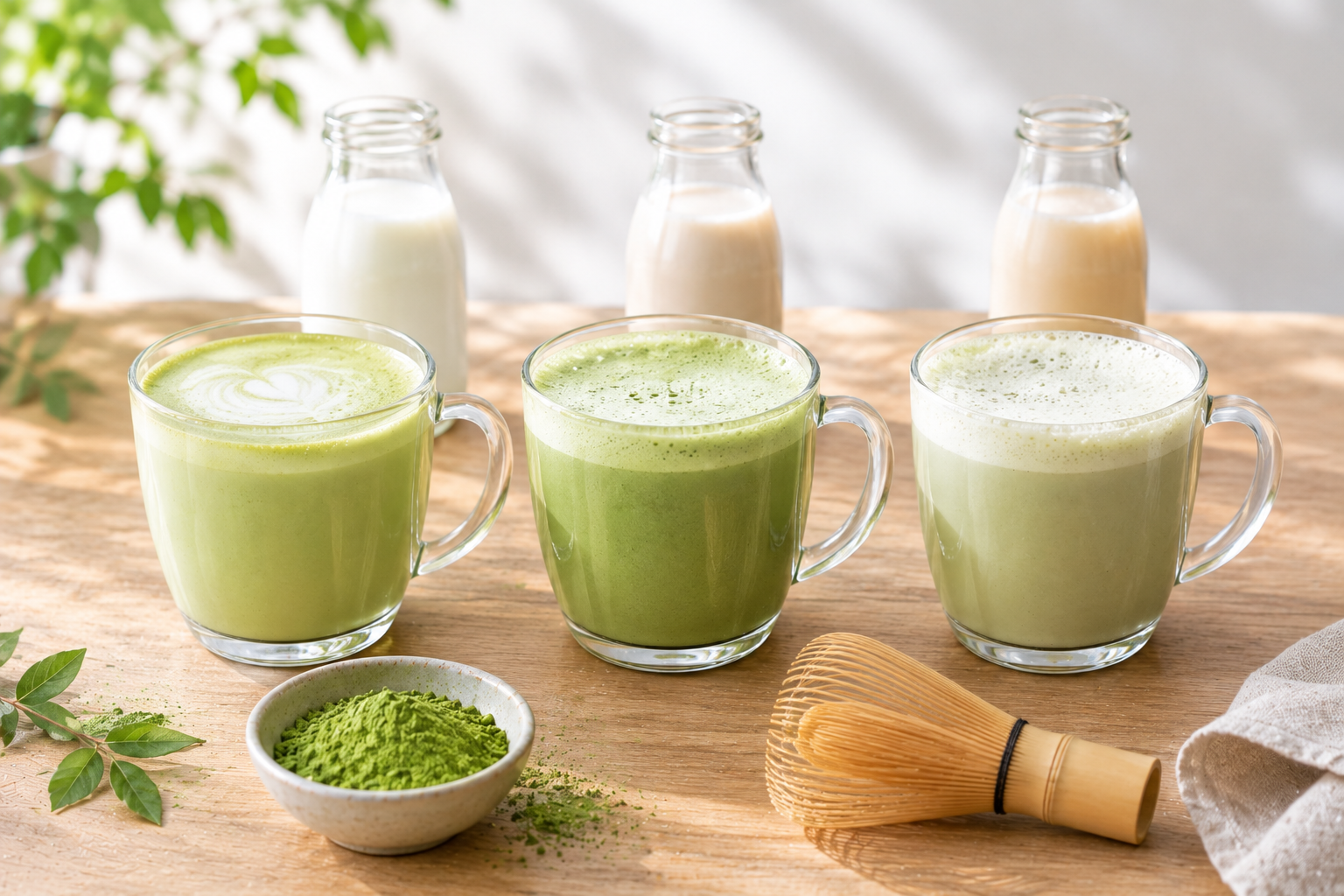
For a while I blamed my matcha for every disappointing latte. Some came out thin and watery, some tasted oddly flat, and a few separated into a sad layer of foam on top of something that looked like pond water. Then I made the same latte, with the same matcha, three times in a row with three different milks – and realized the milk was doing at least half the work. The matcha brings the flavor, but the milk decides the texture, the sweetness, and whether that flavor shines or disappears.
Here’s how the most common milks actually behave in a matcha latte, and which one to choose for what you want.
The Problem You’re Actually Trying to Solve
Most “best milk” lists name a winner and stop there. But the right milk depends on what you care about: creaminess, foam, letting the matcha taste come through, keeping it light, or avoiding dairy. A milk that’s perfect for a hot café-style latte can be disappointing iced, and vice versa.
Who This Article Is NOT For
- If your lattes are clumpy or bitter no matter which milk you use, the problem is probably technique, not milk. My matcha latte guide covers temperature, sifting and the order of steps.
- If you’re mainly counting calories, my matcha vs. matcha latte calorie comparison breaks down how much each milk adds.
- If you drink matcha straight, you don’t need any of this – though it’s still worth knowing why oat milk is so popular in cafés.
The Quick Comparison
| Milk | Flavor in a matcha latte | Foam | Hot or iced? | Best for |
|---|---|---|---|---|
| Whole dairy | Sweet, round, softens bitterness | Excellent, silky | Both, best hot | Classic café latte |
| Oat | Naturally sweet, slightly malty, complements matcha | Very good (barista versions) | Both | The best all-rounder, dairy-free |
| Soy | Neutral, slight bean note | Excellent, stable | Best hot | High protein, dairy-free |
| Almond | Light, nutty, less sweet | Weak unless barista style | Best iced | Lighter lattes |
| Coconut | Sweet, strongly coconut | Fair; better as barista blend | Best iced | Tropical-style drinks |
| Cashew / macadamia | Buttery, smooth | Moderate to good | Both | Letting good matcha shine |
Whole Dairy Milk: The Classic
Whole cow’s milk is still the benchmark for a reason. Its fat and natural sugars round out matcha’s bitterness and bring out its sweetness, and its proteins create a silky, long-lasting microfoam. If you want the latte you’d get in a good café in Japan, this is it.
Downsides: heavier than plant milks, and the richness can mute a very delicate, high-grade matcha. Lower-fat milks foam well but taste thinner.
Best for: hot, café-style lattes.
Oat Milk: The Crowd Favorite
Oat milk has become the default in many cafés, and it earns that place. Its natural sweetness and slightly malty, cereal-like flavor pair beautifully with matcha’s grassy notes, softening bitterness without hiding the tea. Barista versions foam almost as well as dairy, and it works both hot and iced.
Downsides: regular (non-barista) oat milk can be thin and may separate in iced drinks unless shaken well. Some brands are noticeably sweet.
Best for: an everyday, dairy-free latte, hot or iced. If you’re unsure where to start, start here.
Soy Milk: The Best Dairy-Free Foam
Soy milk’s high protein content gives it the most dairy-like foam of any plant milk – thick, smooth and stable. Its neutral flavor lets the matcha come through, with only a faint bean note in the background.
Downsides: some people dislike the beany aftertaste, and soy milk can occasionally curdle if it’s heated too fast or meets very hot liquid. Warming it gently and adding it to slightly cooled matcha helps.
Best for: hot lattes, and anyone who wants protein without dairy.
Almond Milk: Light but Thin
Almond milk is light, mildly nutty and less sweet than oat milk. That makes it a good choice if you want a lower-calorie latte where the matcha flavor stays front and center. Unsweetened almond milk is one of the lightest options available.
Downsides: standard almond milk foams poorly and can separate in hot drinks, giving a watery texture. Barista versions are much better.
Best for: iced lattes, where foam matters less.
Coconut Milk: Use With Care
Coconut milk is sweet and creamy, but its flavor is strong – it can easily become the star of the drink and push the matcha into the background. Carton coconut milk drinks are light and can separate; canned coconut milk is far too rich on its own.
Best for: iced, tropical-style lattes – matcha with coconut and a touch of vanilla or mango. Mixing coconut milk with oat milk is a good way to get the flavor without overwhelming the tea.
Cashew and Macadamia: The Underrated Options
Cashew and macadamia milks are smooth and buttery, with a gentle flavor that doesn’t compete with matcha. Macadamia in particular gives a rich, café-style texture. They’re less common and often more expensive, but if you have a good-quality matcha and want to taste it clearly, they’re worth trying.
Tips for Better Lattes With Any Milk
- Whisk the matcha with a little hot water first. Make a smooth paste with about 60-70ml of water at 70-80°C before adding milk. Pouring cold milk onto dry powder is the main cause of clumps.
- Don’t overheat the milk. Warm it until it’s hot but not boiling – around 60-65°C (140-150°F) is ideal. Hotter milk loses sweetness, and plant milks are more likely to separate.
- Choose barista versions of plant milks. They’re formulated to foam and to resist separating, and the difference is significant.
- Buy unsweetened milk and sweeten yourself. That way you control the sweetness and taste the matcha, not the sugar.
- For iced lattes, shake. Whisk the matcha with warm water, then shake with cold milk and ice in a jar. It mixes better than stirring.
- Use culinary or latte-grade matcha. Milk hides some of the subtle notes of ceremonial grade, so a good latte-grade matcha gives better value.
How Much Milk to Use
A good starting point for one latte is about 2g of matcha (roughly 1 teaspoon), whisked with 60ml of hot water, topped with 150-180ml of milk. From there, adjust to the milk you’re using:
- Rich milks (whole dairy, oat, macadamia): you can use the full amount of milk; they carry the matcha well.
- Light milks (almond, skim): use a little less milk, or add an extra half-gram of matcha, so the latte doesn’t taste watery.
- Strong-flavored milks (coconut): use more matcha or mix the coconut milk half and half with a neutral milk, so the tea isn’t drowned out.
- Iced lattes: remember the ice will melt and dilute the drink, so go slightly stronger on the matcha.
If your latte tastes more like sweet milk than tea, the fix is usually more matcha, not less milk.
Which Milk Should You Pick?
- You want the classic café latte: whole milk.
- You want dairy-free and don’t know where to start: barista oat milk.
- You want the best foam without dairy: soy milk.
- You want a lighter iced latte: unsweetened almond milk.
- You want to taste a high-quality matcha clearly: cashew or macadamia, or a smaller amount of whole milk.
- You want something fun for summer: a coconut-oat blend, iced.
A Few Things People Ask Me
What milk do Japanese cafés use? Most matcha lattes in Japan are still made with cow’s milk, though oat and soy milk are now widely available as alternatives.
Does milk change the taste of matcha? Yes – fat and sugar soften bitterness, and stronger-flavored milks like coconut can mask it. That’s why mild milks let the matcha come through most clearly.
Why does my plant-milk latte separate? Usually because the milk was overheated, poured onto hot matcha too fast, or isn’t a barista version. Warm it gently and use a barista blend.
What should I buy to make better lattes at home? A good latte-grade matcha matters as much as the milk – Nio Teas’ matcha collection has options suited to lattes. A handheld milk frother on Amazon makes café-style foam easy with any milk.
Where I Landed
There isn’t one perfect milk – but there is a perfect milk for the latte you want. For me, barista oat milk is the everyday choice, whole milk is the treat, and almond milk is for hot summer afternoons over ice. Try two side by side with the same matcha, and you’ll see exactly how much difference the milk makes.