Disclosure: This post contains affiliate links. If you buy through one of them, I may earn a small commission at no extra cost to you.
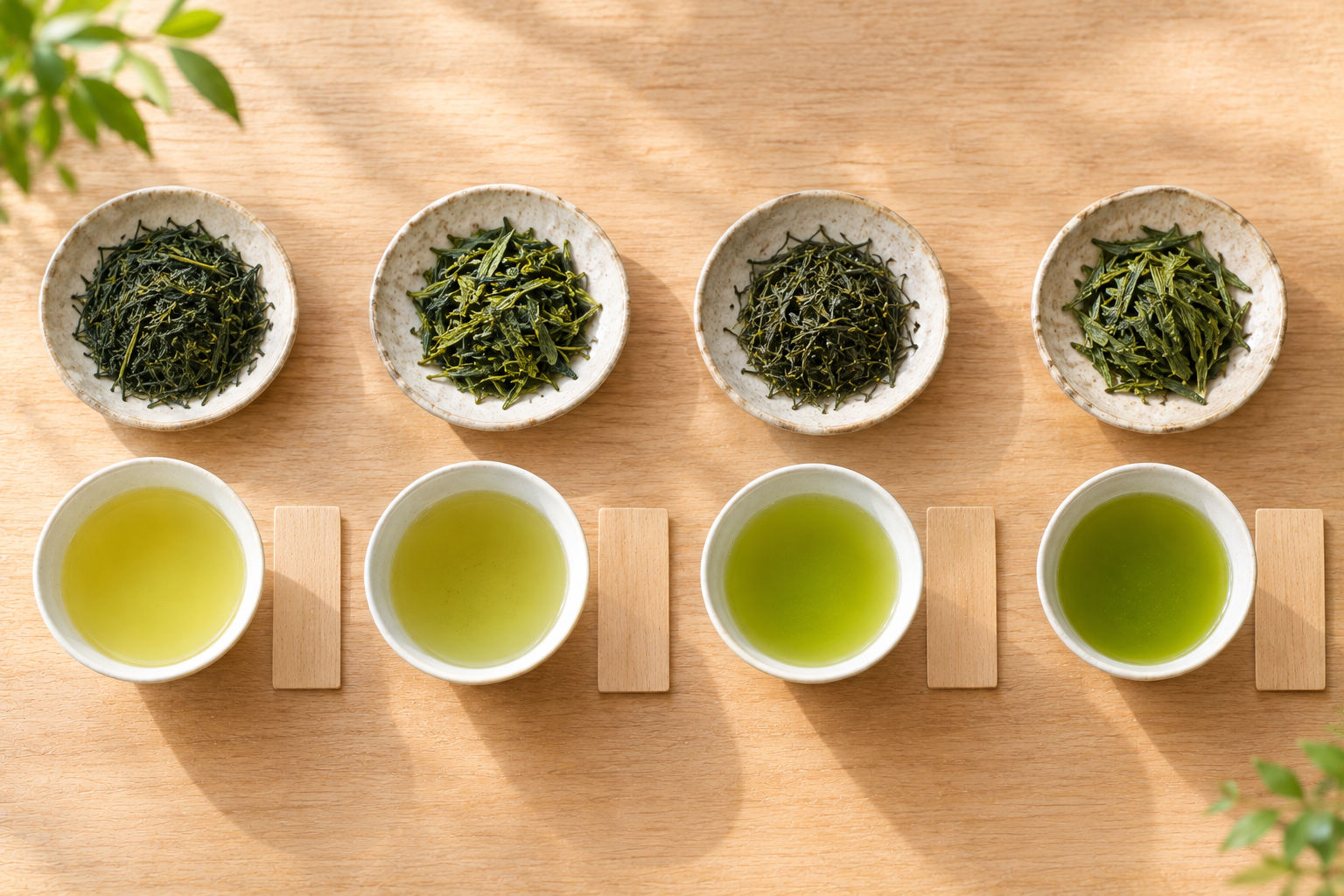
For a long time I read tea labels the way most people do: sencha, gyokuro, maybe a region like Uji or Shizuoka. Then I started noticing a third word in smaller print – Yabukita, Saemidori, Okumidori – and realized it was often the best clue on the bag. Two senchas from the same region could taste completely different, and the reason was usually the cultivar: the specific variety of tea plant the leaves came from.
Japanese tea cultivars are a little like grape varieties in wine. You don’t need to know them to enjoy tea, but once you do, choosing a tea you’ll actually like becomes much easier.
The Problem You’re Actually Trying to Solve
More and more Japanese teas are sold as “single cultivar,” with the cultivar name front and center. If you don’t know what those names mean, it’s hard to tell whether a Saemidori sencha will be sweeter than a Yabukita one, or why one gyokuro costs twice another. This guide covers the cultivars you’re most likely to see, what each tends to taste like, and what they’re best used for.
Who This Article Is NOT For
- If you’re still deciding between sencha and gyokuro, cultivar is a second step. Tea type and how it’s grown matter more first.
- If you want a single “best” cultivar, there isn’t one. Each has strengths, and growing region, harvest and processing still shape the final cup.
- If you’re mainly interested in black tea, the cultivars bred for it are different – Benifuuki is the one to know there.
Why Cultivars Matter in Japan
Most Japanese tea isn’t grown from seed. Instead, farms plant cuttings from a chosen parent plant, so every bush in a field is genetically identical. That gives farmers predictable harvest timing, consistent quality and plants that respond the same way to processing. It also means that a cultivar’s character – its sweetness, aroma, bitterness or color – shows up clearly in the cup.
Cultivars differ in a few key ways:
- Flavor: sweetness, umami, astringency and aroma
- Budding time: early cultivars can be picked for shincha first; late cultivars extend the harvest
- Hardiness: resistance to cold, frost and disease
- Best use: some suit sencha, others are prized for shaded teas like gyokuro and matcha
Yabukita: The Cultivar Behind Most Japanese Tea
If you’ve drunk Japanese green tea, you’ve almost certainly drunk Yabukita. It was selected in Shizuoka by the tea researcher Sugiyama Hikosaburō in the early 20th century and officially registered in 1953. Today it still covers around two-thirds of Japan’s tea fields, according to the Ministry of Agriculture.
Yabukita became dominant because it does almost everything well: it’s cold-hardy, adapts to many regions, yields reliably and produces consistently good tea. Government programs from the 1960s promoted it widely.
Flavor: balanced and clean, with a fresh, grassy aroma, mild sweetness, moderate astringency and gentle umami. It’s the reference point against which other cultivars are described – “sweeter than Yabukita,” “less astringent than Yabukita.”
Best for: all-round sencha, and much of everyday Japanese tea.
Its dominance has a downside, too. When so many fields grow one genetically identical plant, a single disease or climate shift can affect a huge share of the crop at once – one reason growers have been planting more alternatives.
Saemidori: Sweet and Vivid
Saemidori is a cross between Yabukita and Asatsuyu, and it takes the best of both: Yabukita’s reliability and Asatsuyu’s sweetness. It’s especially popular in Kagoshima.
Flavor: vivid green color, strong sweetness and umami, very little bitterness. It’s naturally high in L-theanine, the amino acid behind green tea’s sweetness.
Best for: sencha that tastes noticeably sweeter than Yabukita, as well as gyokuro and matcha. If you find regular sencha a little too sharp, Saemidori is often the first cultivar to try.
Asatsuyu: “Natural Gyokuro”
Asatsuyu is known as a “natural gyokuro” cultivar, because it gives a gyokuro-like sweetness and umami even without shading. The trade-off is that it’s lower-yielding and less hardy, so it’s grown in smaller quantities and tends to be more expensive.
Flavor: very sweet, rich in umami, with low astringency.
Best for: premium sencha with a gyokuro-like character, and as a parent of other cultivars, including Saemidori and Tsuyuhikari.
Okumidori: Late, Elegant and Great for Shading
Oku means “late,” and Okumidori buds later than Yabukita, which lets farmers spread their harvest over a longer season. It responds especially well to shading.
Flavor: refined umami, elegant sweetness, deep green color.
Best for: gyokuro, kabusecha and matcha, as well as premium sencha. You’ll see it often in shaded teas from Kyoto and Kyushu.
Tsuyuhikari: Bright and Fresh
Tsuyuhikari, a cross involving Asatsuyu, is popular in Shizuoka.
Flavor: bright, clear liquor with a fresh, lively aroma and a balanced taste.
Best for: standard and deep-steamed sencha, especially if you like a fresh, bright cup.
Yutakamidori: Kyushu’s Deep-Steaming Favorite
Yutakamidori is widely grown in Kagoshima and Miyazaki. It buds early, around a week before Yabukita, which makes it important for early shincha.
Flavor: deep green color, rich umami, less astringency than Yabukita.
Best for: fukamushi (deep-steamed) sencha, where its strong body holds up well to longer steaming. My fukamushi sencha guide explains why that style suits Kyushu teas.
Gokō and Samidori: Uji’s Classics
These two are closely associated with Uji in Kyoto and with shaded teas.
Gokō is prized for gyokuro and matcha, with a distinctive, rich aroma that develops under shade.
Samidori is another Uji cultivar used mainly for matcha and gyokuro, known for its smooth sweetness and deep green color.
If you’re shopping for high-end gyokuro, these names are a good sign. My gyokuro brand comparison covers where to buy it.
Other Cultivars Worth Knowing
- Kanayamidori: a Shizuoka cultivar with a sweet, milky, almost creamy character and low astringency
- Sayamakaori: from Saitama, with a bold, strong aroma; good for aromatic sencha and hojicha
- Benifuuki: bred with Assam-type heritage and used mainly for Japanese black tea (wakocha)
A Quick Comparison
| Cultivar | Sweetness | Astringency | Character | Best for |
|---|---|---|---|---|
| Yabukita | Medium | Medium | Balanced, grassy, classic | All-round sencha |
| Saemidori | High | Low | Vivid, sweet, umami-rich | Sweet sencha, gyokuro, matcha |
| Asatsuyu | Very high | Low | Gyokuro-like without shade | Premium sencha |
| Okumidori | Medium-high | Low-medium | Elegant umami, late harvest | Gyokuro, matcha, kabusecha |
| Tsuyuhikari | Medium | Medium | Bright, fresh, clear | Sencha, fukamushi |
| Yutakamidori | Medium | Low-medium | Deep, rich, early harvest | Fukamushi sencha |
| Gokō | Medium-high | Low | Rich shaded aroma | Gyokuro, matcha |
These are tendencies, not guarantees. A well-made Yabukita from a good farm can easily beat a careless Saemidori.
How to Use Cultivars When Buying
- If you find sencha too bitter, try Saemidori or Asatsuyu.
- If you want classic, everyday sencha, Yabukita is the safe choice.
- If you want a fresher, brighter cup, try Tsuyuhikari.
- If you love deep-steamed tea, look for Yutakamidori from Kyushu.
- For gyokuro and matcha, look for Okumidori, Saemidori, Gokō or Samidori.
- To learn the differences, buy two single-cultivar senchas – for example, Yabukita and Saemidori – and taste them side by side.
A Few Things People Ask Me
Is “single cultivar” tea better than a blend? Not necessarily. Blends can be excellent and more consistent from year to year. Single-cultivar teas are interesting because they let you taste the character of one variety clearly.
Why is Yabukita so common if other cultivars taste sweeter? Because it’s reliable: hardy, high-yielding and consistently good. Sweeter cultivars are often less hardy or lower-yielding, which makes them more expensive to grow.
Does the cultivar affect caffeine? Somewhat, but how the tea is grown (especially shading) and brewed matters more.
Where can I buy single-cultivar teas? Nio Teas’ sencha collection lets you filter by cultivar, which makes side-by-side comparisons easy. You can also find options as single cultivar Japanese sencha on Amazon.
Where I Landed
Learning a handful of cultivar names changed how I buy tea more than anything else. Instead of guessing from the region or the price, I can look for Saemidori when I want sweetness, Yabukita when I want a classic cup, and Okumidori when I want shaded richness. You don’t need to memorize them all – start with Yabukita and Saemidori, taste the difference, and the rest will make sense from there.