Disclosure: This post contains affiliate links. If you buy through one of them, I may earn a small commission at no extra cost to you. Several of these drinks are made from common allergens – barley, buckwheat and soy – so please check the allergy column in the table before trying one.
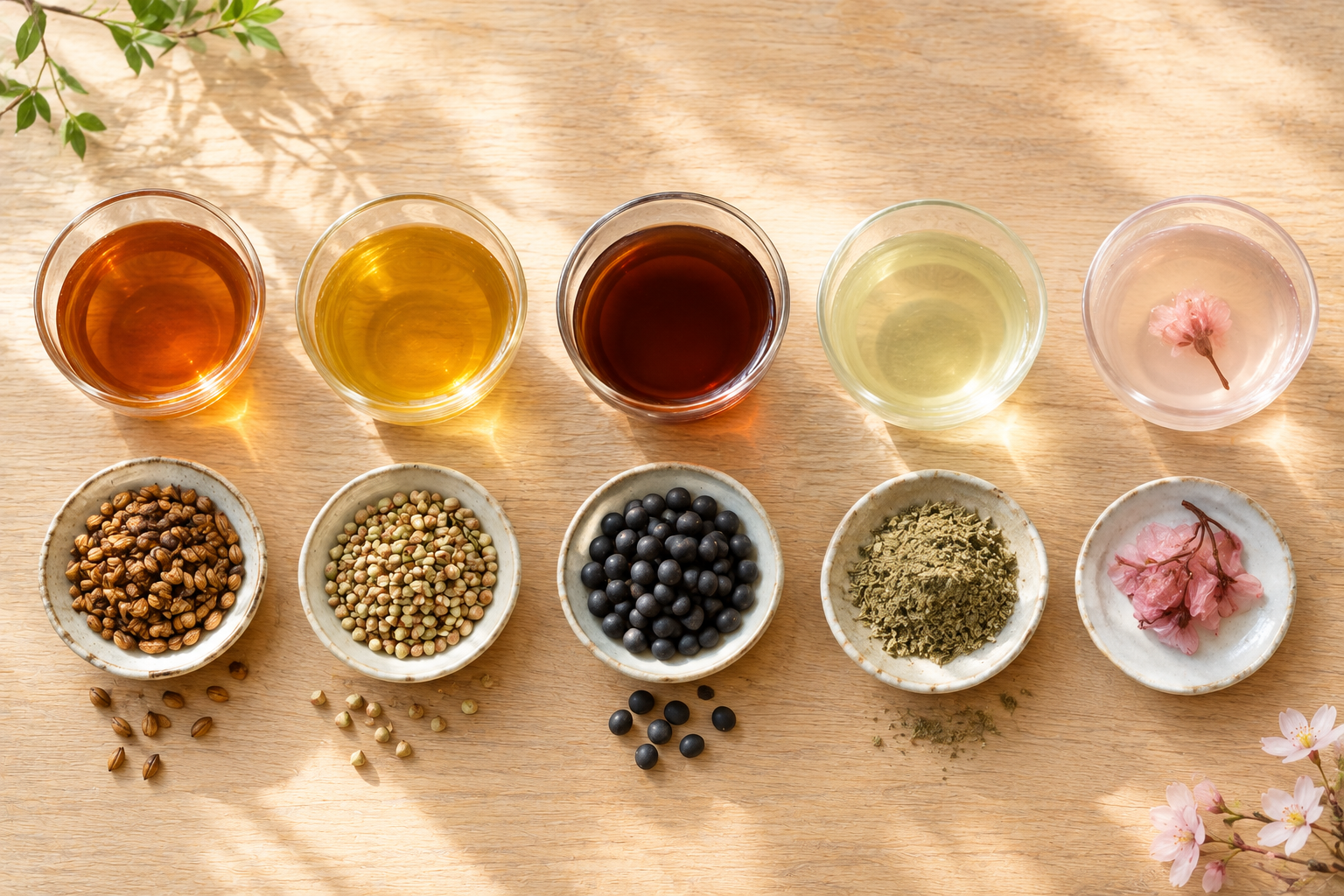
When people tell me they love Japanese tea but can’t have caffeine after lunch, they usually assume the answer is “decaf sencha.” It’s rarely necessary. Japan has a whole family of everyday drinks that are called cha but aren’t made from the tea plant at all – roasted grains, roasted beans, seaweed, even pickled cherry blossoms – and none of them contain any caffeine. They’re not niche health products, either. They’re what Japanese families pour at dinner, give to children, and keep in the fridge all summer.
The Problem You’re Actually Trying to Solve
The confusing part is the word cha. In Japanese it’s used for almost any hot infusion, so “mugicha” and “sencha” sound like close relatives when one has no caffeine and the other has plenty. On top of that, several low-caffeine Japanese teas get described online as “caffeine-free” when they aren’t. If you’re avoiding caffeine for sleep, pregnancy advice from your doctor, or any other reason, it helps to know exactly which drinks are truly zero and which are only low.
Who This Article Is NOT For
- If you’re fine with a little caffeine and just want a gentler green tea, you don’t need to leave the tea plant – kukicha, or twig tea, is one of the lowest-caffeine real teas there is.
- If you’re looking for a drink with medical benefits, none of these should be treated as a remedy. They’re pleasant caffeine-free drinks, nothing more.
- If you have a barley, buckwheat or soy allergy, or celiac disease, skip the drinks in this list that contain those ingredients.
The Five Zero-Caffeine Options at a Glance
| Drink | Made from | Tastes like | Best for | Watch out for |
|---|---|---|---|---|
| Mugicha | Roasted barley | Toasty, grain-forward, slightly bitter | Big jugs of cold tea in summer | Contains gluten |
| Sobacha | Roasted buckwheat | Nutty, lightly sweet, no bitterness | A cup after dinner, hot or cold | Buckwheat allergy can be severe |
| Kuromamecha | Roasted black soybeans | Toasted, gently sweet, mellow | A hearty, warming cup | Soy allergy |
| Konbucha | Powdered kelp | Savory, salty, umami-rich | A brothy cup on a cold day | Usually contains salt, often MSG |
| Sakurayu | Salt-pickled cherry blossoms | Light, slightly salty, floral | Celebrations and special occasions | Salty; rinse blossoms if you prefer |
Mugicha: The Everyday One
Roasted barley tea is the most common caffeine-free drink in Japan, especially in summer, when many households keep a pitcher of it in the fridge from June to September. It’s toasty and slightly bitter hot, and softer and sweeter cold. The usual method is one tea bag per liter of cold water, left in the fridge overnight. Brewed mugicha doesn’t keep long, so it’s best finished within a day or two.
The important caution is gluten: barley contains it, so mugicha isn’t suitable for anyone with celiac disease or a gluten intolerance. My full mugicha guide covers hot, cold and loose-barley brewing, plus how to keep a jug fresh.
Sobacha: The Nutty One
Sobacha is made from roasted buckwheat kernels and is often served in soba restaurants after a meal. It’s nutty and lightly sweet with almost no bitterness, and the softened kernels can be eaten after brewing. Buckwheat itself is gluten-free, which makes sobacha the usual alternative to mugicha for people avoiding gluten – but buckwheat allergy can cause severe reactions, so it isn’t for everyone. My full sobacha guide covers the regular vs. dattan (tartary) varieties and how to brew both.
Kuromamecha: The Hearty One
Kuromamecha is tea made from roasted black soybeans. Beans from Tamba in Hyogo Prefecture are considered among the best – large, glossy and naturally sweet. The flavor is toasted and gently sweet with no bitterness or astringency, rounder and fuller than sobacha.
To brew it, use about 10-15g of beans per 400ml of near-boiling water (around 95°C) and steep for about five minutes; the same beans can give a second, lighter cup. Like sobacha, the softened beans can be eaten afterward, added to rice or salads. People with a soy allergy should avoid it.
Konbucha: The Savory One
This is the one most often confused with something else. Japanese konbucha (also spelled kombucha) is not the fermented, fizzy drink sold in bottles in the West. It’s a hot drink made from powdered or finely cut kombu kelp, and it tastes savory and salty, closer to a light broth than to tea. A teaspoon of powder dissolved in hot water makes a cup, and some blends add dried umeboshi plum for a sour note.
Most commercial konbucha contains salt and often MSG, so it’s a drink to enjoy in moderation, and worth checking the label if you’re watching your sodium intake. It also works as a seasoning – a pinch in ochazuke or a quick pickle is a classic use.
Sakurayu: The Celebratory One
Sakurayu, also called sakura-cha, is made by pouring hot water over cherry blossoms that have been pickled in salt and plum vinegar and then dried. In the cup, the blossoms slowly unfurl and float, and the drink is light, slightly salty and faintly floral.
It’s traditionally served at weddings and engagement ceremonies in place of green tea. One explanation is linguistic: the Japanese expression ocha wo nigosu – literally “to make the tea cloudy” – means to be evasive, which isn’t a phrase anyone wants associated with a marriage. Cherry blossoms, on the other hand, stand for new beginnings. If the saltiness is too strong for you, give the blossoms a quick rinse before adding the water.
Low Caffeine Isn’t No Caffeine
Several Japanese teas are often described as caffeine-free when they’re actually just low:
- Kukicha (twig tea) is made from stems, which contain much less caffeine than leaves – but still some.
- Hojicha is roasted green tea and is lower in caffeine than sencha or matcha, but it isn’t caffeine-free.
- Bancha, made from later-harvest leaves, has roughly half the caffeine of sencha.
These are good choices if you want to cut back, but if you need to avoid caffeine completely, stick to the five drinks above.
A Few Things People Ask Me
Which caffeine-free Japanese tea tastes most like green tea? None of them really does, because none come from the tea plant. If you want green tea flavor with the least caffeine, kukicha is the closest compromise.
Which one is best for children? In Japan, mugicha is the classic choice and is given to children routinely. As with any food, check allergies first – barley for mugicha, buckwheat for sobacha, soy for kuromamecha.
Can I drink these during pregnancy? They’re caffeine-free, but that’s a question for your doctor or midwife rather than a tea blog, especially with allergens or added salt involved.
Where can I buy them? Mugicha and sobacha tea bags are widely available. For something a little different, kuromamecha on Amazon – look for Tamba beans if you can – and Japanese konbucha kelp tea on Amazon are both easy to find.
Where I Landed
You don’t need decaf green tea to enjoy Japanese tea culture in the evening. Mugicha for summer jugs, sobacha after dinner, kuromamecha when you want something warming, konbucha when you’d rather have a savory cup, and sakurayu for special occasions – between them, there’s a caffeine-free option for almost any moment. Just check the allergens first, and remember that “low caffeine” teas like hojicha and kukicha aren’t the same as zero.