Disclosure: This post contains affiliate links. If you buy through one of them, I may earn a small commission at no extra cost to you.
Hojicha has a reputation as “the caffeine-free Japanese tea,” and I believed that for longer than I should have – right up until I looked at actual numbers and found out hojicha isn’t caffeine-free at all. It’s lower in caffeine than matcha, genuinely, but the gap and the reasons behind it are more specific than the simple “roasting removes caffeine” story that gets repeated constantly.
If you’re choosing between the two specifically to manage caffeine intake – afternoon cup, evening habit, sensitivity to caffeine generally – it’s worth knowing what’s actually driving the difference rather than just trusting the reputation.
The Problem You’re Actually Trying to Solve
The common shorthand is “hojicha is roasted, so it’s low-caffeine, and matcha is the whole leaf, so it’s high-caffeine” – which is true in direction but skips over how much of hojicha’s lower caffeine actually comes from roasting versus other factors, and it doesn’t give you real numbers to actually plan around if you’re trying to manage your intake at a specific time of day.
Who This Article Is NOT For
- If you want the lowest-caffeine option available rather than a comparison between these two specifically, genuinely caffeine-free herbal options (not real tea at all) would serve that goal better than either matcha or hojicha.
- If you’re comparing hojicha to sencha or genmaicha rather than matcha specifically, my genmaicha guide covers that three-way comparison in more depth.
The Actual Numbers
Per typical serving, matcha runs meaningfully higher in caffeine than hojicha – roughly 48-80mg for matcha versus roughly 5-20mg for hojicha. That’s a real difference, generally putting hojicha somewhere between a third and a tenth of matcha’s caffeine content depending on the specific matcha grade and how the hojicha was made.
For context, sencha sits in between at roughly 20-30mg, and genmaicha runs close to hojicha at roughly 10-15mg. Coffee, for comparison, is typically 80-100mg per cup – meaning a strong matcha can actually approach coffee’s caffeine level, while hojicha stays well below it across the board.
Why Hojicha Actually Has Less Caffeine
This is the part that gets oversimplified. Roasting does play a role, but it’s a smaller piece of the story than the “roasting burns off the caffeine” version people usually repeat suggests.
Roasting genuinely reduces caffeine somewhat – some of the caffeine in the leaf does evaporate during the high-heat roasting process – but this alone doesn’t account for hojicha’s full drop in caffeine relative to unroasted green tea.
The base leaf matters more than most people realize. Hojicha is very often made from bancha – a coarser, later-harvest tea leaf – which naturally contains somewhat less caffeine than younger, more tender leaf material to begin with. So part of hojicha’s lower caffeine isn’t from roasting at all; it’s baked into the leaf choice before roasting even happens.
Leaf maturity affects how much actually dissolves into your cup. More mature, later-picked leaves (again, common in hojicha’s base material) tend to be tougher and higher in fiber, which means less of their total compound content – caffeine included – extracts into the water during brewing compared to younger, more tender leaf.
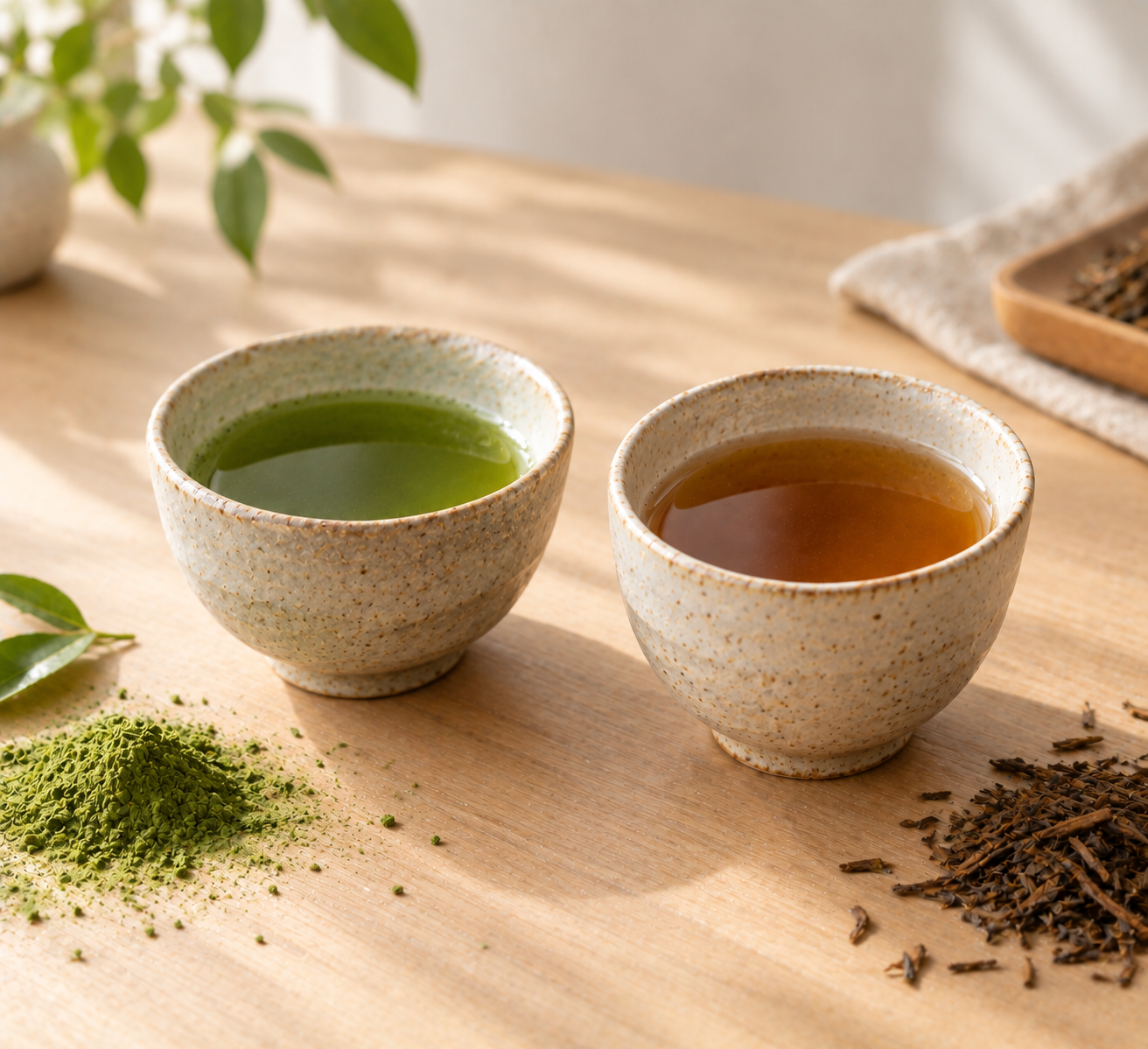
Matcha, by contrast, is made from shade-grown young leaves, ground into a powder you consume whole rather than steeping and discarding – which is the core reason it runs so much higher in caffeine than any steeped tea, hojicha included. You’re not extracting a portion of the leaf’s compounds into water; you’re drinking the entire leaf, powder and all. If you want to keep both on hand and choose by time of day, a matcha and hojicha powder set on Amazon is a simple way to have both without ordering separately.
Choosing Based on When You’re Drinking It
Given the actual gap in caffeine, the practical guidance is fairly simple: matcha is a reasonable substitute for a morning coffee if you want sustained energy without coffee’s sharper spike, while hojicha’s low caffeine load makes it a genuinely good evening or after-dinner option that won’t meaningfully interfere with sleep the way even a modest cup of matcha or sencha might for a caffeine-sensitive person.
If you’re caffeine-sensitive generally, treating hojicha as “basically caffeine-free” isn’t accurate enough to be safe – it does still carry a measurable dose, just a much smaller one than most other real teas.
A Few Things People Ask Me
Is hojicha actually caffeine-free, or does it just have very little? It has very little, not none – somewhere in the 5-20mg range per serving is still a real, measurable amount of caffeine, even though it’s a fraction of what matcha or coffee delivers.
If I’m sensitive to caffeine, is hojicha safe to drink at night? For most people with normal caffeine sensitivity, yes, given how low its caffeine content runs – but if you’re genuinely caffeine-sensitive (not just averagely so), even hojicha’s small dose is worth being aware of rather than assuming it’s equivalent to a caffeine-free herbal tea.
Does darker-roasted hojicha have even less caffeine than lighter roasts? Generally, yes, to a modest degree – more extensive roasting does continue to reduce caffeine somewhat further, though the base leaf and its maturity remain the bigger factor overall rather than roast level alone.
If I want matcha’s flavor but less caffeine, is there a good compromise? Blending matcha into a hojicha latte is one practical way to get some matcha flavor while diluting the overall caffeine load relative to a straight matcha drink – my guide to matcha-hojicha lattes covers exactly that combination in more depth.
Where I Landed
The honest version of this comparison is less tidy than “hojicha is roasted, so it’s caffeine-free” – hojicha is genuinely lower in caffeine than matcha, but it gets there through a combination of leaf choice, leaf maturity, and roasting together, not roasting alone. Practically, that distinction doesn’t change much about which one to reach for – hojicha still wins clearly if a lower caffeine load is what you’re after – but it’s worth knowing you’re not drinking something caffeine-free, just meaningfully lower than the alternative. If you want to try both side by side, Nio Teas carries hojicha and matcha from the same catalog, which makes comparing them directly easier than sourcing from two different brands.