Author: arino

  • Mugicha: Japan’s Caffeine-Free Barley Tea, and How to Make It Properly

    Mugicha: Japan’s Caffeine-Free Barley Tea, and How to Make It Properly

    Disclosure: This post contains affiliate links. If you buy through one of them, I may earn a small commission at no extra cost to you. Important: mugicha is made from barley and contains gluten – please read the note below if you have celiac disease or a gluten intolerance.

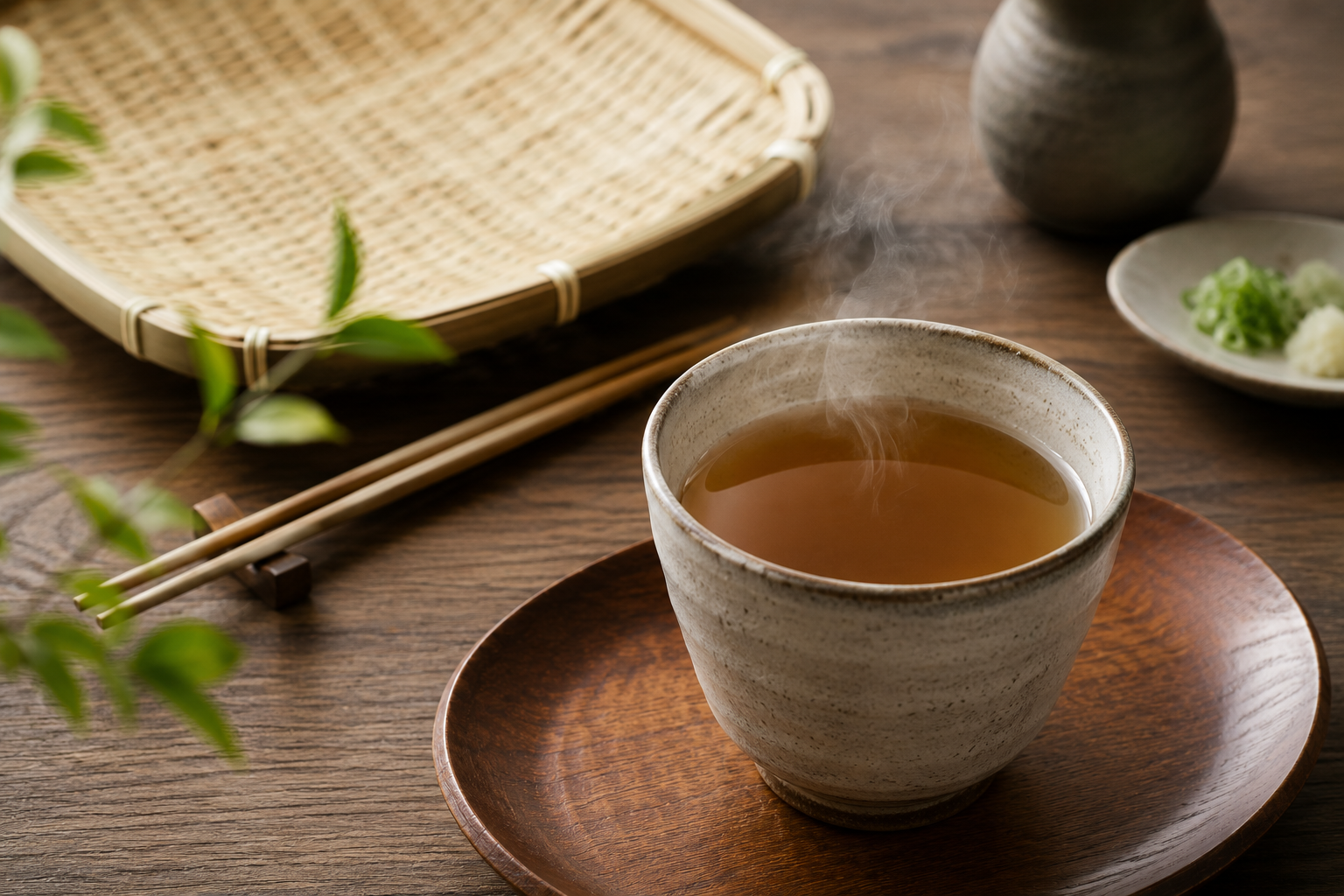
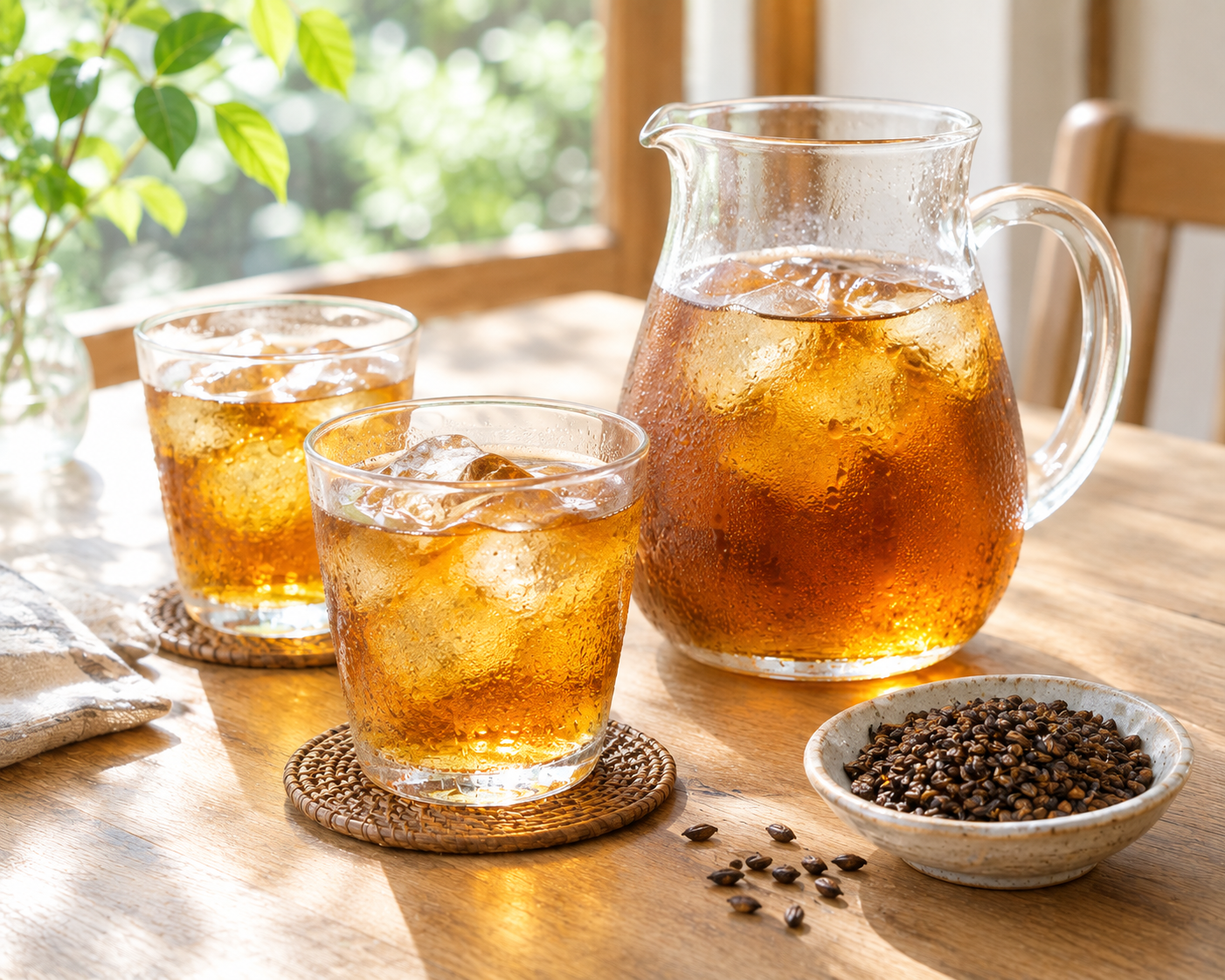
    If you open a fridge in a Japanese home in summer, there’s a good chance you’ll find a plastic pitcher of something pale brown inside. It isn’t iced coffee or black tea. It’s mugicha – roasted barley tea – and for a lot of Japanese families it’s the default cold drink from June to September, poured for kids, adults and guests alike. It has no caffeine, it costs almost nothing, and once you get used to its toasty, slightly bitter flavor, plain water starts to feel a little boring.

    The Problem You’re Actually Trying to Solve

    Most people outside Japan meet mugicha in one of two ways: a free glass at a Japanese restaurant, or a bag of tea packets at an Asian grocery store with instructions they can’t read. The drink itself is simple, but there are a few things that make the difference between a clean, refreshing jug and a flat or slightly sour one – mainly how you brew it, how long you leave the bag in, and how long you keep it.

    Who This Article Is NOT For

    • If you have celiac disease, mugicha isn’t safe for you. Barley contains gluten (in the form of a protein called hordein), and celiac organizations advise against barley drinks regardless of how little ends up in the cup. Sobacha, roasted buckwheat tea, is the closest gluten-free alternative – but read its own allergy note first.
    • If you want a roasted flavor with real tea in it, hojicha is the better choice – my matcha vs. hojicha caffeine comparison shows how little caffeine it actually has.
    • If you’re looking for a health drink, mugicha is best thought of as a pleasant, caffeine-free alternative to water – not a remedy.

    What Mugicha Actually Is

    Mugicha (麦茶, literally “barley tea”) is made by roasting barley grains until they’re dark brown and then steeping them in water. Like sobacha, it’s called “cha” but doesn’t come from the tea plant at all, which is why it has no caffeine.

    It also has a long history. Roasted barley drinks go back to the Heian period, when they were enjoyed at the imperial court, and by the Edo period street vendors were selling it to ordinary people. The modern habit of keeping a cold jug in the fridge took off after the Second World War, as refrigerators became common in Japanese homes – which is why mugicha today is so strongly tied to summer.

    How It Tastes

    Toasty, grain-forward and slightly bitter, with a clean, dry finish – often compared to a very weak, unsweetened coffee or toasted cereal. Served cold, the bitterness softens and a gentle sweetness comes forward, which is why most people prefer it chilled.

    Compared with sobacha, mugicha is darker in color, fuller and more roasted; sobacha is lighter, nuttier and sweeter. Compared with hojicha, mugicha is simpler and more cereal-like, without hojicha’s caramel and tea notes.

    How to Make It

    Most mugicha outside Japan is sold in tea bags, usually sized for a liter or more. Check the package, since some bags are designed only for boiling and others work for cold brewing too.

    Cold brew (the most common way in Japan):

    • 1 tea bag per liter of cold water
    • Refrigerate for about 6-8 hours, or overnight
    • Remove the bag once it’s done, so the flavor doesn’t keep getting stronger and more bitter

    Hot brew:

    • Bring water to a boil, add 1 tea bag per 500ml (or per the package), and steep 3-5 minutes
    • For a stronger, more classic flavor, some families simmer the bag for a few minutes on the stove
    • Let it cool, then refrigerate if you’re going to drink it cold

    Loose roasted barley:

    • About 30-40g per liter, simmered for around 10 minutes, then strained
    • Loose barley gives the deepest, most roasted flavor, but it’s more work and harder to find outside Japan

    Many Japanese households use a simple brewing pitcher with a lid that fits in the fridge door. Any clean, sealed jug works.

    The Part Most Guides Skip: Keep It Fresh

    Mugicha is very easy to make and very easy to keep too long. Unlike green tea, it doesn’t contain the catechins that slow spoilage, so a jug left in the fridge for days can start to taste sour. A few habits keep it safe and tasting good:

    • Drink it within about a day or two of brewing, and keep it refrigerated
    • Use a clean pitcher every time – wash and dry it between batches rather than topping up an old jug
    • Don’t leave it out at room temperature for long, especially in summer
    • Pour, don’t drink from the jug

    If it smells or tastes sour, throw it out and make a fresh batch. That’s the main reason Japanese families brew it so often: it’s cheap enough to make every day.

    A Few Things People Ask Me

    Does mugicha have caffeine? No. It’s made from barley, not tea leaves, so there’s no caffeine at all. That’s why it’s served to children and drunk in the evening in Japan.

    Is mugicha gluten-free? No. Barley contains gluten, so mugicha isn’t suitable for people with celiac disease or a gluten intolerance, even though only a small amount ends up in the drink. Sobacha is the usual alternative.

    Can I drink it hot? Yes, and some people prefer it in winter. Hot mugicha tastes more roasted and a little more bitter than cold.

    Where can I buy it? Japanese mugicha tea bags, including well-known brands like Ito En, are easy to find as mugicha tea bags on Amazon. If you plan to make it regularly, a cold-brew pitcher on Amazon that fits in your fridge door makes the habit much easier.

    Where I Landed

    Mugicha isn’t a tea you sit and analyze. It’s the jug in the fridge that quietly replaces sugary drinks and plain water in summer, and that’s exactly what makes it worth knowing. Brew it cold overnight, take the bag out, finish it within a day or two, and start a new batch. It’s the simplest habit in Japanese tea culture – and, for a lot of people, the one they keep long after they’ve stopped buying fancy sencha.
  • Kabusecha: The Shaded Tea Between Sencha and Gyokuro

    Kabusecha: The Shaded Tea Between Sencha and Gyokuro

    Disclosure: This post contains affiliate links. If you buy through one of them, I may earn a small commission at no extra cost to you.

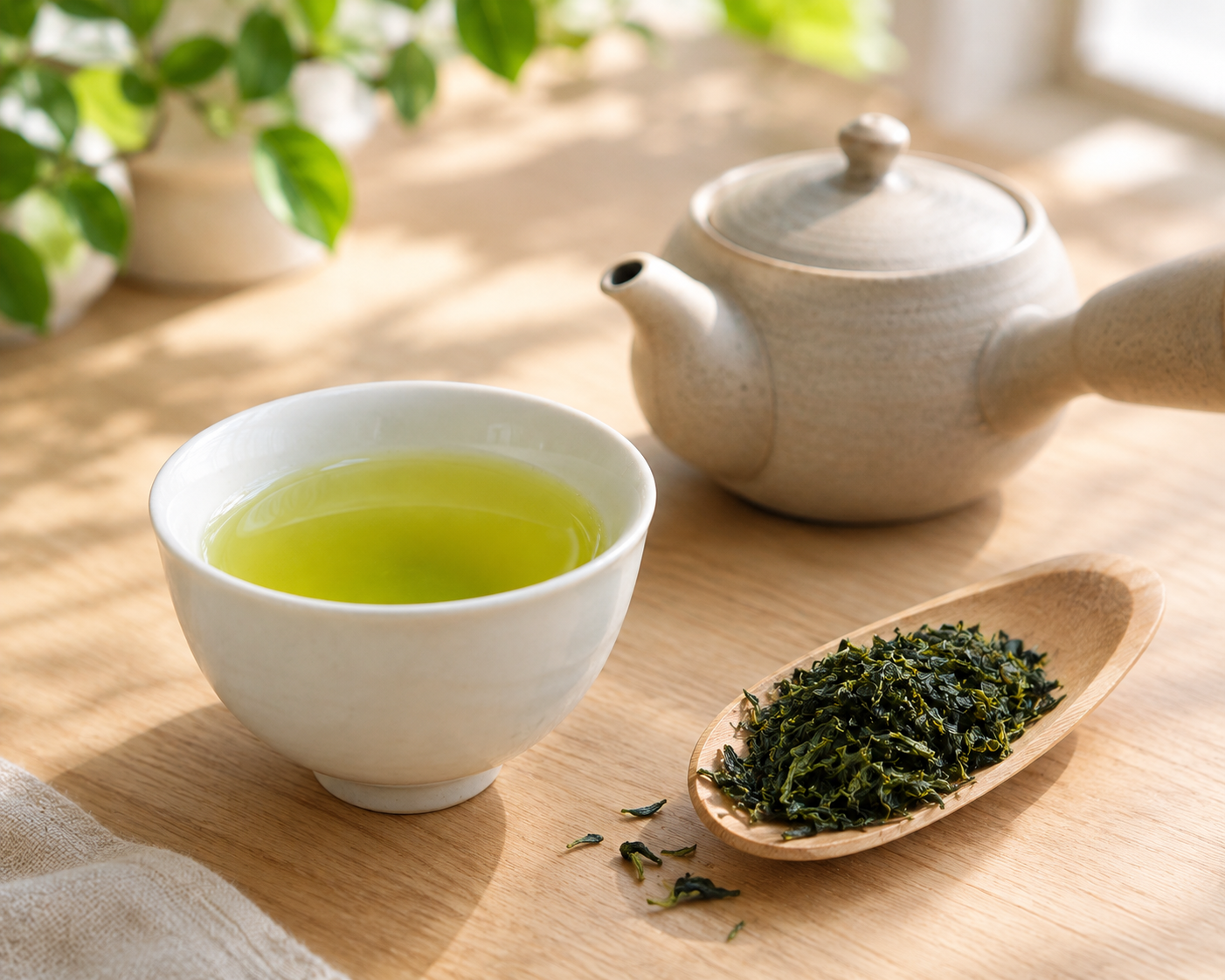
    For a long time I thought Japanese green tea came in two flavors: sencha, which is bright and a little grassy, and gyokuro, which is sweet, rich and expensive. Then I tried a kabusecha and couldn’t place it. It had sencha’s freshness, but with a rounder, sweeter middle that I’d only ever tasted in gyokuro. It turned out to be exactly that – a tea that sits between the two, made by shading the plants for part of the time gyokuro gets.

    The Problem You’re Actually Trying to Solve

    Most people who look up kabusecha have either seen it on a tea shop’s menu with no explanation, or they like sencha, are curious about gyokuro, and are hesitating at gyokuro’s price. Kabusecha is useful in both cases. It’s the easiest way to taste what shading does to green tea, without paying for or learning to brew full gyokuro.

    Who This Article Is NOT For

    • If you’ve never had sencha or gyokuro, start with my sencha vs. gyokuro comparison. Kabusecha makes much more sense once you know the two ends it sits between.
    • If you already know you love gyokuro and want the real thing, my gyokuro brand comparison is the better next read.
    • If you prefer sharp, brisk green tea with lots of astringency, kabusecha will probably feel too mellow.

    What Kabusecha Actually Is

    The name means “covered tea.” Like gyokuro, the tea plants are covered before harvest to block sunlight. The difference is how long and how heavily:

    SenchaKabusechaGyokuro
    Shading before harvestNoneRoughly 1-2 weeksAbout 20 days or more
    How it’s covered–Cloth laid directly over the bushesUsually a frame or trellis over the field
    Light blockedNonePartialMost of it
    TasteBright, grassy, some astringencyFresh, but sweeter and rounderDeep umami, thick, sweet

    Sources vary on the exact number of days, and producers adjust it by region and season, but the principle is the same: less shading than gyokuro, more than sencha. After harvest, kabusecha is processed the same way as sencha. The only difference is how it was grown.

    Why Shading Changes the Taste

    Tea leaves contain theanine, an amino acid that gives green tea its sweetness and umami. In sunlight, the plant converts part of that theanine into catechins, which are responsible for bitterness and astringency. Covering the plants slows that conversion, so shaded leaves keep more sweetness and less bite.

    Kabusecha gets a moderate dose of that effect. You’ll notice the extra sweetness and smoothness compared with sencha, but it keeps more of sencha’s lightness and freshness than gyokuro does. Because it sees more sun than gyokuro, it also keeps more catechins, which is part of why it tastes livelier.

    Where It Comes From

    By most accounts, the majority of Japan’s kabusecha comes from Mie Prefecture, where it’s sold as Ise-cha. Fukuoka – the Yame area, famous for gyokuro – also produces kabusecha, often from cultivars associated with gyokuro, which gives it a deeper umami. Smaller amounts come from Nara, Kyoto and elsewhere.

    If you see “Ise kabusecha” on a label, you’re looking at the most classic version of the style.

    How to Brew It

    Kabusecha brews much more like sencha than like gyokuro, which is a big part of its appeal:

    • Leaf: about 3-5g per cup (roughly 1-2 teaspoons)
    • Water: around 70°C (158°F)
    • Steep: about 1 minute; up to 2 minutes for a fuller cup
    • Later infusions: slightly hotter water, shorter steeps

    If you want to bring out more of its gyokuro side, use a little more leaf and slightly cooler water – around 60-65°C – and steep a bit longer. If you want it brighter and closer to sencha, go the other way. It’s forgiving in both directions, which makes it a good tea to experiment with.

    Try It Cold-Brewed

    Kabusecha is one of the best teas for cold brewing (mizudashi), and it’s the version I’d suggest if you want to taste its sweetness most clearly. Cold water pulls out theanine – the source of the sweetness and umami – fairly readily, but extracts much less of the catechins and caffeine that make green tea bitter. With a shaded tea that’s already rich in theanine, the result is a smooth, sweet, almost syrupy cold tea.

    A simple method: about 10g of leaf to 500ml of cold water in a jar or bottle, left in the fridge for 3-6 hours, then strained. Taste it at the three-hour mark and steep longer if you want it stronger. It keeps for about a day in the fridge, and the leaves can usually give you a second, lighter batch.

    How to Pick a Good Kabusecha

    Kabusecha isn’t graded on a universal scale, so the label is where you get your clues:

    • Look for the name. It may be sold as “kabusecha,” “kabuse sencha,” or simply as “shaded sencha.” Ise-cha from Mie is the most common origin.
    • Prefer first flush. Like sencha, kabusecha from the spring harvest (ichibancha or shincha) is sweeter and more aromatic than later harvests. If the label mentions spring or first flush, that’s a good sign.
    • Check the cultivar if it’s listed. Kabusecha made from cultivars associated with gyokuro, such as Saemidori or Okumidori, tends to lean further toward gyokuro’s sweetness and umami. Yabukita, the most common sencha cultivar, gives a more classic sencha-like balance.
    • Mind the leaf color. Good kabusecha usually has deep green, glossy leaves – a visible sign of the shading. Dull, yellowish leaf suggests age or a lower grade.
    • Buy small amounts. Like all green tea, it loses aroma once opened. A 50-100g bag you’ll finish within a month or two will taste better than a large bag that sits.

    Kabusecha With Food

    Because it’s smoother and less astringent than sencha, kabusecha pairs well with delicate flavors that sencha can overpower: simple Japanese sweets, white fish, lightly seasoned rice dishes, or mild cheeses. Sencha’s brisk edge is better with oily or strongly flavored food; kabusecha is the tea for quieter meals.

    A Few Things People Ask Me

    Is kabusecha cheaper than gyokuro? Usually, yes. It needs less shading time and labor, so it generally sits between sencha and gyokuro in price – often much closer to good sencha.

    Is kabusecha the same as “shaded sencha”? Essentially, yes. Some shops label it that way, and in the Japanese tea trade it’s treated as a type of sencha grown with partial shading.

    Does kabusecha have more caffeine than sencha? Shaded teas tend to have somewhat more caffeine than unshaded sencha, and gyokuro has the most. Kabusecha falls in between, but the difference from sencha isn’t dramatic.

    Where can I buy it? Kabusecha is less widely stocked than sencha outside Japan, but kabusecha on Amazon has several options, including Ise-cha. And if it makes you want to go further into shaded tea, Nio Teas’ gyokuro collection – especially the more affordable Gyokuro Karigane – is a good next step.

    Where I Landed

    Kabusecha is the tea I recommend most to people who like sencha but want to see what the fuss about gyokuro is. It brews like sencha, costs closer to sencha, and still shows you clearly what a few weeks under cover does to a tea leaf. For some people it ends up being a stepping stone to gyokuro. For me, it’s become the everyday tea I reach for when sencha feels a little too sharp and gyokuro feels like too much of an occasion.

  • Best Genmaicha Brands Compared: What Actually Separates a Good Bag From a Flat One

    Best Genmaicha Brands Compared: What Actually Separates a Good Bag From a Flat One

    Disclosure: This post contains affiliate links. If you buy through one of them, I may earn a small commission at no extra cost to you. Prices below were taken from each brand’s own site at the time of writing; genmaicha stock and prices change often, so check before you buy.

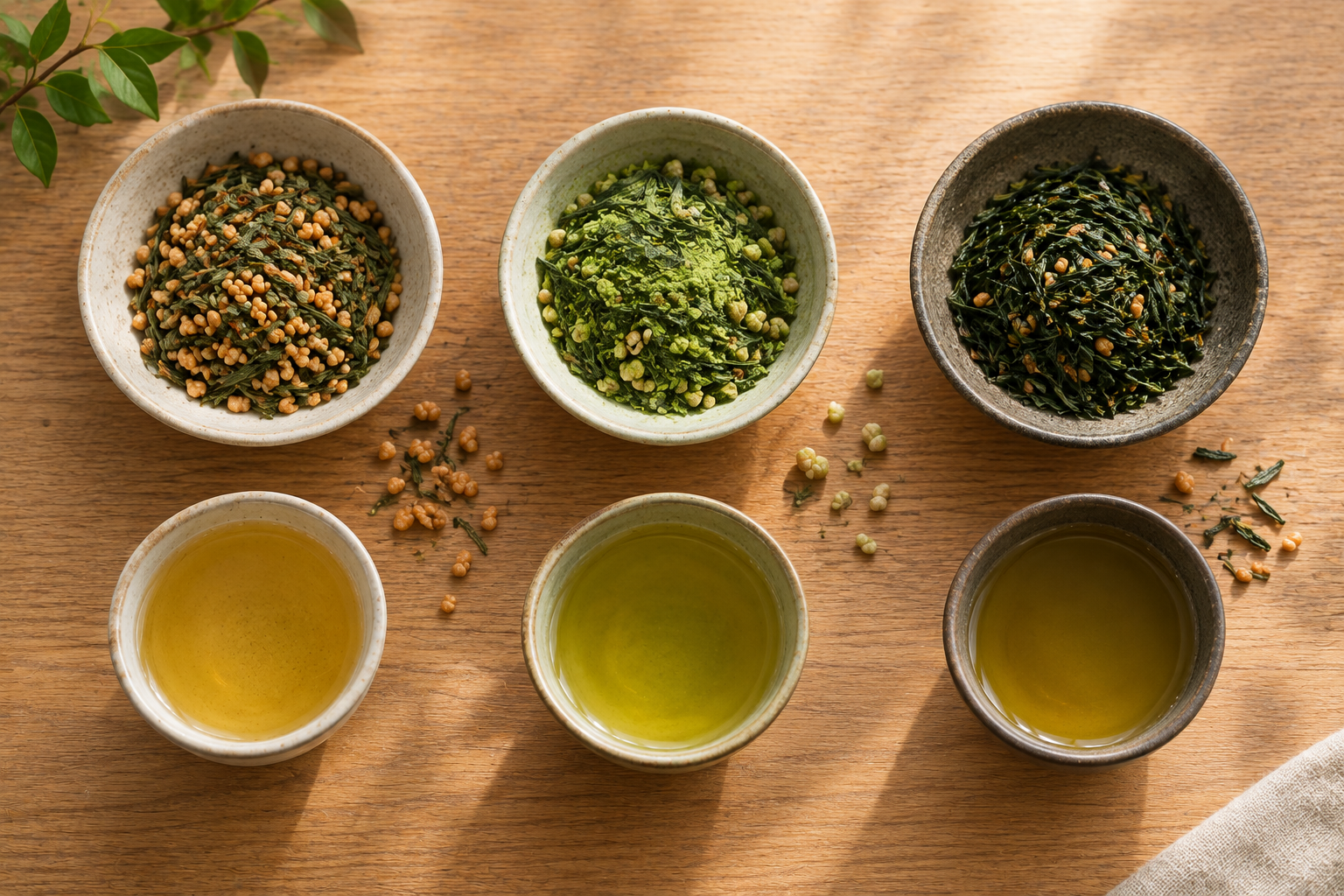
    Genmaicha is the cheapest tea most Japanese tea shops sell, and that makes it easy to assume all genmaicha is basically the same. It isn’t. I’ve had genmaicha that tasted like warm, nutty popcorn with a clean green finish, and genmaicha that tasted like stale rice crackers soaked in water. The difference almost never comes down to price. It comes down to three things printed – or not printed – on the label: what green tea is underneath, whether matcha has been added, and how fresh the roasted rice is.

    The Problem You’re Actually Trying to Solve

    Most genmaicha listings say the same thing: “green tea with roasted brown rice.” What they leave out is the base tea, which can be bancha (later-harvest, cheaper leaf), sencha, or even gyokuro, and that base changes the cup more than the brand name does. Once you know what to look for, picking a genmaicha gets much easier, whichever shop you buy from.

    Who This Article Is NOT For

    • If you’re new to genmaicha and want to know what it is, how it’s made and how to brew it, start with my complete genmaicha guide. This article assumes you already like it and want to buy a better one.
    • If you love the roasted flavor but want almost no green-tea character, you may be happier with hojicha. My hojicha brand comparison covers the best options there.
    • If you only ever drink genmaicha from tea bags at the office, the last section below is the only one you need.

    What to Look for on the Label

    1. The base tea. Bancha-based genmaicha is the most common and cheapest – mellow, a bit rustic, and very easy to drink. Sencha-based genmaicha is brighter and greener. Gyokuro-based genmaicha is rare and noticeably sweeter, with more umami under the toasted rice.

    2. Matcha-iri or not. “Matcha-iri” means matcha powder has been added. It turns the brewed tea a brighter green, adds body, and gives a smoother, slightly creamier cup. Plain genmaicha is lighter and more about the rice.

    3. Freshness. The roasted rice is what gives genmaicha its aroma, and it’s also the first thing to go flat. A large bag that you’ll take months to finish is a false saving.

    The Five Brands at a Glance

    BrandPriceWhat stands outBest for
    Nio Teas$12.65-$18.90 per 100gFour styles, including gyokuro and matcha genmaichaTrying different base teas
    Hibiki-an$24 for 200g (Matcha-iri)Big bags, matcha-iri and organic optionsDaily drinkers on a budget
    Marukyu Koyamaenabout $5.70-$8.55 per productSeveral named blends from an Uji matcha houseExploring one trusted brand
    Ippodo¥600 per 100g (Gokujo)Very cheap, simple, mildA mild everyday cup, when in stock
    Ito En / YamamotoyamaBudgetWidely available tea bagsConvenience

    Nio Teas: Best for Comparing Base Teas

    Nio Teas is the easiest place to taste the “base tea” difference for yourself, because its four genmaicha are built on different foundations. The standard Genmaicha Green Tea with Roasted Rice ($14.50 per 100g) and the Genmaicha Popcorn Green Tea ($12.65 per 100g) cover the classic style. The Gyokuro Genmaicha ($16.90 per 100g) uses shade-grown gyokuro, with notes of light sweetness, toasted popcorn and caramel, and it’s the best-reviewed of the four. The Matcha Genmaicha from Shizuoka ($18.90 per 100g) is the matcha-iri option.

    If you only buy one, try the gyokuro version – it’s the clearest demonstration of how much the base tea matters, and it’s still only a couple of dollars more than standard genmaicha.

    Pick Nio Teas if: you want to understand what makes one genmaicha better than another, not just buy a bag.

    Hibiki-an: Best Value for Matcha-Iri

    Hibiki-an, the Uji-area producer, sells its Genmaicha Matcha-iri in a 200g bag for $24: sencha and roasted, puffed brown rice coated with matcha. It’s described as hearty and grain-like but with the freshness of matcha and sencha, and the price per gram is excellent. There are also plain and organic versions in the same large format.

    The only caution is the freshness point above: 200g is a lot of genmaicha for one person. If you drink a cup a day, it’s fine. If genmaicha is an occasional tea, a smaller bag will taste better by the end.

    Pick Hibiki-an if: genmaicha is a daily habit and you like the smoother matcha-iri style.

    Marukyu Koyamaen: Best for Exploring One Brand

    Marukyu Koyamaen, best known for matcha, sells several named genmaicha blends – Miyako no Yuki (about $5.70), Saga no Yuki (about $7.28), and Takachiho and Akebono (about $8.55 each) – plus tea bag versions. The names don’t explain much on their own, so treat the range like a small tasting flight: start with one of the mid-priced blends and move up or down from there.

    Pick Marukyu Koyamaen if: you already trust the brand from its matcha or sencha and want a genmaicha from the same house.

    Ippodo: Cheap, Mild and Simple

    Ippodo keeps its genmaicha range very small. The main loose-leaf option is Gokujo Genmaicha at ¥600 for 100g, described simply as mild and easy to drink, plus a one-pot tea bag version and an organic option. It’s one of the cheapest good genmaicha you’ll find from a major tea house. The catch is availability: when I checked, Ippodo’s global shop showed its genmaicha as out of stock, so it’s worth checking back rather than relying on it.

    Pick Ippodo if: you want a mild, straightforward genmaicha and it’s in stock.

    Ito En and Yamamotoyama: Tea Bags Done Right Enough

    For convenience, the two names you’ll see everywhere are Ito En (its Oi Ocha matcha genmaicha tea bags) and Yamamotoyama, which sells both regular and organic genmaicha tea bags. Neither will match fresh loose-leaf from the shops above, but genmaicha holds up better in a tea bag than most green teas, because the toasted rice carries the flavor even when the leaf is fine.

    Pick these if: you want something easy for work, travel or the back of the cupboard.

    A Few Things People Ask Me

    Is matcha-iri genmaicha better? It’s different, not better. Matcha-iri gives a greener, rounder cup; plain genmaicha is lighter and toastier. If you like matcha lattes, you’ll probably prefer matcha-iri.

    Why does my genmaicha taste flat after a few weeks? The roasted rice loses its aroma quickly once the bag is open. Buy smaller bags, keep them sealed and away from heat and light, and finish them within a month or so.

    Can I brew genmaicha with boiling water? Hotter water than sencha is fine – around 80-95°C works well – because the rice benefits from the heat. But a gyokuro-based or high-grade sencha-based genmaicha will taste sweeter toward the lower end of that range.

    Which one would you start with? For loose leaf, Nio Teas’ genmaicha collection – especially the gyokuro genmaicha – is the most interesting. For tea bags, genmaicha tea bags on Amazon from Ito En or Yamamotoyama are the easy option.

    Where I Landed

    The brand matters less with genmaicha than with sencha or gyokuro. What matters is the base tea, whether there’s matcha in it, and how fresh the rice is. Nio Teas is where to taste those differences, Hibiki-an is the daily-drinker value pick, Marukyu Koyamaen and Ippodo are solid single-house choices, and Ito En or Yamamotoyama cover the tea-bag shelf. Buy smaller than you think you need, and the cheapest tea in the shop will taste a lot better than its price suggests.

  • Best Gyokuro Brands Compared: Where Your Money Actually Goes

    Best Gyokuro Brands Compared: Where Your Money Actually Goes

    Disclosure: This post contains affiliate links. If you buy through one of them, I may earn a small commission at no extra cost to you. Prices below were taken from each brand’s own site at the time of writing and change often – check before you buy.

    Gyokuro is the most expensive everyday Japanese green tea, and the price range is enormous. At one brand alone, a 50g bag runs from ¥1,400 to ¥10,000. When I first started buying it, I assumed the cheapest gyokuro would still beat a good sencha. Sometimes it does – but sometimes a mid-range sencha is better than an entry-level gyokuro, and the most expensive bag is wasted if you brew it the way you’d brew sencha. This comparison is about where gyokuro money is well spent and where it isn’t.

    The Problem You’re Actually Trying to Solve

    Gyokuro is shaded for weeks before harvest, which pushes the leaf toward sweetness and deep umami rather than bitterness. Every brand sells that idea, but their ranges are structured very differently: some sell eight grades under poetic names, some sell a few large bags, and some sell single-farm teas credited to a named grower. Before you pay gyokuro prices, it helps to know which kind of seller fits what you want.

    Who This Article Is NOT For

    • If you’re still deciding between gyokuro and sencha, start with sencha. My sencha brand comparison covers the same shops at lower prices, and it’s the better first step.
    • If you don’t have a way to brew at around 60°C, fix that first – gyokuro brewed hot tastes like expensive, bitter sencha. My kettle comparison explains which kettles can actually go that low.
    • If you mainly want umami for cooking or lattes, gyokuro isn’t the efficient choice. It’s a tea for drinking slowly, in small amounts.

    The Four Brands at a Glance

    BrandBased inPrice rangeBest for
    IppodoKyoto¥1,400-¥10,000 per 50g bagA clear grade ladder, from everyday to top tier
    Marukyu KoyamaenUji, Kyotoroughly $8.50-$64 per productThe widest selection of gyokuro and kabusecha
    Hibiki-anUjitawara, Kyoto$38 for 200g (Gyokuro Superior)Daily gyokuro at the best value per gram
    Nio TeasShips from Japan$30-$197 per 100gSingle-farm gyokuro from Kagoshima

    Ippodo: The Clearest Ladder

    Ippodo’s gyokuro range is eight loose-leaf teas in 50g bags, and it’s the easiest one to climb. At the bottom are Gyokuro-ko (flakes, ¥1,400), Kuki Gyokuro (stems, ¥1,500) and Mantoku (¥1,500), described as light and easy to drink. The middle – Tekiro (¥1,800), Rimpo (¥2,500) and Kanro (¥3,500) – is where the “mellow umami” Ippodo talks about really starts. At the top, Ippoen (¥6,000) and Tenka-ichi (¥10,000) are described as having concentrated, prominent umami.

    If you’re new to gyokuro, I’d start with Rimpo or Kanro rather than the cheapest bag. The entry teas are good everyday tea, but they don’t show you what gyokuro does differently from sencha.

    Pick Ippodo if: you want a trustworthy brand and a simple way to find your level.

    Marukyu Koyamaen: The Widest Selection

    Marukyu Koyamaen’s range covers around ten gyokuro and kabusecha teas, from Rakuyo (about $8.50) through Tensho, Shiun and Suiteki to Tama Homare (about $26), Hisa Homare (about $47) and Chitose no Homare at the top (about $64). The names don’t tell you much on their own, but the price order does – and the company’s long history with matcha shows in how carefully the range is graded.

    Kabusecha is worth knowing about here: it’s shaded for a shorter time than gyokuro, so it sits between sencha and gyokuro in taste and price. If gyokuro feels like too big a jump, a kabusecha from the lower-middle of this range is a good stepping stone.

    Pick Marukyu Koyamaen if: you want to explore the space between sencha and top-tier gyokuro in small steps.

    Hibiki-an: Best Value for Daily Drinking

    Hibiki-an is the value pick again, for the same reason as with sencha: bag size. Its Gyokuro Superior comes in a 200g bag for $38, which is remarkably cheap per gram for gyokuro. There’s also an Organic Gyokuro (100g for $36) and, in limited quantities, kuradashi gyokuro – gyokuro aged in storage and released in autumn, which turns rounder and deeper over time.

    Pick Hibiki-an if: you want gyokuro as a regular tea rather than an occasional treat.

    Nio Teas: Best for Single-Farm Gyokuro

    Nio Teas takes a different approach. Instead of a house blend, its gyokuro range is mostly from one named producer, Sakamoto, in Shibushi in Kagoshima, with prices from $29.99 per 100g up to around $197 per 100g. The tasting notes are unusually specific – the top tea, Gyokuro Zen, is described with “syrupy umami” and cantaloupe, while Gyokuro Sou mentions cotton candy and creamed corn.

    The best-reviewed tea in the range is also the cheapest: Gyokuro Karigane, made from the stems of gyokuro leaf, at $29.99 per 100g. Stem tea from gyokuro is a well-known way to get gyokuro’s sweetness at a fraction of the price, and it’s more forgiving to brew.

    Pick Nio Teas if: you’ve had gyokuro before and want to taste what a single farm does with it – or you want the karigane route to gyokuro sweetness on a budget.

    Brew It Right or Don’t Bother

    The fastest way to waste expensive gyokuro is to brew it like sencha. A common starting point is about 10g of leaf with only 60-80ml of water at 50-60°C, steeped for about two minutes. That’s a lot of leaf and very little water, and the result is a small, thick, sweet cup – closer to a broth than a mug of tea. Later infusions use slightly hotter water and shorter steeps.

    Because the volume is so small, a regular teapot doesn’t work well. A small kyusu or a hohin (a handle-less pot) is what most people use.

    A Few Things People Ask Me

    Is expensive gyokuro really that different? Yes, more than with sencha. The jump from entry-level to mid-range gyokuro is usually obvious, because the top grades get more shading and better leaf. The jump from mid-range to the very top is more subtle and worth it mainly if you already love gyokuro.

    What’s the cheapest way to try gyokuro properly? Gyokuro karigane (stem tea) or a lower-middle kabusecha. Both give you a sense of shaded tea’s sweetness for much less, and both are more forgiving if your water is a little too hot.

    Why are some gyokuro bags only 40-50g? Because a single session uses about 10g, and gyokuro is meant to be finished while fresh. A small bag is easier to use up before it loses aroma.

    Where should I start? For single-farm gyokuro, including the budget karigane, Nio Teas’ gyokuro collection is a good place to look. If you don’t have a small pot yet, a hohin or small kyusu on Amazon makes gyokuro much easier to brew.

    Where I Landed

    With gyokuro, how you brew matters as much as which brand you buy. Ippodo is the easiest range to climb, Marukyu Koyamaen gives you the most steps between sencha and top gyokuro, Hibiki-an makes daily gyokuro affordable, and Nio Teas is where you go for single-farm teas and the excellent karigane. Start in the middle of a range rather than at the bottom, brew it cool with lots of leaf and little water, and you’ll quickly understand why people pay what they do for it.

  • The Best Electric Kettle for Green Tea (and Why Most “Tea Kettles” Can’t Do Gyokuro)

    The Best Electric Kettle for Green Tea (and Why Most “Tea Kettles” Can’t Do Gyokuro)

    Disclosure: This post contains affiliate links. If you buy through one of them, I may earn a small commission at no extra cost to you. Specs below come from manufacturer pages and published reviews; check the current model before buying, since kettles get updated often.

    I spent years making Japanese green tea with a regular boil-only kettle and the “pour it between cups to cool it down” trick. It works, but it’s guesswork, and on a busy morning I’d skip it and end up with bitter sencha. A variable-temperature kettle fixed that overnight. What I didn’t expect was how many kettles sold as “tea kettles” can’t actually reach the temperatures Japanese green tea needs – several popular models don’t go below 175°F (80°C), which is already too hot for gyokuro and the upper limit for good sencha.

    The Problem You’re Actually Trying to Solve

    Japanese green teas want very different water temperatures. Roughly: gyokuro at 60-70°C (140-158°F), sencha at 70-80°C (158-176°F), genmaicha at 80-95°C, and hojicha near boiling. (My temperature guide covers why in detail.) So the real question isn’t “which kettle is best?” but “which kettle can hit the low end of that range, reliably, without fuss?” – and that’s where kettles differ most.

    Who This Article Is NOT For

    • If you only drink hojicha, genmaicha or black tea, a basic boil-only kettle is fine. Those teas take near-boiling water anyway.
    • If you’re happy with the cooling-between-cups method and don’t mind the extra minute, you don’t need new equipment.
    • If you mainly want a kettle for pour-over coffee, the picks overlap, but the priorities below are for tea.

    The One Spec That Matters Most: How Low Does It Go?

    Before anything else, check the lowest temperature a kettle can hold:

    KettleTemperature controlLowest settingCapacityKeep warm
    Fellow Stagg EKGAny temperature, 1° steps57°C / 135°F0.9LUp to 60 min
    OXO Brew Adjustable GooseneckAny temperature, 1° steps60°C / 140°F1L30 min
    Cuisinart PerfecTemp CPK-176 presets: 160, 175, 185, 190, 200, 212°F71°C / 160°F1.7L30 min
    Zojirushi VE Hybrid Water Boiler4 settings: 160, 175, 195, 208°F71°C / 160°F4L or 5LAll day
    Breville IQ Kettle BKE820XL5 presets, starting at 175°F80°C / 175°F1.8L20 min

    That last column is the trap. The Breville is a well-made kettle, but its lowest preset is 175°F (80°C) – the very top of the sencha range and too hot for gyokuro. The Cuisinart and Zojirushi bottom out at 160°F (about 71°C), which suits sencha and fukamushi well but is still a little warm for gyokuro. Only the degree-by-degree kettles cover the whole range.

    Fellow Stagg EKG: Best If You Drink Gyokuro or Want Exact Control

    The Stagg EKG sets any temperature from 57°C to 100°C (135-212°F) in one-degree steps and can hold it for up to an hour. That full range is what makes it the most complete option for Japanese tea: gyokuro at 60°C, sencha at 75°C and hojicha at boiling are all one dial-turn away. The hold mode is also handy for multiple infusions, since your second and third steeps can come from water that’s already at the right temperature.

    The trade-offs are price – it’s one of the most expensive kettles here – and capacity. At 0.9L it’s built for a few cups, not for a household.

    Pick it if: you drink gyokuro, care about precise temperatures, or want one kettle that handles every Japanese tea.

    OXO Brew Adjustable Gooseneck: Precise Control for Less

    The OXO also adjusts by the degree, from 140°F (60°C) up to boiling – just low enough for gyokuro – holds temperature for 30 minutes, and has a built-in timer, which is genuinely useful for short Japanese steeping times. It covers the same practical ground as the Fellow for most tea drinkers, usually for noticeably less money, with a slightly more utilitarian look.

    Pick it if: you want degree-by-degree control without paying for the Fellow’s design.

    Cuisinart PerfecTemp CPK-17: Best Preset Kettle for Sencha Drinkers

    If you don’t want to think about exact numbers, a preset kettle is easier, and the Cuisinart’s presets happen to fit Japanese tea better than most. Its lowest setting is 160°F (71°C), with 175°F (80°C) right above it – effectively a “sencha” button and a “genmaicha” button. It’s 1.7L, so it suits a household, and the 30-minute keep-warm covers a second pot.

    Pick it if: you mainly drink sencha or fukamushi and want one-touch simplicity.

    Zojirushi VE Hybrid Water Boiler: The Japanese Household Option

    This is what you’ll find in a lot of Japanese kitchens and offices: not a kettle but a hot water dispenser that keeps 4 or 5 liters at a set temperature all day. The four settings – 160, 175, 195 and 208°F – line up neatly with sencha, sencha/matcha, genmaicha and hojicha, and the display shows the actual water temperature. It’s made in Japan, uses vacuum insulation to save energy, and has a timer.

    It’s large and it’s an investment, but if several people in your home drink tea throughout the day, it removes the step of boiling and waiting entirely.

    Pick it if: tea is an all-day habit, or you’re making it for more than one or two people.

    Breville IQ Kettle BKE820XL: Good Kettle, Wrong Lowest Temperature

    The Breville is fast, well built and has a nice soft-opening lid. I include it because it’s often recommended as a “tea kettle,” and it’s worth knowing its limit: five presets starting at 175°F (80°C). That’s fine for genmaicha, hojicha, and black tea, and borderline for sencha. For gyokuro, you’d be back to cooling the water yourself.

    Pick it if: you drink more black tea or hojicha than delicate green tea.

    Do You Need a Gooseneck?

    For pour-over coffee, a gooseneck spout matters. For Japanese tea, much less so – you’re filling a kyusu, not pouring slowly over a coffee bed. The two degree-by-degree kettles above happen to be goosenecks, but don’t buy one for the spout alone. Temperature control is what changes the taste of your tea.

    A Few Things People Ask Me

    Is a variable-temperature kettle really worth it for green tea? If you drink sencha or gyokuro regularly, yes. Water that’s too hot is the most common reason Japanese green tea tastes bitter, and a kettle that sets the temperature for you removes that mistake every single time.

    Can I use a preset kettle for gyokuro? You can, with a small extra step: heat to the lowest preset, pour it into your cups or a yuzamashi (cooling bowl), and wait a minute before pouring into the kyusu. Each transfer drops the temperature a few degrees.

    What about matcha? Matcha does well at roughly 70-80°C, so any kettle with a 160°F or 175°F setting covers it.

    Which one would you buy first? If you drink gyokuro or want to brew everything precisely, the Fellow Stagg EKG on Amazon is the most complete. For a household that drinks sencha all day, the Zojirushi water boiler on Amazon is the more practical choice.

    Where I Landed

    The best kettle for green tea is the one that can reach the low temperatures your tea actually needs. Check the lowest setting before anything else: if you drink gyokuro, go degree-by-degree with the Fellow or OXO; if you mainly drink sencha, the Cuisinart’s 160°F preset is enough; and if tea runs all day in your home, the Zojirushi does it the Japanese way. Then put the money you saved toward better tea – my sencha brand comparison is a good place to start.

  • Best Sencha Brands Compared: Where to Actually Buy Good Japanese Green Tea

    Best Sencha Brands Compared: Where to Actually Buy Good Japanese Green Tea

    Disclosure: This post contains affiliate links. If you buy through one of them, I may earn a small commission at no extra cost to you. Prices below were taken from each brand’s own site at the time of writing and change often – check before you buy.

    Sencha is the tea most Japanese people actually drink every day, which makes it oddly harder to shop for than matcha. There’s no “ceremonial grade” label to lean on, most brands use their own product names instead of describing what’s in the bag, and the gap between a ¥1,000 sencha and a ¥4,000 one isn’t obvious from the packaging. So rather than ranking teas I can’t taste for you, this comparison focuses on what each brand is actually good for, how their range is structured, and what you’re paying per bag.

    The Problem You’re Actually Trying to Solve

    Most people shopping for sencha online are choosing between two bad options: a big-name grocery-store tea bag that tastes flat, or a specialist shop with forty products and names like “Kumpu” and “Unjo” that tell you nothing. What you really need is to know which brand fits how you drink – daily pot vs. occasional treat, tea bags vs. loose leaf, one reliable favorite vs. exploring regions – and where to start inside that brand’s range.

    Who This Article Is NOT For

    • If you’re shopping for roasted tea rather than green, my hojicha brand comparison covers Ippodo, Marukyu Koyamaen, Kaga Boucha and more on that side.
    • If you already know you like the darker, smoother deep-steamed style, my fukamushi sencha guide explains what to look for – most of the brands below sell a fukamushi option too.
    • If you want a single “best sencha in the world” answer, there isn’t one. Sencha varies by region, harvest and steaming, and the right pick depends on taste.

    The Five Brands at a Glance

    BrandBased inTypical price (loose leaf)Best forShips internationally
    IppodoKyoto¥1,000-¥3,500 per 80g bagA clear ladder from everyday to premiumYes (global shop)
    Marukyu KoyamaenUji, Kyotoroughly $6-$28 per productThe widest range, labeled by strengthYes
    Hibiki-anUjitawara, Kyoto$27-$32 per 200g (most teas)Buying in bulk at good valueYes, from Uji
    Nio TeasShips from Japanroughly $12-$30 per 100gSingle-farm teas from different regionsYes
    Ito EnTokyoBudgetTea bags and convenienceWidely sold on Amazon

    Ippodo: The Easiest Range to Understand

    Ippodo, the long-established Kyoto tea house, is the brand I’d point a first-time sencha buyer to, mainly because its range is laid out like a ladder. The loose-leaf senchas run from Unro (¥1,000) and Nichigetsu (¥1,200) at the everyday end, through Hosen (¥1,800) and Kumpu (¥2,500), up to Kaboku (¥3,500) – all in 80g bags, and each described in plain terms like “refreshing sharpness” or “bold flavour with satisfying umami.” That makes it easy to start in the middle and move up or down depending on what you like.

    They also sell a stem sencha (Kuki Sencha), a cheap sencha-ko made from small leaf fragments, and an organic sencha, plus several tea bag formats.

    Pick Ippodo if: you want a trustworthy brand and a simple way to find your preferred level without decoding dozens of products.

    Marukyu Koyamaen: The Widest Range

    Marukyu Koyamaen is better known for matcha, but its sencha range is large – around sixteen products between loose leaf and tea bags. The most helpful thing about it is that some teas are explicitly labeled by style, such as “Strong Sencha” (Choyozan, Manpukuzan) and “Mild Sencha” (Hatsu Midori), which takes a lot of guesswork out of buying. Prices span roughly $6 for everyday teas like Tsubokiri up to about $28 for Teki Teki at the top.

    They also sell a mizudashi (cold-brew) sencha tea bag, which is a nice option for summer.

    Pick Marukyu Koyamaen if: you already know whether you prefer bold or gentle sencha, or you want room to explore one brand for a long time.

    Hibiki-an: Best Value If You Drink a Lot

    Hibiki-an is a tea producer in Ujitawara, in the Uji area of Kyoto, selling directly and shipping worldwide from Japan. Its prices are in US dollars and the most noticeable thing is the bag size: core teas like Sencha Superior, Sencha Fukamushi Superior and House Sencha come in 200g bags for $27-$32. For someone drinking sencha every day, that’s very good value per gram compared with 80-100g bags elsewhere.

    The range also includes some interesting extras: a karigane (stem tea from higher-grade leaves), an organic sencha, and a kuradashi sencha – tea aged in storage and released in autumn.

    Pick Hibiki-an if: sencha is your daily tea and you’d rather buy a big bag at once than reorder small ones.

    Nio Teas: Best for Exploring Regions and Farms

    Nio Teas works differently from the Kyoto houses above: rather than one house style, it sells single-farm senchas from different regions and cultivars, each credited to the farmer who made it. Its sencha collection runs to around sixteen teas – examples include a fukamushi sencha from Kagoshima (about $26 per 100g), a Shizuoka sencha (about $30 per 100g), and an affordable everyday option at around $12 per 100g. You can also filter the range by region, cultivar and taste profile.

    Pick Nio Teas if: you’ve had good sencha before and want to understand how Kagoshima, Shizuoka and other regions actually differ, rather than sticking with one house blend.

    Ito En: Best for Convenience

    Ito En is Japan’s largest green tea company and the one most people outside Japan have already seen, mostly through its Oi Ocha tea bags and bottled tea. It isn’t trying to compete with specialist tea houses on depth, and loose-leaf enthusiasts will find it simple. But it’s cheap, consistent, and easy to buy on Amazon, which makes it a reasonable office or travel tea.

    Pick Ito En if: you want something easy for tea bags at work, or you’re not sure yet whether you’ll drink sencha regularly.

    How I’d Choose

    • First time buying loose sencha: Ippodo, starting with a mid-range tea like Hosen.
    • You drink it every day: Hibiki-an for value, or Marukyu Koyamaen if you want to choose by strength.
    • You want to learn what makes sencha different: Nio Teas, buying two teas from different regions and comparing them side by side.
    • You just want decent tea bags: Ito En.

    Whichever you pick, temperature matters more than brand. A good sencha brewed with boiling water will taste worse than an average one brewed at 70-80°C.

    A Few Things People Ask Me

    Is more expensive sencha always better? Not exactly. Higher-priced sencha usually has more umami and sweetness, but some people prefer the sharper, more refreshing character of everyday sencha, especially with food. Price tells you about grade, not about whether you’ll enjoy it.

    Why do Japanese brands use names instead of grades? Most tea houses name their blends rather than grading them, partly because a blend is adjusted each year to keep the taste consistent. That’s why reading the brand’s flavor description matters more than the name itself.

    Loose leaf or tea bags? Loose leaf has more room to open up and generally tastes better. Tea bags are fine for convenience, and the brands above sell good ones, but if you’re judging a brand, judge it by its loose-leaf tea.

    Where should I start if I only buy one? If you want to compare regions, Nio Teas’ sencha collection is the easiest place to do it from one shop. If you want something cheap and quick to try first, Ito En sencha on Amazon is the low-risk option.

    Where I Landed

    There isn’t one best sencha brand, but there’s usually a best brand for how you drink. Ippodo makes it easy to find your level, Marukyu Koyamaen gives you the most choice, Hibiki-an is the value pick for daily drinkers, Nio Teas is for exploring regions, and Ito En covers convenience. Choose by habit first and price second, and get the water temperature right – that does more for your cup than anything on this list.

  • Sobacha (Buckwheat Tea): What It Is, How It Tastes and How to Brew It

    Sobacha (Buckwheat Tea): What It Is, How It Tastes and How to Brew It

    Disclosure: This post contains affiliate links. If you buy through one of them, I may earn a small commission at no extra cost to you. Important: sobacha is made from buckwheat, a common and potentially severe allergen – please read the allergy note below before trying it.

    Sobacha in 30 Seconds

    Sobacha (そば茶) is Japanese roasted buckwheat tea. It’s made from buckwheat kernels roasted until golden, not from the tea plant, so it’s naturally caffeine-free. It tastes nutty, toasty and lightly sweet, with no bitterness. Before you try it, though, read the allergy note below – buckwheat is one of the more serious food allergens.

    Quick Picks

    • Easiest first try: sobacha tea bags – no strainer needed. Buckwheat tea bags on Amazon
    • Best flavor: loose roasted kernels – toastier, and you can eat them after brewing. Loose sobacha on Amazon
    • Rounder, earthier cup: dattan (Tartary) sobacha. Dattan sobacha on Amazon
    • Want a gentle real tea too? Kukicha (stem tea) is one of the lowest-caffeine green teas. Nio Teas’ kukicha collection – at the time of writing, ordering through the links on this page automatically applies a 10% discount at checkout, no code needed. (Nio Teas doesn’t sell sobacha; the discount applies to their teas. Offers can change, so check the final price in your cart.)

    Below: the allergy note, regular vs dattan sobacha, how it tastes, how to brew it hot or cold, and what to do with the kernels afterward.

    The first time I had sobacha was at the end of a meal in a soba restaurant, where it arrived unasked, in a plain cup, the way water does in most places. I assumed it was some kind of hojicha. It wasn’t – it was roasted buckwheat, with a toasty, slightly sweet flavor and no bitterness at all, and it turned out to contain no caffeine whatsoever. That last part is what eventually made it a regular in my kitchen: it’s the Japanese “tea” I drink when I don’t want tea.

    The Problem You’re Actually Trying to Solve

    Most people looking up sobacha want one of two things: a caffeine-free drink that still feels like part of Japanese tea culture, or an explanation of what they were served at a soba shop. Sobacha answers both, but it gets confused with hojicha and mugicha constantly, and the labeling – “sobacha” versus “dattan sobacha” – isn’t explained on most packages.

    Who This Article Is NOT For

    • If you want a roasted flavor but don’t mind a bit of caffeine, hojicha is the closer “real tea” option – my matcha vs. hojicha caffeine comparison explains how much it actually contains.
    • If you’d prefer a genuine green tea that’s simply low in caffeine rather than caffeine-free, kukicha is the gentler step down.

    Buckwheat Allergy: Read This First

    If you have a buckwheat allergy, or don’t know whether you do, please don’t try sobacha casually. Buckwheat allergy can cause severe reactions, including anaphylaxis, and it’s serious enough that buckwheat is one of the allergens Japan requires food labels to declare. Brewing doesn’t make it safe, and even the steam from cooking buckwheat can affect very sensitive people. If in doubt, talk to a doctor first. If you’re serving sobacha to guests, tell them what it is before they drink it.

    What Sobacha Actually Is

    Sobacha is an infusion made from buckwheat kernels that have been dry-roasted until golden brown. Despite being called “cha” (tea), it doesn’t come from the tea plant (Camellia sinensis) at all – which is exactly why it has no caffeine. In that sense it belongs to the same family as mugicha (roasted barley tea): a roasted grain drink that’s part of everyday Japanese life, rather than a tea in the botanical sense.

    It’s also served routinely in soba restaurants, often complimentary with or after the meal – which is where most visitors to Japan first encounter it.

    Regular vs. Dattan Sobacha (Tartary Buckwheat): The Difference

    You’ll see two kinds on the shelf, and they’re genuinely different plants:

    Regular sobachaDattan (Tartary) sobacha
    PlantCommon buckwheat (Fagopyrum esculentum)Tartary buckwheat (Fagopyrum tataricum)
    KernelsLargerSmaller, rounder, thinner hulls
    Brew colorWarm amberLighter, with a faint yellow-green tinge
    FlavorStronger toasted-grain characterRounder, earthier, slightly bitter edge
    Rutin contentLowerMuch higher – often cited as 50-100x common buckwheat

    Rutin is a plant flavonoid, and it’s the main reason dattan sobacha is marketed as the “healthier” option. I’d treat that cautiously: having more of a compound in the cup isn’t the same as a proven health effect from drinking it. Choose dattan if you prefer its taste, not because of a label promise.

    How It Tastes

    Nutty, lightly sweet, with almost no bitterness – somewhere between toasted sesame and a mild barley tea, sometimes with a hint of popcorn. It’s a clean, palate-cleansing drink that sits alongside food without competing with it, which is exactly why soba shops serve it.

    How to Brew It

    Hot:

    • About 1 tablespoon of kernels per 240ml (8oz) of water
    • Water just off the boil, around 93°C (200°F) – unlike green tea, there’s no bitterness to avoid by cooling the water
    • Steep 3-5 minutes: 3 for lighter, 5 for deeper. Some people go as long as 10 for a strong cup
    • Use a mesh strainer or infuser – the kernels are small and slip through wide filters

    Cold:

    • Double the amount of kernels, steep in the fridge for 4-8 hours
    • The result is noticeably sweeter and smoother than hot-brewed
    • Drink within about 2 days

    Don’t Throw Away the Kernels: How to Eat Them

    Once steeped, the kernels are soft and fully edible. It’s one of the few teas where the “leaves” are as good as the drink:

    • On yogurt or oatmeal for a nutty crunch (dry them briefly in a pan first)
    • Mixed into rice while it’s still hot
    • On salads, like toasted seeds
    • In soup, stirred in just before serving

    Sobacha Latte

    Brew a strong cup – about 2 tablespoons of kernels in 120ml of near-boiling water for 5 minutes – then top with an equal amount of steamed milk or oat milk. A little honey brings out the toasted-grain sweetness. It’s a cozy, caffeine-free alternative to a hojicha latte for the evening.

    A Few Things People Ask Me

    Is sobacha gluten-free? Buckwheat itself isn’t related to wheat and contains no gluten. That said, buckwheat is sometimes processed in facilities that also handle wheat, so if you have celiac disease, check the package for a gluten-free label rather than assuming.

    What’s the difference between sobacha and hojicha? Hojicha is roasted green tea and contains some caffeine. Sobacha is roasted buckwheat and contains none. Both taste toasty, but hojicha has a slight tea-like depth that sobacha lacks, while sobacha is sweeter and more grain-like.

    Can I drink it at night, or give it to kids? With no caffeine, it’s a common choice for evenings and for all ages in Japan – with the same important caveat as above: buckwheat allergy is serious, so introduce it carefully and only if you know it’s safe for you.

    Where can I buy it? Dattan sobacha on Amazon is the easiest place to find both types outside Japan. If you’d rather have a gentle drink that’s actual tea, Nio Teas’ kukicha is a low-caffeine alternative – and the link-only 10% discount mentioned at the top applies there.

    Where I Landed

    Sobacha took me a while to appreciate because I kept judging it as a tea, and as a tea it’s simple. As what it really is – a roasted grain drink built to sit quietly beside a meal – it’s very good. I keep a jar of it for evenings and for the times when a full-flavored green tea would be too much. It’s the closest thing to drinking the end of a soba-shop meal at home, and the kernels at the bottom of the pot are a small bonus I’ve come to look forward to.

  • Shincha: Japan’s “New Tea,” and Why It Only Makes Sense for a Few Weeks

    Shincha: Japan’s “New Tea,” and Why It Only Makes Sense for a Few Weeks

    Disclosure: This post contains affiliate links. If you buy through one of them, I may earn a small commission at no extra cost to you.

    The first time I bought shincha, I treated it like any other sencha – put it in the cupboard, drank it slowly over the summer, and by August I was wondering what the fuss was about. That was the mistake. Shincha isn’t a separate tea variety so much as a moment: the first sencha of the year, sold and drunk while it’s still at its freshest. Drink it slowly and you’ve effectively turned it back into ordinary sencha, at a premium price.

    The Problem You’re Actually Trying to Solve

    Most people who look up shincha have seen it as a limited seasonal listing – “Shincha 2026, available now” – and want to know whether it’s genuinely different or just marketing around a date. The honest answer is both: the leaf is real first-flush sencha with a character you can’t get later in the year, but most of that character depends on how quickly you drink it, which is the part almost nobody explains.

    Who This Article Is NOT For

    • If you want the chemistry of why spring tea tastes sweeter than summer tea – theanine, catechins, the full harvest calendar – my ichibancha vs. nibancha breakdown covers that in detail. This article is about shincha as a seasonal tea you buy and drink, not harvest science.
    • If you’re looking for matcha specifically, shincha almost always means loose-leaf sencha, not powdered tea.
    • If you prefer to stock up on tea and drink it gradually over months, shincha’s main selling point mostly disappears – a good regular first-flush sencha will serve you just as well for less.

    What Shincha Actually Is

    Shincha (新茶) literally means “new tea”: the first sencha harvested in a given year. Picking starts in mid-to-late April in Kagoshima in the south and moves north over the following weeks, wrapping up in most regions by May, with shincha generally on sale from mid-April through mid-June.

    Technically, shincha is the same leaf as ichibancha – first-flush tea. The difference is emphasis. “Ichibancha” tells you which harvest the tea came from; “shincha” tells you it’s this year’s first harvest, sold fresh, now. A tin of ichibancha sencha bought in December is still first flush. It just isn’t shincha anymore in the sense anyone means when they use the word.

    The 88th Night

    The date most associated with shincha is hachijuhachiya – the 88th night counted from risshun, the traditional start of spring on the Japanese calendar, which falls around May 1-2. Tea picked on that day is traditionally said to bring good health and luck for the coming year, and there’s a well-known children’s song about tea picking that opens with exactly this date.

    Whether 88th-night tea genuinely tastes better than tea picked a few days earlier or later is debatable – producers themselves tend to admit it’s more tradition than measurable fact. But it’s a good marker for when shincha season is at its peak, and it’s part of why the tea feels like a seasonal event in Japan rather than just another product.

    Why It Tastes Different (and Why It Doesn’t Last)

    Shincha’s sweetness and low astringency come from the nutrients the plant stores through winter and pushes into its first spring buds. What makes shincha shincha, though, is the aroma – a sharp, fresh, grassy top note often described as aoka (literally “green fragrance”) that you only really get in the first weeks after processing.

    That aroma is the fragile part. Shincha is typically finished with a lighter final firing (hi-ire) than sencha destined for longer storage, which preserves the fresh character but leaves the tea more vulnerable to oxygen, light, and moisture. The practical rule: open it soon after it arrives and try to finish an opened bag within a few weeks, kept airtight and away from heat. Unopened, it’ll keep longer in the fridge, but the top note fades steadily regardless. My green tea storage guide covers the general storage rules; with shincha, the main difference is simply that the clock runs faster.

    How to Brew It

    Shincha brews much like a good sencha, and you can steer it toward sweetness or aroma with temperature:

    • Leaf: about 5g (roughly 2 teaspoons) per 200-250ml of water
    • For sweetness: around 70°C (158°F), steeped about 60 seconds
    • For the bright, grassy aroma: around 80°C (176°F), steeped 30-45 seconds
    • Second infusion: slightly hotter water, shorter steep – 15-20 seconds is plenty

    I’d brew the first cup from a new bag on the cooler side to taste the sweetness, then try the hotter, quicker method on the next round to see the aroma side – it’s one of the few teas where the difference between the two is obvious even to a beginner.

    It’s Autumn – So What Now?

    If you’re reading this in autumn, shincha season is long over, and anything still sold under that name has had months to lose exactly what made it special. Two better options:

    Pre-order next spring’s shincha. Many Japanese tea sellers take pre-orders and ship by air shortly after processing, which is the only way to get shincha internationally while it’s still genuinely fresh. Sea freight or a long sit in a warehouse defeats the point.

    Try kuradashi instead. Autumn has its own seasonal tea that’s almost the mirror image of shincha. Kuradashi (“taken out of storage”) is high-quality spring tea deliberately aged in cold, airtight storage and released in autumn and winter. Where shincha is brisk and green, kuradashi turns smoother, deeper, and less astringent, sometimes picking up notes of honey, nuts, or fruit. It goes back to the Edo period, when tea jars were stored over summer in cool mountain storehouses and opened in autumn – a tradition still marked in tea ceremony as kuchikiri, the ceremonial opening of the jar. Drinking shincha in spring and kuradashi in autumn is a nice way to taste the same first-flush leaf at both ends of its life.

    A Few Things People Ask Me

    Is shincha worth the higher price? If you’ll drink it within a few weeks of it arriving, yes – you’re paying for an aroma you can’t get at any other time of year. If it’ll sit in your cupboard for months, no; buy a regular first-flush sencha instead.

    Is shincha the same as ichibancha? It’s the same harvest, so the leaf itself is ichibancha. “Shincha” adds the promise that it’s this year’s tea, sold fresh. All shincha is ichibancha, but not all ichibancha is still shincha.

    Should shincha be stored in the fridge? Unopened, a fridge is fine and slows the aroma loss. Once opened, keep it in an airtight container at room temperature away from light – repeatedly taking a cold bag in and out of the fridge invites condensation, which is worse for the leaf than mild warmth.

    Where should I buy it? Shincha listings disappear outside spring, so in the off-season I’d look at Nio Teas’ sencha selection and watch for their spring releases. Whatever you buy, an airtight tea canister on Amazon is worth having before it arrives, since shincha is the tea that suffers most from a loosely folded bag.

    Where I Landed

    Once I stopped thinking of shincha as a type of tea and started thinking of it as a time of year, the whole thing made sense. It’s not that spring sencha is magically better than every other tea – it’s that for a few weeks it has something it will never have again, and the only way to taste it is to drink it while it’s there. Buy a small amount, open it right away, and drink it often. Then, come autumn, let kuradashi show you the other end of the same leaf’s story.

  • How to Make Matcha Without a Chasen: What Actually Works

    How to Make Matcha Without a Chasen: What Actually Works

    Disclosure: This post contains affiliate links. If you buy through one of them, I may earn a small commission at no extra cost to you.

    Not owning a chasen shouldn’t mean giving up on matcha – but it’s also where most people go wrong, reaching for a regular spoon or a dinner fork and ending up with a cup full of green clumps floating in water. The actual fix isn’t finding something that moves exactly like a bamboo whisk; it’s understanding why a chasen works in the first place, then picking a substitute that recreates the part that actually matters.

    The Problem You’re Actually Trying to Solve

    Matcha clumps because it’s an extremely fine powder that resists dissolving in water on its own – it needs real mechanical agitation to break up. A chasen’s dozens of thin bamboo tines create a lot of fast, repeated motion in a small space, which is what breaks up the clumps and incorporates air for foam. Most without-a-whisk failures happen because people skip the paste step and try to dissolve dry matcha directly into a full cup of water, where there’s too much liquid and not enough agitation to catch the clumps before they settle.

    Who This Article Is NOT For

    • If you already have a chasen and just want to get more out of it, my matcha whisk buying and care guide is the better read.
    • If you’re making a matcha latte specifically and don’t care about ceremonial foam, my matcha latte guide already covers a simple method using what most kitchens already have.
    • If you want the full traditional whisking experience rather than a quick substitute, none of what follows replicates that – it’s aimed at getting a decent, clump-free cup without the ceremony.

    The One Step That Matters More Than the Tool

    Whatever you use, make a small, concentrated paste first: 1 teaspoon (about 1g) of matcha with just 1-2 tablespoons of water, mixed aggressively until completely smooth with no visible lumps, before adding the rest of your water or milk. Skipping straight to a full cup of liquid is the single most common reason any of these methods fail – there’s simply too much volume for whatever tool you’re using to catch and break up the clumps once they’ve already spread out.

    Four Real Alternatives, Ranked by How Well They Actually Work

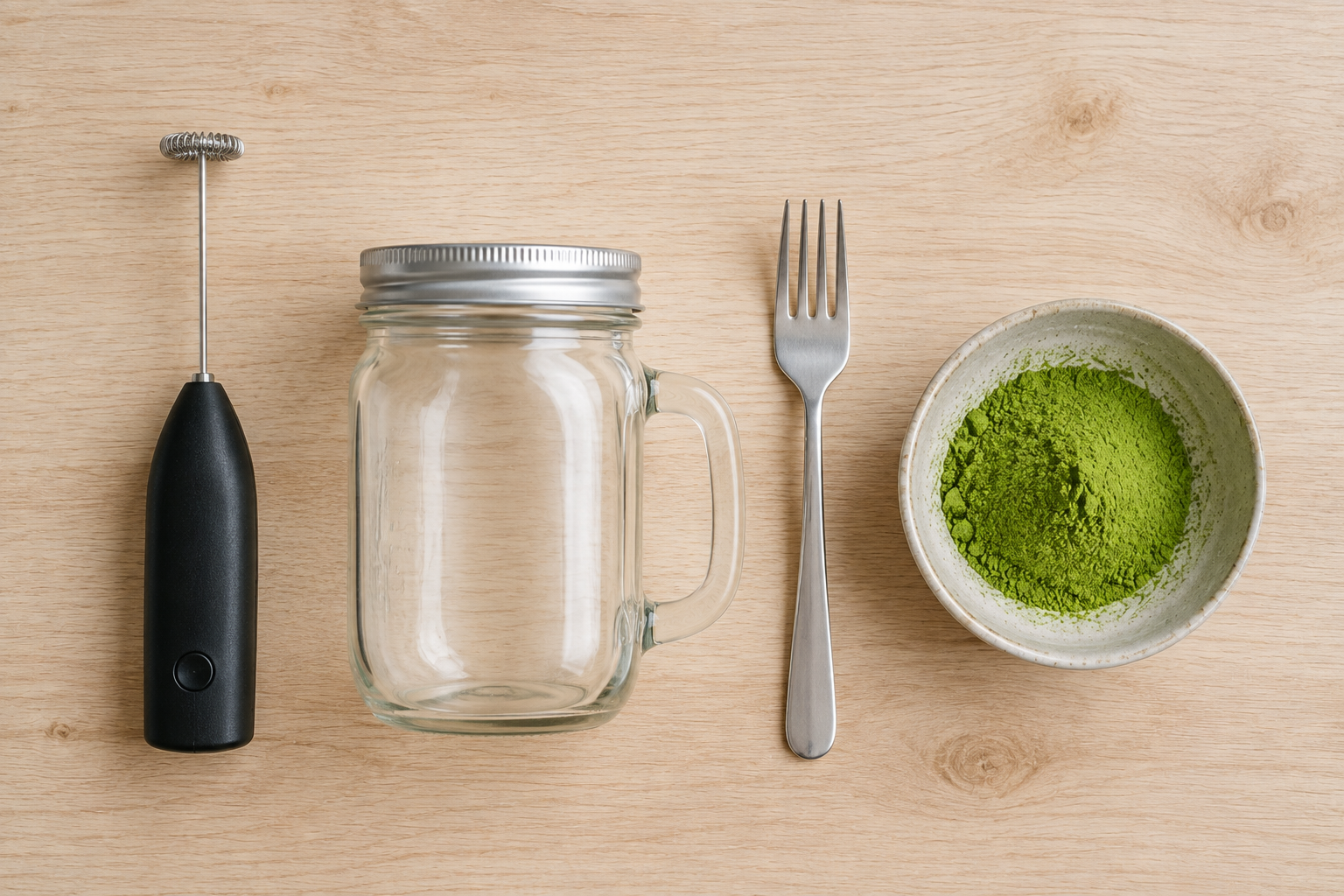
    1. Electric milk frother (best overall). Sift the matcha into your cup, add 2 tablespoons of room-temperature water, submerge the frother head and run it for about 10 seconds until smooth, then add your remaining hot water (75-80°C) or milk and froth again for 15-20 seconds. A small handheld frother creates a fast spinning agitation that’s genuinely comparable to a chasen’s W-shaped motion, and it’s the closest thing to matching both the smoothness and the foam of a traditional whisk with none of the technique.

    2. Blender. Add the matcha with a small amount of water first and pulse for a few seconds to break up the paste, then add the rest of your liquid and blend another 10-15 seconds. This produces excellent, genuinely smooth results and can even edge out a chasen for pure lump-free texture – the tradeoff is more cleanup, and you shouldn’t blend very hot liquid in a sealed blender due to steam pressure building up.

    3. Shaker bottle or wide-mouth mason jar. Make the paste directly in the jar, add your water (warm rather than boiling), seal tightly, and shake vigorously for 15-20 seconds. This works well for cold or iced matcha specifically – a wide-mouth jar froths noticeably better than a narrow bottle – and it’s the most practical option if you’re making matcha somewhere without an outlet, like while traveling.

    4. A regular fork, in a genuine pinch. Mash and mix the matcha with a small amount of cold water using the fork tines for about 30 seconds until it’s a reasonably smooth paste, then stir in hot water vigorously for another minute. Being honest about this one: it’s passable, not good. You’ll likely get a few small remaining clumps and essentially no foam, but it beats drinking gritty matcha water, and it requires nothing you don’t already own.

    A Few Things People Ask Me

    Does the health value of matcha change depending on how I prepare it? No – the antioxidants, L-theanine, and caffeine content come from the powder itself, not the whisking method. A frother or blender doesn’t give you “less” matcha than a chasen does.

    Is a hand whisk (like a mini metal whisk) worth trying instead? It’s a middle option – better than a fork, meaningfully more effort than a frother. Whisk in an M or W pattern rather than circles, which more closely mimics how a chasen actually breaks up clumps, and expect to spend closer to a minute working at it rather than the 15-20 seconds a frother needs.

    Which of these is worth actually buying if I don’t want a chasen at all? A handheld milk frother on Amazon is inexpensive and does the best job of any non-chasen tool here. If you decide you’d rather go the traditional route after all, Nio Teas’ matcha tools is where I’d start looking for a real chasen instead.

    Will my matcha taste worse made this way? Flavor itself won’t change meaningfully – what changes is texture and foam. A frother or blender actually gets you closer to a chasen’s result than a fork or spoon ever will, so “no whisk” doesn’t have to mean “worse matcha,” just a different-looking cup.

    Where I Landed

    The chasen isn’t doing anything mystical – it’s just an efficient tool for fast agitation in a small space, and once you understand that’s the actual job, it’s easy to see why an electric frother gets remarkably close with a fraction of the effort. I still reach for my chasen most mornings because I like the process, but on days I don’t feel like washing bamboo tines, the frother isn’t a downgrade so much as a different tool doing the same job faster.

  • Bancha: The Everyday Japanese Tea Everyone Skips Past for Sencha

    Bancha: The Everyday Japanese Tea Everyone Skips Past for Sencha

    Disclosure: This post contains affiliate links. If you buy through one of them, I may earn a small commission at no extra cost to you.

    Bancha gets treated as the tea you settle for, not the tea you choose – the cheaper option on the shelf next to sencha, made from later, lower leaves rather than the prized spring flush. That framing undersells it. Bancha isn’t a lesser sencha; it’s a genuinely different, milder tea with its own flavor identity, and it’s also the quiet base ingredient behind two teas most people already like without realizing where they come from.

    The Problem You’re Actually Trying to Solve

    Most people encounter bancha as an afterthought – either the budget bag next to sencha at a Japanese grocery store, or a term they see mentioned in passing while reading about hojicha or genmaicha. Understanding what bancha actually is, why it’s cheaper, and why it tastes so different from sencha makes it a lot easier to decide whether it’s worth buying on its own rather than only as a component of something else.

    Who This Article Is NOT For

    • If you want the brighter, grassier, more vegetal flavor Japanese green tea is known for, sencha is the better starting point – my sencha vs. gyokuro comparison covers that leaf-forward end of the spectrum.
    • If you’re specifically looking for a roasted, nutty tea, you actually want hojicha or genmaicha, both of which are often made from bancha but taste quite different after roasting or blending with roasted rice.
    • If you want the lowest-caffeine option possible, kukicha (twig tea) runs even lower than bancha, since stems contain even less caffeine than older leaves.

    What Bancha Actually Is

    Sencha is made from young sprouts picked from the top of the tea plant during the first flush in spring. Bancha comes from further down the plant, and typically from a later harvest – the third or fourth flush, picked later in the season after the prized early leaves are gone. Older leaves simply contain less caffeine and fewer catechins than young spring growth, which is the whole reason bancha tastes and behaves differently from sencha rather than just being a cheaper version of the same thing.

    That harvest timing is also exactly why bancha costs roughly half what sencha does – it isn’t a quality shortcut so much as a genuinely different point in the plant’s growth cycle, priced accordingly.

    How Bancha Actually Tastes

    Where sencha brings grassy, vegetal, slightly citrusy notes, bancha shifts toward something milder and more rustic – earthy, woody notes with hints of cereal, and sometimes a faint caramel or popcorn-like sweetness. It’s a quieter tea by design: less bitterness, less brightness, and a flavor that holds up fine as a background, everyday drink rather than something you sit and savor the way you might a good sencha or gyokuro.

    The Connection to Hojicha and Genmaicha

    Here’s the part that surprises people: both hojicha and genmaicha are frequently made using bancha as their base. Hojicha is bancha (or sencha) leaves roasted at high heat until the flavor shifts entirely toward toasty and nutty; genmaicha is bancha blended with roasted rice. Both are cheaper than straight sencha for the same underlying reason bancha itself is cheaper – they’re built on the same later-harvest, lower-leaf base. If you already like hojicha or genmaicha, you’ve been drinking bancha’s flavor profile all along, just transformed by roasting or blending.

    How to Brew It

    Bancha is forgiving, which is part of its appeal as an everyday tea:

    • Water temperature: 70-80°C (158-176°F) – hotter than you’d use for sencha, since there’s less risk of bitterness from the lower caffeine and catechin content
    • Amount: about 3-4g of leaves per 120-150ml of water
    • Steep time: 30-60 seconds
    • Good for 4-5 infusions, more than sencha typically tolerates, since there’s simply less to extract on the first pour

    Because it’s less prone to bitterness than sencha, bancha is a reasonable tea to brew a little looser with – slightly hotter water or a slightly longer steep won’t punish you the way it would with a delicate first-flush sencha.

    A Few Things People Ask Me

    Is bancha lower quality than sencha, or just different? Different, more than lower quality. It comes from a later harvest and lower leaves by design, which changes the flavor and caffeine profile rather than making it a failed attempt at sencha. Comparing them directly is a bit like comparing a young wine to an aged one – different intent, not a strict hierarchy.

    Does bancha have less caffeine than sencha? Yes, noticeably – roughly half of sencha’s caffeine per cup, since older leaves contain less caffeine than the young spring growth sencha uses. That makes it a reasonable afternoon or after-dinner option where sencha might feel like too much.

    Is Kyoto’s “kyobancha” the same thing as regular bancha? It’s a regional variation – roasted over an open flame in a style specific to Kyoto, giving it a smokier character than standard bancha. The base leaf category is the same; the roasting process is what sets kyobancha apart.

    Where can I actually try bancha? Nio Teas’ bancha is a straightforward place to start, and a simple kyusu teapot on Amazon works fine for brewing it – bancha doesn’t need anything specialized to taste good.

    Where I Landed

    The thing that actually changed how I thought about bancha was realizing how much of what I already liked – hojicha’s toastiness, genmaicha’s popcorn note – was quietly built on this exact tea underneath. Once I tried it plain rather than only encountering it disguised inside something else, it stopped feeling like the tea you settle for and started feeling like a genuinely different, low-key option worth keeping around specifically for the days sencha feels like too much.