Author: arino

  • The Matcha Cocktail Guide: Five Recipes Worth Actually Making

    The Matcha Cocktail Guide: Five Recipes Worth Actually Making

    Disclosure: This post contains affiliate links. If you buy through one of them, I may earn a small commission at no extra cost to you. This article includes recipes containing alcohol; please drink responsibly and only if you are of legal drinking age in your location.

    I resisted matcha cocktails for a long time. My assumption was that they’d taste like someone dumped a health smoothie into a gin and tonic – grassy, a little sad, trying too hard to be “wellness.” Then a bartender in Kyoto made me a version of a whiskey highball with a proper ceremonial-grade matcha and I had to sit with that for a minute. The bitterness wasn’t a flaw to mask. It was doing the same job the bitters in an Old Fashioned do – cutting through the sweetness and giving the drink somewhere to land.

    That’s really the whole case for matcha in cocktails. It’s not a novelty color additive. Used at the right grade and dissolved properly, it brings a vegetal, umami-forward bitterness that plays well against citrus, ginger, and brown spirits in particular.

    The Problem You’re Actually Trying to Solve

    Most people who search for matcha cocktail recipes have had one of two experiences: either they’ve seen a bright green drink on Instagram and want to replicate the look, or they’ve tried making one themselves and ended up with clumpy powder floating on top of their drink instead of dissolving into it. Both problems trace back to the same root cause – treating matcha like a garnish instead of an ingredient that needs to be properly incorporated before it goes anywhere near ice or carbonation.

    The other quiet problem is grade mismatch. A lot of recipes floating around online call for “matcha powder” without specifying that culinary-grade matcha behaves completely differently from ceremonial-grade in a cocktail shaker, and using the wrong one either wastes good tea or makes a mediocre drink taste worse than it should.

    Who This Article Is NOT For

    • If you want a non-alcoholic matcha drink, this isn’t the right guide – a matcha latte or iced matcha will serve you better than a “mocktail” version of these recipes, since the alcohol here is doing real flavor work, not just adding a buzz.
    • If you’re looking for a matcha latte recipe rather than a cocktail, my guide to making a matcha latte at home covers that separately.
    • If you don’t have a bar cart or aren’t interested in shaking/stirring cocktails, three of these five recipes are effectively unmakeable without at least a cocktail shaker and a fine strainer.

    What Actually Makes Matcha Work in a Cocktail

    Three things determine whether a matcha cocktail tastes intentional or like a mistake.

    Grade matters more than people think. Ceremonial-grade matcha is going to give you a smoother, less bitter cup than culinary-grade, which is milled from later, coarser tea leaf harvests and is meant to stand up to milk, sugar, and baking. For cocktails, I’ve found culinary-grade matcha actually works better than you’d expect in citrus-forward drinks like a margarita, where its slightly stronger, more assertive bitterness holds its own against lime and triple sec. For something more spirit-forward like a whiskey highball, a mid-tier ceremonial matcha gives a rounder, less aggressive flavor that doesn’t fight with the whiskey.

    Dissolving technique is not optional. Matcha powder does not dissolve in cold liquid or alcohol on its own – it clumps. The move that actually works is whisking or shaking the matcha with a small amount of warm (not boiling) water first to form a smooth, lump-free paste or slurry, then adding that slurry to the rest of the drink. Some of the recipes below call for a “matcha simple syrup” instead, which solves the same problem by dissolving the matcha into syrup while it’s still warm from the stove.

    Pairing logic follows matcha’s actual flavor profile. Matcha’s vegetal, slightly astringent, umami character pairs naturally with a few flavor families: bright citrus (lime, lemon), warm ginger, mint, and clean base spirits like gin, vodka, and blanco tequila. It gets more complicated with brown spirits like whiskey and bourbon, but the combination can work when the matcha is used sparingly enough that it doesn’t compete with the barrel notes.

    Five Matcha Cocktails Worth Making

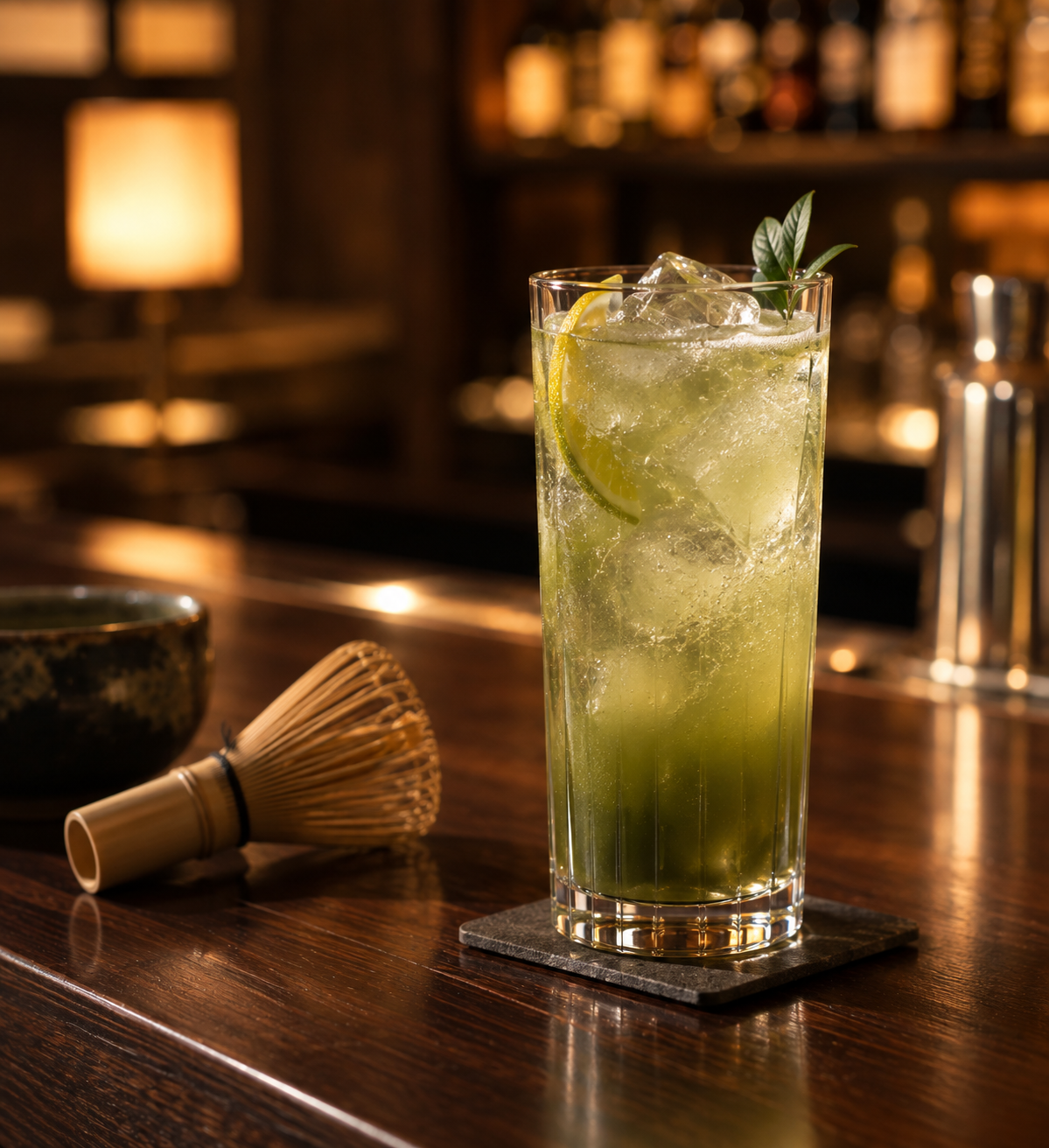
    1. Matcha Gin Fizz

    A gin fizz is already built around the idea of something bitter-bright cutting through citrus and soda, which makes it one of the easiest entry points into matcha cocktails.

    Ingredients:

    • 2 oz gin
    • 1/2 tsp culinary-grade matcha
    • 3/4 oz fresh lemon juice
    • 1/2 oz simple syrup
    • Soda water, to top
    • Ice

    Method: Whisk the matcha with about a tablespoon of warm water until it’s a smooth, clump-free paste. Add the paste, gin, lemon juice, and simple syrup to a shaker with ice and shake hard for about 15 seconds. Strain into a highball glass over fresh ice and top with soda water. The matcha settles into a soft green haze rather than sitting on top, which is the visual sign you’ve dissolved it properly.

    2. Tokyo Mule (Matcha Version)

    This is a matcha riff on the classic Moscow Mule, swapping some of the ginger beer’s sharpness for matcha’s vegetal depth while keeping the drink’s fundamental structure intact.

    Ingredients:

    • 2 oz vodka
    • 1/2 tsp matcha, made into a slurry with 1 tbsp warm water
    • 1/2 oz fresh lime juice
    • Ginger beer, to top
    • Lime wheel and mint sprig, for garnish

    Method: Combine the vodka, matcha slurry, and lime juice in a copper mug or highball glass with ice. Stir gently, then top with ginger beer and stir once more, just enough to combine without killing the carbonation. Garnish with a lime wheel and a mint sprig. The ginger beer’s spice and matcha’s bitterness end up doing very similar jobs in this drink, so it reads as more harmonious than you’d expect from the ingredient list.

    3. Matcha Whiskey Highball

    This is the drink that changed my mind about matcha cocktails in the first place, and it’s the one I’d point a whiskey drinker toward first.

    Ingredients:

    • 2 oz Japanese whiskey (or a smooth blended whiskey)
    • 1/4 tsp ceremonial-grade matcha
    • 1/4 oz simple syrup
    • Soda water, to top
    • Ice

    Method: Whisk the matcha into the simple syrup while it’s still slightly warm, until fully smooth – this keeps the matcha amount low enough that it doesn’t fight the whiskey’s own flavor. Fill a highball glass with ice, add the whiskey and matcha syrup, stir a few times, then top slowly with soda water and give it one final gentle stir. Keep the matcha quantity restrained here; this is a drink where a little goes further than you’d think, and doubling the matcha just makes it taste muddy rather than more flavorful.

    4. Matcha Margarita

    Matcha and lime were always going to work together, and tequila’s slight vegetal quality (particularly in a good blanco) doesn’t fight the tea the way some other spirits do.

    Ingredients:

    • 2 oz blanco tequila
    • 1/2 oz triple sec
    • 3/4 oz fresh lime juice
    • 1/2 tsp culinary-grade matcha
    • 1/2 oz agave syrup or simple syrup
    • Salt, for the rim (optional)

    Method: Whisk the matcha with a small amount of warm water into a smooth paste. Combine the tequila, triple sec, lime juice, matcha paste, and syrup in a shaker with ice, and shake vigorously for 15-20 seconds. Strain into a salt-rimmed rocks glass over fresh ice. Culinary-grade matcha is the right call here specifically because its slightly rougher bitterness stands up to the citrus and triple sec instead of getting lost in them.

    5. Matcha Mint Julep

    A julep is built on the tension between sweetness and mint’s sharp freshness, and matcha slides into that tension as a third bitter-vegetal voice rather than competing with either side.

    Ingredients:

    • 2 oz bourbon
    • 1/4 tsp matcha, made into a slurry with warm water
    • 1/2 oz simple syrup
    • 8-10 fresh mint leaves
    • Crushed ice

    Method: Gently press the mint leaves in the bottom of a julep cup or rocks glass with the simple syrup – just enough to release the oils, not so much that you tear the leaves into shreds. Add the bourbon and matcha slurry, then fill the glass with crushed ice and stir until the outside of the glass frosts over. Top with a final small mound of crushed ice and a fresh mint sprig. Bourbon’s caramel and vanilla notes and matcha’s grassy bitterness sound like they shouldn’t work together, but the mint acts as a bridge between them.

    A Few Things People Ask Me

    Which of these is the easiest to start with? The Matcha Gin Fizz or the Tokyo Mule. Both use citrus or ginger beer to carry most of the flavor, so a small error in your matcha slurry is much more forgiving than it would be in the whiskey highball or julep, where the matcha has less to hide behind.

    Can I make the matcha component ahead of time for a party? A matcha simple syrup keeps in the fridge for about a week in a sealed container, and it’s the most party-friendly option of the group – you can pre-batch several drinks’ worth and just add spirits and mixers to order. A plain matcha-water slurry doesn’t hold up nearly as well and is best made fresh right before shaking.

    Does the caffeine in matcha cocktails add up if I’m having a few? A quarter to half a teaspoon of matcha per drink is a modest caffeine dose – noticeably less than a full cup of matcha tea – but if you’re having several matcha cocktails over an evening, that does add up on top of the alcohol itself, so it’s worth pacing the same way you would with any caffeinated mixer like cola or coffee liqueur.

    What’s the best matcha grade to keep on hand just for cocktails? A mid-tier culinary-grade matcha is the most versatile choice if you only want to buy one tin – it’s more affordable than ceremonial grade and holds up better in citrus-forward drinks, while still working fine in the whiskey highball if you scale the amount down slightly. If you’re also using matcha for baking, my guide to baking with matcha covers grade selection from that angle too.

    Where I Landed

    The lesson that stuck with me most from all of this is that matcha isn’t a color you add to a cocktail – it’s a bitterness you’re borrowing, the same way you’d borrow bitters or amaro. Once I started thinking about it that way, choosing which drinks to try it in got a lot more obvious: anything that already leans on a bitter or sharp counterpoint (citrus, ginger, mint) is a safer bet than trying to force it into something purely sweet. The whiskey highball remains my favorite of the five, mostly because it’s the one where the matcha genuinely surprised me – not by transforming the drink, but by fitting into it like it had always belonged there. If you want a single reliable tin to start with, Nio Teas’ ceremonial-grade matcha is what I used for the highball recipe above, and it holds up well across both the citrus-forward and spirit-forward drinks in this guide.
  • Choosing a Nio Teas Gift Bundle: Matcha Sets, Sampler Bundles, and Advent Calendars

    Choosing a Nio Teas Gift Bundle: Matcha Sets, Sampler Bundles, and Advent Calendars

    Disclosure: This post contains affiliate links, including to Nio Teas. If you buy through one of them, I may earn a small commission at no extra cost to you.

    Nio Teas’ catalog has enough overlapping bundles, matcha sets, sampler-plus-whisk combos, subscription boxes with free teaware, seasonal advent calendars, that picking the right one for a specific gift occasion isn’t as obvious as it should be. This is a breakdown of what’s actually in each bundle type and which one fits which recipient, rather than defaulting to whichever one happens to be featured on the homepage.

    The Problem You’re Actually Trying to Solve

    You’ve searched for how to choose a Nio Teas gift bundle because you’re buying for someone specific, an occasion, a budget, a level of tea knowledge, and want to match the bundle to that person rather than picking the most expensive-looking option and hoping it lands well.

    Who This Article Is NOT For

    Let’s save you some scrolling if this isn’t quite your situation.

    • If you’re buying for yourself rather than gifting, a straightforward review of the catalog is more directly useful than a gift-focused breakdown.
    • If you want a broader Japanese tea gift framework, not specific to Nio Teas, my Japanese tea gift guide covers that wider decision.

    If you’re past that, here’s where the actual breakdown starts.

    The Matcha Set (Whisk, Bowl, Scoop)

    Shop Nio Teas’ matcha sets →

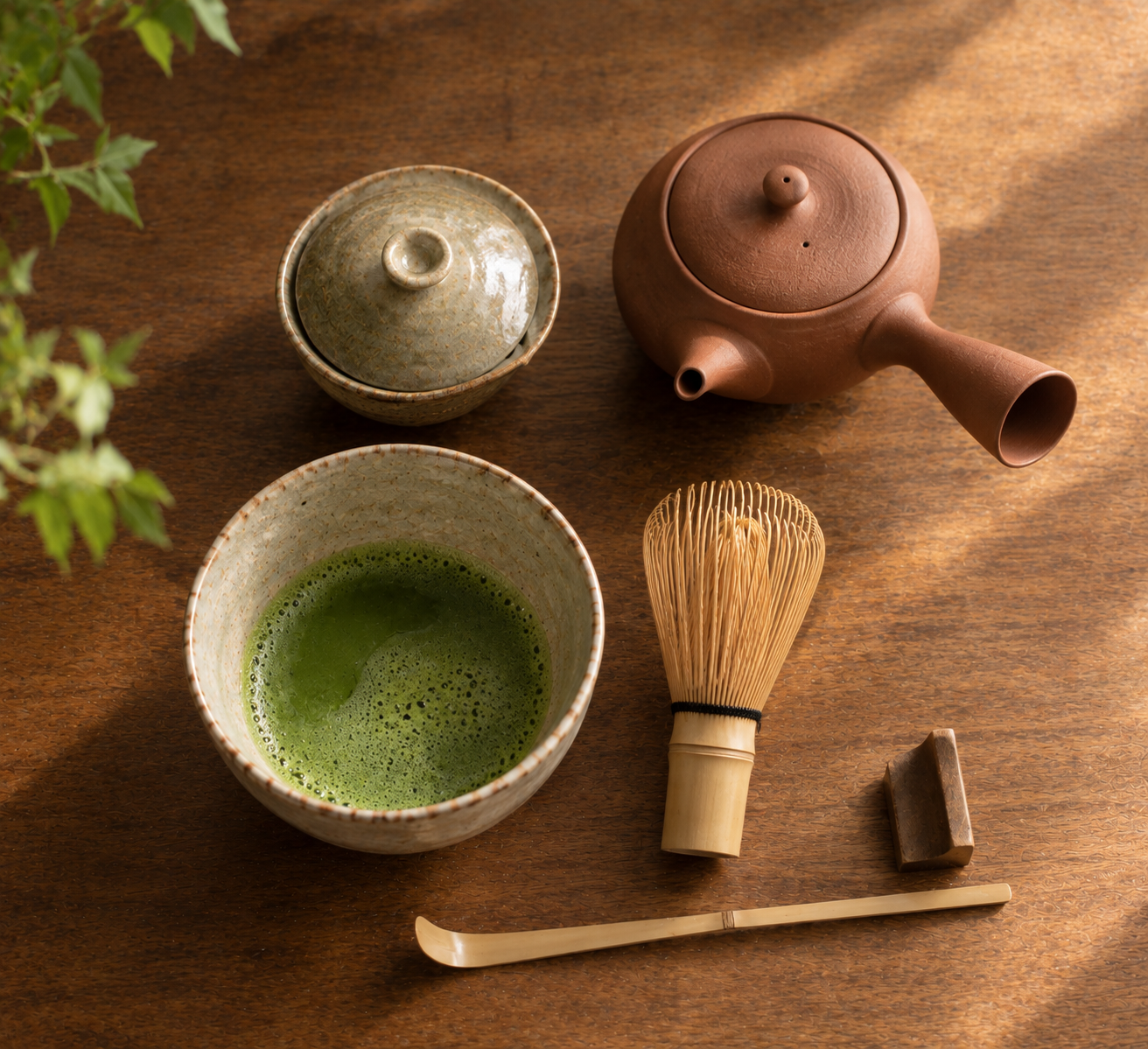
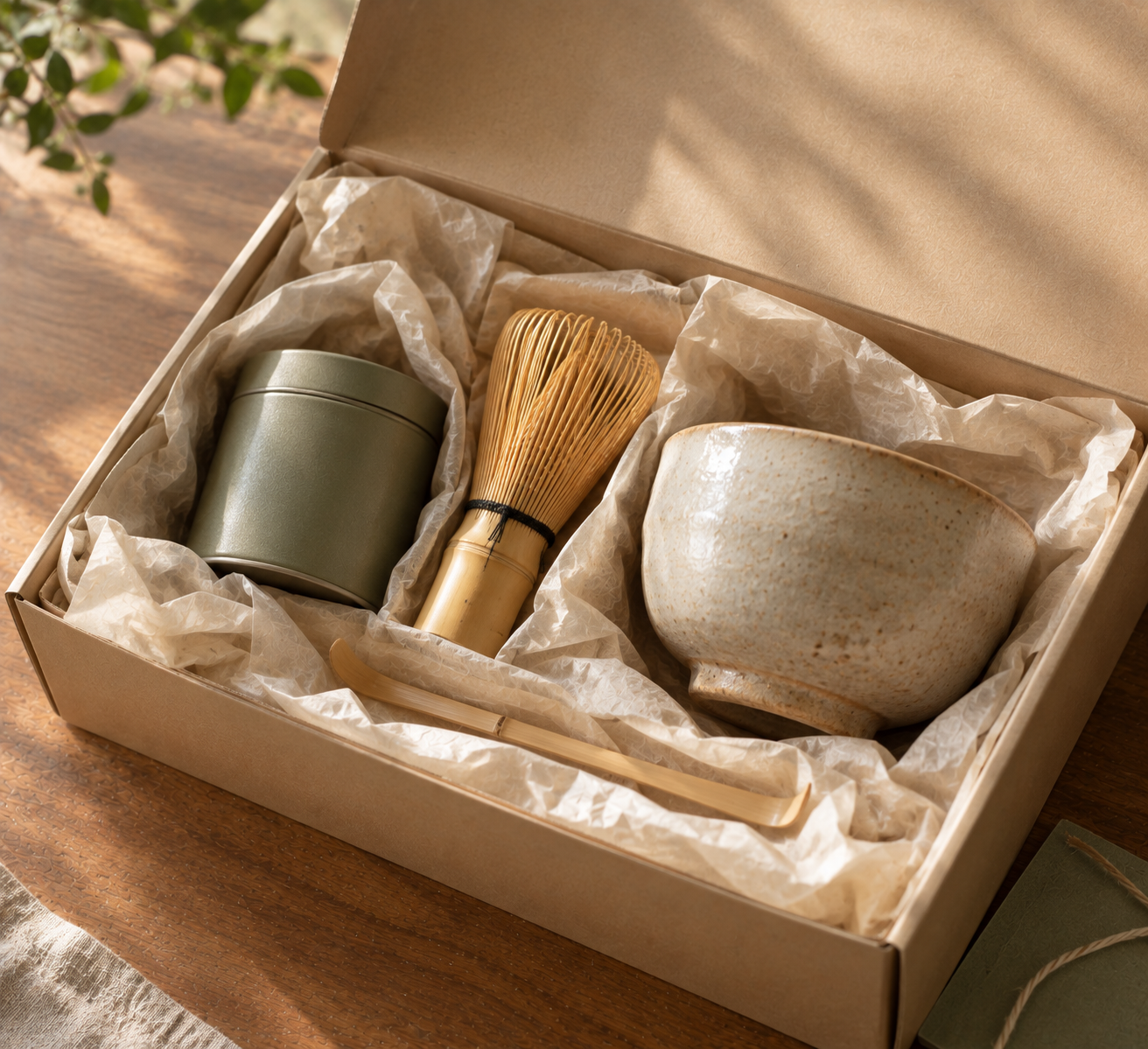
    These bundles pair ceremonial-grade matcha with the core preparation tools, the chasen (whisk), chawan (bowl), and chashaku (scoop), giving a recipient everything needed to start whisking matcha at home immediately, without needing to source pieces separately.

    Who it’s for: Someone curious about matcha who doesn’t yet own any preparation tools. This is the single best “starter” gift in the whole catalog, since the equipment barrier is often what stops someone from ever actually trying matcha at home in the first place.

    Sampler-Plus-Whisk Bundles

    Shop Nio Teas’ matcha sampler with whisk →

    Rather than a single tin, these bundles pair a multi-tea matcha sampler, an 18-pack in one common configuration, with a whisk included. This gives the recipient both the tool and enough variety to discover their own preference, rather than committing them to one specific matcha before they know what they like.

    Who it’s for: Someone slightly further along than a total beginner, or a gift where you want to combine “here’s everything you need” with “here’s a genuine tasting experience” rather than just a single flavor.

    Subscription-as-a-Gift: Monthly Matcha Club or Monthly Tea Club

    Shop the Monthly Matcha Club →

    Gifting a subscription is a genuinely different category from a one-time bundle, since it keeps giving, literally, over months rather than arriving once. The Matcha Club includes a free whisk and scoop in the first shipment; the Tea Club includes a free kyusu. Both are structured so the recipient can cancel once they’ve found their favorite, which removes the awkwardness of gifting an open-ended commitment they might not want to keep.

    Who it’s for: Someone you want to give an ongoing discovery experience to, rather than a single moment. This works particularly well for a recipient who enjoys the ritual of “something new each month” more than settling on one favorite quickly.

    Seasonal Advent Calendars

    Shop Nio Teas’ matcha and tea advent calendars →

    A genuinely novel gift format in this category: a matcha or loose leaf tea advent calendar, delivering a small daily tea discovery through the countdown to a holiday. This is squarely a seasonal, occasion-specific gift rather than a year-round option.

    Who it’s for: Gifting during the holiday season specifically, especially for someone who already enjoys the ritual and small-daily-discovery format, or as a genuinely different alternative to a chocolate advent calendar for a tea-loving recipient.

    Comparison at a Glance

    Bundle TypeBest ForCommitment Level
    Matcha Set (whisk + bowl + scoop)Complete matcha beginnersOne-time gift
    Sampler + WhiskBeginners who want varietyOne-time gift
    Monthly Matcha/Tea ClubOngoing discovery, open-ended interestRecurring (cancel anytime)
    Advent CalendarHoliday-specific giftingSeasonal, one-time

    A Few Things People Ask Me

    Is a subscription a “safe” gift, or does it feel like too much of a commitment to give someone? Since both subscription options are explicitly cancel-anytime once a favorite is found, it’s a genuinely lower-commitment gift than it might initially sound, closer to a trial than an obligation. Framing it that way when you give it helps set the right expectation.

    Should I buy the most expensive bundle to make the best impression? Not necessarily — matching the bundle to the recipient’s actual current knowledge and interest level matters more than price. A complete matcha beginner is often better served by the simpler matcha set than an elaborate, harder-to-navigate sampler bundle.

    Can I combine a bundle with individual products for a bigger gift? Yes, nothing stops you from pairing a matcha set with an individual gyokuro or a teaware piece for a more personalized, larger gift, rather than relying on a single pre-built bundle alone.

    Are the advent calendars only available during a specific window, or can I get one anytime? These are seasonal releases tied to the holiday countdown format, so availability is generally limited to the lead-up period before the relevant holiday, worth checking current availability before planning around one specifically.

    Where I Landed

    The matcha set is genuinely the safest, most broadly appropriate starting point if you’re not sure which bundle fits, since it solves the single biggest barrier, no tools, no way to prepare it, that stops a curious gift recipient from actually using what they’ve been given. Everything else in the lineup, the sampler bundles, the subscriptions, the advent calendars, are better thought of as upgrades once you know a bit more about how the specific person you’re buying for actually likes to engage with something new.

    If you’re deciding on the tea itself rather than the bundle format, checking what’s actually included in the sampler-based options first helps you understand exactly what a recipient will receive.

  • Ichibancha vs Nibancha: Why Matcha Harvest Timing Matters More Than You’d Think

    Ichibancha vs Nibancha: Why Matcha Harvest Timing Matters More Than You’d Think

    Disclosure: This post contains affiliate links. If you buy through one of them, I may earn a small commission at no extra cost to you.

    I used to assume “ceremonial grade” was the only label worth paying attention to on a matcha tin, until I compared two tins from the same brand, same region, same grade name, and found one noticeably sweeter and rounder than the other. The difference turned out to have nothing to do with grade at all. It came down to when the leaves were actually picked, months apart on the same growing calendar, and that single variable changed the flavor more than anything else on either label — more than the region, more than the price, more than the word “ceremonial” printed on both tins alike.

    The Problem You’re Actually Trying to Solve

    You’ve searched for ichibancha versus nibancha because you’ve noticed harvest terminology on matcha packaging, or you’re trying to understand why two matchas with similar grade claims can still taste so different, and want to know what these Japanese harvest terms actually mean for what ends up in your cup.

    Who This Article Is NOT For

    Let’s save you some scrolling if this isn’t quite your situation.

    • If you want to understand grade terminology (ceremonial vs. culinary) rather than harvest timing specifically, my how to tell matcha grades apart guide covers that separate, related topic.
    • If you’re buying matcha specifically for baking, later-harvest matcha is often the more practical, cost-effective choice for that use case anyway, so the distinctions here matter less for your purchase.

    If you’re past that, here’s where the actual explanation starts.

    The Japanese Tea Harvest Calendar

    Japanese tea plants aren’t picked continuously through the growing season. They’re harvested in distinct flushes, each with a name and a genuinely different flavor profile.

    HarvestJapanese TermTypical TimingCharacter
    First flushIchibanchaLate April – late MaySweetest, highest umami, most delicate
    Second flushNibanchaMid-June – early JulyMore astringent, brisker, more affordable
    Third flushSanbanchaLate July – early AugustMost bitter, coarsest, lowest grade use
    Autumn/winterShuto banchaLate September – OctoberRarely used for matcha; mostly other tea products

    Why the Chemistry Actually Changes Between Harvests

    This isn’t just a scheduling difference, it’s a genuinely different chemical outcome, and understanding why makes the flavor gap make complete sense.

    Ichibancha benefits from six months of dormancy. Tea plants accumulate amino acids, particularly L-theanine, the compound responsible for matcha’s sweetness and umami, throughout the winter while the plant is dormant. That stockpile gets concentrated into the very first leaves that emerge in spring, which is why first-flush matcha carries such a pronounced sweet, savory depth. Some sources cite ichibancha containing roughly three times the theanine of nibancha from the same plant, a substantial gap, not a marginal one, and it’s the single biggest reason a well-made first-flush bowl tastes fundamentally different rather than just marginally better.

    Nibancha grows fast under strong summer light, and light drives a different chemical process entirely. Light exposure is the key trigger for catechin production in tea plants, catechins being the polyphenols responsible for bitterness and astringency. Because nibancha leaves grow quickly under longer summer days and more intense sunlight, they shift the plant’s chemical balance toward catechins and away from the amino acid accumulation ichibancha benefits from. The result is a brisker, more assertive, less naturally sweet leaf, picked roughly six to eight weeks after the first flush finishes.

    Sanbancha compounds both effects further. By the third flush, leaves are more mature, have had even less time to build amino acid reserves relative to their growth, and have been exposed to the most cumulative sunlight of the season, producing the most bitter, coarsest result of the three. This is the leaf most likely to end up in the lowest tier of culinary matcha or bulk food-service products, where its assertiveness gets buried under other ingredients anyway.

    Reading Harvest Language on a Label

    Not every brand states harvest timing explicitly, but when they do, here’s what the terms actually signal:

    “First harvest” or “ichibancha” or “first flush” — genuinely the spring leaf, shaded the longest, picked once per season. This is the leaf behind virtually all top-tier ceremonial matcha.

    “Second harvest” or “nibancha” — summer regrowth, more available and more affordable, and genuinely well-suited to lattes and baking, where its brisker character reads as freshness rather than a flaw.

    Vague or absent harvest language — worth treating with a bit more skepticism, particularly on a tin claiming “ceremonial grade” at a suspiciously low price. A legitimate first-flush product is expensive to produce, and a brand confident in that sourcing usually says so.

    Matching Harvest to Actual Use

    For drinking matcha straight, usucha or koicha style: ichibancha, without much debate. This is exactly the use case first-flush matcha’s sweetness and umami were meant to showcase, and a later harvest will taste noticeably flatter and more bitter prepared the same simple way.

    For lattes: nibancha is a genuinely sensible, not just budget-driven, choice. Its brisker character actually reads as fresher and more assertive once milk and sweetener are involved, and you’re not paying a premium for subtlety that dairy is going to mute anyway.

    For baking: later harvests, nibancha or even sanbancha-derived culinary matcha, are the practical, cost-effective choice, since baking similarly buries the delicate qualities that make first flush worth its price tag.

    Where to Find First-Flush Matcha

    Shop first-flush ceremonial-grade matcha on Amazon →

    A Few Things People Ask Me

    Is nibancha “bad” matcha, or just different? Genuinely just different, not inferior in an absolute sense. It’s simply matched to different applications than ichibancha, and treating it as a lesser product rather than a differently suited one leads to either overpaying for lattes or being disappointed by a straight cup made from the wrong harvest.

    Does shincha mean the same thing as ichibancha? Essentially yes, they refer to the same leaf, just with different emphasis. Ichibancha means “first-picked tea” in the context of the season’s harvest sequence, while shincha means “new tea,” highlighting freshness rather than harvest order specifically.

    Can I taste the harvest difference myself, or is it too subtle without training? It’s genuinely one of the more noticeable distinctions in matcha, not a subtle one requiring a trained palate. A side-by-side of genuine ichibancha and nibancha from the same brand and region makes the sweetness and umami gap obvious even to a first-time taster.

    Why don’t more brands state harvest timing clearly if it matters this much? Partly because grade terminology (ceremonial, premium, culinary) has become the more dominant marketing language in Western markets, even though it’s less standardized and arguably less informative than harvest timing. A brand that states both is generally giving you more useful information than one relying on grade language alone.

    Does a plant’s age affect how harvest timing plays out, separate from the flush itself? Yes — newer tea fields, typically in their third or fourth year, are often given lighter harvests to let the plant establish itself, with full commercial-scale picking usually starting around year four or five. A young plant’s ichibancha may not yet reach the same character as an established bush’s first flush, which is a separate variable from harvest timing itself but worth knowing if a brand specifically markets young-plant tea.

    Is there any harvest that falls between nibancha and sanbancha in quality that I should know about? Not really as a distinct named category — the calendar generally runs ichibancha, nibancha, sanbancha in that order of both timing and declining quality, though some regions with longer growing seasons occasionally squeeze in an additional autumn harvest, generally used for lower-grade bancha rather than matcha specifically.

    Where I Landed

    The tin comparison that started this whole realization for me wasn’t really about one product being defective, it was about not understanding that “ceremonial grade” alone doesn’t fully specify what I was buying. Harvest timing is arguably the more fundamental variable, the one that actually explains why two similarly labeled matchas can taste so different, and it’s worth checking for specifically rather than relying on grade language alone.

    Once you know to look for it, harvest timing becomes one of the fastest ways to size up whether a tin is actually worth its price, faster even than color or texture checks, since a brand willing to state ichibancha specifically is telling you something concrete, not just repeating a marketing word every competitor uses too.

    If you’re shopping with this in mind, my matcha powder brands comparison covers several brands where harvest and sourcing details held up well against real scrutiny.

  • Matcha and Hojicha Together: The Layered Latte and Beyond

    Matcha and Hojicha Together: The Layered Latte and Beyond

    Disclosure: This post contains affiliate links. If you buy through one of them, I may earn a small commission at no extra cost to you.

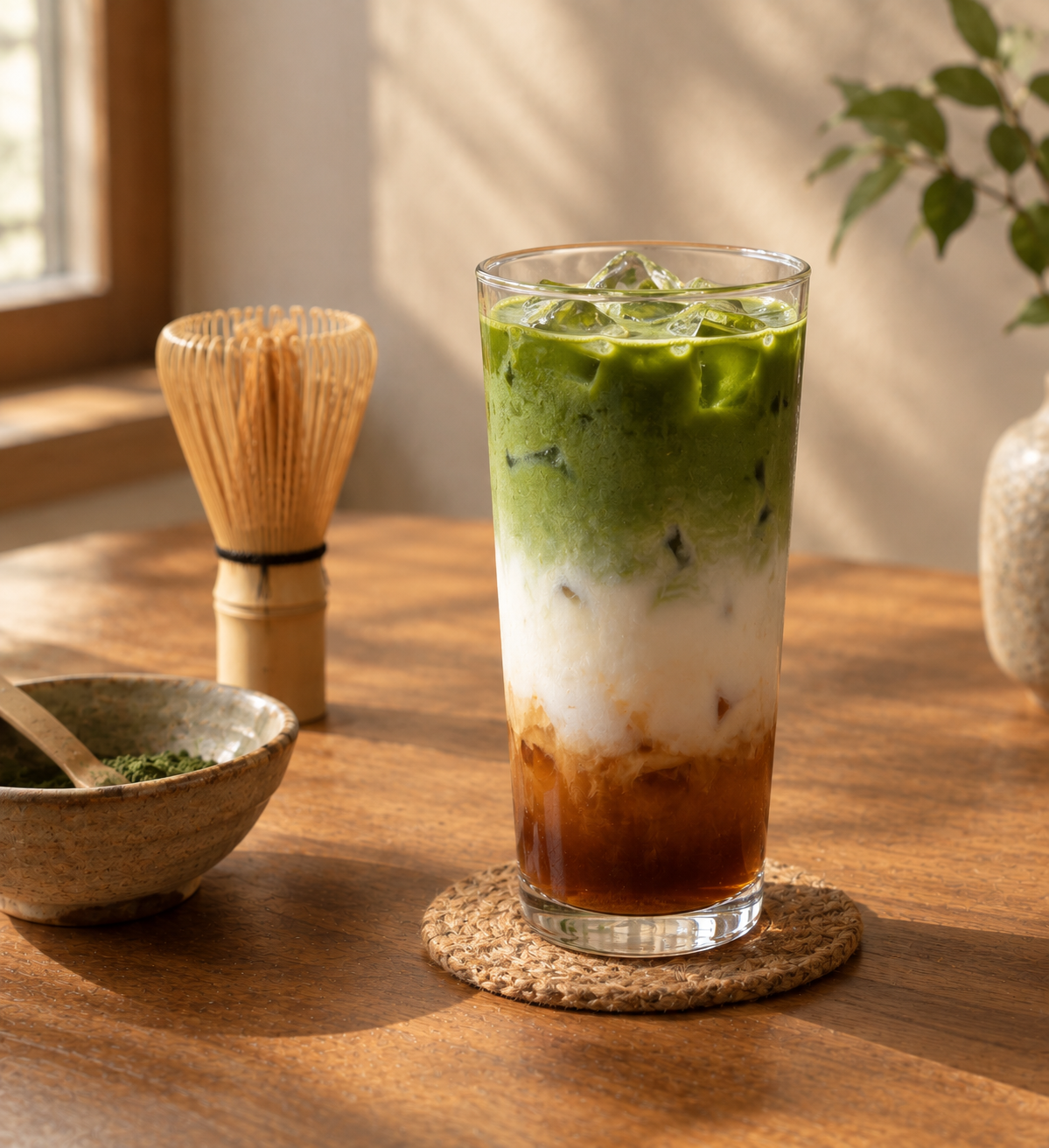
    Matcha and hojicha come from the exact same plant, processed in completely opposite directions, unroasted and vividly green versus roasted into something toasty and reddish-brown, and putting them in the same glass turns out to be far more interesting than picking one or the other. Instead of competing, they layer: matcha’s grassy sharpness on one end, hojicha’s caramel-like roundness on the other, with milk holding the middle together, and the visual contrast alone makes it one of the more genuinely striking drinks you can put together at home.

    The Problem You’re Actually Trying to Solve

    You’ve searched for matcha and hojicha blend ideas because you’ve seen the layered version, the one with three distinct colored stripes in a glass, or you already love both teas separately and want to know how to actually combine them without one flavor completely overwhelming the other.

    Who This Article Is NOT For

    Let’s save you some scrolling if this isn’t quite your situation.

    • If you want matcha recipes specifically without hojicha involved, my how to make a matcha latte guide covers that on its own.
    • If you want to understand hojicha as its own category before combining it with anything, my best hojicha brands guide is the better starting point.

    If you’re past that, here’s where the actual guide starts.

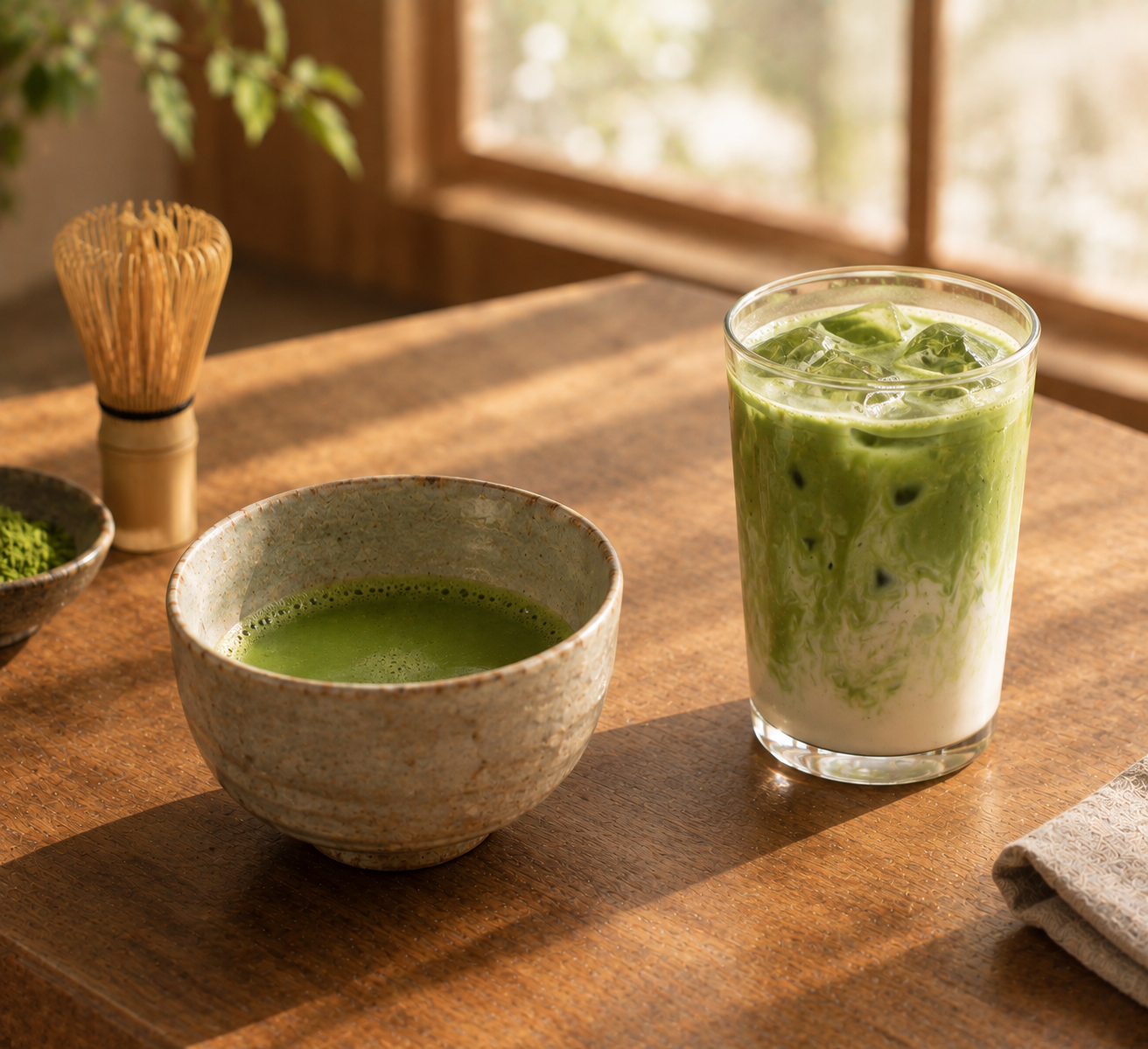
    The Classic Layered Matcha-Hojicha Latte

    This is the version most people picture, three visually distinct layers, hojicha at the bottom, milk in the middle, matcha floating on top, that you stir together right before drinking.

    The method:

    1. Sift 1 teaspoon of matcha into a bowl, whisk with about 40ml of cold water until smooth.
    2. Separately, sift 2 teaspoons of hojicha powder into another bowl, whisk with about 80ml of cold water until smooth.
    3. Fill a tall glass with ice.
    4. Pour the hojicha mixture in first, forming the bottom layer.
    5. Slowly pour milk over the back of a spoon to create a middle layer without disturbing the hojicha below.
    6. Gently pour the matcha mixture on top last, letting it float rather than sink.

    Using cold water for both bases, rather than hot, keeps the layers more visually distinct and prevents the ice from melting too quickly and blurring the separation.

    Matcha-Hojicha with Caramel

    A slightly more indulgent variation adds a caramel element, which bridges the two teas nicely since caramel’s sweetness echoes hojicha’s naturally roasted, almost caramel-like character while still letting matcha’s brighter top note come through.

    The method: Prepare the matcha and hojicha bases separately as above, drizzle caramel syrup along the inside of the glass before adding ice, then layer milk and both tea bases the same way. The caramel clinging to the glass walls adds visual interest along with the flavor.

    Brown Sugar as the Bridge Flavor

    Brown sugar is a particularly good sweetener choice specifically because it doesn’t compete with either tea’s flavor the way white sugar or a neutral syrup can. Its own caramel-forward character sits naturally between matcha’s vegetal brightness and hojicha’s roasted depth, reinforcing both rather than masking either.

    The method: Dissolve brown sugar into warm milk before combining with your whisked matcha and hojicha bases, rather than adding it dry, which can leave undissolved grit at the bottom of the glass.

    Beyond Lattes: Other Ways to Combine Them

    Hot chocolate hybrid. Hojicha blends particularly well into hot chocolate, since its roasted character complements cocoa the way a really good dark roast coffee complements chocolate desserts. Adding a smaller amount of matcha on top as a garnish layer, rather than mixing it fully in, keeps its brightness from getting lost against the cocoa.

    Baked goods with both. A marbled effect in cookies or a loaf cake, swirling a matcha-tinted batter and a hojicha-tinted batter together before baking, gives you both flavors in alternating bites rather than a single blended one, similar in spirit to a chocolate-vanilla marble cake.

    Fruit pairings. Hojicha pairs particularly well with strawberry specifically, its roasted, nutty character contrasting nicely against fresh fruit sweetness, and this combination works as a base for a matcha-hojicha version too, strawberry and hojicha on the bottom, matcha floated on top for color contrast as much as flavor.

    Getting the Ratio Right Between the Two

    Because hojicha’s flavor is naturally more assertive and roasted while matcha is more delicate and vegetal, most successful blends lean slightly hojicha-forward, roughly a 2-to-1 ratio of hojicha to matcha by volume, rather than an even split. An even 50-50 split tends to let hojicha dominate anyway, so intentionally leaning into that ratio rather than fighting it usually produces a more balanced-tasting result than a technically equal measurement would.

    What You’ll Need

    Shop hojicha powder for lattes on Amazon →

    Shop culinary-grade matcha for lattes on Amazon →

    A Few Things People Ask Me

    Does combining matcha and hojicha change the caffeine content compared to either alone? Yes, modestly — since matcha carries meaningfully more caffeine per gram than roasted hojicha, a blended drink lands somewhere between the two, generally closer to a standalone hojicha than a standalone matcha given the ratio most recipes use.

    Can I make a hot version of the layered latte, or does it only work iced? The visual layering effect specifically depends on ice and gentle pouring technique, so a hot version won’t maintain distinct layers the same way. A hot version still tastes great combined, just fully stirred together rather than presented as separate stripes.

    Is there a “wrong” order to layer the ingredients? For the classic version, hojicha on the bottom, milk in the middle, matcha on top, is the standard because it plays with density and color contrast effectively. Reversing it technically still tastes the same but loses some of the visual appeal that makes this version popular in the first place.

    Do I need two separate whisks, or can I use the same one for both teas? A single whisk works fine as long as you rinse it between the matcha and hojicha bases, since any leftover residue from one can slightly muddy the color and flavor of the other, especially matcha’s more delicate green if hojicha residue carries over first.

    Which milk works best for holding the layers apart visually? A slightly thicker milk, whole dairy or a barista-formulated oat milk, holds a cleaner layer than a thinner milk like skim or standard almond, since viscosity affects how well the layers resist mixing on contact. Pouring slowly over the back of a spoon matters more than the milk choice itself, but a thicker milk gives you a bit more forgiveness if your pour isn’t perfectly gentle.

    Can this be made without dairy or any milk at all, just the two teas together? Yes, though without milk in the middle the layering effect mostly disappears, since matcha and hojicha bases are similar enough in density to blend together on contact. If you want the flavor combination without the visual layering, simply whisking both bases together directly works fine.

    Where I Landed

    The appeal of combining matcha and hojicha isn’t really about one being better than the other, it’s that they highlight each other by contrast. Matcha’s brightness makes hojicha’s roastiness read as even warmer, and hojicha’s depth makes matcha’s vegetal edge taste sharper and more distinct than it does on its own. That’s a genuinely different experience than either tea delivers solo, and it’s worth trying at least once even if you already have a clear favorite between the two.

    Once you’ve made the classic layered version, the rest of this list, the caramel variation, the hot chocolate hybrid, the fruit pairings, are all easy to riff on from there using the same basic technique of whisking each base separately before combining them. If you want to go deeper on either tea individually before combining them, a good culinary-grade matcha and a well-roasted hojicha are worth having on hand as your baseline starting points.

  • The History Behind Your Kyusu: Tokoname and Banko Ware

    The History Behind Your Kyusu: Tokoname and Banko Ware

    Disclosure: This post contains affiliate links. If you buy through one of them, I may earn a small commission at no extra cost to you.

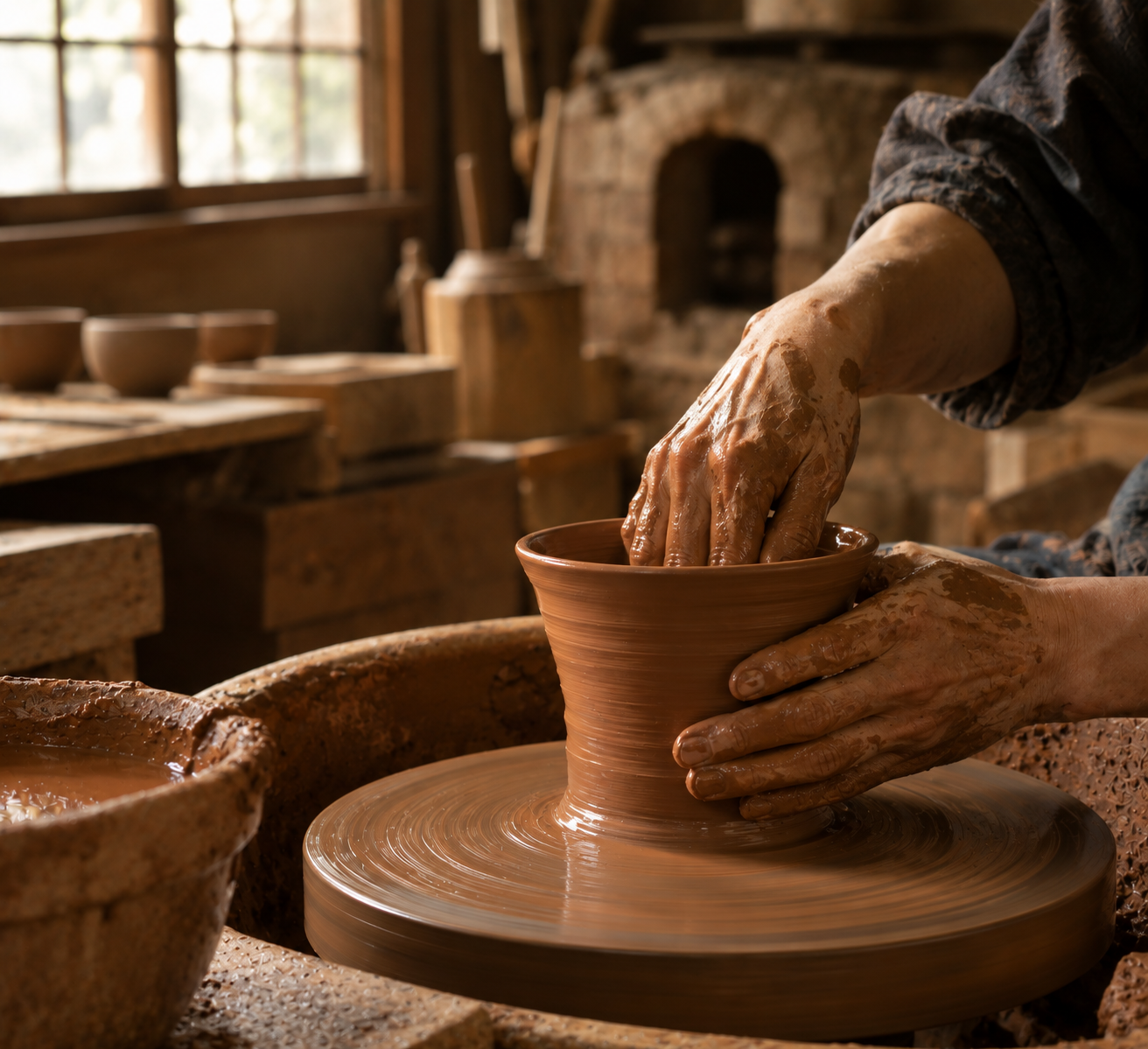
    Every time I pick up my Tokoname kyusu, I’m using a shape and clay tradition that predates the printing press, refined by a specific chain of potters whose names are actually recorded, not lost to vague “ancient craft” marketing language. Knowing that history doesn’t change how the pot brews tea, but it changes how you hold it, and it’s worth actually knowing rather than treating “traditional Japanese teapot” as an unexamined phrase on a product listing that could just as easily be describing something made last month.

    The Problem You’re Actually Trying to Solve

    You’ve searched for the history behind kyusu pottery because you own one, are about to buy one, or you’ve simply noticed “Tokoname” or “Banko” on product listings and want to understand what those names actually represent beyond a vague sense of authenticity.

    Who This Article Is NOT For

    Let’s save you some scrolling if this isn’t quite your situation.

    • If you want current brand and product recommendations rather than history, my Japanese kyusu brands compared guide covers that ground directly.
    • If you’re deciding what to actually buy rather than learning the background, my kyusu buying guide is the more practical resource.

    If you’re past that, here’s where the actual history starts.

    Tokoname: Nearly a Thousand Years Before the Teapot Arrived

    Tokoname’s pottery tradition traces back to the late Heian period, the end of the 12th century, making it one of Japan’s Six Ancient Kilns, a group of historic pottery centers, alongside Seto, Shigaraki, Echizen, Tamba, and Bizen, that have operated continuously since medieval times. For its first several centuries, Tokoname had nothing to do with tea at all. Potters produced large storage jars, cooking vessels, and eventually, by the Kamakura period, the region hosted an extraordinary concentration of kilns, reportedly over 3,000 at its historical peak, all working the region’s distinctive iron-rich clay dug from the Chita Peninsula’s hills.

    The shift toward what Tokoname is known for today didn’t happen until the early 19th century, deep into the Edo period. A potter named Sugie Jumon began crafting Chinese-style teapots from the local red clay, timed almost perfectly with a cultural shift: sencha, steeped loose leaf tea, was gaining popularity among the merchant class as a less formal alternative to the powdered matcha associated with traditional tea ceremony. Tokoname’s iron-rich clay turned out to genuinely soften tea’s astringency, a real chemical property, not just a nice legend, and that discovery cemented the region’s shift toward teapot production. By the Meiji era, Tokoname had become Japan’s premier teapot production center, and in 1961, Tokoname ware received official designation as a Traditional Japanese Craft, a formal recognition protecting the techniques passed down through its potting families.

    Banko: A Merchant’s Wish for Something Eternal

    Banko ware’s origin story is more personal and more precisely dated. Around 1736 to 1740, a wealthy merchant named Nunami Rozan, deeply devoted to tea ceremony since childhood, built his own kiln in what’s now Asahi, Mie Prefecture. Rozan stamped his creations with the seal “Banko Fueki,” meaning “eternal and unchanging,” expressing his wish that his work would be passed down through generations. That stamp is quite literally where the name Banko comes from.

    The story doesn’t run in a straight line from there. Production ceased entirely after Rozan’s death, and Banko ware might have simply ended as a historical footnote if two antique dealer brothers, Mori Yusetsu and Mori Senshu, hadn’t revived it roughly thirty years later in the late Edo period, using wooden-mold techniques called “Kata-Banko” to bring the style back. The tradition found its lasting home not in Rozan’s original location but in nearby Yokkaichi, where, in 1853, a local landowner named Yamanaka Chuzaemon began teaching flood-affected villagers pottery techniques as a form of economic relief, spending twenty years perfecting mass-production methods for what became known as Yokkaichi Banko ware. What started as disaster recovery became a defining regional industry, now specifically associated with distinctive purple-toned shidei clay teapots.

    The Craft Continues Through Named Makers, Not Just Anonymous Tradition

    One detail worth knowing: both traditions carry their history forward through actual named artisans, not an anonymous, faceless “traditional craft” label. Tokoname has produced recognized masters, including at least one recipient of Japan’s Living National Treasure designation for ceramics, a formal government honor reserved for practitioners preserving genuinely significant traditional techniques. Banko ware similarly carries forward through specific workshops, some now on their third or fourth generation of the same family continuing a craft that itself was interrupted and revived generations before them. When a modern kyusu brand names a specific kiln or maker rather than simply printing “Tokoname” or “Banko” as a generic label, that specificity is meaningful — it connects a piece you can actually buy today to a living, traceable lineage rather than a vague regional association.

    Why This History Actually Matters When You’re Drinking Tea

    Tokoname’s story explains its red-clay character. The centuries of iron-rich clay work that preceded teapot production gave Tokoname potters an unusually deep understanding of that specific clay’s properties, which is part of why the tannin-softening effect feels so refined rather than accidental. This wasn’t a material discovered for tea; it was a material perfected for centuries before tea gave it a new purpose.

    Banko’s story explains its association with resilience and reinvention. A tradition that was essentially reborn twice, once by antique dealers reviving a dead kiln, once by a landowner teaching flood victims a trade, carries a genuinely different cultural weight than a tradition that simply continued unbroken. Banko ware’s more purple-toned clay and reputation for heat resistance and umami enhancement both trace back to techniques developed across that discontinuous, rebuilt history.

    Both traditions predate their most famous product by centuries. Neither Tokoname nor Banko began as “teapot towns.” Both were general ceramics centers for hundreds of years before a specific cultural shift, sencha’s rise in Tokoname’s case, one devoted merchant’s passion project in Banko’s, redirected an already-mature craft toward the specific object we now associate with each name.

    Owning a Piece of Either Tradition

    Shop Tokoname and Banko kyusu teapots on Amazon →

    A Few Things People Ask Me

    Is one tradition genuinely older than the other? Yes, considerably — Tokoname’s pottery roots stretch back roughly 900 years to the late Heian period, while Banko ware dates to the mid-18th century, making it a few centuries younger, though still a genuinely historic craft in its own right.

    Does a kyusu’s price reflect which tradition it comes from? Not directly by tradition alone — price within each tradition varies enormously based on the individual maker’s reputation and whether a piece is hand-thrown versus mold-assisted, more than by Tokoname versus Banko as categories.

    Are there other historic kyusu-producing regions beyond these two? Yes, though Tokoname and Banko are the two most commonly encountered in Western retail specifically. Other regions produce teaware within Japan’s broader ceramic tradition, but these two dominate the kyusu category most buyers outside Japan actually encounter.

    Why did sencha’s popularity specifically drive kyusu development in both traditions? Matcha, prepared with a whisk directly in a bowl, never needed a teapot at all. Sencha, being steeped loose leaf, created genuine demand for a vessel designed specifically around infusion and filtering, which is precisely the gap both Tokoname and Banko potters stepped in to fill once the merchant class embraced the less formal tea style.

    Did Tokoname or Banko ware ever serve purposes completely unrelated to tea? Yes, extensively. Tokoname’s earlier centuries produced storage jars, and later, in the Meiji era, large quantities of industrial ceramic pipes for Tokyo and Osaka’s developing sewage systems, even architectural tiles used on Frank Lloyd Wright’s Imperial Hotel in Tokyo. Both traditions were genuinely utilitarian industries long before, and even alongside, their reputation for fine teaware.

    Does the “Living National Treasure” designation apply to entire regions or to individual people? It’s an individual honor, awarded by the Japanese government to specific master craftspeople recognized for preserving culturally significant techniques, not a blanket designation covering an entire pottery region. A Tokoname piece from a Living National Treasure-designated maker carries a different level of recognition than a standard piece from the same region.

    Where I Landed

    What strikes me most about both stories is how much accident and interruption shaped traditions that now feel inevitable and timeless on a product page. Tokoname spent 700 years making storage jars before a single potter’s decision redirected centuries of clay expertise toward tea. Banko ware nearly vanished entirely, twice, before flood relief and antique dealers’ curiosity brought it back.

    Neither craft was preordained to become synonymous with tea. Both are the result of specific people, Sugie Jumon experimenting with Chinese-style teapots, Nunami Rozan chasing a personal obsession with tea ceremony, Yamanaka Chuzaemon trying to help flood victims survive, making decisions that had nothing to do with guaranteeing a legacy and everything to do with solving a problem or pursuing a passion in front of them at the time.

    None of that changes how either clay performs in your cup, but it’s worth knowing the next time you see “Tokoname” or “Banko” printed on a listing, treated as a simple authenticity stamp, that the actual history behind those two words is a lot messier, and a lot more interesting, than the marketing usually lets on.

  • What’s Actually in a Nio Teas Sampler

    What’s Actually in a Nio Teas Sampler

    Disclosure: This post contains affiliate links, including to Nio Teas. If you buy through one of them, I may earn a small commission at no extra cost to you.

    “Sampler” can mean almost anything depending on the seller, a handful of random leftover teas, or a genuinely curated tasting journey. Nio Teas’ samplers lean firmly toward the latter, and knowing exactly what arrives, how much of it, and what you’ll actually need to prepare it makes the difference between a confident first order and an underwhelming surprise.

    The Problem You’re Actually Trying to Solve

    You’ve searched for what’s actually in a Nio Teas sampler because you’re deciding whether to order one and want specifics, portion sizes, tea counts, what equipment you’ll need, rather than vague marketing language about “trying new teas.”

    Who This Article Is NOT For

    Let’s save you some scrolling if this isn’t quite your situation.

    • If you already know which specific tea you want, a sampler isn’t built for you — go straight to that product instead.
    • If you want a broader review of Nio Teas as a brand, my Nio Teas review covers the wider catalog beyond just the samplers.

    If you’re past that, here’s where the actual breakdown starts.

    The Loose Leaf Green Tea Sampler

    Shop Nio Teas’ loose leaf sampler →

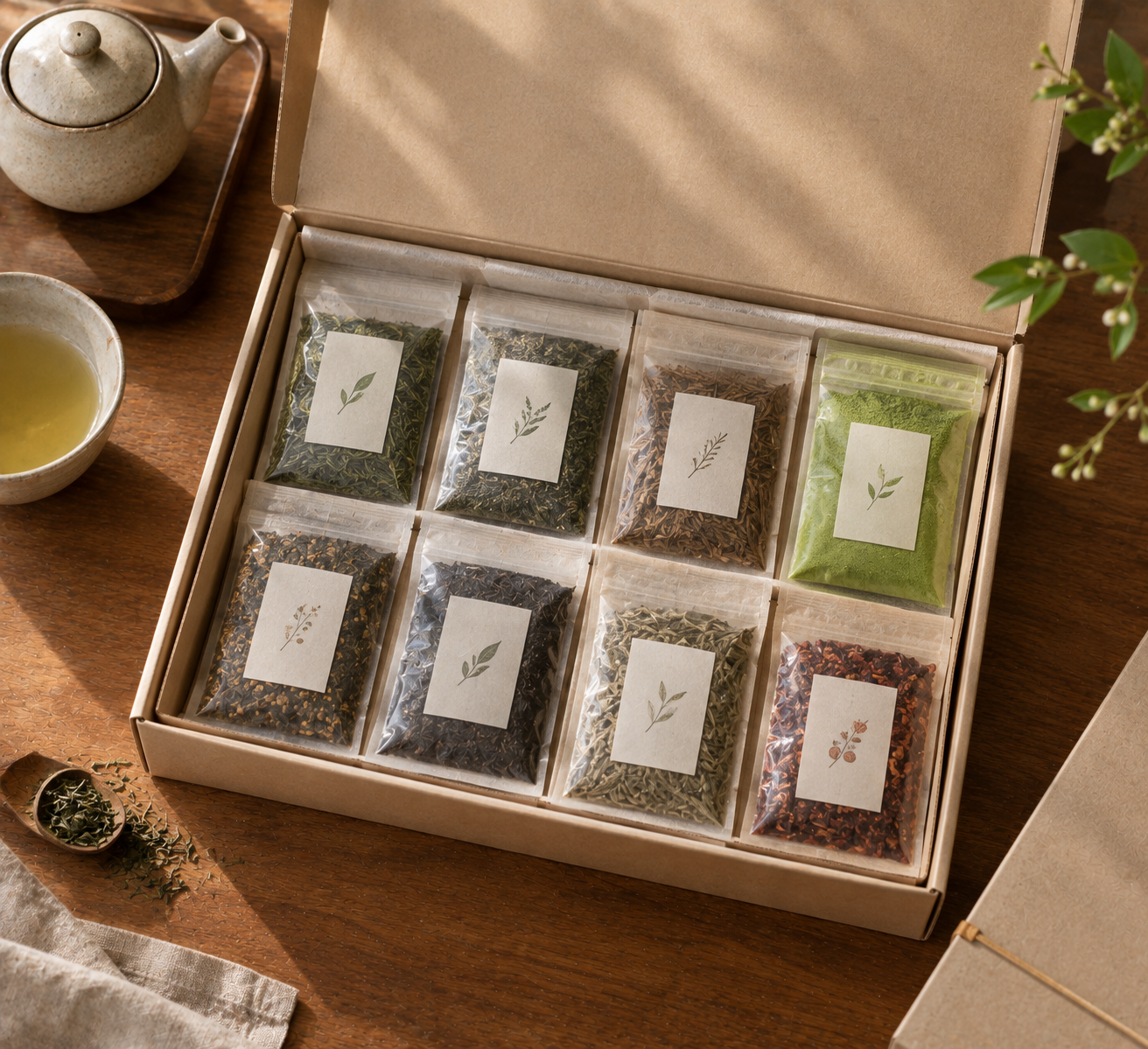
    Each sample pack in this sampler contains 5 grams of loose leaf tea, enough for one full tasting session, meaning 3 to 4 cups from a kyusu, since loose leaf can be re-infused multiple times as its flavor evolves with each steep. The sampler draws from across Nio Teas’ broader sencha, gyokuro, and other green tea categories, giving you exposure to different styles rather than a single tea type repeated in different packaging.

    What you’ll need to prepare it: A kyusu, the clay teapot with a built-in filter that gives the leaves room to open up and release flavor properly. If you don’t already own one, this is worth factoring into your first order, since the sampler tea itself won’t perform the same way steeped in a plain mug with a basic infuser.

    The Matcha Sampler

    Shop Nio Teas’ matcha sampler →

    This is where Nio Teas’ sourcing story really shows up in the numbers. The matcha sampler comes in multiple sizes, a 7-pack and a larger 21-pack among them, each individual packet containing 2 grams, enough for one full bowl or two smaller cups. The full 21-pack lets you work through a genuinely wide range: named matcha varieties like Chanoka Silver (bold, savory, thick umami), Chanoka Okumidori (smoother, less bitter), Nakai Superior (smooth, thick texture), Matcha Seisui (grassier, latte-suited), Matcha Washimine (creamy, suited to koicha), and several more, spanning different cultivars and regions across Japan.

    What you’ll need to prepare it: A chawan (matcha bowl) and chasen (bamboo whisk) at minimum. A chashaku helps with consistent measuring but isn’t strictly required if you’re comfortable eyeballing roughly 2 grams per packet.

    Why the range matters: Matcha genuinely varies by cultivar and region the way wine varies by grape and vineyard, and a sampler this size is really the only practical way to taste that range without buying a dozen full-size tins individually.

    How Much Tea You’re Actually Getting

    SamplerPacket SizeWhat It MakesTypical Variety Count
    Loose leaf sampler5g per pack3–4 cups per pack (re-infused)Varies by selection
    Matcha sampler (7-pack)2g per pack7–14 bowls/cups total7 different matchas
    Matcha sampler (21-pack)2g per pack21–42 bowls/cups total21 different matchas

    Is a Sampler the Right First Order, or Should You Just Buy a Full Tin

    A sampler makes sense if: you’re genuinely undecided, want to taste a spread before committing, or you’re buying as a low-pressure gift for someone whose specific preferences you don’t yet know.

    A full-size tin makes more sense if: you already know you love a specific cultivar or style, since a sampler’s per-gram cost is generally higher than a full-size tin, and you’d rather have a larger, reusable quantity of something you’re confident you’ll enjoy repeatedly.

    A Few Things People Ask Me

    Is the tea in a sampler the same quality as Nio Teas’ full-size products, or a lesser version specifically for samplers? Based on how the sampler is described, it draws directly from the same catalog and sourcing as full-size purchases, not a separate lower tier — the smaller packet size is purely about portion, not a quality downgrade.

    Can I reorder a specific tea I liked from the sampler afterward? Yes, sampler packets are generally drawn from teas also sold individually in full size, so once you’ve identified a favorite, you can look it up and order a larger quantity directly.

    Do I need different equipment for the loose leaf sampler versus the matcha sampler? Yes, they’re genuinely different preparation methods — a kyusu for steeping the loose leaf packets, and a chawan plus chasen for whisking the matcha packets. If you’re ordering both samplers, budget for both sets of tools rather than assuming one setup covers everything.

    Is the matcha sampler worth it if I’m mostly interested in matcha for lattes rather than drinking it straight? Somewhat, though the sampler is built around exploring different cultivars and regions, a use case that shows off best when tasted straight rather than diluted into a latte. If lattes are your primary interest, a single reliable culinary-grade tin may serve you better than a sampler designed for tasting nuance.

    Where I Landed

    The sampler format genuinely earns its place here rather than feeling like a marketing gimmick, mostly because Nio Teas backs it with real specificity: named cultivars, clear portion sizes, and teas drawn from the same catalog as their full-size products. If you’re genuinely unsure what you like yet, that’s worth more than guessing at a single full tin and hoping it’s the right one.

    Once you’ve worked through a sampler and found your favorites, reordering full-size is the natural next step, and there’s plenty more to explore in the rest of the catalog beyond what the sampler introduced you to.

  • Choosing Protective Packaging for a Matcha Gift

    Choosing Protective Packaging for a Matcha Gift

    Disclosure: This post contains affiliate links. If you buy through one of them, I may earn a small commission at no extra cost to you.

    Gifting matcha adds a wrinkle that buying it for yourself doesn’t: you’re not the one deciding how carefully it gets handled between now and the moment someone actually opens it, and you often don’t know how long it’ll sit unopened once it arrives. A beautiful presentation that fails to actually protect the tea inside is a gift that looks great in a photo and tastes disappointing by the time it’s used, which defeats the entire point of giving someone something genuinely good in the first place.

    The Problem You’re Actually Trying to Solve

    You’ve searched for protective matcha packaging because you’re choosing or building a gift and want it to look genuinely thoughtful while also actually keeping the tea fresh until the recipient gets around to using it, which for a gift is often longer than it would take you to work through a tin yourself.

    Who This Article Is NOT For

    Let’s save you some scrolling if this isn’t quite your situation.

    • If you’re storing matcha for your own daily use rather than gifting, my matcha storage guide covers that more directly.
    • If you’re deciding what tea or teaware to gift rather than how it’s packaged, my Japanese tea gift guide covers that broader decision.

    If you’re past that, here’s where the actual guide starts.

    Tin vs. Pouch, for Gifting Specifically

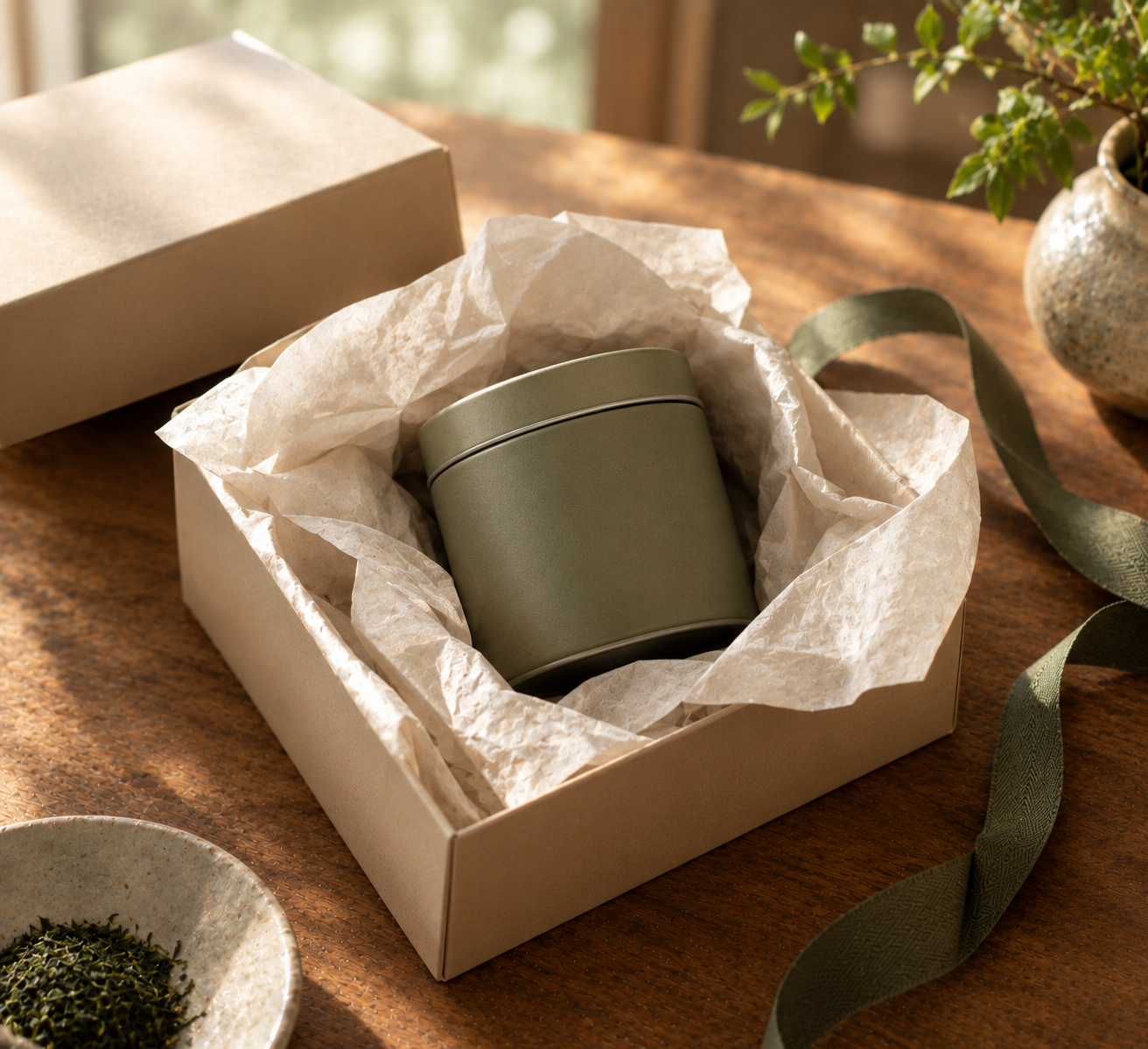
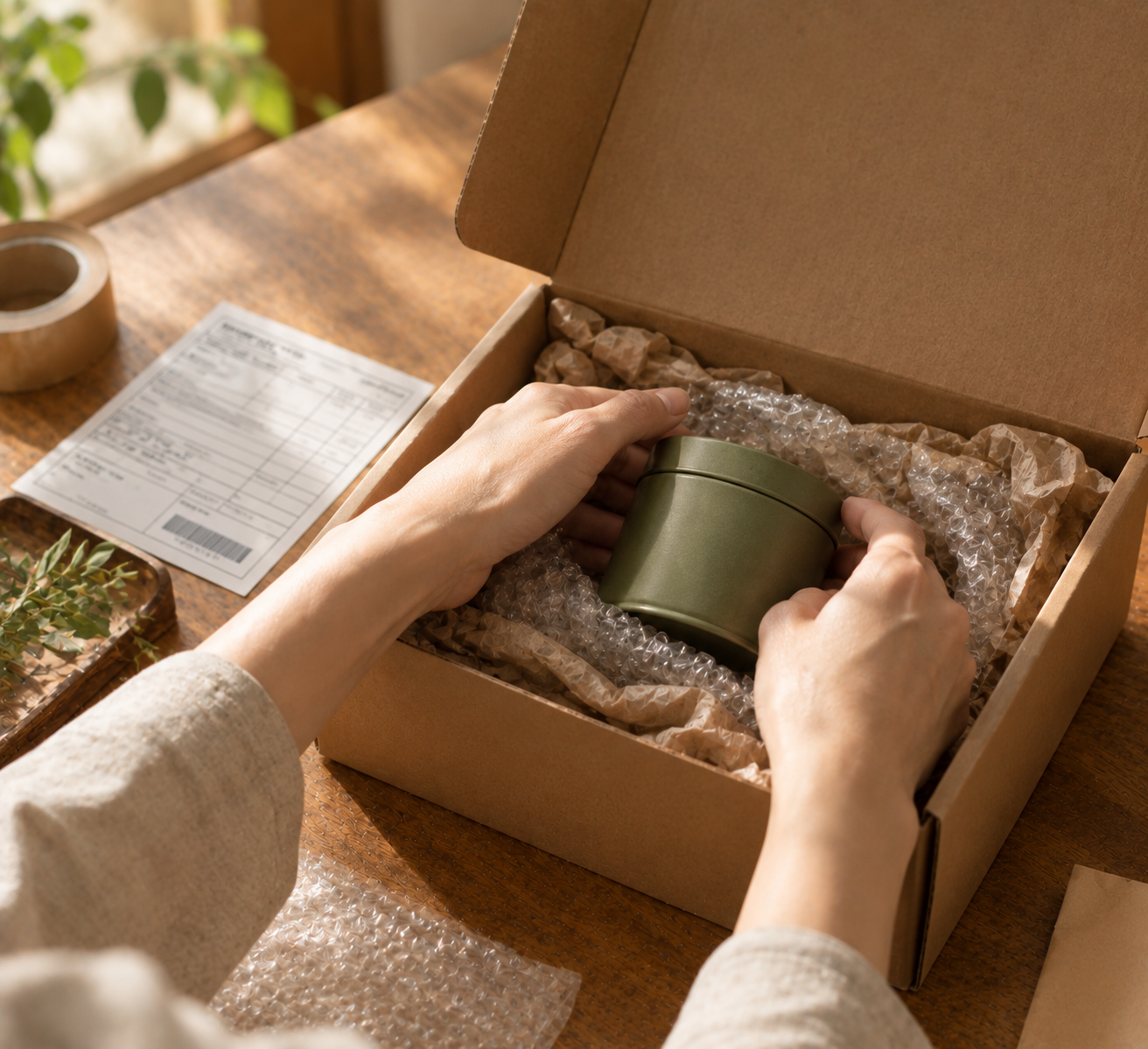
    Metal tins are the stronger default for a gift specifically, not just for everyday storage. They’re fully opaque, genuinely airtight when they use a gasket or double-lid design, and physically protect the contents from the kind of handling a gift might see in shipping or sitting in a bag. They also read as more premium on unboxing, which matters more for a gift than for tea you’re buying purely for yourself, and they’re reusable afterward, which pouches generally aren’t.

    Pouches can perform nearly as well when they use proper multi-layer barrier film with a reliable resealable closure, and they’re often more affordable, which matters if you’re including matcha as part of a larger gift set rather than the sole item. The tradeoff is that a lower-quality pouch is easier to damage or leave imperfectly resealed than a tin, which is a bigger risk for a gift you won’t personally handle again after giving it — you’re trusting the recipient to reseal it correctly every time, which isn’t a given for someone new to matcha.

    What to avoid entirely: clear glass or plastic packaging, however attractive it looks through a gift box window. Light exposure is one of matcha’s biggest enemies, and transparent packaging defeats a meaningful part of what protective packaging is for, regardless of how good it looks unwrapped. If a seller is using clear packaging specifically to show off the vivid green color, that same light exposure is quietly working against the product the whole time it sits on a shelf before the gift is even given.

    What Actually Signals Quality Protective Packaging

    A genuine airtight seal, whether a gasket lid on a tin or a proper zip-and-fold closure on a pouch, not just a snap-on lid that looks sealed but lets air through. If you’re buying rather than packaging matcha yourself, check product descriptions specifically for words like “airtight” or “gasket” rather than assuming any tin qualifies.

    Full opacity, not just a dark tint. Some packaging uses tinted rather than fully opaque material, which blocks less light than it appears to. A tin or foil-lined pouch is more reliable here than colored glass or plastic.

    A double-lid or inner-seal design, common on higher-quality tins, which adds a second layer of protection beyond the outer lid alone, particularly useful for a gift that might be opened and reclosed a few times by a curious recipient before being used regularly.

    Reasonable portion sizing for a gift specifically. A 30 to 40 gram tin is a common, sensible gift size, large enough to feel substantial but small enough that the recipient can reasonably work through it before quality declines, rather than a bulk size that outlives its own freshness before it’s finished.

    Building a Protective Gift Set, Not Just a Tin

    If you’re assembling a fuller gift rather than sending matcha alone, the packaging question extends to what surrounds the tin too. A gift box with a properly fitted insert keeps the tin from shifting and taking impact damage in transit, and pairing the tin with a chasen and chashaku gives the recipient everything they need to actually use the gift immediately rather than needing to source tools separately before their first cup.

    Where to Find Good Protective Tins

    Shop airtight matcha gift tins on Amazon →

    Shop matcha gift sets with tin and whisk on Amazon →

    A Few Things People Ask Me

    Is it worth repackaging matcha into a nicer gift tin if it originally came in a plain bag? Only if the replacement tin is genuinely airtight and opaque itself — transferring matcha into a decorative but poorly sealed container can do more harm than leaving it in a properly sealed original bag, however plain that bag looks.

    Does vacuum-sealed packaging offer a meaningful advantage over a standard airtight tin for gifting? It can extend freshness somewhat further, particularly useful if the gift might sit unopened for an extended period before the recipient starts using it, though a well-made standard airtight tin is sufficient for most gifting timelines under a few months.

    How do I know if a gift tin I’m buying is actually airtight, not just marketed that way? Look for a stated gasket or rubber seal in the product description, and check reviews specifically for mentions of the lid loosening or air getting in over time, since marketing language alone doesn’t always reflect real-world performance.

    Should I worry about the matcha degrading during shipping if I’m mailing a gift rather than handing it over in person? A genuinely airtight, opaque tin handles normal shipping timelines without meaningful degradation. The bigger risk with shipping is usually temperature extremes or rough handling denting a tin, not the packaging’s ability to block light and air specifically.

    Is it better to buy matcha already in gift-appropriate packaging, or buy plain matcha and package it myself? Buying from a seller whose standard packaging already meets the airtight, opaque criteria above is simpler and generally more reliable than repackaging yourself, since matching a proper seal at home is harder than it sounds. Reserve DIY repackaging for cases where you specifically want a personalized container and are confident it genuinely seals well.

    Do different matcha grades need different levels of packaging protection for a gift? Ceremonial grade, being the most delicate and expensive, benefits most from the highest level of protection, an airtight tin with a genuine gasket seal. Culinary grade is somewhat more forgiving and can hold up reasonably well in a good-quality resealable pouch, though the same general principles still apply.

    Where I Landed

    The instinct to prioritize how a gift looks unwrapped is natural, but for matcha specifically, protection and presentation aren’t actually in conflict, a genuinely good tin does both at once. Opaque, airtight, appropriately sized, that’s the checklist, and everything else, the ribbon, the box, the included teaware, is where you get to add the personal touch without compromising what’s actually protecting the tea inside.

    Getting this right also means the gift keeps delivering after the initial unboxing moment, which is really the whole point. A tin that looked beautiful for the five seconds it took to open but let the tea go dull within weeks is a worse gift than a simpler-looking one that still tastes vibrant months later.

    If you’re building out the rest of the gift alongside the packaging itself, my Japanese tea gift guide is a good next stop for matching the whole gift to the person you’re giving it to.

  • Nio Teas Teaware Guide: Kyusu, Shiboridashi, and Matcha Tools

    Nio Teas Teaware Guide: Kyusu, Shiboridashi, and Matcha Tools

    Disclosure: This post contains affiliate links, including to Nio Teas. If you buy through one of them, I may earn a small commission at no extra cost to you.

    Buying good tea and buying the right tool to actually brew it are two separate decisions, and Nio Teas is one of the few brands that treats both as equally worth getting right, stocking a genuine teaware catalog alongside its tea rather than treating equipment as an afterthought. This is a breakdown of what’s actually in that teaware lineup and which piece fits which brewing habit, so you’re not guessing based on product photos and a vague sense that “authentic Japanese teaware” sounds like the right thing to buy.

    The Problem You’re Actually Trying to Solve

    You’ve searched for a Nio Teas teaware guide because you’re deciding what to actually buy from their equipment catalog, kyusu, shiboridashi, chawan, chasen, and want to know which piece matches how you actually drink tea rather than guessing based on product photos alone.

    Who This Article Is NOT For

    Let’s save you some scrolling if this isn’t quite your situation.

    • If you want a broader comparison across multiple teaware brands rather than just Nio Teas’ catalog, my Japanese kyusu brands compared guide covers that wider ground.
    • If you already know exactly which piece you want, this general overview won’t add much — go straight to that product category.

    If you’re past that, here’s where the actual guide starts.

    The Kyusu Lineup

    Shop Nio Teas’ kyusu teapots →

    Nio Teas’ kyusu are genuine Tokoname clay, sold in what the brand describes as two main color variants that reflect different production methods rather than meaningfully different performance. The side-handle design, standard for this category, lets you pour with a controlled wrist motion without needing to grip the hot body of the pot directly.

    Who it’s for: Anyone brewing standard loose leaf green tea, sencha especially, as their everyday go-to. This is the right starting point for most people building a first proper Japanese tea setup, and it pairs naturally with the wider sencha catalog Nio Teas already stocks.

    The Shiboridashi

    Shop Nio Teas’ shiboridashi →

    The shiboridashi is a genuinely different tool from a kyusu, not just a stylistic variant. It’s flatter, handleless, and built specifically for small, concentrated infusions using a larger leaf-to-water ratio and as little as 50 milliliters of water. Rather than a carved filter, it uses small notches near the spout, which works because the larger, tightly rolled leaves typical of gyokuro and kabuse sencha don’t need heavy filtering the way finer cut leaf does. The small total volume isn’t a limitation so much as the entire point — a shiboridashi is built to produce something closer to a concentrated shot of tea than a full mug, meant to be savored slowly rather than gulped.

    Who it’s for: Specifically gyokuro and premium kabuse sencha drinkers. This isn’t a general-purpose teapot, and buying one expecting it to replace a kyusu for everyday sencha will leave you disappointed — its whole design is built around small, deliberate, special-occasion infusions rather than daily-volume brewing. If most of your tea drinking is a full mug on a regular morning, a kyusu remains the more practical daily tool.

    A notable detail: Nio Teas has bundled their shiboridashi with a complimentary pack of gyokuro from a named tea farmer in past offerings, which is a genuinely useful way to get both the tool and a tea specifically suited to it in one purchase, worth checking whether that pairing is currently available before buying the pot alone.

    Matcha Teaware: Chasen, Chawan, and Chashaku

    Shop Nio Teas’ matcha teaware and accessories →

    Nio Teas groups the core matcha tools together, the chasen (bamboo whisk), chawan (clay matcha bowl), and chashaku (bamboo scoop), both as individual pieces and as bundled sets.

    Chasen: Carved from a single piece of bamboo, designed specifically to whisk matcha into a smooth, foamy consistency. As covered in more depth in my matcha whisk buying guide, prong count matters here, and a mid-range count is generally the safest starting point for a first whisk.

    Chawan: A wider, steeper-sided clay bowl than a standard teacup, specifically shaped to give the chasen room to move through a proper whisking motion without splashing.

    Chashaku: The bamboo scoop used for measuring matcha into the bowl, typically two scoops per serving in casual use.

    Who it’s for: Anyone building a matcha routine from scratch. Buying these as a bundled set, when available, is generally the more convenient route for a first-time buyer over sourcing each piece separately.

    Which Piece Should You Actually Start With

    If you’re brewing everyday sencha or most standard green tea: the kyusu, without question. It’s the most versatile, highest-volume piece in the catalog.

    If you already own a kyusu and specifically want to elevate how you brew gyokuro: the shiboridashi, understanding it’s a specialty tool rather than a replacement for your everyday pot.

    If matcha is your main interest rather than steeped tea: the chasen, chawan, and chashaku set, ideally bundled together if available, rather than piecing them together individually.

    If you’re not sure yet which category you’ll settle into: start with the kyusu. It’s the more broadly useful piece, and you can add the shiboridashi or matcha set later once your preferences are clearer.

    A Few Things People Ask Me

    Does the kyusu color variant actually matter for performance? Based on Nio Teas’ own description, no — the two color variants reflect different production approaches rather than a meaningful difference in how well the pot brews tea. Choose based on aesthetic preference rather than expecting a functional difference.

    Is a shiboridashi harder to use than a standard kyusu? It requires a bit more attention to leaf-to-water ratio given its small volume, but it’s not technically difficult — if anything, the lack of a handle and simpler filter design make it a more direct, tactile brewing experience once you’re used to it.

    Can I buy the teaware without also buying tea from Nio Teas? Yes, the teaware catalog is browsable and purchasable independently of any specific tea purchase, though pairing a new kyusu or shiboridashi with a properly measured tea is a sensible way to get the most out of a new piece right away.

    Is Nio Teas’ teaware genuinely handmade, or mass-produced with artisan branding? The brand describes its Tokoname pieces as hand-sculpted clay, consistent with traditional small-batch production methods, though as with any handmade product, expect natural piece-to-piece variation rather than uniform, machine-precise consistency.

    Does buying teaware from Nio Teas guarantee compatibility with tea bought elsewhere? Yes — a kyusu, shiboridashi, or matcha set purchased from Nio Teas works exactly the same with tea sourced from any other brand, since these are standard traditional forms rather than proprietary designs tied to their own tea specifically.

    How does the shiboridashi’s price compare to a standard kyusu? The shiboridashi tends to sit at a premium relative to entry-level kyusu options, partly reflecting its more specialized, hand-sculpted construction and partly the fact that it’s a more niche item with lower production volume than the everyday kyusu category.

    Where I Landed

    What sets Nio Teas’ teaware apart from a lot of tea-focused brands is that it doesn’t feel bolted on as an afterthought, the shiboridashi bundled with gyokuro, the matcha tools grouped as coherent sets, all points to a catalog built by people who understand that the right tool changes what you can actually brew, not just how it looks doing it.

    Start with the kyusu if you’re building a first setup, and let your own brewing habits tell you whether the shiboridashi or a dedicated matcha set is worth adding next. There’s no need to buy the whole catalog at once — the point of teaware is that it should match a habit you already have, or one you’re genuinely ready to build, not sit unused because it seemed like a good idea at checkout.

  • Buying Matcha From Japan: What Actually Matters for International Shipping

    Buying Matcha From Japan: What Actually Matters for International Shipping

    Disclosure: This post contains affiliate links. If you buy through one of them, I may earn a small commission at no extra cost to you.

    I ordered a tin directly from a small Japanese producer once, excited about getting matcha as close to the source as possible, and it sat in customs for nearly three weeks before finally arriving. By the time I opened it, the color had already started drifting toward olive, not ruined, but nowhere near what it would have tasted like fresh off the mill. That experience taught me that “buying direct from Japan” isn’t automatically the fresher choice it sounds like on paper, and there’s a real logistics conversation worth having before you assume the source location is the only thing that matters.

    The Problem You’re Actually Trying to Solve

    You’ve searched for tips on international matcha shipping because you’re deciding between ordering directly from a Japanese producer, buying from a Western brand that imports and repackages, or picking something up locally, and you want to understand the actual tradeoffs rather than just assuming “direct from Japan” is automatically best.

    Who This Article Is NOT For

    Let’s save you some scrolling if this isn’t quite your situation.

    • If you’re buying wholesale quantities for a business, the logistics, customs paperwork, and minimum order requirements are genuinely different at that scale — this guide is written for individual personal orders.
    • If you’re buying from a Western brand’s own warehouse rather than direct from Japan, most of the customs and long-transit concerns below don’t apply to you, since the tea has already cleared import before you order it.

    If you’re past that, here’s where the actual guide starts.

    The Core Tradeoff: Source vs. Transit Time

    Ordering direct from a Japanese producer gets you the closest possible connection to the source, sometimes including rare, small-batch teas that never reach Western retailers at all. The tradeoff is transit time, typically 7 to 21 days depending on carrier and service level, plus the real possibility of customs delays adding unpredictable extra time on top of that. For a genuinely rare, single-farm tea you can’t get any other way, that tradeoff is often worth it.

    Ordering from a Western importer or brand trades some of that direct-source appeal for speed and, often, better-controlled storage once the tea has already cleared customs in bulk. A reputable importer with prompt shipping and proper storage can genuinely deliver fresher matcha to your door than a slow, customs-delayed direct order, even though the tea traveled the same original distance from Japan at some point. The key word is reputable — an importer with poor storage practices or slow fulfillment doesn’t automatically beat a well-packaged direct order.

    Neither approach is universally better — it depends on how much you value direct sourcing specifically versus how much freshness-on-arrival matters to you, and how patient you’re willing to be for a specific rare tea versus a reliably good everyday one.

    What Actually Protects Matcha During Transit

    Packaging matters more than shipping speed alone. Nitrogen-flushed, light-proof, food-grade pouches or tins can preserve freshness for many months even during a longer transit, while a poorly sealed bag will degrade regardless of how fast the carrier moves. Before ordering, check whether the seller describes their packaging specifically, not just their shipping speed — a seller confident enough in their packaging to describe it in detail is usually one that’s actually thought about the problem.

    Air freight is the standard for personal orders, and for good reason. Most legitimate matcha sellers ship via air courier (DHL, FedEx, EMS) rather than sea freight for anything under bulk quantities, landing in the 3 to 7 day range for the shipping portion itself, separate from any customs holding time. Sea freight, sometimes used for large wholesale orders, takes weeks and isn’t something an individual buyer should expect or want, and any seller offering only sea freight for a small personal order is worth double-checking before committing.

    Ask about milling date, not just harvest date, if you’re buying from a small producer. Some Japanese producers mill tencha into matcha only after an order is placed, which delivers genuinely fresher powder than pulling from pre-milled warehouse stock, even if the shipping time itself is identical either way. This distinction matters more than most buyers realize, since two tins with the same harvest year can still differ meaningfully in freshness depending on when the actual grinding happened.

    Customs, Duties, and What to Actually Expect

    For personal, individual-quantity orders, customs processing is usually straightforward, tea is a common, low-risk food import, but delays and small duties are still a real possibility depending on your country’s specific thresholds. Import duties and taxes, where applicable, are generally the buyer’s responsibility rather than something baked into the seller’s price, so it’s worth checking your own country’s de minimis threshold before ordering something you’d be upset to see held up or taxed unexpectedly. Declared customs value and accurate product description on the shipment (typically “green tea” or “matcha green tea powder”) also affect how smoothly a package clears, which is mostly outside your control as the buyer but worth knowing about if a shipment seems to be taking unusually long.

    Judging a Direct-From-Japan Seller Before You Order

    Do they name a specific region or farm? A seller willing to specify Uji, Nishio, or another named region, ideally down to a specific producer, is generally more trustworthy than one using vague “authentic Japanese matcha” language with no further detail.

    Do they describe their packaging specifically? As covered above, this is a genuine quality signal, not just marketing filler. Vague packaging language is a weaker sign than a seller who specifically mentions nitrogen flushing, light-proof material, or similar detail.

    Do they offer any tracking and realistic delivery estimates? A seller who gives you a specific, trackable shipping method and a realistic timeframe, rather than a vague “several weeks” estimate, is generally more reliable to deal with if something does go wrong in transit.

    Are prices suspiciously below the going market rate? Tencha prices have risen substantially in recent years due to global demand outpacing supply, so a direct-from-Japan seller offering prices dramatically below what established Western importers charge for comparable ceremonial-grade matcha is worth extra scrutiny rather than treated as simply a good deal.

    Buying Domestically as a Third Option

    Shop matcha with fast domestic shipping on Amazon →

    For anyone who’d rather sidestep the whole customs-and-transit-time question entirely, buying from a seller already shipping domestically, rather than internationally, removes most of the variables covered above at once. It’s not the same as a direct connection to a specific Japanese farm, but it’s a genuinely reasonable tradeoff if predictable, fast delivery matters more to you than sourcing directness.

    A Few Things People Ask Me

    Is matcha shipped internationally always fine without refrigeration? Generally yes — matcha is shelf-stable enough that refrigerated shipping isn’t required the way it would be for something perishable like fresh produce, though proper sealed packaging still matters for protecting flavor and color during the transit window.

    Should I combine orders from multiple Japanese sellers to save on shipping? This is a reasonable strategy if you’re ordering from sellers who ship from similar locations, since it can meaningfully reduce per-item shipping cost, though it’s worth weighing against the convenience of dealing with a single seller and a single tracking number.

    Is it worth using a package-forwarding service to buy from Japan-only retailers? For genuinely rare products not available through any international-shipping seller, a forwarding service can work, though it adds cost, complexity, and an extra leg of transit time that a direct-shipping seller wouldn’t require. It’s a reasonable last resort, not a first choice.

    How do I know if a delayed shipment has actually degraded the matcha inside? Check color and aroma on arrival regardless of how long transit took — vivid green and a fresh, grassy smell are good signs even after a longer-than-expected delay, while a dull, olive tint or flat smell suggests real degradation happened, independent of what the shipping timeline alone would predict.

    Does the country I’m shipping to significantly change my odds of a smooth delivery? Yes, meaningfully. Customs efficiency, de minimis thresholds, and typical clearance times vary widely by country, so a seller with generally reliable shipping to one region may perform noticeably differently to another. Checking seller reviews specifically from buyers in your own country is more useful than general reviews alone.

    Is buying through a large online marketplace safer than a small producer’s own website for international orders? Not automatically — marketplace listings vary enormously in seller quality, and a well-vetted small producer’s own site can be just as reliable, sometimes more so, than an unverified third-party marketplace listing. The seller-quality checks covered above matter more than which platform you’re buying through.

    Where I Landed

    The lesson from my own customs-delayed tin wasn’t “never buy direct from Japan” — it was “ask about packaging and realistic timelines before assuming direct sourcing automatically means fresher.” A well-packaged tin from a careful small producer, even with a longer transit time, often beats a poorly sealed one from a faster source, and a reputable Western importer with good storage practices can genuinely rival a slow direct order in what actually reaches your cup.

    None of this means direct-from-Japan orders are a bad idea. It means the source location alone isn’t the full picture, and the questions worth asking, packaging, milling date, realistic shipping estimates, matter just as much as where the tea started its journey.

    If you’re deciding between specific brands rather than sourcing strategy in the abstract, my matcha powder brands comparison covers several options that handle international shipping well without requiring you to navigate a Japan-only storefront yourself.

  • Matcha vs. Matcha Latte: The Actual Calorie Difference

    Matcha vs. Matcha Latte: The Actual Calorie Difference

    Disclosure: This post contains affiliate links. If you buy through one of them, I may earn a small commission at no extra cost to you. This article is for general information and isn’t a substitute for advice from a registered dietitian or your doctor about your individual nutrition needs.

    Plain matcha, just powder whisked into water, is essentially a non-issue calorically, somewhere around 6 calories for a typical 2-gram serving. A café matcha latte can run anywhere from under 50 calories to well over 300, and the gap between those numbers has almost nothing to do with the matcha itself. It’s entirely about what gets added to it, which is exactly the part most people never think to question when they assume “matcha” automatically means “light.”

    The Problem You’re Actually Trying to Solve

    You’ve searched for a matcha versus matcha latte calorie comparison because you’re trying to understand where the calories in your daily matcha habit are actually coming from, whether that’s out of general curiosity or because you’re paying attention to your overall intake and want accurate numbers rather than vague assumptions about matcha being automatically “healthy” or “light.”

    Who This Article Is NOT For

    Let’s save you some scrolling if this isn’t quite your situation.

    • If you’re looking for specific calorie targets or a restrictive eating plan, this article isn’t that resource, and general information here shouldn’t be treated as individualized dietary guidance — a registered dietitian is the right resource for that.
    • If you already know your preferred preparation and aren’t questioning the calories, there’s nothing here that changes what you’re already doing.

    If you’re past that, here’s where the actual comparison starts.

    The Numbers, Side by Side

    PreparationApproximate Calories
    Plain matcha (2g, whisked in water)~6
    Matcha latte, unsweetened almond milk40–65
    Matcha latte, unsweetened whole milk150–155
    Matcha latte, oat milk + 1 tbsp syrup180–220
    Café matcha latte (pre-sweetened powder, dairy milk, grande-sized)220–290

    These are general ranges pulled from typical recipes and published café nutrition data, not exact figures for every product — actual numbers vary by brand, milk choice, and portion size.

    Where the Calories Actually Come From

    Plain Matcha Is Nearly Calorie-Free

    Matcha itself, prepared traditionally with just water, is close to negligible calorically, similar to plain steeped green tea. This makes sense once you remember what matcha actually is: dried, ground tea leaf, with essentially no fat, sugar, or significant caloric content on its own.

    Milk Is the First Major Variable

    Once milk enters the picture, calories climb according to fat content. Unsweetened almond milk adds relatively little, often under 50 calories for a full serving, while whole dairy milk can add well over 100 calories on its own before any sweetener is considered. Oat milk tends to land in the middle, with its own naturally occurring sugars contributing a bit more than almond milk without reaching dairy’s fat-driven calorie count. Skim or low-fat dairy sits closer to the plant-based options than whole milk does, which is worth knowing if you prefer dairy’s flavor but still want to keep the number down.

    Shop unsweetened almond and oat milk barista blends on Amazon →

    Sweetener Is Usually the Biggest Swing Factor

    A tablespoon of honey, maple syrup, or simple syrup typically adds somewhere between 48 and 70 calories on its own, and many café recipes use more than one serving’s worth. This is frequently the single largest calorie contributor in the whole drink, often outweighing the milk itself, and it’s also the easiest variable to control at home since you decide exactly how much, if any, goes in.

    Pre-Sweetened Café Matcha Powder Changes the Math Entirely

    This is the detail that surprises a lot of people. Some major coffee chains use a matcha powder that’s pre-blended with sugar as a base ingredient, meaning even an “unsweetened” order still carries built-in sugar you can’t fully opt out of. A grande-sized version of this kind of drink can land in the same calorie range as a plain milk-based espresso latte, which runs counter to matcha’s general reputation as the lighter option. Published nutrition data for one major chain’s grande matcha latte with whole milk shows roughly 220 to 240 calories and around 29 to 32 grams of sugar, almost identical to that same chain’s plain coffee latte at an equivalent size. My how to order a matcha latte at a café guide covers how to actually ask about this before you order, rather than finding out after the fact.

    How It Stacks Up Against Other Popular Drinks

    Context helps here, since “matcha latte” alone doesn’t tell you much without something to compare it against.

    Drink (roughly equivalent size)Approximate Calories
    Plain matcha or plain green tea2–6
    Black coffee or espresso shot2–5
    Unsweetened matcha latte, almond milk40–65
    Café matcha latte, dairy milk, pre-sweetened220–290
    Vanilla latte (espresso-based)250–320
    Blended matcha “cream” frappé-style drink350–450+

    The pattern that shows up repeatedly: the base tea or coffee itself is nearly weightless calorically in every row of this table. What separates a 6-calorie cup from a 400-calorie one is entirely the dairy, sugar, and any blended or whipped additions layered on top, regardless of which base ingredient started the drink.

    Ordering a Lighter Version Without Losing the Flavor

    If you’re specifically trying to keep the calorie count down while still ordering out rather than making it yourself, a few adjustments make a real difference without asking you to give up the drink entirely.

    Ask for the matcha “shots” or scoops reduced, not eliminated. Some cafés use a set number of matcha scoops per size, each carrying its own share of sugar if the powder is pre-sweetened. Asking for one fewer scoop trims both calories and sugar together, though it will also reduce the matcha flavor and caffeine somewhat.

    Request sweetener on the side rather than mixed in. This single change gives you the ability to add exactly as little as you want, rather than trusting a default recipe amount that’s often more generous than necessary.

    Choose unsweetened almond or oat milk over whole dairy. This is consistently one of the larger, easier swaps, often saving 50 to 100 calories depending on the size ordered.

    Consider a smaller size rather than assuming you need the largest available. A tall matcha latte with the same recipe as a venti can carry less than half the calories simply due to portion size, which is an easy lever that has nothing to do with the recipe itself.

    Where to Get Ingredients for a Lighter Build at Home

    Shop unsweetened premium matcha powder on Amazon →

    What This Means in Practice

    If you’re drinking plain matcha: calories are essentially not a meaningful factor, similar to plain tea or black coffee.

    If you’re making a latte at home: you have full control over milk type and sweetener amount, which is the single biggest lever for adjusting the calorie count in either direction, using ratios similar to what’s covered in my how to make a matcha latte guide.

    If you’re ordering at a café: ask whether the base matcha powder is pre-sweetened before assuming “unsweetened” fully removes added sugar, since some blends carry sugar as a built-in ingredient rather than an optional add-on.

    A Few Things People Ask Me

    Does a matcha latte have fewer calories than a regular coffee latte? Not automatically. Because some café matcha powders are pre-sweetened, a matcha latte can land in a similar or even higher calorie range than a plain milk-based coffee latte at an equivalent size, depending on the specific chain and recipe.

    Is oat milk or almond milk the lower-calorie choice for a matcha latte? Unsweetened almond milk is generally the lower-calorie option of the two, since oat milk carries somewhat more natural sugar and calories on its own, though both are meaningfully lighter than whole dairy milk.

    Do the health benefits of matcha offset the calories in a latte? That’s a different question from calorie counting specifically — matcha’s catechin and L-theanine content doesn’t change based on how many calories are in the milk and sweetener surrounding it. The two are worth thinking about separately rather than assuming one cancels out the other.

    Is it possible to get the flavor of a sweet matcha latte with meaningfully fewer calories? Reducing sweetener gradually, using a bolder culinary or latte-grade matcha (which needs less dressing up to taste satisfying), and choosing a lighter milk are the three most effective adjustments, roughly in that order of impact.

    Does iced versus hot change the calorie count at all? Not meaningfully on its own — ice itself carries no calories, so an iced and hot version of the same recipe, same milk, same sweetener amount, will land at essentially the same total. Any difference you notice between a café’s iced and hot versions usually comes down to a different recipe or portion size, not the temperature itself.

    Are “protein matcha” or other fortified café versions actually lower in calories? Not usually, and sometimes the opposite. Added protein powder or collagen typically increases the total calorie count even when sugar is reduced, since protein itself carries calories too. These drinks are better understood as a different nutritional tradeoff, more protein for a similar or higher calorie cost, rather than a straightforwardly “lighter” option.

    Does the size of the matcha serving itself (not the milk) meaningfully change calories? Barely. Even doubling the matcha powder in a drink adds only a handful of calories, since matcha itself is so close to negligible. If a “stronger” or “double matcha” version of a drink costs noticeably more calories, that’s almost always because it also comes with more milk or sweetener, not because of the matcha increase itself.

    Where I Landed

    The calorie story here really isn’t about matcha at all — it’s about milk and sugar, the same two variables that determine the calorie count of nearly every espresso-based drink too. Plain matcha is about as close to calorie-free as a satisfying beverage gets. What you build around it is entirely up to you, and knowing where the calories actually come from means you can make that choice deliberately rather than assuming the word “matcha” on a menu automatically means “light.”

    If you want full control over that build, twenty minutes with the right ratios is all it takes to make your own.