Author: arino

  • The Matcha Dessert Guide: What’s Actually Worth Making

    The Matcha Dessert Guide: What’s Actually Worth Making

    Disclosure: This post contains affiliate links. If you buy through one of them, I may earn a small commission at no extra cost to you.

    My first attempt at matcha ice cream came out tasting almost entirely like sweetened cream with a faint green tint, and I spent a while assuming matcha just didn’t translate well into frozen desserts. It turned out the problem was the same one that trips people up in baking: not enough matcha, and the wrong grade for the job. Once I fixed both, the difference wasn’t subtle — the tea flavor finally showed up instead of hiding behind the cream and sugar, and I realized the issue had never been the ingredient itself.

    Matcha desserts range from genuinely easy weeknight projects to more involved multi-step recipes, and the trick to enjoying this whole category is picking the right one for your patience level rather than jumping straight to the most photogenic option you saw online. Some of the most Instagrammable results also happen to be the most forgiving to make, which is a nice coincidence worth knowing about upfront.

    The Problem You’re Actually Trying to Solve

    You’ve searched for a matcha dessert guide because you want to make something beyond a latte or a batch of cookies, and the sheer number of options, ice cream, mochi, cheesecake, tiramisu, parfaits, makes it hard to know where to start or which ones are actually approachable versus which ones look simple in a video but are genuinely fussy in practice.

    Who This Article Is NOT For

    Let’s save you some scrolling if this isn’t quite your situation.

    • If you want baking-specific technique and ratios, my how to bake with matcha guide covers cookies, cakes, and brownies in more depth than this broader overview does.
    • If you want a single locked recipe with exact measurements for one dessert, this covers the landscape of options and what to expect from each, with example ratios rather than one definitive recipe per dessert.
    • If you’re looking for traditional wagashi specifically, my wagashi beginner guide covers that separate, more traditional category of Japanese sweets.

    If you’re past that, here’s where the actual guide starts.

    What Actually Matters Across Every Matcha Dessert

    Three things determine whether a matcha dessert tastes like a real tea-flavored treat or just sweetened cream with a green tint, and they hold true across nearly every recipe in this category.

    1. Grade. Culinary-grade matcha, not ceremonial grade, is the right call for nearly everything here. It’s bolder and more affordable, and it survives competing against cream, sugar, and chocolate better than a delicate ceremonial tin does.

    2. Amount. Desserts with a lot of dairy or sugar (ice cream, cheesecake) need more matcha per batch than you’d expect to actually register as matcha-flavored, not just green-tinted.

    3. When the matcha goes in. Some desserts (no-bake cheesecake, mochi filling) let you taste and adjust as you go, which is far more forgiving than a baked dessert where you’re committed once it’s in the oven.

    The Desserts, One by One

    Matcha Ice Cream

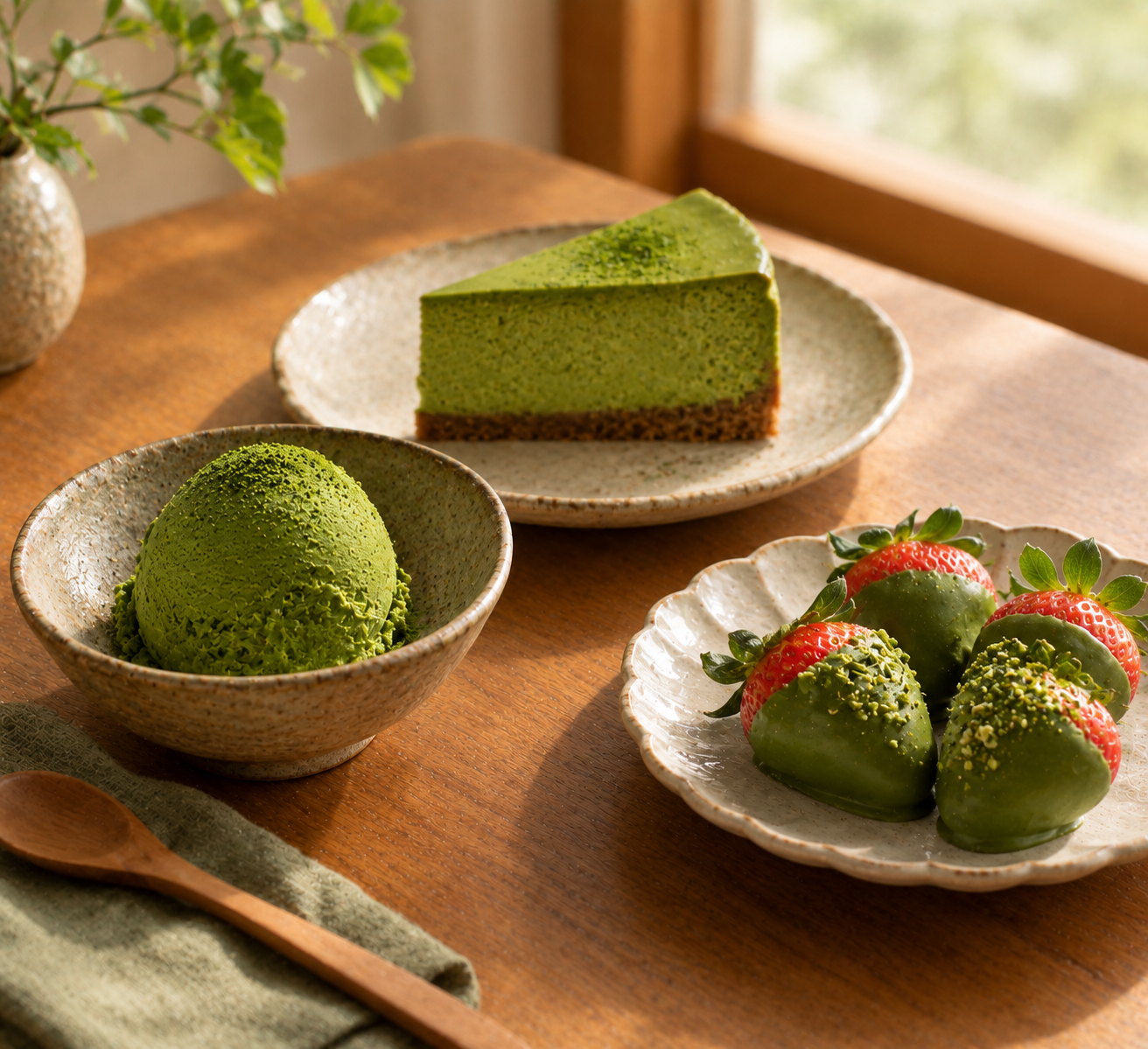
    The most straightforward entry point, and a genuinely good place to start if you’ve never cooked with matcha before. A basic custard or no-churn base takes matcha well, since the fat content in cream and milk mellows its more vegetal edge naturally.

    The key adjustment: Standard recipes tend to under-matcha for how much dairy is involved. Where a cookie recipe might use 1 to 2 teaspoons per cup of flour, ice cream generally wants closer to 2 to 3 tablespoons of matcha per quart of base to actually taste distinctly like matcha once frozen, since cold temperatures mute flavor perception more than you’d expect. Taste the unfrozen base and expect it to seem slightly stronger than you want before churning — the cold will tone it down more than you’d guess.

    Why it works well as a starting point: You can taste and adjust the unfrozen base before committing it to the freezer, which removes most of the guesswork a baked dessert doesn’t allow for.

    Matcha Mochi (Ice Cream Mochi)

    This one has more steps than ice cream alone, since you’re making both a filling and a separate glutinous rice dough, but none of the individual steps are difficult on their own, just numerous enough to plan for a bit more prep time than a single-bowl recipe would need.

    The method, broadly: A cream cheese and matcha filling gets frozen into small discs first, then wrapped in a glutinous rice flour dough that’s been cooked into a smooth, stretchy consistency. The dough itself typically uses very little or no matcha, since the filling is where the flavor concentration lives, and the dough’s job is mostly textural rather than flavor-forward.

    Why it’s worth the extra steps: The contrast between the chewy mochi exterior and the cold, creamy filling is genuinely part of the appeal, and it travels and stores better in the freezer than a scoop of loose ice cream does, making it a good make-ahead option for guests.

    No-Bake Matcha Cheesecake

    A genuinely forgiving dessert for a matcha beginner, since there’s no baking step to worry about scorching the color or flavor, and you can taste the filling before it sets.

    The method, broadly: A cream cheese, sugar, and whipped cream filling with sifted matcha folded in, poured over a cookie crumb crust and chilled until set, typically for several hours or overnight.

    Why it’s a good pick: Because you can taste the filling before refrigerating it, this is one of the easiest matcha desserts to dial in to your own preferred strength on the first attempt, without any risk of overbaking ruining the color the way a baked cheesecake can.

    Matcha Tiramisu

    A less traditional but increasingly popular variation on the Italian classic, swapping the espresso-soaked ladyfingers for a matcha-soaked version, layered with mascarpone.

    The method, broadly: Whisked matcha (prepared similarly to how you’d make a latte base) replaces the espresso for soaking the ladyfingers, layered with a sweetened mascarpone and whipped cream mixture, dusted with more matcha on top instead of cocoa powder.

    Why it works: Matcha’s slight bitterness plays a similar structural role to espresso’s bitterness in the original recipe, cutting through the richness of the mascarpone in a genuinely comparable way, which is part of why this variation has caught on rather than feeling like a forced substitution.

    Matcha-Covered Strawberries and Simple Toppings

    The lowest-effort option on this list, and worth knowing about specifically because not every matcha dessert needs to be a project.

    The method: Melted white chocolate mixed with sifted matcha, used to dip strawberries or drizzle over other simple desserts like ice cream or plain cake.

    Why it’s worth having in your back pocket: When you want something matcha-flavored without committing real time to it, this delivers a genuine result in minutes rather than hours.

    What You’ll Need

    Shop culinary-grade matcha for desserts on Amazon →

    Shop mochi molds on Amazon →

    A Few Things People Ask Me

    Why does my matcha dessert taste flat even though I followed a recipe closely? Two likely culprits: using ceremonial-grade matcha where culinary grade was actually the right call, or a recipe that simply under-measures matcha relative to how much dairy or sugar is in the batch. Don’t be afraid to increase the matcha amount slightly beyond what a recipe states if the first attempt tastes underwhelming.

    Can I use the same matcha for drinking and for desserts? You can, but you’ll get more value using a dedicated culinary-grade tin for desserts and saving a ceremonial-grade tin for drinking straight. Culinary grade is both more affordable and better suited to holding up against competing flavors, so there’s little reason to use your nicer tin for baking or frozen desserts.

    Do matcha desserts need to be less sweet than regular versions to let the tea flavor come through? Not necessarily less sweet, but matcha does pair particularly well with slightly reduced or more restrained sweetness compared to, say, a very sugary vanilla dessert, since excess sugar can bury matcha’s more subtle savory-bitter character. Many matcha dessert recipes lean slightly less sweet than their non-matcha counterparts for exactly this reason.

    Which dessert on this list is the best starting point if I’ve never cooked with matcha before? No-bake matcha cheesecake or matcha ice cream, both for the same reason — you can taste and adjust the base before it’s locked in by baking or freezing, which removes most of the risk of a disappointing first attempt.

    Can I make any of these ahead of time for a gathering? Matcha mochi and no-bake cheesecake are both genuinely better make-ahead options than ice cream churned fresh that day, since mochi holds up well in the freezer for days and cheesecake actually benefits from a longer chill time to fully set and develop flavor. Ice cream is best within a week or two of churning before texture starts to suffer from ice crystal formation.

    Is white chocolate really the best pairing for matcha, or does dark chocolate work too? White chocolate is generally the more popular pairing because its sweetness and creaminess complement matcha’s bitterness without competing against it the way dark chocolate’s own bitterness can. Some people do enjoy the combination of matcha and dark chocolate, but it’s a bolder, more polarizing pairing than the more universally liked white chocolate version.

    Where I Landed

    The lesson from my flat-tasting first ice cream batch really does apply across this whole category: use culinary grade, and use more of it than most recipes initially suggest, especially in anything dairy-heavy. Once that’s dialed in, matcha desserts stop being a gamble and start being one of the more reliable ways to introduce matcha to someone who’s on the fence about the flavor in its straight, undiluted form — the sweetness and familiar dessert format does a lot of the persuading that a plain bowl of whisked matcha never quite manages on its own.

    Start with whichever of these feels most approachable given your own patience for kitchen projects, not necessarily the one that looks most impressive online. A simple no-bake cheesecake done well beats an ambitious mochi attempt that falls apart from rushed prep, every time.

    If you want the deeper technical dive into ratios and troubleshooting specifically for baked goods, my how to bake with matcha guide picks up where this one leaves off, and my matcha powder brands comparison is worth a look if you don’t yet have a good culinary-grade tin on hand.
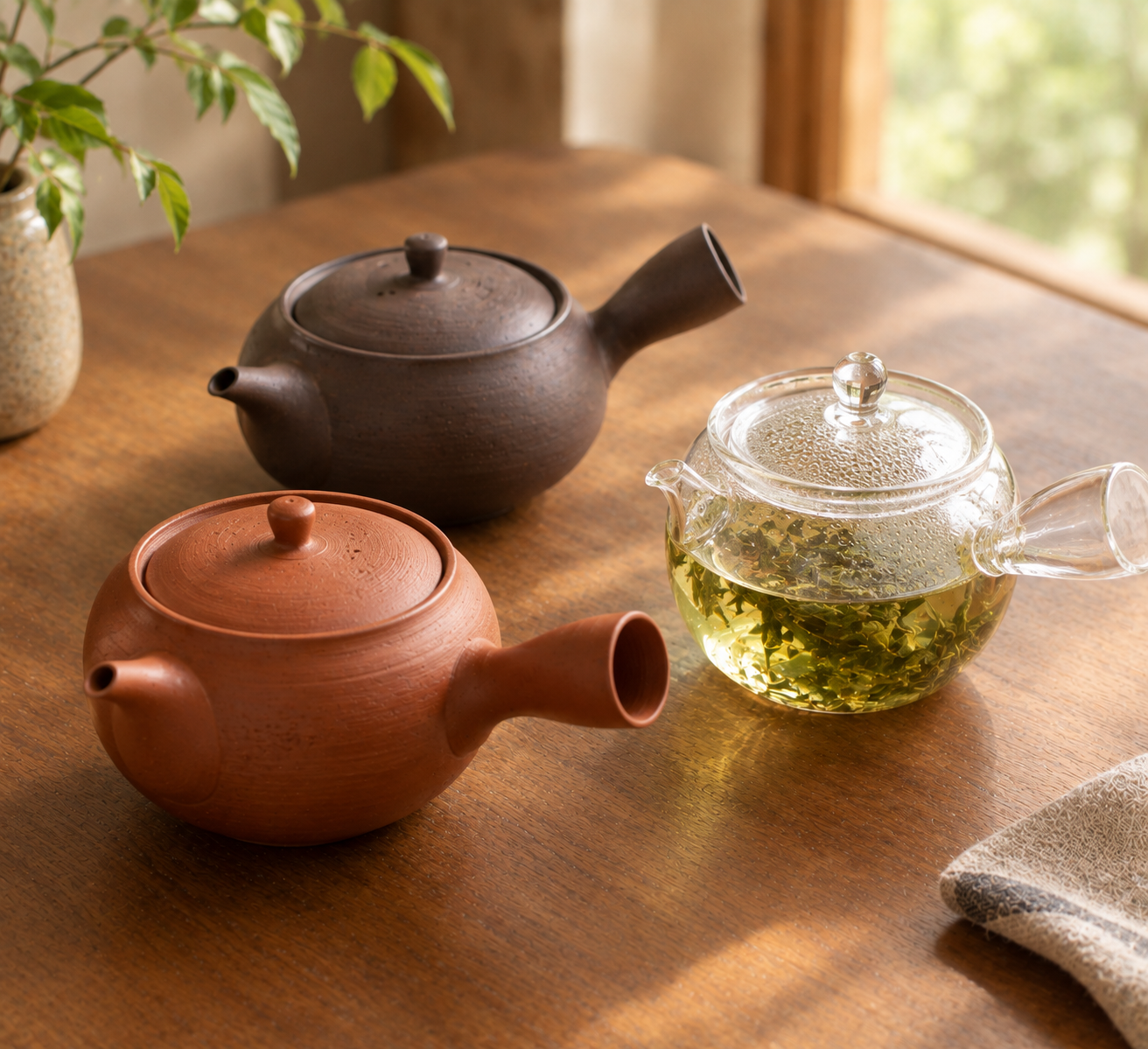
  • Japanese Kyusu Brands Compared: Yamakiikai, KIMIKURA, COTONOHA, and More

    Japanese Kyusu Brands Compared: Yamakiikai, KIMIKURA, COTONOHA, and More

    Disclosure: This post contains affiliate links. If you buy through one of them, I may earn a small commission at no extra cost to you.

    Once you know what to look for in a kyusu, clay type, handle style, filter design, the next question is genuinely harder to answer: which actual brand or maker do you buy from? Type “kyusu” into a shopping search and you’ll get everything from centuries-old Tokoname kilns to modern Japanese housewares brands to budget imports that borrow the shape without much of the substance behind it, all sitting side by side in a results page with no obvious way to tell them apart at a glance.

    I went through several of the names that come up most often, across both traditional clay and a well-known modern alternative, to sort out which ones are actually worth your money and which ones are riding on Tokoname’s reputation without quite earning it themselves.

    The Problem You’re Actually Trying to Solve

    You’ve searched for a kyusu brand comparison because you already understand, or want to understand, the basics of what makes a good kyusu, and now you’re facing an overwhelming number of specific product listings that all claim to be “authentic Tokoname” or “handmade Japanese pottery” without much to actually differentiate one from another at a glance. This guide sorts through several of the more established names so you’re choosing based on something more concrete than star ratings alone.

    Who This Article Is NOT For

    Let’s save you some scrolling if this isn’t quite your situation.

    • If you haven’t yet decided what kind of kyusu you want (handle style, clay type), start with my kyusu buying guide first, then come back here once you know what you’re shopping for.
    • If you’re looking for antique or one-of-a-kind collector pieces, this covers accessible, currently-produced brands rather than the vintage and auction market, which follows very different pricing and authentication rules.
    • If budget is your only concern and authenticity doesn’t matter to you, most of the brands below sit in the mid-range rather than the absolute cheapest tier, since genuine Tokoname or Banko craftsmanship, even from a smaller maker, carries real production cost.

    If you’re past that, here’s where the actual comparison starts.

    What I Actually Judged These On

    Three criteria, consistent with how every guide on this site is built.

    1. Authenticity of craft. Is the kiln, clay origin, and maker genuinely traceable, or is “Tokoname-style” doing a lot of marketing work without a verifiable production origin behind it?

    2. Consistency and quality control. Handmade pottery naturally varies piece to piece, but a good maker still delivers dependable filter performance and pour control across their catalog, not just in their best-photographed pieces.

    3. Fit for different buyers. A centuries-old artisan kiln and a modern accessible housewares brand serve genuinely different needs, and neither is automatically the “correct” choice for every buyer.

    Comparison Table

    Brand/MakerClay/MaterialStylePrice RangeBest For
    YamakiikaiTokoname clayTraditional handmade, patterned options available~$40–90Authentic Tokoname craftsmanship, gift-worthy pieces
    KIMIKURATokoname clayClean, modern-leaning Tokoname~$30–60First-time clay kyusu buyers
    COTONOHABanko clayModern Banko-yaki with steel strainer~$25–50Buyers wanting Banko specifically, reliable filtering
    Hario ChaCha Kyusu MaruHeat-resistant glassModern, not traditional clay~$25–40Watching the leaves, easy cleaning, multi-tea use
    Nio Teas (curated)Tokoname clay (sourced from small artisans)Curated selection for Western buyers~$30–70English-speaking buyers wanting guided artisan sourcing

    The Brands, One by One

    Yamakiikai

    Shop Yamakiikai kyusu teapots on Amazon →

    Yamakiikai is a genuinely established Tokoname maker, producing everything from simple, budget-friendly ash-glazed rounds to more elaborate patterned pieces with decorative crests.

    What I liked: The range within one maker is genuinely useful — you can start with a modest, single-serve ash-glazed piece and later step up to a more elaborate patterned kyusu without switching brands entirely. The handmade character is real, not just marketing language, and it shows in small variations from piece to piece that mass-produced imports don’t have.

    What bugged me: Because pieces are handmade, sizing and exact proportions can vary slightly between what you see in photos and what arrives, which is standard for genuine artisan pottery but worth expecting going in rather than being surprised by.

    Bottom line: A strong, traceable choice if authentic Tokoname craftsmanship matters to you and you’re comfortable with the natural variation that comes with handmade pieces.

    KIMIKURA

    Shop KIMIKURA Tokoname kyusu on Amazon →

    KIMIKURA sits in a similar Tokoname clay category to Yamakiikai but leans toward cleaner, more minimal, contemporary shapes rather than heavily patterned traditional designs.

    What I liked: For a first clay kyusu, KIMIKURA’s more understated aesthetic and consistently well-reviewed filter performance make it an easy, low-friction entry point. It doesn’t ask you to commit to an ornate traditional look if that’s not your style, while still delivering genuine Tokoname clay’s tannin-softening benefit.

    What bugged me: If you specifically want the more traditional, decorative look associated with classic Tokoname ware, KIMIKURA’s more minimal designs won’t scratch that particular itch as well as a maker like Yamakiikai will.

    Bottom line: A great starting point if you want authentic Tokoname clay without a heavily traditional aesthetic attached to it.

    COTONOHA

    Shop COTONOHA Banko-yaki kyusu on Amazon →

    COTONOHA works in Banko clay rather than Tokoname, and pairs it with a bottom-mounted stainless steel strainer rather than the ceramic mesh filters more common in Tokoname pieces.

    What I liked: If you’ve decided Banko clay specifically is what you want, based on its reputation for enhancing umami and its association with gyokuro and higher-grade sencha, COTONOHA is one of the more accessible ways to get there. The steel bottom strainer is also genuinely good at resisting clogs with finer tea particles compared to some ceramic mesh designs.

    What bugged me: A steel strainer, while functional, is a slight departure from the fully traditional all-ceramic construction some purists prefer, and it’s worth knowing that distinction going in if authenticity to the classic Banko form matters to you specifically.

    Bottom line: The clearest path to genuine Banko clay if that’s specifically what you’re after, with a filter design that handles fine sediment unusually well.

    Hario ChaCha Kyusu Maru

    Shop Hario ChaCha Kyusu on Amazon →

    Hario, better known internationally for pour-over coffee equipment, makes this heat-resistant glass kyusu as a genuinely different alternative to clay. It’s worth including specifically because it represents such a clear departure from everything else on this list.

    What I liked: Glass adds zero mineral character to your tea, which makes it the most flexible option here for brewing different tea types in the same pot without the flavor cross-contamination concern that comes with unglazed clay. It’s also easy to clean with mild soap, unlike clay, and lets you watch the leaves unfurl, which some people genuinely enjoy as part of the process.

    What bugged me: You lose the flavor-softening, tannin-mellowing effect that unglazed clay develops over time, and glass doesn’t retain heat quite as well through a longer multi-infusion session. It’s a fundamentally different tool, not a lesser version of a clay kyusu.

    Bottom line: The right pick if you want maximum flexibility across different teas, or if the idea of dedicated single-tea clay pots feels like more commitment than you want right now.

    Nio Teas (Curated Artisan Sourcing)

    Shop Nio Teas’ kyusu collection →

    Nio Teas isn’t a maker itself but a retailer that sources handmade Tokoname kyusu directly from small Japanese artisan producers, curated specifically for an English-speaking, Western customer base.

    What I liked: If navigating Japanese pottery marketplaces directly feels intimidating, Nio Teas’ curation does that legwork for you, and the pieces are genuinely sourced from small Tokoname producers rather than anonymous mass manufacturing. It’s a solid middle ground between fully DIY sourcing and buying from a large, impersonal retailer.

    What bugged me: Because it’s a curated selection rather than a single maker’s full catalog, the range at any given time is narrower than going directly to a maker like Yamakiikai with a larger overall product line.

    Bottom line: A comfortable, guided entry point if you’d rather not research individual Japanese kilns yourself and trust a specialist retailer to have already done that vetting.

    Which One Should You Actually Buy

    If you want the most authentic, traditional Tokoname experience: Yamakiikai, especially if you’re drawn to a more decorative, classic aesthetic.

    If you want Tokoname clay with a cleaner, more contemporary look: KIMIKURA.

    If you specifically want Banko clay: COTONOHA, particularly if you value strong filter performance for finer tea leaves.

    If you want maximum flexibility across multiple tea types without dedicating a pot to just one: the Hario ChaCha Kyusu Maru.

    If you’d rather have a specialist retailer curate the sourcing for you: Nio Teas’ collection.

    A Few Things People Ask Me

    Is a glass kyusu like the Hario a legitimate choice, or is it seen as a lesser option among tea enthusiasts? It’s a legitimate, genuinely different tool rather than a downgrade. Some serious tea drinkers keep both a clay kyusu for a dedicated everyday tea and a glass one for variety or for teas they don’t want to commit a clay pot to long-term.

    Does buying from a curated retailer like Nio Teas cost more than buying directly from a maker? Not necessarily dramatically more, though there’s often some premium built in for the curation and English-language customer support. If you’re comfortable researching Japanese makers yourself, going direct can sometimes save a bit, but the convenience has real value if that research isn’t something you want to take on.

    How do I know if a listing claiming “Tokoname” or “Banko” is actually genuine? Look for the maker or kiln name specifically listed, not just the clay region as a generic descriptor. A listing that names an actual studio or maker (like Yamakiikai, KIMIKURA, or a specific kiln) is a stronger signal of authenticity than one that only uses “Tokoname-style” as a loose marketing term without attribution.

    Do these brands ship internationally, or are they mainly available through Japanese retailers? Most of the brands and curated retailers covered here are accessible through Amazon and international shipping options, which is part of why they made this list rather than smaller makers who sell exclusively through Japan-only marketplaces.

    Is it worth paying more for a named maker versus an unbranded “Tokoname-style” listing at a lower price? Generally yes, if authenticity and long-term durability matter to you. Named makers have a reputation to protect and tend to be more consistent in clay quality and filter construction, while unbranded budget listings can vary wildly, sometimes using a thinner clay body or a less effective filter design to hit a lower price point.

    Can I mix and match — a Yamakiikai kyusu for one tea and a Hario glass one for another? Absolutely, and it’s actually a common approach among people who drink a genuine variety of teas. A dedicated clay pot for your everyday sencha or gyokuro, paired with a glass kyusu for occasional different teas or for guests, avoids the flavor cross-contamination concern that comes with using one unglazed clay pot for everything.

    Where I Landed

    If I had to recommend just one starting point, it’d be KIMIKURA for most first-time clay kyusu buyers — genuine Tokoname clay, a clean aesthetic that doesn’t demand you commit to a heavily traditional look, and consistently solid filter performance. If you already know you want the more decorative, classic Tokoname look, Yamakiikai is worth the slightly higher investment, and if variety across many tea types matters more to you than a single dedicated pot, the Hario glass option is a genuinely smart alternative rather than a compromise.

    None of these are wrong choices, and it’s worth resisting the pressure to find one objectively “best” brand — the right pick here depends more on what you already know you want out of the previous buying guide than on any single maker being universally superior to the others.

    Whichever you choose, pair it with proper care from the start — my kyusu seasoning and care guide covers exactly how to treat a new clay pot so it develops well rather than degrading early.

  • Matcha vs CBD vs Adaptogen Drinks: What Each One Actually Does

    Matcha vs CBD vs Adaptogen Drinks: What Each One Actually Does

    Disclosure: This post contains affiliate links. If you buy through one of them, I may earn a small commission at no extra cost to you. This article is for general information and isn’t a substitute for advice from your doctor. CBD’s legal status varies by location, and its regulation and quality control differ significantly from matcha and most tea products — always check your local laws and product testing before purchasing.

    I got curious about this comparison after noticing my usual matcha shop had started stocking ashwagandha lattes and CBD-infused sparkling drinks right next to the ceremonial-grade tins, all loosely filed under the same “calm energy” marketing language. It made me realize how differently these three categories actually work, even though they’re increasingly sold side by side as interchangeable wellness options, often with strikingly similar packaging and near-identical promises printed on the label.

    They’re not interchangeable. Matcha, CBD, and adaptogens come from entirely different origins, work through different mechanisms, and have wildly different levels of research and regulation behind them. This guide sorts out what’s actually known about each, rather than treating them as one blurry wellness trend that happens to come in similar-looking cans.

    The Problem You’re Actually Trying to Solve

    You’ve searched for a comparison of matcha, CBD, and adaptogen drinks because the wellness beverage aisle has started blending all three into the same vague “calm, focused energy” pitch, and you want to understand what each one actually is and does before picking one, or several, to try. That’s a reasonable thing to want clarity on, since these three categories genuinely don’t belong in the same bucket despite frequently being marketed together.

    Who This Article Is NOT For

    Let’s save you some scrolling if this isn’t quite your situation.

    • If you’re looking for specific CBD dosing guidance, that’s genuinely outside what a general comparison article should provide — CBD dosing varies by product, individual, and local regulation, and it’s worth discussing with a doctor or pharmacist, particularly if you take other medications.
    • If you’re on medication that could interact with any of these, especially CBD, which has known interaction potential with several drug classes, check with a doctor or pharmacist before adding any of these to your routine.
    • If you want a definitive “which one is best” answer, they’re not competing for the same job — this article explains what each one is actually for, rather than crowning a winner.

    If you’re past that, here’s where the actual comparison starts.

    The Three Categories, Side by Side

    MatchaCBDAdaptogens
    What it isGround, shade-grown green tea leafCompound derived from hemp or cannabisVarious herbs/mushrooms (ashwagandha, reishi, lion’s mane, etc.)
    Contains caffeineYesNoGenerally no (some blends pair adaptogens with matcha or coffee)
    Regulatory oversightFood product, well-establishedVaries significantly by region; limited FDA oversight in the USSold as supplements; limited pre-market testing requirements
    Research depthSubstantial, decades of studyGrowing, but far more limited than matchaHighly variable by specific herb
    Legal statusLegal everywhere tea is soldVaries by state/country, sometimes significantlyGenerally legal, though efficacy claims are lightly regulated

    Matcha: What It Actually Is

    Matcha is shade-grown green tea, harvested, steamed, dried, and stone-ground into a fine powder, then whisked directly into water rather than steeped and discarded. It’s a whole food product with a long, well-documented history and a correspondingly deep body of research behind its caffeine content, catechin profile, and general safety, covered in more depth in my matcha vs coffee caffeine comparison and matcha health benefits guides.

    What sets it apart in this comparison: Matcha is the only one of the three with well-established regulatory status as a food, decades of nutritional research, and a caffeine content you can reasonably estimate and control through how much powder you use.

    CBD: What It Actually Is

    CBD (cannabidiol) is a compound derived from hemp or cannabis plants, sold in drinks, oils, and other products, generally marketed around relaxation, sleep, and stress relief. Unlike matcha, CBD doesn’t contain caffeine and is often marketed as a calming counterpart to stimulant-based wellness drinks.

    What sets it apart in this comparison: CBD sits in a genuinely different regulatory category than matcha. Oversight and quality control vary significantly by region and product, third-party lab testing isn’t universally required, and legal status differs meaningfully depending on where you live and whether the product is hemp-derived or cannabis-derived. Research into CBD’s effects is real and growing but remains considerably less extensive than the decades of nutritional research behind something like green tea. If you’re considering CBD specifically, checking product testing transparency and your local legal status matters more here than it does with matcha or most adaptogens.

    Adaptogens: What They Actually Are

    Adaptogens are a category of herbs and mushrooms, ashwagandha, reishi, lion’s mane, rhodiola, and others, traditionally used and increasingly marketed around the idea of helping the body “adapt” to stress. They’re commonly blended into lattes, tonics, and powdered drink mixes, sometimes alongside matcha itself.

    What sets it apart in this comparison: Research depth varies enormously by specific herb. Some, like ashwagandha, have a reasonable and growing body of clinical research behind specific claims. Others carry much thinner scientific backing despite confident marketing language. Because adaptogens are sold as supplements rather than regulated foods or pharmaceuticals in most places, pre-market testing requirements are generally lighter than what applies to food products like matcha, which is worth factoring into how much weight you put on any single brand’s specific claims.

    How They’re Actually Being Combined

    A growing number of products blend these categories rather than keeping them separate, matcha with adaptogenic mushrooms, or CBD-infused beverages marketed as a calming afternoon alternative to caffeine. This blending is largely a marketing and flavor-pairing trend rather than evidence that combining them multiplies any individual benefit. Each ingredient in a blended product still carries its own separate research base, quality considerations, and regulatory status, even when they’re packaged together under one unified “wellness” label.

    The confident, unified branding on these blended products can make it easy to assume the whole formula has been studied together as a combination, when in reality most of the underlying research, where it exists at all, was conducted on individual ingredients in isolation, not on the specific combined blend a brand happens to be selling.

    Which One Actually Fits What You’re Looking For

    If you want a well-researched, reliable energy source with a long track record: matcha remains the most established option of the three, with the most predictable, well-documented effects.

    If you’re specifically looking for something caffeine-free to help with relaxation or sleep, and you’re comfortable navigating variable product quality and regional legal differences: CBD is worth researching further, ideally with input from a doctor or pharmacist given interaction potential with some medications.

    If you’re drawn to the idea of stress resilience through traditional herbal ingredients: adaptogens are worth exploring, though it’s worth researching the specific herb’s evidence base individually rather than trusting the category as a whole, since quality of research varies dramatically between, say, ashwagandha and less-studied ingredients marketed alongside it.

    If you’re not sure and want to start somewhere low-risk: matcha is the most straightforward starting point of the three, given its established safety profile, predictable caffeine content, and the fact that it’s regulated as an ordinary food product rather than a supplement or a substance with variable regional legal status.

    A Few Things People Ask Me

    Is it safe to combine matcha with CBD or adaptogens? This genuinely depends on the specific products and your individual health situation, so it’s worth checking with a doctor or pharmacist rather than assuming general safety, particularly given CBD’s documented interaction potential with certain medications. Many commercial blended products are formulated with typical safe dosing in mind, but “many products are fine” isn’t the same as a guarantee for your specific situation.

    Why does CBD have less research behind it than matcha, given how popular it’s become? Largely regulatory history — matcha and green tea have been studied as food products for decades across many countries, while CBD’s legal status has shifted more recently and unevenly across different regions, which has limited the scale and consistency of research compared to a long-established food product.

    Are adaptogen claims regulated the same way food claims are? Generally not as strictly. Products sold as dietary supplements in many countries, including the US, face lighter pre-market testing and claim substantiation requirements than either conventional foods or pharmaceuticals, which is part of why the strength of evidence behind specific adaptogen claims can vary so widely from one product to the next.

    Should I be skeptical of a product that combines all three into one “super blend”? Not automatically skeptical, but it’s worth reading past the marketing copy to understand what’s actually in the product and at what dose, rather than assuming the combination is inherently more effective than any single ingredient consumed on its own. A confident blend name doesn’t substitute for actual dosing transparency.

    Does the caffeine in matcha cancel out the calming effect of CBD or adaptogens if they’re combined in one drink? Not necessarily, since caffeine and something like CBD or ashwagandha work through largely different mechanisms rather than directly opposing each other. That said, if your goal is genuine relaxation or winding down, pairing a stimulant like matcha with a calming ingredient sends somewhat mixed signals to your body, and a simpler, single-purpose drink might serve that specific goal more directly than a combined product marketed to do everything at once.

    Where I Landed

    Of the three, matcha is genuinely the one with the clearest, most established research behind it and the fewest regulatory question marks, which is a big part of why it’s the entire focus of this site rather than a broader wellness-drink blog. CBD and adaptogens both have real, if more variable, research behind specific claims, but they ask more of you as a consumer in terms of checking product quality, sourcing, and how they interact with anything else you’re taking.

    None of this means CBD or adaptogens are bad choices — plenty of people find genuine value in both. It just means they come with a different set of homework attached than something as long-established and well-regulated as matcha does, and it’s worth knowing that going in rather than assuming a shared “wellness” label means a shared level of scrutiny behind the scenes.

    If matcha specifically is where you want to focus, my matcha powder brands comparison and how to tell matcha grades apart guides are good next stops for actually choosing a good one.

  • Does Matcha Actually Help With Weight Loss? What the Research Actually Says

    Does Matcha Actually Help With Weight Loss? What the Research Actually Says

    Disclosure: This post contains affiliate links. If you buy through one of them, I may earn a small commission at no extra cost to you. This article is for general information and isn’t a substitute for advice from your doctor, especially if you’re pregnant, managing a health condition, or taking medication.

    I went through a stretch where I drank matcha specifically because I’d read it would help me lose weight, and when the number on the scale didn’t move much, I felt a little cheated, like the tea had failed to deliver on a promise. Looking back, the promise itself was the problem, not the tea. What the actual research supports is a modest, supporting effect, not the dramatic fat-burning story a lot of marketing copy implies, and I’d have been far less disappointed if I’d known that going in.

    That gap between marketing claims and actual research is really the whole reason this article exists. Matcha does have real, measurable effects on metabolism, and it’s a genuinely reasonable part of a healthy routine. It’s just not what a lot of headlines make it sound like, and separating the two matters if you’re deciding how much to actually expect from a daily habit.

    The Problem You’re Actually Trying to Solve

    You’ve searched for matcha’s health benefits, likely around weight loss specifically, because you’ve seen strong claims online and want to know how much of it is actually backed by research versus how much is marketing exaggeration built on top of a real but modest effect. That’s a genuinely reasonable thing to want clarity on, especially given how much matcha-branded weight loss content exists that’s written to sell a product rather than inform a reader.

    Who This Article Is NOT For

    Let’s save you some scrolling if this isn’t quite your situation.

    • If you’re looking for matcha as a treatment for a diagnosed medical condition, this isn’t that resource — talk to your doctor about anything condition-specific, and don’t substitute general dietary habits for medical care.
    • If you want a guaranteed number on the scale, no honest article can promise that. This covers what research actually supports, which is a modest supporting effect, not a specific weight-loss outcome.
    • If you’re pregnant, nursing, sensitive to caffeine, or managing a heart condition, general information like this doesn’t replace personalized guidance on safe caffeine intake from your doctor.

    If you’re past that, here’s where the actual guide starts.

    What the Research Actually Shows

    The Mechanism: EGCG and Thermogenesis

    Matcha’s most-studied compound in this context is EGCG (epigallocatechin gallate), a catechin present in notably higher concentration in matcha than in steeped green tea, since you’re consuming the whole ground leaf rather than a partial water extraction. Research suggests EGCG, particularly alongside caffeine, may modestly increase thermogenesis, the process by which your body generates heat and burns a small amount of extra energy at rest. The proposed mechanism involves EGCG affecting an enzyme that would otherwise break down norepinephrine, a hormone involved in signaling fat cells to release stored energy — though it’s worth noting that proposed biochemical mechanisms don’t always translate into large real-world effects, which is exactly why the actual measured outcomes matter more than the mechanism alone.

    The foundational research in this area, most commonly cited back to a 1999 study on green tea extract and energy expenditure, found an increase in 24-hour energy expenditure of roughly 3 to 4 percent in the studied group, alongside evidence of increased fat oxidation, meaning the body drawing on stored fat for fuel slightly more than usual. For an average adult, that’s been estimated at somewhere around 60 to 80 additional calories burned per day, a real but genuinely modest effect, not a dramatic one — roughly equivalent to a short walk, not a substitute for one.

    Fat Oxidation During Exercise

    Separately from resting thermogenesis, some research has looked at matcha’s effect on fat oxidation specifically during exercise, with modest positive findings in small studies — participants showing somewhat increased fat use as fuel during moderate activity after matcha consumption compared to a placebo. This is a genuinely interesting area of research, though it’s worth noting these studies tend to be small, and effect sizes in nutrition research often shrink or become less consistent as more, larger studies are conducted over time.

    What the Research Does NOT Show

    It’s worth being direct about the limits here, since this is exactly where marketing tends to overreach. Matcha does not burn fat directly or dramatically — it modestly amplifies existing metabolic processes by single-digit percentages. It doesn’t work independently of diet and activity, and it can’t offset a genuine caloric surplus. Most importantly, the research showing measurable effects generally used consistent daily consumption over weeks or months, not a single cup expecting an immediate result.

    The Biggest Practical Trap: Sweetened Matcha Drinks

    This is worth its own section because it’s the single most common way people undo whatever modest benefit matcha actually offers. A typical sweetened matcha latte from a coffee chain can carry 250 to 350 calories and 30 to 45 grams of added sugar. The EGCG is still present in that drink, but the caloric surplus from milk and sugar comfortably outweighs any metabolic benefit matcha itself might contribute. If weight management is genuinely your goal, plain or lightly sweetened matcha, prepared with water or a small amount of milk rather than a full-sugar café-style latte, is where the actual research-supported benefit lives.

    A Reasonable Way to Think About This

    Matcha is a genuinely useful, low-risk, enjoyable habit that can offer a small metabolic edge as part of an already reasonable routine — consistent sleep, regular movement, and a generally balanced diet. It’s not a substitute for those fundamentals, and no realistic amount of matcha will compensate for their absence. Think of it as a supporting player in a larger routine, not the main event.

    A Few Things People Ask Me

    How much matcha should I drink for any metabolic benefit to actually show up? Most of the research showing measurable effects used consistent daily consumption over 8 to 12 weeks, generally in the range of 1 to 3 cups a day, rather than a single serving expecting an immediate result. Consistency over time appears to matter more than any single dose.

    Is matcha extract or supplement form more effective than drinking the tea itself? Concentrated extracts deliver a much higher dose of EGCG than a typical cup of matcha, which changes both the potential effect and the risk profile. High-dose EGCG supplements, generally cited above roughly 800mg per day, have been associated in some case reports with liver stress in sensitive individuals, which isn’t a risk typically associated with drinking matcha in normal beverage amounts. If you’re considering a supplement rather than the beverage itself, that’s a conversation worth having with your doctor specifically.

    Does matcha target belly fat specifically? No, and be skeptical of any source claiming it does. Research supports a general increase in overall fat oxidation, not localized or “spot” fat reduction from a specific area. No food or beverage can target fat loss to one part of the body.

    Is regular green tea just as good as matcha for this, or is matcha genuinely better? Because matcha involves consuming the whole ground leaf, it does deliver notably more EGCG per serving than steeped green tea, where you’re only getting what dissolved into the water during infusion. That said, regular green tea consumption is also linked to similar, generally modest metabolic benefits in research, just at a lower per-serving concentration. My matcha vs green tea guide covers that broader comparison if you want the full picture.

    Does timing matter — is there a best time of day to drink matcha for this purpose? Some people prefer drinking matcha before moderate exercise specifically, since the research on fat oxidation during activity is a reasonably active area of study, though the effect size remains modest rather than dramatic. If caffeine sensitivity is a concern for your sleep, avoiding matcha within several hours of bedtime is a sensible general precaution regardless of any metabolic timing considerations.

    Should I be worried about caffeine if I’m drinking matcha specifically for this reason, on top of my regular coffee? It’s worth being mindful of your total daily caffeine intake if you’re adding matcha on top of an existing coffee habit rather than replacing it. General safety guidelines for healthy adults commonly cite a total daily caffeine ceiling, and it’s worth checking that your combined intake stays within a reasonable range for your own tolerance and any guidance from your doctor.

    Where I Landed

    The honest version of this story is less exciting than the marketing version, but it’s also more useful: matcha offers a real, modest metabolic boost, genuinely worth having as part of a broader healthy routine, and genuinely not worth expecting dramatic results from on its own. My own disappointment years ago came from believing an oversold promise, not from the tea itself failing to deliver what research actually supports.

    If you’re drinking matcha specifically with this in mind, keep it simple and mostly unsweetened rather than defaulting to a syrup-heavy café latte, and give it weeks rather than days before judging whether it’s doing anything for you. The research that actually shows measurable effects was built on consistency over time, not a single dramatic cup, and treating it the same way in your own routine is the most realistic path to actually noticing whatever modest benefit is genuinely there.

    My how to make a matcha latte guide covers a version worth making at home that won’t undercut the benefit with added sugar the way a typical café order often does.

  • Japanese Tea vs Chinese Tea: The Difference Is in the First 60 Seconds

    Japanese Tea vs Chinese Tea: The Difference Is in the First 60 Seconds

    Disclosure: This post contains affiliate links. If you buy through one of them, I may earn a small commission at no extra cost to you.

    I spent a while assuming Japanese and Chinese green tea were basically the same thing with different packaging, until I brewed a Longjing and a sencha side by side and realized they barely tasted like they belonged to the same category. One was toasty, nutty, almost chestnut-like. The other was bright, grassy, and distinctly vegetal, closer to steamed spinach than anything I’d associate with a nutty roast. Same plant. Wildly different result, and not the kind of difference that a shared “green tea” label prepares you for.

    The reason for that gap comes down almost entirely to one processing decision made in the first minute or two after the leaves are picked, and once you understand that single choice, most of the other differences between Japanese and Chinese tea start making sense as downstream consequences of it, rather than a random grab bag of unrelated facts you have to memorize separately.

    The Problem You’re Actually Trying to Solve

    You’ve searched for an explanation of Japanese versus Chinese tea because you’ve noticed they taste genuinely different and want to understand why, or you’re trying to decide which tradition to explore first and want to know what actually separates them beyond country of origin. Both are reasonable things to want clarified, since a lot of general “tea guide” content treats both traditions as a single undifferentiated category, which undersells just how distinct they actually are.

    Who This Article Is NOT For

    Let’s save you some scrolling if this isn’t quite your situation.

    • If you’re looking for a comparison of black or oolong tea traditions specifically, this article focuses on green tea, since that’s where the processing divide between Japan and China is most pronounced and most relevant to what most readers are actually asking about.
    • If you already know the steaming-versus-pan-firing distinction well, this is a foundational explainer, not new information for someone already deep into tea processing knowledge.
    • If you want a ranking of which tradition is “better”, that’s a matter of personal taste, not an objective fact — this article explains the differences rather than declaring a winner.

    If you’re past that, here’s where the actual guide starts.

    The Core Difference: Steaming vs. Pan-Firing

    Both Japanese and Chinese green tea come from the same plant, Camellia sinensis, and both need to stop oxidation quickly after harvest to preserve that green color and fresh character. How each tradition accomplishes that single goal is where everything else diverges.

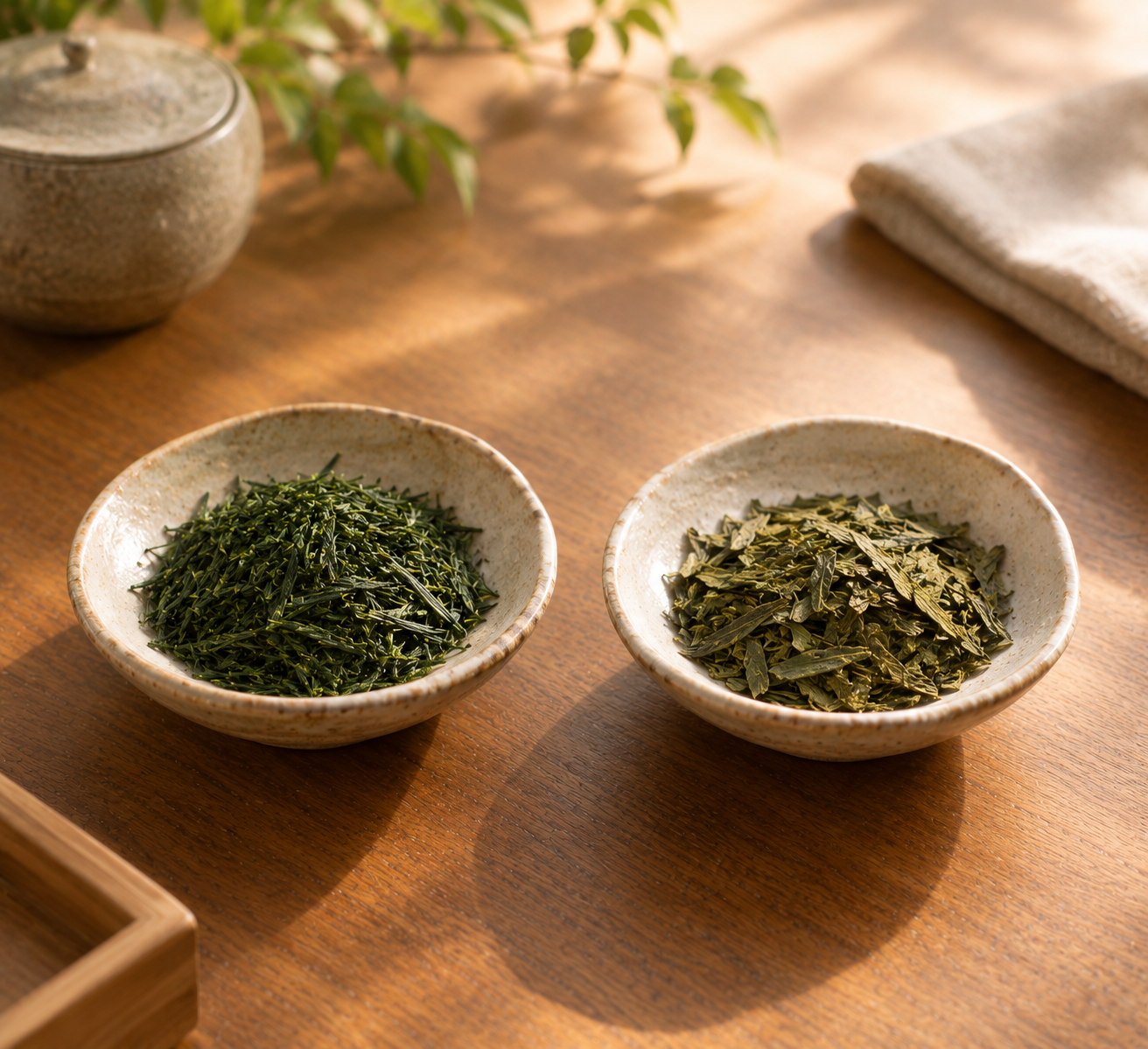
    Japan steams its leaves. Freshly picked leaves are steamed for roughly 15 to 60 seconds (sometimes up to 120 for a deep-steamed style called fukamushi), a process that halts oxidation almost instantly, locks in chlorophyll, and preserves high levels of the compounds responsible for that bright green color and vegetal, sometimes described as “oceanic,” flavor. This steaming tradition dates back to a technique introduced over a thousand years ago and has remained the defining processing choice for Japanese green tea ever since.

    China pan-fires its leaves. Fresh leaves are tossed in a dry, extremely hot wok or drum, reaching temperatures well above what steaming involves, for several minutes rather than seconds. This method also halts oxidation, but produces a noticeably toastier, nuttier flavor profile with less of the grassy vegetal character steaming preserves. The extended dry heat also develops more complex aromatic compounds than the faster, moist-heat steaming process does.

    Neither method is more “correct” than the other — they’re simply different technical choices that lead to genuinely different sensory results, the tea equivalent of a light roast versus a dark roast in coffee.

    Comparison Table

    Japanese Green TeaChinese Green Tea
    Oxidation-stopping methodSteaming (15–60+ seconds)Pan-firing (several minutes, high heat)
    Typical flavorGrassy, vegetal, sometimes oceanicToasty, nutty, sometimes chestnut-like
    Typical colorBright, vivid greenLighter yellow-green to pale green
    Brewing temperatureCooler (roughly 70–80°C / 158–175°F)Slightly hotter tolerance (roughly 77–90°C / 170–195°F)
    Common formsSencha, gyokuro, matcha (machine-processed, uniform)Longjing, Biluochun, many hand-shaped, artisanal forms

    Why the Flavor Difference Is So Noticeable

    Steaming is a fast, moist-heat process that locks in the leaf’s fresh, vegetal character before much can change. Pan-firing is a slower, dry-heat process, and that extended heat exposure is what develops the toasted, nutty notes Chinese green teas are known for. It’s a genuinely similar relationship to how steaming versus roasting vegetables produces different flavors from the same starting ingredient, even though both methods are considered “cooking.”

    This is also why brewing temperature guidance differs between the two traditions. Japanese green teas, especially delicate styles like gyokuro, are more sensitive to heat during brewing and can turn harshly bitter above roughly 80°C, while Chinese pan-fired teas are somewhat more forgiving of hotter water, since the pan-firing process itself already modifies some of the compounds responsible for that bitterness.

    Why the Appearance Differs Too

    Japanese tea’s steaming process helps preserve a notably higher water content in the leaf immediately after processing, and the leaves are typically machine-rolled into uniform needle shapes (as with sencha) or ground into a fine powder (matcha), producing a fairly standardized, utilitarian look across a given tea type.

    Chinese green tea, by contrast, often comes in a wider range of hand-finished shapes and forms, reflecting a longer history of regional, artisanal shaping techniques, from the flat pressed leaves of Longjing to the tightly curled leaves of Biluochun. If you’re someone who enjoys the visual and tactile side of loose leaf tea, Chinese green tea generally offers more variety to explore there.

    Is One Actually Healthier Than the Other?

    Both traditions offer genuinely beneficial compounds, and it’s worth being careful not to overstate the gap. Japanese green tea’s steaming method does tend to preserve somewhat higher levels of certain catechins, including EGCG, along with L-theanine, compared to the higher-heat pan-firing process, which can break down a portion of these compounds during the longer, hotter processing. That said, Chinese green teas retain their own beneficial compound profile, shaped by different cultivars and regional growing conditions, and “different” isn’t the same as “worse.”

    If you’re choosing based on health considerations specifically, both are reasonable choices within a balanced diet, and the difference in compound concentration, while measurable, isn’t dramatic enough to make one an obviously superior everyday choice over the other. Personal enjoyment and how likely you are to actually drink it consistently probably matters more for real-world benefit than a modest difference in catechin concentration between two genuinely healthy beverages.

    Where to Explore Both

    Shop Japanese sencha on Amazon →

    Shop Chinese Longjing (Dragon Well) tea on Amazon →

    Which Tradition to Start Exploring

    If you’re drawn to bright, vegetal, grassy flavors: Japanese sencha is the natural starting point, and it’s also the most common everyday Japanese green tea, making it easy to find good options.

    If you prefer toasty, nutty, more mellow flavors: a Chinese Longjing (Dragon Well) is one of the most widely available and well-regarded starting points into that tradition.

    If you want the most concentrated, ritual-heavy experience: Japanese gyokuro or matcha, both built around more intensive shading and preparation than most everyday Chinese green teas.

    If you want variety in shape, form, and regional character within a single visit to a tea shop: Chinese green tea’s wider range of hand-finished styles gives you more to explore in that specific dimension.

    A Few Things People Ask Me

    Does matcha have a Chinese equivalent? Not really in the same form. While powdered tea has historical roots in China (and was actually the origin of the practice before it developed further in Japan), the specific shade-grown, stone-ground matcha tradition as it exists today is distinctly Japanese. Chinese tea culture developed in a different direction, favoring loose leaf brewing over powdered preparation.

    Is oolong tea part of this comparison? Not directly — oolong is a partially oxidized tea, distinct from the fully unoxidized green teas covered in this guide, and it’s a category where Chinese and Taiwanese tea traditions are especially prominent rather than Japanese ones specifically.

    Can I brew Chinese green tea the same way I’d brew Japanese green tea? You can start with similar principles, avoiding boiling water and oversteeping, but Chinese pan-fired teas generally tolerate slightly hotter water and can be a bit more forgiving of small timing errors than delicate Japanese teas like gyokuro. My green tea brewing temperature guide covers the Japanese side of this in detail if you want the more precise version.

    Why does Japanese tea seem more standardized while Chinese tea has so many named regional varieties? Japanese tea production is more centralized around a smaller number of well-established styles (sencha, gyokuro, matcha, hojicha) with more standardized machine processing, while China’s much larger and more geographically spread tea industry has developed a wider range of regional specialties and hand-processing traditions over a longer history. Neither approach is better, they just reflect different scales and histories of production.

    Is it fair to say Chinese tea culture is “older” than Japanese tea culture? In terms of tea’s origin as a beverage, yes — tea drinking has a longer documented history in China, and Japan’s tea tradition developed later, initially influenced by Chinese practices before evolving into its own distinct culture, most visibly through the Japanese tea ceremony. That said, “older” doesn’t mean more refined or more advanced; both traditions developed genuine depth and sophistication on their own separate timelines.

    Do Japanese and Chinese teas use different tea plant varieties, or is it purely a processing difference? Both primarily use the same species, Camellia sinensis, though different cultivars within that species are favored regionally in each country, shaped by local climate and centuries of selective cultivation. Processing remains the more dominant factor in the flavor difference, but cultivar selection does add its own layer of regional character on top of that.

    Where I Landed

    The steaming-versus-pan-firing distinction really is the single thread that explains almost everything else — flavor, color, brewing temperature tolerance, and even how the leaves end up shaped. Once that clicks, the rest of the comparison stops feeling like a list of disconnected facts and starts feeling like the logical consequence of one early decision made within seconds of harvest, the same way understanding roast level unlocks most of what differentiates one coffee from another.

    Neither tradition needs to be your only tradition, either. Plenty of tea drinkers keep both a Japanese sencha and a Chinese Longjing in rotation, reaching for one or the other depending on mood, rather than treating this as a permanent allegiance to pick once and never revisit.

    If Japanese tea is where your curiosity is currently pointed, my green tea brewing temperature guide and how much tea leaf to use in a kyusu guides are good next stops for actually brewing it well once you’ve decided which tradition to explore first.

  • How to Make Cold Brew Matcha (Without the Clumps)

    How to Make Cold Brew Matcha (Without the Clumps)

    Disclosure: This post contains affiliate links. If you buy through one of them, I may earn a small commission at no extra cost to you.

    My first attempt at cold brew matcha was exactly what you’d expect from someone who assumed “cold brew” meant “just add cold water and stir”: a glass of cold green water with dark, unmixed clumps of matcha sitting stubbornly at the bottom, no matter how long I stirred. It turns out dumping dry matcha straight into cold water is close to the worst way to try dissolving it, and the actual method, while still genuinely simple, needs one extra step most people skip on their first attempt.

    Cold brew matcha is a real, distinct thing from the more common flash-chilled iced matcha most cafés serve, and once you know the difference, you can choose whichever fits your morning better rather than accidentally making a worse version of one while trying for the other. Neither method is hard once you know it, but they’re genuinely different processes with different results, not just two names for the same drink.

    The Problem You’re Actually Trying to Solve

    You’ve searched for how to make cold brew matcha because either your first attempt came out clumpy and unpleasant, or you’re trying to understand what “cold brew matcha” actually means versus the iced matcha lattes you’ve had at coffee shops. Both come down to the same underlying issue: matcha doesn’t dissolve in cold liquid the way it does in warm water, and skipping the step that accounts for that is where almost every bad cold brew matcha attempt goes wrong.

    Who This Article Is NOT For

    Let’s save you some scrolling if this isn’t quite your situation.

    • If you want the classic café-style iced matcha latte, made with hot-water-whisked matcha poured over ice and milk, that’s a related but different method — my how to make a matcha latte guide covers that version specifically.
    • If you’re baking with matcha rather than drinking it, none of the cold water techniques here apply — my how to bake with matcha guide is the right resource instead.
    • If you’re brewing steeped green tea rather than whisked matcha, cold brewing loose leaf tea is a different process entirely from what’s covered here, which is specifically about matcha powder.

    If you’re past that, here’s where the actual guide starts.

    Cold Brew vs. Iced Matcha: What’s Actually Different

    These two terms get used almost interchangeably online, but they describe genuinely different methods with different results.

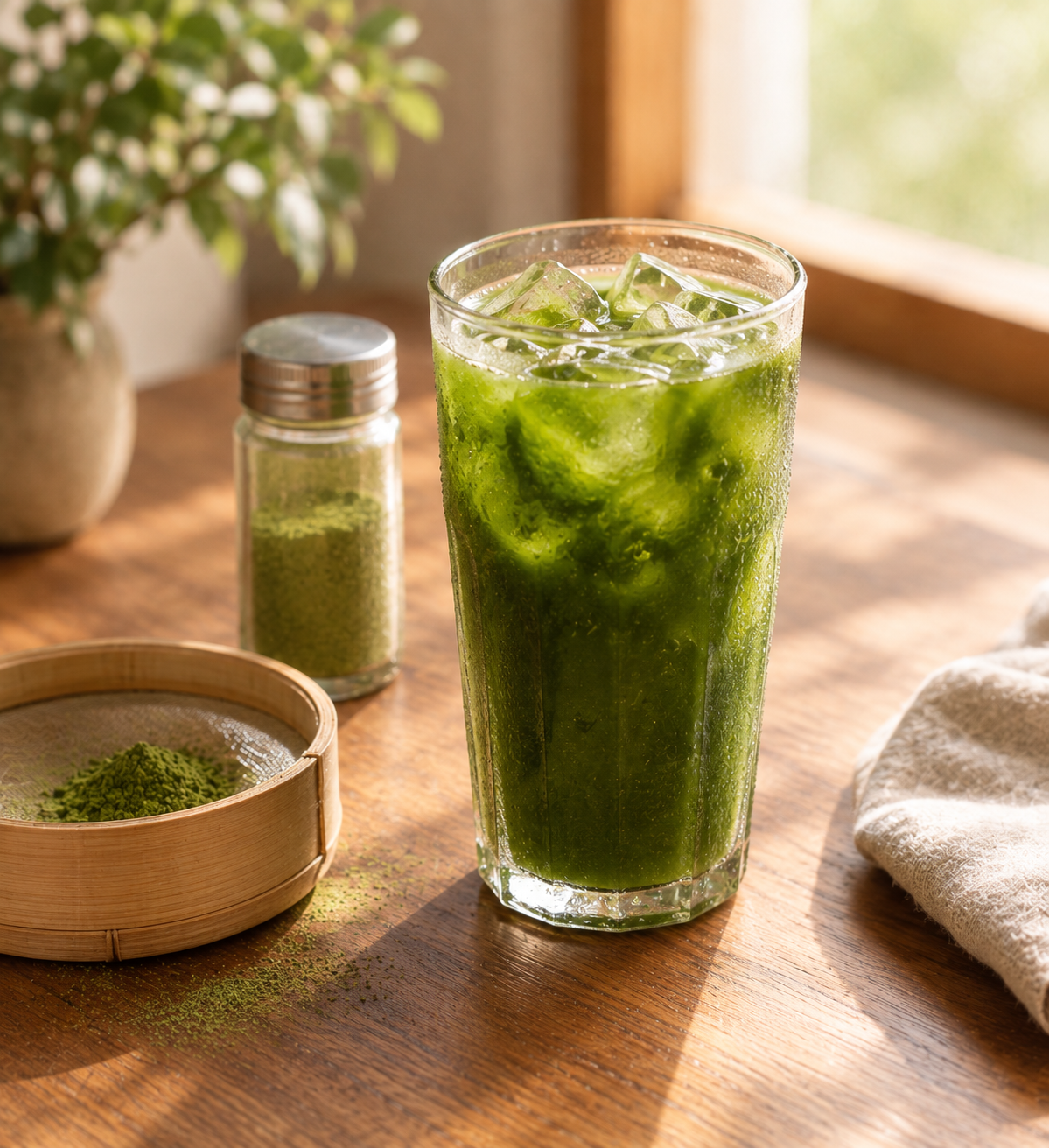
    Cold brew matcha means dissolving matcha directly in cold water from the start, typically by shaking it in a sealed bottle or jar, with no hot water involved at any point. It tends to produce a smoother, mellower flavor with less bitterness, since cold water extracts differently than hot water does, and it’s the better choice if you’re making a batch ahead of time to keep in the fridge.

    Flash-chilled iced matcha (what most cafés actually serve) means whisking matcha with a small amount of hot water first to fully dissolve it, then pouring that concentrated base over ice. It’s faster to make on the spot and produces a brighter, slightly bolder flavor than true cold brew.

    Neither is objectively better — they’re just different tools for different situations. Cold brew rewards a little patience and batch preparation; flash-chilled iced matcha is the quicker, single-serving option.

    The Method, Step by Step

    True Cold Brew Matcha

    1. Sift 1 teaspoon (about 2 grams) of matcha into a small bowl or directly into your bottle. This step doesn’t become optional just because you’re skipping hot water — cold water is actually worse at breaking up existing clumps than hot water, so sifting matters even more here.
    2. Add a small amount of room-temperature water first to form a thin paste, stirring or whisking briefly. This bridging step, forming a smooth paste before adding the bulk of your cold water, is the single most effective way to prevent the clumping that ruins most first attempts at true cold brew.
    3. Add the remaining cold water, roughly 8 ounces (235ml) total for the 1 teaspoon of matcha, adjusting to taste.
    4. Seal and shake vigorously for 30 to 40 seconds, until no visible dark green clumps remain and the mixture looks uniformly smooth and slightly frothy.
    5. Pour over a glass of ice and serve, or refrigerate the batch for later.

    Flash-Chilled Iced Matcha (The Faster Alternative)

    1. Sift 1 to 2 teaspoons of matcha into a bowl.
    2. Add about 2 tablespoons of hot water, 160–175°F (70–80°C), not boiling.
    3. Whisk vigorously in a zigzag or “W” motion for 15 to 20 seconds until smooth and frothy.
    4. Fill a glass with ice, then pour the whisked matcha base over the top.
    5. Add cold water or milk to fill, stir, and serve immediately.

    Why the Paste Step Matters So Much

    This is worth calling out specifically because it’s the step almost everyone skips on their first attempt, and it’s also the single biggest predictor of whether your cold brew comes out smooth or clumpy. Matcha powder is hydrophobic in small clumps, meaning dry pockets of powder actually resist mixing into liquid rather than dissolving on contact. A small amount of liquid mixed directly with the dry powder first, forming a concentrated paste before you dilute it further, breaks that resistance down far more effectively than trying to dissolve the same amount of powder directly into a full glass of water all at once. Think of it the same way you’d handle cocoa powder or instant coffee crystals that clump when you dump them straight into a full glass rather than dissolving a small amount first.

    Adjusting Ratio and Strength

    The 1 teaspoon (roughly 2 grams) to 8 ounces (235ml) ratio is a solid starting point, but it’s genuinely adjustable to taste. A stronger cold brew, closer to 1.5 teaspoons per 8 ounces, produces a bolder, more assertive cup, while a lighter ratio makes something gentler and easier to drink throughout a hot afternoon. If you’re using a specific brand’s matcha, check whether they’ve published their own recommended ratio, since matcha density and intended strength can vary meaningfully between brands.

    Variations Worth Trying

    Creamy cold brew matcha. After shaking the base with cold water until smooth, add a splash of oat, almond, or regular milk and shake again gently before pouring over ice.

    Vanilla and honey cold brew. Stir in a small amount of vanilla extract and honey after the matcha has fully dissolved in the cold water, before adding milk if you’re using it.

    Batch cold brew for the week. Scale the ratio up into a larger pitcher or jar and keep it refrigerated, shaking briefly before each pour since some settling is normal over a day or two.

    Tools That Make This Easier

    Shop matcha sifters on Amazon →

    Shop shaker bottles for cold brew matcha on Amazon →

    A Few Things People Ask Me

    Why is my cold brew matcha still clumpy even after shaking it for a while? Almost always means the paste step got skipped, or the initial small amount of water used to form that paste wasn’t enough to fully wet the sifted powder before more water was added. Go back to basics: sift, form a thin paste with a small amount of liquid, then dilute.

    Can I use a blender instead of shaking a bottle? Yes, and it can actually produce a smoother result faster than shaking, particularly for a larger batch. Blend on low for about 10 seconds after adding the sifted matcha and cold water together.

    Does cold brew matcha taste noticeably different from hot-brewed or flash-chilled matcha? Yes, genuinely. Cold water extraction tends to produce a smoother, less bitter, more mellow flavor than hot water does, since some of the more astringent compounds extract less aggressively at lower temperatures. Some people specifically prefer cold brew for this reason, independent of the temperature of the final drink.

    How long does prepared cold brew matcha keep in the fridge? Generally a day or two before the color and flavor start to noticeably decline, similar to how a whisked matcha base loses vibrancy over time. Making it fresh, or in a small enough batch to finish within that window, gives you the best result.

    Does the grade of matcha matter as much for cold brew as it does for drinking it hot? It matters, though slightly less dramatically than with a straight hot cup, since cold extraction is gentler overall and tends to mute some of the sharper differences between grades. A decent premium or latte-grade matcha performs well here without needing to reach for your most expensive ceremonial tin.

    Can I make cold brew matcha without a bottle or shaker, just using a whisk? Yes, though you’ll get a smoother result with vigorous shaking than with whisking cold water, since a whisk works best with warm water where the powder is already more willing to dissolve. If you’re whisking rather than shaking, the paste step becomes even more important to get right.

    Where I Landed

    The paste step is genuinely the whole trick here — everything else about cold brew matcha is close to as simple as “add matcha to water.” Skip the paste step and you’re fighting clumps the entire time; include it and the whole process takes maybe an extra thirty seconds for a noticeably smoother result. It’s a small habit that pays off disproportionately, the kind of thing that once you’ve done it correctly once, you’ll never go back to skipping again.

    Once you’ve got the basic method down, cold brew matcha becomes one of the easiest routine drinks to keep stocked for a hot afternoon, especially if you batch a small pitcher ahead of time rather than making it fresh every single time. It’s a genuinely low-effort habit once the technique clicks, closer to keeping a pitcher of iced coffee ready than to any kind of elaborate preparation. If you’re still deciding which matcha to actually use for this, my matcha powder brands comparison is a good place to start.

  • Matcha vs Coffee: The Actual Caffeine Numbers

    Matcha vs Coffee: The Actual Caffeine Numbers

    Disclosure: This post contains affiliate links. If you buy through one of them, I may earn a small commission at no extra cost to you. This article is for general information and isn’t a substitute for advice from your doctor, especially if you’re pregnant, managing a health condition, or sensitive to caffeine.

    I switched from a morning coffee to a morning matcha expecting a noticeably gentler jolt, and what actually surprised me was how close the two felt in the moment, even though every chart I’d seen beforehand suggested matcha was the clearly weaker option. It turns out both things are true at once: matcha generally does have less caffeine than a standard cup of drip coffee, but the gap is smaller than the popular narrative suggests, and how the caffeine actually feels matters just as much as the raw number on a chart.

    This is a topic where the numbers genuinely vary a lot depending on how you prepare each drink, so instead of giving you one flat number, here’s the actual range and what drives it — because a single confident-sounding figure, the kind that gets repeated across dozens of blog posts without much scrutiny, tends to hide more than it reveals.

    The Problem You’re Actually Trying to Solve

    You’ve searched for a matcha vs coffee caffeine comparison because you’re either trying to switch from one to the other for a gentler or stronger effect, or you’re managing your total daily caffeine intake and want to know how the two actually stack up rather than relying on the vague “matcha has less caffeine” line that gets repeated everywhere without much detail behind it.

    Who This Article Is NOT For

    Let’s save you some scrolling if this isn’t quite your situation.

    • If you have a diagnosed heart condition, are pregnant, or are managing caffeine sensitivity under a doctor’s guidance, general comparison numbers like these aren’t a substitute for personalized medical advice about your specific safe intake level.
    • If you’re looking for a precise number to track exact daily milligrams, both matcha and coffee’s caffeine content vary enough by preparation that any single number is really a midpoint of a range, not a lab-verified constant you can rely on to the milligram.
    • If you want to know which one is “healthier”, that’s a different, broader question than caffeine content alone — this article stays specifically focused on the caffeine comparison.

    If you’re past that, here’s where the actual comparison starts.

    The Actual Numbers

    DrinkTypical ServingCaffeine Range
    Matcha (whisked bowl)1–2g powder35–90mg
    Steeped green tea8oz cup20–30mg
    Hojicha8oz cup7–8mg
    Drip coffee8oz cup70–150mg
    Espresso shot1oz60–80mg
    Instant coffee8oz cup30–90mg

    These ranges are wide on purpose — caffeine content genuinely varies by brand, grade, growing conditions, and how much of the powder or grounds you actually use, so treat these as realistic bands rather than fixed numbers.

    Why the Ranges Are So Wide

    Matcha’s Variables

    Matcha’s caffeine content depends heavily on how much powder goes into a serving, generally somewhere between 1 and 2 grams for a standard bowl, and roughly 20 to 35mg of caffeine per gram of powder. A lighter 1-gram serving and a stronger, café-style 3 to 4-gram serving can differ by a factor of three or more in total caffeine, which is a bigger swing than most people expect from what looks like a fairly standardized drink. Grade and growing conditions add further variation on top of that, since shading intensity and harvest timing both influence the leaf’s underlying caffeine concentration before it’s ever ground into powder.

    Because matcha is whole ground leaf rather than a partial water extraction, you’re consuming everything in that leaf, which is part of why matcha carries more caffeine per gram than most conventional steeped green tea, even though a full cup of matcha still generally lands below a full cup of coffee.

    Coffee’s Variables

    Coffee’s range is arguably even wider than matcha’s. A standard 8-ounce drip coffee typically falls between 70 and 150mg, but that swings meaningfully based on the roast, grind, brew method, and how much ground coffee actually went into the pot. Counterintuitively, lighter roasts often retain slightly more caffeine than darker roasts, since roasting itself breaks down a small amount of caffeine over time, though this effect is modest compared to the impact of simply using more or less coffee per cup. Espresso, despite its reputation for intensity, is actually more concentrated per ounce but lower in total caffeine per shot than a full cup of drip coffee, simply because you’re drinking a much smaller volume.

    The Closer Comparison: Matcha vs Espresso

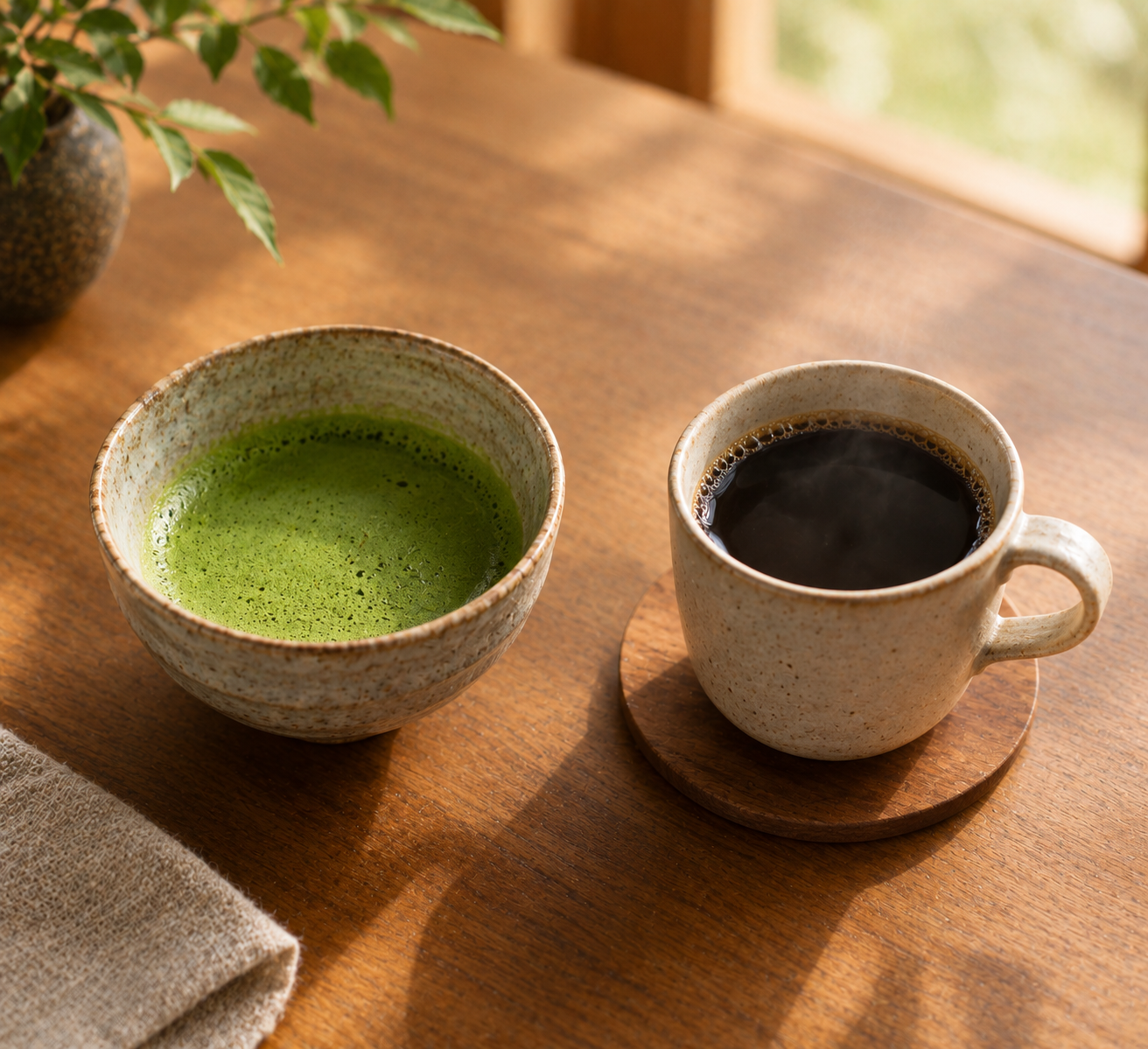
    This is where the numbers get genuinely interesting. A standard 2-gram matcha serving and a single espresso shot land in a strikingly similar range, both typically somewhere around 60 to 80mg. If your mental model of matcha is “much weaker than coffee,” that model holds up against a full drip coffee, but breaks down almost entirely against a single shot of espresso.

    Why the Caffeine Feels Different Even at Similar Amounts

    Even when the milligram counts land close together, matcha and coffee tend to feel different in practice, and the most commonly cited explanation is L-theanine, an amino acid present in much higher concentration in matcha than in coffee. L-theanine is thought to work alongside caffeine to produce a steadier, more sustained alertness, without the sharper spike-and-crash pattern some people experience with coffee alone.

    It’s worth being straightforward about the strength of this claim: the L-theanine-smoothing effect is a genuinely common and widely reported experience, and there’s real research interest in how L-theanine and caffeine interact, but individual response varies, and it’s not a guarantee that matcha will feel gentler for everyone specifically because of this mechanism.

    Which One Makes Sense for You

    If you want the gentlest possible caffeine option: steeped green tea or hojicha, both meaningfully lower than either matcha or coffee, with hojicha in particular landing close to caffeine-free in comparison to the others on this list.

    If you want noticeably less caffeine than coffee but still a real dose: a standard 1 to 2-gram matcha serving, understanding that a stronger café-style preparation closes much of that gap.

    If you want maximum caffeine in the smallest volume: espresso, which delivers a comparable amount to matcha but in a fraction of the liquid volume and time to drink it.

    If you’re managing total daily intake and want predictability: track your actual preparation method rather than relying on a single “coffee has X mg” or “matcha has Y mg” number, since both vary enough that a rough average can be meaningfully off from what you’re actually drinking.

    Measuring Your Own Matcha Amount

    Shop digital kitchen scales (0.1g precision) on Amazon →

    If predictability matters more to you than convenience, weighing your matcha rather than eyeballing a scoop is the single most reliable way to keep your caffeine intake consistent from one cup to the next.

    A Few Things People Ask Me

    Can I just switch from coffee to matcha and expect the exact same energy? Not reliably, given how much both ranges overlap and vary. A light matcha serving will feel noticeably gentler than a strong drip coffee, but a robust, café-style matcha can land close to a full cup of coffee in raw caffeine. If a predictable switch matters to you, start by measuring your matcha amount consistently rather than eyeballing it.

    Is it safe to drink both matcha and coffee in the same day? For most healthy adults, yes, as long as total caffeine intake stays within general safety guidelines, commonly cited around 400mg per day for healthy adults. A matcha in the 60–70mg range plus a coffee in the 100–150mg range comfortably fits within that for most people, though your own tolerance and any medical guidance you’ve received should take priority over a general guideline.

    Does the caffeine in matcha hit faster or slower than coffee? Anecdotally, many people report matcha’s effects building more gradually and lasting longer rather than hitting all at once, which lines up with the L-theanine explanation above, though rigorous head-to-head timing data comparing the two is more limited than the general caffeine content numbers.

    Why does my matcha latte from a café sometimes feel stronger than the numbers suggest it should? Café preparations often use more matcha powder per serving than a typical home recipe, sometimes in the 3 to 4-gram range rather than 1 to 2 grams, which can push a single drink’s caffeine content noticeably higher than the lighter end of the range this article covers.

    Does hojicha make a good caffeine-free-ish alternative if I love the flavor of Japanese tea but want to cut back? Yes, and it’s genuinely one of the more effective swaps on this list. Roasting breaks down a meaningful portion of hojicha’s caffeine, landing it at just 7 to 8mg per cup compared to matcha’s 35 to 90mg range, while still delivering a distinct, satisfying flavor rather than feeling like a compromise. My best hojicha brands guide is a good place to start if this appeals to you.

    Is decaf coffee a fairer comparison to low-caffeine teas than regular coffee? In terms of raw caffeine content, yes — decaf coffee typically lands in the single digits to low teens of milligrams, closer to hojicha than to matcha or regular coffee. It’s worth keeping in mind if you’re specifically trying to minimize caffeine rather than just choosing a gentler option than a full cup of regular coffee.

    Where I Landed

    The honest takeaway is less dramatic than most headlines make it sound: matcha generally has less caffeine than coffee, but the two overlap enough, especially against espresso, that “matcha is the weak option” isn’t automatically true depending on how each is prepared. If caffeine amount is your main concern, measuring your matcha rather than eyeballing it gives you far more control than the ingredient itself does.

    It’s also worth remembering that caffeine content is only one piece of why people choose one drink over the other. Flavor, ritual, and how the caffeine actually feels once it kicks in all matter just as much as the milligram count, and none of those show up on a comparison chart no matter how detailed it gets.

    If you’re deciding which matcha to actually keep in your kitchen for this, my matcha powder brands comparison is a good next stop, and my how to make a matcha latte guide covers the ratios if you want to dial in a specific strength rather than guessing.

  • How Much Tea Leaf to Use in a Kyusu (The Ratio Guide Nobody Measures For)

    How Much Tea Leaf to Use in a Kyusu (The Ratio Guide Nobody Measures For)

    Disclosure: This post contains affiliate links. If you buy through one of them, I may earn a small commission at no extra cost to you.

    For a long time I used the “teaspoon per cup” rule everyone seems to repeat, and my sencha always came out thin, mild, and a little disappointing, like drinking hot water with a faint suggestion of green tea somewhere in the background. When I finally bought a cheap kitchen scale and started actually weighing my leaf instead of eyeballing it, the difference was immediate and honestly a little embarrassing — I’d been using less than half the leaf a properly brewed cup actually calls for.

    Leaf amount is the variable people skip past fastest when learning to brew Japanese tea, mostly because temperature and steep time get all the attention. But getting the ratio wrong undermines everything else. Perfect water temperature and timing can’t fix a cup that’s fundamentally under-leafed or over-leafed for the amount of water you’re using — it’s the foundation the other two variables are built on top of, not an equal third factor you can safely ignore.

    The Problem You’re Actually Trying to Solve

    You’ve searched for how much tea leaf to use in a kyusu because either your homemade sencha or gyokuro tastes weaker or more one-dimensional than what you’ve had elsewhere, or you’re brand new to loose leaf and the “teaspoon” and “tablespoon” measurements you keep seeing feel too vague to trust. Both problems point to the same fix: a proper weight-based ratio, adjusted by tea type, rather than a generic spoon measurement that doesn’t account for how differently teas pack by volume.

    Who This Article Is NOT For

    Let’s save you some scrolling if this isn’t quite your situation.

    • If you’re brewing tea bags rather than loose leaf, ratio isn’t something you control — that’s pre-measured by the manufacturer. This guide is specifically for loose leaf brewing in a kyusu or similar vessel.
    • If water temperature is your actual problem, not leaf amount, my green tea brewing temperature guide is the more relevant resource — a correctly ratioed cup brewed at the wrong temperature will still taste off.
    • If you’re brewing matcha, ratio works completely differently since you’re consuming the whole ground leaf rather than steeping and discarding it — my how to make a matcha latte and matcha whisk buying guide cover that side of things.

    If you’re past that, here’s where the actual guide starts.

    What Actually Determines the Right Ratio

    Three things drive how much leaf you should use, and once you understand them, you can adjust confidently even for a tea not explicitly covered below.

    1. Tea type. Gyokuro, brewed with very little water at a low temperature, needs significantly more leaf per milliliter than sencha, which uses more water and higher heat. More leaf compensates for the shorter extraction window that lower temperatures create, keeping the cup from tasting thin despite the gentler brewing conditions.

    2. Leaf density and shape. Needle-like whole leaves, broken leaf, and deep-steamed (fukamushi) teas all pack differently by volume, which is exactly why weight-based measurement is more reliable than a teaspoon or tablespoon guideline. The same tablespoon of two different senchas can weigh noticeably different amounts, sometimes by close to double.

    3. How concentrated you want the result. Japanese tea culture generally favors small, concentrated infusions over large, diluted ones, which is part of why kyusu are traditionally so much smaller than Western teapots. Adjusting leaf amount up or down from the baseline is a legitimate way to dial in your own preferred strength, not a sign you’re doing it wrong or deviating from some fixed correct answer.

    The Ratio Guide

    Tea TypeLeaf AmountWater AmountApprox. Teaspoons
    Sencha (standard)4–5g150–200ml~1 tablespoon
    Sencha (deep-steamed / fukamushi)4–5g150–200ml~1 tablespoon, slightly compressed
    Gyokuro5–6g60–100ml~2–3 teaspoons
    Genmaicha4–5g200ml~1 tablespoon (rice content adds bulk)
    Hojicha4–5g200ml~1 tablespoon

    These are reliable starting points, not rigid rules — adjust up or down from here once you know your own preference for strength.

    Why Weight Beats Volume

    A teaspoon or tablespoon measurement feels more approachable than a kitchen scale, but it’s genuinely unreliable across different teas. A tightly rolled, dense sencha and a loose, needle-shaped one can weigh quite differently even at the same spoon volume, which is exactly why serious tea drinkers measure by weight rather than volume once they’re brewing regularly.

    The practical fix: A basic digital kitchen scale with 0.1g precision removes this guesswork entirely, and it’s a small, inexpensive investment relative to what you’re likely already spending on decent tea. If you don’t have one yet, the tablespoon guidelines above are a reasonable approximation, just know they’ll drift depending on the specific tea’s density.

    Brewing Sencha: The Everyday Ratio

    Sencha is the most forgiving starting point, and its ratio holds up whether you’re brewing a standard asamushi style or a deeper-steamed fukamushi.

    The method: 4 to 5 grams of leaf for 150 to 200ml of water, at 70–80°C, steeped 60 to 90 seconds for the first infusion. Too little leaf produces a thin, hollow cup; too much without adjusting the water makes the tea sharp and overly dense in a way a shorter steep won’t fix.

    Scaling for more servings: Scale both leaf and water together proportionally rather than stretching the same amount of leaf across more water — diluting a fixed amount of leaf into a larger pot of water doesn’t preserve the ratio, it just makes a weaker cup. If you’re brewing for two people instead of one, double both the leaf and the water rather than assuming the same leaf amount will “stretch” to cover the extra volume.

    Brewing Genmaicha and Hojicha: More Forgiving Ratios

    Genmaicha (green tea blended with roasted rice) and hojicha (roasted green tea) are both meaningfully more forgiving of small ratio mistakes than sencha or gyokuro, which makes them a good practice ground if you’re still building confidence with a scale.

    The method: Roughly 4 to 5 grams of leaf for 200ml of water, similar to standard sencha, though genmaicha’s rice content adds bulk without adding much strength, so err toward the higher end of that range if you want a more pronounced flavor. Hojicha’s roasting process makes it noticeably tolerant of both small ratio variations and hotter water, so small measurement errors here rarely produce a genuinely bad cup the way they can with delicate gyokuro.

    Brewing Gyokuro: The Concentrated Ratio

    Gyokuro asks for meaningfully more leaf relative to water than sencha does, which is part of what makes it such a small, deliberate serving rather than a full mug.

    The method: 5 to 6 grams of leaf for just 60 to 100ml of water, at a much cooler 60°C (140°F), steeped for around 2 minutes. The higher leaf-to-water ratio compensates for the lower temperature, ensuring enough flavor compound extraction happens even though the water itself is doing less of the work than boiling water would.

    Why the small volume matters: This isn’t a limitation, it’s the point. Gyokuro is meant to be a small, intensely flavored, savored serving rather than something you gulp down the way you might a larger mug of sencha.

    Tools That Make This Easier

    Shop digital kitchen scales (0.1g precision) on Amazon →

    Shop kyusu teapots on Amazon →

    A Few Things People Ask Me

    Can I just use more leaf if I want a stronger cup, rather than steeping longer? Yes, and it’s often the better move. Increasing leaf while keeping steep time consistent generally produces a fuller, rounder cup, while extending steep time on a correctly ratioed brew tends to pull out more bitterness rather than more genuine flavor.

    Does the ratio change for later infusions (second, third steep)? The leaf amount stays the same across infusions since you’re reusing the same leaves already in the pot — what typically changes is the steep time, which is usually shortened for the second infusion since the leaves are already partially opened, then lengthened again slightly for a third or fourth round as the leaves’ remaining flavor diminishes.

    What if I don’t have a kitchen scale — how close can I get with spoons? Close enough to start, especially for sencha, where 1 tablespoon is a reasonable approximation of 4 to 5 grams for most standard leaf styles. Gyokuro is where spoon measurements get less reliable, since its ratio is more concentrated and small measurement errors matter proportionally more in such a small volume of water.

    Is there a “correct” strength, or is this genuinely just personal preference? The ranges above are reliable starting points based on how these teas are traditionally brewed to showcase their intended flavor profile, but personal preference genuinely matters once you’re past the basics. Some people prefer their Japanese tea notably lighter than tradition suggests, and that’s a legitimate choice, not a mistake, as long as you’re adjusting from an informed baseline rather than guessing blind.

    Does the size of my kyusu limit how much leaf I should use? Yes, indirectly — the leaf needs room to expand and unfurl as it steeps, and a kyusu packed too tightly with dry leaf won’t brew evenly regardless of the water ratio. As a rough guide, dry leaf plus water should fill somewhere around two-thirds to three-quarters of the pot’s total volume, not all the way to the brim.

    Where I Landed

    The single biggest fix, if you only take one thing from this guide, is simple: measure by weight, not by spoon, at least while you’re still dialing in your preferences. A cheap kitchen scale removes almost all the guesswork that made my early sencha attempts taste thin and forgettable for longer than it should have taken me to figure out.

    Once you’ve got a baseline ratio that tastes right to you, the rest is genuinely just fine-tuning — a little more leaf here, a slightly shorter steep there — the same way you’d dial in a pour-over coffee recipe once you know the basic proportions work. It stops being a math problem and starts being intuition fairly quickly, usually within a few weeks of regular brewing.

    If you haven’t sorted out water temperature yet, my green tea brewing temperature guide is the natural next stop to pair with everything covered here, and together the two guides cover the two variables that matter most before steep time or equipment ever come into play.

  • The Japanese Tea Gift Guide That Actually Matches the Person You’re Buying For

    The Japanese Tea Gift Guide That Actually Matches the Person You’re Buying For

    Disclosure: This post contains affiliate links. If you buy through one of them, I may earn a small commission at no extra cost to you.

    I once gave a friend a beautiful, expensive tin of ceremonial-grade matcha, the kind I’d have been thrilled to receive myself, and it sat unopened in her cupboard for over a year because she had no whisk, no idea how to prepare it, and honestly no particular interest in going through the ritual just to drink tea. She would have been far happier with a simple sampler box and a mug. The tea itself wasn’t the problem. Matching the gift to the person was.

    That’s really the whole trick to giving Japanese tea as a gift: the “best” option depends entirely on where the recipient is starting from, not on how impressive or expensive the item looks in photos. A stunning gift wasted on the wrong person is still a wasted gift, no matter how much it cost or how carefully it was sourced. This guide sorts gift ideas by recipient type, so you can actually match the gift to the person instead of just picking whatever looks nicest online.

    The Problem You’re Actually Trying to Solve

    You’ve searched for a Japanese tea gift guide because you want to give something that feels thoughtful and authentic, not just a random tin picked off a shelf. Maybe you’re buying for someone who’s mentioned liking matcha lattes, or someone who’s never tried Japanese tea at all, or a genuine tea enthusiast who already has strong opinions and a cupboard full of equipment. Each of these calls for a different kind of gift, and getting it wrong usually means good intentions landing as a well-meaning but slightly missed gesture.

    Who This Article Is NOT For

    Let’s save you some scrolling if this isn’t quite your situation.

    • If you’re buying for yourself rather than gifting, my matcha powder brands comparison and Japanese green tea subscription box comparison are better starting points than a gift-framed guide.
    • If the recipient has a known allergy or dietary restriction, always double-check ingredient lists on any tea-adjacent gift, especially wagashi or snack-inclusive sets, rather than relying on general recommendations here.
    • If you want something under $15, most genuinely good Japanese tea gifts, especially anything including proper matcha or ceremonial tools, sit above that price point. A single well-sourced tea bag sampler is about the only realistic option at that budget.

    If you’re past that, here’s where the actual guide starts.

    What Actually Determines a Good Gift Here

    Three things decide whether a Japanese tea gift lands well or ends up forgotten in a cupboard, and matching these to your specific recipient is the whole game.

    1. Their current relationship to Japanese tea. A complete beginner needs something approachable and guided. Someone who already drinks matcha regularly wants either a genuine upgrade or something they wouldn’t have bought for themselves. Getting this wrong in either direction — overwhelming a beginner or underwhelming an enthusiast — is the single most common way these gifts miss the mark.

    2. Whether they’ll actually use the equipment involved. A gorgeous ceremonial matcha set is wasted on someone who has no interest in whisking their own tea. A simple tea bag sampler undersells someone who’s already invested in the ritual. Think honestly about their existing habits rather than the habits you’d love for them to adopt.

    3. Whether the gift teaches or just delivers. The best gift sets in this category include tasting notes or brewing instructions, which matters enormously for a beginner and matters much less for an enthusiast who already knows what they’re doing. A gift that requires research just to use properly is a gift with homework attached.

    Gift Ideas by Recipient

    RecipientBest Gift TypePrice Range
    Complete beginnerMulti-tea sampler with brewing instructions$20–40
    Matcha latte drinkerCulinary or premium-grade matcha, no ceremonial equipment needed$15–30
    Aspiring matcha ritual beginnerStarter kit: matcha, whisk, bowl, scoop$40–80
    Established tea enthusiastSingle-origin, high-grade tea they wouldn’t buy themselves$30–100+
    Coworker or casual acquaintanceSmall, well-packaged sampler box$15–25

    The Gifts, One by One

    For the Complete Beginner: A Multi-Tea Sampler

    A curated sampler that includes several distinct varieties, sencha, hojicha, genmaicha, and a modest matcha, gives someone genuinely new to Japanese tea a chance to figure out what they actually like without committing to one type upfront. Look specifically for sets that include tasting notes and brewing instructions for each tea, since the gap between a forgettable gift and a memorable one often comes down to whether the recipient actually knows how to prepare what’s inside.

    Why this works: It removes the guesswork and the intimidation factor entirely. Nobody feels lost opening a sampler with a card explaining what each tea is and how long to steep it.

    For the Matcha Latte Drinker: Skip the Ceremonial Grade

    If you know someone primarily drinks matcha as a latte, resist the instinct to buy them an expensive ceremonial-grade tin. Culinary or premium-grade matcha, built to hold up against milk and sweetener, is both more appropriate for how they’ll actually use it and more affordable than you might expect. My matcha powder brands comparison covers which brands offer good latte-specific grades if you want to go deeper on this choice.

    Why this works: You’re respecting how they actually drink tea, rather than gifting based on what sounds most impressive.

    For Someone Ready to Start the Ritual: A Complete Starter Kit

    For someone who’s expressed genuine curiosity about traditional matcha preparation but hasn’t taken the plunge, a complete starter kit, ceremonial-grade matcha paired with a chasen (bamboo whisk), chashaku (bamboo scoop), and a chawan (tea bowl), removes the single biggest barrier to entry: not knowing what equipment to buy or how to gather it all separately. Receiving everything as one coordinated set instead of piecing it together themselves is a genuinely appreciated shortcut.

    Why this works: These three tools are essential for proper matcha preparation, and gifting them together means the recipient can start immediately rather than researching and buying pieces one at a time.

    For the Established Enthusiast: Go Single-Origin and Specific

    Someone who already owns tea equipment and has a favorite everyday brand wants something they wouldn’t have bought for themselves, not a beginner’s starter kit they’ve long since outgrown. A single-origin, competition-grade sencha or gyokuro from a specific region, ideally one they haven’t tried, respects both their existing knowledge and their storage space, which by this point is probably already full of basics.

    Why this works: You’re treating them as the expert they are, offering discovery rather than duplication of what they already own.

    For a Coworker or Casual Acquaintance: Keep It Small and Well-Packaged

    For gift exchanges or lower-stakes relationships, a modest, nicely packaged sampler in the $15–25 range hits the right note without over-committing. Presentation matters disproportionately here — a small box that looks thoughtfully put together reads better than a larger, plainer bag of loose tea at a similar price.

    Why this works: It signals effort without requiring either of you to have a deep relationship or shared knowledge of tea to justify the gift.

    Where to Find These

    Shop Japanese tea sampler gift sets on Amazon →

    Shop matcha starter kits with whisk and bowl on Amazon →

    A Few Things People Ask Me

    Is matcha or regular green tea the safer default gift if I don’t know much about the recipient’s preferences? A multi-tea sampler that includes both is the safer bet than committing fully to either. If you have to choose one, a well-regarded sencha is generally a gentler, more universally approachable choice than matcha, which asks more of the recipient in terms of equipment and preparation.

    Should I buy tea online or try to find something locally? Online specialty tea retailers, especially ones focused specifically on Japanese tea, tend to offer better sourcing transparency and gift-specific packaging than what you’ll typically find in a general grocery store. If you want something with genuine provenance behind it, a dedicated tea shop is worth the extra step over a supermarket aisle.

    What if the recipient already has a favorite matcha brand? Lean toward a complementary gift rather than duplicating what they already buy — a nicer whisk, an upgraded bowl, or a different single-origin tea outside their usual rotation respects their existing preference while still giving them something new.

    Is it a faux pas to gift tea to someone who doesn’t already drink it? Not at all, as long as you frame it as an introduction rather than an assumption. A beginner-friendly sampler with clear instructions is a genuinely welcoming way to introduce someone to Japanese tea culture, and most people appreciate a low-pressure way to try something new.

    How far in advance should I order, especially for smaller or single-origin producers? Give yourself more lead time than you would for a mainstream retail gift, particularly around holiday seasons when smaller tea shops and specialty producers can sell through limited-batch items quickly. A week or two of buffer avoids the scramble of a sold-out single-origin tea the day before you need it.

    Does packaging and presentation actually matter, or is it just the tea inside that counts? For gifting specifically, presentation genuinely matters more than it would for a purchase you’d make for yourself. A well-designed box or thoughtful wrapping signals effort in a way that a plain bag of loose tea, even if the tea itself is excellent, doesn’t communicate as clearly on first impression.

    Where I Landed

    The lesson from my unopened matcha tin sitting in a cupboard for a year is really the whole thesis of this guide: match the gift to the person’s actual relationship with tea, not to what looks most impressive in a photo. A thoughtful $20 sampler for a beginner will get used and appreciated in a way that a $100 ceremonial tin, gifted to someone with no whisk and no particular interest in the ritual, never will.

    None of this means you need to overthink a simple gift into a research project. A quick honest assessment — beginner, casual matcha drinker, aspiring ritual-doer, or seasoned enthusiast — narrows the field fast, and from there the specific product matters far less than getting that basic category right in the first place.

    If you’re buying for someone who mentions liking matcha specifically, my matcha powder brands comparison and matcha whisk buying guide are both good next stops for narrowing down exactly what to include.

  • How to Tell Matcha Grades Apart (Because the Label Alone Won’t Tell You)

    How to Tell Matcha Grades Apart (Because the Label Alone Won’t Tell You)

    Disclosure: This post contains affiliate links. If you buy through one of them, I may earn a small commission at no extra cost to you.

    I once bought a tin proudly labeled “ceremonial grade” for under twenty dollars, excited to have found a bargain, and the powder inside was a dull olive color that tasted flatly bitter no matter how carefully I whisked it. It took me embarrassingly long to learn something that would have saved me that disappointment entirely: “ceremonial grade” isn’t a regulated term anywhere. There’s no government body checking whether a tin labeled that way actually meets any standard at all. Brands can, and plenty do, put “ceremonial” on whatever they want.

    That doesn’t mean grade is meaningless — real, meaningful differences exist between matcha grown and processed for different purposes. It just means you can’t fully trust a label alone, and you need to know what to actually look, smell, and taste for instead. Once you know those signals, you stop being at the mercy of whatever word a brand decided to print on the tin.

    The Problem You’re Actually Trying to Solve

    You’ve searched for how to tell matcha grades apart because either you’re shopping for a new tin and don’t know how to judge whether a “ceremonial grade” claim is legitimate, or you already have some matcha at home and are trying to figure out what grade it actually is, since the packaging alone didn’t make that obvious. Both come down to the same core issue: since grading isn’t officially standardized, you need independent ways to verify quality rather than trusting a single word on a label.

    Who This Article Is NOT For

    Let’s save you some scrolling if this isn’t quite your situation.

    • If you’re buying matcha specifically for baking, you actually want the bolder, more assertive characteristics of culinary grade, not the subtle sweetness ceremonial grade is prized for — my how to bake with matcha guide covers that side of things.
    • If you already trust a specific brand’s grading and have been happy with the results, this diagnostic-level guide isn’t necessary for you — it’s aimed at people navigating an unfamiliar tin or comparing options for the first time.
    • If you want a definitive numeric grading scale, that doesn’t exist industry-wide. This guide teaches you to judge quality through observable characteristics, not to apply an official point system, because no such official system exists.

    If you’re past that, here’s where the actual guide starts.

    What the Grades Actually Mean

    Despite the lack of regulation, there is a real, meaningful pattern behind the common grade names, rooted in three production variables.

    1. Shading duration and intensity. Longer, more intense shading before harvest (often 20 days or more, blocking 90%+ of light for the highest grades) boosts chlorophyll and L-theanine, both of which drive the sweeter, greener, less bitter qualities associated with top-tier matcha. Culinary grade typically comes from shorter, less intense shading, sometimes as little as a week or two, which leaves more of the compounds responsible for astringency intact.

    2. Harvest timing. First-flush leaves, picked in the earliest spring harvest, are younger, more tender, and carry more of the amino acids responsible for sweetness. Later harvests, sometimes the third or fourth picking of the season, produce more mature, tougher leaves that lean more bitter and astringent. This is part of why a tin’s stated harvest timing, when a brand actually discloses it, is one of the more trustworthy signals available.

    3. Processing and grinding. Higher grades typically have stems and veins fully removed before grinding and are stone-ground slowly into an extremely fine powder. Lower grades may retain more stem material and be ground faster with less precision, producing a coarser texture. Traditional stone mills are slow by design, which is part of why properly ground high-grade matcha commands a real price premium rather than being purely a marketing markup.

    The Three Common Grade Tiers

    GradeHarvestShadingBest For
    CeremonialFirst flush (earliest spring)Longest, most intense (20+ days)Drinking straight, usucha, koicha
    Premium / Latte GradeFirst or blended early harvestModerateLattes, daily drinking, all-round use
    CulinaryLater harvest (third/fourth picking)Shorter, less intenseBaking, smoothies, cooking

    Keep in mind these tier names aren’t standardized across brands — one company’s “premium” might taste closer to another’s “ceremonial.” Treat this table as a general map of the landscape, not an exact translation between every brand’s own labeling.

    How to Actually Judge What You’ve Got

    Color

    This is the fastest and most reliable visual clue. Genuine ceremonial-grade matcha should be a vivid, almost electric emerald or jade green. As you move down through premium into culinary grade, the color trends progressively toward a duller olive, khaki, or yellow-green. If a tin labeled “ceremonial” looks distinctly olive or brownish rather than vibrant green, that’s a real red flag regardless of what the label claims — color doesn’t lie the way marketing copy can.

    Texture

    Run a small pinch between your fingers. High-grade matcha should feel exceptionally fine, almost like cosmetic talc or baby powder, a direct result of slow stone-grinding. Culinary grade tends to feel slightly coarser or grittier by comparison, a sign of faster, less precise grinding and sometimes leftover stem material that didn’t get fully removed before processing.

    Aroma

    Good ceremonial matcha should smell fresh and vegetal, sometimes described as similar to fresh-cut grass, with a pleasant, slightly sweet edge. Lower grades tend to smell more hay-like, dusty, or simply flatter, lacking that fresh quality entirely.

    Taste

    This is the most decisive test, though it requires actually preparing a cup. Whisk a small amount with water at the correct temperature (roughly 70–80°C, never boiling) and taste it plain, without sweetener. Genuine ceremonial-grade matcha should taste naturally sweet with a savory umami depth and minimal bitterness. If it tastes sharply bitter, thin, or predominantly grassy with no real sweetness, you’re likely dealing with something closer to culinary grade regardless of what the tin says, or matcha that’s been brewed with water too hot.

    Price as a (Rough) Sanity Check

    Genuine ceremonial-grade matcha from a legitimate producer is expensive to make — the shading infrastructure, the limited harvest window, and the slow stone-grinding all add real cost. A tin claiming “ceremonial grade” at a price point that undercuts the market significantly is worth extra scrutiny. This isn’t a perfect rule, since brand markup varies, but an implausibly cheap “ceremonial” tin should raise your eyebrows before it raises your expectations.

    A Quick Side-by-Side Test

    If you have access to two matcha tins, even from the same brand at different price points, the fastest way to actually learn to spot the difference is a direct comparison rather than tasting one in isolation:

    1. Whisk both with the same water temperature and ratio.
    2. Look at the color of the foam and liquid side by side before tasting either.
    3. Smell both before tasting.
    4. Taste the lighter-colored one first, then the more vibrant one — going in this order makes the quality gap more obvious than tasting them in reverse.

    Doing this once with two genuinely different-grade matchas trains your palate far faster than reading about the differences ever will.

    Where to Buy for Comparison

    Shop ceremonial-grade matcha on Amazon →

    Shop culinary-grade matcha on Amazon →

    A Few Things People Ask Me

    Does higher grade always mean healthier, or just better tasting? Mostly the latter. Both ceremonial and culinary grade come from the same plant and generally contain similar core compounds — catechins, caffeine, L-theanine — since both are whole-leaf products. The real differences are in taste, texture, and preparation suitability rather than a dramatic nutritional gap between grades.

    Is “premium” grade just a marketing word, or does it mean something specific? It’s a genuinely useful middle category in practice, even without a formal standard behind it — typically leaves from an early harvest with moderate shading, positioned to hold up reasonably well in a latte while still being pleasant enough to drink straight. Treat it as “good enough for most everyday uses” rather than either extreme.

    If I already have matcha and I’m not sure what grade it is, how do I figure it out? Run through the color, texture, aroma, and taste checks above. If it’s vividly green, extremely fine, smells fresh, and tastes sweet with minimal bitterness when whisked properly, you likely have something at or near ceremonial grade regardless of what the packaging says. If it’s duller, coarser, and more bitter, treat it as culinary grade and consider saving it for baking rather than drinking straight.

    Can bad brewing technique make good matcha taste like a lower grade than it actually is? Absolutely, and this trips people up constantly. Water that’s too hot, insufficient sifting, or poor whisking technique can all make genuinely good matcha taste flat or bitter. Before concluding a tin is mismarked or lower quality than advertised, make sure you’re actually brewing it correctly — my green tea brewing temperature guide covers water temperature principles that apply here too, even though matcha itself is whisked rather than steeped.

    Does matcha degrade from one grade to a lower one as it sits in the tin? Not literally, but it can taste like it has. Oxidation and light exposure dull color and flatten flavor over time, so a properly stored ceremonial-grade matcha that’s gone stale can genuinely taste closer to culinary grade than it did fresh, even though nothing about its original processing changed. My how to store matcha guide covers keeping that degradation from happening in the first place.

    Is it worth paying extra for a brand that publishes specific harvest and shading details rather than just a grade name? Generally yes. A brand willing to disclose first-flush harvest timing or a specific shading duration is giving you something closer to verifiable fact than a brand that only prints “ceremonial grade” with no further detail. That transparency is itself a reasonably good quality signal, independent of the grade name alone.

    Where I Landed

    The single most useful habit from all of this: trust your own senses over the label. Color, texture, aroma, and taste will tell you more about what’s actually in a tin than the word printed on the front of it, since that word isn’t policed by anyone. Once you’ve done a side-by-side comparison even one time, you’ll find yourself able to spot a mismarked or overhyped “ceremonial” tin almost instantly, without needing to reference a chart at all.

    It’s a genuinely useful skill to build once, the same way learning to recognize a good cup of coffee by smell and color eventually replaces needing to read the bag’s roast date every time. The market isn’t going to start regulating these terms anytime soon, so your own palate is the most reliable tool you actually have.

    If you’re shopping for your next tin with this in mind, my matcha powder brands comparison covers several brands where grading claims held up well against the criteria in this guide.