Disclosure: This post contains affiliate links. If you buy through one of them, I may earn a small commission at no extra cost to you.
I once left an opened tin of genuinely good matcha sitting on a sunny counter for about six weeks, next to the coffee where it seemed convenient, and when I finally whisked a cup from it, the color had gone from vivid jade to a tired olive brown and the flavor had flattened into something closer to plain grass. Nothing was wrong with the tea when I bought it. Everything went wrong after, because I stored it exactly the way most people instinctively store spices, and matcha punishes that treatment faster than almost anything else in a kitchen.
Matcha is more fragile than people expect, mostly because of how it’s made. You’re drinking the entire ground leaf, not a partial water extraction, and that same property that makes matcha so flavorful and concentrated also makes it degrade fast once it’s exposed to air, light, heat, and moisture. Good storage habits aren’t optional if you’ve spent real money on a decent tin — they’re the difference between that tin tasting good on day 60 versus tasting like disappointment by day 20, and the fix costs nothing beyond a bit of attention.
The Problem You’re Actually Trying to Solve
You’ve searched for how to store matcha because either you just bought a tin and want to protect it properly from the start, or you’ve had the experience I had — a matcha that tasted great initially and went flat, dull, or bitter well before you expected it to. Both situations come down to the same handful of storage mistakes, repeated across nearly everyone’s kitchen: leaving it out in light, letting air in every time you scoop, and not accounting for how fast it degrades once the tin is actually open.
The good news is that fixing this is simple and doesn’t require special equipment. It’s mostly about a few consistent habits, not an elaborate setup.
Who This Article Is NOT For
Let’s save you some scrolling if this isn’t quite your situation.
- If you buy small tins and finish them within a couple of weeks anyway, most of the shelf-life anxiety below won’t apply to you — you’re already moving through matcha fast enough that degradation isn’t a real risk.
- If you’re storing culinary-grade matcha specifically for baking, the same general principles apply, but culinary grade is naturally more heat-and-processing-tolerant to begin with, so you have somewhat more room for error than with a delicate ceremonial-grade tin.
- If you want a definitive expiration date, matcha doesn’t spoil the way dairy does — it degrades gradually rather than becoming unsafe, so this guide is about quality, not food safety.
If you’re past that, here’s where the actual guide starts.
What Actually Degrades Matcha
Four things are working against your matcha from the moment the tin is opened, and understanding them explains basically every storage recommendation that follows.
1. Oxygen. Matcha oxidizes on contact with air, which is what dulls its vivid green color into a duller olive tone and flattens its flavor over time.
2. Light. Light breaks down chlorophyll, the same compound responsible for matcha’s color, faster than almost any other factor — a clear jar on an open counter is close to the worst place you could keep it.
3. Heat. Warm kitchen temperatures speed up all of the above processes. A cool, stable temperature slows degradation meaningfully.
4. Moisture. Because matcha is ground so fine, it absorbs ambient moisture easily, which causes clumping and, in worse cases, can encourage mold. This is also why the fridge is a double-edged sword — helpful for temperature, risky for condensation if not handled carefully. Fine powder has far more surface area exposed to the air than whole tea leaves do, which is part of why matcha degrades noticeably faster than loose-leaf sencha or gyokuro stored under similar conditions.
How Long Matcha Actually Lasts
| State | Shelf Life | Storage Location |
|---|---|---|
| Unopened tin | 6–12 months, sometimes up to a year | Cool pantry, or fridge/freezer if sealed |
| Opened tin | 4–8 weeks for best flavor | Airtight, opaque container, cool and dark |
| Opened tin, refrigerated | Up to 2–3 months | Airtight, double-sealed to prevent condensation |
These numbers are about quality, not safety — matcha past these windows won’t make you sick, it’ll just taste noticeably duller and less vibrant than it did fresh.
The Actual Storage Method
Before You Open It
Leave a new tin sealed until you’re actually ready to start using it regularly. An unopened, properly sealed tin can hold its quality in a cool, dark pantry for months, and even longer in the fridge or freezer, since it isn’t yet exposed to the repeated air contact that accelerates degradation.
If you’re storing it long-term unopened: the freezer is genuinely fine specifically because it’s sealed. Just make sure it comes back to room temperature, still sealed, before you open it — opening a cold tin immediately invites condensation onto the powder, which causes clumping.
Once It’s Open
This is where most people go wrong, mainly because the habits that work fine for coffee or spices actively work against matcha.
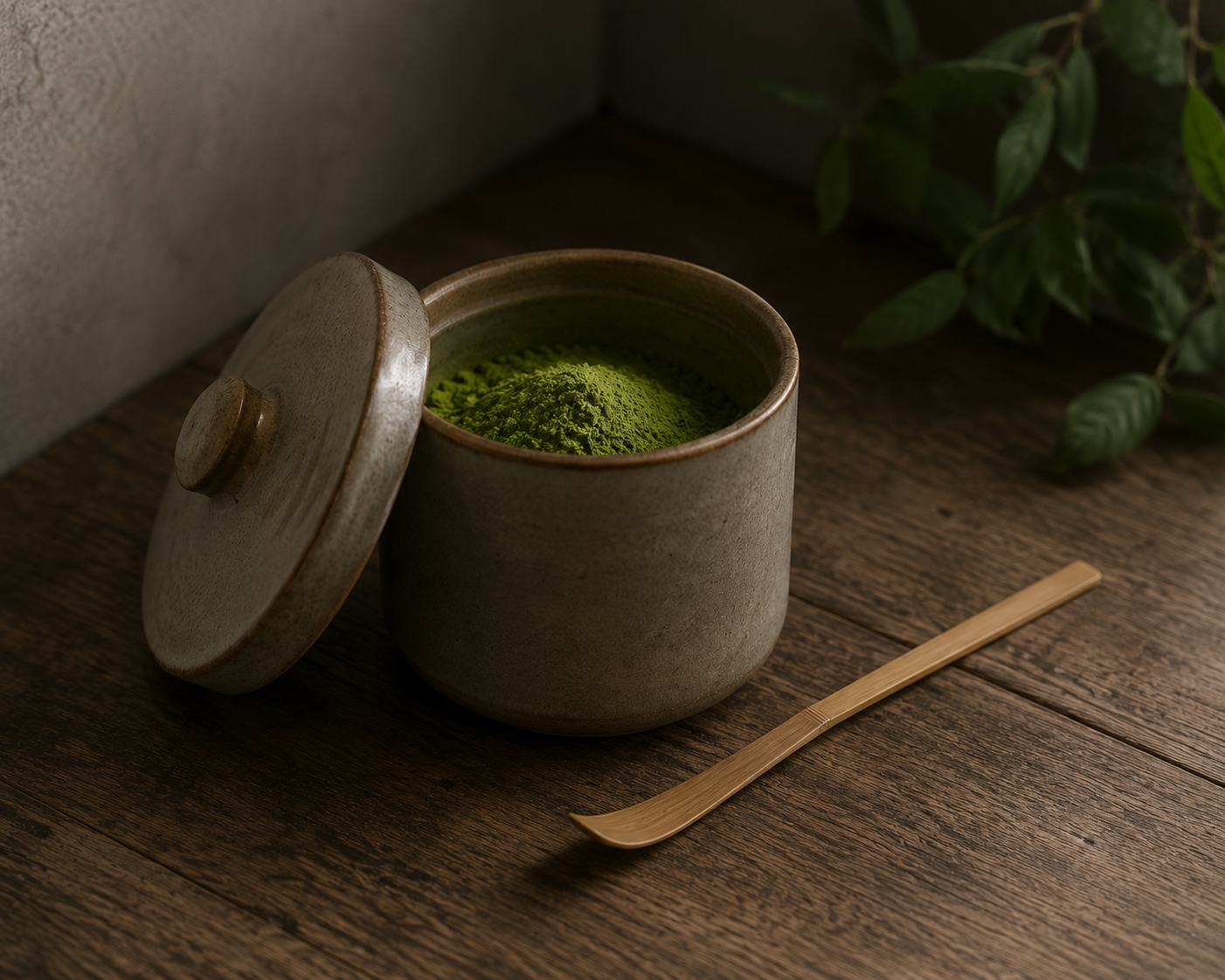
- Keep it in an airtight, opaque container. A tin with a tight double lid, or the original packaging inside a zip-top bag, both work. Clear glass jars look nice on a shelf and are genuinely one of the worst choices, since they let light straight through to the exact compound light is busy destroying.
- Store it somewhere cool and dark, not on a sunny counter. A kitchen cabinet away from the stove is usually sufficient. The fridge works too, but only if the container is genuinely airtight — an imperfectly sealed tin in the fridge invites moisture and can pick up odors from other food.
- Use a dry scoop every time. Any moisture introduced into the tin, even from a slightly damp spoon, accelerates clumping and can encourage mold over time.
- Reseal immediately after scooping. Don’t leave the tin open on the counter mid-preparation. Every extra minute of air exposure adds up over weeks of daily use.
- Consider splitting your stash. If you buy larger quantities, keep a small amount in a daily-use tin at room temperature and store the rest, still sealed, in the fridge or freezer. You get convenience for daily use without exposing your whole supply to repeated temperature swings and air contact. This is also just a good habit if you tend to buy matcha faster than you actually drink it — better to keep most of it protected than to have the whole tin degrading while you slowly work through it.
If You Refrigerate After Opening
This is the part people get wrong most often. Refrigeration helps with heat, but the temperature swap between fridge and room temperature causes condensation on the cold powder the moment you open the container, which ruins texture and encourages clumping.
The fix: if you do refrigerate an opened tin, make sure it’s genuinely airtight, and let it sit sealed at room temperature for a few minutes before opening it, rather than opening it straight out of the fridge.
Tools That Make This Easier
An opaque, airtight tin. Shop matcha storage tins on Amazon → Look specifically for opaque metal or ceramic, not clear glass, and a tight double lid rather than a simple press-fit cap.
A small vacuum-sealable canister. Shop vacuum-seal tea canisters on Amazon → Useful if you buy larger quantities and want a small daily-use portion separate from your sealed backup stock.
How to Tell If Your Matcha Has Gone Downhill
You’re looking for a shift, not a hard failure point — matcha degrades gradually rather than suddenly turning bad.
Color. Fresh matcha should be a vivid, almost jewel-toned green. If yours has drifted toward olive, brown, or a dull yellow-green, oxidation and light exposure have already done real damage.
Smell. Good matcha smells fresh, slightly grassy, sometimes a little sweet. A flat, dull, or musty smell is a sign it’s past its best, and a genuinely sour or moldy smell means it should be discarded, not just downgraded to culinary use.
Taste. Stale matcha tends to taste flatter and more bitter than fresh matcha, losing the natural sweetness and umami that made it worth buying in the first place.
Texture. Clumping that won’t break up even after sifting usually indicates moisture has gotten into the tin at some point, which is worth addressing in how you’re storing it going forward, not just this one batch.
A Few Things People Ask Me
Can I still use matcha that’s past its best-by date? Usually yes, as long as it shows no signs of mold or an off, sour smell. It’s a quality issue, not typically a safety one — expect a flatter flavor and duller color rather than anything harmful. If it’s degraded significantly, it may still work fine in baking or blended lattes where the subtlety wasn’t going to show through anyway.
Does freezing matcha actually work, or does it ruin the texture? Freezing works well for unopened, properly sealed tins specifically. The risk isn’t the cold itself, it’s condensation when you go from cold to warm too quickly. Always let a frozen tin return to room temperature while still sealed before opening it.
Why does my matcha smell like other food in my fridge? Matcha absorbs ambient odors easily because it’s such a fine, porous powder. If it’s picked up smells from your fridge, your container likely isn’t as airtight as you think — this is one of the more common signs it’s time to upgrade to a proper sealed tin rather than relying on the original bag alone.
Is it worth buying a vacuum-sealed canister specifically for matcha? If you go through matcha slowly, or you buy in bulk, yes — a small vacuum-sealable canister for daily use paired with a larger sealed container for backup stock is a genuinely effective way to extend freshness without constantly exposing your whole supply to air.
Should I keep matcha in its original bag, or transfer it into a new container? Keeping it in the original resealable bag or foil pouch, then placing that inside a rigid opaque tin, actually works better than dumping it loose into a new container. The original packaging is usually designed to limit air exposure already, and the outer tin adds a second layer of protection rather than replacing the first.
Does matcha lose its nutritional benefits as it degrades, or just its taste? Both, to some degree. The same oxidation process that dulls color and flavor also breaks down some of the antioxidant compounds matcha is valued for. It’s not an immediate cliff — you’re not getting zero benefit from slightly stale matcha — but fresher matcha does deliver more of what you’re actually paying for.
Where I Landed
If you only change one habit after reading this, make it the container. An opaque, genuinely airtight tin, kept somewhere cool and dark rather than on a sunny counter, solves most of what causes matcha to go dull before its time. Everything else — the fridge, the freezer, splitting your stash into smaller portions — is refinement on top of that one basic fix, worth adding once the container habit is already solid.
It’s a small amount of effort for something that, if you’ve read my matcha powder brands comparison, you probably didn’t buy cheaply in the first place. Good storage is really just protecting the money you already spent, and it’s the difference between your matcha tasting the way it did on day one versus tasting like a disappointing memory of that by week six. The tin I let sit on that sunny counter taught me that the hard way — don’t let yours suffer the same fate for the sake of convenience.