Disclosure: This post contains affiliate links. If you buy through one of them, I may earn a small commission at no extra cost to you. Prices below were taken from each brand’s own site at the time of writing; genmaicha stock and prices change often, so check before you buy.
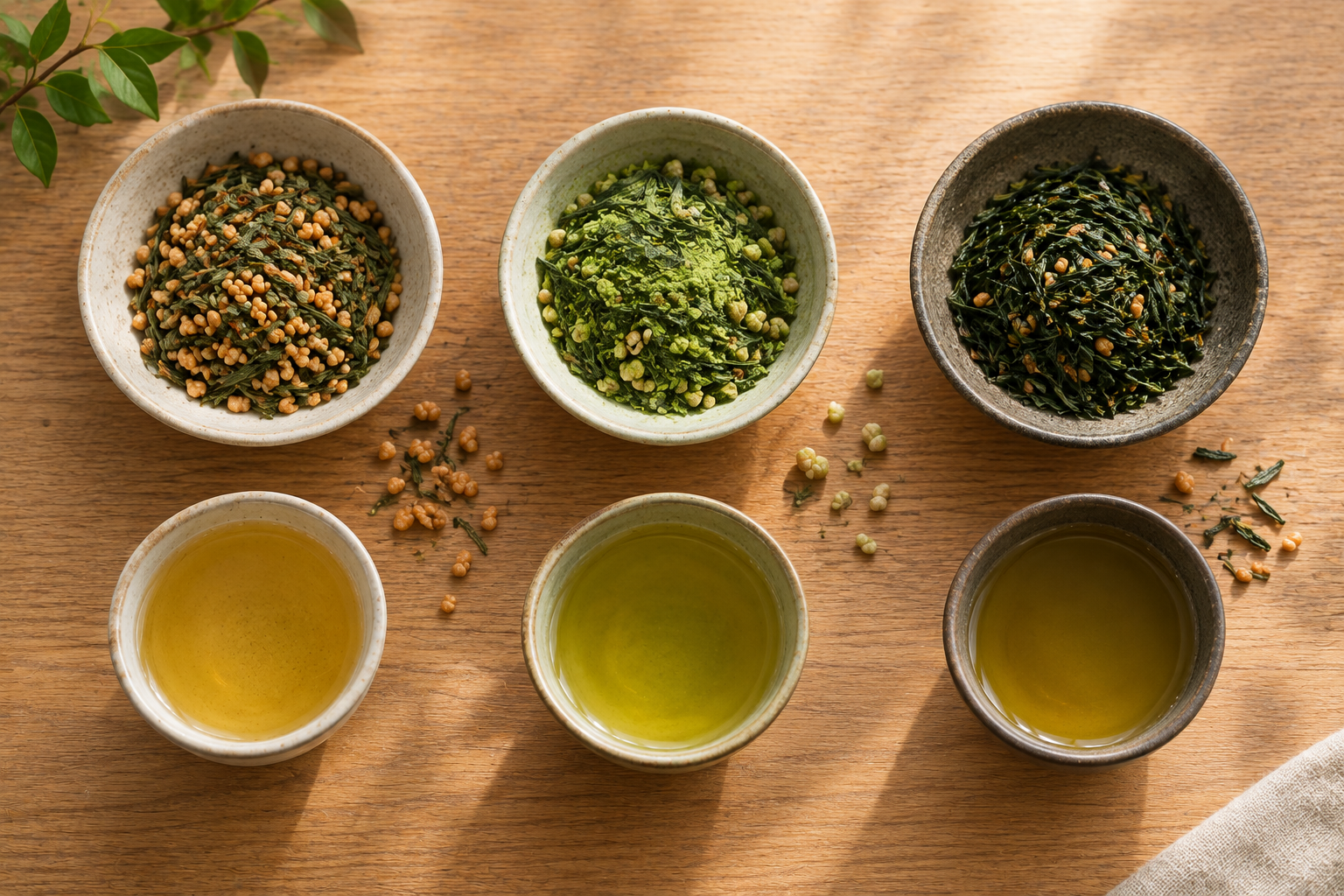
Genmaicha is the cheapest tea most Japanese tea shops sell, and that makes it easy to assume all genmaicha is basically the same. It isn’t. I’ve had genmaicha that tasted like warm, nutty popcorn with a clean green finish, and genmaicha that tasted like stale rice crackers soaked in water. The difference almost never comes down to price. It comes down to three things printed – or not printed – on the label: what green tea is underneath, whether matcha has been added, and how fresh the roasted rice is.
The Problem You’re Actually Trying to Solve
Most genmaicha listings say the same thing: “green tea with roasted brown rice.” What they leave out is the base tea, which can be bancha (later-harvest, cheaper leaf), sencha, or even gyokuro, and that base changes the cup more than the brand name does. Once you know what to look for, picking a genmaicha gets much easier, whichever shop you buy from.
Who This Article Is NOT For
- If you’re new to genmaicha and want to know what it is, how it’s made and how to brew it, start with my complete genmaicha guide. This article assumes you already like it and want to buy a better one.
- If you love the roasted flavor but want almost no green-tea character, you may be happier with hojicha. My hojicha brand comparison covers the best options there.
- If you only ever drink genmaicha from tea bags at the office, the last section below is the only one you need.
What to Look for on the Label
1. The base tea. Bancha-based genmaicha is the most common and cheapest – mellow, a bit rustic, and very easy to drink. Sencha-based genmaicha is brighter and greener. Gyokuro-based genmaicha is rare and noticeably sweeter, with more umami under the toasted rice.
2. Matcha-iri or not. “Matcha-iri” means matcha powder has been added. It turns the brewed tea a brighter green, adds body, and gives a smoother, slightly creamier cup. Plain genmaicha is lighter and more about the rice.
3. Freshness. The roasted rice is what gives genmaicha its aroma, and it’s also the first thing to go flat. A large bag that you’ll take months to finish is a false saving.
The Five Brands at a Glance
| Brand | Price | What stands out | Best for |
|---|---|---|---|
| Nio Teas | $12.65-$18.90 per 100g | Four styles, including gyokuro and matcha genmaicha | Trying different base teas |
| Hibiki-an | $24 for 200g (Matcha-iri) | Big bags, matcha-iri and organic options | Daily drinkers on a budget |
| Marukyu Koyamaen | about $5.70-$8.55 per product | Several named blends from an Uji matcha house | Exploring one trusted brand |
| Ippodo | ¥600 per 100g (Gokujo) | Very cheap, simple, mild | A mild everyday cup, when in stock |
| Ito En / Yamamotoyama | Budget | Widely available tea bags | Convenience |
Nio Teas: Best for Comparing Base Teas
Nio Teas is the easiest place to taste the “base tea” difference for yourself, because its four genmaicha are built on different foundations. The standard Genmaicha Green Tea with Roasted Rice ($14.50 per 100g) and the Genmaicha Popcorn Green Tea ($12.65 per 100g) cover the classic style. The Gyokuro Genmaicha ($16.90 per 100g) uses shade-grown gyokuro, with notes of light sweetness, toasted popcorn and caramel, and it’s the best-reviewed of the four. The Matcha Genmaicha from Shizuoka ($18.90 per 100g) is the matcha-iri option.
If you only buy one, try the gyokuro version – it’s the clearest demonstration of how much the base tea matters, and it’s still only a couple of dollars more than standard genmaicha.
Pick Nio Teas if: you want to understand what makes one genmaicha better than another, not just buy a bag.
Hibiki-an: Best Value for Matcha-Iri
Hibiki-an, the Uji-area producer, sells its Genmaicha Matcha-iri in a 200g bag for $24: sencha and roasted, puffed brown rice coated with matcha. It’s described as hearty and grain-like but with the freshness of matcha and sencha, and the price per gram is excellent. There are also plain and organic versions in the same large format.
The only caution is the freshness point above: 200g is a lot of genmaicha for one person. If you drink a cup a day, it’s fine. If genmaicha is an occasional tea, a smaller bag will taste better by the end.
Pick Hibiki-an if: genmaicha is a daily habit and you like the smoother matcha-iri style.
Marukyu Koyamaen: Best for Exploring One Brand
Marukyu Koyamaen, best known for matcha, sells several named genmaicha blends – Miyako no Yuki (about $5.70), Saga no Yuki (about $7.28), and Takachiho and Akebono (about $8.55 each) – plus tea bag versions. The names don’t explain much on their own, so treat the range like a small tasting flight: start with one of the mid-priced blends and move up or down from there.
Pick Marukyu Koyamaen if: you already trust the brand from its matcha or sencha and want a genmaicha from the same house.
Ippodo: Cheap, Mild and Simple
Ippodo keeps its genmaicha range very small. The main loose-leaf option is Gokujo Genmaicha at ¥600 for 100g, described simply as mild and easy to drink, plus a one-pot tea bag version and an organic option. It’s one of the cheapest good genmaicha you’ll find from a major tea house. The catch is availability: when I checked, Ippodo’s global shop showed its genmaicha as out of stock, so it’s worth checking back rather than relying on it.
Pick Ippodo if: you want a mild, straightforward genmaicha and it’s in stock.
Ito En and Yamamotoyama: Tea Bags Done Right Enough
For convenience, the two names you’ll see everywhere are Ito En (its Oi Ocha matcha genmaicha tea bags) and Yamamotoyama, which sells both regular and organic genmaicha tea bags. Neither will match fresh loose-leaf from the shops above, but genmaicha holds up better in a tea bag than most green teas, because the toasted rice carries the flavor even when the leaf is fine.
Pick these if: you want something easy for work, travel or the back of the cupboard.
A Few Things People Ask Me
Is matcha-iri genmaicha better? It’s different, not better. Matcha-iri gives a greener, rounder cup; plain genmaicha is lighter and toastier. If you like matcha lattes, you’ll probably prefer matcha-iri.
Why does my genmaicha taste flat after a few weeks? The roasted rice loses its aroma quickly once the bag is open. Buy smaller bags, keep them sealed and away from heat and light, and finish them within a month or so.
Can I brew genmaicha with boiling water? Hotter water than sencha is fine – around 80-95°C works well – because the rice benefits from the heat. But a gyokuro-based or high-grade sencha-based genmaicha will taste sweeter toward the lower end of that range.
Which one would you start with? For loose leaf, Nio Teas’ genmaicha collection – especially the gyokuro genmaicha – is the most interesting. For tea bags, genmaicha tea bags on Amazon from Ito En or Yamamotoyama are the easy option.
Where I Landed
The brand matters less with genmaicha than with sencha or gyokuro. What matters is the base tea, whether there’s matcha in it, and how fresh the rice is. Nio Teas is where to taste those differences, Hibiki-an is the daily-drinker value pick, Marukyu Koyamaen and Ippodo are solid single-house choices, and Ito En or Yamamotoyama cover the tea-bag shelf. Buy smaller than you think you need, and the cheapest tea in the shop will taste a lot better than its price suggests.