Disclosure: This post contains affiliate links. If you buy through one of them, I may earn a small commission at no extra cost to you.
A Japanese tea set is one of those gifts that can go either way. Get it right and it becomes something someone actually uses every day for years, a small daily ritual you had a hand in starting. Get it wrong and it becomes decorative clutter, admired once and then quietly relegated to a cabinet. The difference almost always comes down to matching the set’s size and formality to the occasion and the recipient’s actual life, not to how impressive the set looks in photos or how ornate the box it arrives in happens to be.
This is a companion piece to my broader Japanese tea gift guide, which covers what tea itself to give based on the recipient. This one is specifically about the teaware, the physical set, and which configuration actually fits which occasion — a question that comes up constantly once someone’s already decided teaware, not tea leaves, is the gift they want to give.
The Problem You’re Actually Trying to Solve
You’ve searched for a Japanese tea set gift guide because you want to give teaware specifically, not just a bag of tea, for a wedding, housewarming, anniversary, or another meaningful occasion, and you’re facing an overwhelming range of set sizes, cup counts, and styles without an obvious sense of which one actually fits your situation.
Who This Article Is NOT For
Let’s save you some scrolling if this isn’t quite your situation.
- If you’re buying for yourself rather than gifting, my kyusu buying guide covers choosing a pot based on your own brewing habits rather than an occasion.
- If you want tea itself as the gift, not teaware, my Japanese tea gift guide is the more relevant resource.
- If the recipient already owns a full, well-loved tea set, duplicating what they have rarely lands well — consider a complementary piece like a single specialty cup or a whisk upgrade instead of a full new set.
If you’re past that, here’s where the actual guide starts.
What a Japanese Tea Set Actually Includes
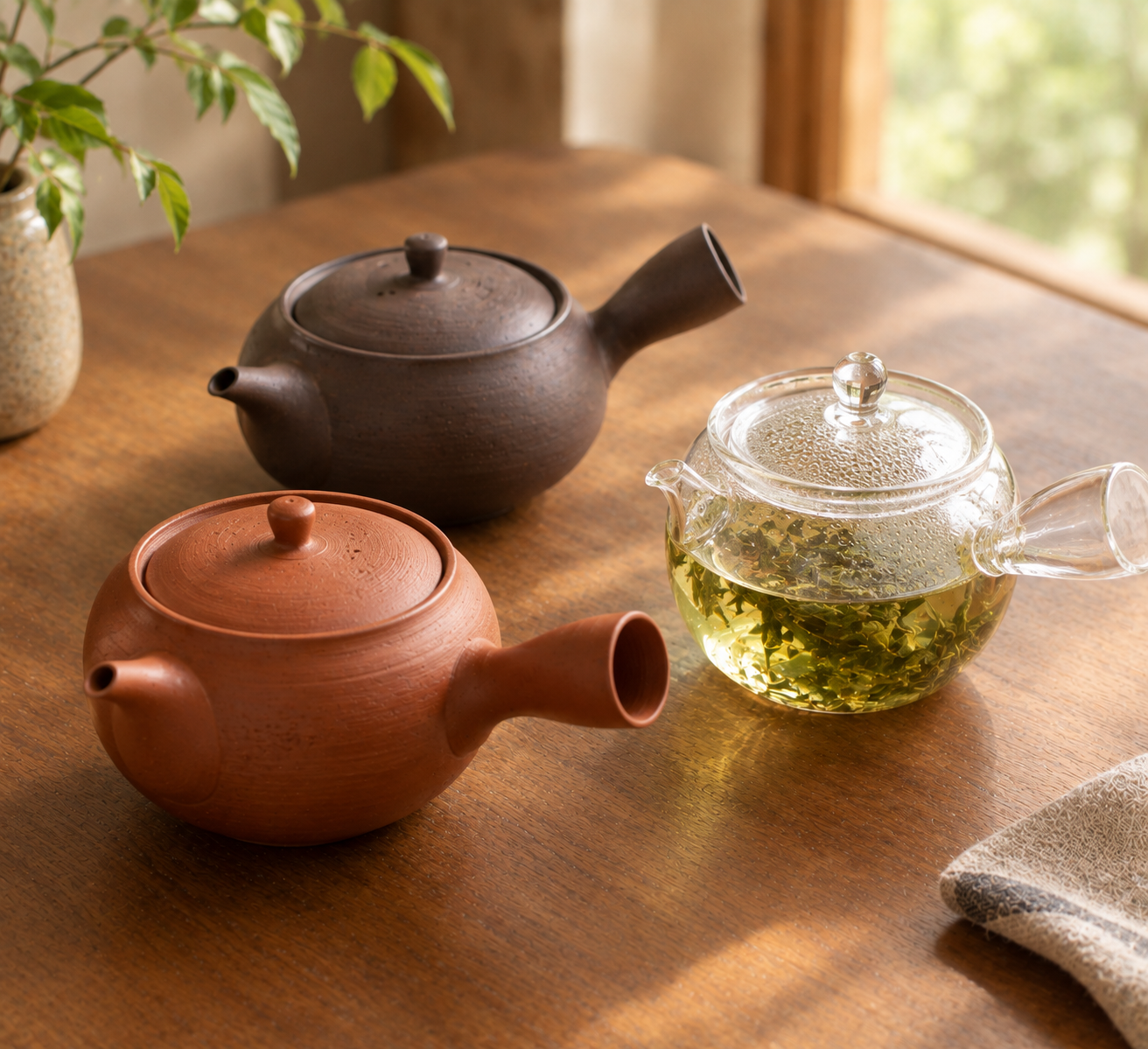
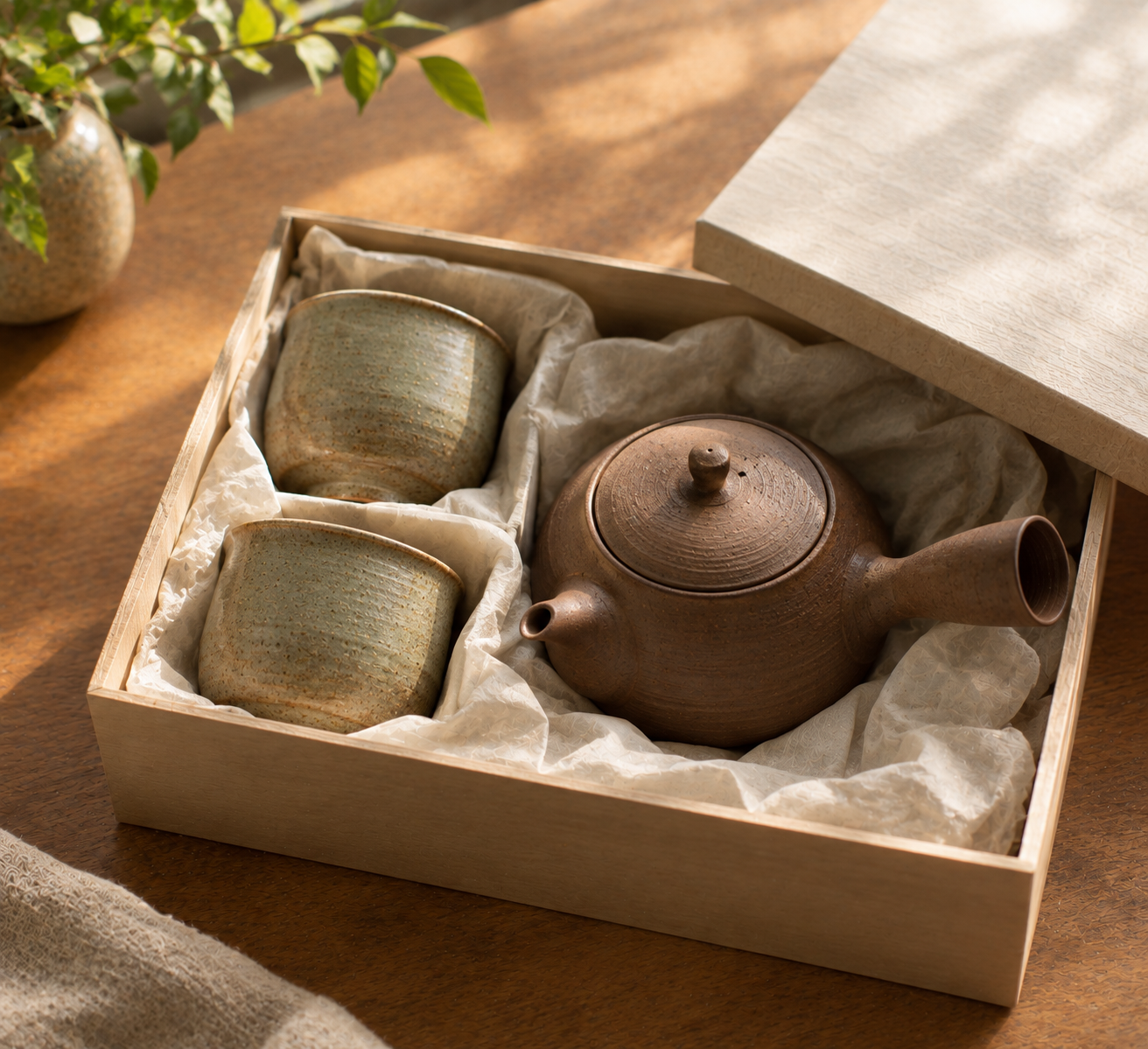
At its core, a Japanese tea set combines a brewing vessel, typically a kyusu, with matching serving cups, called yunomi. More elaborate sets add a tray, a yuzamashi (a small lidless vessel for cooling boiling water before it hits delicate leaves), or a built-in strainer. The two variables that matter most for gifting purposes are the number of cups included and the overall formality of the design. Beyond the standard yunomi, some sets use wider-brimmed kumidashi cups, meant to accentuate aroma, or sleeker modern shapes suited to a more contemporary interior, so it’s worth glancing at the cup style itself, not just the teapot, when picking a set.
Set Sizes by Occasion
| Occasion | Set Size | Why |
|---|---|---|
| Couple, anniversary, housewarming for two | Kyusu + 2 cups | Personal without being overly intimate; the classic “tea for two” gift |
| Wedding, engagement | Kyusu + 2–4 cups, often nicer materials | Symbolic of shared daily ritual; slightly more formal presentation expected |
| Housewarming for a family or shared household | Kyusu + 4–5 cups | Covers a typical household’s daily needs without excess |
| Retirement, milestone birthday | Larger, more formal or artisan set | The occasion itself often calls for something with more visible craftsmanship |
| Hosting-focused recipient | Larger kyusu (dobin-style) + several cups | Supports serving guests rather than just one or two people |
| Thank-you gift, lower-stakes relationship | Smaller nested set (cups store inside the pot) | Compact, practical, doesn’t require prior knowledge of the recipient’s taste |
Matching Material and Style to the Recipient
For Someone New to Japanese Tea
A straightforward porcelain kyusu and cup set, rather than unglazed clay, is the more forgiving gift here. Porcelain requires none of the special care unglazed clay demands, and it won’t punish a beginner for not yet knowing the no-soap rule that matters so much for genuine Tokoname or Banko ware. My kyusu care guide is worth mentioning if you do go the clay route, since it covers exactly what a first-time owner needs to know, and including a small note or card pointing them to it removes a lot of the intimidation factor a beginner might otherwise feel.
For an Established Tea Enthusiast
Someone who already owns basic teaware wants something with more visible craftsmanship, an artisan-made Tokoname or Banko clay set, ideally from a maker they wouldn’t have sought out themselves. My kyusu brands comparison is a useful reference here for specific makers worth considering, and leaning toward a maker’s more decorative or limited pieces rather than their entry-level catalog respects that this person already has the basics covered.
For Someone Who Hosts Often
Look toward a larger-capacity pot, sometimes called a dobin style, paired with four or five cups rather than the standard two. This fits a household that regularly serves tea to guests rather than just brewing for one or two people daily.
Presentation Matters More Here Than With Most Gifts
Because a tea set is inherently a ceremonial object even outside formal tea ceremony, presentation carries real weight. Look for sets that arrive in a proper gift box, ideally with some context, a small card or catalog explaining the kiln or maker, rather than teaware shipped loose in generic packaging. This matters disproportionately more for weddings, retirements, and other milestone occasions than it would for a casual thank-you gift, where practicality and ease of use matter more than ceremony.
Where to Find These
Shop Japanese kyusu and yunomi cup gift sets on Amazon →
Shop porcelain kyusu tea sets on Amazon →
A Few Things People Ask Me
Is two cups too intimate a gift for a coworker or more casual relationship? For a lower-stakes relationship, a nested set (where the cups store inside the teapot itself) or a single elegant cup paired with a small tea sample is a better fit than a full two-cup “for two” set, which does carry a more personal connotation appropriate for couples or close friends.
Should the tea set match the type of tea the recipient already drinks? Ideally yes, if you know it. A kyusu with a fine mesh filter suits sencha and most everyday green tea well, while someone who specifically drinks a lot of matcha would get more use out of a chawan and whisk set than a kyusu-based gift, which is a different gifting category entirely.
Is porcelain or clay the safer default if I don’t know the recipient’s preference? Porcelain is generally the safer, more universally appropriate default for gifting specifically, since it requires no special care knowledge and won’t punish an unprepared recipient the way unglazed clay’s soap-avoidance rule can if they’re not warned about it.
How many cups should a standard gift set include if I’m not sure of the occasion’s formality? Two to four cups covers the widest range of situations reasonably well. Below two feels incomplete as a gift, and above four starts to feel more specifically suited to hosting than to general gifting unless you know that’s the recipient’s actual habit.
Does the tray matter, or is it a purely decorative add-on? A tray is genuinely functional, not just decorative — it catches drips during pouring and gives the whole set a cohesive presentation on a table, which matters more for a gift that will likely be used for guests occasionally than for one meant purely for solo daily use. For a couple’s everyday tea-for-two set, it’s a nice-to-have rather than essential.
Is it appropriate to gift a Japanese tea set to someone who’s never had Japanese tea before, or does that feel presumptuous? It’s a genuinely welcoming way to introduce someone to the category, especially paired with a beginner-friendly tea sampler. Framing it as an invitation rather than an assumption, a note explaining what it’s for and how simple it is to use, goes a long way toward making the gift feel thoughtful rather than presumptuous.
Where I Landed
The single most useful filter for this whole category of gift: think about who will actually be drinking from this set and how often, not how impressive the box looks unwrapped. A modest two-cup porcelain set that gets used every morning is a better gift than an elaborate artisan set that ends up as a shelf display because it felt too precious to actually use.
None of this means you need to overthink a well-intentioned gift into a research project. A quick honest read on the occasion’s formality and the recipient’s existing tea habits narrows the field fast, and from there, most of the specific choices, material, cup count, tray or no tray, are genuinely flexible rather than governed by a strict rule.
If tea itself, rather than teaware, is what you’re deciding on next, my Japanese tea gift guide picks up where this one leaves off.