Category: Japanese Tea Guides

  • Japanese Tea Christmas Gifts: What to Give, What It Costs, and When to Order

    Japanese Tea Christmas Gifts: What to Give, What It Costs, and When to Order

    Disclosure: This post contains affiliate links. If you buy through one of them, I may earn a small commission at no extra cost to you. Shipping times, holiday cut-off dates and product availability change every year – always check each shop’s current holiday shipping information before you order.

    Quick Picks

    • Best all-in-one gift: a matcha set with powder, whisk and scoop – everything they need to start. Nio Teas’ matcha sets
    • Best for a curious tea lover: a matcha sampler, so they can taste several grades. Nio Teas’ matcha samplers
    • The gift that keeps arriving: a matcha subscription – and a lifesaver if you’re ordering late. Nio Teas’ Monthly Matcha Club
    • At the time of writing, ordering from Nio Teas through the links on this page automatically applies a 10% discount at checkout – no code needed. Offers can change, so check the final price in your cart.
    • Last-minute and fast shipping: a matcha whisk set from Amazon. Matcha whisk sets on Amazon
    • Beautiful wrapping: a furoshiki cloth turns any tea gift into something special. Furoshiki wrapping cloths on Amazon

    Below: gift ideas by budget and by recipient, when to order so it arrives in time, and how to wrap Japanese tea the Japanese way.


    Japanese tea makes a lovely Christmas gift. It’s thoughtful without being generic, it’s something people actually use, and a beautiful tin of matcha or a handmade teacup feels far more personal than another candle. It’s also easy to get wrong: a delicate gyokuro for someone who only drinks sweet lattes, or a matcha tin with no whisk for someone who’s never made matcha.

    This guide is about Christmas specifically – what to give at different budgets, and how to make sure it arrives before the 25th.

    The Problem You’re Actually Trying to Solve

    You want to give Japanese tea for Christmas, but you’re not sure what to choose, how much to spend, or whether ordering from Japan will arrive in time. You want a gift that feels special and that the person will actually enjoy using.

    Who This Article Is NOT For

    • If you’re shopping for a birthday, thank-you or other occasion, my Japanese tea gift guide matches gifts to people year-round.
    • If you specifically want a full tea set, my Japanese tea set gift guide compares sets by occasion.
    • If you’re buying for yourself, you can skip the wrapping section – but the ordering timeline still applies.

    When to Order: The Christmas Timeline

    This is the part most people get wrong. Many of the best Japanese tea shops ship from Japan, and international parcels take longer in December, when carriers are busiest.

    WhenWhat to do
    Early to mid-NovemberBest time to order from shops in Japan, especially teaware and limited seasonal items
    Late NovemberStill usually fine for express international shipping – but check each shop’s holiday cut-off
    Early DecemberChoose express shipping, or buy from shops in your own country
    Mid-December onwardBuy locally or from Amazon, or give a subscription that starts after Christmas

    Holiday cut-off dates are announced by each shop and carrier each year, so treat this as a rough guide and check the current dates.

    Ordering late? A subscription is the perfect last-minute gift: you can give a card on Christmas Day saying the first box is on its way.

    Gift Ideas by Budget

    Under $25: stocking stuffers

    • A small tin of everyday matcha – perfect for someone who already owns a whisk
    • A bamboo whisk (chasen) – the single tool that makes the biggest difference to matcha
    • Hojicha or genmaicha – toasty, forgiving and loved by almost everyone
    • A box of good Japanese green tea bags – ideal for coworkers
    • A small yunomi teacup

    $25-60: the sweet spot

    • A matcha starter set with powder, whisk, scoop and sometimes a bowl – the safest gift for a matcha beginner
    • A matcha sampler with several grades to compare
    • A premium sencha or gyokuro with a small teacup
    • A Japanese tea canister (chazutsu) with a bag of tea inside

    $60 and up: a special gift

    • A handmade matcha bowl (chawan) with a premium matcha
    • A Japanese teapot (kyusu) with a high-grade sencha
    • A tea subscription for three, six or twelve months
    • A complete tea set for someone who loves hosting

    Gift Ideas by Recipient

    They are…GiveWhy
    Curious about matcha but have never made itA matcha set with whiskThey can start right away
    Already a matcha fanA matcha sampler or a premium tinSomething new to explore
    A coffee drinkerHojichaToasty, low in bitterness, easy to like
    Always cold in winterHojicha or genmaicha with a cozy mugA warming evening ritual
    Caffeine-sensitiveHojicha, kukicha or a grain teaGentle or caffeine-free
    A bakerCulinary matcha with a recipe cardFor matcha cookies and cakes
    A host or design loverA handmade teacup or tea canisterBeautiful and lasting
    Hard to shop forA subscriptionA surprise every month

    Teas That Feel Right for Christmas

    Some Japanese teas suit the season better than others:

    • Matcha – its bright green looks festive, and a matcha set feels like an event to unwrap.
    • Hojicha – roasted, warming and low in bitterness, it’s a natural partner for Christmas cookies, chocolate and gingerbread.
    • Genmaicha – green tea with toasted rice, cozy and nutty on a cold evening.
    • Kuradashi – aged sencha or gyokuro released in autumn, when its flavor has mellowed. Some Japanese shops sell it as a seasonal tea, so it’s a thoughtful choice for someone who already knows sencha.
    • Hojicha or matcha powder for lattes – an easy way to make a festive drink at home, with milk and a little sweetener.

    If you’re unsure, hojicha is the safest crowd-pleaser: almost everyone likes it, and it pairs with almost every Christmas sweet.

    How to Wrap Japanese Tea the Japanese Way

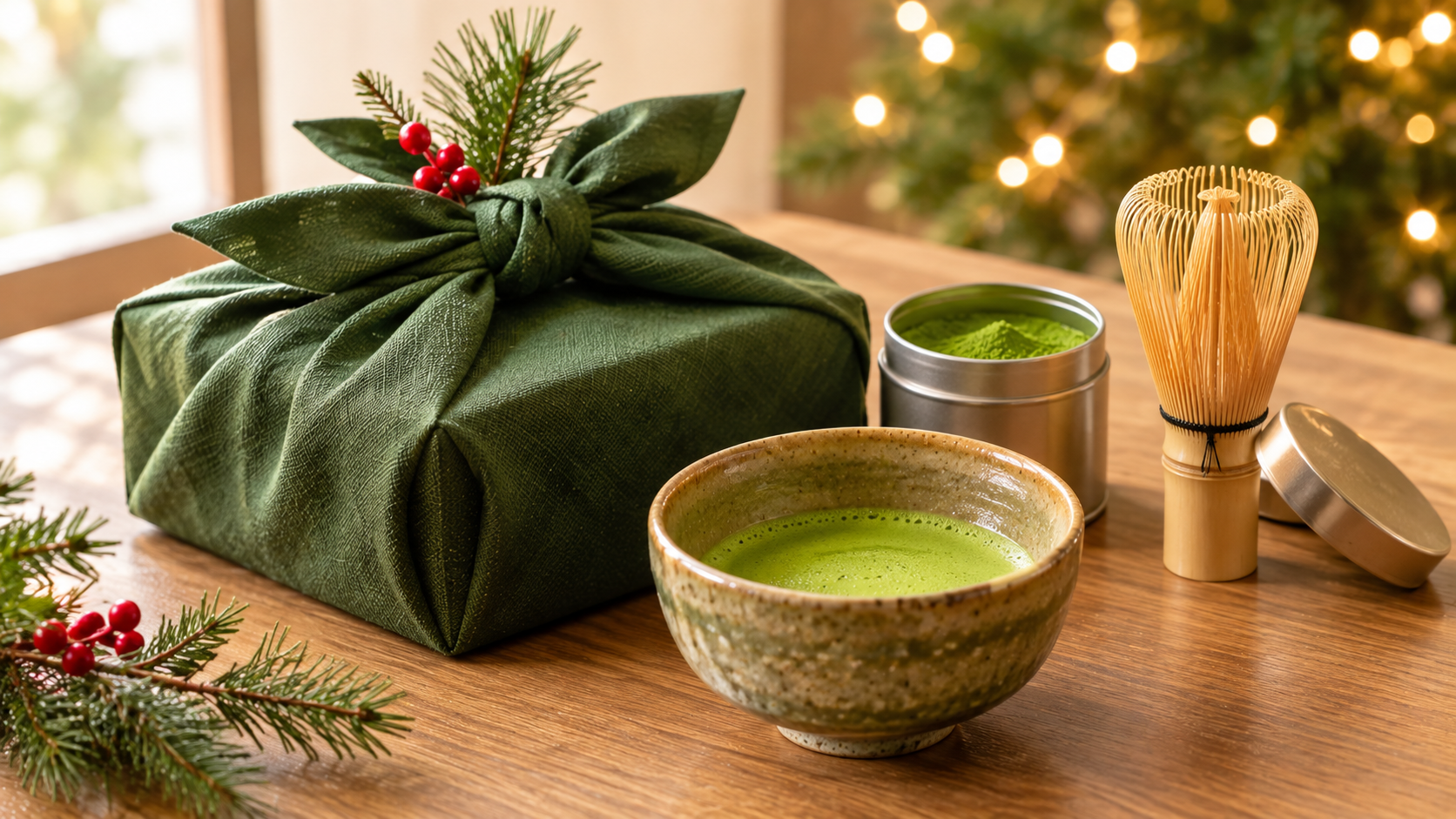
    Furoshiki is a square cloth used in Japan to wrap and carry gifts. It’s reusable, beautiful and perfect for tins, boxes and teaware – and the cloth becomes part of the gift.

    A simple furoshiki wrap for a tin or box:

    1. Lay the cloth flat in a diamond shape, with the gift in the center.
    2. Fold the bottom corner up over the gift, then the top corner down.
    3. Bring the left and right corners to the top and tie them in a neat double knot.
    4. Adjust the knot so the ends sit evenly – and add a small sprig of pine or holly for Christmas.

    A few other thoughtful touches:

    • Add a handwritten brewing card with the water temperature and amount for the tea you’re giving.
    • Include a seasonal sweet – Japanese rice crackers or wagashi travel well with tea.
    • Pack teaware carefully with plenty of padding, especially if you’re shipping it.

    A Few Tips for Giving Tea Well

    • Always include the tools. Matcha without a whisk often goes unused.
    • Choose fresh tea. Check best-before dates, and avoid huge bags that will go stale.
    • Match the grade to the person. Ceremonial grade for drinking straight; latte or culinary grade for lattes and baking.
    • Keep it simple for beginners. One tea and the right tool beats a complicated set.
    • Mind the allergens. Some teas and blends contain grains like barley or buckwheat, and some gift boxes include sweets – check labels if you know of allergies.

    A Few Things People Ask Me

    What’s the best Japanese tea gift for someone who’s never tried matcha? A matcha set with a whisk and scoop. It removes every barrier to getting started.

    Will tea ordered from Japan arrive before Christmas? Often yes, if you order early and choose express shipping. In December, check each shop’s holiday cut-off dates and consider buying locally if it’s close.

    Is a tea subscription a good Christmas gift? Yes – especially for people who have everything, and as a last-minute gift you can announce with a card.

    What should I give a coffee lover? Hojicha. Its roasted, toasty flavor is the easiest bridge from coffee to Japanese tea.

    Where I Landed

    The best Japanese tea gift is one the person can enjoy on Christmas morning: a matcha set for the curious, a sampler for the enthusiast, hojicha for the coffee lover, and a subscription for anyone hard to shop for. Order early if you’re buying from Japan, wrap it in a furoshiki, and add a little card telling them how to brew it. That small note often turns a nice gift into a new habit.
  • Decaf Matcha and Low-Caffeine Alternatives: What to Buy If You Love Matcha but Not the Caffeine

    Decaf Matcha and Low-Caffeine Alternatives: What to Buy If You Love Matcha but Not the Caffeine

    Disclosure: This post contains affiliate links. If you buy through one of them, I may earn a small commission at no extra cost to you. Caffeine figures are approximate and vary by product and preparation. If you need to limit caffeine for medical reasons, including pregnancy, check with your doctor about what’s right for you.

    Quick Picks

    • Closest to real matcha, with much less caffeine: DoMatcha Master’s Decaf – one of the few decaf matchas widely sold, with about 6mg of caffeine per gram according to a retailer listing. DoMatcha Master’s Decaf on Amazon
    • Best low-caffeine swap for lattes: hojicha powder – roasted, toasty and gentler than matcha, though not caffeine-free. Nio Teas’ hojicha powder – at the time of writing, ordering through the links on this page automatically applies a 10% discount at checkout, no code needed. Offers can change, so check the final price in your cart.
    • Zero caffeine, different drink: roasted grain teas like mugicha (barley tea).
    • The free option: use less matcha. Half a serving in a latte cuts the caffeine in half and still tastes like matcha.

    Below: how much caffeine matcha really has, how decaf matcha is made and how it tastes, the best low-caffeine alternatives, and simple ways to cut caffeine without giving matcha up.


    Matcha has a reputation as a “calm” alternative to coffee, and many people drink it in the afternoon or evening without thinking twice. But matcha is the whole tea leaf, ground and whisked into your cup – so you drink all of its caffeine, not just what steeps out. For some people, an evening matcha latte means lying awake at midnight.

    If that sounds familiar, you have options: decaf matcha, lower-caffeine teas that feel similar, and a few simple tricks. Here’s what actually works.

    The Problem You’re Actually Trying to Solve

    You love matcha – the ritual, the flavor, the color – but the caffeine doesn’t suit you, at least not later in the day. You want to know whether decaf matcha exists, whether it tastes any good, and what else you can drink instead.

    Who This Article Is NOT For

    How Much Caffeine Is in Matcha?

    Japan’s official food composition tables list matcha powder at about 3.2g of caffeine per 100g – roughly 32mg per gram. A typical bowl of usucha uses about 2g, so it contains around 60-70mg. A large latte made with 3-4g of powder can easily go higher.

    For comparison, the same tables list brewed coffee at about 60mg per 100ml – so a generous matcha latte can be in the same range as a cup of coffee.

    Decaf Matcha: How It’s Made and What It Tastes Like

    How it’s made

    Decaf matcha is made by removing caffeine from the tea leaves before they’re ground. Common methods include:

    • Carbon dioxide (CO2): pressurized CO2 draws caffeine out of the leaves.
    • Water processing: leaves are soaked so caffeine dissolves, then the water is filtered and returned.
    • Ethyl acetate: a compound that bonds with caffeine so it can be removed.

    How much caffeine is left

    Decaf matcha is not caffeine-free. Sources commonly describe it as containing a small fraction of regular matcha’s caffeine. DoMatcha’s Master’s Decaf is listed at about 6mg per gram – roughly a fifth of regular matcha’s 32mg per gram, based on the official tables.

    How it tastes

    Be honest with yourself here: decaffeination removes some flavor along with the caffeine. Decaf matcha is generally milder, thinner and less rich in umami than regular matcha – often compared to a second steeping – and it can look a little paler. Many people find it perfectly pleasant in a latte, where milk carries the flavor; fewer love it whisked with water alone.

    What’s available

    Decaf matcha is rare. DoMatcha’s Master’s Decaf is one of the best-known options, sold as 100% Japanese matcha decaffeinated with a proprietary water extraction process, and recommended for both whisked matcha and lattes. It’s also notably more expensive per gram than regular matcha, and it sometimes sells out.

    You may also see caffeine-reduced green tea powders from Japan. These are useful, but read the label carefully: some are made from sencha rather than true matcha and can taste quite different – one Japanese caffeineless green tea powder sold abroad even warns that it “isn’t matcha” and is fairly bitter.

    Low-Caffeine Alternatives That Feel Like Matcha

    OptionCaffeineTasteBest for
    Decaf matchaLowMild matchaKeeping the matcha ritual
    Hojicha powderLower than matcha in a typical servingToasty, caramel-likeEvening lattes
    Half-dose matchaHalf of your usualLighter matchaAfternoon lattes
    Kukicha (stem tea)LowLight, sweet green teaA gentle real tea
    Mugicha, sobacha, kuromamechaNoneToasty grain flavorsLate evening

    Hojicha powder

    Hojicha powder is roasted green tea ground like matcha. It whisks and mixes just as easily, but it tastes toasty and caramel-like instead of grassy, and it’s usually gentler in caffeine. It’s not caffeine-free – you’re still drinking the whole leaf – but a hojicha latte in the evening is a popular swap for a matcha latte.

    Kukicha

    Kukicha is a stem tea made from the twigs left over from sencha production. Stems contain less caffeine than young leaves, so it’s a gentle real green tea for the afternoon.

    Caffeine-free grain teas

    Mugicha (barley tea), sobacha (buckwheat tea) and kuromamecha (black soybean tea) have no caffeine at all. They don’t taste like matcha, but they give you a warm, comforting cup any time of day. Check allergens: barley contains gluten, buckwheat and soy are common allergens.

    Simple Ways to Cut Matcha Caffeine Without Giving It Up

    1. Use less powder. Try 1g instead of 2g. In a latte, the difference in flavor is smaller than you’d expect.
    2. Drink it earlier. Many people sleep fine with matcha before noon.
    3. Blend it. Mix half matcha and half hojicha powder for a toasty, lower-caffeine latte.
    4. Make it smaller. A 200ml latte with 1.5g is gentler than a large café latte with 4g.
    5. Switch later in the day. Matcha in the morning, hojicha in the afternoon, grain tea at night.

    Two Evening Recipes to Try

    Hojicha-matcha half-and-half latte. Whisk 1g of matcha and 1g of hojicha powder with 30ml of hot water (about 80°C / 175°F) until smooth, then add 150ml of steamed milk and a little honey. You get matcha’s color and grassy notes with a toasty, gentler finish – and roughly half the caffeine of a standard matcha latte.

    Decaf matcha oat latte. Whisk 2g of decaf matcha with a splash of warm water into a paste, then add 150ml of warm oat milk and a few drops of vanilla. Oat milk’s natural sweetness helps make up for decaf matcha’s milder flavor.

    Which Should You Buy?

    You want…Buy
    Matcha flavor with minimal caffeineDecaf matcha
    A cozy evening latteHojicha powder
    Zero caffeineMugicha or another grain tea
    To keep your current matchaNothing – just use less, earlier

    A Few Things People Ask Me

    Is there completely caffeine-free matcha? No. Decaf matcha still has a small amount of caffeine.

    Does decaf matcha keep its antioxidants? Some research and producers suggest decaffeinated matcha retains much of its catechins and L-theanine, but processing does change the leaf. Enjoy it as a drink rather than for health claims.

    Is hojicha caffeine-free? No. It’s gentler than matcha in most cups, but it contains caffeine.

    Can I drink matcha in the evening? It depends on your sensitivity. If matcha keeps you awake, switch to decaf, hojicha or a grain tea after lunch.

    Where I Landed

    You don’t have to give up matcha to cut caffeine. For the closest experience, decaf matcha works – especially in a latte – as long as you accept a milder flavor. For a cozy evening drink, hojicha powder is the easiest swap. And for many people, the simplest fix is free: use a little less matcha and drink it earlier in the day.

  • The Best Cold Brew Tea Bottle for Japanese Green Tea (and Barley Tea): What to Buy and Why

    The Best Cold Brew Tea Bottle for Japanese Green Tea (and Barley Tea): What to Buy and Why

    Disclosure: This post contains affiliate links. If you buy through one of them, I may earn a small commission at no extra cost to you. Specs below are from manufacturer and retailer listings at the time of writing; models and colors change often.

    Quick Picks

    • Best overall for green tea: Hario Filter-in Bottle (750ml) – heatproof glass, a fine built-in filter, and made in Japan. Hario Filter-in Bottle on Amazon
    • Best for a family-size fridge pitcher: a large cold-brew tea pitcher with an infuser and airtight lid – ideal for mugicha by the liter. Cold brew tea pitchers on Amazon
    • Best for taking to work: a small portable filter-in bottle. Portable cold brew tea bottles on Amazon
    • Best budget option: a glass jar plus a fine-mesh strainer – it works just as well, with a little more effort.
    • Don’t forget the tea: cold brew is only as good as the leaf. Nio Teas’ sencha collection – at the time of writing, ordering through the links on this page automatically applies a 10% discount at checkout, no code needed. Offers can change, so check the final price in your cart.

    Below: what actually matters in a cold-brew bottle, the main types compared, and how to cold-brew green tea and barley tea properly.


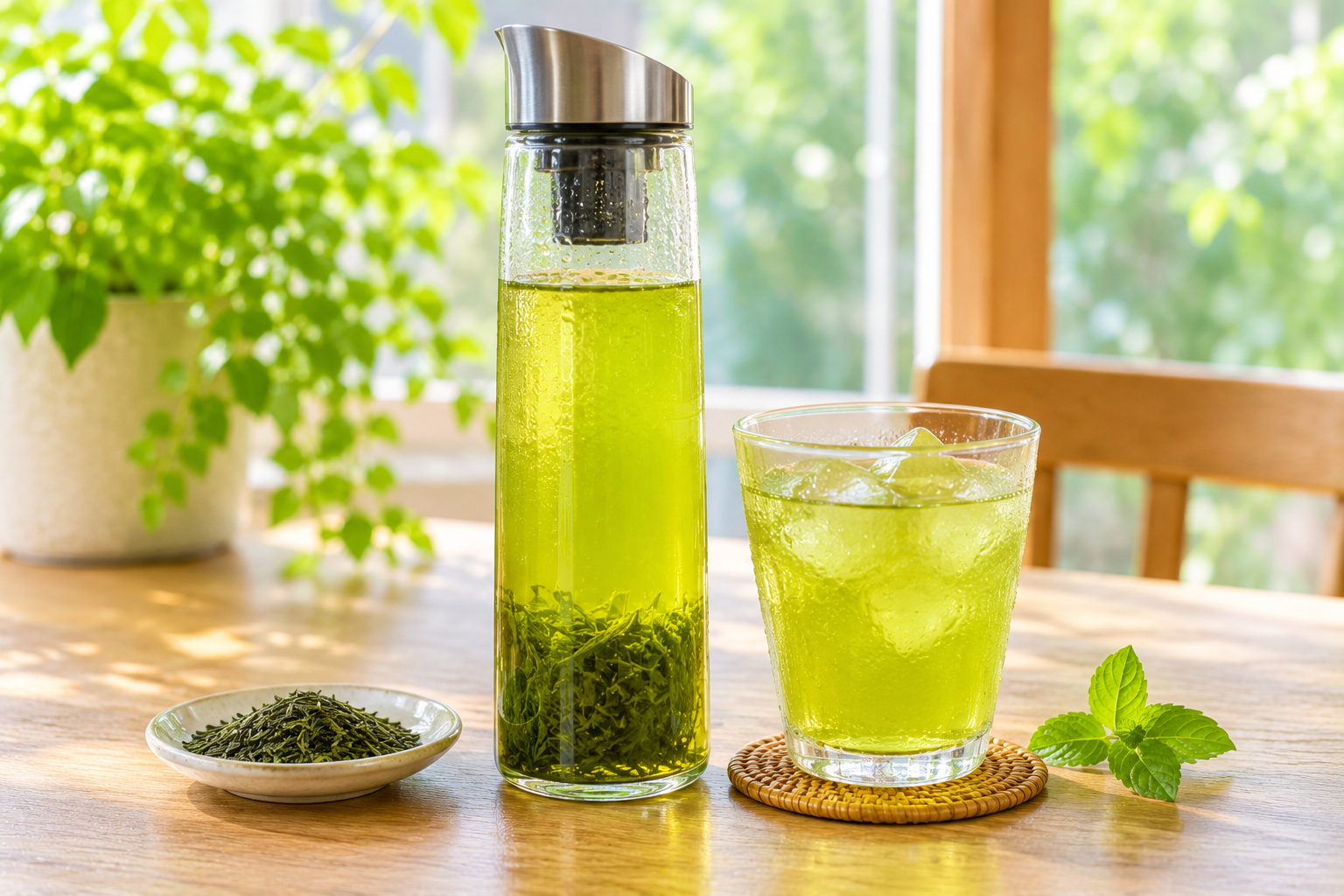
    Cold-brewed Japanese green tea is one of the simplest pleasures in tea. You put leaves in cold water, wait a few hours, and get a cup that’s smoother, sweeter and less bitter than hot-brewed tea – with almost no effort. In Japan, this method is called mizudashi, and in summer, many households keep a bottle of cold-brewed green tea or barley tea in the fridge at all times.

    You can do it in any jar. But the right bottle makes it so easy that you’ll actually do it every day. Here’s what to look for.

    The Problem You’re Actually Trying to Solve

    You want to make cold-brew tea at home – to replace bottled tea, save money, or enjoy better-tasting green tea – and you’re looking at a confusing range of bottles, pitchers and infusers. You want to know which design works best for Japanese tea, and what features actually matter.

    Who This Article Is NOT For

    • If you’re looking for good loose-leaf tea to cold-brew, my sencha brand comparison covers where to buy it.
    • If you mostly make barley tea and want to know how, my mugicha guide covers the method.
    • If you want cold brew coffee, many of these bottles work, but coffee needs a coarser grind and a different filter.

    What Actually Matters in a Cold Brew Tea Bottle

    1. A fine filter

    Japanese green tea, especially deep-steamed fukamushi sencha, has small leaf particles. A coarse filter lets them through, leaving your tea gritty and cloudy. Look for a fine mesh – some guides suggest roughly 200-400 microns – or a tightly woven filter.

    2. Material

    • Glass doesn’t hold onto flavors or smells, so it’s ideal if you switch between green tea, hojicha and barley tea. Heatproof (borosilicate) glass is more durable.
    • Plastic (look for BPA-free) is lighter and less breakable but can absorb tea flavors and odors over time.
    • Stainless steel is durable, but you can’t see the tea brewing.

    3. Size

    • 300-750ml suits one person or a day at work.
    • 1-2 liters suits families and batch-brewing mugicha.

    4. A wide mouth

    A wide opening makes it easy to add leaves, ice and fruit – and much easier to clean.

    5. A good seal

    A tight lid stops the tea from absorbing fridge smells and lets you lay the bottle down or carry it in a bag.

    6. Replacement parts

    Filters and silicone seals wear out. A brand that sells spare parts means your bottle lasts years.

    The Main Types, Compared

    TypeExampleSizeBest forWatch out for
    Filter-in bottleHario Filter-in Bottle750mlGreen tea, one or two peopleGlass can break
    Portable filter bottleHario portable bottle~400mlWork, commutingSmall batches only
    Pitcher with infuserVarious brands1-2LFamilies, mugichaTakes fridge space
    Large mizudashi potHario Mizudashi-style pots~1LBatch brewingLarger filter, harder to carry
    Jar + strainerAny glass jarAnyBudgetStrain separately

    Hario Filter-in Bottle

    Hario is a Japanese glassware maker, and its Filter-in Bottle is designed specifically for cold-brew tea. The 750ml model uses a heatproof glass bottle, a silicone spout and stopper, and a polypropylene filter, and it’s made in Japan. You put tea leaves in the bottle, fill it with water, and pour through the filter built into the spout – no separate infuser to lift out.

    Why it’s good for Japanese tea: the fine filter handles small sencha particles well, the glass doesn’t hold flavors, and the wine-bottle shape fits in a fridge door.

    Downsides: glass can break if dropped, and some users find that the silicone parts pick up odors over time – replace them if they do.

    Portable Filter Bottles

    Smaller versions of the filter-in design are ideal for brewing a single serving overnight and taking it to work in the morning.

    Pitchers With an Infuser

    A pitcher with a removable infuser core is the easiest way to make tea for a whole family. Fill the infuser with tea leaves or a mugicha bag, add water, and refrigerate. Look for an airtight lid, a fine infuser mesh, and a shape that fits your fridge door.

    Mizudashi Pots

    Large Japanese-style cold-brew pots, such as Hario’s Mizudashi range, are designed for batch brewing. They’re great for barley tea and hojicha, though their larger filters may let more fine sencha particles through.

    The Budget Option: Jar + Strainer

    Any clean glass jar works. Brew the leaves loose, then pour through a fine-mesh strainer. The tea tastes just as good – you just have an extra step.

    How to Cold-Brew Japanese Tea

    TeaAmount per literTime in the fridge
    SenchaAbout 10-15g2-3 hours
    Fukamushi senchaAbout 10g1-2 hours
    GyokuroAbout 15g3 hours
    HojichaAbout 12-18g3-5 hours
    Mugicha1 bag (check pack size)1-3 hours
    1. Add tea leaves to the bottle or infuser.
    2. Fill with cold water – filtered water tastes best.
    3. Refrigerate for the time above. Taste and adjust next time.
    4. Remove the leaves or pour through the filter, so the tea doesn’t over-steep.
    5. Drink within a day or two. Cold-brew tea has no preservatives.

    Matcha tip: don’t cold-brew matcha leaves – whisk or shake 1-2g of matcha into cold water instead, or stir a little into your cold-brewed sencha for a richer, greener cup.

    Flavor Ideas for Your Cold-Brew Bottle

    Once you have a bottle, it’s easy to experiment:

    • Sencha with yuzu or lemon peel – add a strip of peel with the leaves for a bright, citrusy twist.
    • Hojicha with a slice of ginger – warming flavor, even when cold.
    • Genmaicha cold brew – toasty and nutty, and very forgiving.
    • Sencha with fresh mint – a few leaves make an excellent summer drink.
    • Half mugicha, half sencha – a gentle blend with a little caffeine.

    Add fruit or herbs only for same-day drinking, since they can spoil faster than plain tea.

    Cleaning and Care

    • Rinse with hot water and a soft brush after each use.
    • Avoid strong-smelling detergents, which can linger in silicone parts.
    • For tea stains or mineral buildup, soak in diluted vinegar, then rinse well.
    • Let all parts dry completely before reassembling.
    • Replace filters and seals when they wear out or start to smell.

    A Few Things People Ask Me

    Why does cold-brew green tea taste sweeter? Cold water extracts less of the bitter compounds and caffeine, while the sweet, savory amino acids still come through.

    Can I use tea bags? Yes. One or two green tea bags per 500ml works well, and mugicha bags are designed for it.

    Can I put hot water in a glass cold-brew bottle? Only if the manufacturer says it’s suitable. Heatproof glass helps, but check the instructions before using hot water.

    How long does cold-brew tea keep? About a day or two in the fridge.

    Where I Landed

    If you drink Japanese green tea, a filter-in bottle like Hario’s is the easiest upgrade you can make: put leaves in at night, pour smooth, sweet tea in the morning. For a family or for barley tea by the liter, a pitcher with an infuser is more practical. And if you just want to try cold brew first, a glass jar and a strainer cost almost nothing. Whichever you choose, start with good leaf – it makes more difference than any bottle.

  • Japanese Convenience Store Tea Guide: Hojicha, Oolong, Jasmine, Afternoon Tea and More (Beyond Green Tea)

    Japanese Convenience Store Tea Guide: Hojicha, Oolong, Jasmine, Afternoon Tea and More (Beyond Green Tea)

    Disclosure: This post contains affiliate links. If you buy through one of them, I may earn a small commission at no extra cost to you. Lineups, recipes and labels change often in Japan, and seasonal editions come and go – always check the label.

    Quick Picks

    • Toasty and gentle: bottled hojicha – roasted green tea, low in bitterness, great in the evening (still contains some caffeine).
    • Best with oily food: bottled oolong tea – clean and refreshing; Suntory has sold it since 1981.
    • Floral and refreshing: jasmine tea, or Okinawa’s sanpin-cha – a favorite in the south.
    • Sweet treat: Kirin’s Gogo no Kocha (Afternoon Tea) – Japan’s classic bottled black tea, in milk, lemon and straight versions.
    • Caffeine-light blends: grain and herb blends like Sokenbicha – toasty and easy to drink, but check the label for green tea in the mix.
    • Fell in love with hojicha? You can brew it at home. Hojicha tea bags on Amazon, or try fresh loose-leaf Japanese tea from Nio Teas’ sencha collection – at the time of writing, ordering through the links on this page automatically applies a 10% discount at checkout, no code needed. Offers can change, so check the final price in your cart.

    Below: every major type of tea you’ll find in a Japanese convenience store besides green tea and barley tea – what it tastes like, whether it’s sweetened, and how much caffeine to expect.


    The drinks fridge in a Japanese convenience store is one of the best tea shops in the world – if you know what you’re looking at. Green tea and barley tea get the most space, but next to them you’ll find roasted tea, Chinese-style teas, black tea, blended health teas and a rotating cast of seasonal drinks.

    Most are unsweetened. Some are very sweet. A few look the same on the shelf but taste completely different. This guide is your map to the rest of the fridge.

    The Problem You’re Actually Trying to Solve

    You’ve tried the green tea and maybe the barley tea, and you want to explore – but you can’t read the labels, and you don’t want to end up with a sugary milk tea when you wanted something refreshing (or vice versa). You want to know what each type is, whether it’s sweet, and whether it has caffeine.

    Who This Article Is NOT For

    • If you want to buy good hojicha to brew at home, my hojicha brand comparison covers the best brands.
    • If you need a caffeine-free drink above all, my caffeine-free Japanese tea guide explains which drinks have none.
    • If you’re looking for energy drinks or coffee, they’re a different section of the fridge entirely.

    The Quick Map

    TypeSweetened?CaffeineTasteBest for
    HojichaUsually noSome (generally gentle)Toasty, smoothEvenings, with food
    OolongUsually noYesClean, slightly roastedFried and rich food
    Jasmine / sanpin-chaUsually noYes (green tea base)Floral, lightHot days, Okinawan food
    Gogo no Kocha and other black teasOften yes (except straight and sugar-free)YesSweet, milky or lemonyA sweet afternoon break
    Blended health teasNoVariesToasty, mildAll-day sipping
    Matcha and hojicha lattesYesYesSweet, creamyDessert in a bottle

    Hojicha (Roasted Green Tea)

    Bottled hojicha is roasted green tea: brown in color, toasty, smooth and low in bitterness. It’s one of the best choices with Japanese food, and many people drink it in the evening because it’s gentle. It does contain caffeine, though usually less per bottle than strong green tea.

    Look for ほうじ茶 on the label. In autumn and winter, you’ll often find it in the hot cabinet, too.

    Oolong Tea

    Oolong is a Chinese-style, partly oxidized tea, and it’s hugely popular in Japan as an unsweetened everyday drink. Suntory launched its canned oolong tea in 1981 – one of the first ready-to-drink teas in Japan, at a time when buying tea in a can was a new idea. Today, bottled oolong is a standard partner for fried food, grilled meat and Chinese food, because its clean, slightly roasted taste cuts through oil.

    Look for ウーロン茶 on the label. Some oolong products are sold as foods with health claims; treat them as tea, not medicine.

    Jasmine Tea and Okinawa’s Sanpin-cha

    Jasmine tea is green tea scented with jasmine flowers: light, floral and refreshing. In Okinawa, a similar jasmine-scented tea called sanpin-cha is so popular it’s considered a local soul drink. It has been drunk there for generations, and a canned sanpin-cha was first sold in Okinawa in 1993 – at a time when the idea of selling chilled tea in cans was still unusual. Today, both sanpin-cha and jasmine tea are standard in Okinawan convenience stores and supermarkets, and jasmine tea is easy to find across Japan.

    Look for ジャスミン茶 or さんぴん茶. Because it’s made from tea, it contains caffeine.

    Gogo no Kocha (Afternoon Tea) and Other Black Teas

    Kirin’s Gogo no Kocha (“Afternoon Tea”) launched in 1986 as Japan’s first bottled black tea inspired by afternoon tea culture, and it’s still a giant: at the time of writing, Kirin said it was Japan’s best-selling tea drink brand by sales in 2025. The main lineup includes:

    • Straight tea – lightly sweet black tea
    • Milk tea – sweet and creamy, the classic choice
    • Lemon tea – sweet and tangy
    • A sugar-free series – for people who want black tea without sweetness

    Unlike most Japanese bottled teas, the milk and lemon versions are sweetened, so think of them as a treat rather than an everyday thirst-quencher. If you enjoy Japanese black tea and want to try a loose-leaf version, Japanese-grown black tea (wakocha) is worth exploring.

    Blended Health Teas

    Japan loves blended teas made from grains, herbs and sometimes a little tea. The best-known is Coca-Cola’s Sokenbicha, launched nationally in 1994 with a blend that originally included ten ingredients, such as Job’s tears, brown rice, barley and green tea. Asahi’s Juroku-cha (“sixteen tea”) is another long-running blend.

    These teas are toasty, mild and unsweetened. Some are caffeine-free, but others contain a little tea, so read the label if caffeine matters: カフェインゼロ means caffeine-free.

    Sweet Tea Lattes and Seasonal Drinks

    You’ll also see bottled matcha lattes, hojicha lattes, royal milk teas and seasonal flavors like sakura in spring or chestnut in autumn. They’re fun to try, but they’re sweet – closer to dessert than tea.

    Konbini Tea Tips for Travelers

    • Check the hot cabinet. From autumn to spring, hot bottles of tea sit in a warmer near the register – perfect on cold mornings.
    • Try store-brand teas. Convenience store chains sell their own unsweetened teas, often cheaper than the big brands.
    • Look for limited editions. Seasonal and regional bottles change constantly, and they’re part of the fun.
    • Buy big for your hotel. Supermarkets sell 2-liter bottles much more cheaply per liter than convenience stores.
    • Recycle properly. Remove the cap and label if you can, and use the bottle bins next to the store or vending machine.

    How to Avoid Accidentally Buying Something Sweet

    LabelMeaning
    無糖 (mutō)Unsweetened
    砂糖不使用No sugar used
    微糖 (bitō)Slightly sweetened
    ミルクティー / ラテMilk tea / latte – usually sweet
    カフェインゼロCaffeine-free

    If a bottle has a picture of milk or fruit on it, assume it’s sweetened unless it says 無糖.

    Which Tea for Which Moment?

    MomentGrab
    With ramen, karaage or gyozaOolong tea
    With sushi or a bentoHojicha (or green tea)
    A hot day in OkinawaSanpin-cha
    An afternoon pick-me-upGogo no Kocha milk tea
    Late eveningA caffeine-free blended tea or barley tea
    A cold winter morningHot hojicha from the heated cabinet

    A Few Things People Ask Me

    Are Japanese bottled teas sweetened? Most plain teas – green tea, hojicha, oolong, jasmine and blended teas – are unsweetened. Black tea with milk or lemon, and lattes, are usually sweet.

    Which convenience store tea has no caffeine? Barley tea and some blended teas. Look for カフェインゼロ.

    What is sanpin-cha? Okinawa’s jasmine-scented tea, a local favorite available in almost every store there.

    Is Gogo no Kocha Japanese tea? It’s a Japanese brand of bottled black tea, made in the style of Western-inspired afternoon tea.

    Where I Landed

    The convenience store fridge is the cheapest tea tasting you’ll ever do. Grab a hojicha with your bento, an oolong with your fried chicken, a sanpin-cha if you’re in Okinawa, and a Gogo no Kocha milk tea when you need something sweet. When you find a favorite, it’s worth learning to brew it at home – especially hojicha, which is easy to make and even better fresh.

  • Japanese Bottled Barley Tea (Mugicha): The Best Brands to Grab, and How They Differ

    Japanese Bottled Barley Tea (Mugicha): The Best Brands to Grab, and How They Differ

    Disclosure: This post contains affiliate links. If you buy through one of them, I may earn a small commission at no extra cost to you. Allergy note: mugicha is made from barley, which contains gluten. Some bottled barley teas also include other grains – check the label if you have allergies. Lineups and labels change often in Japan.

    Quick Picks

    • Japan’s best seller: Kenko Mineral Mugicha (Ito En) – sweet, toasty and easy to drink. Guinness World Records lists it as the best-selling ready-to-drink barley tea brand.
    • Most toasty, “kettle-brewed” taste: Yakan no Mugicha (Coca-Cola) – made with a high-temperature boiling method for a fuller roast.
    • Lightest and softest: GREEN DA・KA・RA Yasashii Mugicha (Suntory) – gentle, with roasted rice and Job’s tears in the blend.
    • Can’t get to Japan? Ito En sells a bottled Mugicha outside Japan – caffeine-free, made from water, barley and vitamin C. Ito En Mugicha bottles on Amazon
    • Want to make it at home? A cold-brew pitcher and mugicha tea bags make a liter for a fraction of the price. Cold-brew tea pitchers on Amazon

    Below: how the major brands taste, how to read the labels, which to choose for which moment, and how to recreate bottled mugicha at home.


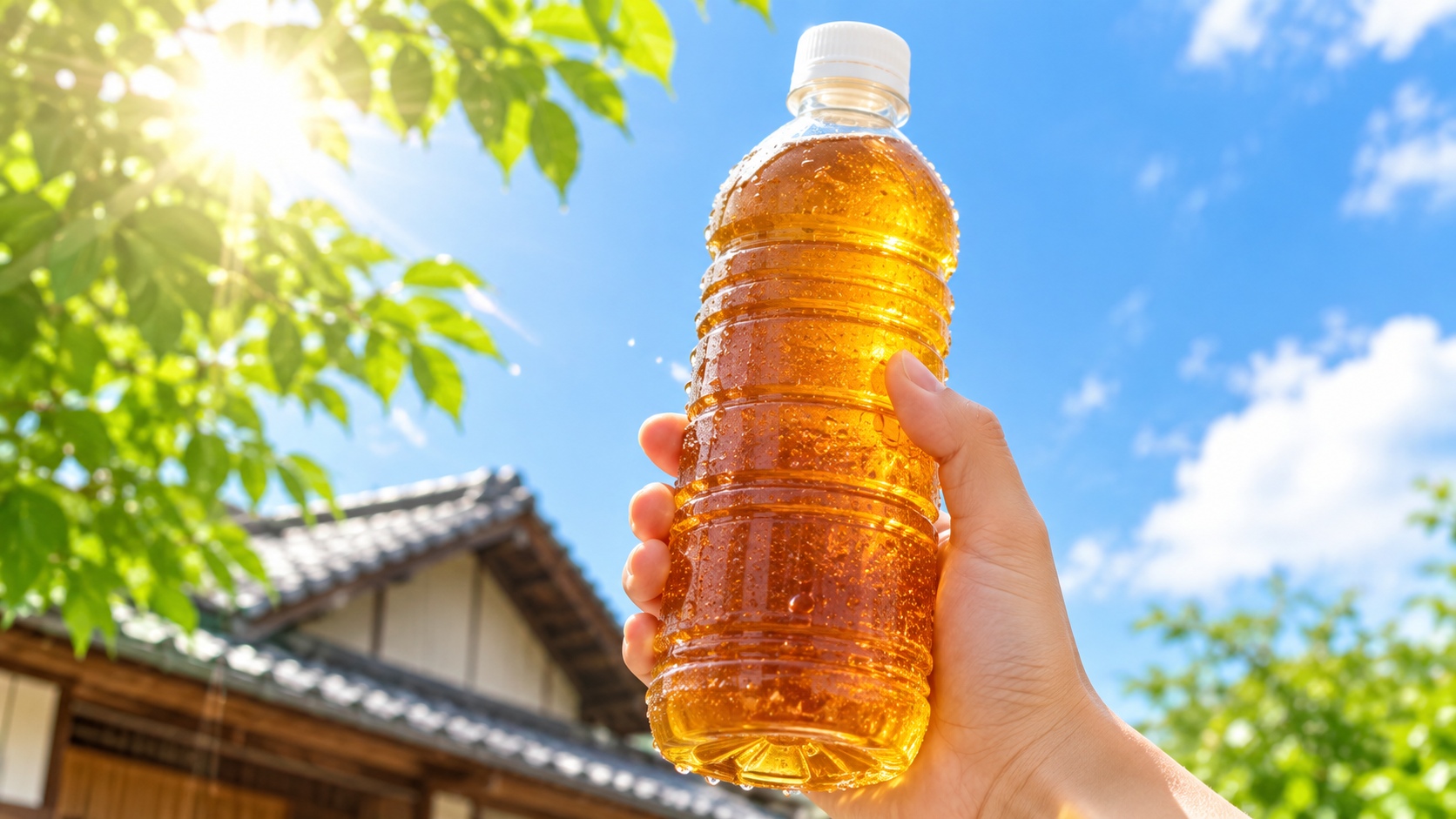
    In a Japanese convenience store, the barley tea section is almost as big as the green tea section – and in summer, it may be bigger. Bottled mugicha is caffeine-free, unsweetened, cheap and wonderfully refreshing, which makes it the drink of choice for families, office workers, athletes and anyone escaping the summer heat.

    But the bottles look alike, and they taste surprisingly different. Some are sweet and mellow, some deeply roasted, some blended with other grains. Here’s how to tell them apart.

    The Problem You’re Actually Trying to Solve

    You want a caffeine-free, sugar-free drink in Japan – or you’ve tried bottled mugicha and want to know which brand to buy next, or how to get something similar at home. The labels are in Japanese, and you can’t tell the brands apart from the shelf.

    Who This Article Is NOT For

    • If you want to brew mugicha from tea bags or grains, my mugicha guide covers how to make it properly.
    • If you want to compare all of Japan’s caffeine-free drinks, my caffeine-free Japanese tea guide covers mugicha, sobacha and more.
    • If you avoid gluten, barley tea isn’t for you.

    The Main Brands, Compared

    BrandMakerWhat’s in itTaste
    Kenko Mineral MugichaIto EnBarley, malt, deep-sea water, vitamin CSweet, toasty, smooth, no bitterness
    Yakan no MugichaCoca-ColaSix-row barley, barley extract, vitamin CFuller roast, “boiled in a kettle” style
    GREEN DA・KA・RA Yasashii MugichaSuntoryBarley, sprouted barley, roasted rice, Job’s tears, seaweed extractLight, soft, easy to drink
    Juroku-cha MugichaAsahiBarley blended with other grains and herbsToasty with a clean finish
    Ito En Mugicha (sold abroad)Ito EnWater, barley, vitamin CClassic, clean roasted barley

    Ingredients as listed by manufacturers and retailers at the time of writing. Recipes change, so check the label.

    Kenko Mineral Mugicha (Ito En)

    This is the best-known bottled barley tea in Japan. Ito En blends barley with malt for a naturally sweet, roasted flavor with no bitterness, and uses deep-sea water to add a small amount of minerals. Guinness World Records lists Kenko Mineral Mugicha as the best-selling ready-to-drink barley tea brand, based on 2024 sales. In a 2022 survey of 500 people in Japan by All About, it also came first among favorite bottled barley teas, with respondents praising its easy, non-bitter taste and large bottle.

    Yakan no Mugicha (Coca-Cola)

    Yakan means kettle, and that’s the idea: a mugicha that tastes like it was boiled at home in a kettle. Coca-Cola uses a high-temperature boiling method to bring out a fuller, toastier barley flavor. It’s the pick if you like a stronger roast. There are a few versions under the Sokenbicha brand as well.

    GREEN DA・KA・RA Yasashii Mugicha (Suntory)

    Yasashii means gentle, and this is the softest of the major brands. Suntory blends barley with sprouted barley, roasted rice and Job’s tears (hatomugi). It’s light and easy to drink – popular with families and with people who find other barley teas too strongly roasted.

    Juroku-cha Mugicha (Asahi)

    Asahi’s barley tea draws on its famous blended “sixteen tea” (juroku-cha), combining barley with other grains and herbs. It’s toasty with a clean finish – a good pick if you like a more complex flavor.

    Ito En Mugicha (Outside Japan)

    If you’re outside Japan, Ito En’s bottled Mugicha is one of the easiest Japanese barley teas to find. Its US listing describes 500ml bottles made from water, barley and vitamin C, naturally caffeine-free.

    Why Mugicha Is Everywhere in Japan

    Mugicha has been a household drink in Japan for generations. Before bottled drinks existed, families boiled roasted barley in a kettle every morning and cooled it in the fridge, and many still do. Its appeal is simple:

    • No caffeine, so children, older people and anyone avoiding caffeine can drink it freely.
    • No sugar, so it’s a healthier everyday alternative to soft drinks.
    • It suits Japanese summers. A cold, slightly toasty drink is refreshing in hot, humid weather, and many people drink it to stay hydrated.
    • It goes with everything. It doesn’t compete with food, from rice balls to barbecue.

    Bottled mugicha simply made that home habit portable.

    Bottle Sizes and Where to Buy

    • Convenience stores and vending machines usually sell bottles of around 500-650ml – perfect for a day out.
    • Supermarkets and drugstores sell large 2-liter bottles, often much cheaper per liter. Families buy them by the case in summer.
    • Seasonal displays – mugicha takes over more shelf space from late spring through summer, with special and limited editions.
    • Hot mugicha occasionally appears in winter in some stores and vending machines, though hot green tea and hojicha are more common.

    How to Read the Labels

    JapaneseMeaning
    麦茶 / むぎ茶 (mugicha)Barley tea
    カフェインゼロCaffeine-free
    無糖Unsweetened
    六条大麦 (rokujo omugi)Six-row barley – the classic barley for mugicha
    国産Japanese-grown
    はと麦 (hatomugi)Job’s tears (another grain)
    ミネラルMinerals

    Almost all bottled barley teas in Japan are unsweetened and caffeine-free. If an ingredient list includes several grains, it’s a blend.

    Which Bottle for Which Moment?

    MomentGrabWhy
    A hot summer walkKenko Mineral MugichaSweet, easy and refreshing
    With grilled food or ramenYakan no MugichaThe stronger roast stands up to rich food
    With kids or for all-day sippingYasashii MugichaLight and gentle
    After exerciseAny large bottle of mugichaCaffeine-free and unsweetened
    Late eveningAny mugichaNo caffeine to keep you awake

    How to Make “Bottled” Mugicha at Home

    Bottled mugicha is convenient, but homemade is cheaper, greener and just as good:

    1. Use a pitcher or cold-brew bottle. One with a built-in filter is easiest.
    2. Add one mugicha tea bag per liter (check the bag size on the pack).
    3. Cold brew for 1-3 hours, or boil for 3-5 minutes and cool. Boiling gives the “yakan” kettle-style flavor.
    4. Remove the bag so it doesn’t turn bitter.
    5. Keep it in the fridge and drink within about two days. Mugicha has no preservatives.

    Want Kenko Mineral Mugicha’s sweetness? Look for mugicha bags that include malt, or try a deeper-roasted barley.

    A Few Things People Ask Me

    Is bottled mugicha caffeine-free? Yes. Barley tea has no tea leaves, so it’s naturally caffeine-free.

    Is bottled mugicha sweetened? The major brands are unsweetened. Any sweetness comes from roasted barley and malt.

    Is mugicha gluten-free? No. Barley contains gluten.

    Can I buy Japanese bottled mugicha outside Japan? Ito En’s Mugicha is sold in some countries and online. Other brands are mainly found in Japanese and Asian supermarkets, if at all.

    Which is the most popular in Japan? Kenko Mineral Mugicha from Ito En is the best-selling brand.

    Where I Landed

    Bottled mugicha is one of the best things you can drink in Japan: caffeine-free, sugar-free and perfect in the heat. Start with Kenko Mineral Mugicha for a sweet, smooth classic, try Yakan no Mugicha if you like a stronger roast, and Yasashii Mugicha if you want something gentle. Back home, a pitcher and a box of mugicha bags will keep you stocked all summer.

  • Japanese Bottled Green Tea Guide: Oi Ocha, Ayataka, Iyemon and Namacha – Which to Grab at a Konbini

    Japanese Bottled Green Tea Guide: Oi Ocha, Ayataka, Iyemon and Namacha – Which to Grab at a Konbini

    Disclosure: This post contains affiliate links. If you buy through one of them, I may earn a small commission at no extra cost to you. Lineups, labels and prices change often in Japan – especially with seasonal editions.

    Quick Picks

    • The classic, clean benchmark: Oi Ocha (Ito En) – light, clear and lightly bitter. Also the easiest to buy outside Japan. Oi Ocha on Amazon
    • Richest and most “green”: Ayataka (Coca-Cola) – blended with matcha for a fuller, slightly cloudy cup.
    • Most “freshly brewed” feeling: Iyemon (Suntory) – developed with Kyoto tea merchant Fukujuen.
    • Freshest, lightest: Namacha (Kirin) – partly cold-extracted for a fresh, gentle taste.
    • For the evening: a bottled hojicha, or a caffeine-free barley or grain tea.
    • Want to recreate it at home? A cold-brew bottle and good loose sencha make a better, cheaper “bottled tea” than anything on the shelf. Nio Teas’ sencha collection – at the time of writing, ordering through the links on this page automatically applies a 10% discount at checkout, no code needed. Offers can change, so check the final price in your cart.

    Below: what each brand tastes like, how to read the labels, hot vs. cold bottles, and how to make your own bottled-style tea at home.


    Walk into any Japanese convenience store and you’ll find a wall of green tea bottles – and almost all of them are unsweetened. For visitors used to sugary iced tea, it’s a revelation: real, cold, refreshing green tea for a couple of hundred yen, available on every corner and in every vending machine.

    The problem is choosing. The big four – Oi Ocha, Ayataka, Iyemon and Namacha – all look similar on the shelf, and the labels are in Japanese. Here’s how they differ, so you can find your favorite on your first day.

    The Problem You’re Actually Trying to Solve

    You’re in Japan (or planning a trip) and want to try the famous bottled green teas. Or you’ve already tried one and want to know which others to taste, how they differ, and how to get something similar back home.

    Who This Article Is NOT For

    • If you need a caffeine-free option, see my guide to mugicha – Japanese roasted barley tea, which you’ll also find in every konbini.
    • If you want to brew loose-leaf tea at home instead, my sencha brand comparison covers where to buy good sencha.
    • If you’re looking for sweet milk tea or flavored drinks, those are on the same shelf, but this guide focuses on unsweetened green tea.

    The Big Four, Compared

    BrandMakerStyleTasteBest for
    Oi OchaIto EnClear senchaLight, clean, lightly bitterEveryday benchmark, with food
    AyatakaCoca-Cola (Japan)Matcha-blendedFuller, rounder, slightly cloudyPeople who like a rich “green” taste
    IyemonSuntoryKyoto-style green teaBalanced, gently bitter, aromaticA “teapot-brewed” feel
    NamachaKirinPartly cold-extractedFresh, light, gentleA softer, less bitter cup

    Oi Ocha (Ito En)

    Oi Ocha is the original. Ito En began selling canned green tea in 1985, renamed it Oi Ocha in 1989, and moved it into plastic bottles in 1996 – making it one of the pioneers of ready-to-drink green tea. It’s clear, light and refreshingly bitter: the taste most people picture when they think of Japanese bottled tea.

    Oi Ocha is also the easiest to find outside Japan, so if you fall in love with it, you can keep drinking it at home. Ito En also sells variations, such as a stronger “koi” version with more caffeine and aroma, and premium editions in some seasons.

    Ayataka (Coca-Cola)

    Ayataka was launched by Coca-Cola in Japan in 2007 and has become one of the country’s top green tea brands – it reported its highest-ever sales in 2025. Its signature is matcha: the tea is blended with matcha, which gives it a slightly cloudy look and a fuller, rounder, more intensely “green” flavor than a clear sencha. Coca-Cola works with Kanbayashi Shunsho Honten, a historic Uji tea house, on Ayataka products.

    If you find Oi Ocha a little thin, Ayataka is the one to try next.

    Iyemon (Suntory)

    Suntory launched Iyemon in 2004, in partnership with Fukujuen, a long-established Kyoto tea merchant. The brand is named after Fukujuen’s founder, and a Fukujuen tea master selects the leaves. Iyemon aims for the feeling of tea poured from a teapot: balanced, aromatic and gently bitter. Suntory adjusts the flavor over time to match changing tastes.

    Namacha (Kirin)

    Kirin’s Namacha uses partly cold extraction – brewing some of the tea with cold water – which gives a fresh, gentle, less bitter taste. It’s a good pick if you find other bottled teas too astringent.

    Beyond the Big Four

    • Bottled hojicha – roasted, toasty and lower in bitterness; a nice choice in the evening (it still contains some caffeine).
    • Caffeine-free grain teas – mugicha (barley tea) and blended grain teas like Coca-Cola’s Sokenbicha are toasty, caffeine-free and perfect in summer.
    • Premium editions – some brands sell pricier bottles made with gyokuro or first-harvest tea. Worth trying once.
    • Seasonal and regional editions – limited flavors appear throughout the year, so the shelf is never quite the same twice.

    Which Bottle for Which Moment?

    MomentGrabWhy
    With sushi, onigiri or a bentoOi OchaClean bitterness cuts through rice and fish
    Mid-afternoon slumpAyataka or a “koi” (strong) green teaFuller flavor and a bit more caffeine
    A long train rideIyemonBalanced and easy to sip slowly
    A hot summer walkNamacha or mugichaLight and refreshing; mugicha is caffeine-free
    After dinnerHojicha or a grain teaGentle and toasty
    A cold winter morningAny hot bottle from the heated cabinetWarms your hands as well as you

    How to Read the Labels

    You don’t need to read Japanese – just look for a few words:

    JapaneseMeaning
    緑茶 (ryokucha)Green tea
    無糖 (mutō)Unsweetened
    濃い (koi)Strong / rich
    ほうじ茶 (hōjicha)Roasted green tea
    麦茶 (mugicha)Barley tea (caffeine-free)
    カフェインゼロCaffeine-free
    抹茶入り (matcha iri)Contains matcha

    Most plain green teas in Japan are unsweetened by default. Sweet drinks are usually labeled as milk tea, lattes or “tea” in Western style – check before you buy if you want zero sugar.

    Hot or Cold?

    In autumn and winter, Japanese convenience stores and vending machines sell hot bottled tea. In vending machines, hot drinks are usually marked with a red label (あったか〜い, “warm”), and cold drinks with blue (つめた〜い, “cold”). In convenience stores, hot bottles sit in a heated cabinet near the register. Hot bottles are usually smaller and have caps designed for heating.

    A warm bottle of green tea on a cold morning is one of the small pleasures of travel in Japan.

    How to Make “Bottled Tea” at Home

    Bottled tea is convenient, but it’s easy to make a fresher, cheaper version yourself:

    1. Use a cold-brew bottle. A bottle with a built-in filter makes it effortless. Cold-brew tea bottles on Amazon
    2. Add good sencha. About 10g of loose sencha per liter of cold water.
    3. Refrigerate for 2-3 hours. Then remove the leaves or filter.
    4. Want an Ayataka-style cup? Whisk a little matcha (about 1g) into a small amount of water and stir it into your cold-brewed sencha.
    5. Drink within a day or two. Homemade tea has no preservatives.

    The result is smoother and sweeter than most bottled teas, with none of the plastic waste.

    A Few Things People Ask Me

    Which bottled green tea is most popular in Japan? Oi Ocha, Ayataka and Iyemon are consistently among the leading brands. Each has loyal fans.

    Are Japanese bottled teas sweetened? Plain green teas almost never are. Look for 無糖 (unsweetened) on the label to be sure.

    Can I buy Oi Ocha outside Japan? Yes – it’s the most widely exported, found in many Asian supermarkets and online. Ayataka, Iyemon and Namacha are much harder to find abroad.

    Do bottled green teas have caffeine? Yes. For zero caffeine, choose mugicha or another grain tea.

    Where I Landed

    Try all four on your trip – it’s one of the cheapest, most fun food experiences in Japan. Start with Oi Ocha as your benchmark, try Ayataka if you want something richer, Iyemon for a teapot-style cup, and Namacha for something lighter. When you get home and miss them, Oi Ocha is easy to find – and a cold-brew bottle with good sencha will give you something even better.

  • The Best Mugicha (Japanese Barley Tea) to Buy: Tea Bags, Brands and What to Look For

    The Best Mugicha (Japanese Barley Tea) to Buy: Tea Bags, Brands and What to Look For

    Disclosure: This post contains affiliate links. If you buy through one of them, I may earn a small commission at no extra cost to you. Allergy note: mugicha is made from barley, which contains gluten – it is not suitable for people with celiac disease or a wheat/barley allergy.

    Quick Picks

    • Easiest to find abroad: Ito En Mugicha tea bags – caffeine-free, made for hot or cold brewing, and sold in large packs. Ito En Mugicha on Amazon
    • Best for Japanese-grown barley: Japanese-brand mugicha that lists barley from Japan on the label. Japanese barley tea bags on Amazon
    • Best for a toastier, fuller cup: whole-grain (marumugi) mugicha made for boiling. Whole grain mugicha on Amazon
    • Best for organic: organic roasted barley tea – look for organic certification on the pack.
    • Want a low-caffeine real tea too? Nio Teas’ kukicha collection has gentle stem teas from small Japanese farms. At the time of writing, ordering through the links on this page automatically applies a 10% discount at checkout – no code needed. (Nio Teas doesn’t sell mugicha; the discount applies to its teas. Offers can change, so check the final price in your cart.)

    Below: how to choose mugicha, the main types and brands, how much you get per bag, and how to brew it so it tastes like the mugicha in a Japanese fridge.


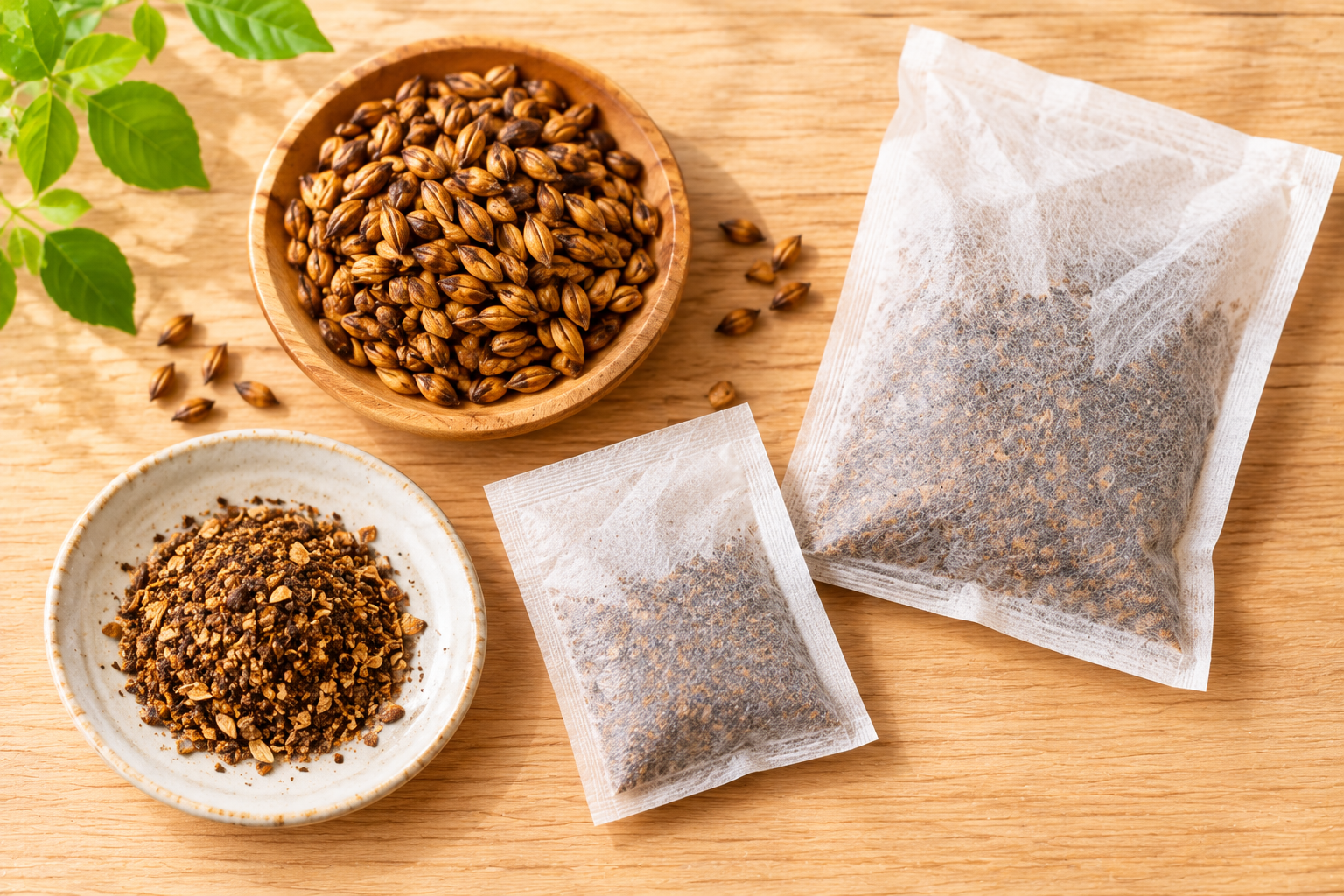
    In Japan, summer smells like roasted barley. Almost every household keeps a pitcher of cold mugicha in the fridge from early summer onward, and many keep drinking it all year. It’s caffeine-free, sugar-free, cheap, and easy to make by the liter.

    Outside Japan, though, buying good mugicha is confusing. Some bags are meant for cold water, some for boiling. Some contain whole roasted grains, others ground barley. Some are Japanese, some Korean, and some are blends with other grains. This guide sorts it out so you buy the right bag the first time.

    The Problem You’re Actually Trying to Solve

    You’ve tried mugicha – or read about it – and want to keep a pitcher in the fridge. But the Amazon listings all look similar, and you don’t know whether to buy cold-brew bags or boiling bags, ground or whole grain, Japanese or Korean, or which brand tastes best.

    Who This Article Is NOT For

    • If you want to know what mugicha is and how to make it from scratch, my mugicha guide covers the basics.
    • If you want to compare all of Japan’s caffeine-free drinks, my caffeine-free Japanese tea guide covers mugicha, sobacha, kuromamecha and more.
    • If you avoid gluten, mugicha isn’t for you. Barley contains gluten. Sobacha (buckwheat tea) is gluten-free, but buckwheat is a serious allergen of its own.

    How to Choose Mugicha

    1. Cold-brew bags vs. boiling bags

    This is the most important choice.

    • Cold-brew (mizudashi) bags are made from finely ground or cut barley, so flavor comes out in cold water. You drop a bag in a pitcher of cold water and refrigerate. Easy, but usually a lighter flavor.
    • Boiling (nidashi) bags often use whole or coarsely cracked roasted grains. You simmer them for several minutes, then cool. More effort, but a deeper, toastier taste.
    • Hot-or-cold bags work both ways and are a good all-rounder.

    Check the pack: Japanese bags usually say 水出し (cold brew), 煮出し (boil) or both.

    2. Bag size: how much tea it makes

    Japanese mugicha bags are usually sized for a whole pitcher – often around 1 liter per bag (some brands make bags for 2 liters). Check the size so you don’t end up with tea that’s too weak or too strong. A pack of 50 bags can last a family a whole summer.

    3. Whole grain vs. ground barley

    • Whole roasted grains (marumugi) give a rounder, toastier flavor and a clear, amber tea. They’re usually meant for boiling.
    • Ground or cut barley releases flavor fast and suits cold brew and quick hot brewing.

    4. Roast level

    Some brands roast lightly for a soft, sweet flavor; others roast deeply, sometimes more than once, for a stronger, almost coffee-like toastiness. If you like a bold cup, look for words like “deep roast” or “double roasted.”

    5. Where the barley comes from

    Many mugichas use imported barley processed in Japan. If you prefer Japanese-grown barley, look for “barley (Japan)” or 国産大麦 on the label. Most Japanese mugicha uses six-row barley (rokujo omugi), which gives the classic toasty flavor.

    6. Pure barley vs. blends

    Some products blend barley with other grains or ingredients – for example multi-grain teas. They can be delicious, but if you want classic mugicha, check that barley is the only ingredient.

    The Main Options

    OptionTypeBest forWatch out for
    Ito En MugichaTea bags, hot or coldEasy everyday mugicha, widely available abroadCheck bag size and brewing method on the pack
    Japanese-grown barley mugicha (various Japanese brands)Tea bagsPeople who want Japanese-grown barleyUsually a little pricier
    Whole-grain mugicha (e.g. Hakubaku Marumugicha)Whole grains in bags, mainly for boilingDeeper, toastier flavorNeeds boiling and cooling
    Organic mugichaTea bagsOrganic-focused buyersLess common outside Japan
    Korean borichaLoose roasted barley or bagsA very similar, often cheaper alternativeFlavor and roast differ slightly from Japanese mugicha

    Ito En Mugicha

    Ito En is Japan’s largest green tea company, and its mugicha tea bags are among the easiest Japanese mugichas to buy abroad. Its US store lists a 54-bag pack that’s naturally caffeine-free and suitable for both hot and cold brewing. In Japan, Ito En’s Kenko Mineral Mugicha is one of the best-known bottled and bagged barley teas, and you may find it in Japanese grocery stores abroad.

    Japanese-Grown Barley Mugicha

    Several Japanese brands sell mugicha made only from barley grown in Japan – Ujien’s roasted barley tea bags, for example, list barley from Japan as the ingredient. These are a good choice if origin matters to you.

    Whole-Grain Mugicha

    Hakubaku, a Japanese grain company, is known in Japan for Marumugicha – whole roasted six-row barley in bags designed to leave little residue. Whole-grain mugicha takes a few minutes of boiling but rewards you with a deeper flavor.

    Korean Boricha

    Korean roasted barley tea (boricha) is a close cousin of mugicha and is often easier to find in Asian supermarkets. It’s a perfectly good substitute – just expect small differences in roast and flavor.

    How to Brew Mugicha Like a Japanese Household

    Cold brew (easiest):

    1. Put one bag in a pitcher with the amount of cold water shown on the pack (often 1 liter).
    2. Refrigerate for 1-3 hours, depending on the brand.
    3. Remove the bag so it doesn’t turn bitter.

    Boiled (tastiest):

    1. Bring the water to a boil, add the bag, and simmer for about 3-5 minutes (or as the pack says).
    2. Remove the bag, cool the tea quickly, then refrigerate.

    Food safety tip: mugicha has no tea leaves, sugar or preservatives, but it can spoil. Keep it in the fridge in a clean pitcher, and drink it within about two days.

    A pitcher with a built-in filter or a dedicated cold-brew bottle makes the daily routine easier. The same pitcher works for cold-brewed green tea, too.

    Ways to Enjoy Mugicha Beyond a Plain Glass

    • Mugicha with a squeeze of lemon – a refreshing, sugar-free summer drink.
    • Half mugicha, half green tea – a gentle, toasty blend with a little caffeine.
    • Mugicha “latte” – brew it strong, then add warm milk and a little honey for a cozy, caffeine-free evening drink.
    • Mugicha ice cubes – freeze mugicha in an ice tray so your iced mugicha never gets watered down.
    • With rice crackers or onigiri – in Japan, mugicha is the default drink with simple, salty snacks.

    A Few Things People Ask Me

    Is mugicha caffeine-free? Yes. It’s made from roasted barley, not tea leaves.

    Is mugicha gluten-free? No. Barley contains gluten.

    Which is better, cold-brew or boiling bags? Cold-brew bags are easier; boiled mugicha tastes deeper and toastier. Many Japanese households use whichever fits the day.

    Can I drink mugicha hot? Yes. It’s lovely hot in winter, especially after a meal.

    Is Korean barley tea the same as mugicha? Very similar – both are roasted barley tea. Roast levels and flavor can differ slightly.

    Where I Landed

    The best mugicha is the one that fits your routine. For most people outside Japan, Ito En’s mugicha bags are the easy starting point. If you want Japanese-grown barley, read the label; if you want the richest flavor, try whole-grain mugicha and boil it. Whichever you choose, keep a pitcher in the fridge – it’s the simplest way to drink like a Japanese household all summer long.

  • The Best Japanese Green Tea Bags: Which Brands Actually Taste Like Real Japanese Tea

    The Best Japanese Green Tea Bags: Which Brands Actually Taste Like Real Japanese Tea

    Disclosure: This post contains affiliate links. If you buy through one of them, I may earn a small commission at no extra cost to you.

    Quick Picks

    • Best overall (premium): Ippodo sencha tea bags – real Kyoto tea-house sencha in a bag, 2g per bag. Ippodo tea bags on Amazon
    • Best everyday value: Ito En green tea bags – consistent, easy to find, and genuinely Japanese. Ito En green tea bags on Amazon
    • Best budget / supermarket pick: Yamamotoyama – an inexpensive classic, especially their genmaicha. Yamamotoyama tea bags on Amazon
    • Best for evenings: hojicha tea bags – roasted, mellow and gentler than sencha. Hojicha tea bags on Amazon
    • Ready to move beyond bags? Nio Teas’ sencha collection – loose-leaf sencha from small Japanese farms. At the time of writing, ordering through the links on this page automatically applies a 10% discount at checkout – no code needed. Offers can change, so check the final price in your cart.

    Below, you’ll find what separates a good Japanese tea bag from a dusty one, a comparison table, and how to brew a tea bag so it doesn’t taste bitter.


    Most green tea bags taste the same: thin, grassy, a little bitter, and gone after one cup. That’s not because green tea is bland. It’s because most tea bags are filled with the smallest, cheapest leftovers of tea processing, packed in paper and left on a shelf for months.

    Good Japanese tea bags exist, though, and the best of them are surprisingly close to loose-leaf tea. The trick is knowing what to look for on the box – because the brand name on the front tells you much less than the details on the back.

    The Problem You’re Actually Trying to Solve

    You want real Japanese green tea, but you don’t want to deal with a teapot, a strainer and wet leaves – at work, while traveling, or just on busy mornings. You’ve probably already tried a supermarket green tea bag and found it flat or bitter, and you’re wondering whether paying more actually makes a difference.

    It does – but only if you’re paying for the right things.

    Who This Article Is NOT For

    What Makes a Good Japanese Tea Bag

    1. Leaf size: “fannings” vs. real leaf

    Cheap tea bags are usually filled with fannings and dust – tiny broken particles left over after the good leaf has been sorted out. They release flavor quickly, which sounds good, but they also release bitterness quickly, and their aroma fades fast.

    Better tea bags use larger, broken leaf pieces. You can often see the difference through a mesh bag: recognizable green leaf fragments instead of fine brown-green powder.

    2. Bag type: paper vs. mesh vs. pyramid

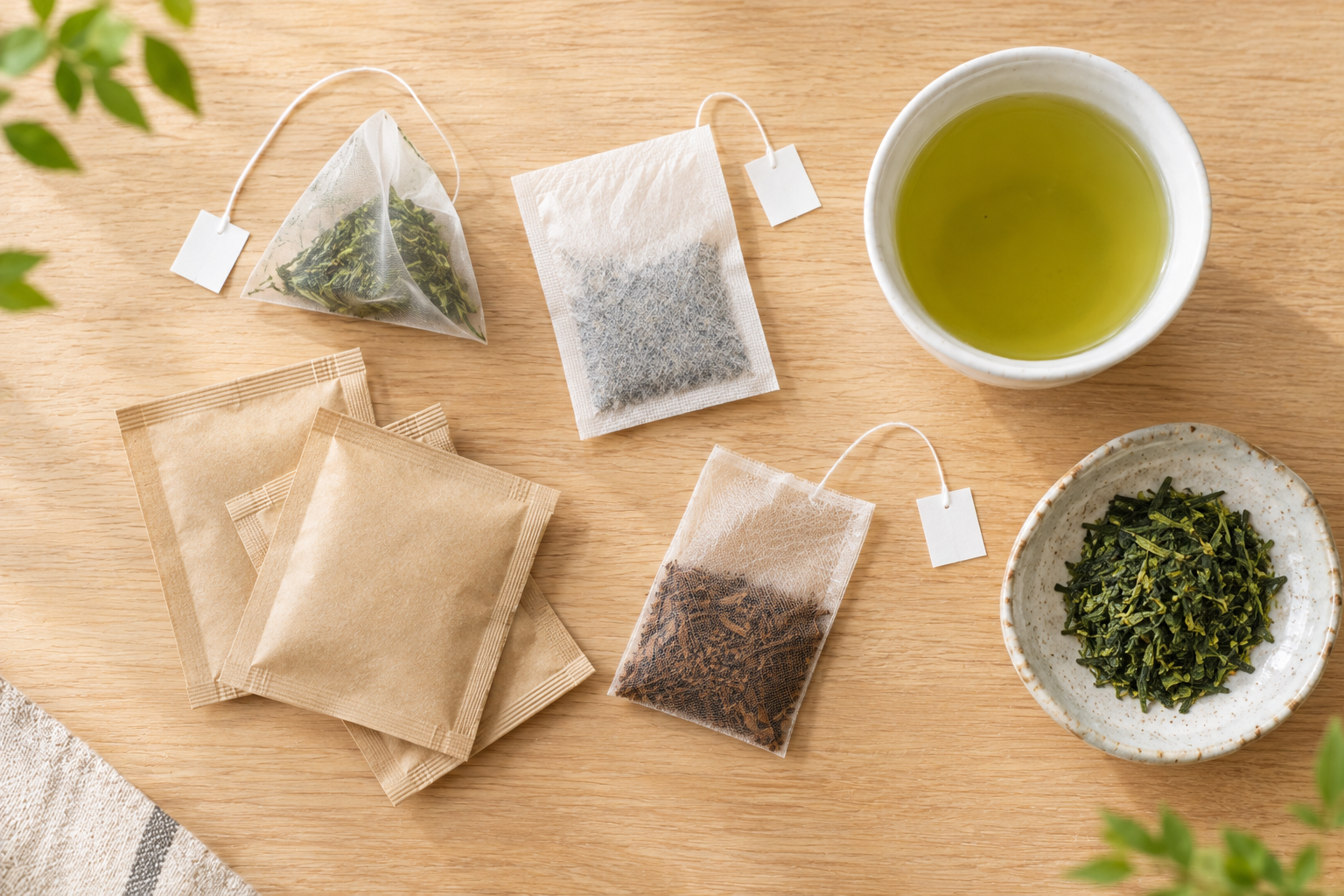
    • Flat paper bags are the cheapest. They give the leaves very little room to open, and some people notice a slight papery taste.
    • Mesh and pyramid bags give the leaves space to unfurl and let water flow through more freely – a closer experience to loose leaf. Many are made from nylon or PET; some brands now use plant-based or biodegradable materials. Check the box if this matters to you.

    3. Amount of tea per bag

    Look for about 2g per bag or more. Many budget bags contain 1.5g or less, which is part of why they taste weak – people then steep them longer, which makes them bitter. It’s a lose-lose.

    4. Origin and harvest

    “Product of Japan” is the minimum. Better brands name a region (Uji, Shizuoka, Kagoshima) or say the tea is from the first harvest (ichibancha). If a box just says “green tea” with no origin, it may not be Japanese tea at all.

    5. Freshness and packaging

    Green tea fades quickly once exposed to air. Individually wrapped bags, or bags in a resealable foil pouch, stay fresh much longer than loose bags in a cardboard box. Check the best-before date and buy the freshest box you can.

    Comparison Table

    Brand / typeLeaf qualityBag stylePrice levelBest for
    Ippodo (sencha, gyokuro, hojicha)Kyoto tea-house loose-leaf grade, 2g/bagBiodegradable plastic bagsPremiumGifts, tea lovers, office “treat”
    Ito En green tea bagsGood, consistentMostly paper or mesh, varies by lineMidEveryday drinking
    YamamotoyamaBasic everydayPaperBudgetLarge boxes, genmaicha
    Western brand sencha sachets (e.g. Harney & Sons)Decent senchaSachetMidEasy to find in Western stores
    Hojicha tea bags (various brands)Roasted leaf or stemsMixedBudget-midEvenings, low bitterness

    The Options, One by One

    Ippodo

    Ippodo is a Kyoto tea house dating back to 1717, and its tea bags are essentially its loose-leaf teas portioned into bags. Their sampler set includes sencha, gyokuro and hojicha at 2g per bag, and the bags themselves are made from a biodegradable plastic material. Brewing instructions are simple: one bag in about 150ml of water, around 90 seconds for sencha and gyokuro (cooled water), or 60 seconds with boiling water for hojicha.

    What’s good: this is as close to loose-leaf quality as tea bags get. The gyokuro bags in particular are a rare chance to try shaded tea without buying a full bag of leaf.

    The catch: price. Per cup, it costs several times more than supermarket tea bags. It’s the one I’d buy as a gift or for a desk drawer treat rather than for drinking five cups a day.

    Ito En

    Ito En is one of Japan’s largest tea companies, best known abroad for its bottled “Oi Ocha” green tea. Its tea bags are widely available in Asian supermarkets and online, and the quality is reliable from box to box.

    What’s good: a solid, clean-tasting Japanese green tea at an everyday price, and easy to find. Their matcha-blended green tea bags add a little body and color.

    The catch: it won’t have the depth or sweetness of a premium first-harvest sencha. Think of it as a dependable daily cup.

    Yamamotoyama

    Yamamotoyama is a long-established Japanese tea and nori company and a fixture in many American grocery stores. Their tea bags are among the cheapest Japanese options available.

    What’s good: price and availability. Their genmaicha tea bags are a particularly good value, because the toasted rice gives flavor and body that hides the limits of everyday leaf.

    The catch: flat paper bags and basic leaf. Steep briefly to avoid bitterness.

    Western Brand Sencha Sachets

    Several Western tea companies sell Japanese sencha in sachets – Harney & Sons is a common example. These are often easier to find in Western supermarkets and cafés than Japanese brands.

    What’s good: convenient and usually better than generic “green tea” bags, since they name the tea as Japanese sencha.

    The catch: you’re paying a Western brand’s markup, and sourcing details are usually limited. Check the origin on the box.

    Hojicha Tea Bags

    Roasted green tea is one of the best types of Japanese tea for a bag, because roasting makes it forgiving: it’s hard to make hojicha bitter, and boiling water is fine. Several Japanese brands sell hojicha tea bags, including Ito En and Ippodo.

    What’s good: toasty, mellow, and gentle in the evening. A good choice for people who find sencha too grassy.

    The catch: it isn’t caffeine-free – just gentler than sencha in most cups.

    How to Brew a Japanese Tea Bag (So It Doesn’t Taste Bitter)

    Most bitter tea-bag tea is a brewing problem, not a tea problem.

    1. Cool the water. For sencha and gyokuro bags, use water around 70-80°C (158-176°F) – let boiled water stand for a few minutes, or pour it into your mug first and wait. Boiling water is fine for hojicha and genmaicha.
    2. Use less water. About 150ml (5oz) per bag, not a giant mug. A large mug is why many tea bags taste weak.
    3. Keep it short. 60-90 seconds for sencha. Set a timer.
    4. Don’t squeeze the bag. Squeezing pushes out the bitterest part of the brew.
    5. Re-steep good bags. Premium bags like Ippodo’s can give a second, lighter cup – use slightly hotter water and a shorter time.
    6. Try cold brew. Put one or two bags in a bottle of cold water and refrigerate for 2-3 hours. It’s smooth, sweet and almost impossible to make bitter.

    A Few Things People Ask Me

    Are Japanese tea bags as good as loose leaf? The best ones come close, but loose leaf still wins for depth and for multiple infusions. Tea bags win on convenience.

    Why does my green tea bag taste bitter? Usually water that’s too hot, too long a steep, or squeezing the bag. Fix those three things before you blame the tea.

    Are tea bags made of plastic? Many mesh and pyramid bags are made of nylon or PET; some brands use plant-based or biodegradable materials, and traditional paper bags are also common. Check the packaging if you want to avoid plastic.

    How long do tea bags stay fresh? Unopened, until the best-before date. Once opened, keep them in an airtight container and use them within a month or two for the best flavor.

    What’s the next step up from tea bags? Loose-leaf sencha brewed in a mug with a fine strainer. Nio Teas’ sencha collection is a good place to start – the link-only discount mentioned at the top applies there too.

    Where I Landed

    A good Japanese tea bag is about three things: real leaf, enough of it, and fresh packaging. For a special cup or a gift, Ippodo’s tea bags are the closest thing to loose-leaf tea in a bag. For everyday drinking, Ito En is the reliable choice, and Yamamotoyama’s genmaicha is the bargain. Whichever you pick, brew it with cooler water and a shorter steep than the box suggests – that one change makes more difference than any brand.

  • How to Choose a Yunomi: The Japanese Teacup Guide (Shape, Size and Material)

    How to Choose a Yunomi: The Japanese Teacup Guide (Shape, Size and Material)

    Disclosure: This post contains affiliate links. If you buy through one of them, I may earn a small commission at no extra cost to you.

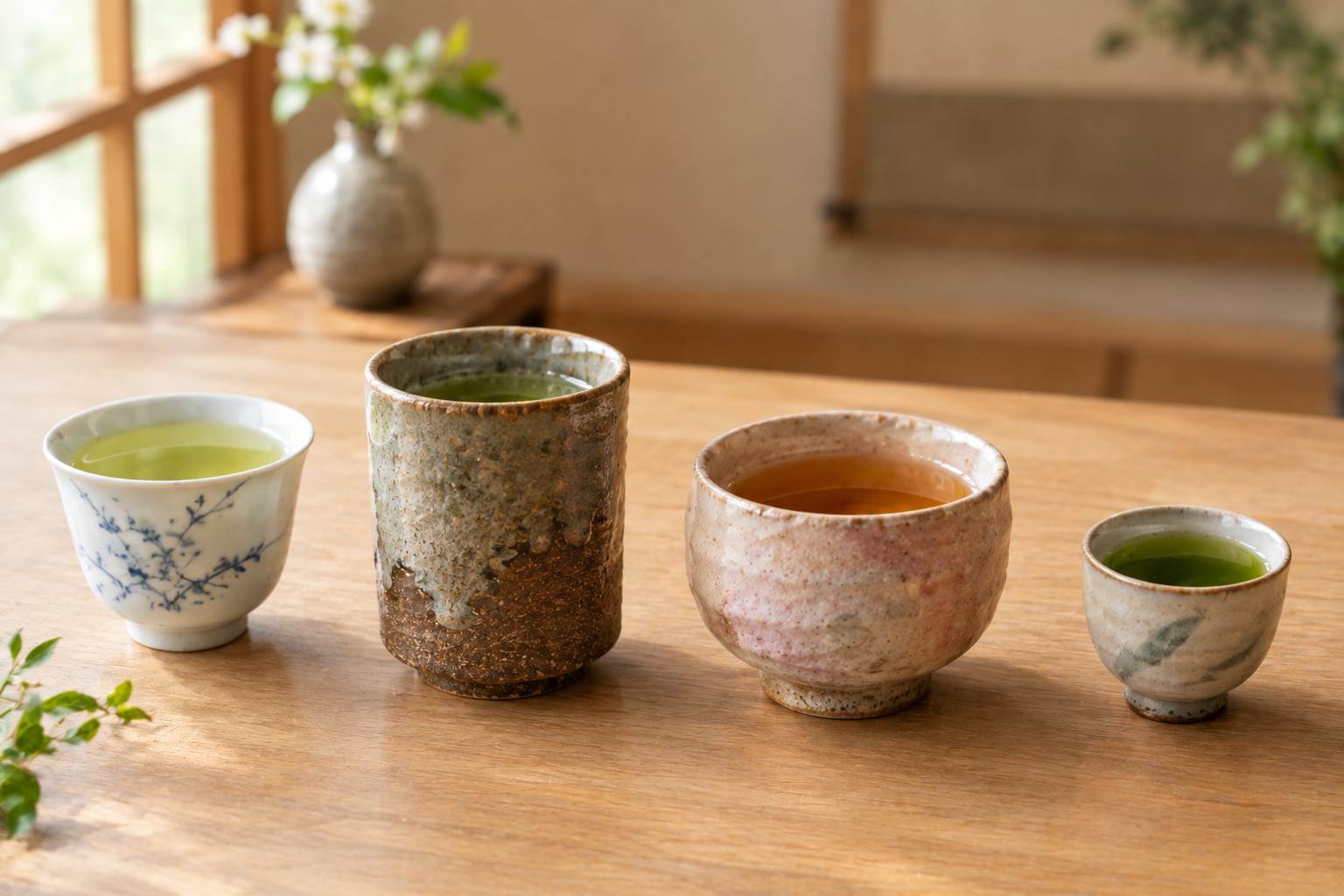
    In most Japanese homes, every member of the family has their own teacup. It might be a tall, chunky pottery cup that’s been used every morning for years, or a delicate white porcelain one kept for good sencha. Ask someone which cup is theirs and they’ll know immediately. That’s the yunomi (湯呑み), the everyday Japanese teacup – and the right one makes a surprising difference to how your tea tastes and feels.

    Yunomi come in an enormous range of shapes, sizes and clays, and they’re one of the easiest pieces of Japanese teaware to start collecting. This guide explains what actually matters when you choose one.

    The Problem You’re Actually Trying to Solve

    You’ve bought a good Japanese tea and maybe a kyusu, and now you’re drinking it out of a coffee mug. It works, but something feels off: the tea cools too fast or burns your fingers, you can’t see its color, or a mug-sized pour makes delicate sencha taste weak. You want a cup that suits the tea – without having to learn the history of Japanese pottery first.

    Who This Article Is NOT For

    • If you’re looking for a bowl for matcha, that’s a chawan, which is much wider and shaped for whisking – a different purchase.
    • If you’re still choosing a teapot, start with my kyusu buying guide. The teapot affects your tea more than the cup does.
    • If you’re buying a complete matching set as a gift, my Japanese tea set gift guide is a better starting point.

    What a Yunomi Is

    Yunomi literally means “hot water drinker.” It’s the everyday, handle-less teacup used for green tea in Japan – at home, at the office and in casual restaurants. Unlike Western cups, a yunomi usually has no handle: you hold it with one hand and support the base with the other. That’s also a quiet temperature check – if the cup is too hot to hold comfortably, the tea is probably too hot for good green tea.

    You’ll often see two broad styles:

    • Nagayunomi (長湯呑): tall, cylindrical cups for everyday drinking. They hold more tea and keep it warm longer.
    • Kumidashi (汲出): shorter, wider, rounder cups, traditionally used to serve guests. Their wide mouths release aroma and show off the tea’s color.

    The large, thick, tall cups you see at sushi restaurants – often printed with fish names in kanji – are the extreme version of the everyday nagayunomi.

    Material: Porcelain, Stoneware or Glass

    Porcelain (磁器)

    Porcelain is made from fine, white clay fired at high temperatures. It’s thin, smooth, hard and non-porous. Well-known porcelain wares include Arita (Saga Prefecture) and Hasami (Nagasaki Prefecture).

    • Best for: gyokuro, fine sencha and any tea where you want to see the color clearly.
    • Why: the white interior shows the tea’s color, and the thin walls feel elegant on the lips. Porcelain doesn’t absorb flavor or smell, so it’s neutral.
    • Downside: thin porcelain passes heat to your fingers quickly, and it cools fast.

    Stoneware and Earthenware (陶器)

    Pottery cups are thicker, heavier and more textured, often with expressive glazes. Famous examples include Hagi (Yamaguchi), Mino (Gifu), Shigaraki (Shiga) and Mashiko (Tochigi).

    • Best for: hojicha, bancha, genmaicha and other teas brewed with hotter water.
    • Why: thick walls insulate, so the tea stays warm and the cup is comfortable to hold even when hot. The rough texture feels warm and natural in the hand.
    • Downside: some pottery is slightly porous and can absorb aromas or stains over time. This is why many people keep separate cups for green tea and strong-smelling drinks.

    A note on Hagi ware: Hagi pottery is famous for changing with use. Tea gradually seeps into the fine cracks in its glaze and slowly changes the cup’s color over the years – a quality known as Hagi no nanabake, “the seven transformations of Hagi.” Many owners treasure this, but if you want a cup that stays exactly the same, choose glazed porcelain.

    Glass

    Heat-resistant glass is ideal for cold-brewed tea and for showing off the bright color of good green tea. It’s not traditional, but it’s practical in summer. Make sure any glass you use with hot tea is labeled heat-resistant.

    Shape: What It Changes

    ShapeEffectBest for
    Tall and narrowKeeps tea warm longer; holds moreEveryday sencha, bancha, hojicha
    Short and wideReleases aroma; cools tea faster; shows colorFine sencha, serving guests
    Small and shallowSmall, concentrated servingsGyokuro
    Flared rimGentle on the lips; tea flows smoothlyAll teas
    Thick rimSoft, comfortable feel with hot drinksHot hojicha, bancha
    Thin rimDelicate feel; good for cold teaGyokuro, cold brew

    Small details matter more than you’d expect. A thin, slightly flared rim makes delicate tea feel lighter in the mouth, while a thicker rim feels warm and comforting with hot roasted tea.

    Size: Match the Cup to the Tea

    Size is the most practical choice of all. A cup that’s too big for the tea leads to either a half-empty cup or weak tea.

    • Gyokuro: about 40-60ml. Gyokuro is brewed with very little water and drunk in small, concentrated sips, so tiny cups are traditional.
    • Fine sencha: about 80-120ml. Small to medium cups let you enjoy the aroma and keep the tea at its best temperature.
    • Everyday sencha: about 120-180ml. A standard everyday cup.
    • Bancha, hojicha, genmaicha: about 150-250ml. These teas are drunk in larger quantities, so a bigger, taller cup suits them.

    Tip: check that your teapot’s volume matches the cups you’ll use. A 300ml kyusu fills two or three medium cups well. Pouring a little into each cup in turn, rather than filling one at a time, gives every cup the same strength.

    The Inside Color Matters

    If you love green tea’s color, look for a cup that’s white or pale inside. A white interior shows the bright green of fukamushi sencha, the pale gold of gyokuro and the amber of hojicha. A dark interior is beautiful in its own way but hides the tea completely – better suited to roasted teas, where color matters less.

    How to Choose Your First Yunomi

    1. Decide what you drink most. Sencha? Hojicha? Your everyday tea should decide your first cup.
    2. Choose the material. Porcelain for delicate green tea; stoneware for hot, roasted teas.
    3. Pick a size. For most people, a 120-180ml cup is the most versatile.
    4. Hold it if you can. A yunomi is meant to feel good in your hands. Weight, texture and the shape of the rim are all personal.
    5. Check the care instructions. Some handmade pottery shouldn’t go in the dishwasher or microwave.

    If you only buy one cup, a medium-sized cup with a white interior is the most versatile choice.

    Caring for Your Yunomi

    • Rinse with warm water after use. For porcelain, mild dish soap is fine.
    • Be gentle with porous pottery. Avoid soaking it in soapy water for long periods, since some unglazed or porous clay can absorb the smell. Rinse well and let it dry completely before putting it away.
    • Dry thoroughly. Damp pottery stored in a cupboard can develop odors or mold.
    • Check before the dishwasher or microwave. Mass-produced porcelain is often fine; handmade pieces and cups with gold or silver decoration usually aren’t.
    • Before first use, some potters recommend soaking new stoneware in water to help it settle in. Follow the maker’s advice if it comes with instructions.
    • If a cup chips, don’t throw it away – the traditional Japanese art of kintsugi repairs broken pottery with lacquer and gold.

    A Few Things People Ask Me

    Why don’t yunomi have handles? Japanese green tea is brewed below boiling, so the cup is usually comfortable to hold. Holding the cup itself also lets you feel the temperature of the tea.

    What’s the difference between a yunomi and a teacup for guests? Everyday yunomi are taller and personal; guest cups are often shorter, wider and come in matching sets, sometimes with lids and saucers.

    Can I use a yunomi for coffee or Western tea? Yes, though thin porcelain cups may feel very hot with boiling drinks. Thick pottery works better.

    Where can I buy a good yunomi? For delicate green tea, a white Arita porcelain yunomi on Amazon is a classic choice. And a beautiful cup deserves good tea – Nio Teas’ sencha collection has fresh sencha from small Japanese farms.

    Where I Landed

    You don’t need a cabinet full of teaware. One good yunomi – the right size for your favorite tea, with a white interior and a rim that feels good on your lips – will make every cup more enjoyable. Start with one for your everyday tea. Then, if you’re like most tea drinkers in Japan, you’ll slowly find a second for hojicha, a tiny one for gyokuro, and a favorite you’ll reach for every morning for years.

  • Japanese Tea and Cheese Pairing (Plus Chocolate and Western Desserts): What Actually Works

    Japanese Tea and Cheese Pairing (Plus Chocolate and Western Desserts): What Actually Works

    Disclosure: This post contains affiliate links. If you buy through one of them, I may earn a small commission at no extra cost to you. Allergy note: cheese and many desserts contain milk, and some contain nuts, wheat or eggs – adjust the pairings to suit your guests.

    Japanese tea is usually paired with Japanese sweets: a bowl of matcha with a delicate wagashi, a cup of sencha with a rice cracker. But Japanese tea also goes remarkably well with Western food – especially cheese and chocolate. In France, tea and cheese pairings have become part of the growing interest in Japanese tea, and once you try one, it makes sense: tea has umami, roasted notes and refreshing bitterness, the same qualities that make wine and cheese work together.

    The difference is that tea is gentler, has no alcohol, and refreshes your palate rather than coating it. This guide covers which Japanese teas go with which cheeses, chocolates and desserts, and why.

    The Problem You’re Actually Trying to Solve

    You want to serve Japanese tea with something other than wagashi – for a dinner party, an afternoon cheese board, or just with dessert – but you don’t know where to start. Pair the wrong tea with the wrong food and one of them disappears: a delicate gyokuro gets flattened by a strong blue cheese, or a smoky hojicha overwhelms a light fruit tart.

    Who This Article Is NOT For

    • If you’re looking for traditional Japanese sweets to serve with matcha, my wagashi pairing guide covers that.
    • If you want strict rules, pairing is personal. Treat these as starting points, then trust your own taste.
    • If you’re pairing very strong, pungent blue cheeses, tea can struggle; wine or a sweet drink may suit them better.

    Why Tea and Cheese Work Together

    Three things make the pairings click:

    1. Umami meets umami. Gyokuro and good sencha are rich in amino acids, which give them a savory, brothy quality. Aged cheeses like Parmesan are also full of umami. Together, they reinforce each other.
    2. Roast meets roast. Hojicha and genmaicha have toasty, nutty, caramel-like notes – the same flavors found in aged Gouda, Gruyère and dark chocolate.
    3. Bitterness cuts richness. The gentle astringency of green tea cleans fat from your palate, so each bite of cheese or chocolate tastes fresh again.

    A good rule of thumb: match intensity. Light teas with light foods, bold teas with bold foods.

    Pairing by Tea

    Sencha: Fresh Cheese, Light Desserts and Savory Bites

    Sencha’s grassy freshness and light bitterness make it a natural partner for fresh, tangy flavors.

    • Fresh goat cheese (chèvre): the classic sencha pairing. The tea’s green, umami notes bring out the cheese’s freshness, and its bitterness tames the tang.
    • Ricotta or fresh cow’s milk cheese: a gentle match for a light, sweet sencha.
    • Sheep’s milk cheese: try a deep-steamed fukamushi sencha, whose fuller body stands up to the richer fat.
    • Cheesecake: sencha’s astringency cuts through the creaminess, keeping a rich dessert from feeling heavy.
    • Savory foods: smoked salmon, light salads and herb-based dishes.

    Tip: cold-brewed sencha is excellent with salty or sharp cheeses – it’s refreshing and acts like a palate cleanser.

    Gyokuro: Aged Cheese and Umami

    Gyokuro’s deep sweetness and savory umami call for foods with depth.

    • Parmesan (Parmigiano-Reggiano) or aged Comté: long-aged cheeses are full of savory compounds that echo gyokuro’s umami. Small pieces with small cups of gyokuro make a memorable tasting.
    • Rich triple-cream cheeses (Brie-style): their soft, buttery texture can bring out gyokuro’s sweetness.
    • Fresh mozzarella: serve it with cold-brewed gyokuro, a drizzle of olive oil and a pinch of salt for a light, elegant pairing.

    Avoid: strong blue cheese and very spicy foods, which overwhelm gyokuro’s subtlety.

    Hojicha: Aged, Nutty Cheeses and Dark Chocolate

    Hojicha is the most food-friendly Japanese tea. Its roasted, toasty, slightly caramel flavor and low bitterness go with almost anything rich.

    • Aged Gouda or aged Cheddar: the caramelized, nutty flavors of aged hard cheeses echo hojicha’s roast. This is one of the easiest and most reliable pairings to start with.
    • Camembert and Brie: hot hojicha softens the cheese in your mouth, and its woody aroma blends with the creamy center.
    • Washed-rind cheeses (like Pont-l’Évêque): a roasted stem hojicha can stand up to their stronger aroma.
    • Dark chocolate: hojicha’s toasty sweetness harmonizes with cocoa’s roasted bitterness. Try 60-75% dark chocolate.
    • Desserts: chocolate cake, brownies, tiramisu, caramel desserts, pecan pie, dried fruit and roasted nuts.

    Genmaicha: Nutty Cheeses and Grain-Based Snacks

    The toasted rice in genmaicha gives it a mellow, popcorn-like aroma.

    • Gruyère and other nutty alpine cheeses: the toasty rice echoes the cheese’s roasted, nutty flavors.
    • Mild cheeses: genmaicha is gentle enough not to overpower them.
    • Snacks and desserts: crackers, shortbread, oatmeal cookies and grain-based treats.

    Matcha: Creamy Cheeses, White Chocolate and Berries

    Matcha’s thick body, deep vegetal flavor and bitterness need richness to balance them.

    • Mascarpone or burrata: their creaminess softens matcha’s astringency.
    • Alpine cheeses like Gruyère: their smooth, nutty character complements matcha’s earthy finish.
    • White chocolate and milk chocolate: the classic matcha partner; the sweetness and milk fat round out the bitterness.
    • Cream-based desserts: panna cotta, cream puffs, vanilla ice cream and shortcake.
    • Berries: strawberries and raspberries add bright acidity that contrasts beautifully with matcha.

    Tip: for pairings, serve matcha as usucha (thin tea), not as a sweet latte. A latte’s milk and sugar compete with the food.

    Wakocha (Japanese Black Tea): Milk Chocolate and Baked Goods

    Japanese black tea is gentle, with little astringency and a natural sweetness.

    • Milk chocolate, scones, butter cookies and fruit tarts: wakocha’s soft, honeyed character suits classic afternoon-tea foods.
    • Mild, creamy cheeses: an easy match for its gentle body.

    Quick Pairing Chart

    TeaCheeseChocolateDesserts
    SenchaFresh goat cheese, ricottaLight, fruity chocolateCheesecake, fruit, light cakes
    Fukamushi senchaSheep’s milk cheese–Butter cookies
    GyokuroParmesan, aged Comté–Simple, lightly sweet desserts
    HojichaAged Gouda, Cheddar, CamembertDark chocolateBrownies, tiramisu, caramel
    GenmaichaGruyère, mild cheeses–Crackers, shortbread, oat cookies
    MatchaMascarpone, burrata, GruyèreWhite and milk chocolateCream desserts, berries, ice cream
    WakochaMild creamy cheesesMilk chocolateScones, fruit tarts

    How to Host a Tea and Cheese Tasting

    1. Choose three teas with different characters: for example, a sencha, a hojicha and a matcha or gyokuro.
    2. Choose three or four cheeses, from fresh to aged: a goat cheese, a Brie, an aged Gouda and a Parmesan.
    3. Go from light to strong. Start with the lightest tea and cheese, and finish with the boldest, just as you would with wine.
    4. Serve small amounts. Small cups of tea and bite-sized pieces of cheese let everyone compare without filling up.
    5. Offer neutral crackers and water between pairings to reset the palate.
    6. Add a bridge. If a pairing feels disconnected, a little honey, fig jam or dried fruit often brings tea and cheese together.
    7. End with dessert. Finish with hojicha and dark chocolate, or matcha and white chocolate.

    Hot or Cold?

    • Hot tea softens cheese and releases aromas, making creamy and aged cheeses feel even richer.
    • Cold-brewed tea is refreshing and works like a palate cleanser – ideal with salty, sharp or fatty foods, and in summer.

    A Few Things People Ask Me

    What’s the easiest pairing to start with? Hojicha with aged Gouda, or hojicha with dark chocolate. Both are forgiving and taste good to almost everyone.

    Does tea really work with cheese, or is it a gimmick? It genuinely works, for the same reasons wine does: complementary flavors and a drink that refreshes the palate. It’s a good option for anyone who doesn’t drink alcohol.

    Which tea is best with chocolate? Hojicha for dark chocolate, matcha for white chocolate, and sencha or wakocha for milk chocolate.

    What should I buy to try this? A fresh, quality sencha like the ones in Nio Teas’ sencha collection covers the fresh-cheese pairings, and loose-leaf hojicha on Amazon handles aged cheese and chocolate. If you’re choosing a hojicha, my hojicha brand comparison can help.

    Where I Landed

    Pairing Japanese tea with cheese and chocolate opened up a whole new way of serving tea for me. A cheese board with three teas instead of three wines is relaxed, interesting and something everyone at the table can enjoy. Start with hojicha and aged Gouda, add a fresh sencha with goat cheese, and finish with matcha and white chocolate. After that, you’ll start noticing pairings everywhere.