Disclosure: This post contains affiliate links. If you buy through one of them, I may earn a small commission at no extra cost to you.
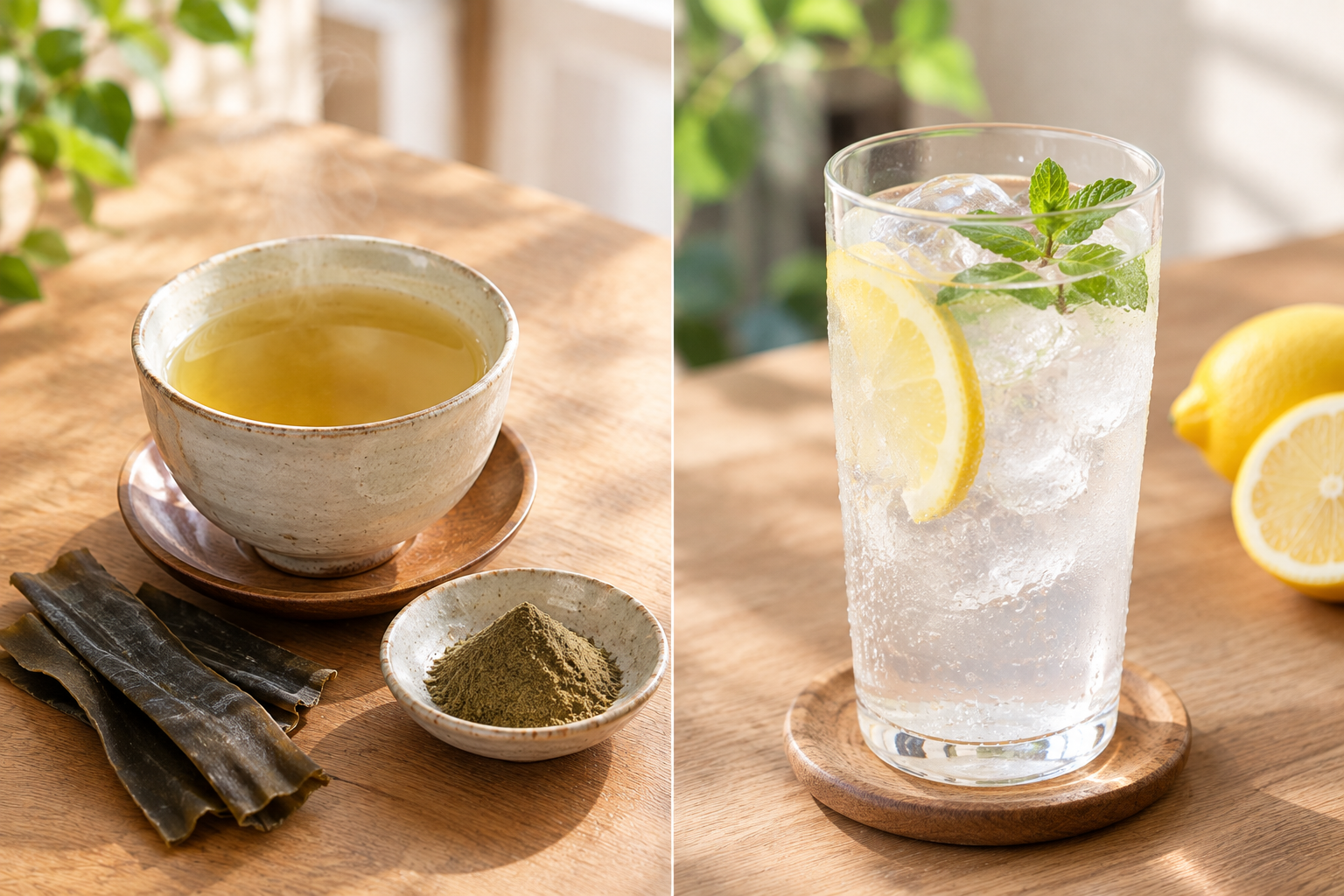
If you order “kombucha” in Japan, there’s a fair chance you’ll be handed a small cup of hot, salty, savory liquid that tastes more like a light soup than a fizzy health drink. That’s not a mistake. In Japanese, konbucha (昆布茶) means kelp tea – a drink made from dried kombu seaweed – and it existed long before the fermented tea we call kombucha in English became famous. The two drinks share a name, but almost nothing else.
The Problem You’re Actually Trying to Solve
Most people land here for one of three reasons: they bought a jar of “kombucha” from a Japanese grocery store and found powder instead of a bottled drink; they saw kombucha on a menu in Japan and got something unexpected; or they’re simply curious why two completely different drinks have the same name. The short answer is that the English word was borrowed from Japanese and attached to the wrong drink. The longer answer is more interesting, and it also helps you know which one you’re actually buying.
Who This Article Is NOT For
- If you’re looking for a recipe for fermented kombucha, this isn’t it – I only cover it here to explain the difference.
- If you need to watch your sodium intake, be aware that most Japanese konbucha powders contain added salt, and often MSG, so it’s a drink to check the label on rather than drink by the jug.
- If you want a caffeine-free Japanese drink with no salt at all, roasted grain teas are the better fit – sobacha, roasted buckwheat tea, is a good place to start, and my caffeine-free Japanese tea guide compares all five zero-caffeine options side by side.
The Two Drinks Side by Side
| Japanese konbucha (kelp tea) | Fermented kombucha | |
|---|---|---|
| Made from | Dried kombu kelp | Sweetened black or green tea |
| Process | Kelp is shredded or ground into powder | Fermented with a SCOBY (bacteria and yeast) |
| Taste | Savory, salty, umami | Tangy, sour, slightly fizzy |
| Served | Hot, like a light broth | Usually cold, bottled |
| Caffeine | None (no tea leaves) | Usually some, from the tea it’s brewed with |
| Alcohol | None | Small amounts from fermentation (commercial versions are usually under 0.5%) |
| Also used as | A seasoning in cooking | – |
| Called in Japan | Konbucha / kobucha | Kōcha kinoko (“black tea mushroom”) |
What Japanese Konbucha Actually Is
Konbucha is about as simple as a drink gets: kombu kelp, dried and either cut into thin strips or ground into a fine powder. The powdered kind dissolves completely in hot water – a teaspoon or so in a cup is typical – and commercial versions are usually seasoned with salt and sugar, and often MSG. You can also make it from strips by steeping a small amount of kelp in hot water and adding a pinch of salt.
The taste is savory first: umami-rich, salty and lightly sweet, much closer to a thin dashi broth than to anything you’d call tea. It contains no tea leaves, so there’s no caffeine.
People have been pouring hot water over chopped kelp in Japan since at least the Edo period. The instant powdered version came later – it was invented in 1918 – and that’s the form most people buy today.
The Plum Version
The most popular variation is ume-konbucha, kelp tea mixed with freeze-dried umeboshi (pickled plum). It adds a sour, slightly fruity note that cuts through the saltiness, and many people prefer it to plain konbucha. If you’re trying konbucha for the first time, the ume version is a friendly starting point.
A Drink for Good Fortune
Kombu has long been a celebratory food in Japan, partly because kobu sounds like the end of yorokobu, “to be happy.” That’s why kelp tea is served at New Year and at some weddings. In the Kansai region, there are also special New Year teas, fuku-cha and ōbuku-cha (“good fortune tea”), which combine sencha with kombu and umeboshi – so for those, there’s real green tea in the cup too.
What Fermented Kombucha Actually Is
The bottled drink sold in the West is sweetened tea – usually black, sometimes green – fermented with a SCOBY, a gel-like culture of bacteria and yeast often called the “mother.” Fermentation turns the sugar into organic acids and a little carbon dioxide, which gives it its tangy, fizzy character, and leaves small amounts of alcohol behind. Fruit or spices are often added afterward.
It most likely originated in northeast China and spread through Russia and Europe before reaching Japan, where it had a brief boom in the 1970s under the name kōcha kinoko, “black tea mushroom.” Because it’s brewed from tea, it usually contains some caffeine, though typically less than the tea it started from.
So Why Do They Share a Name?
Nobody knows for certain. The most common explanation is that the English word “kombucha” is a misapplied loanword from Japanese: the name of the kelp drink ended up attached to the fermented one, perhaps because the floating culture looks a little like seaweed, or simply through confusion between Japanese terms. Whatever the cause, the result is that the original Japanese meaning has been almost completely overwritten in English – which is why Japanese stores abroad sometimes label their kelp tea “kobucha” or “konbu cha” to avoid confusion.
How to Use Japanese Konbucha
As a drink: dissolve about a teaspoon of powder in a cup of hot water. Taste and adjust; it’s easy to make it too salty.
As a seasoning: this is where konbucha really shines in Japanese kitchens. A pinch works as an instant umami boost in:
- Quick pickles (asazuke) – rub sliced cucumber or cabbage with a little konbucha powder and leave for 15-30 minutes
- Japanese-style pasta, stir-fries and fried rice
- Rice balls and plain rice
- Ochazuke, where a pinch in the tea makes the broth noticeably more savory
- Soups, as a quick substitute for dashi granules
Keep it sealed and dry – the powder clumps quickly in humid air.
A Few Things People Ask Me
Does konbucha have caffeine? No. Japanese kelp tea contains no tea leaves, so there’s no caffeine at all.
Is konbucha a probiotic drink? No. It isn’t fermented, so it has none of the live cultures that fermented kombucha is known for.
Is konbucha healthy? It’s a light, savory drink, but most commercial powders contain a fair amount of salt and often MSG, so it’s best enjoyed in moderation rather than as a health drink. Unsalted versions exist if you look for them.
Where can I buy it? Japanese kelp tea is easy to find as konbucha powder on Amazon, and the ume-konbucha plum version on Amazon is worth trying if plain kelp tea sounds too salty.
Where I Landed
Once you know the history, the confusion is almost funny: the Japanese drink that originally owned the name is a humble, salty cup of kelp broth, while the English word now belongs to a fizzy fermented tea from somewhere else entirely. They’re different drinks for different moments. Fermented kombucha is a cold, tangy refresher; Japanese konbucha is a warm, savory sip on a cold day – and, more often than not, a secret seasoning in the kitchen.