Disclosure: This post contains affiliate links. If you buy through one of them, I may earn a small commission at no extra cost to you.
When I started exploring Japanese tea, the hardest part wasn’t brewing – it was knowing where to begin. A Japanese tea shop can easily have twenty kinds of green tea on the shelf, plus roasted teas, stem teas, powdered teas and blends, all with names that sound similar. Sencha, bancha, kukicha, hojicha… it’s easy to buy the wrong one for what you actually want, and conclude you “don’t like Japanese tea.”
The good news is that almost all Japanese tea comes from the same plant, and the differences come down to a handful of choices: how the plant was grown, which leaves were picked, and what happened to them afterward. Once you see that pattern, the whole range becomes easy to navigate.
The Problem You’re Actually Trying to Solve
You want to try Japanese tea, or you’ve tried one and want to know what else is out there – without spending money on teas you won’t enjoy. This guide gives you a quick map of the main types, what each tastes like, and a simple way to choose your first (or next) one.
Who This Article Is NOT For
- If you already know exactly which tea you want and need brewing details, go straight to my green tea temperature guide.
- If you can’t have caffeine at all, most of the teas below contain it. My caffeine-free Japanese tea guide covers the alternatives.
- If you’re mainly interested in matcha lattes and recipes, start with matcha below and then head to the recipe articles.
Three Questions That Explain Every Japanese Tea
1. Was it shaded before harvest? Covering the tea plants for a few weeks keeps more of the sweet, savory amino acids in the leaf. Shaded teas (gyokuro, kabusecha, matcha) taste sweeter and richer; unshaded teas (sencha, bancha) are brighter and more refreshing.
2. Which part of the plant, and which harvest? The young spring leaves give the most prized tea. Later harvests and lower leaves give milder, cheaper teas. Stems and small fragments give their own teas.
3. What happened after picking? Most Japanese tea is steamed, rolled and dried. Some is then roasted, blended with rice, ground into powder, or – rarely – pan-fired instead of steamed.
Every tea below is a combination of those three choices.
The Main Types of Japanese Tea
Sencha – the everyday classic
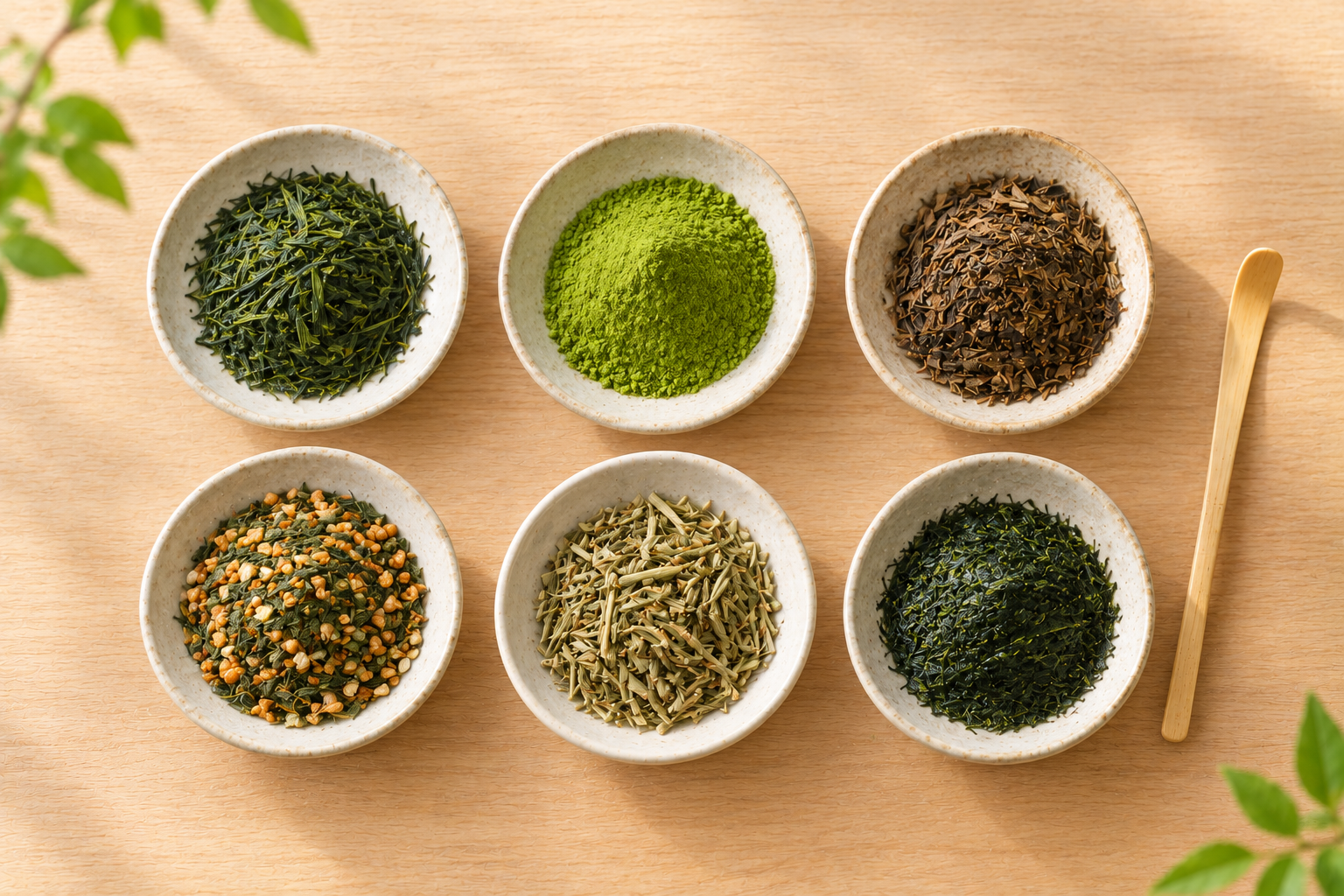
Unshaded, steamed and rolled into fine needles. It’s the most commonly drunk tea in Japan: fresh, grassy, gently sweet with a little astringency. Start here if you want to understand Japanese green tea.
Variant: Fukamushi sencha is steamed longer, which makes it cloudier, deeper green, smoother and less bitter. It’s a great choice if regular sencha tastes too sharp. (More on fukamushi.)
Variant: Shincha is the first sencha of the year, sold fresh in spring for its bright aroma. (More on shincha.)
Gyokuro – the luxurious one
Shaded for about three weeks before harvest, gyokuro is sweet, rich and full of umami, almost like a light broth. It’s brewed cool, with lots of leaf and very little water. It’s expensive and best enjoyed slowly. (Sencha vs. gyokuro explained.)
Kabusecha – between sencha and gyokuro
Shaded for a shorter time than gyokuro. It brews like sencha but tastes sweeter and rounder – an affordable way to taste what shading does. (More on kabusecha.)
Matcha – the powdered one
Made from shaded leaves that are steamed, dried, de-veined and stone-ground into a fine powder. You whisk it into water and drink the whole leaf, so it’s rich, creamy and higher in caffeine than leaf tea. It’s the tea of the tea ceremony and of matcha lattes. (Matcha vs. green tea explained.)
Bancha – the gentle everyday tea
Made from later-harvest, more mature leaves. Mild, a little earthy, low in bitterness and inexpensive – the tea many Japanese families drink with meals. (More on bancha.)
Hojicha – the roasted one
Green tea (often bancha or stems) roasted until it turns brown. Toasty, nutty and caramel-like, with very little bitterness and lower caffeine than sencha. It’s a favorite in the evening and makes a lovely latte. (The best hojicha brands.)
Genmaicha – the “popcorn tea”
Green tea blended with roasted brown rice, some of which pops like popcorn. Light, toasty and comforting, and very easy to like. Some versions add matcha for extra color and body. (The complete genmaicha guide.)
Kukicha – the stem tea
Made from the stems and twigs left over from sencha or gyokuro production. Sweet, light and low in caffeine. (More on kukicha.)
Konacha – the sushi-restaurant tea
Small leaf particles left over from processing sencha and gyokuro. Strong, grassy and quick to brew – the hot tea served at sushi bars.
Kamairicha – the rare pan-fired tea
Instead of being steamed, the leaves are pan-fired, the Chinese way. Made mostly in Kyushu, it has a gentle, toasty aroma and a golden cup – a bridge between Japanese and Chinese green tea.
Wakocha – Japanese black tea
The same plant, fully oxidized into black tea. Softer, sweeter and less astringent than most Indian or Sri Lankan black teas, and best drunk without milk.
Japanese Tea at a Glance
| Tea | Taste | Caffeine | Price | Good first choice? |
|---|---|---|---|---|
| Sencha | Fresh, grassy, lightly sweet | Medium | $$ | Yes – the classic starting point |
| Fukamushi sencha | Smooth, deep, less bitter | Medium | $$ | Yes – if sencha feels sharp |
| Gyokuro | Very sweet, rich umami | High | $$$ | After you know sencha |
| Kabusecha | Sweet, rounded | Medium | $$ | Yes – a gentle step up |
| Matcha | Creamy, rich, slightly bitter | High | $$-$$$ | Yes – especially as a latte |
| Bancha | Mild, earthy | Lower | $ | Yes – easy everyday tea |
| Hojicha | Toasty, nutty, sweet | Low | $-$$ | Yes – very approachable |
| Genmaicha | Toasty, light, comforting | Low-medium | $ | Yes – very easy to like |
| Kukicha | Sweet, light | Low | $ | Yes – mild and gentle |
| Konacha | Strong, grassy | Medium | $ | For sushi lovers |
| Kamairicha | Gentle, toasty, golden | Medium | $$ | For the curious |
| Wakocha | Sweet black tea | Medium | $$ | If you prefer black tea |
Which Should You Try First?
- You want the “real” Japanese green tea experience: start with a good sencha.
- You find green tea bitter: try fukamushi sencha, kabusecha or genmaicha.
- You prefer coffee or toasty flavors: hojicha or genmaicha.
- You want something special for a treat: gyokuro.
- You want lattes or desserts: culinary matcha, or hojicha powder.
- You drink tea in the evening: hojicha, kukicha or bancha – all lower in caffeine.
My honest recommendation for most beginners is to buy two teas at once: a sencha and a hojicha. They sit at opposite ends of Japanese tea – one fresh and green, one roasted and warm – and tasting them side by side tells you quickly which direction you prefer.
Three Brewing Mistakes That Make Beginners Quit
- Boiling water on green tea. Most Japanese green tea wants 70-80°C. Boiling water is the number one cause of bitterness. (Roasted teas like hojicha are the exception.)
- Steeping too long. Japanese green tea usually needs about a minute, not the three to five minutes of black tea.
- Throwing the leaves away after one pot. Most leaf teas give two or three good infusions – the second cup is often the best.
Fix those three, and even an inexpensive sencha tastes noticeably better.
A Few Things People Ask Me
Are all Japanese teas green tea? Almost all come from the same plant as green tea. Hojicha is roasted green tea, wakocha is black tea, and drinks like mugicha and sobacha aren’t made from the tea plant at all.
Which Japanese tea has the most caffeine? Matcha and gyokuro are at the top. Hojicha, kukicha and bancha are at the lower end.
Do I need a kyusu (Japanese teapot)? It helps, especially for fine-leaf sencha, but any teapot with a fine filter or a mesh infuser will do to start.
Where should I buy my first Japanese tea? Nio Teas’ sencha collection is a good place to start with sencha, with clear tasting notes for each tea. If you’d rather try several types at once, a Japanese tea sampler on Amazon is an easy, low-risk way to find out what you like.
Where I Landed
Japanese tea looks complicated from the outside, but it’s really one plant and a few decisions: shade or sun, young leaves or old, steamed or roasted, leaf or powder. Start with sencha and hojicha, brew them cooler and shorter than you think, and use this map to decide where to go next. Every tea on this list is a small change from the last one, and following those changes is half the fun.