Tag: Types of Japanese Tea

  • Tamaryokucha: Japan’s Curly Green Tea (Guricha), Explained

    Tamaryokucha: Japan’s Curly Green Tea (Guricha), Explained

    Disclosure: This post contains affiliate links. If you buy through one of them, I may earn a small commission at no extra cost to you.

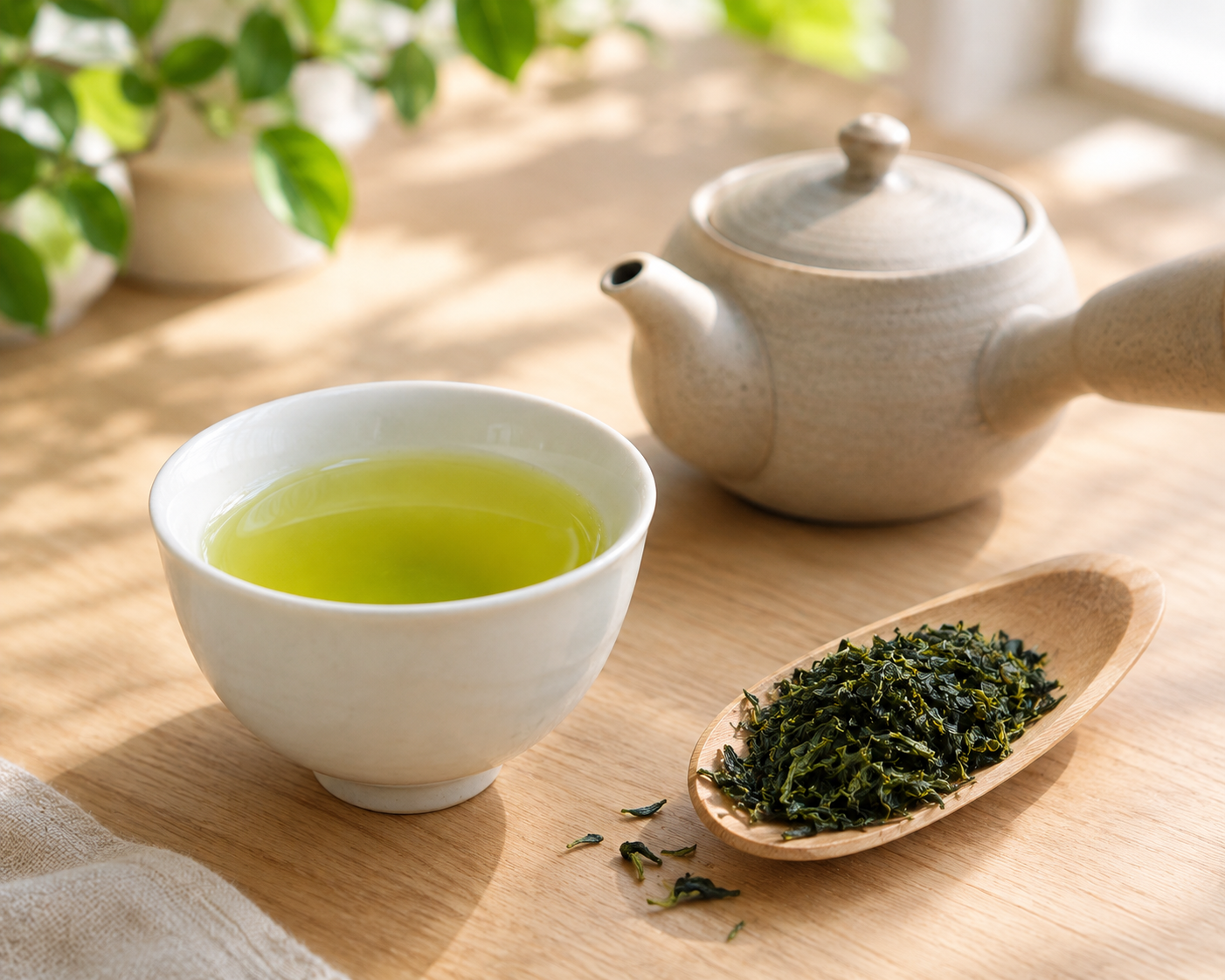
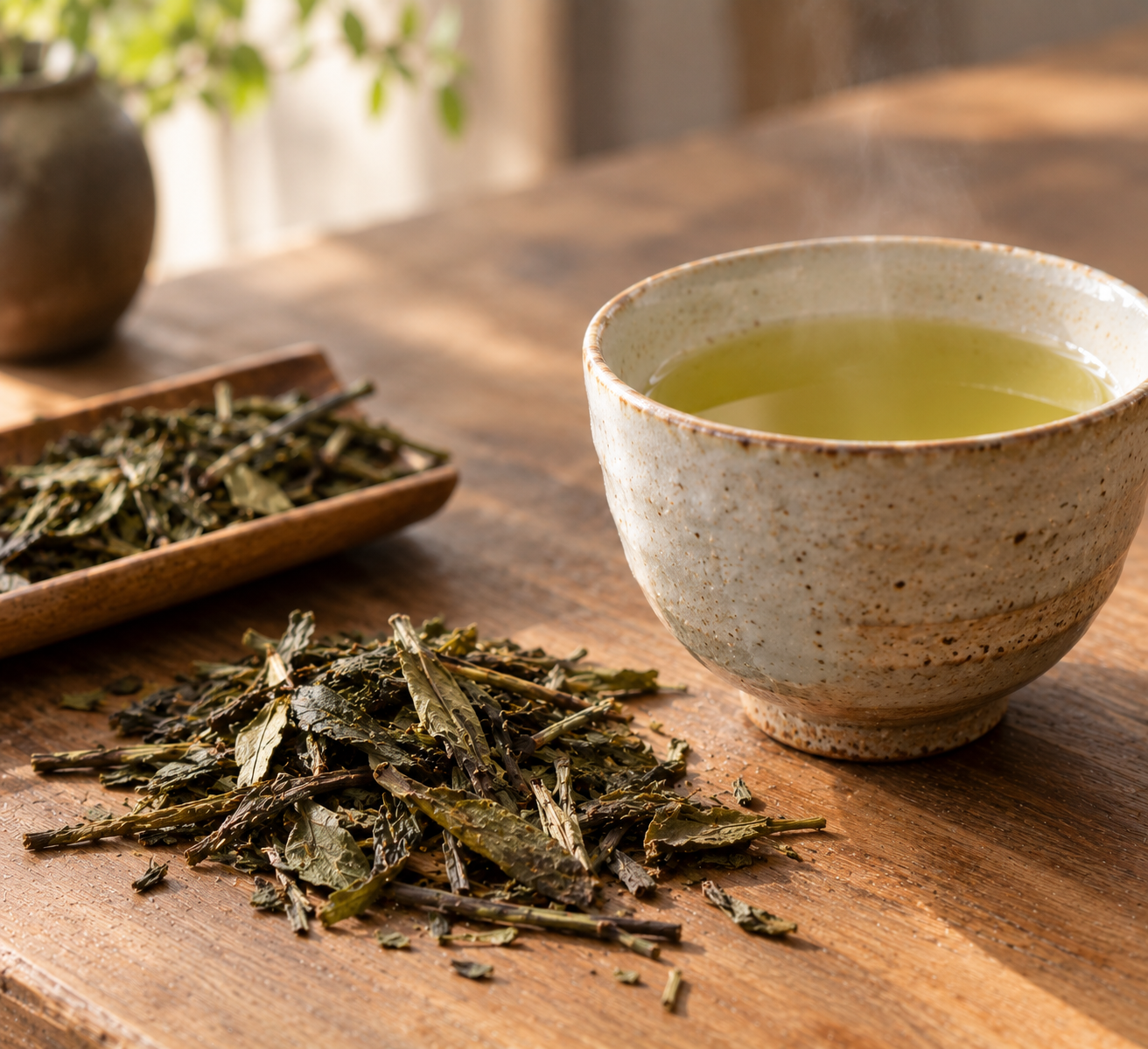
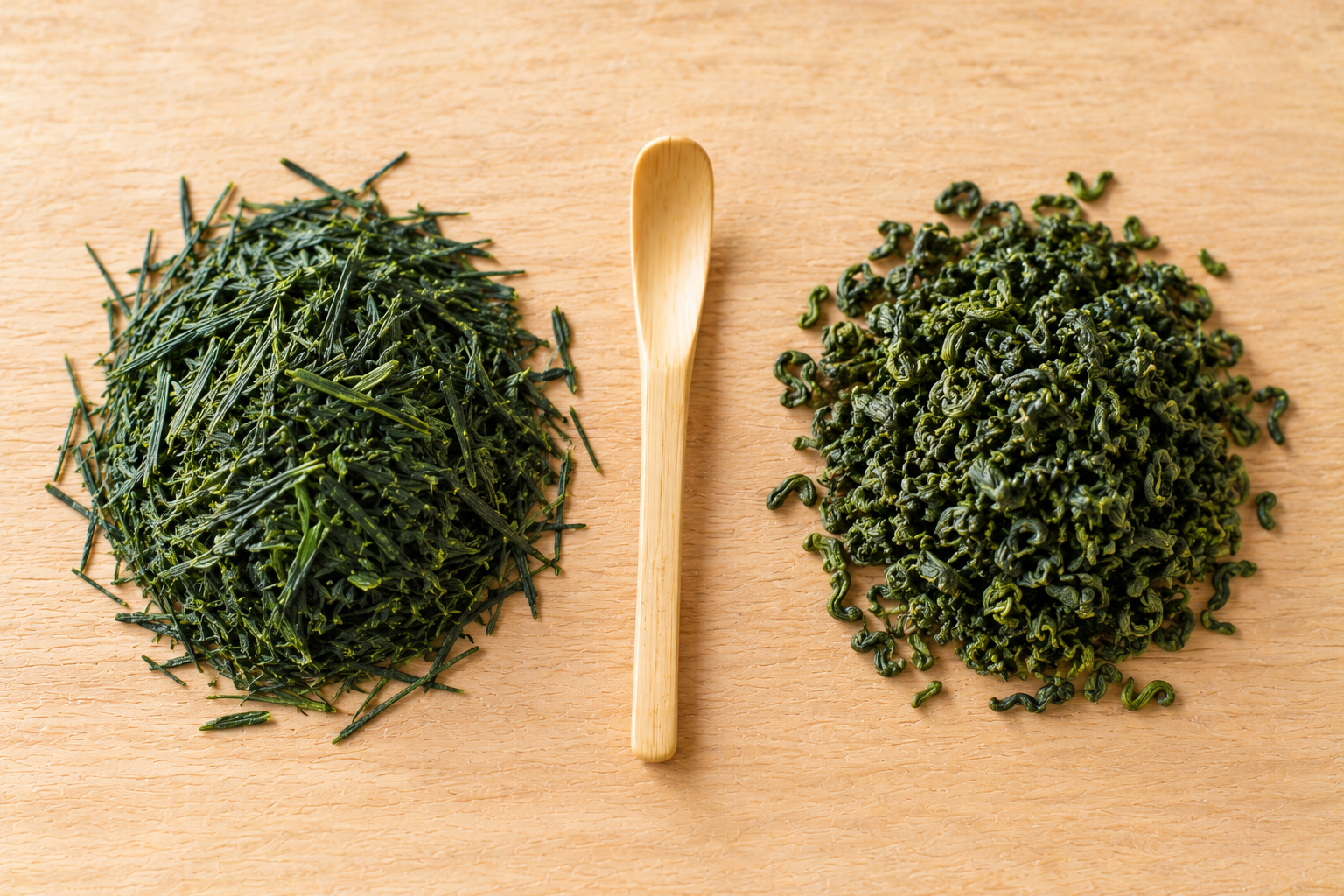
    Pour a spoonful of sencha onto a plate and you’ll see fine, straight, dark-green needles. Pour out a spoonful of tamaryokucha next to it and the difference is obvious: the leaves are curled into little commas and coils, like tiny green question marks. They look almost like a Chinese tea. In the cup, they taste softer and rounder than sencha, with less bite and a gentle, almost fruity sweetness.

    Tamaryokucha (玉緑茶, “jade green tea”) – also called guricha, “curly tea” – is one of Japan’s lesser-known green teas. It makes up only around 3% of the country’s production, mostly in Kyushu, and its curly shape has a surprisingly interesting history involving the Soviet Union.

    The Problem You’re Actually Trying to Solve

    Most people come across tamaryokucha on a specialty tea list and wonder whether it’s just sencha with a different name, or a different kind of tea altogether. The confusion is understandable: some tamaryokucha is steamed like sencha, and some is pan-fired like Chinese green tea. Knowing which is which – and what that does to the flavor – is the key to choosing one you’ll like.

    Who This Article Is NOT For

    • If you love sencha’s bright, grassy edge, tamaryokucha is deliberately gentler. It may feel a little soft at first.
    • If you want rich, savory umami, a shaded tea like gyokuro is the better choice.
    • If you’re looking for the deep green, cloudy, full-bodied cup of deep-steamed tea, my fukamushi sencha guide covers that style instead.

    What Makes It Tamaryokucha: The Missing Step

    To understand tamaryokucha, it helps to know how sencha gets its shape. Sencha goes through several rolling stages, ending with a final shaping step (seijū) that presses the leaves into straight, thin needles.

    Tamaryokucha skips that final straight-rolling step. Instead, the leaves are dried while being tumbled, often in a rotating drum, and they naturally curl into comma and spiral shapes – the “jade” or magatama (curved bead) shape that gives the tea its name.

    That one difference in processing changes both how the tea looks and how it brews: curled leaves unfold more slowly in the pot, giving a gentler, rounder extraction.

    Two Kinds: Steamed and Pan-Fired

    There are two main types of tamaryokucha, and it’s worth knowing which one you’re buying:

    Mushisei tamaryokucha (steamed). The leaves are steamed like sencha, then curled and dried. Often shortened to mushiguri (“steamed curly”) in Kyushu. It tastes closest to sencha, but milder and rounder. This is the type most people mean by “tamaryokucha” or “guricha” today.

    Kamairisei tamaryokucha (pan-fired). The leaves are heated in an iron pan instead of steamed. This is usually just called kamairicha, and it has a light, toasty aroma and a golden cup.

    If the label says “kamairi,” it’s pan-fired. If it says “mushisei,” “mushiguri” or simply “guricha,” it’s almost always steamed.

    A Tea Made for Export

    The steamed version has an unusual origin story. Around 1930, Japanese tea makers wanted to sell more tea to the Soviet Union, where drinkers were used to curly, pan-fired Chinese green tea. Straight Japanese sencha didn’t look right to them. So Japanese producers developed a steamed tea shaped to resemble Chinese tea, and steamed it longer than usual to soften its bitterness.

    It worked. Exports grew quickly, and the name tamaryokucha was chosen through an industry call for names in 1932, during that export boom. After the war, it was also exported to North Africa and Central Asia. As those export markets faded, producers began selling it at home, where it found a following of its own.

    The nickname guricha comes from the swirling, scroll-like “guri” pattern found in traditional Japanese lacquerwork, which the curled leaves resemble. The name started in the Izu area of Shizuoka and has since spread more widely.

    Sencha vs. Steamed vs. Pan-Fired at a Glance

    SenchaSteamed tamaryokucha (guricha)Pan-fired tamaryokucha (kamairicha)
    Kill-green stepSteamingSteaming (often longer)Hot iron pan
    Final shapingRolled into straight needlesFinal straight rolling skipped; leaves curlLeaves curl
    Leaf lookThin, straight, dark greenComma-shaped curls, deep greenComma-shaped curls, slightly duller green
    Cup colorYellow-greenClear yellow-greenGolden yellow
    TasteBright, grassy, some astringencyRound, mild, gently sweetLight, toasty, low astringency
    Main regionsShizuoka, Kagoshima and most of JapanUreshino, Sonogi, IzuMiyazaki, Kumamoto

    The table shows why tamaryokucha is easy to confuse with both its neighbors: it shares the steaming of sencha (or the pan-firing of Chinese-style tea) but has its own curled shape and softer character.

    Where It’s Made

    Tamaryokucha is mainly a Kyushu tea:

    • Ureshino (Saga) – the best-known region, with a long tea-growing history and a reputation for round, sweet, smooth teas
    • Sonogi (Nagasaki) – a strong competitor to Ureshino, known for steamed tamaryokucha that has won national awards
    • Kumamoto and Miyazaki – associated especially with pan-fired versions
    • Fukuoka and Oita – smaller amounts
    • Izu (Shizuoka) – outside Kyushu, where the “guricha” name originated

    What It Tastes Like

    Compared with sencha, steamed tamaryokucha is usually:

    • Rounder and smoother, with less astringency
    • Gently sweet, sometimes with a light berry-like or citrusy note
    • Softer on the finish, often with an almond-like aftertaste
    • Clear, yellow-green in the cup

    Because its leaves are curled and unfold gradually, it’s also more forgiving to brew. It’s hard to make it harsh unless you use very hot water or steep it much too long.

    How to Brew Tamaryokucha

    • Leaf: about 4-5g (weigh it if you can – curled leaves take up more space than sencha, so teaspoon measurements can mislead)
    • Water: 70-80°C (158-176°F); pan-fired versions can take a little hotter, around 80-85°C
    • First infusion: 60-90 seconds – a little longer than sencha, since the curled leaves need time to open
    • Second infusion: slightly hotter water, 30-45 seconds
    • Third infusion: hotter again, about 60 seconds

    As with all Japanese tea, pour out every last drop between infusions so the leaves don’t keep steeping in the pot. My green tea temperature guide explains why getting the water temperature right matters so much.

    Cold brew also works well: about 4-5g of leaf in 500ml of cold water, refrigerated for 4-8 hours, gives a smooth, sweet iced tea.

    Tamaryokucha With Food

    Its soft, round character makes tamaryokucha an easy tea to drink with meals. It doesn’t overpower delicate flavors the way a sharp sencha can, so it works well with:

    • Fish and seafood, from sashimi to simply grilled fish – a natural pairing in coastal Nagasaki and Saga
    • Rice dishes and onigiri
    • Light Japanese sweets such as castella or yokan, where its gentle sweetness complements rather than competes

    A good everyday habit is to brew a pot at the start of a meal and refill it as you go – the curled leaves give several pleasant infusions, and the later cups stay smooth.

    Storing It

    Treat tamaryokucha like any good green tea: keep it in an airtight, opaque container, away from heat, light and strong smells, and finish an opened bag within a couple of months. The curled leaves are a little sturdier than fine sencha needles, but the aroma still fades once the bag is open.

    How to Choose a Good One

    • Check the method. Decide whether you want steamed (mild, sencha-like) or pan-fired (toasty, golden).
    • Look for origin. Ureshino and Sonogi are reliable signs for steamed tamaryokucha; Miyazaki and Kumamoto for pan-fired.
    • Look at the leaves. Good tamaryokucha has evenly sized, clearly curled leaves with a vivid, consistent green color.
    • Check freshness. As with any green tea, a recent harvest and an airtight package make a big difference. Spring-harvested shincha versions are especially aromatic.

    A Few Things People Ask Me

    Is tamaryokucha the same as kamairicha? Not exactly. Kamairicha is one type of tamaryokucha – the pan-fired kind. Most tamaryokucha sold today is steamed (mushisei), which tastes closer to sencha.

    Is tamaryokucha the same as fukamushi sencha? No. Both may involve longer steaming, but fukamushi is rolled into straight needles and brews cloudy and deep green. Tamaryokucha is curled and brews clearer and milder.

    Why is it so hard to find outside Japan? It’s a small part of Japan’s production and mostly made by Kyushu producers for the domestic market, so fewer exporters carry it.

    Where can I buy it? For a pan-fired version, Nio Teas’ Pan Fired Kamairicha from Miyazaki Sabou is a good example of the curly, toasty style. For steamed guricha and Ureshino teas, try tamaryokucha on Amazon.

    Where I Landed

    Tamaryokucha is a good reminder that small changes in processing make big changes in the cup. Skip one rolling step, and you get curled leaves, a rounder flavor and a tea that’s far more forgiving to brew. Its odd history – a Japanese tea shaped to look Chinese for Soviet buyers – makes it even more fun to drink. If you like sencha but sometimes find it a little sharp, a cup of Ureshino or Sonogi tamaryokucha is well worth trying.
  • Types of Japanese Tea: A Beginner’s Guide to What to Try First

    Types of Japanese Tea: A Beginner’s Guide to What to Try First

    Disclosure: This post contains affiliate links. If you buy through one of them, I may earn a small commission at no extra cost to you.

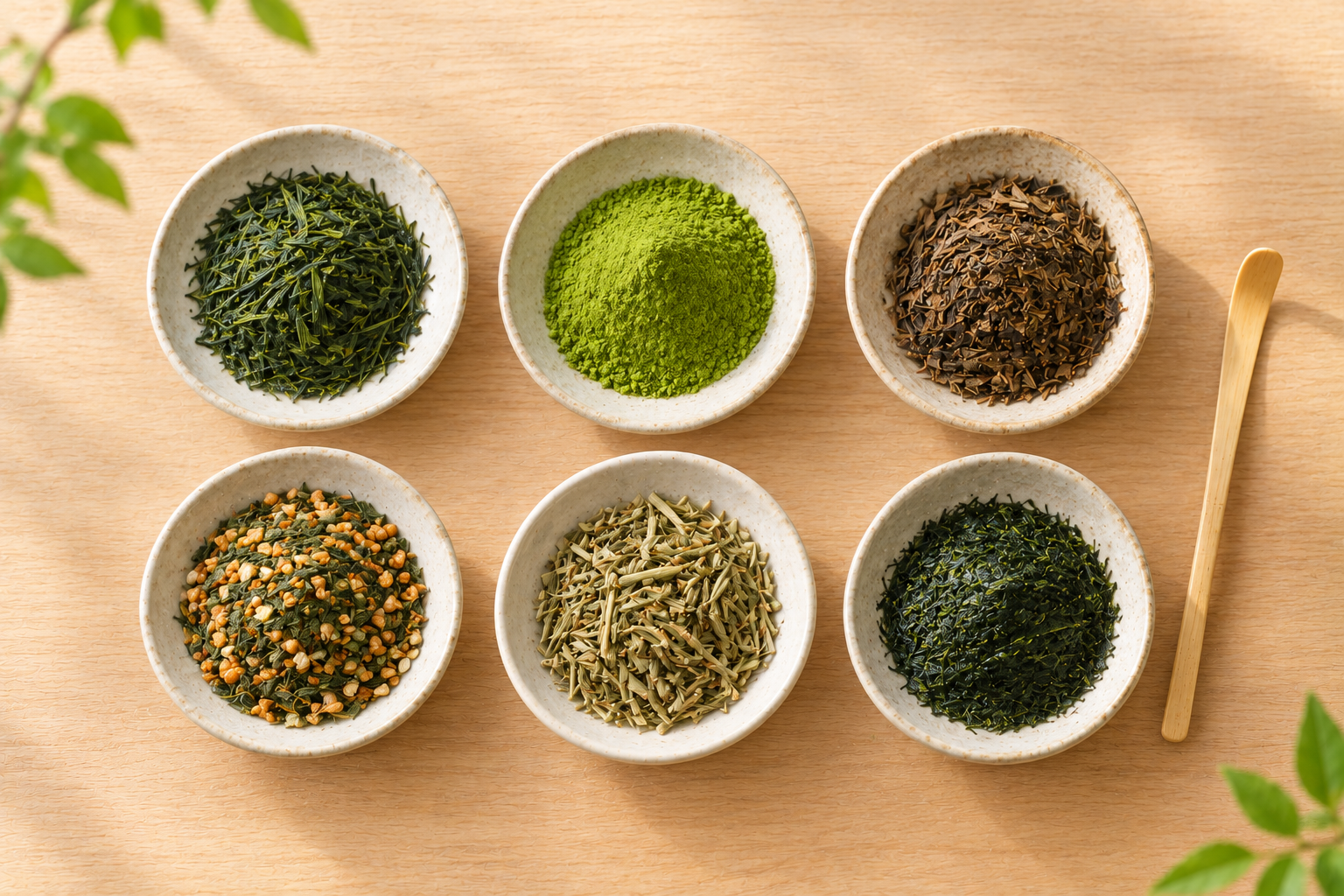
    When I started exploring Japanese tea, the hardest part wasn’t brewing – it was knowing where to begin. A Japanese tea shop can easily have twenty kinds of green tea on the shelf, plus roasted teas, stem teas, powdered teas and blends, all with names that sound similar. Sencha, bancha, kukicha, hojicha… it’s easy to buy the wrong one for what you actually want, and conclude you “don’t like Japanese tea.”

    The good news is that almost all Japanese tea comes from the same plant, and the differences come down to a handful of choices: how the plant was grown, which leaves were picked, and what happened to them afterward. Once you see that pattern, the whole range becomes easy to navigate.

    The Problem You’re Actually Trying to Solve

    You want to try Japanese tea, or you’ve tried one and want to know what else is out there – without spending money on teas you won’t enjoy. This guide gives you a quick map of the main types, what each tastes like, and a simple way to choose your first (or next) one.

    Who This Article Is NOT For

    • If you already know exactly which tea you want and need brewing details, go straight to my green tea temperature guide.
    • If you can’t have caffeine at all, most of the teas below contain it. My caffeine-free Japanese tea guide covers the alternatives.
    • If you’re mainly interested in matcha lattes and recipes, start with matcha below and then head to the recipe articles.

    Three Questions That Explain Every Japanese Tea

    1. Was it shaded before harvest? Covering the tea plants for a few weeks keeps more of the sweet, savory amino acids in the leaf. Shaded teas (gyokuro, kabusecha, matcha) taste sweeter and richer; unshaded teas (sencha, bancha) are brighter and more refreshing.

    2. Which part of the plant, and which harvest? The young spring leaves give the most prized tea. Later harvests and lower leaves give milder, cheaper teas. Stems and small fragments give their own teas.

    3. What happened after picking? Most Japanese tea is steamed, rolled and dried. Some is then roasted, blended with rice, ground into powder, or – rarely – pan-fired instead of steamed.

    Every tea below is a combination of those three choices.

    The Main Types of Japanese Tea

    Sencha – the everyday classic

    Unshaded, steamed and rolled into fine needles. It’s the most commonly drunk tea in Japan: fresh, grassy, gently sweet with a little astringency. Start here if you want to understand Japanese green tea.

    Variant: Fukamushi sencha is steamed longer, which makes it cloudier, deeper green, smoother and less bitter. It’s a great choice if regular sencha tastes too sharp. (More on fukamushi.)

    Variant: Shincha is the first sencha of the year, sold fresh in spring for its bright aroma. (More on shincha.)

    Gyokuro – the luxurious one

    Shaded for about three weeks before harvest, gyokuro is sweet, rich and full of umami, almost like a light broth. It’s brewed cool, with lots of leaf and very little water. It’s expensive and best enjoyed slowly. (Sencha vs. gyokuro explained.)

    Kabusecha – between sencha and gyokuro

    Shaded for a shorter time than gyokuro. It brews like sencha but tastes sweeter and rounder – an affordable way to taste what shading does. (More on kabusecha.)

    Matcha – the powdered one

    Made from shaded leaves that are steamed, dried, de-veined and stone-ground into a fine powder. You whisk it into water and drink the whole leaf, so it’s rich, creamy and higher in caffeine than leaf tea. It’s the tea of the tea ceremony and of matcha lattes. (Matcha vs. green tea explained.)

    Bancha – the gentle everyday tea

    Made from later-harvest, more mature leaves. Mild, a little earthy, low in bitterness and inexpensive – the tea many Japanese families drink with meals. (More on bancha.)

    Hojicha – the roasted one

    Green tea (often bancha or stems) roasted until it turns brown. Toasty, nutty and caramel-like, with very little bitterness and lower caffeine than sencha. It’s a favorite in the evening and makes a lovely latte. (The best hojicha brands.)

    Genmaicha – the “popcorn tea”

    Green tea blended with roasted brown rice, some of which pops like popcorn. Light, toasty and comforting, and very easy to like. Some versions add matcha for extra color and body. (The complete genmaicha guide.)

    Kukicha – the stem tea

    Made from the stems and twigs left over from sencha or gyokuro production. Sweet, light and low in caffeine. (More on kukicha.)

    Konacha – the sushi-restaurant tea

    Small leaf particles left over from processing sencha and gyokuro. Strong, grassy and quick to brew – the hot tea served at sushi bars.

    Kamairicha – the rare pan-fired tea

    Instead of being steamed, the leaves are pan-fired, the Chinese way. Made mostly in Kyushu, it has a gentle, toasty aroma and a golden cup – a bridge between Japanese and Chinese green tea.

    Wakocha – Japanese black tea

    The same plant, fully oxidized into black tea. Softer, sweeter and less astringent than most Indian or Sri Lankan black teas, and best drunk without milk.

    Japanese Tea at a Glance

    TeaTasteCaffeinePriceGood first choice?
    SenchaFresh, grassy, lightly sweetMedium$$Yes – the classic starting point
    Fukamushi senchaSmooth, deep, less bitterMedium$$Yes – if sencha feels sharp
    GyokuroVery sweet, rich umamiHigh$$$After you know sencha
    KabusechaSweet, roundedMedium$$Yes – a gentle step up
    MatchaCreamy, rich, slightly bitterHigh$$-$$$Yes – especially as a latte
    BanchaMild, earthyLower$Yes – easy everyday tea
    HojichaToasty, nutty, sweetLow$-$$Yes – very approachable
    GenmaichaToasty, light, comfortingLow-medium$Yes – very easy to like
    KukichaSweet, lightLow$Yes – mild and gentle
    KonachaStrong, grassyMedium$For sushi lovers
    KamairichaGentle, toasty, goldenMedium$$For the curious
    WakochaSweet black teaMedium$$If you prefer black tea

    Which Should You Try First?

    • You want the “real” Japanese green tea experience: start with a good sencha.
    • You find green tea bitter: try fukamushi sencha, kabusecha or genmaicha.
    • You prefer coffee or toasty flavors: hojicha or genmaicha.
    • You want something special for a treat: gyokuro.
    • You want lattes or desserts: culinary matcha, or hojicha powder.
    • You drink tea in the evening: hojicha, kukicha or bancha – all lower in caffeine.

    My honest recommendation for most beginners is to buy two teas at once: a sencha and a hojicha. They sit at opposite ends of Japanese tea – one fresh and green, one roasted and warm – and tasting them side by side tells you quickly which direction you prefer.

    Three Brewing Mistakes That Make Beginners Quit

    1. Boiling water on green tea. Most Japanese green tea wants 70-80°C. Boiling water is the number one cause of bitterness. (Roasted teas like hojicha are the exception.)
    2. Steeping too long. Japanese green tea usually needs about a minute, not the three to five minutes of black tea.
    3. Throwing the leaves away after one pot. Most leaf teas give two or three good infusions – the second cup is often the best.

    Fix those three, and even an inexpensive sencha tastes noticeably better.

    A Few Things People Ask Me

    Are all Japanese teas green tea? Almost all come from the same plant as green tea. Hojicha is roasted green tea, wakocha is black tea, and drinks like mugicha and sobacha aren’t made from the tea plant at all.

    Which Japanese tea has the most caffeine? Matcha and gyokuro are at the top. Hojicha, kukicha and bancha are at the lower end.

    Do I need a kyusu (Japanese teapot)? It helps, especially for fine-leaf sencha, but any teapot with a fine filter or a mesh infuser will do to start.

    Where should I buy my first Japanese tea? Nio Teas’ sencha collection is a good place to start with sencha, with clear tasting notes for each tea. If you’d rather try several types at once, a Japanese tea sampler on Amazon is an easy, low-risk way to find out what you like.

    Where I Landed

    Japanese tea looks complicated from the outside, but it’s really one plant and a few decisions: shade or sun, young leaves or old, steamed or roasted, leaf or powder. Start with sencha and hojicha, brew them cooler and shorter than you think, and use this map to decide where to go next. Every tea on this list is a small change from the last one, and following those changes is half the fun.

  • Kamairicha: Japan’s Rare Pan-Fired Green Tea

    Kamairicha: Japan’s Rare Pan-Fired Green Tea

    Disclosure: This post contains affiliate links. If you buy through one of them, I may earn a small commission at no extra cost to you.

    Almost every Japanese green tea you’ve ever had – sencha, gyokuro, matcha, bancha – starts the same way: the freshly picked leaves are steamed. That single step is what gives Japanese tea its bright green color and its fresh, grassy, sometimes ocean-like flavor. So the first time I tasted kamairicha, I was confused. It was clearly Japanese green tea, but it tasted toasty and round, pale gold rather than green, with almost no bitterness. It reminded me more of a Chinese green tea than of sencha.

    That’s because kamairicha (釜炒り茶, “pan-fired tea”) skips the steaming. Instead, the leaves are tossed in a hot iron pan – the Chinese method – and the result is one of Japan’s rarest and most distinctive teas. It makes up less than 1% of Japanese tea production, and it’s almost entirely made on the southern island of Kyushu.

    The Problem You’re Actually Trying to Solve

    Most people come to kamairicha from one of two directions. Some love sencha and want to explore beyond it. Others prefer Chinese green teas like Longjing and are curious whether Japan makes anything similar. Kamairicha answers both – but because it’s rare outside Japan, information about it is scattered, and it’s often confused with hojicha (which is roasted after processing) or with tamaryokucha (a curled-leaf tea that can be either steamed or pan-fired).

    Who This Article Is NOT For

    • If you love the bright, grassy, deep-green character of fukamushi sencha, kamairicha goes the other way: lighter, toastier, less “green.” My fukamushi sencha guide covers the far end of the steamed spectrum.
    • If you want a strongly roasted, nutty tea, you’re looking for hojicha. Kamairicha’s toastiness is gentle, not dark.
    • If you’re after rich umami, shaded teas like gyokuro are the better choice. Kamairicha’s appeal is aroma and lightness, not savoriness.

    Steamed vs. Pan-Fired: The One Step That Changes Everything

    Every green tea – Japanese or Chinese – has to be heated soon after picking. This “kill-green” step stops the enzymes in the leaf from oxidizing it, which is what keeps green tea green rather than letting it turn into black tea.

    There are two main ways to do it:

    • Steaming (Japan’s standard): moist heat for a short time. It preserves a vivid green color and fresh, vegetal flavors.
    • Pan-firing (China’s standard): dry heat in a hot pan. It gives a pale gold liquor and a warm, toasty aroma.

    Kamairicha is the Japanese tea made the Chinese way. My Japanese vs. Chinese tea comparison explains why this first minute of processing shapes so much of the final flavor.

    How Kamairicha Is Made

    1. First firing. Fresh leaves go into an iron pan heated to around 300°C at the surface and are kept constantly moving so they don’t scorch. This takes a few minutes and stops oxidation.
    2. Rolling. While still warm, the leaves are kneaded and turned, which spreads moisture evenly and starts shaping them.
    3. Drying and second firing. The leaves are dried gradually, often in a rotating drum, and then given a final firing in a hot pan. This is what develops kamairicha’s characteristic aroma.

    Today, most kamairicha is made with machines that recreate the pan-firing process, though a few producers still work by hand.

    Unlike sencha, which is rolled into straight, needle-like shapes, kamairicha isn’t pressed straight. Its leaves curl into a loose comma or magatama (curved bead) shape.

    The Aroma: Kamaka

    The defining feature of kamairicha is a scent called kamaka (釜香) – literally “pan aroma.” It’s warm, lightly toasted and grain-like, often compared to roasted chestnuts or lightly toasted sesame.

    It’s important to understand that kamaka is not the same as roasting. Hojicha is green tea roasted after it’s already been made, which gives it a deep brown color and a strong, nutty, almost coffee-like flavor. Kamairicha’s toastiness comes from the dry heat during processing itself, so it stays light and gentle – a green tea with a warm edge, not a roasted tea.

    What Kamairicha Tastes Like

    • Mellow and round, with a soft sweetness
    • Low in astringency – noticeably less bite than sencha
    • Lightly toasty, thanks to kamaka
    • Clear golden-yellow in the cup, rather than green
    • Less grassy, with none of the marine or seaweed notes some steamed teas have

    It’s one of the most approachable Japanese green teas for people who find sencha too bitter or too “green.”

    Two Traditional Styles

    Kamairicha has two historic styles, named after the pans and methods they used:

    Ureshino style. Associated with Saga and Nagasaki prefectures, around the town of Ureshino. The pan is tilted at an angle toward the tea maker. Traditionally, Ureshino tea was firm and tightly rolled, with a brighter, more vivid flavor.

    Aoyagi style. Associated with Kumamoto and Miyazaki prefectures. The pan is kept flat, parallel to the floor. Aoyagi tea traditionally had longer, more open leaves and a fresh aroma, and its method spread more widely.

    Each style comes with its own origin story. Ureshino’s is said to begin with Chinese potters who settled in the area in the 15th and early 16th centuries and brought pan-firing with them. Aoyagi tea has legends linking it to craftsmen brought from the continent by a feudal lord. The exact history is uncertain, but both point to the same thing: Kyushu’s closeness to China.

    Where It’s Made Today

    Kamairicha is still made almost entirely in Kyushu:

    • Miyazaki – the largest producer today, especially mountainous areas like Takachiho, Gokase and Kobayashi
    • Saga – Ureshino, the historic home of the Ureshino style
    • Kumamoto and Nagasaki – smaller amounts
    • Fukuoka – including some in the Yame area

    The mountain climate, with large swings between day and night temperatures, suits the tea well.

    Why It Became So Rare

    Kamairicha was once made across Japan and was even prized by the upper classes. Its decline came with the rise of tea exports in the 19th century, when straight-leaf steamed tea became the standard for trade. Steamed sencha took over domestic production as well, and pan-firing survived mainly in the mountains of Kyushu, where local producers kept the tradition alive.

    How to Brew Kamairicha

    Kamairicha is forgiving, partly because it’s low in astringency:

    • Leaf: about 5g (two teaspoons) for 150-200ml of water
    • Water: 70-85°C (158-185°F). Start around 80°C; go hotter if you want more of the toasty aroma.
    • Steep: about 45-60 seconds for the first infusion
    • Later infusions: 20-30 seconds each; it gives two or three good cups

    Because the leaves are curled rather than finely broken, the brew stays clear, and you don’t need a very fine filter. A regular kyusu or teapot works well.

    Kamairicha With Food

    Kamairicha’s gentle toastiness makes it unusually easy to pair with food. Where sencha’s brisk, grassy edge works best with lighter Japanese dishes, kamairicha also sits comfortably next to richer, more savory food:

    • Grilled and fried dishes – yakitori, tempura, karaage – where the toasty notes echo the char and the low astringency doesn’t clash with oil
    • Rice dishes and onigiri, especially with miso or soy-based flavors
    • Chinese food, which makes sense given its pan-fired roots
    • Simple sweets like castella, rice crackers or chestnut confections, which bring out its chestnut-like aroma

    It’s also a good everyday tea to keep on the table through a meal, because it doesn’t turn harsh as it cools.

    Hot or Iced?

    Kamairicha is at its best hot, when the kamaka aroma is most noticeable. Opinions differ on cold brewing: some producers don’t recommend it because the toasty aroma doesn’t come through in cold water, while others enjoy it as a mild, sweet iced tea. If you want it cold, a good compromise is to brew it hot at the usual strength and then chill it quickly over ice. You’ll keep more of the aroma that makes it special.

    A Few Things People Ask Me

    Is kamairicha the same as hojicha? No. Hojicha is roasted after processing and is brown, strongly toasty and low in caffeine. Kamairicha is pan-fired during processing and stays a green tea, with only a light toasty note.

    Is kamairicha the same as tamaryokucha? Not exactly. Tamaryokucha describes curled-leaf Japanese green tea, made in Kyushu. Some tamaryokucha is pan-fired (essentially kamairicha), but most is steamed and then curled. If you see “kamairi” on the label, it’s pan-fired.

    Does it taste like Chinese green tea? It shares the pan-fired toastiness of teas like Longjing, but it’s usually softer and rounder, and it’s made from Japanese cultivars such as Yabukita, so it has its own character.

    Where can I buy it? Nio Teas’ Pan Fired Kamairicha from Miyazaki Sabou is a good, well-described example, with notes of sweet roasted soybean. You can also find more options as kamairicha on Amazon.

    Where I Landed

    Kamairicha shows how much a single step can change a tea. Same leaves, same Japanese farms – but swap steam for an iron pan, and you get a lighter, warmer, gentler cup that tastes like a bridge between Japan and China. It’s rare, but it’s worth seeking out, especially if you’ve ever found sencha a little too sharp. One cup, and you’ll understand why the farmers of Kyushu have kept making it for centuries.

  • Wakocha: Japan’s Black Tea, and Why Almost Nobody Outside Japan Has Tried It

    Wakocha: Japan’s Black Tea, and Why Almost Nobody Outside Japan Has Tried It

    Disclosure: This post contains affiliate links. If you buy through one of them, I may earn a small commission at no extra cost to you.

    When people think of Japanese tea, they think of green: sencha, matcha, gyokuro. So the first time I was handed a cup of Japanese black tea, I expected something like a weaker Assam. Instead it was clear amber, softly sweet, almost floral, with none of the drying bite I associated with black tea. I drank it without milk, without sugar, and went back for a second cup.

    That tea was wakocha (和紅茶, also written wakoucha) – black tea made in Japan, often from the same tea bushes used for green tea. It has an unusual history, a recent revival, and a style that’s quite different from the black teas most of the world drinks.

    The Problem You’re Actually Trying to Solve

    Most people who look up wakocha have either spotted it on a Japanese tea shop’s menu and wondered why a green tea country makes black tea, or they love black tea and are curious whether Japan’s version is worth seeking out. The short answer is yes – but it helps to know what makes it different, because if you brew it like an Assam, with boiling water and a long steep, you’ll miss most of what makes it good.

    Who This Article Is NOT For

    • If you want a strong, malty breakfast tea to take with milk, most wakocha is too gentle for that. A robust Assam will serve you better.
    • If you’re looking for low caffeine, wakocha isn’t the answer. It’s made from the same plant as green tea and contains caffeine.
    • If you’ve never tried Japanese green tea, start there. My Japanese vs. Chinese tea comparison explains what makes Japanese tea processing distinctive, which helps put wakocha in context.

    Same Plant, Different Process

    Green tea and black tea come from the same plant, Camellia sinensis. What separates them is oxidation.

    To make Japanese green tea, freshly picked leaves are steamed almost immediately. The heat stops the enzymes in the leaf from oxidizing it, which keeps the leaves green and the flavor fresh and vegetal.

    To make black tea, the leaves are instead withered, rolled to break the cell walls, and left to oxidize fully before drying. The leaves turn dark, and the flavor shifts toward sweet, fruity, malty and floral notes. The brewed tea turns red-amber – which is why black tea is called kōcha, “red tea,” in Japanese.

    Wakocha is simply black tea made this way in Japan, using Japanese-grown leaf.

    A Short History: Boom, Bust and Revival

    The export era. Japan began producing black tea in the 1870s, early in the Meiji period, when the government saw tea as a valuable export. In 1874 it distributed instructions on making black tea to growers, and Chinese tea specialists were brought in to teach the techniques. A former shogunate retainer named Tada Motokichi was sent to China, and later to India and Ceylon, to study black tea production and bring back seeds, including the Assam variety. Because Assam plants struggled with Japanese winters, they were crossbred with local tea plants to create hardier varieties.

    The peak. After the Second World War, black tea production was encouraged again, partly through a rule that required importers of foreign black tea to buy an equal amount of Japanese black tea. Production peaked in the mid-1950s at more than 8,000 tons a year.

    The collapse. In 1971, imports of black tea were liberalized. Cheaper teas from India and Sri Lanka flooded in, the purchase requirement disappeared, and Japanese farmers switched to green tea, which sold more reliably. Within a few years, Japanese black tea had almost vanished.

    The revival. In the 1990s, as demand for green tea at home began to fall, some farmers started making black tea again – often as a way to use later-harvest leaves that wouldn’t sell for much as green tea. This time the focus was on quality and character rather than volume. Production has grown steadily since, and the name wakocha came into use to describe this new generation of Japanese black tea. Today it’s made all over Japan, from the north of Honshu down to Kyushu and Okinawa, mostly by small farms.

    What Wakocha Tastes Like

    Compared with typical Indian and Sri Lankan black teas, wakocha is usually:

    • Gentler – lower in astringency, with little of the drying, brisk bite of Assam or Ceylon
    • Sweeter – often with honey, stone fruit or floral notes
    • Lighter in body – a clear, bright amber cup rather than a deep, dark one
    • Made to drink straight – most wakocha is at its best without milk or sugar

    There’s a lot of variety, though, and it largely comes down to the cultivar.

    The Cultivars That Matter

    Benifuuki. The best-known Japanese black tea cultivar, developed with Assam-type heritage and registered in the 1990s. It makes a bolder, more aromatic black tea with real depth – the closest wakocha gets to a classic black tea, while still being smoother.

    Benihikari and Izumi. Other cultivars bred with black tea in mind, also on the bolder side.

    Yabukita and other green tea cultivars. Many farms make wakocha from the same cultivars they use for sencha – Yabukita above all. These teas are usually lighter and more delicate, sometimes with a faintly green, almost sencha-like sweetness underneath. They vary more from farm to farm, which is part of the fun.

    Zairai (native seed-grown plants). Some small producers use old, unregistered seed-grown bushes, which can give distinctive, unusual results.

    Where It’s Made

    You’ll find wakocha from nearly every tea region in Japan, but a few areas have built a reputation for it:

    • Kyushu – Kagoshima, Kumamoto (including Ashikita) and Ureshino in Saga, known for gentle, sweet black teas
    • Shikoku – areas of Kōchi, such as Niyodogawa
    • Shizuoka and central Honshu – Japan’s biggest tea region, with many green tea farms also making black tea
    • Tottori and western Honshu – home to Benihikari black tea

    Because so much wakocha comes from small farms, the region is often less useful than the producer and cultivar listed on the bag.

    How to Brew Wakocha

    The most common mistake is brewing it like Assam. Wakocha’s appeal is in its delicate aroma, and very hot water and long steeps tend to flatten it and bring out bitterness.

    • Leaf: about 3g per 200ml (roughly a heaped teaspoon)
    • Water: around 85-90°C (185-194°F) – just off the boil, not at a rolling boil
    • Steep: 2-3 minutes; start at 2 and taste
    • Second infusion: add about 30 seconds to the first time

    Use a teapot with room for the leaves to open, and pour the tea out completely so it doesn’t keep steeping. Drink it straight first; if you want to try milk, a bolder Benifuuki is the one to try it with.

    Wakocha also makes excellent iced tea. Brewed cold or chilled quickly, its natural sweetness comes through, and it stays smooth rather than bitter.

    How It Fits Into Japanese Tea

    Part of what makes wakocha interesting is that it connects to everything else on the green tea side. It’s often made from later-harvest leaves – the same summer flushes that make lower-priced green tea, as I explained in my ichibancha vs. nibancha guide – which is one reason farmers turned to it. Summer leaves, which can taste rough as green tea, often have exactly the character that makes good black tea. In that sense, wakocha is a way of turning leaf that would be ordinary green tea into something special.

    It’s also lovely with Japanese sweets. Its softness doesn’t overpower delicate flavors the way a strong breakfast tea would, and its sweetness works well with red bean paste and castella.

    A Few Things People Ask Me

    Is wakocha the same as hojicha? No. Hojicha is green tea that has been roasted after processing; it’s brown but not oxidized. Wakocha is fully oxidized black tea. They taste very different – hojicha is toasty and nutty, wakocha is sweet and fruity or floral.

    Does wakocha have caffeine? Yes. It’s made from the same plant as green tea, so it contains caffeine, roughly comparable to other black teas brewed the same way.

    Why is it more expensive than supermarket black tea? Most wakocha is made in small batches by small farms, often by hand or with limited machinery, and Japan’s labor and land costs are high. You’re paying for small-scale production, not a commodity blend.

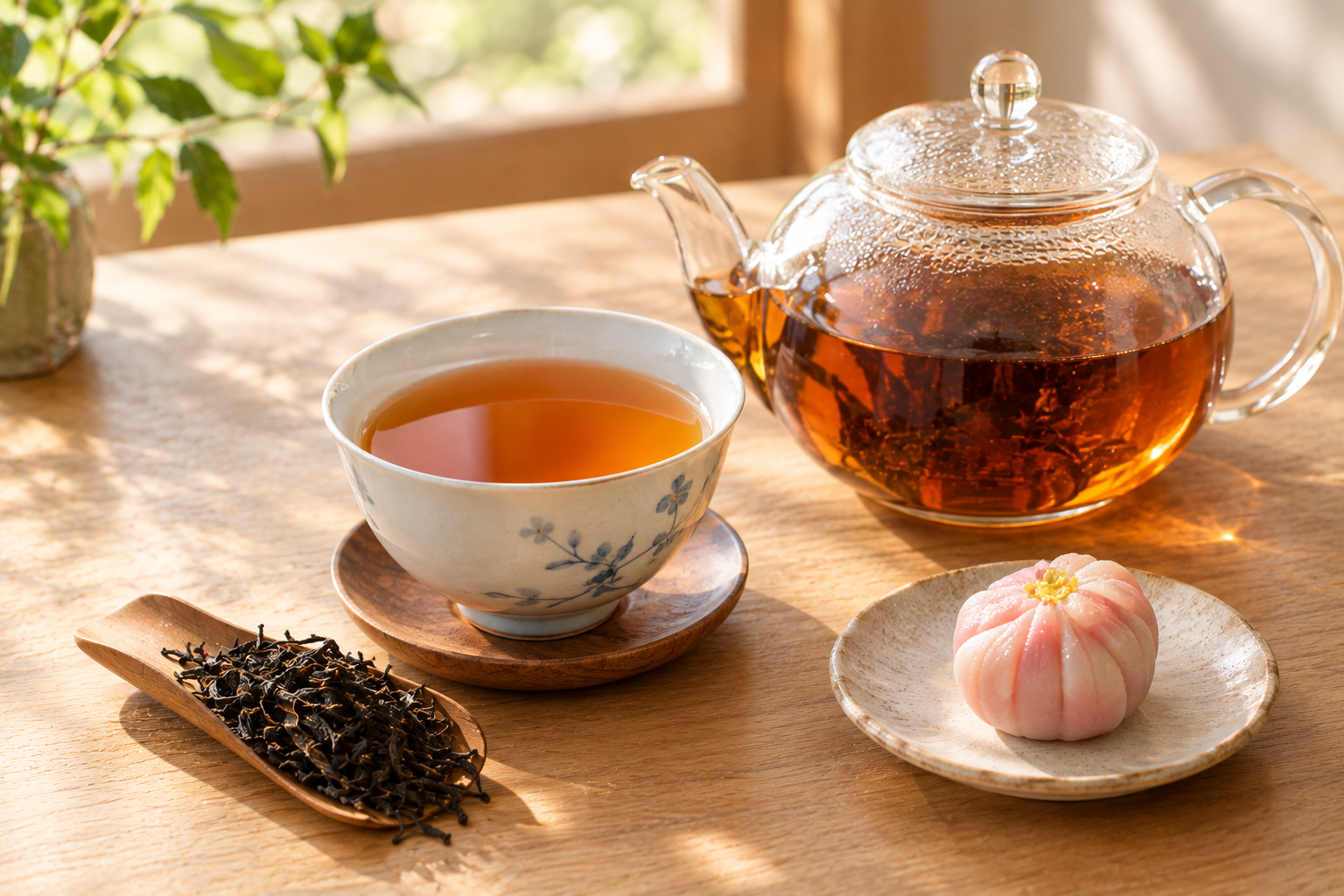
    Where can I buy it? Japanese tea shops increasingly carry it, and wakocha on Amazon includes several options, including Benifuuki teas. A glass teapot on Amazon is a nice way to brew it, so you can see the bright amber color and watch the leaves open.

    Where I Landed

    Wakocha surprised me because it doesn’t try to compete with the great black teas of India and Sri Lanka. It’s softer, sweeter and more delicate – the kind of black tea you drink slowly and on its own. Its history, from an export industry to near-extinction to a small-farm revival, makes every cup a little more interesting. If you love Japanese green tea, it’s the natural next step: same plant, same farms, a completely different cup.

  • Kabusecha: The Shaded Tea Between Sencha and Gyokuro

    Kabusecha: The Shaded Tea Between Sencha and Gyokuro

    Disclosure: This post contains affiliate links. If you buy through one of them, I may earn a small commission at no extra cost to you.

    For a long time I thought Japanese green tea came in two flavors: sencha, which is bright and a little grassy, and gyokuro, which is sweet, rich and expensive. Then I tried a kabusecha and couldn’t place it. It had sencha’s freshness, but with a rounder, sweeter middle that I’d only ever tasted in gyokuro. It turned out to be exactly that – a tea that sits between the two, made by shading the plants for part of the time gyokuro gets.

    The Problem You’re Actually Trying to Solve

    Most people who look up kabusecha have either seen it on a tea shop’s menu with no explanation, or they like sencha, are curious about gyokuro, and are hesitating at gyokuro’s price. Kabusecha is useful in both cases. It’s the easiest way to taste what shading does to green tea, without paying for or learning to brew full gyokuro.

    Who This Article Is NOT For

    • If you’ve never had sencha or gyokuro, start with my sencha vs. gyokuro comparison. Kabusecha makes much more sense once you know the two ends it sits between.
    • If you already know you love gyokuro and want the real thing, my gyokuro brand comparison is the better next read.
    • If you prefer sharp, brisk green tea with lots of astringency, kabusecha will probably feel too mellow.

    What Kabusecha Actually Is

    The name means “covered tea.” Like gyokuro, the tea plants are covered before harvest to block sunlight. The difference is how long and how heavily:

    SenchaKabusechaGyokuro
    Shading before harvestNoneRoughly 1-2 weeksAbout 20 days or more
    How it’s covered–Cloth laid directly over the bushesUsually a frame or trellis over the field
    Light blockedNonePartialMost of it
    TasteBright, grassy, some astringencyFresh, but sweeter and rounderDeep umami, thick, sweet

    Sources vary on the exact number of days, and producers adjust it by region and season, but the principle is the same: less shading than gyokuro, more than sencha. After harvest, kabusecha is processed the same way as sencha. The only difference is how it was grown.

    Why Shading Changes the Taste

    Tea leaves contain theanine, an amino acid that gives green tea its sweetness and umami. In sunlight, the plant converts part of that theanine into catechins, which are responsible for bitterness and astringency. Covering the plants slows that conversion, so shaded leaves keep more sweetness and less bite.

    Kabusecha gets a moderate dose of that effect. You’ll notice the extra sweetness and smoothness compared with sencha, but it keeps more of sencha’s lightness and freshness than gyokuro does. Because it sees more sun than gyokuro, it also keeps more catechins, which is part of why it tastes livelier.

    Where It Comes From

    By most accounts, the majority of Japan’s kabusecha comes from Mie Prefecture, where it’s sold as Ise-cha. Fukuoka – the Yame area, famous for gyokuro – also produces kabusecha, often from cultivars associated with gyokuro, which gives it a deeper umami. Smaller amounts come from Nara, Kyoto and elsewhere.

    If you see “Ise kabusecha” on a label, you’re looking at the most classic version of the style.

    How to Brew It

    Kabusecha brews much more like sencha than like gyokuro, which is a big part of its appeal:

    • Leaf: about 3-5g per cup (roughly 1-2 teaspoons)
    • Water: around 70°C (158°F)
    • Steep: about 1 minute; up to 2 minutes for a fuller cup
    • Later infusions: slightly hotter water, shorter steeps

    If you want to bring out more of its gyokuro side, use a little more leaf and slightly cooler water – around 60-65°C – and steep a bit longer. If you want it brighter and closer to sencha, go the other way. It’s forgiving in both directions, which makes it a good tea to experiment with.

    Try It Cold-Brewed

    Kabusecha is one of the best teas for cold brewing (mizudashi), and it’s the version I’d suggest if you want to taste its sweetness most clearly. Cold water pulls out theanine – the source of the sweetness and umami – fairly readily, but extracts much less of the catechins and caffeine that make green tea bitter. With a shaded tea that’s already rich in theanine, the result is a smooth, sweet, almost syrupy cold tea.

    A simple method: about 10g of leaf to 500ml of cold water in a jar or bottle, left in the fridge for 3-6 hours, then strained. Taste it at the three-hour mark and steep longer if you want it stronger. It keeps for about a day in the fridge, and the leaves can usually give you a second, lighter batch.

    How to Pick a Good Kabusecha

    Kabusecha isn’t graded on a universal scale, so the label is where you get your clues:

    • Look for the name. It may be sold as “kabusecha,” “kabuse sencha,” or simply as “shaded sencha.” Ise-cha from Mie is the most common origin.
    • Prefer first flush. Like sencha, kabusecha from the spring harvest (ichibancha or shincha) is sweeter and more aromatic than later harvests. If the label mentions spring or first flush, that’s a good sign.
    • Check the cultivar if it’s listed. Kabusecha made from cultivars associated with gyokuro, such as Saemidori or Okumidori, tends to lean further toward gyokuro’s sweetness and umami. Yabukita, the most common sencha cultivar, gives a more classic sencha-like balance.
    • Mind the leaf color. Good kabusecha usually has deep green, glossy leaves – a visible sign of the shading. Dull, yellowish leaf suggests age or a lower grade.
    • Buy small amounts. Like all green tea, it loses aroma once opened. A 50-100g bag you’ll finish within a month or two will taste better than a large bag that sits.

    Kabusecha With Food

    Because it’s smoother and less astringent than sencha, kabusecha pairs well with delicate flavors that sencha can overpower: simple Japanese sweets, white fish, lightly seasoned rice dishes, or mild cheeses. Sencha’s brisk edge is better with oily or strongly flavored food; kabusecha is the tea for quieter meals.

    A Few Things People Ask Me

    Is kabusecha cheaper than gyokuro? Usually, yes. It needs less shading time and labor, so it generally sits between sencha and gyokuro in price – often much closer to good sencha.

    Is kabusecha the same as “shaded sencha”? Essentially, yes. Some shops label it that way, and in the Japanese tea trade it’s treated as a type of sencha grown with partial shading.

    Does kabusecha have more caffeine than sencha? Shaded teas tend to have somewhat more caffeine than unshaded sencha, and gyokuro has the most. Kabusecha falls in between, but the difference from sencha isn’t dramatic.

    Where can I buy it? Kabusecha is less widely stocked than sencha outside Japan, but kabusecha on Amazon has several options, including Ise-cha. And if it makes you want to go further into shaded tea, Nio Teas’ gyokuro collection – especially the more affordable Gyokuro Karigane – is a good next step.

    Where I Landed

    Kabusecha is the tea I recommend most to people who like sencha but want to see what the fuss about gyokuro is. It brews like sencha, costs closer to sencha, and still shows you clearly what a few weeks under cover does to a tea leaf. For some people it ends up being a stepping stone to gyokuro. For me, it’s become the everyday tea I reach for when sencha feels a little too sharp and gyokuro feels like too much of an occasion.

  • Sobacha (Buckwheat Tea): What It Is, How It Tastes and How to Brew It

    Sobacha (Buckwheat Tea): What It Is, How It Tastes and How to Brew It

    Disclosure: This post contains affiliate links. If you buy through one of them, I may earn a small commission at no extra cost to you. Important: sobacha is made from buckwheat, a common and potentially severe allergen – please read the allergy note below before trying it.

    Sobacha in 30 Seconds

    Sobacha (そば茶) is Japanese roasted buckwheat tea. It’s made from buckwheat kernels roasted until golden, not from the tea plant, so it’s naturally caffeine-free. It tastes nutty, toasty and lightly sweet, with no bitterness. Before you try it, though, read the allergy note below – buckwheat is one of the more serious food allergens.

    Quick Picks

    • Easiest first try: sobacha tea bags – no strainer needed. Buckwheat tea bags on Amazon
    • Best flavor: loose roasted kernels – toastier, and you can eat them after brewing. Loose sobacha on Amazon
    • Rounder, earthier cup: dattan (Tartary) sobacha. Dattan sobacha on Amazon
    • Want a gentle real tea too? Kukicha (stem tea) is one of the lowest-caffeine green teas. Nio Teas’ kukicha collection – at the time of writing, ordering through the links on this page automatically applies a 10% discount at checkout, no code needed. (Nio Teas doesn’t sell sobacha; the discount applies to their teas. Offers can change, so check the final price in your cart.)

    Below: the allergy note, regular vs dattan sobacha, how it tastes, how to brew it hot or cold, and what to do with the kernels afterward.

    The first time I had sobacha was at the end of a meal in a soba restaurant, where it arrived unasked, in a plain cup, the way water does in most places. I assumed it was some kind of hojicha. It wasn’t – it was roasted buckwheat, with a toasty, slightly sweet flavor and no bitterness at all, and it turned out to contain no caffeine whatsoever. That last part is what eventually made it a regular in my kitchen: it’s the Japanese “tea” I drink when I don’t want tea.

    The Problem You’re Actually Trying to Solve

    Most people looking up sobacha want one of two things: a caffeine-free drink that still feels like part of Japanese tea culture, or an explanation of what they were served at a soba shop. Sobacha answers both, but it gets confused with hojicha and mugicha constantly, and the labeling – “sobacha” versus “dattan sobacha” – isn’t explained on most packages.

    Who This Article Is NOT For

    • If you want a roasted flavor but don’t mind a bit of caffeine, hojicha is the closer “real tea” option – my matcha vs. hojicha caffeine comparison explains how much it actually contains.
    • If you’d prefer a genuine green tea that’s simply low in caffeine rather than caffeine-free, kukicha is the gentler step down.

    Buckwheat Allergy: Read This First

    If you have a buckwheat allergy, or don’t know whether you do, please don’t try sobacha casually. Buckwheat allergy can cause severe reactions, including anaphylaxis, and it’s serious enough that buckwheat is one of the allergens Japan requires food labels to declare. Brewing doesn’t make it safe, and even the steam from cooking buckwheat can affect very sensitive people. If in doubt, talk to a doctor first. If you’re serving sobacha to guests, tell them what it is before they drink it.

    What Sobacha Actually Is

    Sobacha is an infusion made from buckwheat kernels that have been dry-roasted until golden brown. Despite being called “cha” (tea), it doesn’t come from the tea plant (Camellia sinensis) at all – which is exactly why it has no caffeine. In that sense it belongs to the same family as mugicha (roasted barley tea): a roasted grain drink that’s part of everyday Japanese life, rather than a tea in the botanical sense.

    It’s also served routinely in soba restaurants, often complimentary with or after the meal – which is where most visitors to Japan first encounter it.

    Regular vs. Dattan Sobacha (Tartary Buckwheat): The Difference

    You’ll see two kinds on the shelf, and they’re genuinely different plants:

    Regular sobachaDattan (Tartary) sobacha
    PlantCommon buckwheat (Fagopyrum esculentum)Tartary buckwheat (Fagopyrum tataricum)
    KernelsLargerSmaller, rounder, thinner hulls
    Brew colorWarm amberLighter, with a faint yellow-green tinge
    FlavorStronger toasted-grain characterRounder, earthier, slightly bitter edge
    Rutin contentLowerMuch higher – often cited as 50-100x common buckwheat

    Rutin is a plant flavonoid, and it’s the main reason dattan sobacha is marketed as the “healthier” option. I’d treat that cautiously: having more of a compound in the cup isn’t the same as a proven health effect from drinking it. Choose dattan if you prefer its taste, not because of a label promise.

    How It Tastes

    Nutty, lightly sweet, with almost no bitterness – somewhere between toasted sesame and a mild barley tea, sometimes with a hint of popcorn. It’s a clean, palate-cleansing drink that sits alongside food without competing with it, which is exactly why soba shops serve it.

    How to Brew It

    Hot:

    • About 1 tablespoon of kernels per 240ml (8oz) of water
    • Water just off the boil, around 93°C (200°F) – unlike green tea, there’s no bitterness to avoid by cooling the water
    • Steep 3-5 minutes: 3 for lighter, 5 for deeper. Some people go as long as 10 for a strong cup
    • Use a mesh strainer or infuser – the kernels are small and slip through wide filters

    Cold:

    • Double the amount of kernels, steep in the fridge for 4-8 hours
    • The result is noticeably sweeter and smoother than hot-brewed
    • Drink within about 2 days

    Don’t Throw Away the Kernels: How to Eat Them

    Once steeped, the kernels are soft and fully edible. It’s one of the few teas where the “leaves” are as good as the drink:

    • On yogurt or oatmeal for a nutty crunch (dry them briefly in a pan first)
    • Mixed into rice while it’s still hot
    • On salads, like toasted seeds
    • In soup, stirred in just before serving

    Sobacha Latte

    Brew a strong cup – about 2 tablespoons of kernels in 120ml of near-boiling water for 5 minutes – then top with an equal amount of steamed milk or oat milk. A little honey brings out the toasted-grain sweetness. It’s a cozy, caffeine-free alternative to a hojicha latte for the evening.

    A Few Things People Ask Me

    Is sobacha gluten-free? Buckwheat itself isn’t related to wheat and contains no gluten. That said, buckwheat is sometimes processed in facilities that also handle wheat, so if you have celiac disease, check the package for a gluten-free label rather than assuming.

    What’s the difference between sobacha and hojicha? Hojicha is roasted green tea and contains some caffeine. Sobacha is roasted buckwheat and contains none. Both taste toasty, but hojicha has a slight tea-like depth that sobacha lacks, while sobacha is sweeter and more grain-like.

    Can I drink it at night, or give it to kids? With no caffeine, it’s a common choice for evenings and for all ages in Japan – with the same important caveat as above: buckwheat allergy is serious, so introduce it carefully and only if you know it’s safe for you.

    Where can I buy it? Dattan sobacha on Amazon is the easiest place to find both types outside Japan. If you’d rather have a gentle drink that’s actual tea, Nio Teas’ kukicha is a low-caffeine alternative – and the link-only 10% discount mentioned at the top applies there.

    Where I Landed

    Sobacha took me a while to appreciate because I kept judging it as a tea, and as a tea it’s simple. As what it really is – a roasted grain drink built to sit quietly beside a meal – it’s very good. I keep a jar of it for evenings and for the times when a full-flavored green tea would be too much. It’s the closest thing to drinking the end of a soba-shop meal at home, and the kernels at the bottom of the pot are a small bonus I’ve come to look forward to.

  • Bancha: The Everyday Japanese Tea Everyone Skips Past for Sencha

    Bancha: The Everyday Japanese Tea Everyone Skips Past for Sencha

    Disclosure: This post contains affiliate links. If you buy through one of them, I may earn a small commission at no extra cost to you.

    Bancha gets treated as the tea you settle for, not the tea you choose – the cheaper option on the shelf next to sencha, made from later, lower leaves rather than the prized spring flush. That framing undersells it. Bancha isn’t a lesser sencha; it’s a genuinely different, milder tea with its own flavor identity, and it’s also the quiet base ingredient behind two teas most people already like without realizing where they come from.

    The Problem You’re Actually Trying to Solve

    Most people encounter bancha as an afterthought – either the budget bag next to sencha at a Japanese grocery store, or a term they see mentioned in passing while reading about hojicha or genmaicha. Understanding what bancha actually is, why it’s cheaper, and why it tastes so different from sencha makes it a lot easier to decide whether it’s worth buying on its own rather than only as a component of something else.

    Who This Article Is NOT For

    • If you want the brighter, grassier, more vegetal flavor Japanese green tea is known for, sencha is the better starting point – my sencha vs. gyokuro comparison covers that leaf-forward end of the spectrum.
    • If you’re specifically looking for a roasted, nutty tea, you actually want hojicha or genmaicha, both of which are often made from bancha but taste quite different after roasting or blending with roasted rice.
    • If you want the lowest-caffeine option possible, kukicha (twig tea) runs even lower than bancha, since stems contain even less caffeine than older leaves.

    What Bancha Actually Is

    Sencha is made from young sprouts picked from the top of the tea plant during the first flush in spring. Bancha comes from further down the plant, and typically from a later harvest – the third or fourth flush, picked later in the season after the prized early leaves are gone. Older leaves simply contain less caffeine and fewer catechins than young spring growth, which is the whole reason bancha tastes and behaves differently from sencha rather than just being a cheaper version of the same thing.

    That harvest timing is also exactly why bancha costs roughly half what sencha does – it isn’t a quality shortcut so much as a genuinely different point in the plant’s growth cycle, priced accordingly.

    How Bancha Actually Tastes

    Where sencha brings grassy, vegetal, slightly citrusy notes, bancha shifts toward something milder and more rustic – earthy, woody notes with hints of cereal, and sometimes a faint caramel or popcorn-like sweetness. It’s a quieter tea by design: less bitterness, less brightness, and a flavor that holds up fine as a background, everyday drink rather than something you sit and savor the way you might a good sencha or gyokuro.

    The Connection to Hojicha and Genmaicha

    Here’s the part that surprises people: both hojicha and genmaicha are frequently made using bancha as their base. Hojicha is bancha (or sencha) leaves roasted at high heat until the flavor shifts entirely toward toasty and nutty; genmaicha is bancha blended with roasted rice. Both are cheaper than straight sencha for the same underlying reason bancha itself is cheaper – they’re built on the same later-harvest, lower-leaf base. If you already like hojicha or genmaicha, you’ve been drinking bancha’s flavor profile all along, just transformed by roasting or blending.

    How to Brew It

    Bancha is forgiving, which is part of its appeal as an everyday tea:

    • Water temperature: 70-80°C (158-176°F) – hotter than you’d use for sencha, since there’s less risk of bitterness from the lower caffeine and catechin content
    • Amount: about 3-4g of leaves per 120-150ml of water
    • Steep time: 30-60 seconds
    • Good for 4-5 infusions, more than sencha typically tolerates, since there’s simply less to extract on the first pour

    Because it’s less prone to bitterness than sencha, bancha is a reasonable tea to brew a little looser with – slightly hotter water or a slightly longer steep won’t punish you the way it would with a delicate first-flush sencha.

    A Few Things People Ask Me

    Is bancha lower quality than sencha, or just different? Different, more than lower quality. It comes from a later harvest and lower leaves by design, which changes the flavor and caffeine profile rather than making it a failed attempt at sencha. Comparing them directly is a bit like comparing a young wine to an aged one – different intent, not a strict hierarchy.

    Does bancha have less caffeine than sencha? Yes, noticeably – roughly half of sencha’s caffeine per cup, since older leaves contain less caffeine than the young spring growth sencha uses. That makes it a reasonable afternoon or after-dinner option where sencha might feel like too much.

    Is Kyoto’s “kyobancha” the same thing as regular bancha? It’s a regional variation – roasted over an open flame in a style specific to Kyoto, giving it a smokier character than standard bancha. The base leaf category is the same; the roasting process is what sets kyobancha apart.

    Where can I actually try bancha? Nio Teas’ bancha is a straightforward place to start, and a simple kyusu teapot on Amazon works fine for brewing it – bancha doesn’t need anything specialized to taste good.

    Where I Landed

    The thing that actually changed how I thought about bancha was realizing how much of what I already liked – hojicha’s toastiness, genmaicha’s popcorn note – was quietly built on this exact tea underneath. Once I tried it plain rather than only encountering it disguised inside something else, it stopped feeling like the tea you settle for and started feeling like a genuinely different, low-key option worth keeping around specifically for the days sencha feels like too much.

  • Kukicha: The Twig Tea That’s Basically Green Tea’s Low-Caffeine Byproduct

    Kukicha: The Twig Tea That’s Basically Green Tea’s Low-Caffeine Byproduct

    Disclosure: This post contains affiliate links. If you buy through one of them, I may earn a small commission at no extra cost to you.

    The first time I saw kukicha described as “twig tea,” I assumed that meant something scrappy or lesser – literal sticks steeped in water. It’s actually the opposite kind of story: kukicha is made from the stems and twigs left over after sencha or matcha leaves are processed, and because caffeine and bitterness concentrate mostly in the young leaves rather than the woodier stems, what you get is a genuinely pleasant, naturally low-caffeine tea that happens to be a byproduct rather than a compromise.

    The Problem You’re Actually Trying to Solve

    Most people looking into kukicha are trying to solve one of two things: finding a green tea they can drink in the evening without the caffeine hit of sencha or matcha, or figuring out what to do with the stems left over if they’re processing their own tea. Kukicha answers both, but it gets brewed wrong constantly – people treat it like sencha and oversteep it in water that’s too hot, which is one of the few ways to actually make this forgiving tea taste bad.

    Who This Article Is NOT For

    • If you want maximum caffeine from your green tea, kukicha is deliberately the wrong choice here – my matcha vs. coffee caffeine comparison or a standard sencha is a better fit for that.
    • If you’re drinking tea specifically for the umami and richer flavor of whole leaves, kukicha’s stem-based character is intentionally lighter and sweeter rather than deep – my sencha vs. gyokuro comparison covers that leaf-forward end of the spectrum instead.
    • If you’ve never brewed Japanese green tea before and want a single starting point, a standard sencha is the more typical entry tea – kukicha is a worthwhile detour once you already know what you like.

    What Kukicha Actually Is

    Kukicha is made from the stems, stalks, and twigs separated out during the final sorting stage (shiage) of sencha or matcha production – not a tea grown and picked on its own, but a genuine byproduct of premium tea that would otherwise go to waste. That byproduct status is exactly why it’s traditionally inexpensive despite tasting good on its own merits, and why it’s long been associated with macrobiotic diets as an everyday, sustainable tea.

    There’s a quality hierarchy within kukicha worth knowing. Standard kukicha uses stems from various green teas, including sencha and fukamushi sencha. Karigane, the higher-quality version, comes specifically from gyokuro stems – and when that gyokuro-derived kukicha comes from Kyushu specifically, it’s sometimes called shiraore. If you see “karigane” on a package, you’re looking at the stem-tea equivalent of upgrading from sencha to gyokuro.

    Why It’s So Low in Caffeine and Astringency

    Caffeine and catechins (the compounds responsible for bitterness and astringency) concentrate heavily in young leaves, which is the plant’s own defense mechanism against insects. Stems and twigs, being older and woodier, simply contain much less of both. The rough numbers: kukicha runs somewhere around 5-10mg of caffeine per 8-ounce serving, compared to roughly 20-30mg for sencha and 70-80mg for matcha – a meaningful drop, not a marginal one.

    The flip side of lower catechins is higher theanine relative to the tea’s other compounds, which is part of why kukicha tends to taste sweeter and less astringent than leaf teas, with a milder, nuttier, slightly creamy character rather than sencha’s grassier bite. It’s also genuinely hard to oversteep into bitterness the way you can with sencha, since there’s simply less of the compound responsible for that bitterness to extract in the first place.

    How to Brew It

    For unroasted (green) kukicha:

    • Water temperature: 75-80°C (167-176°F)
    • Amount: 4-5g of kukicha per 200ml water
    • First steep: 60-90 seconds
    • Good for 2-3 infusions, though flavor drops off noticeably after the first

    For roasted kukicha (often labeled bocha):

    • Water temperature: 85-95°C (185-203°F) – it tolerates hotter water well
    • Steep time: 30-60 seconds
    • Good for up to 5 infusions

    Roasting changes the character substantially – unroasted kukicha stays pale gold with a light, vegetal sweetness, while roasted bocha develops a warmer, toasty, almost grain-like flavor from the same compounds (pyrazines) that show up in roasted hojicha. If you already like hojicha, roasted kukicha is worth trying as a close relative with an even gentler caffeine profile.

    A Few Things People Ask Me

    Is kukicha the same thing as hojicha? No, though they’re often confused. Hojicha is roasted sencha leaves (and sometimes stems); kukicha is specifically stems and twigs, which may or may not be roasted afterward. A roasted kukicha and a hojicha can taste fairly similar, but they start from different parts of the plant.

    Is karigane worth paying more for over regular kukicha? If you already like kukicha’s flavor and want to see the upper end of it, yes – karigane’s gyokuro-stem origin gives it a noticeably smoother, sweeter cup than stems sourced from sencha. If you’re just trying kukicha for the first time, standard kukicha is a perfectly good and cheaper starting point.

    Can I drink kukicha at night without worrying about caffeine? It’s genuinely one of the better options if you want green tea’s flavor without much caffeine – at roughly a quarter of sencha’s caffeine content, most people can drink it in the evening without issue, though anyone very caffeine-sensitive should still treat “low caffeine” as different from “no caffeine.”

    Where can I actually get kukicha or karigane? Nio Teas’ kukicha is a straightforward place to start, and a basic kyusu-style teapot on Amazon works fine for brewing it if you don’t already have one – kukicha doesn’t demand anything specialized.

    Where I Landed

    What changed my view of kukicha wasn’t the tea itself so much as the framing – once I stopped thinking of it as “leftover tea” and started thinking of it as a deliberately different part of the same plant, the low caffeine and mild sweetness stopped feeling like a downgrade from sencha and started feeling like their own, genuinely useful thing. It’s the tea I actually reach for later in the day now, precisely because it isn’t trying to be sencha.

  • Sencha vs. Gyokuro: What’s Actually Different, and Which One You Want

    Sencha vs. Gyokuro: What’s Actually Different, and Which One You Want

    Disclosure: This post contains affiliate links. If you buy through one of them, I may earn a small commission at no extra cost to you.

    I used to assume gyokuro was just “fancier sencha” – a nicer version of the same tea you’d pay more for on a special occasion, the way a reserve wine is still basically the same wine. It isn’t, really. The two are grown differently, taste genuinely different from each other, and even need to be brewed at different temperatures to taste right. Treating gyokuro like expensive sencha is actually the fastest way to waste a good batch of it.

    Both are Japanese green teas, both come from the same tea plant, and both get steamed rather than pan-fired the way most Chinese green tea is. Past that, they diverge more than their similar-sounding names suggest.

    The Problem You’re Actually Trying to Solve

    Most explanations of sencha vs. gyokuro focus entirely on price and prestige – gyokuro costs more, therefore it’s “better” – without explaining the actual mechanism behind why they taste different or how that should change the way you brew each one. Brewing gyokuro the way you’d brew sencha (hotter water, shorter attempts at judging it by feel) is a common way to end up disappointed by a tea that’s genuinely excellent when handled correctly.

    Who This Article Is NOT For

    • If you’re deciding between green tea and matcha rather than between two steeped green teas, that’s a different comparison – my other guides on this site cover matcha specifically.
    • If you want a lower-caffeine option than either of these, gyokuro in particular runs high on caffeine, so my guide to genmaicha will serve you better.
    • If you’re brand new to Japanese green tea and want a forgiving starting point, sencha is that starting point far more than gyokuro is – gyokuro rewards precision in a way that isn’t very forgiving for a first attempt.

    The Actual Difference: Shading

    The single biggest difference between sencha and gyokuro isn’t the leaf itself – it’s whether the tea plant was shaded before harvest, and for how long.

    Gyokuro is shaded for three weeks or more before picking, blocking sunlight from the plant. This does something specific chemically: it suppresses the plant’s production of bitter catechins while allowing L-theanine (the amino acid responsible for umami and sweetness) to build up instead. That’s the entire reason gyokuro tastes the way it does – deeply savory, almost seaweed-like, with very little of the astringency you’d get from an unshaded leaf.

    Sencha is typically grown without shading at all, though a small number of premium sencha varieties get a brief 7-10 day shading period – nowhere close to gyokuro’s three-plus weeks. Without extended shading, sencha develops more catechins and a brighter, more vegetal, slightly citrusy flavor rather than gyokuro’s dense umami.

    This is also, not coincidentally, why gyokuro has historically been the more prestigious of the two – it was reserved for Japan’s imperial court at one point, and the extra weeks of shaded cultivation plus more careful harvesting genuinely does make it more labor-intensive to produce.

    Flavor, Caffeine, and Price Compared

    SenchaGyokuro
    CultivationUnshaded (or briefly shaded, 7-10 days)Shaded 3+ weeks before harvest
    FlavorGrassy, vegetal, slightly citrusyIntense umami, savory, seaweed-like
    Caffeine per cup~40mg120-140mg
    PriceEveryday/moderatePremium
    Best forDaily drinking, first-time green tea drinkersSpecial-occasion, quiet focused drinking

    The caffeine gap is worth pausing on because it surprises people – gyokuro isn’t just “more intense in flavor,” it genuinely carries close to double or triple the caffeine of sencha per cup, a direct result of the same shading process that builds its umami. If you’re reaching for gyokuro assuming it’s a gentler afternoon tea because it’s “premium” and delicate-tasting, the caffeine content says otherwise.

    How to Brew Each One Correctly

    This is where treating gyokuro like fancy sencha actually goes wrong.

    Sencha brews hot and fast. Fukamushi (deep-steamed) sencha does well around 60°C (140°F) for about 45 seconds; drier, standard sencha can take closer to 70°C (160°F) for around a minute. Either way, sencha is meant to be a quick infusion – lingering water contact at high heat is what turns it bitter.

    Gyokuro is the opposite in almost every respect. Use notably cooler water – 50-60°C (122-140°F) – a small amount of it relative to the leaf (roughly 3g of leaf to just 30-50ml of water for a single serving), and let it steep for a full 90 seconds to 2 minutes on the first infusion. This isn’t a stylistic choice; at that temperature range, theanine dissolves readily while catechin extraction is significantly suppressed, which is the actual mechanism behind gyokuro’s umami-forward taste. Push the temperature above 70°C and you start pulling more bitter compounds out, which works directly against what makes gyokuro worth drinking in the first place.

    Gyokuro is also genuinely good for multiple infusions – a second steep at 60-70°C for 30-60 seconds, and a third at 70-80°C for about 30 seconds, each one drawing out a slightly different character as the water gets hotter and the leaf’s easier compounds are already spent.

    If you don’t already have a tea thermometer on Amazon for getting gyokuro’s temperature right consistently, it’s a worthwhile small purchase – eyeballing “cooler than sencha” tends to undershoot or overshoot more than people expect. And if you want to compare the two teas side by side yourself, Nio Teas carries both sencha and gyokuro from the same catalog.

    A Few Things People Ask Me

    Is gyokuro just a fancier version of sencha, or a genuinely different tea? Genuinely different, not just a price tier – the shading process changes its chemistry, not just its reputation, and that shows up directly in both flavor and caffeine content.

    Which one should a beginner start with? Sencha, without much hesitation. It’s more forgiving to brew, cheaper to experiment with, and its flavor profile is closer to what most people expect from “green tea” generally. Gyokuro is worth working up to once you’re comfortable with steeping temperatures and want something more intense.

    Why does gyokuro have so much more caffeine if it’s the more delicate-tasting tea? The shading that builds gyokuro’s umami and reduces its bitterness happens to also boost its caffeine content – the two aren’t related by taste, they’re both downstream of the same shading process, so “smoother tasting” doesn’t mean “lower caffeine” here the way it might with other teas.

    Can I use the same kyusu for both? Yes, the same teapot works for both, though my kyusu buying guide is worth a look if you’re brewing gyokuro often, since its small-volume, cooler-water brewing style suits a slightly different kyusu size than a typical sencha session.

    Where I Landed

    The real lesson here isn’t “gyokuro is better” or “sencha is better” – it’s that they’re built to do different things and brewing them the same way wastes whichever one you’re less careful with. Sencha rewards a quick, hot, low-effort approach; gyokuro rewards patience and a thermometer you actually trust. Once I stopped brewing gyokuro like an expensive sencha and started respecting the actual temperature range it needs, it stopped being the tea I occasionally over-brewed into bitterness and became the one I actually looked forward to on a slow afternoon.

  • Genmaicha: The Complete Guide to Japan’s “Popcorn Tea”

    Genmaicha: The Complete Guide to Japan’s “Popcorn Tea”

    Disclosure: This post contains affiliate links. If you buy through one of them, I may earn a small commission at no extra cost to you.

    The first time someone handed me a bag of genmaicha without explaining what it was, I genuinely thought a few kernels of popcorn had gotten mixed in with loose-leaf green tea by accident. They hadn’t. Genmaicha is green tea blended with roasted brown rice, and some of those rice grains actually pop during roasting the same way popcorn does, which is exactly where the nickname comes from.

    It’s one of the more approachable Japanese green teas for people who find sencha or gyokuro a bit too grassy or vegetal on their own, because the roasted rice rounds out that sharpness with something warmer and nuttier. It’s also, historically, the most working-class of Japan’s green teas, which is a more interesting backstory than most tea has.

    The Problem You’re Actually Trying to Solve

    Genmaicha gets recommended a lot as a “beginner-friendly” Japanese green tea, but very little of that advice explains what’s actually different about it – why it tastes the way it does, how its caffeine content compares to sencha or hojicha, or how to brew it so the rice flavor doesn’t overpower the tea (or vice versa). Most people end up either over-steeping it into something bitter, or just buying whatever bag says “genmaicha” without knowing there are meaningfully different versions of it.

    Who This Article Is NOT For

    • If you’re looking for a completely caffeine-free option, genmaicha isn’t it – it has moderate caffeine, more than hojicha but less than sencha, so my guide to hojicha brands might be closer to what you want if avoiding caffeine is the priority.
    • If you already know genmaicha well and want brewing gear rather than an explainer, my kyusu buying guide covers the teapot side of things.
    • If you’re specifically comparing matcha to green tea rather than genmaicha to other green teas, that’s a different comparison covered elsewhere on the site.

    What Genmaicha Actually Is

    Genmaicha on Amazon is steamed Japanese green tea – usually sencha or bancha – blended with roasted, hulled brown rice. During roasting, a portion of the rice grains pop, similar to popcorn, and those popped kernels are part of what people mean when they call this “popcorn tea.” The tea itself contributes the grassy, umami base you’d expect from Japanese green tea, while the rice adds a nutty, toasty sweetness and a lighter, more golden color to the finished cup than a straight sencha would have.

    Historically, genmaicha wasn’t originally about flavor at all – the rice was added as a cost-effective filler that stretched more expensive tea leaves further, which made it accessible to lower-income households and earned it the nickname “the people’s tea.” It was also used by people observing religious fasting periods or going long stretches between meals, since the roasted rice made a cup feel more substantial than tea alone. Today that class association has mostly faded, and genmaicha is enjoyed across the board, but the backstory is part of what makes it distinct from teas developed purely around flavor or ceremony.

    Matcha-iri genmaicha is the one variant worth knowing by name: it has powdered matcha added into the blend, which gives it a noticeably more vivid green color and a stronger, more rounded flavor than plain genmaicha. If you’ve had a genmaicha that tasted unusually rich and green rather than pale gold, it was probably this version.

    How Genmaicha Compares to Sencha and Hojicha

    These three often get lumped together as “everyday Japanese green teas,” but they’re made differently and taste distinctly different from each other.

    GenmaichaSenchaHojicha
    What it isSteamed green tea + roasted brown riceSteamed, rolled green tea leavesRoasted green tea leaves and stems
    FlavorToasty, nutty, mildly sweetGrassy, vegetal, umami-forwardNutty, caramelized, warm
    CaffeineModerateHigherLow
    Best time to drinkAfternoonMorningEvening

    The caffeine difference comes down to processing and ratio: sencha is straight tea leaf, so it carries the most caffeine of the three. Hojicha is roasted at high heat, which measurably reduces both bitterness and caffeine. Genmaicha sits in the middle mostly because the rice dilutes the ratio of actual tea leaf in each serving, not because the tea itself is a lower-caffeine varietal.

    How to Brew Genmaicha Properly

    Genmaicha is more forgiving than sencha or gyokuro, but it still has a sweet spot. The general target is 80°C (176°F) for most standard genmaicha blends, with some adjustment depending on what base tea it’s built on:

    • Premium or gyokuro-based genmaicha: 75-78°C – these use a more delicate base tea that turns bitter faster at higher heat
    • Standard sencha-based genmaicha (the most common kind): 80°C
    • Bancha-based genmaicha: 85-90°C – bancha is a coarser, later-harvest leaf that can handle more heat without turning bitter

    If you don’t own a tea thermometer on Amazon, the cooling transfer method works well here: pour boiling water between two cups or a cup and your teapot, waiting about 30 seconds between each transfer. Each pour drops the temperature by roughly 8-10°C, so two or three transfers gets you into genmaicha’s ideal range without any equipment. Let it steep briefly rather than walking away from it – genmaicha at high heat turns bitter quickly, and the rice flavor is more pleasant when the tea itself hasn’t gone over-extracted.

    A Few Things People Ask Me

    Does genmaicha taste like rice, or like tea? Both, in a blended way rather than one overpowering the other – the base is recognizably green tea, umami and slightly grassy, but the roasted rice adds a warm, nutty sweetness underneath it that softens the sharper edges you’d get from plain sencha.

    Is genmaicha good for people who find green tea too bitter or grassy? Genuinely, yes – it’s one of the more commonly recommended “starter” Japanese green teas for exactly this reason. The rice’s mild sweetness balances the vegetal quality that puts some people off sencha or gyokuro on their own.

    Can I re-steep genmaicha the way you can with sencha? You can get a second infusion out of most genmaicha, though the rice flavor tends to fade faster than the tea’s own flavor across multiple steeps, so the second cup will taste noticeably more like plain green tea and less like the rice-forward blend you got on the first pour.

    Is matcha-iri genmaicha worth seeking out over regular genmaicha? If you like a stronger, greener, more full-bodied cup, yes – it’s a genuinely different drinking experience from plain genmaicha, not just a marketing variation. Nio Teas’ genmaicha is where I’d start if you want to compare the plain and matcha-iri versions side by side. Worth trying at least once to see which style you actually prefer.

    Where I Landed

    What sold me on genmaicha, once I understood the backstory, was realizing it was never designed to impress anyone – it was tea made more affordable and more filling for people who needed both. That practical, unglamorous origin is oddly part of the appeal now: it’s an easy, forgiving, everyday cup in a way ceremonial-grade matcha or a fussy gyokuro just isn’t trying to be. If sencha has ever felt like a bit too much on its own, genmaicha is worth keeping in the cupboard as the version that meets you halfway.