Disclosure: This post contains affiliate links, including to Nio Teas. If you buy through one of them, I may earn a small commission at no extra cost to you.
Buying good tea and buying the right tool to actually brew it are two separate decisions, and Nio Teas is one of the few brands that treats both as equally worth getting right, stocking a genuine teaware catalog alongside its tea rather than treating equipment as an afterthought. This is a breakdown of what’s actually in that teaware lineup and which piece fits which brewing habit, so you’re not guessing based on product photos and a vague sense that “authentic Japanese teaware” sounds like the right thing to buy.
The Problem You’re Actually Trying to Solve
You’ve searched for a Nio Teas teaware guide because you’re deciding what to actually buy from their equipment catalog, kyusu, shiboridashi, chawan, chasen, and want to know which piece matches how you actually drink tea rather than guessing based on product photos alone.
Who This Article Is NOT For
Let’s save you some scrolling if this isn’t quite your situation.
- If you want a broader comparison across multiple teaware brands rather than just Nio Teas’ catalog, my Japanese kyusu brands compared guide covers that wider ground.
- If you already know exactly which piece you want, this general overview won’t add much — go straight to that product category.
If you’re past that, here’s where the actual guide starts.
The Kyusu Lineup
Shop Nio Teas’ kyusu teapots →
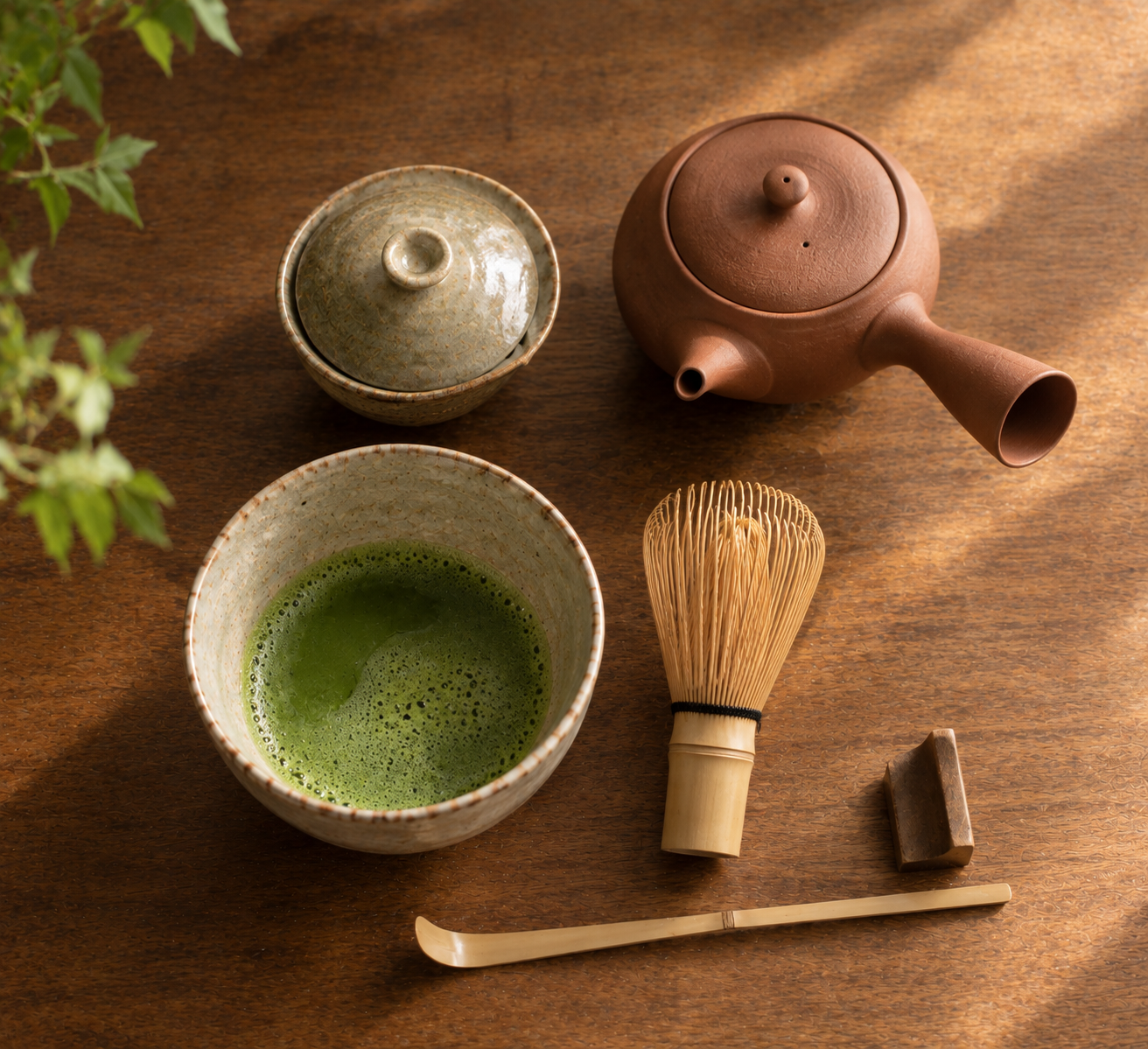
Nio Teas’ kyusu are genuine Tokoname clay, sold in what the brand describes as two main color variants that reflect different production methods rather than meaningfully different performance. The side-handle design, standard for this category, lets you pour with a controlled wrist motion without needing to grip the hot body of the pot directly.
Who it’s for: Anyone brewing standard loose leaf green tea, sencha especially, as their everyday go-to. This is the right starting point for most people building a first proper Japanese tea setup, and it pairs naturally with the wider sencha catalog Nio Teas already stocks.
The Shiboridashi
The shiboridashi is a genuinely different tool from a kyusu, not just a stylistic variant. It’s flatter, handleless, and built specifically for small, concentrated infusions using a larger leaf-to-water ratio and as little as 50 milliliters of water. Rather than a carved filter, it uses small notches near the spout, which works because the larger, tightly rolled leaves typical of gyokuro and kabuse sencha don’t need heavy filtering the way finer cut leaf does. The small total volume isn’t a limitation so much as the entire point — a shiboridashi is built to produce something closer to a concentrated shot of tea than a full mug, meant to be savored slowly rather than gulped.
Who it’s for: Specifically gyokuro and premium kabuse sencha drinkers. This isn’t a general-purpose teapot, and buying one expecting it to replace a kyusu for everyday sencha will leave you disappointed — its whole design is built around small, deliberate, special-occasion infusions rather than daily-volume brewing. If most of your tea drinking is a full mug on a regular morning, a kyusu remains the more practical daily tool.
A notable detail: Nio Teas has bundled their shiboridashi with a complimentary pack of gyokuro from a named tea farmer in past offerings, which is a genuinely useful way to get both the tool and a tea specifically suited to it in one purchase, worth checking whether that pairing is currently available before buying the pot alone.
Matcha Teaware: Chasen, Chawan, and Chashaku
Shop Nio Teas’ matcha teaware and accessories →
Nio Teas groups the core matcha tools together, the chasen (bamboo whisk), chawan (clay matcha bowl), and chashaku (bamboo scoop), both as individual pieces and as bundled sets.
Chasen: Carved from a single piece of bamboo, designed specifically to whisk matcha into a smooth, foamy consistency. As covered in more depth in my matcha whisk buying guide, prong count matters here, and a mid-range count is generally the safest starting point for a first whisk.
Chawan: A wider, steeper-sided clay bowl than a standard teacup, specifically shaped to give the chasen room to move through a proper whisking motion without splashing.
Chashaku: The bamboo scoop used for measuring matcha into the bowl, typically two scoops per serving in casual use.
Who it’s for: Anyone building a matcha routine from scratch. Buying these as a bundled set, when available, is generally the more convenient route for a first-time buyer over sourcing each piece separately.
Which Piece Should You Actually Start With
If you’re brewing everyday sencha or most standard green tea: the kyusu, without question. It’s the most versatile, highest-volume piece in the catalog.
If you already own a kyusu and specifically want to elevate how you brew gyokuro: the shiboridashi, understanding it’s a specialty tool rather than a replacement for your everyday pot.
If matcha is your main interest rather than steeped tea: the chasen, chawan, and chashaku set, ideally bundled together if available, rather than piecing them together individually.
If you’re not sure yet which category you’ll settle into: start with the kyusu. It’s the more broadly useful piece, and you can add the shiboridashi or matcha set later once your preferences are clearer.
A Few Things People Ask Me
Does the kyusu color variant actually matter for performance? Based on Nio Teas’ own description, no — the two color variants reflect different production approaches rather than a meaningful difference in how well the pot brews tea. Choose based on aesthetic preference rather than expecting a functional difference.
Is a shiboridashi harder to use than a standard kyusu? It requires a bit more attention to leaf-to-water ratio given its small volume, but it’s not technically difficult — if anything, the lack of a handle and simpler filter design make it a more direct, tactile brewing experience once you’re used to it.
Can I buy the teaware without also buying tea from Nio Teas? Yes, the teaware catalog is browsable and purchasable independently of any specific tea purchase, though pairing a new kyusu or shiboridashi with a properly measured tea is a sensible way to get the most out of a new piece right away.
Is Nio Teas’ teaware genuinely handmade, or mass-produced with artisan branding? The brand describes its Tokoname pieces as hand-sculpted clay, consistent with traditional small-batch production methods, though as with any handmade product, expect natural piece-to-piece variation rather than uniform, machine-precise consistency.
Does buying teaware from Nio Teas guarantee compatibility with tea bought elsewhere? Yes — a kyusu, shiboridashi, or matcha set purchased from Nio Teas works exactly the same with tea sourced from any other brand, since these are standard traditional forms rather than proprietary designs tied to their own tea specifically.
How does the shiboridashi’s price compare to a standard kyusu? The shiboridashi tends to sit at a premium relative to entry-level kyusu options, partly reflecting its more specialized, hand-sculpted construction and partly the fact that it’s a more niche item with lower production volume than the everyday kyusu category.
Where I Landed
What sets Nio Teas’ teaware apart from a lot of tea-focused brands is that it doesn’t feel bolted on as an afterthought, the shiboridashi bundled with gyokuro, the matcha tools grouped as coherent sets, all points to a catalog built by people who understand that the right tool changes what you can actually brew, not just how it looks doing it.
Start with the kyusu if you’re building a first setup, and let your own brewing habits tell you whether the shiboridashi or a dedicated matcha set is worth adding next. There’s no need to buy the whole catalog at once — the point of teaware is that it should match a habit you already have, or one you’re genuinely ready to build, not sit unused because it seemed like a good idea at checkout.