Tag: Kyusu

  • Nio Teas Teaware Guide: Kyusu, Shiboridashi, and Matcha Tools

    Nio Teas Teaware Guide: Kyusu, Shiboridashi, and Matcha Tools

    Disclosure: This post contains affiliate links, including to Nio Teas. If you buy through one of them, I may earn a small commission at no extra cost to you.

    Buying good tea and buying the right tool to actually brew it are two separate decisions, and Nio Teas is one of the few brands that treats both as equally worth getting right, stocking a genuine teaware catalog alongside its tea rather than treating equipment as an afterthought. This is a breakdown of what’s actually in that teaware lineup and which piece fits which brewing habit, so you’re not guessing based on product photos and a vague sense that “authentic Japanese teaware” sounds like the right thing to buy.

    The Problem You’re Actually Trying to Solve

    You’ve searched for a Nio Teas teaware guide because you’re deciding what to actually buy from their equipment catalog, kyusu, shiboridashi, chawan, chasen, and want to know which piece matches how you actually drink tea rather than guessing based on product photos alone.

    Who This Article Is NOT For

    Let’s save you some scrolling if this isn’t quite your situation.

    • If you want a broader comparison across multiple teaware brands rather than just Nio Teas’ catalog, my Japanese kyusu brands compared guide covers that wider ground.
    • If you already know exactly which piece you want, this general overview won’t add much — go straight to that product category.

    If you’re past that, here’s where the actual guide starts.

    The Kyusu Lineup

    Shop Nio Teas’ kyusu teapots →

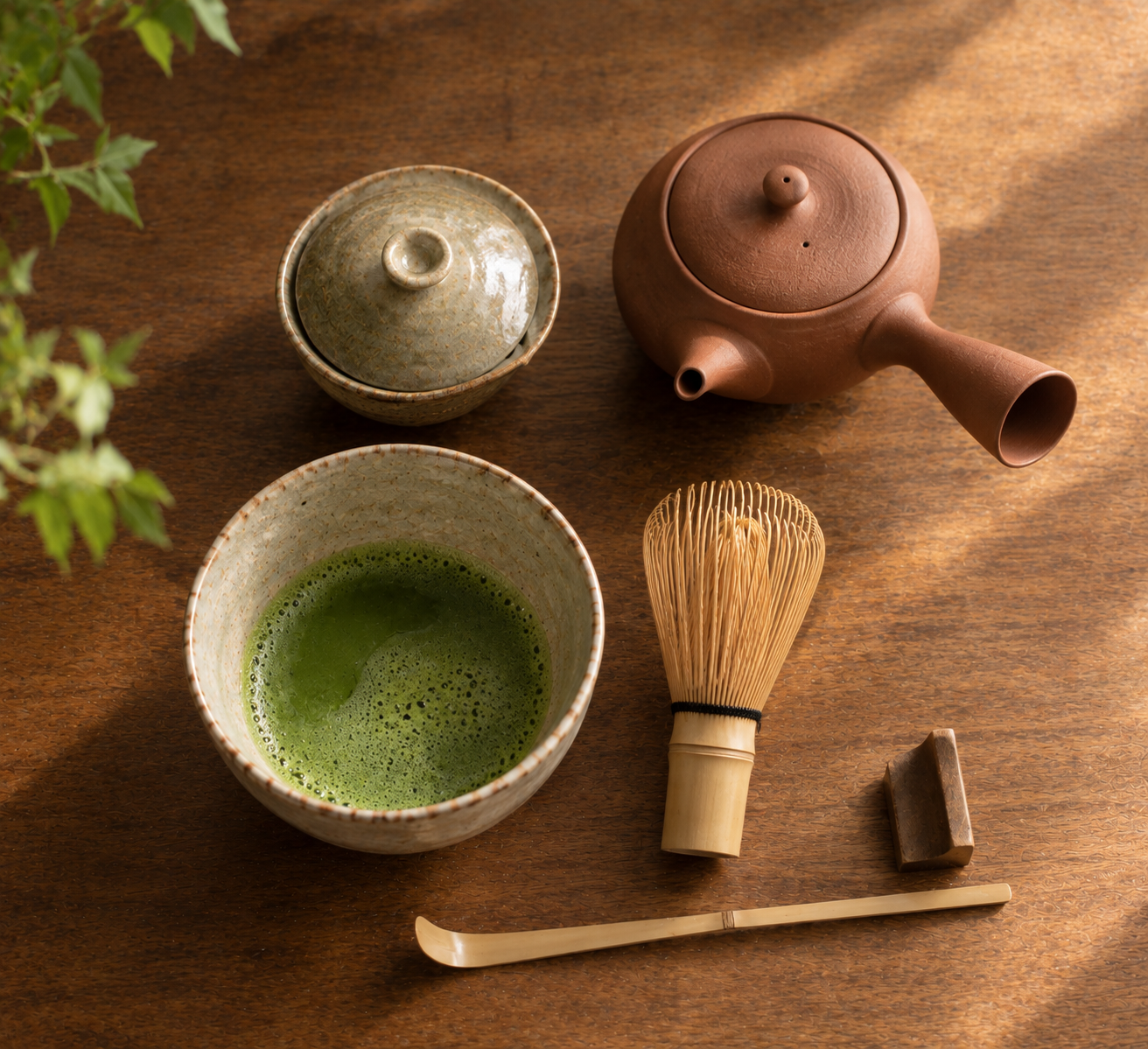
    Nio Teas’ kyusu are genuine Tokoname clay, sold in what the brand describes as two main color variants that reflect different production methods rather than meaningfully different performance. The side-handle design, standard for this category, lets you pour with a controlled wrist motion without needing to grip the hot body of the pot directly.

    Who it’s for: Anyone brewing standard loose leaf green tea, sencha especially, as their everyday go-to. This is the right starting point for most people building a first proper Japanese tea setup, and it pairs naturally with the wider sencha catalog Nio Teas already stocks.

    The Shiboridashi

    Shop Nio Teas’ shiboridashi →

    The shiboridashi is a genuinely different tool from a kyusu, not just a stylistic variant. It’s flatter, handleless, and built specifically for small, concentrated infusions using a larger leaf-to-water ratio and as little as 50 milliliters of water. Rather than a carved filter, it uses small notches near the spout, which works because the larger, tightly rolled leaves typical of gyokuro and kabuse sencha don’t need heavy filtering the way finer cut leaf does. The small total volume isn’t a limitation so much as the entire point — a shiboridashi is built to produce something closer to a concentrated shot of tea than a full mug, meant to be savored slowly rather than gulped.

    Who it’s for: Specifically gyokuro and premium kabuse sencha drinkers. This isn’t a general-purpose teapot, and buying one expecting it to replace a kyusu for everyday sencha will leave you disappointed — its whole design is built around small, deliberate, special-occasion infusions rather than daily-volume brewing. If most of your tea drinking is a full mug on a regular morning, a kyusu remains the more practical daily tool.

    A notable detail: Nio Teas has bundled their shiboridashi with a complimentary pack of gyokuro from a named tea farmer in past offerings, which is a genuinely useful way to get both the tool and a tea specifically suited to it in one purchase, worth checking whether that pairing is currently available before buying the pot alone.

    Matcha Teaware: Chasen, Chawan, and Chashaku

    Shop Nio Teas’ matcha teaware and accessories →

    Nio Teas groups the core matcha tools together, the chasen (bamboo whisk), chawan (clay matcha bowl), and chashaku (bamboo scoop), both as individual pieces and as bundled sets.

    Chasen: Carved from a single piece of bamboo, designed specifically to whisk matcha into a smooth, foamy consistency. As covered in more depth in my matcha whisk buying guide, prong count matters here, and a mid-range count is generally the safest starting point for a first whisk.

    Chawan: A wider, steeper-sided clay bowl than a standard teacup, specifically shaped to give the chasen room to move through a proper whisking motion without splashing.

    Chashaku: The bamboo scoop used for measuring matcha into the bowl, typically two scoops per serving in casual use.

    Who it’s for: Anyone building a matcha routine from scratch. Buying these as a bundled set, when available, is generally the more convenient route for a first-time buyer over sourcing each piece separately.

    Which Piece Should You Actually Start With

    If you’re brewing everyday sencha or most standard green tea: the kyusu, without question. It’s the most versatile, highest-volume piece in the catalog.

    If you already own a kyusu and specifically want to elevate how you brew gyokuro: the shiboridashi, understanding it’s a specialty tool rather than a replacement for your everyday pot.

    If matcha is your main interest rather than steeped tea: the chasen, chawan, and chashaku set, ideally bundled together if available, rather than piecing them together individually.

    If you’re not sure yet which category you’ll settle into: start with the kyusu. It’s the more broadly useful piece, and you can add the shiboridashi or matcha set later once your preferences are clearer.

    A Few Things People Ask Me

    Does the kyusu color variant actually matter for performance? Based on Nio Teas’ own description, no — the two color variants reflect different production approaches rather than a meaningful difference in how well the pot brews tea. Choose based on aesthetic preference rather than expecting a functional difference.

    Is a shiboridashi harder to use than a standard kyusu? It requires a bit more attention to leaf-to-water ratio given its small volume, but it’s not technically difficult — if anything, the lack of a handle and simpler filter design make it a more direct, tactile brewing experience once you’re used to it.

    Can I buy the teaware without also buying tea from Nio Teas? Yes, the teaware catalog is browsable and purchasable independently of any specific tea purchase, though pairing a new kyusu or shiboridashi with a properly measured tea is a sensible way to get the most out of a new piece right away.

    Is Nio Teas’ teaware genuinely handmade, or mass-produced with artisan branding? The brand describes its Tokoname pieces as hand-sculpted clay, consistent with traditional small-batch production methods, though as with any handmade product, expect natural piece-to-piece variation rather than uniform, machine-precise consistency.

    Does buying teaware from Nio Teas guarantee compatibility with tea bought elsewhere? Yes — a kyusu, shiboridashi, or matcha set purchased from Nio Teas works exactly the same with tea sourced from any other brand, since these are standard traditional forms rather than proprietary designs tied to their own tea specifically.

    How does the shiboridashi’s price compare to a standard kyusu? The shiboridashi tends to sit at a premium relative to entry-level kyusu options, partly reflecting its more specialized, hand-sculpted construction and partly the fact that it’s a more niche item with lower production volume than the everyday kyusu category.

    Where I Landed

    What sets Nio Teas’ teaware apart from a lot of tea-focused brands is that it doesn’t feel bolted on as an afterthought, the shiboridashi bundled with gyokuro, the matcha tools grouped as coherent sets, all points to a catalog built by people who understand that the right tool changes what you can actually brew, not just how it looks doing it.

    Start with the kyusu if you’re building a first setup, and let your own brewing habits tell you whether the shiboridashi or a dedicated matcha set is worth adding next. There’s no need to buy the whole catalog at once — the point of teaware is that it should match a habit you already have, or one you’re genuinely ready to build, not sit unused because it seemed like a good idea at checkout.
  • How to Choose a Kyusu: The Japanese Teapot Buying Guide

    How to Choose a Kyusu: The Japanese Teapot Buying Guide

    Disclosure: This post contains affiliate links. If you buy through one of them, I may earn a small commission at no extra cost to you.

    My first kyusu was a $12 impulse buy from an import shop, chosen entirely because the shape looked nice on a shelf. It worked, technically, but I had no idea for years that the handle position, the clay it was made from, and even the built-in filter type were all deliberate choices that change how the tea actually tastes, not just how the pot looks holding it. I only found that out once I compared a proper Tokoname clay pot side by side with my old one, and the difference in how smooth the same sencha tasted was hard to ignore.

    A kyusu isn’t just “a Japanese teapot” the way a mug is just a cup. It’s a purpose-built tool with a handle position designed around a specific pouring motion, a clay chemistry that can genuinely soften or round out a tea’s astringency, and a filter design that affects how well loose leaf actually opens up and steeps. None of that is obvious from a product photo, so this guide walks through what actually matters versus what’s mostly aesthetic preference — because you can absolutely spend a lot of money on the wrong features and still end up with a mediocre cup.

    The Problem You’re Actually Trying to Solve

    You’ve searched for how to choose a kyusu because you’re staring at a wall of options — different handle placements, different clay colors, wildly different prices for pots that look similar in photos — and you don’t know which differences are functional and which are just style. Maybe you’ve been steeping loose leaf green tea in whatever mug-and-infuser setup you already had, and you’re wondering if a proper kyusu is actually going to change your results or if it’s mostly about looking the part.

    The honest answer is that some of this genuinely changes your tea, and some of it really is preference. This guide sorts out which is which, so you can spend money where it actually matters and skip the parts that are just about what looks nice on your counter.

    Who This Article Is NOT For

    Let’s save you some scrolling if this isn’t quite your situation.

    • If you only ever drink tea bags or pre-bagged loose leaf, a kyusu isn’t built for that — it’s designed around loose leaf tea that needs room to unfurl and expand, and a tea bag gets no benefit from the extra brewing space or built-in filter.
    • If you already own a kyusu and are looking for advanced pairing (which clay for which specific tea), this is a beginner-to-intermediate buying guide, not a deep dive into matching clay mineral content to individual tea cultivars.
    • If you exclusively drink matcha, you don’t need a kyusu at all — matcha is whisked, not steeped, and my matcha whisk buying guide is the right resource instead.

    If you’re past that, here’s where the actual guide starts.

    What Actually Matters When Choosing One

    Three things determine whether a kyusu is right for how you actually drink tea, and once you understand them, the wall of options gets a lot easier to navigate.

    1. Handle style. This isn’t just aesthetic — it determines how you physically pour, how much control you have over the final drops, and how comfortable the pot is for your specific brewing habits.

    2. Clay type and material. Unglazed clay genuinely interacts with tea chemically over time, softening bitterness and building flavor memory into the pot. Glazed ceramic, porcelain, and glass don’t do this, which is a real tradeoff, not just a style choice.

    3. Filter design. The built-in strainer style affects how well loose leaf can actually expand and how easily fine tea dust clogs the pour. A cheap, poorly designed filter can undermine an otherwise good pot.

    Comparison Table

    Handle StyleBest ForPour ControlTypical Size
    Yokode (side handle)Solo or small servings of sencha, gyokuroBest, one-handed precision pour200–350ml
    Ushirode (back handle)Casual daily use, hojicha, genmaichaGood, familiar Western-style motion300–500ml
    Uwade (top handle)Larger pots, serving groupsModerate, two-handed for bigger pours400ml+
    Houhin (no handle)Delicate, low-temperature teas like gyokuroRequires careful grip, best for small servings100–200ml

    The Choices, One by One

    Handle Style

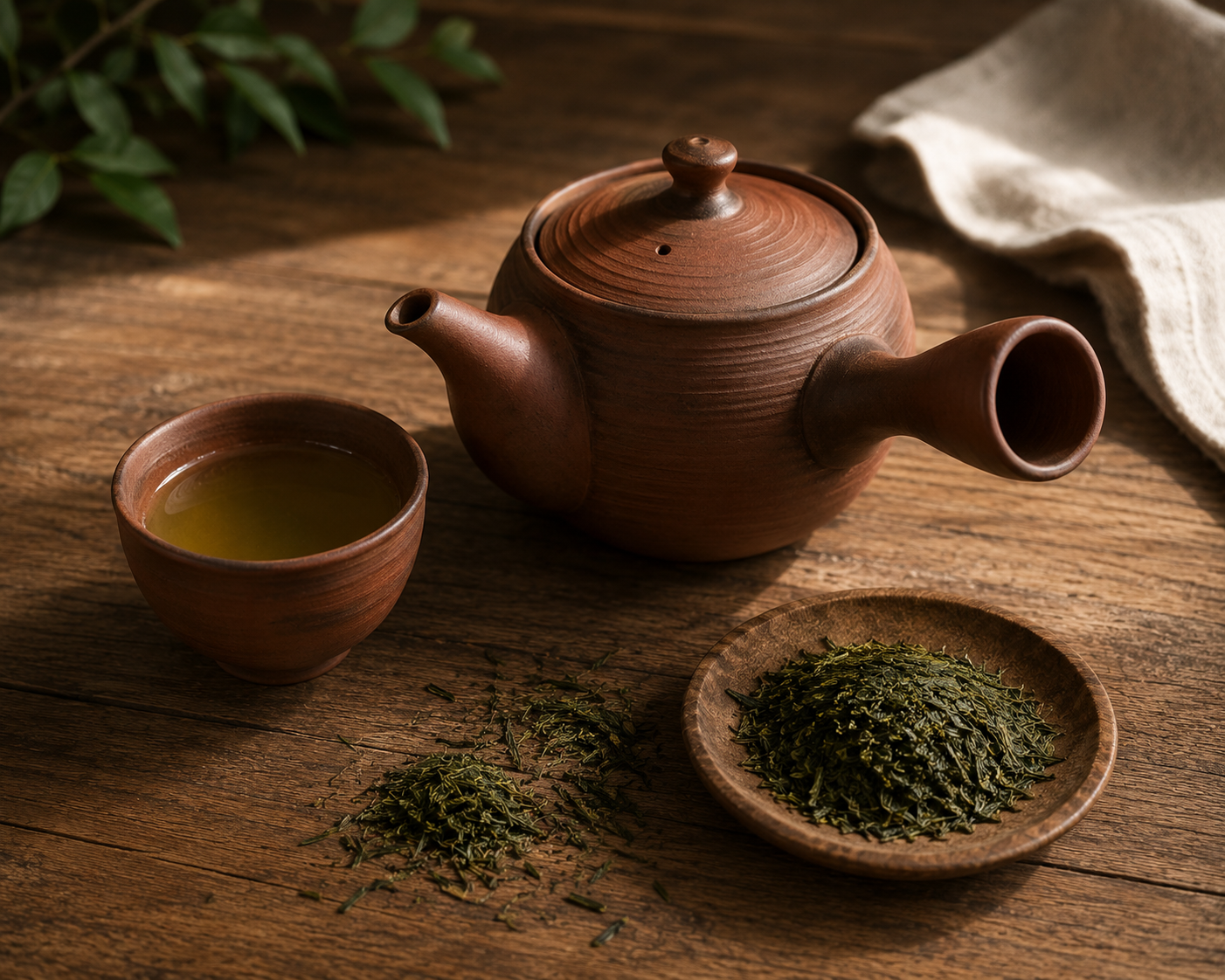
    Yokode, the side handle, sits at a 90-degree angle from the spout, letting you pour one-handed with your thumb resting on the lid. This is the design most associated with kyusu specifically, and it’s built around what tea enthusiasts call the “twist of the wrist” pour — a short, controlled motion that lets you extract the final concentrated drops precisely rather than dribbling out an uneven stream.

    Why it’s usually the right default: For solo or small servings of sencha or gyokuro, this handle style gives you the most control, and it’s genuinely the most intuitive once you’ve used it a few times. If you’re buying your first kyusu and aren’t sure what to get, this is the safe, traditional choice.

    Ushirode, the back handle, sits opposite the spout, similar to a Western teapot. It’s the most familiar shape if you’re coming from typical teapot use, and it tends to come in larger sizes suited to more casual, higher-volume teas like hojicha and genmaicha.

    Why you might prefer it: If the twist-of-the-wrist yokode motion feels unfamiliar or awkward, ushirode requires no adjustment at all — you pour it exactly like any Western teapot you’ve already used.

    Uwade, the top handle, usually a basket-style handle arching over the lid, suits larger pots meant for serving multiple people or multiple rounds at once.

    Why you might prefer it: If you’re regularly brewing for a group rather than a solo cup, the larger typical size and two-handed pour give you more volume per steep than a yokode is built for.

    Houhin, a handleless variant, is designed specifically for delicate, low-temperature teas like gyokuro, where you’re working with small quantities of concentrated, precious leaf and want to control the pour by gripping the body directly.

    Why you might prefer it: If gyokuro or other high-grade delicate teas are your main focus, houhin’s design is purpose-built for exactly that use case in a way general-purpose kyusu aren’t.

    Clay Type

    The two dominant Japanese clay traditions are Tokoname-yaki, from Aichi Prefecture, and Banko-yaki, from Mie Prefecture, and they genuinely produce different results in the cup, not just different colors on a shelf.

    Tokoname clay, typically a red, iron-rich shudei, is prized for smoothing out tannins and softening astringency, which makes it well suited to everyday sencha and most standard green teas.

    Banko clay, typically purple or yellow, is associated with enhancing umami and better heat retention, which makes it a stronger match for gyokuro, kabusecha, and higher-grade sencha where umami is the whole point.

    Why this matters: Unglazed clay pots absorb tea oils over repeated use, gradually building flavor character into the pot itself — which is also why dedicating an unglazed clay kyusu to one general category of tea (rather than switching between wildly different teas in the same pot) actually matters. A strongly roasted or smoky tea can leave lingering flavor in unglazed clay that affects a more delicate tea brewed in it afterward.

    Glazed ceramic, porcelain, or glass kyusu don’t have this absorption property, which means they’re more flexible for brewing different tea types in the same pot without cross-contamination of flavor, at the cost of not developing that same smoothing effect over time. Glass in particular is worth mentioning separately — it adds no mineral character at all and lets you watch the leaves unfurl, which some people genuinely enjoy as part of the ritual, even though it does nothing functional that ceramic doesn’t already do.

    Filter Design

    Most modern kyusu use one of a few common built-in filter styles, usually a fine ceramic mesh built into the body near the spout, sometimes called sasame or ceramesh. Older or cheaper pots may use simpler perforated holes, which tend to clog more easily with fine tea particles and let more sediment through into your cup.

    Why it matters: A well-designed built-in filter is what actually lets loose leaf tea expand fully inside the pot rather than getting compressed against a poor screen, which directly affects how much flavor you extract per steep. This is one area where paying slightly more for a reputable pot genuinely pays off in the cup, not just in durability.

    Which Kyusu Should You Actually Buy

    If you’re buying your first kyusu and brewing mostly for yourself: a 200–350ml Tokoname yokode. It’s the traditional, versatile default for standard sencha and most everyday green tea.

    If you regularly drink hojicha or genmaicha and want something familiar to use: an ushirode in a larger size, since those teas are typically brewed in bigger, more casual batches than delicate sencha or gyokuro.

    If you’re serving tea to a group or brewing multiple rounds at once: an uwade, sized for higher volume without sacrificing too much precision.

    If gyokuro or other high-grade delicate teas are your main focus: a houhin, purpose-built for small, careful, low-temperature brewing.

    If you drink a wide variety of very different teas and don’t want flavor crossover: a glazed ceramic or porcelain kyusu instead of unglazed clay, since it won’t absorb and carry over flavor between different tea types the way unglazed clay does.

    Where to Actually Buy One

    Shop Tokoname kyusu teapots on Amazon →

    Shop Banko kyusu teapots on Amazon →

    Shop houhin (handleless) teapots on Amazon →

    A Few Things People Ask Me

    Do I really need a dedicated kyusu, or can I use a regular teapot with an infuser basket? A regular teapot will technically work, but you lose the built-in filter design that lets loose leaf expand properly, and you lose the handle-and-pour ergonomics that make the final concentrated drops easy to extract cleanly. If you’re already committed to loose leaf Japanese tea, a proper kyusu is a worthwhile upgrade, not just a purist’s preference.

    Can I use the same kyusu for green tea and black tea? Technically yes with a glazed pot, but with unglazed clay specifically, dedicate it to one general tea category. A pot that’s absorbed the character of a smoky black tea will carry some of that into a delicate green tea brewed in it afterward.

    How do I take care of a clay kyusu? Rinse with hot water only after each use, no soap, which would strip the flavor-building patina unglazed clay develops over time. Let it air dry fully with the lid off between uses to avoid trapping moisture and developing odor or mold inside.

    Is a more expensive kyusu actually worth it, or is that just paying for craftsmanship prestige? Both are somewhat true. A well-made filter and quality clay genuinely affect brewing performance, which is worth paying for. Beyond a certain point, though, you are paying for the reputation of a specific potter or region, similar to how a well-known ceramic artist’s work commands more than an equally functional piece from an unknown maker.

    What size kyusu should I get for one or two people? Somewhere around 200–350ml is the standard recommendation for solo or two-person use, and it pairs naturally with the typical 3–5 gram doses used for quality loose leaf tea. Going much larger than that for a single-serving habit just means more leaf and more waiting per pour than you actually need.

    Does the shape of the spout matter as much as the handle? It matters, though less dramatically. A well-tapered spout produces a clean, controlled stream and stops dripping cleanly at the end of a pour, while a poorly shaped one can dribble down the side of the pot. It’s worth checking reviews for spout complaints specifically, since it’s a common quality issue on cheaper mass-produced pots.

    Where I Landed

    If I had to point a total beginner toward exactly one pot, it’d be a mid-range Tokoname yokode kyusu, somewhere in the 250–300ml range. It’s the traditional default for a reason — the handle style is the most intuitive once you’ve used it a few times, the clay is forgiving and well-suited to everyday sencha, and it’s versatile enough to handle most of what a typical home tea routine actually needs.

    Once you know you’re sticking with loose leaf tea as a regular habit, that’s when it’s worth exploring Banko clay for your higher-grade gyokuro, or a houhin if delicate teas become your main focus. Don’t feel pressured to build out a whole collection of specialized pots right away — most people are genuinely well served by one good all-purpose kyusu for years before a second pot starts to make sense. Start simple, and let your own brewing habits tell you where to specialize from there — my green tea brewing temperature guide is a good companion piece once you’ve got the pot itself sorted out.