Disclosure: This post contains affiliate links. If you buy through one of them, I may earn a small commission at no extra cost to you.
For years I only thought of sencha as something to drink, and threw the spent leaves straight in the compost after steeping – which, it turns out, was wasting a genuinely useful ingredient rather than a spent one. Sencha shows up in Japanese cooking well beyond the teacup: poured over rice as ochazuke, dried and turned into a seasoning powder, even mixed straight into rice or noodles. Once I started treating tea as something with a second life after brewing, I stopped throwing away half of what I was already buying.
The Problem You’re Actually Trying to Solve
Most people who cook with tea at all default to matcha, since it’s a powder that mixes easily into batter or dough. Sencha gets treated as purely a drinking tea, which means both the brewed tea itself (as a savory broth) and the leftover leaves after steeping go completely unused as ingredients, when both have real culinary applications specific to Japanese cooking that don’t require any special technique to try.
Who This Article Is NOT For
- If you’re looking for baking with matcha specifically, my matcha baking guide covers that separately – the technique and use case there is quite different from what follows.
- If you don’t already drink sencha regularly, generating “spent leaves” as a byproduct of your normal tea habit is really the natural entry point here – buying tea specifically to throw away the leaves afterward defeats the appeal.
- If you’re vegetarian or avoid fish generally, the classic ochazuke toppings below lean heavily on salmon and fish roe – the tea-over-rice base still works fine, but you’ll want to swap in pickled vegetables or umeboshi as the topping instead.
Ochazuke: Tea Poured Over Rice
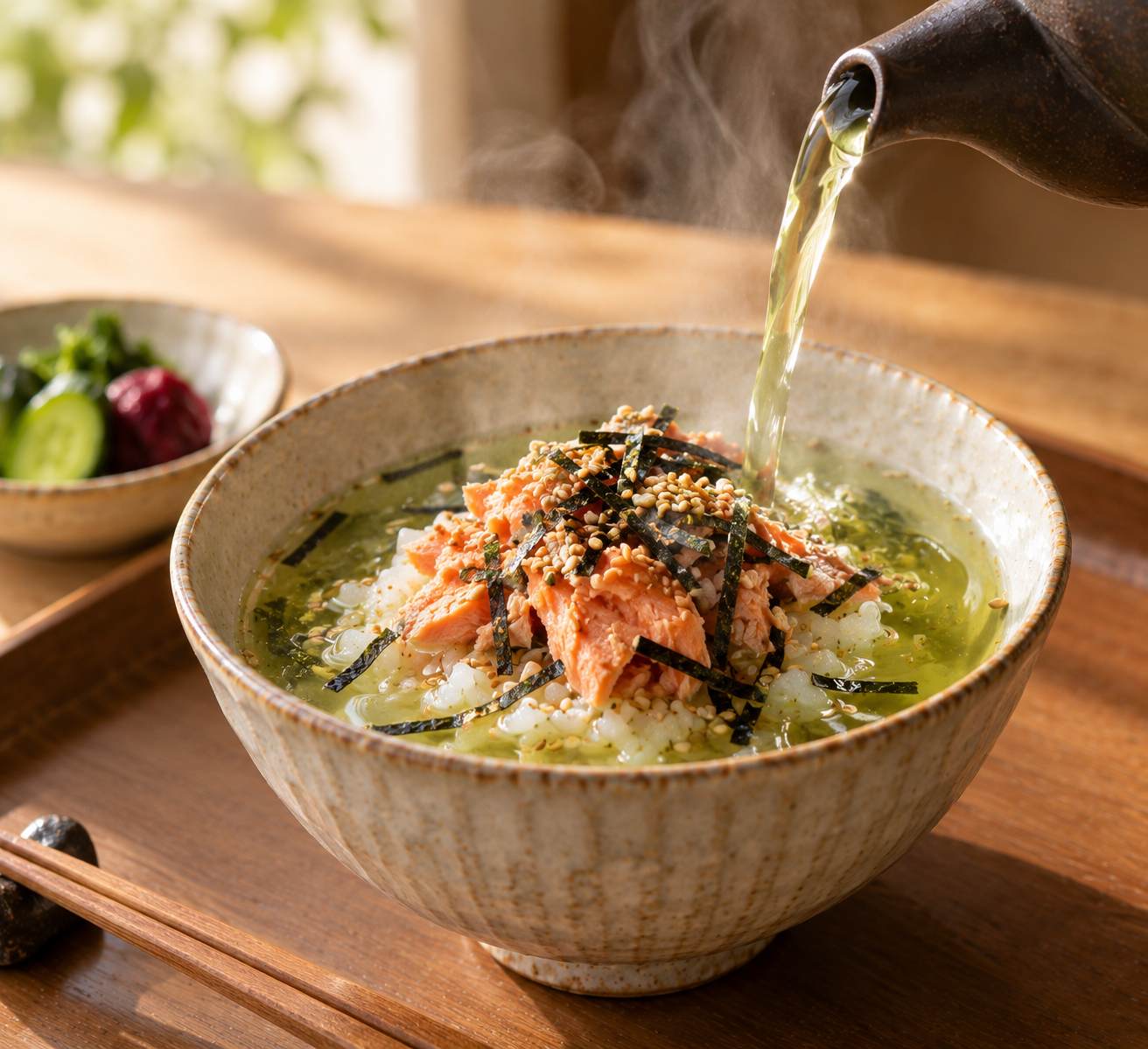
Ochazuke is the most direct and well-known way sencha shows up in a meal rather than a cup – literally tea poured over a bowl of rice, plus toppings, eaten as a light meal or a way to use up leftover rice.
The base: Cooked Japanese short-grain rice in a bowl, topped with something savory – classic options include flaked cooked salmon, umeboshi (pickled plum), salmon roe, shredded nori, sesame seeds, and a few sprigs of mitsuba or scallion.
The tea: Brew 2 teaspoons of sencha leaves in about a cup of hot water for 1-2 minutes – genmaicha and hojicha work here too, each giving a slightly different character to the dish. A splash of soy sauce is a common addition to the brewed tea before pouring.
Putting it together: Arrange the rice and toppings in a bowl first, then pour the hot tea over until it comes about halfway up the rice – not a full soup, just enough liquid to soften and flavor the top layer of rice while leaving the bottom more intact. Add wasabi if you want extra sharpness.
There’s also a cold summer variation using chilled tea (or cold dashi) poured over room-temperature rice, which is worth trying specifically in hot weather when a hot bowl of anything feels unappealing.
Three Things to Do With Spent Tea Leaves
Once you’ve brewed sencha the normal way, the leaves themselves aren’t actually done working – they’ve released most, but not all, of their flavor and nutrients into the water.
Ohitashi-style side dish. Blanch the used leaves briefly if you want a softer texture, squeeze out the excess water, then dress lightly with soy sauce and scatter bonito flakes on top. This turns leftover leaves into a small side dish rather than something to discard.
Mixed into rice or noodles. Finely chop the spent leaves and stir them into freshly cooked rice, or add them during the final stage of cooking. The same idea works with noodles – fold chopped leaves into warm soba or scatter over udon, especially alongside sesame and a bit of soy sauce.
Dried into a seasoning powder. Dry the used leaves slowly in a pan over low heat, stirring occasionally, until all the moisture is gone – this takes roughly five to seven minutes. Once fully dry, crumble the leaves and blend with sesame, dried bonito flakes, and salt to make a simple furikake-style seasoning. It doesn’t keep for long, so make it in small batches and use it within a few days.
A Few Things People Ask Me
Do I need to use fresh sencha for ochazuke, or can I use whatever’s already brewed? Freshly brewed is better for flavor – a stronger, more deliberate steep specifically for the dish tends to hold up better against the rice and toppings than tea that’s been sitting around cooling for a while.
Is it safe to eat the actual tea leaves, not just drink the brewed tea? Yes – tea leaves are edible, and the practice of eating brewed leaves (as in the ohitashi-style dish above) is a real, traditional use rather than an unusual or risky one.
Can I use gyokuro or fukamushi sencha instead of standard sencha for any of this? Generally yes, though gyokuro’s more delicate umami (see my sencha vs. gyokuro comparison for why) is arguably wasted poured over rice with strong toppings like salted salmon – it’s better preserved by drinking on its own. Standard or fukamushi sencha, with their more robust flavor, hold up better as an ingredient rather than purely a drink.
What’s a good sencha to keep on hand specifically for cooking with, rather than just drinking? Nio Teas’ sencha works fine for this – you don’t need a premium single-origin leaf for cooking applications the way you might for drinking on its own. A donabe-style rice bowl on Amazon is also worth having if you plan to make ochazuke regularly, since the wider, shallower shape suits pouring tea over rice better than a standard deep bowl.
Where I Landed
The shift that actually mattered here wasn’t learning a new recipe – it was realizing sencha didn’t stop being useful the moment I finished drinking it. Between ochazuke as an actual meal and spent leaves turning into a side dish or seasoning, the same bag of tea does noticeably more work than “just a drink” once you start looking at it that way. If you already drink sencha regularly, most of what’s above costs nothing extra to try – it’s just using what you’d otherwise throw away.