Category: Brand Reviews

  • Yunomi.life Review: Is It Worth Buying Japanese Tea Direct From Small Farms?

    Yunomi.life Review: Is It Worth Buying Japanese Tea Direct From Small Farms?

    Disclosure: This post contains affiliate links. If you buy through one of them, I may earn a small commission at no extra cost to you. Links to Yunomi.life itself are not affiliate links. Shipping methods, fees and policies below are from Yunomi.life’s website at the time of writing (October 2026) and change often – always check at checkout.

    Quick Verdict

    • Is Yunomi.life worth it? Yes, if you want variety. It’s an online marketplace based in Tokyo that sells tea from small Japanese farms, factories and shops to customers in 100+ countries – including teas you almost never see outside Japan.
    • Best for: adventurous tea drinkers who want to explore regions, farms and unusual teas, and who are happy to wait for international delivery.
    • Not ideal for: people who want one cheap bag quickly. International shipping costs make small orders expensive.
    • Best first order: a sampler, plus one or two teas you can’t find anywhere else – for example, a single-farm sencha or a regional specialty.
    • Prefer a simpler, curated shop with fewer choices? Nio Teas also ships tea from small Japanese farms, with a smaller, easier-to-browse selection. At the time of writing, ordering through the links on this page automatically applies a 10% discount at checkout – no code needed. Offers can change, so check the final price in your cart.

    Below: how Yunomi.life works, what it does well, the honest downsides, and how to order without overpaying for shipping.


    Quick note: this is a review of Yunomi.life, the online tea shop. If you’re looking for the Japanese teacup called a yunomi, that’s a different article.

    Most Japanese tea sold abroad comes from a handful of big brands. But Japan has thousands of small tea farms and family factories, and almost none of them sell overseas – they don’t have English websites, export paperwork, or international shipping. Yunomi.life exists to fix that. It’s one of the main ways tea lovers outside Japan can buy directly from the small producers who actually grow and make the tea.

    The Problem You’re Actually Trying to Solve

    You’ve tried the well-known brands and want to go further – single-farm teas, unusual regional styles, things you’ve read about but can’t find. Yunomi.life comes up again and again, but you want to know whether it’s trustworthy, how shipping works, and whether it’s worth the cost.

    Who This Article Is NOT For

    • If you want a monthly box rather than choosing teas yourself, my Japanese tea subscription box guide compares the main options.
    • If you just want one good everyday sencha from a domestic US seller, a US-based shop with faster, cheaper shipping will suit you better.
    • If you’re new to Japanese tea and overwhelmed by choice, a smaller curated shop is an easier starting point.

    How Yunomi.life Works

    Yunomi.life is run by Yunomi Life Co., Ltd., based in Tokyo, with Ian Chun as CEO. It grew out of an earlier project selling tea for a farm in Wazuka, Kyoto, around 2010, and launched as a broader marketplace a few years later.

    The idea is simple:

    • Small Japanese producers list their teas – family farms, tea factories, teaware studios and long-established shops.
    • Yunomi handles the hard parts – English descriptions, promotion, export rules and international shipping.
    • You buy from many producers in one place, and Yunomi ships to you from Japan.

    The company also translates customer reviews into Japanese and passes them on to the producers – a small detail that shows the “people-to-people” focus behind the business.

    By early 2026, Yunomi.life was approaching its 50,000th order.

    What You Can Buy

    The range is enormous:

    • Green teas: sencha, fukamushi, gyokuro, kabusecha, kamairicha, tamaryokucha, bancha, kukicha, genmaicha, hojicha
    • Matcha from multiple regions and producers
    • Black tea, oolong and rare styles, including fermented teas like goishicha and awa bancha (my guide to Japan’s fermented teas explains these)
    • Herbal and grain teas, teaware, snacks and samplers
    • A quarterly subscription box – at the time of writing, each box contained 11 teas (10g each), 2 tisanes and 2 snacks

    What’s Genuinely Good

    • Unmatched variety. If a Japanese tea exists, there’s a good chance you’ll find it here – including teas from small farms with no other way to reach overseas buyers.
    • Direct from producers. You can often see which farm or factory made your tea, sometimes with photos and background.
    • Great for learning. Comparing several senchas from different regions or farms side by side teaches you more than any article can.
    • Supports small farms. Japan’s tea industry is shrinking and ageing – Yunomi cites figures showing the number of tea farms has fallen dramatically over recent decades. Buying direct helps small producers stay in business.
    • Delivery guarantee. Yunomi states that it guarantees delivery of retail orders: if a parcel is lost and can’t be reshipped, it offers a refund, and damaged items reported with a photo are replaced or refunded.

    The Honest Downsides

    • Shipping costs. International courier shipping isn’t cheap, and it makes small orders expensive. You’ll get much better value by ordering several teas at once.
    • Fewer shipping options for the US. At the time of writing, Yunomi’s site said Japan Post mail wasn’t available for the USA, so US orders go by courier – faster, but usually pricier.
    • Possible duties and taxes. Depending on your country, you may pay import taxes or fees on delivery. Check your country’s rules before placing a large order.
    • Waiting time. Orders typically take 1-5 days to fulfill before shipping, plus delivery time – and out-of-stock items or customs checks can add more.
    • Quality varies by producer. It’s a marketplace, not a single brand. Most teas are good, but you’re choosing among many sellers, so read descriptions and reviews carefully.
    • Overwhelming choice. The huge catalog is a strength for enthusiasts but can be confusing for beginners.

    How to Order Smart

    1. Make one bigger order instead of several small ones. Shipping is the main cost, so combine teas.
    2. Start with a sampler. It’s the cheapest way to taste several producers before committing to full bags.
    3. Sign up for the newsletter. At the time of writing, Yunomi offered a discount coupon for new newsletter members.
    4. Compare shipping methods at checkout. Prices and speeds differ a lot between couriers.
    5. Read producer descriptions and reviews. Look for harvest date, region and cultivar – the same signals of quality you’d look for anywhere.
    6. Order fresh teas in spring and early summer. That’s when new-season sencha (shincha) is available.

    What to Try First

    If you like…Look forWhy it’s worth ordering from Japan
    SenchaTwo senchas from different regions (e.g. Shizuoka and Kagoshima)Tasting them side by side shows how much region matters
    MatchaA small tin from a farm-direct producerFresher and more specific than supermarket matcha
    Something newA regional specialty like kamairicha or tamaryokuchaRarely sold outside Japan
    Roasted teaA single-farm hojichaSmall roasters often have distinctive styles
    AdventureA fermented tea such as awa banchaAlmost impossible to find elsewhere

    Yunomi.life vs. Other Ways to Buy

    Yunomi.lifeNio TeasUS-based Japanese tea shop
    Ships fromJapanJapanWithin the US
    SelectionHuge marketplace of many producersCurated selection from small farmsUsually one producer or region
    Best forExploring and rare teasEasy-to-browse farm teasFast, cheap everyday reorders
    ShippingInternational courier, variesInternationalDomestic, cheaper
    DrawbackOverwhelming, shipping costsSmaller rangeLess variety

    A Few Things People Ask Me

    Is Yunomi.life legit? Yes. It’s a registered Japanese company based in Tokyo that has been selling tea internationally for over a decade, with tens of thousands of orders and a published delivery guarantee.

    How long does shipping take? It depends on the courier and your country. Orders generally take 1-5 days to fulfill, plus delivery time shown at checkout.

    Will I pay customs fees? Possibly, depending on your country. Yunomi notes that buyers may owe duties or taxes on delivery.

    Is the subscription box worth it? If you enjoy discovering new teas, yes – it’s a curated way to try many small producers. If you already know what you like, buying individual teas gives you more control.

    Is it better than buying from one brand? For variety, yes. For simplicity and speed, a single trusted brand is easier.

    Where I Landed

    Yunomi.life is the closest thing to walking through Japan’s tea country from your kitchen. For anyone who’s outgrown the big brands and wants to taste the difference between farms, regions and unusual styles, it’s an excellent resource – especially if you order several teas at once to make shipping worthwhile. If you’d rather have a smaller, simpler selection, a curated shop is easier. But if you want to explore, this is where to start.

    You can browse the full catalog on Yunomi.life.
  • DoMatcha Review: Is the Supermarket-Shelf Matcha Actually Good, and Which Tin Should You Buy?

    DoMatcha Review: Is the Supermarket-Shelf Matcha Actually Good, and Which Tin Should You Buy?

    Disclosure: This post contains affiliate links. If you buy through one of them, I may earn a small commission at no extra cost to you. Product details and prices vary by country and retailer and change often – check the current listing before you buy.

    Quick Verdict

    • Is DoMatcha worth it? Yes, as an everyday matcha you can find easily in North American stores. It’s genuinely Japanese, widely certified organic, and honestly labeled by harvest. It isn’t trying to compete with top Kyoto tea houses for special-occasion bowls.
    • Best value daily matcha: Summer Harvest – a later-harvest tea sold honestly as an everyday matcha, not dressed up as “ceremonial.” DoMatcha Summer Harvest on Amazon
    • Best for drinking straight: DoMatcha Ceremonial – smoother and sweeter, for whisking with water. DoMatcha Ceremonial on Amazon
    • Best for baking: DoMatcha Culinary.
    • Want to explore single-origin teas from small farms? Nio Teas’ matcha collection offers more variety. At the time of writing, ordering through the links on this page automatically applies a 10% discount at checkout – no code needed. Offers can change, so check the final price in your cart.

    Below: who makes DoMatcha, how its lines differ, the honest downsides, and how it compares with Encha, Ippodo and Marukyu Koyamaen.


    If you’ve ever looked for matcha in a Canadian or American grocery store, health-food shop or café, there’s a good chance you’ve seen DoMatcha’s small tins. It was one of the first brands to bring Japanese matcha to North American shelves, long before matcha lattes were everywhere.

    That makes it one of the most convenient matcha brands to buy – but convenience raises a fair question. Is a matcha you can pick up next to the coffee beans actually good? Or is it the kind of “green powder” that gives matcha a bad name?

    The Problem You’re Actually Trying to Solve

    You want decent matcha without ordering from Japan or paying Kyoto tea-house prices, and DoMatcha is the brand you keep seeing in stores. You want to know whether it’s real Japanese matcha, which of its tins to buy, and whether it’s good enough to drink straight or only for lattes.

    Who This Article Is NOT For

    • If you’re comparing several brands at once, my matcha brand comparison puts DoMatcha alongside Ippodo, Marukyu Koyamaen and Encha.
    • If you’re not sure what “ceremonial” or “culinary” really mean, my guide to telling matcha grades apart explains why the label alone won’t tell you.
    • If you want koicha-grade matcha or a long ladder of premium grades, DoMatcha isn’t built for that.

    Who Makes DoMatcha

    DoMatcha was introduced in 2007 by Andrews & George, a long-established company with roots in trade with Japan, led by John Harrison. Based in Canada, it set out to bring authentic Japanese matcha to North American shoppers at a time when most people there had never heard of it.

    According to the company’s own history, it works with tea partners in Japan, including producers in Uji and an organically certified family business in Kagoshima. Its matcha is stone-ground in Japan, and many of its products carry organic certification.

    DoMatcha also says it popularized simple grade names in North America – Ceremonial, Summer Harvest and Culinary – to help shoppers understand what they’re buying.

    The Main Lines, Explained

    LineWhat it isBest for
    CeremonialHigher-grade, shade-grown matcha for whisking with waterUsucha, drinking straight
    Summer HarvestPicked later in the season; bolder and more affordableDaily matcha, lattes
    CulinaryMade for cooking and bakingBaking, smoothies, desserts
    Organic versionsCertified organic matchaOrganic-focused buyers
    Master’s DecafDecaffeinated matchaEvening drinkers, caffeine-sensitive people
    Travel packetsSingle-serve sachetsWork, travel, trying the brand

    The lineup varies by country and store, so you may not see every product everywhere.

    Why “Summer Harvest” is a smart idea

    Most matcha brands only use the words “ceremonial” and “culinary” – and slap “ceremonial” on almost everything, because it sells. DoMatcha does something more honest: it sells a later-harvest matcha under its own name. Later-harvest leaves are bolder and slightly more astringent than spring leaves, which makes them less ideal for a delicate bowl of usucha but perfectly good for daily drinking and lattes – at a lower price.

    If you’re looking for an everyday matcha, that honesty is worth rewarding.

    The decaf option

    Decaffeinated matcha is rare. DoMatcha’s Master’s Decaf is one of the few widely sold options, and it’s genuinely useful if you love matcha but can’t have caffeine in the evening. Expect it to taste a little different from regular matcha – decaffeination affects flavor – and don’t expect it to be completely caffeine-free.

    Which DoMatcha Should You Buy?

    You mostly…BuyWhy
    Drink matcha with waterCeremonialSmoother and sweeter
    Make daily lattesSummer HarvestBold enough for milk, better value
    Bake or make smoothiesCulinaryNo point paying for ceremonial in a cake
    Want organicAn organic Ceremonial or Summer HarvestCertified organic options in both lines
    Avoid caffeine in the eveningMaster’s DecafOne of the few decaf matchas available
    Just want to try itTravel packetsLow commitment, no open tin going stale

    What’s Genuinely Good

    • Easy to find. Widely sold in North American grocery stores, health-food shops and online – no waiting for an international order.
    • Honest grade names. Summer Harvest tells you what it is instead of pretending to be ceremonial.
    • Organic options. Many products carry organic certification.
    • Small tins. Easier to finish while fresh than large bags.
    • A decaf option. Rare, and useful.
    • Good entry point. A sensible, affordable step up from generic supermarket “green tea powder.”

    The Honest Downsides

    • Not top-tier. DoMatcha’s ceremonial grade is good for everyday drinking, but it doesn’t match the depth of Ippodo’s or Marukyu Koyamaen’s higher grades.
    • Less sourcing detail per tin. Encha names one farm; DoMatcha works with several partners, so you know less about where a particular tin came from.
    • Freshness depends on the store. Tins on a warm grocery shelf may have been there for a while. Check the best-before date and avoid dusty stock.
    • Lineup varies by country. What’s sold in Canada may differ from what’s available in the US.
    • Lower grades lean generic. The flavor is pleasant and reliable rather than distinctive.

    How DoMatcha Compares

    DoMatchaEnchaIppodoMarukyu Koyamaen
    Organic optionsYesYes (all)NoNo
    SourcingSeveral Japanese partnersOwn farm in UjiKyoto tea-house blendsOwn tea in Uji
    Price levelAffordableMidMid to premiumMid to premium
    Easy to find in storesVeryOnline, some retailersOnlineOften sold out
    Best forEveryday matcha, beginnersOrganic, lattesDrinking straightLearning grades, koicha

    How to Prepare It

    Ceremonial: sift about 2g (a heaped teaspoon) into a bowl, add about 70ml of water at around 80°C (175°F), and whisk briskly in a zigzag until frothy.

    Summer Harvest latte: whisk 2g of matcha with a splash of warm water into a smooth paste, then add about 150ml of hot or cold milk. A little honey or maple syrup balances the bolder flavor.

    Storage: keep the tin tightly closed in the fridge and finish it within about a month or two of opening.

    A Few Things People Ask Me

    Is DoMatcha real Japanese matcha? Yes. It’s grown and stone-ground in Japan, sold by a Canadian company working with Japanese tea partners.

    Is DoMatcha Summer Harvest good? For everyday drinking and lattes, yes – and it’s honestly labeled. Just don’t expect it to taste like a premium spring-harvest ceremonial matcha.

    Is DoMatcha organic? Many DoMatcha products are certified organic, but not every product is. Check the label of the specific tin.

    DoMatcha or Encha? Both are organic-friendly North American brands. Encha is single-farm and has a well-designed latte grade; DoMatcha is easier to find in stores, offers a decaf option and has the honest Summer Harvest line.

    Where I Landed

    DoMatcha isn’t trying to be the best matcha in the world – it’s trying to be good, honest matcha you can actually find. On that, it succeeds. Summer Harvest is a smart buy for daily drinking and lattes, Ceremonial is a solid everyday bowl, and the decaf fills a gap almost no other brand covers. When you’re ready for deeper, sweeter matcha, a Kyoto tea house is the next step. Until then, DoMatcha is a perfectly good place to start.

  • Den’s Tea Review: Is This Shizuoka-Owned Shop the Best Place to Buy Japanese Tea in the US?

    Den’s Tea Review: Is This Shizuoka-Owned Shop the Best Place to Buy Japanese Tea in the US?

    Disclosure: This post contains affiliate links. If you buy through one of them, I may earn a small commission at no extra cost to you. Links to Den’s Tea’s own website are not affiliate links. Details below are from Den’s Tea’s website at the time of writing (October 2026) and may change.

    Quick Verdict

    • Is Den’s Tea worth it? Yes, especially for sencha. It’s the US arm of a Shizuoka tea company that has been in business since 1923, so the tea comes straight from a Japanese producer rather than through layers of importers.
    • Best for: sencha and fukamushi sencha lovers in North America who want fresh, authentic everyday Japanese tea delivered quickly.
    • Best first order: a fukamushi sencha and a genmaicha – the styles Shizuoka does best. Den’s Tea also sells matcha comparison sets if you want to taste grades side by side.
    • Where to buy: directly from Den’s Tea’s website (free shipping on orders of $50 or more at the time of writing), or look for Den’s Tea on Amazon.
    • Want teas from many regions and small farms instead? Nio Teas’ sencha collection covers more regions. At the time of writing, ordering through the links on this page automatically applies a 10% discount at checkout – no code needed. Offers can change, so check the final price in your cart.

    Below: who’s behind Den’s Tea, what it does well, the honest downsides, and what to order first.


    If you live in the US and want good Japanese green tea, you quickly run into a problem: most of what’s on store shelves is old, generic, or not really Japanese at all. Ordering from Japan works, but it takes time and shipping costs add up. Den’s Tea is one of the names that keeps coming up as the answer – a California-based shop that sells Japanese tea from its own family company in Shizuoka.

    Here’s what makes it different, and whether it’s the right place for you to buy.

    The Problem You’re Actually Trying to Solve

    You want fresh, authentic Japanese tea without paying international shipping or waiting weeks, and you want to be sure the seller actually knows Japanese tea. Den’s Tea looks promising, but you want to know who’s behind it, how fresh the tea is, and what’s worth ordering.

    Who This Article Is NOT For

    • If you’re comparing several places to buy sencha, my sencha brand comparison covers the main options side by side.
    • If you’re outside North America, Den’s Tea is set up mainly for US customers; a shop that ships internationally from Japan may suit you better.
    • If you’re mainly after rare single-estate teas from many different regions, Den’s Tea’s strength is breadth within Shizuoka-style tea rather than a wide map of small farms.

    Who’s Behind Den’s Tea

    Den’s Tea isn’t a reseller that happens to like Japanese tea. It’s part of a Japanese tea company:

    • Shirakata Denshiro Shoten (SDS) is a tea company in Shizuoka, Japan’s historic tea capital, founded by Denshiro Shirakata. Den’s Tea dates the company’s operations to 1923.
    • Den Masanori Shirakata, Denshiro’s grandson, has led SDS since 1996 and owns Den’s Tea.
    • Den’s Tea was established in California in 2000 as SDS’s North American subsidiary.

    Most of its teas are grown in Shizuoka and processed and packed by SDS, then imported directly to California. Den himself holds the Japan Tea Association’s “Japanese Tea Instructor” qualification, and in 2018 he received a Japanese government award, the Minister’s Award for Overseas Promotion of Japanese Food.

    In short: when you buy from Den’s Tea, you’re buying from a Japanese tea producer’s own shop.

    What They Sell

    The range is broad for a single company:

    • Leaf teas: sencha, fukamushi sencha, gyokuro, bancha, hojicha, genmaicha, kukicha, guricha (tamaryokucha), GABA tea, Japanese black tea, oolong and more
    • Matcha: usucha and koicha grades, including matcha from several regions, plus comparison sets that let you taste grades side by side
    • Organic teas – SDS is certified organic under Japan’s JAS program
    • Tea bags, caffeine-free teas, teaware and gifts

    What’s Genuinely Good

    • Producer-direct. Fewer middlemen means you’re closer to the source, and the people selling the tea are the people who process it.
    • Fresh, carefully stored tea. Den’s Tea says it keeps its teas in climate-controlled storage in California after they arrive from Shizuoka.
    • Strong in fukamushi sencha. Deep-steamed sencha is a Shizuoka specialty, and it’s where Den’s Tea shines. Independent reviewers have rated its organic fukamushi sencha highly for flavor and aroma. (More on fukamushi sencha.)
    • Matcha comparison sets. Usucha, koicha and organic sets are an affordable way to learn grades without buying full tins.
    • US shipping. Domestic shipping is faster and simpler than ordering from Japan, with free shipping over $50 at the time of writing.
    • Organic, kosher and halal options. SDS facilities are certified kosher and halal, and many teas are JAS organic.
    • Monthly deals. A “Tea of the Month” is often discounted.

    The Honest Downsides

    • Shizuoka-centric. Most of the teas come from Shizuoka. That’s a strength for sencha, but if you want to compare Kagoshima, Yame, Uji and smaller regions, a multi-farm shop offers more variety.
    • Prices are US retail prices. You’re paying for import, storage and domestic shipping. It’s fair for what you get, but it’s more than buying the same tea in Japan.
    • A basic website. It’s functional rather than polished, and some product descriptions are brief, so beginners may need to research before ordering.
    • Mainly for North America. International customers will usually find better options elsewhere.
    • Limited independent reviews. There are fewer detailed third-party reviews than for big brands like Ippodo, so you’re relying partly on the company’s reputation.

    What to Order First

    If you like…TryWhy
    Rich, smooth green teaA fukamushi senchaShizuoka’s specialty, deep green and mellow
    Classic, fresh senchaA standard senchaA benchmark for everyday Japanese tea
    Toasty, gentle teaGenmaicha or hojichaForgiving and easy to brew
    Learning matchaA matcha comparison setTaste grades side by side for less than a full tin
    Sweet, shaded teaGyokuro or kariganeA step up in umami and sweetness

    A good first order is one sencha you’ll drink every day plus one tea you’ve never tried – which, with free shipping above $50, is easy to reach.

    Tips for Ordering

    • Check the Tea of the Month. It’s usually discounted, and it’s a low-risk way to try something new.
    • Order sizes you can finish. Opened sencha is best within a few weeks, so two smaller bags beat one large one.
    • Store it properly when it arrives. Keep unopened bags in the fridge, let them reach room temperature before opening, and move opened tea into an airtight canister away from light.
    • Brew fukamushi briefly. Deep-steamed sencha releases flavor fast – around 30-45 seconds at 70-80°C (158-176°F) is plenty. Longer steeps turn it bitter.
    • Buy matcha in small amounts. Matcha fades faster than leaf tea, so the comparison sets or small tins are the smart way to start.

    Den’s Tea vs. Other Ways to Buy

    Den’s TeaNio TeasBuying direct from Japan
    Ships fromCaliforniaJapanJapan
    StrengthProducer-direct Shizuoka tea, fast US deliverySmall farms across many regionsWidest choice, lowest base prices
    Best forEveryday sencha in the USExploring regions and farmsExperienced buyers who don’t mind waiting
    DrawbackMostly ShizuokaInternational shipping timeShipping costs and customs

    A Few Things People Ask Me

    Is Den’s Tea actually Japanese? Yes. It’s the US subsidiary of a Shizuoka tea company founded by the owner’s grandfather, and most of its tea is grown in Shizuoka and processed by the family company.

    Is Den’s Tea good for matcha? It sells a range of usucha and koicha matcha, including from several regions. Its comparison sets are especially useful for learning.

    Does Den’s Tea ship internationally? It’s focused on North American customers. Check its shipping page for current destinations.

    Is it better than buying from Japan? For US buyers who want fresh tea quickly, often yes. For the widest variety and lowest base prices, buying from Japan can win.

    Where I Landed

    Den’s Tea is one of the most trustworthy places in the US to buy Japanese tea, because it isn’t really a middleman at all – it’s a Shizuoka tea family’s own shop. If you drink sencha, and especially fukamushi sencha, it’s an easy recommendation. If you want to explore tea from many regions and small farms, pair it with a shop that covers more of Japan. Either way, start with one everyday sencha and one tea you’ve never tried.

  • Encha Matcha Review: Is the Organic Pick Worth It, and Which Grade Should You Buy?

    Encha Matcha Review: Is the Organic Pick Worth It, and Which Grade Should You Buy?

    Disclosure: This post contains affiliate links. If you buy through one of them, I may earn a small commission at no extra cost to you. Product details below come from Encha’s own website at the time of writing (October 2026); grades and prices can change, so check the current listing before you buy.

    Quick Verdict

    • Is Encha worth it? Yes, if organic matters to you. Encha grows its matcha on its own organic farm in Uji and sells it in a simple three-grade system that’s easy to understand. If organic isn’t a priority, traditional Kyoto tea houses offer more depth and variety.
    • Best for drinking with water: Encha Ceremonial Grade – first-harvest, smooth and not bitter. Encha Ceremonial on Amazon
    • Best for lattes: Encha Latte Grade – made specifically to taste strong enough under milk. Encha Latte Grade on Amazon
    • Best for baking and smoothies: Encha Culinary Grade – second-harvest leaf, earthier and cheaper.
    • Don’t need organic and want to compare single-origin teas? Nio Teas’ matcha collection has a wide range from small Japanese farms. At the time of writing, ordering through the links on this page automatically applies a 10% discount at checkout – no code needed. Offers can change, so check the final price in your cart.

    Below: how Encha’s grades differ, who each one suits, the honest downsides, and how Encha compares with Ippodo and Marukyu Koyamaen.


    Most famous matcha brands are centuries-old Kyoto tea houses. Encha is different: it’s a newer, US-based brand built around one idea – organic, single-origin matcha from its own farm in the mountains of Uji. That focus has made it a popular choice among health-conscious buyers in the US, and it’s widely sold online, including through major US retailers.

    But “organic” and “Uji” on a pouch don’t automatically mean great matcha. So is Encha genuinely good, or just good at marketing?

    The Problem You’re Actually Trying to Solve

    You want matcha you can trust – organic, clean, and properly Japanese – and Encha keeps showing up. You’re not sure which of its grades to buy, whether its ceremonial grade can compete with traditional Kyoto brands, or whether you’d be better off with something else.

    Who This Article Is NOT For

    • If you’re comparing several brands at once, my matcha brand comparison puts Encha alongside Ippodo, Marukyu Koyamaen and DoMatcha.
    • If you want to explore koicha (thick tea) or a long ladder of premium grades, Encha’s short range isn’t built for that.
    • If you mainly want sweet, flavored matcha drinks, Encha’s flavored latte blends exist, but this review focuses on its pure matcha.

    About Encha

    Encha sells matcha grown on its own organic farm in the Uji mountains of Kyoto Prefecture. Rather than buying tea through layers of wholesalers, it controls the tea from the field to the pouch – a model that makes its sourcing unusually easy to trace.

    Its key selling points, according to its own site:

    • Organic farming, with no pesticides or synthetic chemicals
    • Single origin – all three main grades come from its Uji farm
    • Testing – Encha states radioactivity has never been detected in its matcha, and that lead is not detected at California’s Prop 65 limit, with reports published on its website
    • No added sugar in its pure matcha grades

    The Three Grades, Explained

    Encha keeps it simple: three main grades, defined mostly by harvest.

    GradeLeafTaste (per Encha)Best for
    CeremonialPremium first-harvest (spring) leavesSmooth, full-bodied, delicately grassy, not bitterDrinking with water only
    LatteStandard first-harvest leavesStrong, slightly bitter with water aloneLattes, iced matcha, shakes
    CulinaryPremium second-harvest leavesVegetal and earthy, with a sweet, nutty finishBaking, cooking, smoothies

    Encha also sells limited-edition reserve matcha from single cultivars, a “barista” grade for cafés, and flavored latte blends. For most people, though, the choice is between the three main grades above.

    What’s smart about this system

    Encha is unusually honest about one thing many brands blur: the latte grade is designed to taste a little strong and bitter on its own. That’s a feature, not a flaw – milk softens bitterness, and a delicate ceremonial matcha can disappear in a latte. Rather than telling you to put expensive ceremonial grade in milk, Encha tells you to buy the cheaper grade made for the job.

    Which Encha Should You Buy?

    You mostly…BuyWhy
    Drink matcha whisked with waterCeremonialSmooth enough to drink straight
    Make hot or iced lattesLatteHolds its flavor under milk, costs less
    Make smoothies or protein shakesLatte or CulinaryStrong flavor survives other ingredients
    BakeCulinaryNo point paying for first-harvest leaf in a cake
    Want both straight and lattesCeremonial for bowls, Latte for milkTwo pouches, each used for what it’s good at

    If you’re not sure, start with the grade that matches what you drink most often. If that’s lattes, my matcha latte guide covers how to make one that isn’t bitter or clumpy.

    What’s Genuinely Good

    • Organic and single origin. If you care about how your tea is grown – and with matcha you drink the whole leaf – Encha is one of the clearest choices.
    • A simple, honest grade system. Three grades, each with a clear job.
    • Published testing information. Encha shares its testing reports on its website, which few brands do.
    • Easy to buy in the US. Widely available online, and Encha’s own site ships within the US (free shipping was advertised at the time of writing).
    • A latte grade that actually works. Many brands sell “ceremonial” for everything; Encha’s latte grade is built for milk.

    The Honest Downsides

    • Less depth at the top end. If you want to explore a long ladder of premium grades or prepare koicha, traditional houses like Marukyu Koyamaen offer much more.
    • One farm means less variety. You won’t get the range of regions, cultivars and blends a big Kyoto tea house offers.
    • Pouch packaging. Encha uses resealable pouches rather than tins. They work well if you reseal them carefully and keep them cold, but they’re less protective once opened.
    • Flavored blends can confuse. Some Encha latte blends include added ingredients or sweeteners. Check the label if you want pure matcha.
    • Organic isn’t the same as better-tasting. Organic matcha can be excellent, but shading and fertilizing practices also affect sweetness and umami. Some of the richest-tasting matcha in Japan isn’t organic.

    How Encha Compares

    EnchaIppodoMarukyu Koyamaen
    OrganicYesNoNo
    SourcingOwn farm in UjiKyoto tea house blendsGrows and processes its own tea in Uji
    Grade range3 main gradesClassic and premium rangesVery wide, including koicha grades
    Best forOrganic buyers, lattesBeginners drinking matcha straightLearning grades, koicha
    Availability in the USEasyEasyOften sold out

    How to Prepare It

    Ceremonial (usucha): sift about 2g into a bowl, add about 70ml of water at around 80°C (175°F), and whisk in a quick zigzag until frothy.

    Latte: whisk 2g of latte-grade matcha with a little warm water into a smooth paste, then add about 150ml of hot or cold milk. Sweeten to taste.

    Storage: keep pouches sealed in the fridge, squeeze out the air each time, and finish an opened pouch within one to three months – Encha’s own recommendation.

    A Few Things People Ask Me

    Is Encha really organic? Encha says its matcha is organic and publishes its certificates and testing information on its website.

    Is Encha good for lattes? Yes – its latte grade is one of the best-designed latte matchas available, because it’s made to taste strong enough under milk.

    Is Encha better than Ippodo? Not better, different. Encha wins on organic and simplicity; Ippodo wins on depth, consistency and a more traditional flavor for drinking straight.

    Why does Encha latte grade taste bitter with water? That’s by design. Latte grade is made to stand up to milk, which softens bitterness. For drinking with water, choose ceremonial grade.

    Where I Landed

    Encha does exactly what it promises: clean, organic, single-origin Uji matcha in a simple range that’s easy to choose from. For organic-minded drinkers and latte lovers, it’s one of the best choices available in the US. For people chasing the deepest umami or wanting to explore koicha, a traditional Kyoto tea house will take you further. Choose Encha for organic and everyday drinking, and buy the grade that matches how you actually drink it.

  • Marukyu Koyamaen Matcha Review: Which Grade to Buy (and Whether It’s Worth the Hunt)

    Marukyu Koyamaen Matcha Review: Which Grade to Buy (and Whether It’s Worth the Hunt)

    Disclosure: This post contains affiliate links. If you buy through one of them, I may earn a small commission at no extra cost to you. Marukyu Koyamaen matcha is frequently out of stock and heavily resold – availability and prices change quickly, so always check the current listing before you buy.

    Quick Verdict

    • Is Marukyu Koyamaen worth it? Yes, if you drink matcha straight and want to understand grades. It’s one of Uji’s most respected producers, grows and processes its own tea, and offers one of the widest, most clearly structured grade ranges anywhere.
    • Best first tin: Aoarashi or Isuzu – approachable, balanced, and the classic starting points. Marukyu Koyamaen Isuzu on Amazon
    • Best for sweet, smooth usucha: Wako – a favorite for its sweetness and low bitterness. Marukyu Koyamaen Wako on Amazon
    • First step into koicha: Kinrin – the usual entry point for thick tea.
    • Can’t find it in stock, or mostly making lattes? Nio Teas’ matcha collection is easier to get and more affordable. At the time of writing, ordering through the links on this page automatically applies a 10% discount at checkout – no code needed. Offers can change, so check the final price in your cart.

    Below: how the grade system works, which grade fits which use, the honest downsides, and how to avoid overpaying a reseller.


    If Ippodo is the brand most people start with, Marukyu Koyamaen is the one many matcha lovers end up with. It’s the name you hear from tea ceremony students, from people who have been drinking matcha for years, and from anyone who starts asking why one tin of “ceremonial” matcha tastes so different from another.

    The reason is simple: Marukyu Koyamaen doesn’t just sell matcha in a few grades. It sells a ladder – a carefully structured range from approachable everyday matcha to some of the most refined tea in Uji – and once you understand that ladder, you understand matcha grading in general.

    The Problem You’re Actually Trying to Solve

    You’ve heard Marukyu Koyamaen is excellent, but the lineup is long, the names are unfamiliar (Aoarashi, Isuzu, Yugen, Wako, Kinrin, Unkaku, Tenju…), and every listing seems to be sold out or marked up. You want to know which grade is right for you, whether it’s actually better than easier-to-find brands, and how to buy it without overpaying.

    Who This Article Is NOT For

    • If you’re still choosing between brands, my matcha brand comparison compares Marukyu Koyamaen with Ippodo, Encha and DoMatcha.
    • If you want to understand how Uji matcha differs from Nishio, Kagoshima or Yame, my matcha region comparison covers that.
    • If you mostly make sweet iced lattes, Marukyu Koyamaen’s grades are more than you need – and harder to find than a good latte-grade matcha.

    About Marukyu Koyamaen

    Marukyu Koyamaen is a family-owned tea producer based in Ogura, Uji, in Kyoto Prefecture. It traces its history back to around the turn of the 18th century, and it’s now run by a later generation of the same family. Unlike many brands that buy finished tea, Marukyu Koyamaen grows, harvests and processes its own tea, and it has won awards at Japan’s national tea competitions many times.

    Its matcha is used by tea ceremony schools, temples and shrines in Japan – which says a lot about how seriously professionals take it. Its matcha is also kosher certified.

    How the Grade System Works

    The key to Marukyu Koyamaen is one division: usucha grades and koicha grades.

    • Usucha (thin tea) grades are made to be whisked into a light, frothy bowl. They’re the everyday grades.
    • Koicha-capable grades are refined and smooth enough to be prepared as koicha – thick tea, kneaded into a glossy paste with much more matcha and much less water. Thick tea exposes any bitterness, so only the highest-quality leaf works. These grades also make excellent usucha.

    As a rule of thumb, Kinrin and above can be used for koicha. Below Kinrin, think usucha.

    The Main Grades, Roughly From Entry to Top

    GradeBest forCharacter
    Aoarashi (青嵐)First-time drinkers, daily matcha, lattesBalanced, approachable, good value
    Isuzu (五十鈴)Daily usucha, tea ceremony practiceClassic balance of sweetness and umami, clean finish
    Yugen (又玄)Daily usucha with more depthRicher umami, smooth mouthfeel
    Wako (和光)Premium usucha, special occasionsNotably sweet, lingering finish, very little bitterness
    Kinrin (金輪)First koicha, rich usuchaSoft, creamy, full on the palate
    Unkaku (雲鶴)Koicha and premium usuchaDeeper, more refined umami
    Eiju (永寿)KoichaSmooth, rounded, easy to whisk
    Choan, Kiwami Choan, TenjuFormal tea gatherings, special koichaMarukyu Koyamaen’s top tier – extremely smooth and rich

    This isn’t every product Marukyu Koyamaen makes – the full catalog in Japan is longer – but these are the grades you’re most likely to see abroad.

    Which Grade Should You Buy?

    You are…Start withWhy
    New to good matchaAoarashi or IsuzuForgiving, balanced, sensibly priced
    Drinking usucha dailyIsuzu or YugenThe best balance of quality and price
    Wanting the “wow” usuchaWakoSweetness and smoothness that stand out
    Curious about koichaKinrinThe entry point to thick tea
    An experienced koicha drinkerUnkaku or aboveDepth that shows in thick tea
    Mostly making lattesAoarashi – or a cheaper latte grade elsewhereMilk hides the difference

    A practical approach many tea students use: buy one usucha grade (Isuzu or Wako) and drink it for a month. Then try one grade higher and taste them side by side. The differences become obvious once you compare directly – and that’s the real education Marukyu Koyamaen offers.

    What’s Genuinely Good

    • The clearest grade ladder in matcha. Each step up adds smoothness and depth in a way you can actually taste.
    • Grown and processed in-house. Fewer middlemen, and more control over quality.
    • Respected by professionals. Used by tea schools, temples and shrines in Japan.
    • Excellent koicha grades. If you want to explore thick tea, few brands are as well suited.
    • Strong value at the lower grades when bought at a fair price – Isuzu and Wako punch well above their price.

    The Honest Downsides

    • Availability. Global matcha demand has made Marukyu Koyamaen hard to find. Popular grades sell out quickly, and some retailers limit how many tins you can buy.
    • Reseller markups. Because it’s scarce, it’s often resold at two or three times its Japanese price. A “great deal” from an unknown seller may be old stock.
    • Learning curve. The Japanese grade names mean nothing until you learn the system. Beginners can easily buy the wrong grade.
    • Not certified organic. If organic certification matters to you, Encha or DoMatcha are better fits.
    • Overkill for lattes. In milk and syrup, most of what you’re paying for disappears.

    How to Buy It Without Overpaying

    • Use authorized retailers that sell sealed tins with clear best-before dates. Many reputable Japanese tea shops abroad carry Marukyu Koyamaen.
    • Check the price against similar sizes. A 40g tin of Isuzu or Wako shouldn’t cost several times what a comparable Ippodo tin costs.
    • Look at the best-before date. Sealed, nitrogen-flushed tins keep well for months, but fresher is always better.
    • On Amazon, check the seller, read recent reviews for freshness complaints, and avoid listings with no date information. Marukyu Koyamaen matcha on Amazon
    • In Uji or Kyoto, buying in person is often easier and cheaper – and a good excuse for a trip.

    Once opened, keep the tin sealed in the fridge and finish it within a month or two.

    How to Prepare It

    Usucha: sift about 2g (a heaped teaspoon) into a bowl, add 60-70ml of water at about 80°C (175°F), and whisk briskly in a zigzag until a fine foam forms.

    Koicha (Kinrin and above): sift about 4g into a bowl, add around 30ml of water at about 80°C, and knead slowly with the whisk in circles until the matcha becomes a smooth, glossy paste – no foam.

    A Few Things People Ask Me

    Marukyu Koyamaen or Ippodo? Ippodo is easier to buy and simpler to navigate – great for beginners. Marukyu Koyamaen has a deeper grade system and some of the best koicha grades available, so it rewards people who want to learn. Many matcha drinkers keep one of each.

    Which is the best Marukyu Koyamaen matcha? For most people drinking usucha, Wako is the standout. For koicha, Kinrin is the entry point, and the top grades (Choan, Kiwami Choan, Tenju) are for special occasions.

    Why is it always sold out? Worldwide demand for high-quality Uji matcha has grown faster than production. Good matcha can’t be made quickly, so popular grades sell out.

    Is Aoarashi good for lattes? Yes – it’s the grade most often recommended for daily matcha and lattes in the range.

    Where I Landed

    Marukyu Koyamaen is the brand that teaches you matcha. Start with Isuzu or Wako for usucha, try Kinrin when you’re curious about koicha, and taste grades side by side to understand what you’re paying for. Just be patient and careful about where you buy: a fairly priced, fresh tin from a good retailer is worth waiting for, while an overpriced tin of old stock isn’t. And if you can’t find it, don’t let the hunt stop you from drinking good matcha – plenty of excellent tea is easier to get.

  • Ippodo Matcha Review: Is It Worth It, and Which Grade Should You Buy?

    Ippodo Matcha Review: Is It Worth It, and Which Grade Should You Buy?

    Disclosure: This post contains affiliate links. If you buy through one of them, I may earn a small commission at no extra cost to you. Prices below are from Ippodo’s US online store at the time of writing (October 2026) and change often – check the current price before you buy.

    Quick Verdict

    • Is Ippodo worth it? Yes, for most people who drink matcha straight. It’s consistent, clearly graded and genuinely Uji-style, from a Kyoto tea house that has been selling tea since 1717. It’s not the cheapest way to make lattes.
    • Best first tin: Sayaka – Ippodo’s own first recommendation for newcomers. Ippodo Sayaka on Amazon
    • Best value daily matcha: Kan – the cheapest per gram in the classic range.
    • Best for a special bowl or koicha: Ummon – bold, full umami. Ippodo Ummon on Amazon
    • Mostly making lattes? You don’t need Ippodo’s prices. Nio Teas’ matcha collection has more affordable single-origin options – and at the time of writing, ordering through the links on this page automatically applies a 10% discount at checkout, no code needed. Offers can change, so check the final price in your cart.

    Below, you’ll find the full lineup with price per gram, which grade suits which use, the honest downsides, and the safest way to buy it.


    Ippodo is usually the first “real” matcha brand people hear about after a disappointing supermarket tin. It’s recommended in almost every matcha discussion, sold in Kyoto, Tokyo and New York, and its simple white-and-gold cans are instantly recognizable. That reputation raises an obvious question: is it actually better, or are you paying for the name?

    The short answer is that Ippodo is good at the thing most brands aren’t – making each grade predictable, so you know what you’re buying. The longer answer depends on which tin you pick and how you drink it.

    The Problem You’re Actually Trying to Solve

    You’ve decided to try a quality matcha, Ippodo keeps coming up, and you’re looking at a lineup of Japanese names – Kan, Sayaka, Seiun, Ummon, Kuon, Kanza – with prices ranging from about $20 to over $100. You want to know whether the brand deserves its reputation and which tin to buy so you don’t overspend or under-buy.

    Who This Article Is NOT For

    • If you’re still choosing between brands, my matcha brand comparison puts Ippodo side by side with Marukyu Koyamaen, Encha and DoMatcha.
    • If you only make sweet iced lattes or bake with matcha, Ippodo’s grades are more than you need. A good culinary or latte-grade matcha is better value.
    • If you need certified organic matcha, Ippodo isn’t sold as organic. Encha or DoMatcha are better fits.

    About Ippodo

    Ippodo Tea is a family-run tea house founded in Kyoto in 1717. Its main shop still stands on Teramachi Street in central Kyoto, and it sells matcha, gyokuro, sencha and hojicha, both in Japan and through international online stores. Its matcha is stone-milled and blended in the Uji tradition – each grade is a blend designed to taste the same from year to year, rather than a single-farm tea that changes with each harvest.

    That blending is the key to understanding the brand. You’re not buying a specific farm’s tea; you’re buying a flavor that Ippodo’s tea masters keep consistent. For a beginner, that’s a real advantage: once you find a grade you like, it will taste the same next time.

    The Lineup, With Price per Gram

    Ippodo splits its matcha into a “classic” range for everyday drinking and a “premium” range. Here’s how they compare:

    MatchaSizePrice (US store)Price per gramHow Ippodo describes it
    Kan20g box$22~$1.10Medium, well-balanced, mild bitterness and earthiness
    Sayaka40g can$50~$1.25Medium-rich, smooth, accessible – their first pick for newcomers
    Seiun40g can$67~$1.68Rich, full umami and complexity
    Ummon40g can$82~$2.05Punchy, robust umami, pleasant bitterness
    Kuon20g can$64~$3.20Bright fragrance, deep refined umami, long finish
    Kanza20g can$104~$5.20Smooth, full-bodied, silky, clean aftertaste

    Prices at the time of writing (October 2026). Ippodo has raised prices in recent years, so expect changes.

    Two things stand out from the per-gram numbers. First, the jump from Kan to Sayaka is small – only about 15 cents a gram – so Sayaka is often the better buy if you drink matcha straight. Second, the premium grades rise steeply: Kanza costs nearly five times as much per gram as Kan. Those top tins are for people who already know what they’re tasting for.

    Which Ippodo Matcha Should You Buy?

    How you drink itBest pickWhy
    First time trying good matchaSayakaSmooth and forgiving, not too heavy
    Daily usucha on a budgetKanLowest price per gram, balanced flavor
    Daily usucha, more depthSeiunNoticeably richer umami than Sayaka
    Koicha or a special occasionUmmon, Kuon or KanzaBuilt for richness and thick tea
    Hot matcha latteKan or SayakaEnough flavor to stand up to milk
    Iced sweet latte or bakingProbably not IppodoMilk and sugar hide what you’re paying for

    If you’re unsure, start with Sayaka. Ippodo itself calls it its first recommendation for new customers, and it’s a sensible benchmark for judging every matcha you try afterward.

    What’s Genuinely Good About Ippodo

    • Consistency. Blended grades taste the same tin after tin. That predictability is rare in matcha.
    • Clear grading. The descriptions are short and honest – “medium,” “rich,” “punchy” – and the price steps line up with real differences in depth and smoothness.
    • Freshness-friendly sizes. The 20g and 40g tins are small enough to finish before the matcha fades.
    • Easy to brew well. The classic grades are forgiving: whisked at around 80°C (175°F), they don’t turn harsh easily.
    • Reputation that holds up. Three centuries in Kyoto isn’t a marketing invention – and the tea house is still run by the same family.

    The Honest Downsides

    • Price. You’re paying for a premium Kyoto name. Some smaller Japanese producers sell comparable matcha for less.
    • Not certified organic. If that matters to you, choose another brand.
    • Blends, not single origin. If you like comparing farms, regions and cultivars, Ippodo’s blended approach gives you less to explore.
    • Overkill for sweet drinks. In a large, sweet latte, most people can’t tell Sayaka from a good latte-grade matcha that costs half as much.
    • Resellers. Ippodo is widely resold on marketplaces. A tin that’s been sitting in a warehouse can be stale even when it’s genuine.

    Where to Buy It (and How to Avoid Stale Tins)

    • Ippodo’s official online store ships its US range directly and is the safest source for freshness.
    • Amazon is convenient and often faster, but check who the seller is, read recent reviews for freshness complaints, and look for a clear best-before date. Ippodo matcha on Amazon
    • In Kyoto or Tokyo, buying at an Ippodo shop is a lovely experience – and the staff will let you compare grades.

    Once opened, keep the tin tightly sealed in the fridge and finish it within about a month. My matcha storage guide covers the details.

    How to Prepare Ippodo Matcha

    Usucha (thin tea): sift about 2g (roughly 1 heaped teaspoon) into a bowl, add about 70ml of water at around 80°C (175°F), and whisk briskly in a zigzag until a fine foam forms.

    Koicha (thick tea): for the grades suited to it, use about twice as much matcha with much less water, and knead it slowly into a thick, glossy paste rather than whisking it into foam.

    Latte: whisk 2g of matcha with a little hot water into a smooth paste, then add around 150ml of warm or cold milk.

    A Few Things People Ask Me

    Is Ippodo better than Marukyu Koyamaen? They’re different rather than better. Ippodo is simpler to navigate and great for beginners; Marukyu Koyamaen has a deeper grade system that rewards people who want to learn. My brand comparison covers both.

    Is Ippodo ceremonial grade? “Ceremonial grade” isn’t an official term in Japan. What matters is that Ippodo’s higher grades are suitable for tea ceremony use, and its classic grades are made for everyday usucha.

    Why is Ippodo so expensive? You’re paying for Uji-style stone-milled matcha, consistent blending, small fresh tins, and a famous name. The classic grades are fairly priced for what they are; the premium grades are luxury products.

    Is it worth it for lattes? For hot lattes, Kan or Sayaka work well. For sweet iced lattes, you’ll get better value elsewhere.

    Where I Landed

    Ippodo deserves its reputation, but not every tin deserves your money. For most people, Sayaka is the right first purchase: smooth, approachable and a good yardstick for every matcha that follows. If you drink matcha straight every day and want to spend less, Kan is the value pick; if you want to find out what great matcha can taste like, save up for Ummon. And if your matcha mostly ends up under milk and syrup, skip the famous name and put the money toward fresher everyday matcha instead.

  • Choosing a Nio Teas Gift Bundle: Matcha Sets, Sampler Bundles, and Advent Calendars

    Choosing a Nio Teas Gift Bundle: Matcha Sets, Sampler Bundles, and Advent Calendars

    Disclosure: This post contains affiliate links, including to Nio Teas. If you buy through one of them, I may earn a small commission at no extra cost to you.

    Nio Teas’ catalog has enough overlapping bundles, matcha sets, sampler-plus-whisk combos, subscription boxes with free teaware, seasonal advent calendars, that picking the right one for a specific gift occasion isn’t as obvious as it should be. This is a breakdown of what’s actually in each bundle type and which one fits which recipient, rather than defaulting to whichever one happens to be featured on the homepage.

    The Problem You’re Actually Trying to Solve

    You’ve searched for how to choose a Nio Teas gift bundle because you’re buying for someone specific, an occasion, a budget, a level of tea knowledge, and want to match the bundle to that person rather than picking the most expensive-looking option and hoping it lands well.

    Who This Article Is NOT For

    Let’s save you some scrolling if this isn’t quite your situation.

    • If you’re buying for yourself rather than gifting, a straightforward review of the catalog is more directly useful than a gift-focused breakdown.
    • If you want a broader Japanese tea gift framework, not specific to Nio Teas, my Japanese tea gift guide covers that wider decision.

    If you’re past that, here’s where the actual breakdown starts.

    The Matcha Set (Whisk, Bowl, Scoop)

    Shop Nio Teas’ matcha sets →

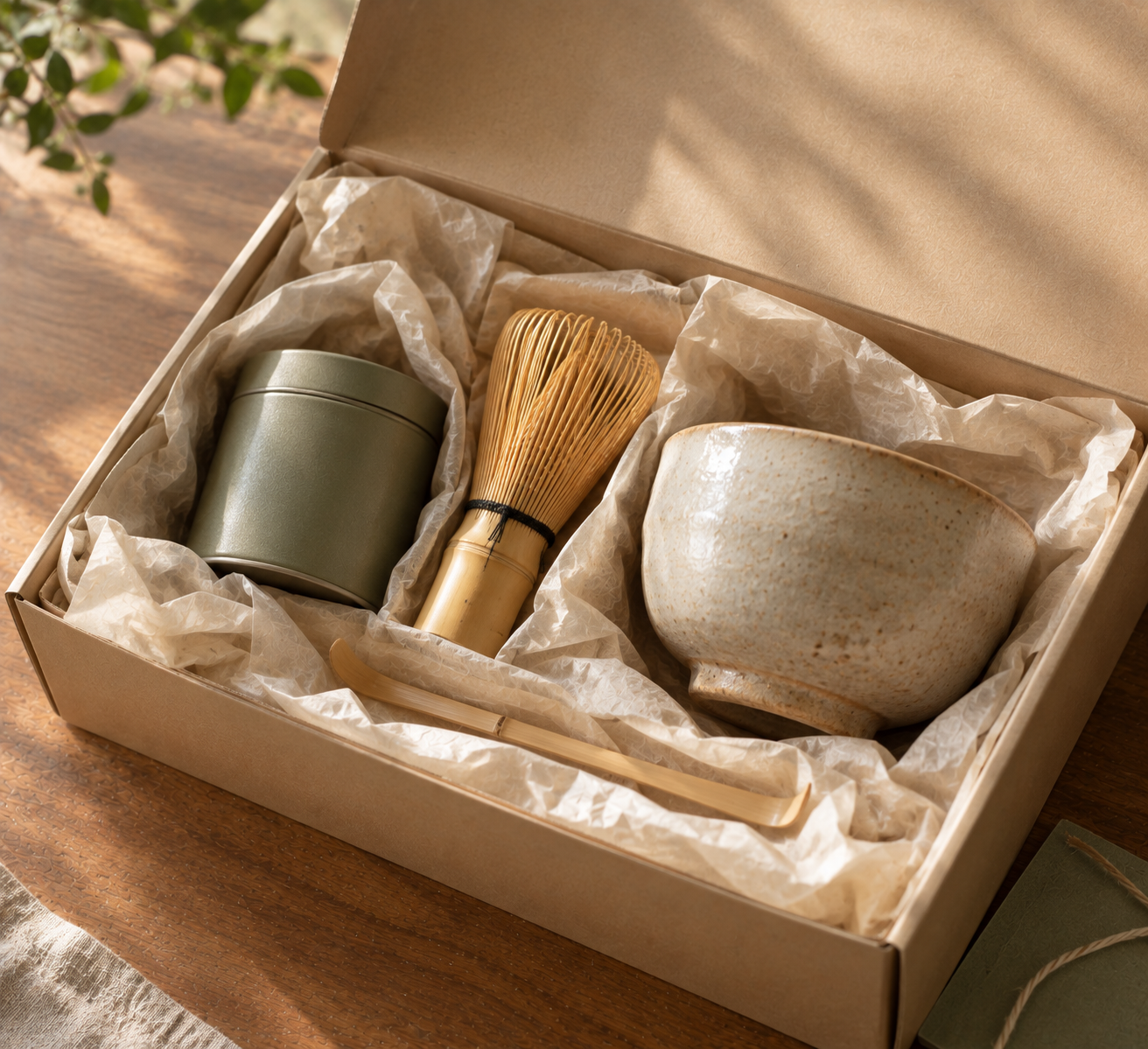
    These bundles pair ceremonial-grade matcha with the core preparation tools, the chasen (whisk), chawan (bowl), and chashaku (scoop), giving a recipient everything needed to start whisking matcha at home immediately, without needing to source pieces separately.

    Who it’s for: Someone curious about matcha who doesn’t yet own any preparation tools. This is the single best “starter” gift in the whole catalog, since the equipment barrier is often what stops someone from ever actually trying matcha at home in the first place.

    Sampler-Plus-Whisk Bundles

    Shop Nio Teas’ matcha sampler with whisk →

    Rather than a single tin, these bundles pair a multi-tea matcha sampler, an 18-pack in one common configuration, with a whisk included. This gives the recipient both the tool and enough variety to discover their own preference, rather than committing them to one specific matcha before they know what they like.

    Who it’s for: Someone slightly further along than a total beginner, or a gift where you want to combine “here’s everything you need” with “here’s a genuine tasting experience” rather than just a single flavor.

    Subscription-as-a-Gift: Monthly Matcha Club or Monthly Tea Club

    Shop the Monthly Matcha Club →

    Gifting a subscription is a genuinely different category from a one-time bundle, since it keeps giving, literally, over months rather than arriving once. The Matcha Club includes a free whisk and scoop in the first shipment; the Tea Club includes a free kyusu. Both are structured so the recipient can cancel once they’ve found their favorite, which removes the awkwardness of gifting an open-ended commitment they might not want to keep.

    Who it’s for: Someone you want to give an ongoing discovery experience to, rather than a single moment. This works particularly well for a recipient who enjoys the ritual of “something new each month” more than settling on one favorite quickly.

    Seasonal Advent Calendars

    Shop Nio Teas’ matcha and tea advent calendars →

    A genuinely novel gift format in this category: a matcha or loose leaf tea advent calendar, delivering a small daily tea discovery through the countdown to a holiday. This is squarely a seasonal, occasion-specific gift rather than a year-round option.

    Who it’s for: Gifting during the holiday season specifically, especially for someone who already enjoys the ritual and small-daily-discovery format, or as a genuinely different alternative to a chocolate advent calendar for a tea-loving recipient.

    Comparison at a Glance

    Bundle TypeBest ForCommitment Level
    Matcha Set (whisk + bowl + scoop)Complete matcha beginnersOne-time gift
    Sampler + WhiskBeginners who want varietyOne-time gift
    Monthly Matcha/Tea ClubOngoing discovery, open-ended interestRecurring (cancel anytime)
    Advent CalendarHoliday-specific giftingSeasonal, one-time

    A Few Things People Ask Me

    Is a subscription a “safe” gift, or does it feel like too much of a commitment to give someone? Since both subscription options are explicitly cancel-anytime once a favorite is found, it’s a genuinely lower-commitment gift than it might initially sound, closer to a trial than an obligation. Framing it that way when you give it helps set the right expectation.

    Should I buy the most expensive bundle to make the best impression? Not necessarily — matching the bundle to the recipient’s actual current knowledge and interest level matters more than price. A complete matcha beginner is often better served by the simpler matcha set than an elaborate, harder-to-navigate sampler bundle.

    Can I combine a bundle with individual products for a bigger gift? Yes, nothing stops you from pairing a matcha set with an individual gyokuro or a teaware piece for a more personalized, larger gift, rather than relying on a single pre-built bundle alone.

    Are the advent calendars only available during a specific window, or can I get one anytime? These are seasonal releases tied to the holiday countdown format, so availability is generally limited to the lead-up period before the relevant holiday, worth checking current availability before planning around one specifically.

    Where I Landed

    The matcha set is genuinely the safest, most broadly appropriate starting point if you’re not sure which bundle fits, since it solves the single biggest barrier, no tools, no way to prepare it, that stops a curious gift recipient from actually using what they’ve been given. Everything else in the lineup, the sampler bundles, the subscriptions, the advent calendars, are better thought of as upgrades once you know a bit more about how the specific person you’re buying for actually likes to engage with something new.

    If you’re deciding on the tea itself rather than the bundle format, checking what’s actually included in the sampler-based options first helps you understand exactly what a recipient will receive.