Disclosure: This post contains affiliate links. If you buy through one of them, I may earn a small commission at no extra cost to you. Marukyu Koyamaen matcha is frequently out of stock and heavily resold – availability and prices change quickly, so always check the current listing before you buy.
Quick Verdict
- Is Marukyu Koyamaen worth it? Yes, if you drink matcha straight and want to understand grades. It’s one of Uji’s most respected producers, grows and processes its own tea, and offers one of the widest, most clearly structured grade ranges anywhere.
- Best first tin: Aoarashi or Isuzu – approachable, balanced, and the classic starting points. Marukyu Koyamaen Isuzu on Amazon
- Best for sweet, smooth usucha: Wako – a favorite for its sweetness and low bitterness. Marukyu Koyamaen Wako on Amazon
- First step into koicha: Kinrin – the usual entry point for thick tea.
- Can’t find it in stock, or mostly making lattes? Nio Teas’ matcha collection is easier to get and more affordable. At the time of writing, ordering through the links on this page automatically applies a 10% discount at checkout – no code needed. Offers can change, so check the final price in your cart.
Below: how the grade system works, which grade fits which use, the honest downsides, and how to avoid overpaying a reseller.
If Ippodo is the brand most people start with, Marukyu Koyamaen is the one many matcha lovers end up with. It’s the name you hear from tea ceremony students, from people who have been drinking matcha for years, and from anyone who starts asking why one tin of “ceremonial” matcha tastes so different from another.
The reason is simple: Marukyu Koyamaen doesn’t just sell matcha in a few grades. It sells a ladder – a carefully structured range from approachable everyday matcha to some of the most refined tea in Uji – and once you understand that ladder, you understand matcha grading in general.
The Problem You’re Actually Trying to Solve
You’ve heard Marukyu Koyamaen is excellent, but the lineup is long, the names are unfamiliar (Aoarashi, Isuzu, Yugen, Wako, Kinrin, Unkaku, Tenju…), and every listing seems to be sold out or marked up. You want to know which grade is right for you, whether it’s actually better than easier-to-find brands, and how to buy it without overpaying.
Who This Article Is NOT For
- If you’re still choosing between brands, my matcha brand comparison compares Marukyu Koyamaen with Ippodo, Encha and DoMatcha.
- If you want to understand how Uji matcha differs from Nishio, Kagoshima or Yame, my matcha region comparison covers that.
- If you mostly make sweet iced lattes, Marukyu Koyamaen’s grades are more than you need – and harder to find than a good latte-grade matcha.
About Marukyu Koyamaen
Marukyu Koyamaen is a family-owned tea producer based in Ogura, Uji, in Kyoto Prefecture. It traces its history back to around the turn of the 18th century, and it’s now run by a later generation of the same family. Unlike many brands that buy finished tea, Marukyu Koyamaen grows, harvests and processes its own tea, and it has won awards at Japan’s national tea competitions many times.
Its matcha is used by tea ceremony schools, temples and shrines in Japan – which says a lot about how seriously professionals take it. Its matcha is also kosher certified.
How the Grade System Works
The key to Marukyu Koyamaen is one division: usucha grades and koicha grades.
- Usucha (thin tea) grades are made to be whisked into a light, frothy bowl. They’re the everyday grades.
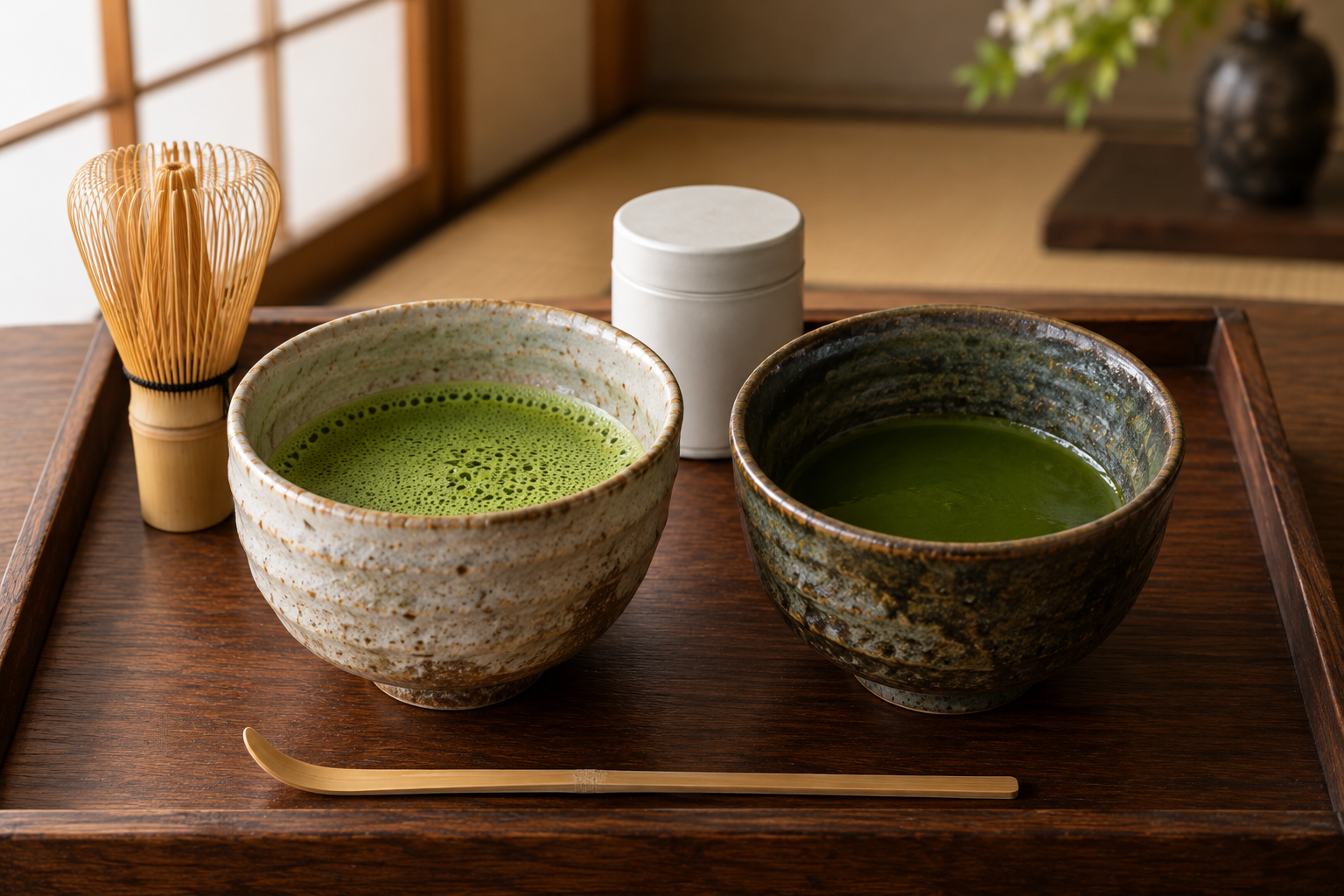
- Koicha-capable grades are refined and smooth enough to be prepared as koicha – thick tea, kneaded into a glossy paste with much more matcha and much less water. Thick tea exposes any bitterness, so only the highest-quality leaf works. These grades also make excellent usucha.
As a rule of thumb, Kinrin and above can be used for koicha. Below Kinrin, think usucha.
The Main Grades, Roughly From Entry to Top
| Grade | Best for | Character |
|---|---|---|
| Aoarashi (青嵐) | First-time drinkers, daily matcha, lattes | Balanced, approachable, good value |
| Isuzu (五十鈴) | Daily usucha, tea ceremony practice | Classic balance of sweetness and umami, clean finish |
| Yugen (又玄) | Daily usucha with more depth | Richer umami, smooth mouthfeel |
| Wako (和光) | Premium usucha, special occasions | Notably sweet, lingering finish, very little bitterness |
| Kinrin (金輪) | First koicha, rich usucha | Soft, creamy, full on the palate |
| Unkaku (雲鶴) | Koicha and premium usucha | Deeper, more refined umami |
| Eiju (永寿) | Koicha | Smooth, rounded, easy to whisk |
| Choan, Kiwami Choan, Tenju | Formal tea gatherings, special koicha | Marukyu Koyamaen’s top tier – extremely smooth and rich |
This isn’t every product Marukyu Koyamaen makes – the full catalog in Japan is longer – but these are the grades you’re most likely to see abroad.
Which Grade Should You Buy?
| You are… | Start with | Why |
|---|---|---|
| New to good matcha | Aoarashi or Isuzu | Forgiving, balanced, sensibly priced |
| Drinking usucha daily | Isuzu or Yugen | The best balance of quality and price |
| Wanting the “wow” usucha | Wako | Sweetness and smoothness that stand out |
| Curious about koicha | Kinrin | The entry point to thick tea |
| An experienced koicha drinker | Unkaku or above | Depth that shows in thick tea |
| Mostly making lattes | Aoarashi – or a cheaper latte grade elsewhere | Milk hides the difference |
A practical approach many tea students use: buy one usucha grade (Isuzu or Wako) and drink it for a month. Then try one grade higher and taste them side by side. The differences become obvious once you compare directly – and that’s the real education Marukyu Koyamaen offers.
What’s Genuinely Good
- The clearest grade ladder in matcha. Each step up adds smoothness and depth in a way you can actually taste.
- Grown and processed in-house. Fewer middlemen, and more control over quality.
- Respected by professionals. Used by tea schools, temples and shrines in Japan.
- Excellent koicha grades. If you want to explore thick tea, few brands are as well suited.
- Strong value at the lower grades when bought at a fair price – Isuzu and Wako punch well above their price.
The Honest Downsides
- Availability. Global matcha demand has made Marukyu Koyamaen hard to find. Popular grades sell out quickly, and some retailers limit how many tins you can buy.
- Reseller markups. Because it’s scarce, it’s often resold at two or three times its Japanese price. A “great deal” from an unknown seller may be old stock.
- Learning curve. The Japanese grade names mean nothing until you learn the system. Beginners can easily buy the wrong grade.
- Not certified organic. If organic certification matters to you, Encha or DoMatcha are better fits.
- Overkill for lattes. In milk and syrup, most of what you’re paying for disappears.
How to Buy It Without Overpaying
- Use authorized retailers that sell sealed tins with clear best-before dates. Many reputable Japanese tea shops abroad carry Marukyu Koyamaen.
- Check the price against similar sizes. A 40g tin of Isuzu or Wako shouldn’t cost several times what a comparable Ippodo tin costs.
- Look at the best-before date. Sealed, nitrogen-flushed tins keep well for months, but fresher is always better.
- On Amazon, check the seller, read recent reviews for freshness complaints, and avoid listings with no date information. Marukyu Koyamaen matcha on Amazon
- In Uji or Kyoto, buying in person is often easier and cheaper – and a good excuse for a trip.
Once opened, keep the tin sealed in the fridge and finish it within a month or two.
How to Prepare It
Usucha: sift about 2g (a heaped teaspoon) into a bowl, add 60-70ml of water at about 80°C (175°F), and whisk briskly in a zigzag until a fine foam forms.
Koicha (Kinrin and above): sift about 4g into a bowl, add around 30ml of water at about 80°C, and knead slowly with the whisk in circles until the matcha becomes a smooth, glossy paste – no foam.
A Few Things People Ask Me
Marukyu Koyamaen or Ippodo? Ippodo is easier to buy and simpler to navigate – great for beginners. Marukyu Koyamaen has a deeper grade system and some of the best koicha grades available, so it rewards people who want to learn. Many matcha drinkers keep one of each.
Which is the best Marukyu Koyamaen matcha? For most people drinking usucha, Wako is the standout. For koicha, Kinrin is the entry point, and the top grades (Choan, Kiwami Choan, Tenju) are for special occasions.
Why is it always sold out? Worldwide demand for high-quality Uji matcha has grown faster than production. Good matcha can’t be made quickly, so popular grades sell out.
Is Aoarashi good for lattes? Yes – it’s the grade most often recommended for daily matcha and lattes in the range.
Where I Landed
Marukyu Koyamaen is the brand that teaches you matcha. Start with Isuzu or Wako for usucha, try Kinrin when you’re curious about koicha, and taste grades side by side to understand what you’re paying for. Just be patient and careful about where you buy: a fairly priced, fresh tin from a good retailer is worth waiting for, while an overpriced tin of old stock isn’t. And if you can’t find it, don’t let the hunt stop you from drinking good matcha – plenty of excellent tea is easier to get.