Disclosure: This post contains affiliate links. If you buy through one of them, I may earn a small commission at no extra cost to you. Used tea leaves spoil quickly – see the food safety notes below before eating them.
If you brew loose-leaf Japanese tea every day, you end up with a lot of soggy leaves. And sooner or later, you’ll also find a half-finished bag of sencha at the back of the cupboard that’s past its best-before date and smells a little flat. Throwing either away feels wasteful – especially with good tea.
In Japan, used tea leaves even have their own name, chagara (茶殻), and there’s a long tradition of using them around the house, from cleaning tatami floors to cooking. Some of the popular “tea leaf hacks” online work well; others are more folklore than fact. This guide covers the uses worth trying, how to do them properly, and what to be careful about.
The Problem You’re Actually Trying to Solve
You have two different problems, and they need different solutions:
- Used leaves after brewing – wet, perishable, and still full of flavor and fiber.
- Old, unused tea – dry and safe, but stale, with faded aroma.
Old tea can often be revived; used leaves need to be used quickly or dried. Mixing the two up is how people end up with moldy leaves in the fridge.
Who This Article Is NOT For
- If your matcha has gone dull, the best fix is prevention – my matcha storage guide covers how to keep it fresh in the first place.
- If you’re hoping tea leaves will cure skin problems or work as a medicine, this isn’t that article. These are practical household uses, not remedies.
- If your tea has visible mold, a musty smell or signs of damp, don’t try to rescue it. Throw it away.
Part 1: Reviving Old, Unused Tea
Roast Stale Sencha Into Hojicha
This is the single best use for old green tea. Roasting brings out new, toasty aromas and covers the flat, faded notes of stale leaf. You get a fresh-tasting hojicha from tea you were about to throw out.
How to do it:
- Sift out the fine bits. Shake the tea through a strainer. Powdery fragments scorch easily.
- Heat a dry pan. Use a clean, dry frying pan (no oil) over low to medium-low heat. A traditional houroku, a clay tea roaster, works even better.
- Add the tea. About 15-20g is a good batch – a thin layer, not a pile.
- Keep it moving. Shake the pan or stir constantly with a spatula. Within a few minutes, the kitchen will fill with a sweet, toasty smell.
- Watch the color. Roast for roughly 5-10 minutes, until the leaves are an even light to medium brown. Stop before they turn black.
- Cool and store. Spread the leaves on a plate to cool, then keep them in an airtight container.
Brew it like regular hojicha: near-boiling water, about 30 seconds.
Tip: Bancha and lower-grade sencha roast beautifully. Very fine, deep-steamed teas break up easily, so roast them more gently.
Cook and Bake With Old Matcha
Matcha that’s lost its bright color and sweetness isn’t pleasant to drink straight, but it’s still fine for recipes where sugar, butter and milk do the heavy lifting: cookies, pound cake, pancakes and matcha lattes with plenty of milk. The color will be duller, so it suits recipes where appearance matters less. My guide to baking with matcha covers how to keep the flavor and color as good as possible.
Make Cold Brew
Slightly stale sencha often tastes better cold-brewed than hot, because cold water extracts less bitterness and the faded aroma matters less. Use about 10g of leaf per liter of cold water and refrigerate for a few hours.
Grind It Into Tea Salt
Grind dry old sencha finely in a spice grinder or mortar and mix it with salt – roughly one part tea to two or three parts salt. It’s lovely sprinkled on tempura, rice balls, grilled fish or roasted vegetables.
Part 2: Using Leaves After Brewing
Eat Them
Japanese tea leaves, especially good sencha and gyokuro, are tender enough to eat after brewing – and gyokuro leaves in particular are often enjoyed this way in Japan. They’re soft, slightly bitter and pleasantly green.
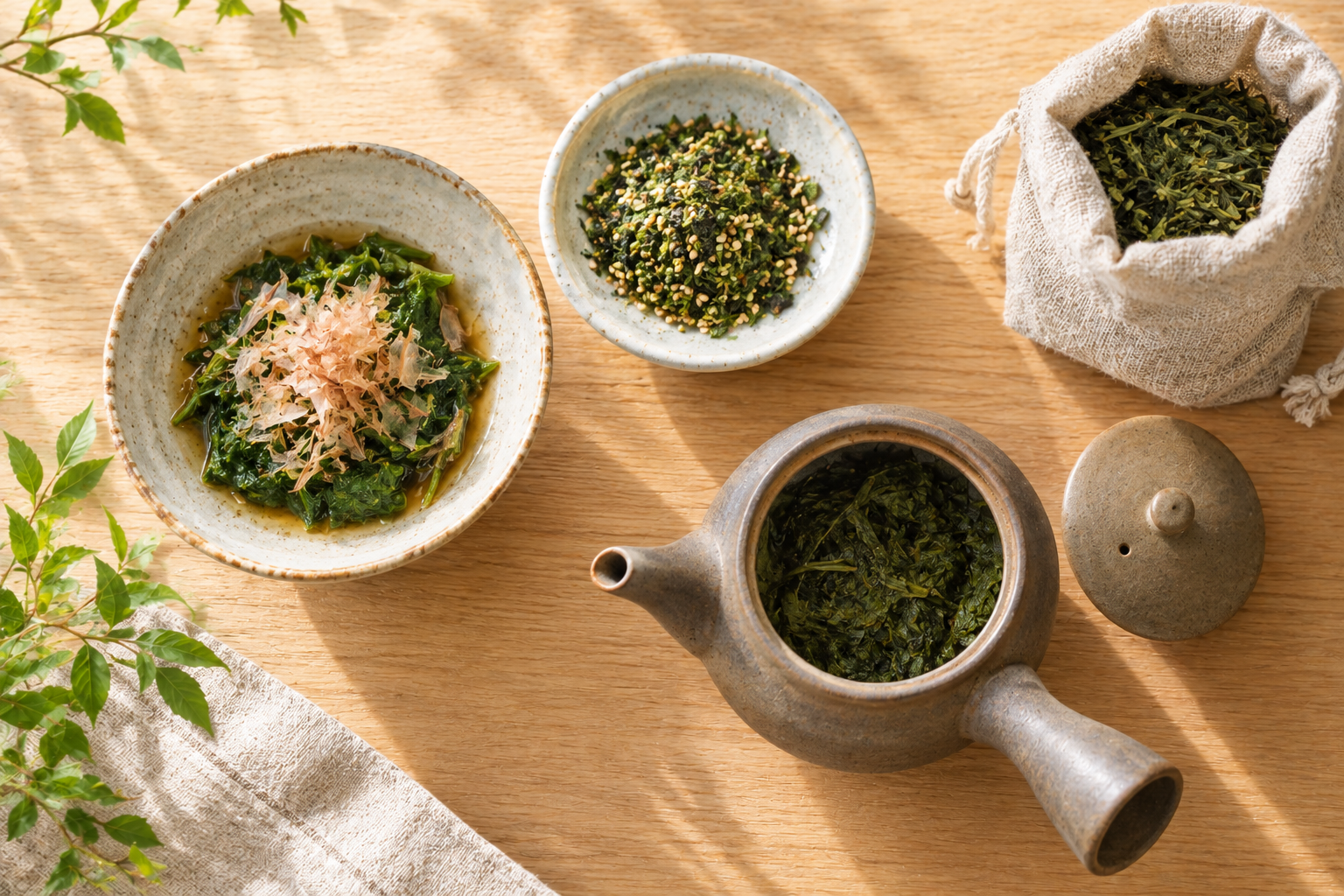
- With ponzu or soy sauce. Squeeze out the water, then dress the leaves with a little ponzu or soy sauce and a pinch of bonito flakes. This is a classic way to finish a pot of gyokuro.
- In salads and dressings. Chop and add to a simple salad or mix into dressings.
- Tsukudani. Simmer the leaves with soy sauce, mirin and sugar until the liquid is gone to make a savory rice topping.
- Furikake. Dry the leaves in a low oven or a dry pan, then crumble them with sesame seeds, salt and nori.
- In cooking. Mix chopped leaves into omelets, fritters, fried rice or tempura batter.
Best leaves to eat: high-grade sencha, fukamushi and especially gyokuro. Tougher teas like bancha or hojicha are less pleasant to chew.
Food safety: used tea leaves are wet and perishable. Treat them like cooked vegetables:
- Use them the same day, or refrigerate in a covered container and use within about a day.
- Don’t leave them sitting in the teapot or at room temperature for long.
- If they smell sour, look slimy or show any mold, throw them away.
Use Them for Cleaning
This one is genuinely traditional. In Japanese homes, people scattered damp tea leaves on tatami mats or wooden floors before sweeping. The leaves trap dust and stop it from flying up, making sweeping easier.
How to do it:
- Squeeze the leaves well so they’re damp, not wet.
- Scatter them lightly over the floor, then sweep them up with the dust.
Caution: tea can stain. Test on a small, hidden area first, and avoid using this on light-colored carpets, unsealed wood, fabric or light tatami. For most modern homes, a quick test is essential.
Use Them to Reduce Smells
Thoroughly dried tea leaves are often used in Japan to absorb odors in small spaces. Results are modest, but many people find them useful for:
- The fridge: put dried leaves in a small dish or a cloth pouch.
- Shoes: place a pouch of dried leaves inside overnight.
- Hands and cutting boards: rubbing damp leaves on your hands or a board after cutting fish or garlic can help freshen them before washing.
The important part: the leaves must be completely dry before you leave them anywhere. Damp leaves in a closed space are an invitation for mold. Dry them on a tray in a sunny spot for a day or two, or in a low oven, and replace them every week or two.
Add Them to Compost or the Garden
Used tea leaves are organic matter and can go into compost. You can also dig them lightly into garden soil. Their fertilizer effect is mild, so think of them as compost material rather than plant food.
Tips:
- Mix them into compost or soil rather than piling them on the surface, where they can go moldy.
- Go easy with houseplants – a thick layer of wet leaves on a potted plant can encourage mold and fungus gnats.
- Remove tea bags with plastic or nylon mesh, and staples, before composting.
Quick Reference: What to Do With Each
| What you have | Best uses |
|---|---|
| Old, stale sencha or bancha | Roast into hojicha; cold brew; tea salt |
| Old, dull matcha | Baking, lattes, smoothies |
| Used gyokuro or good sencha leaves | Eat with ponzu; furikake; tsukudani |
| Used everyday tea leaves | Cleaning, deodorizing (dried), compost |
| Tea that’s moldy or smells musty | Throw away |
How to Avoid Having Old Tea in the First Place
- Buy smaller bags. 50-100g of sencha is a good size for most people.
- Store it properly. Airtight, dark and cool. A good tea canister makes a big difference.
- Finish opened tea within a few weeks. Sencha starts to fade once opened; matcha even faster.
- Keep unopened tea in the fridge if you won’t open it soon, and let it reach room temperature before opening to avoid condensation.
A Few Things People Ask Me
Can I drink expired green tea? If it’s been stored dry and shows no mold or musty smell, old tea is usually still safe – it just tastes flat. The best-before date is about quality. Roasting it into hojicha is the best way to enjoy it.
Can I reuse tea leaves the next day? Not for brewing. Leaves left wet overnight can start to spoil, so either brew all your infusions in one session or refrigerate the leaves and cook with them within a day.
Do tea leaves really remove smells? Dried leaves can help a little in small spaces like shoes or the fridge. They’re not as strong as baking soda or activated charcoal, but they’re free.
What should I buy to make my own hojicha? A traditional houroku tea roaster on Amazon makes roasting easier and more even. And when it’s time for fresh tea, Nio Teas’ sencha collection offers smaller bags that are easier to finish while fresh.
Where I Landed
The best way to use old tea is to roast it – turning a stale bag of sencha into fresh hojicha feels like a small kitchen magic trick. For used leaves, I eat the good ones with a splash of ponzu, dry a handful for the fridge, and put the rest in the compost. Good tea deserves more than one life, as long as you remember the one rule: dry leaves keep, wet leaves don’t.