Disclosure: This post contains affiliate links. If you buy through one of them, I may earn a small commission at no extra cost to you.
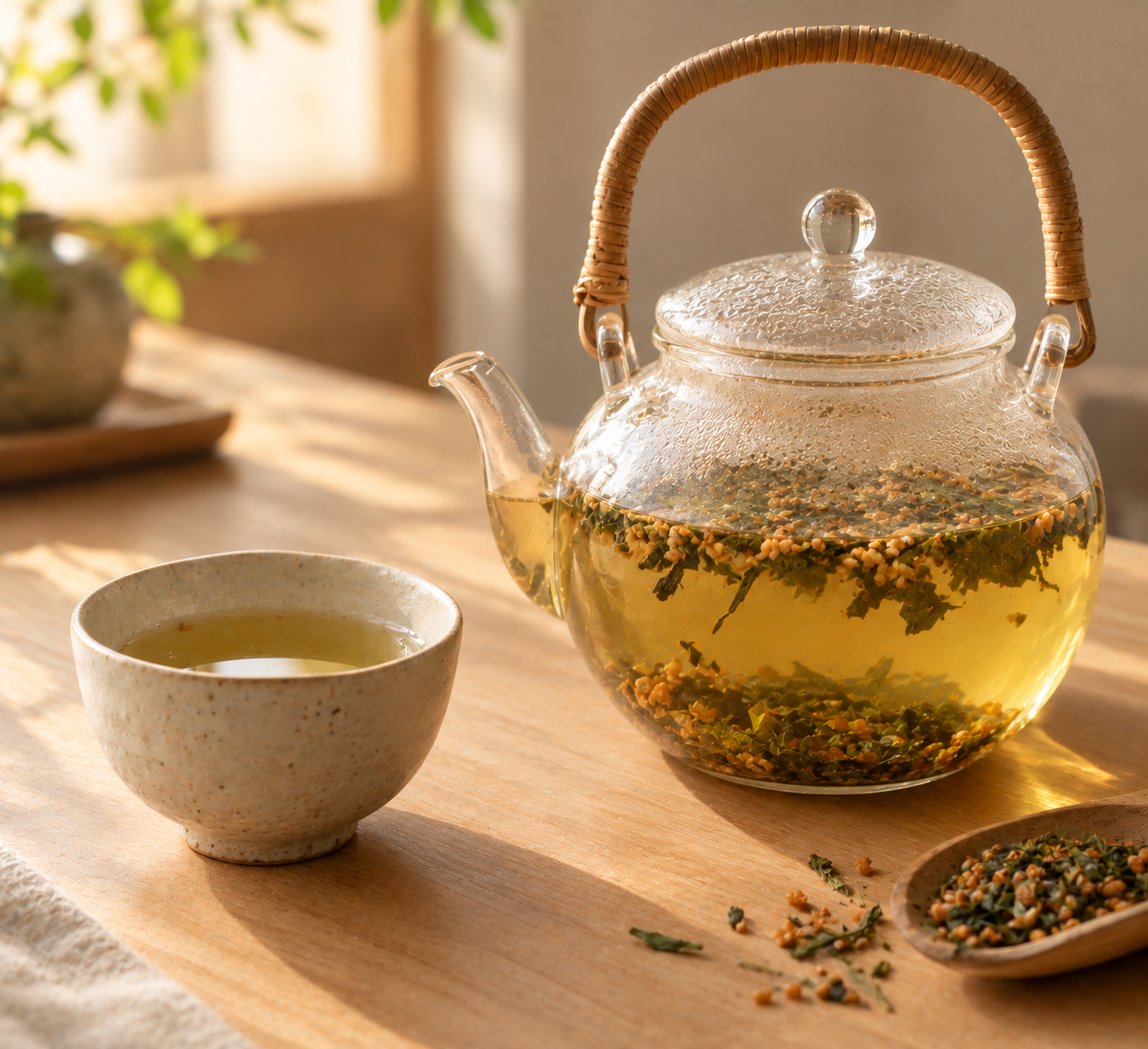
The first time someone handed me a bag of genmaicha without explaining what it was, I genuinely thought a few kernels of popcorn had gotten mixed in with loose-leaf green tea by accident. They hadn’t. Genmaicha is green tea blended with roasted brown rice, and some of those rice grains actually pop during roasting the same way popcorn does, which is exactly where the nickname comes from.
It’s one of the more approachable Japanese green teas for people who find sencha or gyokuro a bit too grassy or vegetal on their own, because the roasted rice rounds out that sharpness with something warmer and nuttier. It’s also, historically, the most working-class of Japan’s green teas, which is a more interesting backstory than most tea has.
The Problem You’re Actually Trying to Solve
Genmaicha gets recommended a lot as a “beginner-friendly” Japanese green tea, but very little of that advice explains what’s actually different about it – why it tastes the way it does, how its caffeine content compares to sencha or hojicha, or how to brew it so the rice flavor doesn’t overpower the tea (or vice versa). Most people end up either over-steeping it into something bitter, or just buying whatever bag says “genmaicha” without knowing there are meaningfully different versions of it.
Who This Article Is NOT For
- If you’re looking for a completely caffeine-free option, genmaicha isn’t it – it has moderate caffeine, more than hojicha but less than sencha, so my guide to hojicha brands might be closer to what you want if avoiding caffeine is the priority.
- If you already know genmaicha well and want brewing gear rather than an explainer, my kyusu buying guide covers the teapot side of things.
- If you’re specifically comparing matcha to green tea rather than genmaicha to other green teas, that’s a different comparison covered elsewhere on the site.
What Genmaicha Actually Is
Genmaicha on Amazon is steamed Japanese green tea – usually sencha or bancha – blended with roasted, hulled brown rice. During roasting, a portion of the rice grains pop, similar to popcorn, and those popped kernels are part of what people mean when they call this “popcorn tea.” The tea itself contributes the grassy, umami base you’d expect from Japanese green tea, while the rice adds a nutty, toasty sweetness and a lighter, more golden color to the finished cup than a straight sencha would have.
Historically, genmaicha wasn’t originally about flavor at all – the rice was added as a cost-effective filler that stretched more expensive tea leaves further, which made it accessible to lower-income households and earned it the nickname “the people’s tea.” It was also used by people observing religious fasting periods or going long stretches between meals, since the roasted rice made a cup feel more substantial than tea alone. Today that class association has mostly faded, and genmaicha is enjoyed across the board, but the backstory is part of what makes it distinct from teas developed purely around flavor or ceremony.
Matcha-iri genmaicha is the one variant worth knowing by name: it has powdered matcha added into the blend, which gives it a noticeably more vivid green color and a stronger, more rounded flavor than plain genmaicha. If you’ve had a genmaicha that tasted unusually rich and green rather than pale gold, it was probably this version.
How Genmaicha Compares to Sencha and Hojicha
These three often get lumped together as “everyday Japanese green teas,” but they’re made differently and taste distinctly different from each other.
| Genmaicha | Sencha | Hojicha | |
|---|---|---|---|
| What it is | Steamed green tea + roasted brown rice | Steamed, rolled green tea leaves | Roasted green tea leaves and stems |
| Flavor | Toasty, nutty, mildly sweet | Grassy, vegetal, umami-forward | Nutty, caramelized, warm |
| Caffeine | Moderate | Higher | Low |
| Best time to drink | Afternoon | Morning | Evening |
The caffeine difference comes down to processing and ratio: sencha is straight tea leaf, so it carries the most caffeine of the three. Hojicha is roasted at high heat, which measurably reduces both bitterness and caffeine. Genmaicha sits in the middle mostly because the rice dilutes the ratio of actual tea leaf in each serving, not because the tea itself is a lower-caffeine varietal.
How to Brew Genmaicha Properly
Genmaicha is more forgiving than sencha or gyokuro, but it still has a sweet spot. The general target is 80°C (176°F) for most standard genmaicha blends, with some adjustment depending on what base tea it’s built on:
- Premium or gyokuro-based genmaicha: 75-78°C – these use a more delicate base tea that turns bitter faster at higher heat
- Standard sencha-based genmaicha (the most common kind): 80°C
- Bancha-based genmaicha: 85-90°C – bancha is a coarser, later-harvest leaf that can handle more heat without turning bitter
If you don’t own a tea thermometer on Amazon, the cooling transfer method works well here: pour boiling water between two cups or a cup and your teapot, waiting about 30 seconds between each transfer. Each pour drops the temperature by roughly 8-10°C, so two or three transfers gets you into genmaicha’s ideal range without any equipment. Let it steep briefly rather than walking away from it – genmaicha at high heat turns bitter quickly, and the rice flavor is more pleasant when the tea itself hasn’t gone over-extracted.
A Few Things People Ask Me
Does genmaicha taste like rice, or like tea? Both, in a blended way rather than one overpowering the other – the base is recognizably green tea, umami and slightly grassy, but the roasted rice adds a warm, nutty sweetness underneath it that softens the sharper edges you’d get from plain sencha.
Is genmaicha good for people who find green tea too bitter or grassy? Genuinely, yes – it’s one of the more commonly recommended “starter” Japanese green teas for exactly this reason. The rice’s mild sweetness balances the vegetal quality that puts some people off sencha or gyokuro on their own.
Can I re-steep genmaicha the way you can with sencha? You can get a second infusion out of most genmaicha, though the rice flavor tends to fade faster than the tea’s own flavor across multiple steeps, so the second cup will taste noticeably more like plain green tea and less like the rice-forward blend you got on the first pour.
Is matcha-iri genmaicha worth seeking out over regular genmaicha? If you like a stronger, greener, more full-bodied cup, yes – it’s a genuinely different drinking experience from plain genmaicha, not just a marketing variation. Nio Teas’ genmaicha is where I’d start if you want to compare the plain and matcha-iri versions side by side. Worth trying at least once to see which style you actually prefer.
Where I Landed
What sold me on genmaicha, once I understood the backstory, was realizing it was never designed to impress anyone – it was tea made more affordable and more filling for people who needed both. That practical, unglamorous origin is oddly part of the appeal now: it’s an easy, forgiving, everyday cup in a way ceremonial-grade matcha or a fussy gyokuro just isn’t trying to be. If sencha has ever felt like a bit too much on its own, genmaicha is worth keeping in the cupboard as the version that meets you halfway.