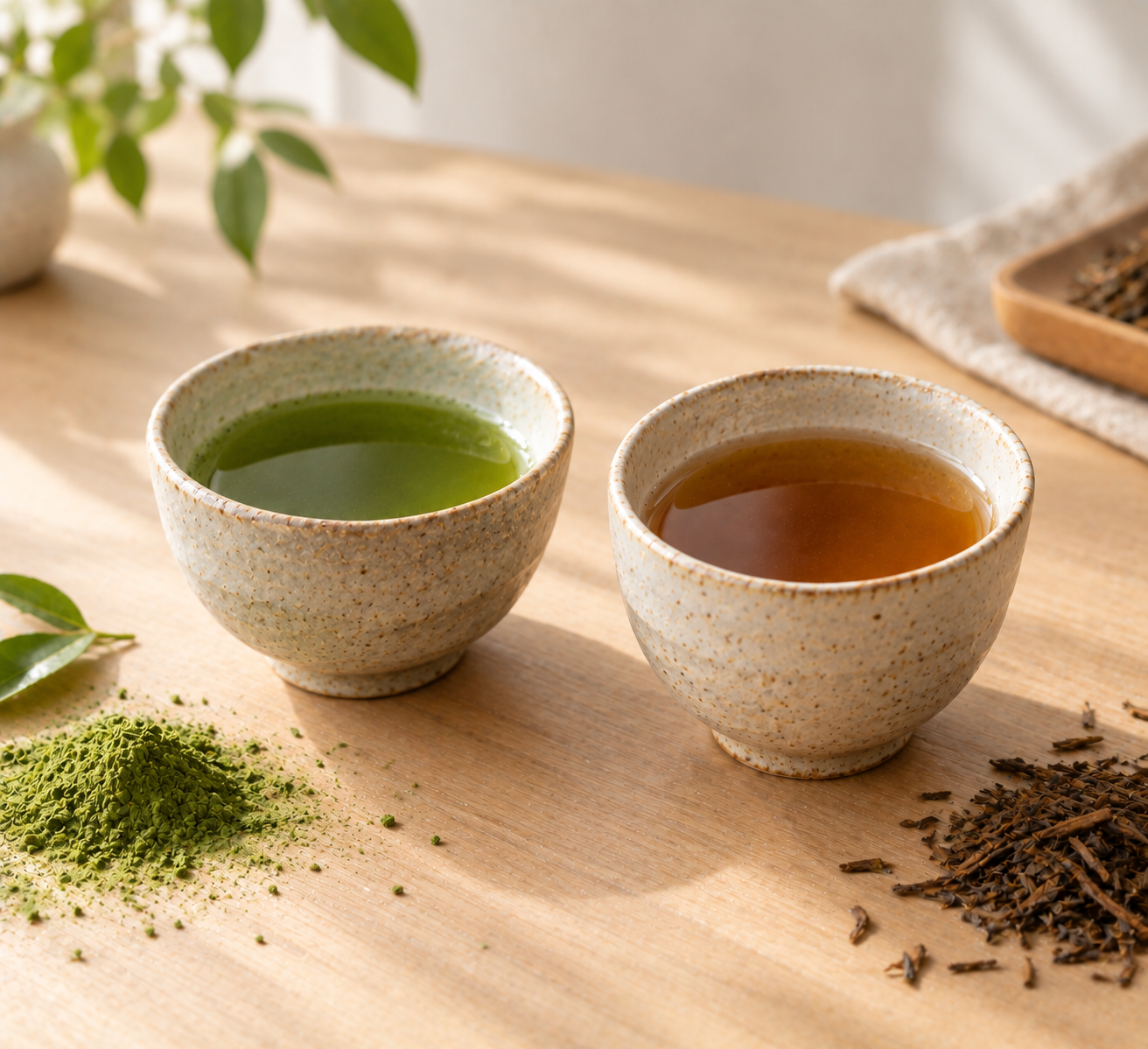
Tag: Caffeine Comparison

  • Matcha vs. Hojicha: Which One Actually Has Less Caffeine?

    Matcha vs. Hojicha: Which One Actually Has Less Caffeine?

    Disclosure: This post contains affiliate links. If you buy through one of them, I may earn a small commission at no extra cost to you.

    Hojicha has a reputation as “the caffeine-free Japanese tea,” and I believed that for longer than I should have – right up until I looked at actual numbers and found out hojicha isn’t caffeine-free at all. It’s lower in caffeine than matcha, genuinely, but the gap and the reasons behind it are more specific than the simple “roasting removes caffeine” story that gets repeated constantly.

    If you’re choosing between the two specifically to manage caffeine intake – afternoon cup, evening habit, sensitivity to caffeine generally – it’s worth knowing what’s actually driving the difference rather than just trusting the reputation.

    The Problem You’re Actually Trying to Solve

    The common shorthand is “hojicha is roasted, so it’s low-caffeine, and matcha is the whole leaf, so it’s high-caffeine” – which is true in direction but skips over how much of hojicha’s lower caffeine actually comes from roasting versus other factors, and it doesn’t give you real numbers to actually plan around if you’re trying to manage your intake at a specific time of day.

    Who This Article Is NOT For

    • If you want the lowest-caffeine option available rather than a comparison between these two specifically, genuinely caffeine-free herbal options (not real tea at all) would serve that goal better than either matcha or hojicha.
    • If you’re comparing hojicha to sencha or genmaicha rather than matcha specifically, my genmaicha guide covers that three-way comparison in more depth.

    The Actual Numbers

    Per typical serving, matcha runs meaningfully higher in caffeine than hojicha – roughly 48-80mg for matcha versus roughly 5-20mg for hojicha. That’s a real difference, generally putting hojicha somewhere between a third and a tenth of matcha’s caffeine content depending on the specific matcha grade and how the hojicha was made.

    For context, sencha sits in between at roughly 20-30mg, and genmaicha runs close to hojicha at roughly 10-15mg. Coffee, for comparison, is typically 80-100mg per cup – meaning a strong matcha can actually approach coffee’s caffeine level, while hojicha stays well below it across the board.

    Why Hojicha Actually Has Less Caffeine

    This is the part that gets oversimplified. Roasting does play a role, but it’s a smaller piece of the story than the “roasting burns off the caffeine” version people usually repeat suggests.

    Roasting genuinely reduces caffeine somewhat – some of the caffeine in the leaf does evaporate during the high-heat roasting process – but this alone doesn’t account for hojicha’s full drop in caffeine relative to unroasted green tea.

    The base leaf matters more than most people realize. Hojicha is very often made from bancha – a coarser, later-harvest tea leaf – which naturally contains somewhat less caffeine than younger, more tender leaf material to begin with. So part of hojicha’s lower caffeine isn’t from roasting at all; it’s baked into the leaf choice before roasting even happens.

    Leaf maturity affects how much actually dissolves into your cup. More mature, later-picked leaves (again, common in hojicha’s base material) tend to be tougher and higher in fiber, which means less of their total compound content – caffeine included – extracts into the water during brewing compared to younger, more tender leaf.

    Matcha, by contrast, is made from shade-grown young leaves, ground into a powder you consume whole rather than steeping and discarding – which is the core reason it runs so much higher in caffeine than any steeped tea, hojicha included. You’re not extracting a portion of the leaf’s compounds into water; you’re drinking the entire leaf, powder and all. If you want to keep both on hand and choose by time of day, a matcha and hojicha powder set on Amazon is a simple way to have both without ordering separately.

    Choosing Based on When You’re Drinking It

    Given the actual gap in caffeine, the practical guidance is fairly simple: matcha is a reasonable substitute for a morning coffee if you want sustained energy without coffee’s sharper spike, while hojicha’s low caffeine load makes it a genuinely good evening or after-dinner option that won’t meaningfully interfere with sleep the way even a modest cup of matcha or sencha might for a caffeine-sensitive person.

    If you’re caffeine-sensitive generally, treating hojicha as “basically caffeine-free” isn’t accurate enough to be safe – it does still carry a measurable dose, just a much smaller one than most other real teas.

    A Few Things People Ask Me

    Is hojicha actually caffeine-free, or does it just have very little? It has very little, not none – somewhere in the 5-20mg range per serving is still a real, measurable amount of caffeine, even though it’s a fraction of what matcha or coffee delivers.

    If I’m sensitive to caffeine, is hojicha safe to drink at night? For most people with normal caffeine sensitivity, yes, given how low its caffeine content runs – but if you’re genuinely caffeine-sensitive (not just averagely so), even hojicha’s small dose is worth being aware of rather than assuming it’s equivalent to a caffeine-free herbal tea.

    Does darker-roasted hojicha have even less caffeine than lighter roasts? Generally, yes, to a modest degree – more extensive roasting does continue to reduce caffeine somewhat further, though the base leaf and its maturity remain the bigger factor overall rather than roast level alone.

    If I want matcha’s flavor but less caffeine, is there a good compromise? Blending matcha into a hojicha latte is one practical way to get some matcha flavor while diluting the overall caffeine load relative to a straight matcha drink – my guide to matcha-hojicha lattes covers exactly that combination in more depth.

    Where I Landed

    The honest version of this comparison is less tidy than “hojicha is roasted, so it’s caffeine-free” – hojicha is genuinely lower in caffeine than matcha, but it gets there through a combination of leaf choice, leaf maturity, and roasting together, not roasting alone. Practically, that distinction doesn’t change much about which one to reach for – hojicha still wins clearly if a lower caffeine load is what you’re after – but it’s worth knowing you’re not drinking something caffeine-free, just meaningfully lower than the alternative. If you want to try both side by side, Nio Teas carries hojicha and matcha from the same catalog, which makes comparing them directly easier than sourcing from two different brands.
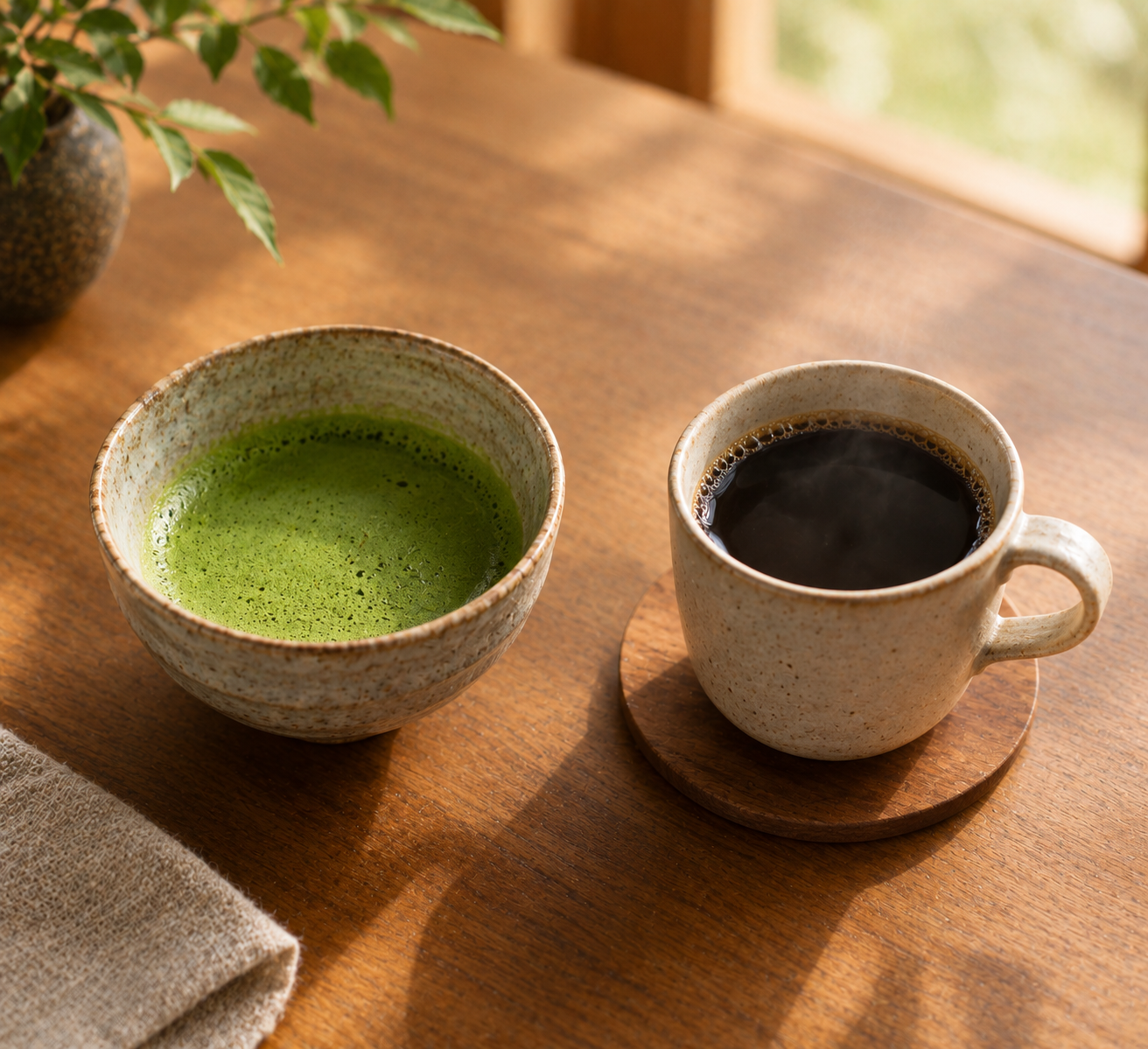
  • Matcha vs Coffee: The Actual Caffeine Numbers

    Matcha vs Coffee: The Actual Caffeine Numbers

    Disclosure: This post contains affiliate links. If you buy through one of them, I may earn a small commission at no extra cost to you. This article is for general information and isn’t a substitute for advice from your doctor, especially if you’re pregnant, managing a health condition, or sensitive to caffeine.

    I switched from a morning coffee to a morning matcha expecting a noticeably gentler jolt, and what actually surprised me was how close the two felt in the moment, even though every chart I’d seen beforehand suggested matcha was the clearly weaker option. It turns out both things are true at once: matcha generally does have less caffeine than a standard cup of drip coffee, but the gap is smaller than the popular narrative suggests, and how the caffeine actually feels matters just as much as the raw number on a chart.

    This is a topic where the numbers genuinely vary a lot depending on how you prepare each drink, so instead of giving you one flat number, here’s the actual range and what drives it — because a single confident-sounding figure, the kind that gets repeated across dozens of blog posts without much scrutiny, tends to hide more than it reveals.

    The Problem You’re Actually Trying to Solve

    You’ve searched for a matcha vs coffee caffeine comparison because you’re either trying to switch from one to the other for a gentler or stronger effect, or you’re managing your total daily caffeine intake and want to know how the two actually stack up rather than relying on the vague “matcha has less caffeine” line that gets repeated everywhere without much detail behind it.

    Who This Article Is NOT For

    Let’s save you some scrolling if this isn’t quite your situation.

    • If you have a diagnosed heart condition, are pregnant, or are managing caffeine sensitivity under a doctor’s guidance, general comparison numbers like these aren’t a substitute for personalized medical advice about your specific safe intake level.
    • If you’re looking for a precise number to track exact daily milligrams, both matcha and coffee’s caffeine content vary enough by preparation that any single number is really a midpoint of a range, not a lab-verified constant you can rely on to the milligram.
    • If you want to know which one is “healthier”, that’s a different, broader question than caffeine content alone — this article stays specifically focused on the caffeine comparison.

    If you’re past that, here’s where the actual comparison starts.

    The Actual Numbers

    DrinkTypical ServingCaffeine Range
    Matcha (whisked bowl)1–2g powder35–90mg
    Steeped green tea8oz cup20–30mg
    Hojicha8oz cup7–8mg
    Drip coffee8oz cup70–150mg
    Espresso shot1oz60–80mg
    Instant coffee8oz cup30–90mg

    These ranges are wide on purpose — caffeine content genuinely varies by brand, grade, growing conditions, and how much of the powder or grounds you actually use, so treat these as realistic bands rather than fixed numbers.

    Why the Ranges Are So Wide

    Matcha’s Variables

    Matcha’s caffeine content depends heavily on how much powder goes into a serving, generally somewhere between 1 and 2 grams for a standard bowl, and roughly 20 to 35mg of caffeine per gram of powder. A lighter 1-gram serving and a stronger, café-style 3 to 4-gram serving can differ by a factor of three or more in total caffeine, which is a bigger swing than most people expect from what looks like a fairly standardized drink. Grade and growing conditions add further variation on top of that, since shading intensity and harvest timing both influence the leaf’s underlying caffeine concentration before it’s ever ground into powder.

    Because matcha is whole ground leaf rather than a partial water extraction, you’re consuming everything in that leaf, which is part of why matcha carries more caffeine per gram than most conventional steeped green tea, even though a full cup of matcha still generally lands below a full cup of coffee.

    Coffee’s Variables

    Coffee’s range is arguably even wider than matcha’s. A standard 8-ounce drip coffee typically falls between 70 and 150mg, but that swings meaningfully based on the roast, grind, brew method, and how much ground coffee actually went into the pot. Counterintuitively, lighter roasts often retain slightly more caffeine than darker roasts, since roasting itself breaks down a small amount of caffeine over time, though this effect is modest compared to the impact of simply using more or less coffee per cup. Espresso, despite its reputation for intensity, is actually more concentrated per ounce but lower in total caffeine per shot than a full cup of drip coffee, simply because you’re drinking a much smaller volume.

    The Closer Comparison: Matcha vs Espresso

    This is where the numbers get genuinely interesting. A standard 2-gram matcha serving and a single espresso shot land in a strikingly similar range, both typically somewhere around 60 to 80mg. If your mental model of matcha is “much weaker than coffee,” that model holds up against a full drip coffee, but breaks down almost entirely against a single shot of espresso.

    Why the Caffeine Feels Different Even at Similar Amounts

    Even when the milligram counts land close together, matcha and coffee tend to feel different in practice, and the most commonly cited explanation is L-theanine, an amino acid present in much higher concentration in matcha than in coffee. L-theanine is thought to work alongside caffeine to produce a steadier, more sustained alertness, without the sharper spike-and-crash pattern some people experience with coffee alone.

    It’s worth being straightforward about the strength of this claim: the L-theanine-smoothing effect is a genuinely common and widely reported experience, and there’s real research interest in how L-theanine and caffeine interact, but individual response varies, and it’s not a guarantee that matcha will feel gentler for everyone specifically because of this mechanism.

    Which One Makes Sense for You

    If you want the gentlest possible caffeine option: steeped green tea or hojicha, both meaningfully lower than either matcha or coffee, with hojicha in particular landing close to caffeine-free in comparison to the others on this list.

    If you want noticeably less caffeine than coffee but still a real dose: a standard 1 to 2-gram matcha serving, understanding that a stronger café-style preparation closes much of that gap.

    If you want maximum caffeine in the smallest volume: espresso, which delivers a comparable amount to matcha but in a fraction of the liquid volume and time to drink it.

    If you’re managing total daily intake and want predictability: track your actual preparation method rather than relying on a single “coffee has X mg” or “matcha has Y mg” number, since both vary enough that a rough average can be meaningfully off from what you’re actually drinking.

    Measuring Your Own Matcha Amount

    Shop digital kitchen scales (0.1g precision) on Amazon →

    If predictability matters more to you than convenience, weighing your matcha rather than eyeballing a scoop is the single most reliable way to keep your caffeine intake consistent from one cup to the next.

    A Few Things People Ask Me

    Can I just switch from coffee to matcha and expect the exact same energy? Not reliably, given how much both ranges overlap and vary. A light matcha serving will feel noticeably gentler than a strong drip coffee, but a robust, café-style matcha can land close to a full cup of coffee in raw caffeine. If a predictable switch matters to you, start by measuring your matcha amount consistently rather than eyeballing it.

    Is it safe to drink both matcha and coffee in the same day? For most healthy adults, yes, as long as total caffeine intake stays within general safety guidelines, commonly cited around 400mg per day for healthy adults. A matcha in the 60–70mg range plus a coffee in the 100–150mg range comfortably fits within that for most people, though your own tolerance and any medical guidance you’ve received should take priority over a general guideline.

    Does the caffeine in matcha hit faster or slower than coffee? Anecdotally, many people report matcha’s effects building more gradually and lasting longer rather than hitting all at once, which lines up with the L-theanine explanation above, though rigorous head-to-head timing data comparing the two is more limited than the general caffeine content numbers.

    Why does my matcha latte from a café sometimes feel stronger than the numbers suggest it should? Café preparations often use more matcha powder per serving than a typical home recipe, sometimes in the 3 to 4-gram range rather than 1 to 2 grams, which can push a single drink’s caffeine content noticeably higher than the lighter end of the range this article covers.

    Does hojicha make a good caffeine-free-ish alternative if I love the flavor of Japanese tea but want to cut back? Yes, and it’s genuinely one of the more effective swaps on this list. Roasting breaks down a meaningful portion of hojicha’s caffeine, landing it at just 7 to 8mg per cup compared to matcha’s 35 to 90mg range, while still delivering a distinct, satisfying flavor rather than feeling like a compromise. My best hojicha brands guide is a good place to start if this appeals to you.

    Is decaf coffee a fairer comparison to low-caffeine teas than regular coffee? In terms of raw caffeine content, yes — decaf coffee typically lands in the single digits to low teens of milligrams, closer to hojicha than to matcha or regular coffee. It’s worth keeping in mind if you’re specifically trying to minimize caffeine rather than just choosing a gentler option than a full cup of regular coffee.

    Where I Landed

    The honest takeaway is less dramatic than most headlines make it sound: matcha generally has less caffeine than coffee, but the two overlap enough, especially against espresso, that “matcha is the weak option” isn’t automatically true depending on how each is prepared. If caffeine amount is your main concern, measuring your matcha rather than eyeballing it gives you far more control than the ingredient itself does.

    It’s also worth remembering that caffeine content is only one piece of why people choose one drink over the other. Flavor, ritual, and how the caffeine actually feels once it kicks in all matter just as much as the milligram count, and none of those show up on a comparison chart no matter how detailed it gets.

    If you’re deciding which matcha to actually keep in your kitchen for this, my matcha powder brands comparison is a good next stop, and my how to make a matcha latte guide covers the ratios if you want to dial in a specific strength rather than guessing.