Tag: Tea Gift Ideas

  • The Japanese Tea Set Gift Guide: Matching the Set to the Occasion

    The Japanese Tea Set Gift Guide: Matching the Set to the Occasion

    Disclosure: This post contains affiliate links. If you buy through one of them, I may earn a small commission at no extra cost to you.

    A Japanese tea set is one of those gifts that can go either way. Get it right and it becomes something someone actually uses every day for years, a small daily ritual you had a hand in starting. Get it wrong and it becomes decorative clutter, admired once and then quietly relegated to a cabinet. The difference almost always comes down to matching the set’s size and formality to the occasion and the recipient’s actual life, not to how impressive the set looks in photos or how ornate the box it arrives in happens to be.

    This is a companion piece to my broader Japanese tea gift guide, which covers what tea itself to give based on the recipient. This one is specifically about the teaware, the physical set, and which configuration actually fits which occasion — a question that comes up constantly once someone’s already decided teaware, not tea leaves, is the gift they want to give.

    The Problem You’re Actually Trying to Solve

    You’ve searched for a Japanese tea set gift guide because you want to give teaware specifically, not just a bag of tea, for a wedding, housewarming, anniversary, or another meaningful occasion, and you’re facing an overwhelming range of set sizes, cup counts, and styles without an obvious sense of which one actually fits your situation.

    Who This Article Is NOT For

    Let’s save you some scrolling if this isn’t quite your situation.

    • If you’re buying for yourself rather than gifting, my kyusu buying guide covers choosing a pot based on your own brewing habits rather than an occasion.
    • If you want tea itself as the gift, not teaware, my Japanese tea gift guide is the more relevant resource.
    • If the recipient already owns a full, well-loved tea set, duplicating what they have rarely lands well — consider a complementary piece like a single specialty cup or a whisk upgrade instead of a full new set.

    If you’re past that, here’s where the actual guide starts.

    What a Japanese Tea Set Actually Includes

    At its core, a Japanese tea set combines a brewing vessel, typically a kyusu, with matching serving cups, called yunomi. More elaborate sets add a tray, a yuzamashi (a small lidless vessel for cooling boiling water before it hits delicate leaves), or a built-in strainer. The two variables that matter most for gifting purposes are the number of cups included and the overall formality of the design. Beyond the standard yunomi, some sets use wider-brimmed kumidashi cups, meant to accentuate aroma, or sleeker modern shapes suited to a more contemporary interior, so it’s worth glancing at the cup style itself, not just the teapot, when picking a set.

    Set Sizes by Occasion

    OccasionSet SizeWhy
    Couple, anniversary, housewarming for twoKyusu + 2 cupsPersonal without being overly intimate; the classic “tea for two” gift
    Wedding, engagementKyusu + 2–4 cups, often nicer materialsSymbolic of shared daily ritual; slightly more formal presentation expected
    Housewarming for a family or shared householdKyusu + 4–5 cupsCovers a typical household’s daily needs without excess
    Retirement, milestone birthdayLarger, more formal or artisan setThe occasion itself often calls for something with more visible craftsmanship
    Hosting-focused recipientLarger kyusu (dobin-style) + several cupsSupports serving guests rather than just one or two people
    Thank-you gift, lower-stakes relationshipSmaller nested set (cups store inside the pot)Compact, practical, doesn’t require prior knowledge of the recipient’s taste

    Matching Material and Style to the Recipient

    For Someone New to Japanese Tea

    A straightforward porcelain kyusu and cup set, rather than unglazed clay, is the more forgiving gift here. Porcelain requires none of the special care unglazed clay demands, and it won’t punish a beginner for not yet knowing the no-soap rule that matters so much for genuine Tokoname or Banko ware. My kyusu care guide is worth mentioning if you do go the clay route, since it covers exactly what a first-time owner needs to know, and including a small note or card pointing them to it removes a lot of the intimidation factor a beginner might otherwise feel.

    For an Established Tea Enthusiast

    Someone who already owns basic teaware wants something with more visible craftsmanship, an artisan-made Tokoname or Banko clay set, ideally from a maker they wouldn’t have sought out themselves. My kyusu brands comparison is a useful reference here for specific makers worth considering, and leaning toward a maker’s more decorative or limited pieces rather than their entry-level catalog respects that this person already has the basics covered.

    For Someone Who Hosts Often

    Look toward a larger-capacity pot, sometimes called a dobin style, paired with four or five cups rather than the standard two. This fits a household that regularly serves tea to guests rather than just brewing for one or two people daily.

    Presentation Matters More Here Than With Most Gifts

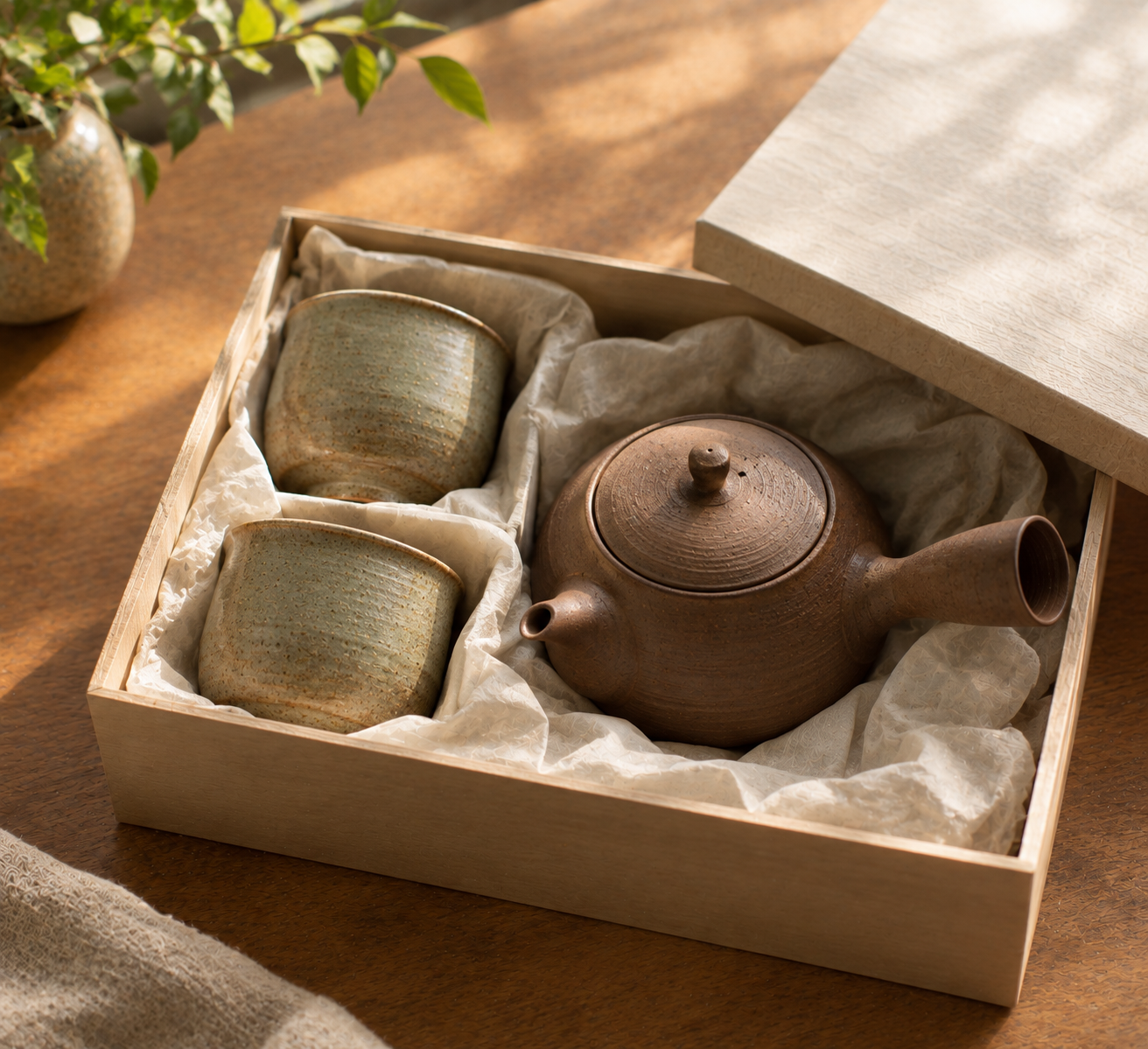
    Because a tea set is inherently a ceremonial object even outside formal tea ceremony, presentation carries real weight. Look for sets that arrive in a proper gift box, ideally with some context, a small card or catalog explaining the kiln or maker, rather than teaware shipped loose in generic packaging. This matters disproportionately more for weddings, retirements, and other milestone occasions than it would for a casual thank-you gift, where practicality and ease of use matter more than ceremony.

    Where to Find These

    Shop Japanese kyusu and yunomi cup gift sets on Amazon →

    Shop porcelain kyusu tea sets on Amazon →

    A Few Things People Ask Me

    Is two cups too intimate a gift for a coworker or more casual relationship? For a lower-stakes relationship, a nested set (where the cups store inside the teapot itself) or a single elegant cup paired with a small tea sample is a better fit than a full two-cup “for two” set, which does carry a more personal connotation appropriate for couples or close friends.

    Should the tea set match the type of tea the recipient already drinks? Ideally yes, if you know it. A kyusu with a fine mesh filter suits sencha and most everyday green tea well, while someone who specifically drinks a lot of matcha would get more use out of a chawan and whisk set than a kyusu-based gift, which is a different gifting category entirely.

    Is porcelain or clay the safer default if I don’t know the recipient’s preference? Porcelain is generally the safer, more universally appropriate default for gifting specifically, since it requires no special care knowledge and won’t punish an unprepared recipient the way unglazed clay’s soap-avoidance rule can if they’re not warned about it.

    How many cups should a standard gift set include if I’m not sure of the occasion’s formality? Two to four cups covers the widest range of situations reasonably well. Below two feels incomplete as a gift, and above four starts to feel more specifically suited to hosting than to general gifting unless you know that’s the recipient’s actual habit.

    Does the tray matter, or is it a purely decorative add-on? A tray is genuinely functional, not just decorative — it catches drips during pouring and gives the whole set a cohesive presentation on a table, which matters more for a gift that will likely be used for guests occasionally than for one meant purely for solo daily use. For a couple’s everyday tea-for-two set, it’s a nice-to-have rather than essential.

    Is it appropriate to gift a Japanese tea set to someone who’s never had Japanese tea before, or does that feel presumptuous? It’s a genuinely welcoming way to introduce someone to the category, especially paired with a beginner-friendly tea sampler. Framing it as an invitation rather than an assumption, a note explaining what it’s for and how simple it is to use, goes a long way toward making the gift feel thoughtful rather than presumptuous.

    Where I Landed

    The single most useful filter for this whole category of gift: think about who will actually be drinking from this set and how often, not how impressive the box looks unwrapped. A modest two-cup porcelain set that gets used every morning is a better gift than an elaborate artisan set that ends up as a shelf display because it felt too precious to actually use.

    None of this means you need to overthink a well-intentioned gift into a research project. A quick honest read on the occasion’s formality and the recipient’s existing tea habits narrows the field fast, and from there, most of the specific choices, material, cup count, tray or no tray, are genuinely flexible rather than governed by a strict rule.

    If tea itself, rather than teaware, is what you’re deciding on next, my Japanese tea gift guide picks up where this one leaves off.
  • The Japanese Tea Gift Guide That Actually Matches the Person You’re Buying For

    The Japanese Tea Gift Guide That Actually Matches the Person You’re Buying For

    Disclosure: This post contains affiliate links. If you buy through one of them, I may earn a small commission at no extra cost to you.

    I once gave a friend a beautiful, expensive tin of ceremonial-grade matcha, the kind I’d have been thrilled to receive myself, and it sat unopened in her cupboard for over a year because she had no whisk, no idea how to prepare it, and honestly no particular interest in going through the ritual just to drink tea. She would have been far happier with a simple sampler box and a mug. The tea itself wasn’t the problem. Matching the gift to the person was.

    That’s really the whole trick to giving Japanese tea as a gift: the “best” option depends entirely on where the recipient is starting from, not on how impressive or expensive the item looks in photos. A stunning gift wasted on the wrong person is still a wasted gift, no matter how much it cost or how carefully it was sourced. This guide sorts gift ideas by recipient type, so you can actually match the gift to the person instead of just picking whatever looks nicest online.

    The Problem You’re Actually Trying to Solve

    You’ve searched for a Japanese tea gift guide because you want to give something that feels thoughtful and authentic, not just a random tin picked off a shelf. Maybe you’re buying for someone who’s mentioned liking matcha lattes, or someone who’s never tried Japanese tea at all, or a genuine tea enthusiast who already has strong opinions and a cupboard full of equipment. Each of these calls for a different kind of gift, and getting it wrong usually means good intentions landing as a well-meaning but slightly missed gesture.

    Who This Article Is NOT For

    Let’s save you some scrolling if this isn’t quite your situation.

    • If you’re buying for yourself rather than gifting, my matcha powder brands comparison and Japanese green tea subscription box comparison are better starting points than a gift-framed guide.
    • If the recipient has a known allergy or dietary restriction, always double-check ingredient lists on any tea-adjacent gift, especially wagashi or snack-inclusive sets, rather than relying on general recommendations here.
    • If you want something under $15, most genuinely good Japanese tea gifts, especially anything including proper matcha or ceremonial tools, sit above that price point. A single well-sourced tea bag sampler is about the only realistic option at that budget.

    If you’re past that, here’s where the actual guide starts.

    What Actually Determines a Good Gift Here

    Three things decide whether a Japanese tea gift lands well or ends up forgotten in a cupboard, and matching these to your specific recipient is the whole game.

    1. Their current relationship to Japanese tea. A complete beginner needs something approachable and guided. Someone who already drinks matcha regularly wants either a genuine upgrade or something they wouldn’t have bought for themselves. Getting this wrong in either direction — overwhelming a beginner or underwhelming an enthusiast — is the single most common way these gifts miss the mark.

    2. Whether they’ll actually use the equipment involved. A gorgeous ceremonial matcha set is wasted on someone who has no interest in whisking their own tea. A simple tea bag sampler undersells someone who’s already invested in the ritual. Think honestly about their existing habits rather than the habits you’d love for them to adopt.

    3. Whether the gift teaches or just delivers. The best gift sets in this category include tasting notes or brewing instructions, which matters enormously for a beginner and matters much less for an enthusiast who already knows what they’re doing. A gift that requires research just to use properly is a gift with homework attached.

    Gift Ideas by Recipient

    RecipientBest Gift TypePrice Range
    Complete beginnerMulti-tea sampler with brewing instructions$20–40
    Matcha latte drinkerCulinary or premium-grade matcha, no ceremonial equipment needed$15–30
    Aspiring matcha ritual beginnerStarter kit: matcha, whisk, bowl, scoop$40–80
    Established tea enthusiastSingle-origin, high-grade tea they wouldn’t buy themselves$30–100+
    Coworker or casual acquaintanceSmall, well-packaged sampler box$15–25

    The Gifts, One by One

    For the Complete Beginner: A Multi-Tea Sampler

    A curated sampler that includes several distinct varieties, sencha, hojicha, genmaicha, and a modest matcha, gives someone genuinely new to Japanese tea a chance to figure out what they actually like without committing to one type upfront. Look specifically for sets that include tasting notes and brewing instructions for each tea, since the gap between a forgettable gift and a memorable one often comes down to whether the recipient actually knows how to prepare what’s inside.

    Why this works: It removes the guesswork and the intimidation factor entirely. Nobody feels lost opening a sampler with a card explaining what each tea is and how long to steep it.

    For the Matcha Latte Drinker: Skip the Ceremonial Grade

    If you know someone primarily drinks matcha as a latte, resist the instinct to buy them an expensive ceremonial-grade tin. Culinary or premium-grade matcha, built to hold up against milk and sweetener, is both more appropriate for how they’ll actually use it and more affordable than you might expect. My matcha powder brands comparison covers which brands offer good latte-specific grades if you want to go deeper on this choice.

    Why this works: You’re respecting how they actually drink tea, rather than gifting based on what sounds most impressive.

    For Someone Ready to Start the Ritual: A Complete Starter Kit

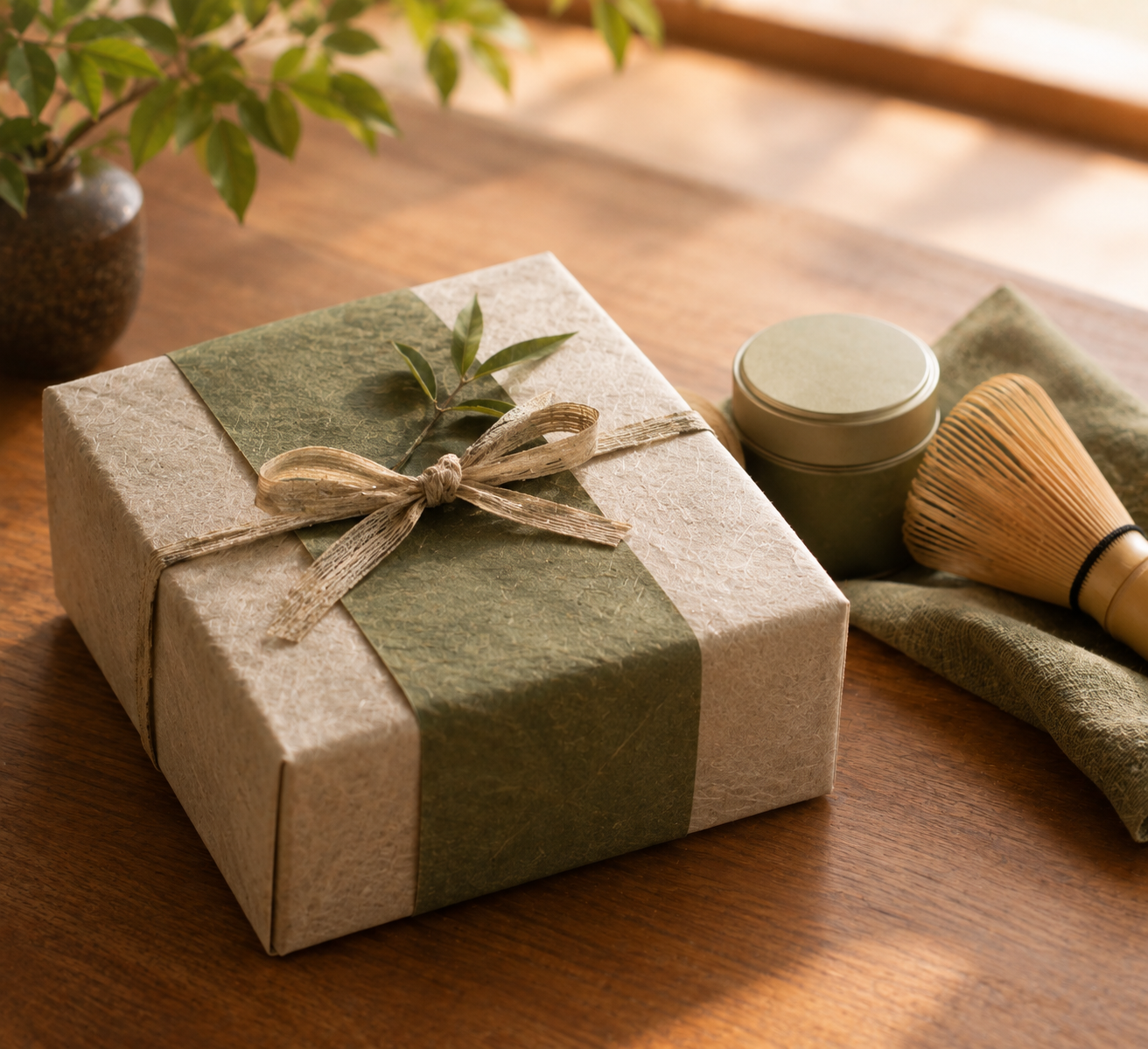
    For someone who’s expressed genuine curiosity about traditional matcha preparation but hasn’t taken the plunge, a complete starter kit, ceremonial-grade matcha paired with a chasen (bamboo whisk), chashaku (bamboo scoop), and a chawan (tea bowl), removes the single biggest barrier to entry: not knowing what equipment to buy or how to gather it all separately. Receiving everything as one coordinated set instead of piecing it together themselves is a genuinely appreciated shortcut.

    Why this works: These three tools are essential for proper matcha preparation, and gifting them together means the recipient can start immediately rather than researching and buying pieces one at a time.

    For the Established Enthusiast: Go Single-Origin and Specific

    Someone who already owns tea equipment and has a favorite everyday brand wants something they wouldn’t have bought for themselves, not a beginner’s starter kit they’ve long since outgrown. A single-origin, competition-grade sencha or gyokuro from a specific region, ideally one they haven’t tried, respects both their existing knowledge and their storage space, which by this point is probably already full of basics.

    Why this works: You’re treating them as the expert they are, offering discovery rather than duplication of what they already own.

    For a Coworker or Casual Acquaintance: Keep It Small and Well-Packaged

    For gift exchanges or lower-stakes relationships, a modest, nicely packaged sampler in the $15–25 range hits the right note without over-committing. Presentation matters disproportionately here — a small box that looks thoughtfully put together reads better than a larger, plainer bag of loose tea at a similar price.

    Why this works: It signals effort without requiring either of you to have a deep relationship or shared knowledge of tea to justify the gift.

    Where to Find These

    Shop Japanese tea sampler gift sets on Amazon →

    Shop matcha starter kits with whisk and bowl on Amazon →

    A Few Things People Ask Me

    Is matcha or regular green tea the safer default gift if I don’t know much about the recipient’s preferences? A multi-tea sampler that includes both is the safer bet than committing fully to either. If you have to choose one, a well-regarded sencha is generally a gentler, more universally approachable choice than matcha, which asks more of the recipient in terms of equipment and preparation.

    Should I buy tea online or try to find something locally? Online specialty tea retailers, especially ones focused specifically on Japanese tea, tend to offer better sourcing transparency and gift-specific packaging than what you’ll typically find in a general grocery store. If you want something with genuine provenance behind it, a dedicated tea shop is worth the extra step over a supermarket aisle.

    What if the recipient already has a favorite matcha brand? Lean toward a complementary gift rather than duplicating what they already buy — a nicer whisk, an upgraded bowl, or a different single-origin tea outside their usual rotation respects their existing preference while still giving them something new.

    Is it a faux pas to gift tea to someone who doesn’t already drink it? Not at all, as long as you frame it as an introduction rather than an assumption. A beginner-friendly sampler with clear instructions is a genuinely welcoming way to introduce someone to Japanese tea culture, and most people appreciate a low-pressure way to try something new.

    How far in advance should I order, especially for smaller or single-origin producers? Give yourself more lead time than you would for a mainstream retail gift, particularly around holiday seasons when smaller tea shops and specialty producers can sell through limited-batch items quickly. A week or two of buffer avoids the scramble of a sold-out single-origin tea the day before you need it.

    Does packaging and presentation actually matter, or is it just the tea inside that counts? For gifting specifically, presentation genuinely matters more than it would for a purchase you’d make for yourself. A well-designed box or thoughtful wrapping signals effort in a way that a plain bag of loose tea, even if the tea itself is excellent, doesn’t communicate as clearly on first impression.

    Where I Landed

    The lesson from my unopened matcha tin sitting in a cupboard for a year is really the whole thesis of this guide: match the gift to the person’s actual relationship with tea, not to what looks most impressive in a photo. A thoughtful $20 sampler for a beginner will get used and appreciated in a way that a $100 ceremonial tin, gifted to someone with no whisk and no particular interest in the ritual, never will.

    None of this means you need to overthink a simple gift into a research project. A quick honest assessment — beginner, casual matcha drinker, aspiring ritual-doer, or seasoned enthusiast — narrows the field fast, and from there the specific product matters far less than getting that basic category right in the first place.

    If you’re buying for someone who mentions liking matcha specifically, my matcha powder brands comparison and matcha whisk buying guide are both good next stops for narrowing down exactly what to include.