Disclosure: This post contains affiliate links. If you buy through one of them, I may earn a small commission at no extra cost to you.
The first time I saw a proper tea ceremony setup laid out, I counted at least seven distinct tools before I even got to the bowl and whisk I already recognized – a small silk cloth, a bamboo scoop, a lidded container that wasn’t the bowl, a second bamboo tool shaped like a ladle. It looked like more equipment than the actual drink could possibly justify. It isn’t excess, though – each piece has a specific, singular job, and most of them exist because chanoyu (the tea ceremony) treats the entire preparation, not just the drinking, as the point.
You don’t need all of this to make good matcha at home – a bowl and a whisk genuinely cover the basics. But understanding what each ceremonial tool does makes it much easier to recognize what you’re looking at if you ever see a full set, whether in a shop, a museum, or an actual ceremony.
The Problem You’re Actually Trying to Solve
Most casual explanations of tea ceremony either overwhelm with the full ritual choreography (which utensil moves where, in what order, with what gesture) or undersell it down to just “bowl and whisk,” skipping the several other tools that have real, specific functions. If you want to actually understand what you’re looking at in a tea ceremony set without committing to studying the full ceremonial practice, a plain-language rundown of each piece’s job is the more useful starting point.
Who This Article Is NOT For
- If you already own a chawan and chasen and just want to make good matcha at home casually, my matcha whisk buying guide covers the two tools that actually matter for that, without needing the rest of this list.
- If you want to learn the actual ceremonial choreography and etiquette rather than just what each tool is called and does, my simplified home tea ceremony guide is a better starting point for that.
- If you’re shopping for a complete ceremonial set to actually practice chanoyu formally, this is background knowledge rather than a buying guide – working with an instructor is the better route for building out a proper set.
The Core Utensils, One at a Time
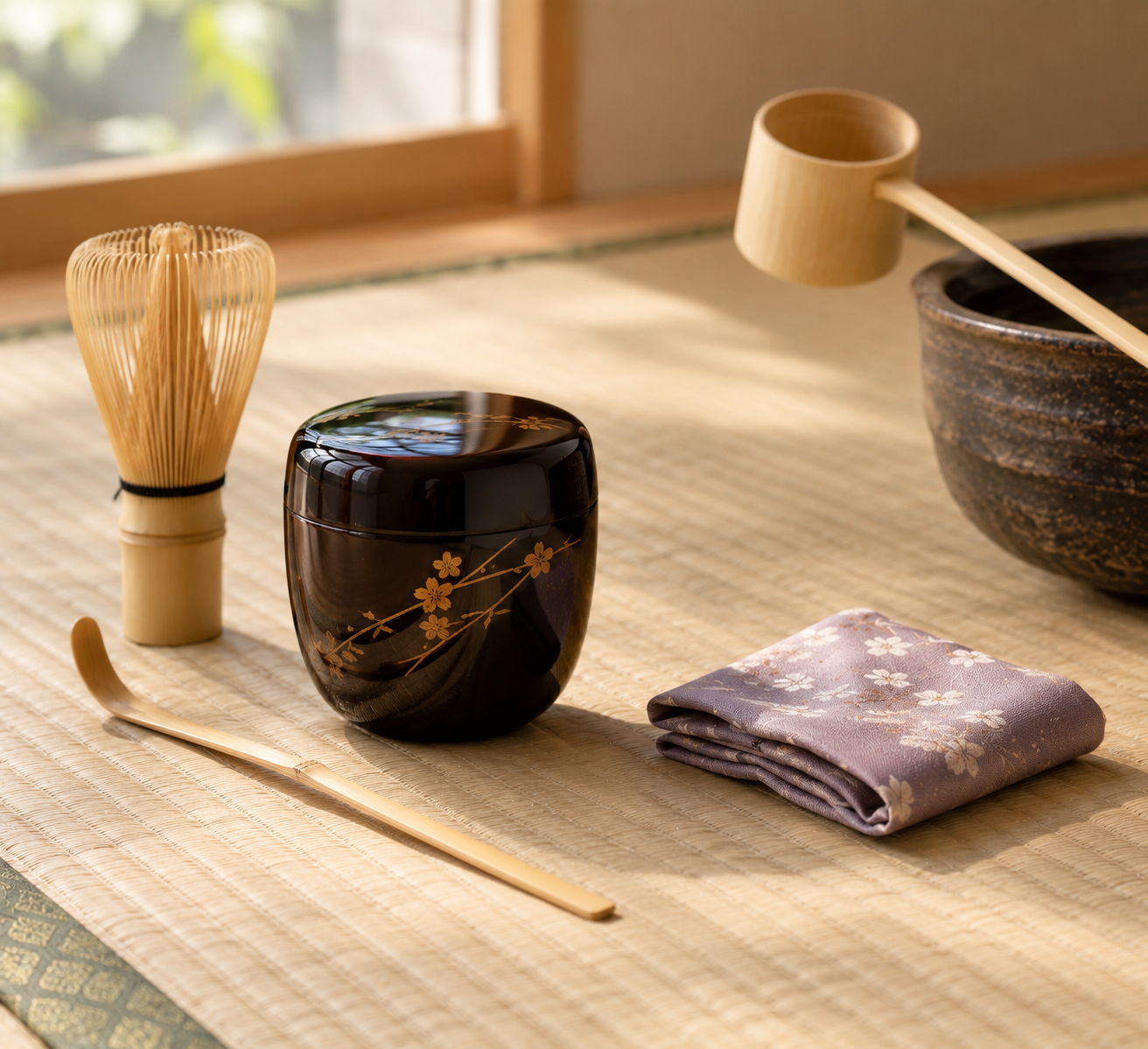
Chasaku (bamboo scoop). A long, narrow bamboo scoop used to measure and transfer matcha from its caddy into the bowl – typically holding around two grams per scoop. These are often hand-carved, sometimes by tea masters themselves, and can carry real personal or artistic significance well beyond their simple function.
Natsume. A lacquered wooden tea caddy used specifically for usucha (thin tea, the more casual and common style of matcha preparation). Named for its resemblance to the natsume (jujube) fruit, it’s typically finished in black or red urushi lacquer, often decorated with seasonal motifs that change with the time of year – tying back to the same seasonal sensibility that shows up in chawan and wagashi choices.
Chaire. A ceramic tea caddy used exclusively for koicha (thick tea, a more concentrated and ceremonially formal preparation), distinct from the natsume both in material and in which style of tea it’s reserved for. Traditionally oblong with an ivory lid, a chaire is often stored in its own protective drawstring pouch when not in use.
Hishaku. A long-handled bamboo ladle used to transfer hot water from the kettle (kama) to the tea bowl, and to scoop water for cooling. Its handling is one of the more codified parts of the ceremony – specific grips and motions are prescribed depending on what the ladle is doing at that moment.
Fukusa. A folded silk cloth used to ritually purify the natsume, chasaku, and other utensils before and during the ceremony. It must stay dry throughout – it’s a purification tool, not a cleaning cloth for wiping up spills – and its color traditionally signals the practitioner’s gender (purple for men, orange or red for women, broadly speaking).
Chakin. A damp linen cloth used to wipe the tea bowl itself between preparations. Where the fukusa purifies dry, the chakin is the tool that actually touches and cleans the bowl with moisture – the two serve related but distinct purification roles and aren’t interchangeable.
Kensui. A wastewater vessel, made of clay, metal, or wood, into which used rinse water is poured after cleaning the bowl during the ceremony – essentially the practice’s built-in waste container, keeping used water contained and out of view rather than disposed of elsewhere mid-ceremony.
Mizusashi. A lidded water container, made from ceramic, glass, metal, or wood, holding fresh cold water primarily used to refill the kettle as needed throughout the ceremony.
Futaoki. A small rest for the kettle’s lid and the hishaku ladle when they’re not actively in use, typically made of bamboo, ceramic, or porcelain – a small detail, but one more example of the ceremony having a designated place for literally everything involved in the process.
Why So Many Separate Tools
The pattern across nearly all of these is separation of function and purity: a distinct tool for measuring, a distinct tool for purifying, a distinct tool for handling water, a distinct tool for waste. Nothing does double duty. That’s less about needing that many tools functionally and more about chanoyu treating the entire preparation sequence, not just the finished cup, as the meaningful part of the practice – each tool’s precise, singular role is part of what makes the process itself deliberate and unhurried rather than efficient.
A Few Things People Ask Me
Do I need any of these beyond a chawan and chasen to make matcha at home? No – a bowl and whisk are genuinely sufficient for casual home matcha. The rest of this list matters for understanding or practicing formal chanoyu, not for making a good everyday cup.
What’s the actual difference between the fukusa and the chakin if they’re both cloths? The fukusa is dry and used for ceremonial purification of utensils like the natsume and chasaku; the chakin is damp and used specifically to wipe the tea bowl. They’re not interchangeable, and using one for the other’s job would be a real departure from proper practice.
Is a chaire always more valuable or formal than a natsume? Generally, yes, in the sense that koicha (which the chaire is used for) is considered the more advanced, formal preparation compared to usucha – but that doesn’t make an individual natsume less well-crafted or valuable on its own terms; the two serve genuinely different tea styles rather than existing on a strict hierarchy.
Where would I actually start if I wanted to build toward owning some of these pieces? A chasen and chawan first, since those are the tools any regular matcha drinker actually uses. Nio Teas’ matcha tools covers that starting point well, and a natsume-style tea caddy on Amazon is a reasonable next piece if you want something a step beyond the basics without committing to a full ceremonial set.
Where I Landed
What struck me most, once I understood what each piece actually did, was how little of it was decorative. Every tool in a full tea ceremony set is solving one specific problem – measuring, purifying, transporting water, containing waste – and none of them overlap in function the way household items so often do. It’s a genuinely efficient system dressed up as an elaborate one, which is a different thing than I expected walking into it.