Disclosure: This post contains affiliate links. If you buy through one of them, I may earn a small commission at no extra cost to you.
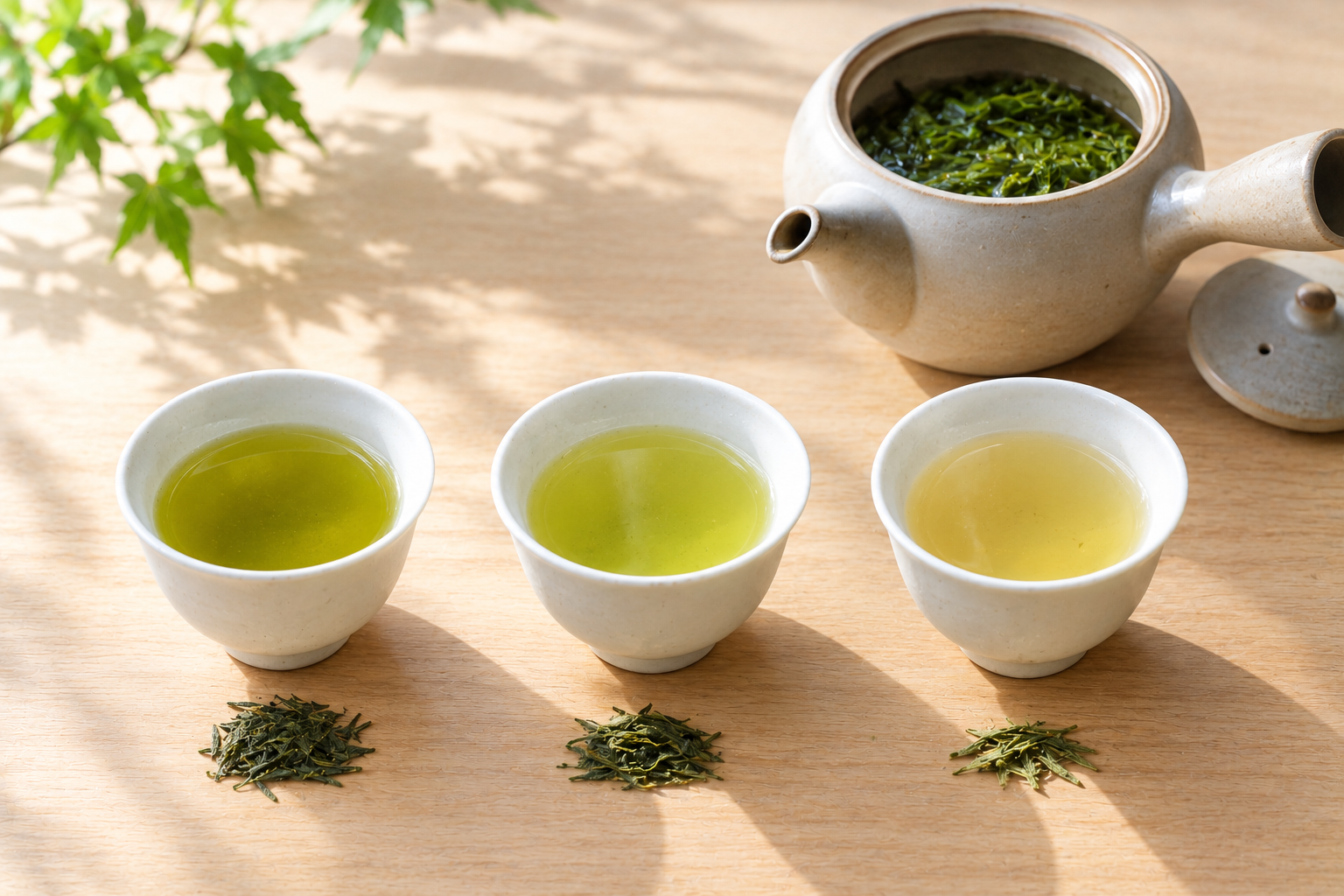
For my first few months with loose-leaf sencha, I brewed one pot and threw the leaves away. It felt natural – that’s how tea bags work. It took me a while to learn that in Japan, good green tea is expected to give you at least two or three cups from the same leaves, and the second cup is often the one people like best. Throwing the leaves out after one pot means paying for three cups and drinking one.
The Problem You’re Actually Trying to Solve
Most people either don’t re-steep at all, or try it once, use the same timing as the first pot and end up with a bitter or watery cup – and decide it doesn’t work. The trick is that each infusion needs different handling. Once the leaves have opened, they release flavor much faster, so the second steep needs to be far shorter than the first.
Who This Article Is NOT For
- If you’re brewing matcha, there’s nothing to re-steep – you drink the whole powdered leaf.
- If you haven’t got your first infusion right yet, start with my green tea temperature guide. Re-steeping builds on a good first cup.
- If you’re using tea bags, you can re-steep, but finely cut leaf gives up most of its flavor the first time, so expect a weak second cup.
How Many Infusions, by Tea
| Tea | Typical good infusions | Notes |
|---|---|---|
| Gyokuro | 3-4 | Rich, small cups; often the best tea for re-steeping |
| Sencha | 3 | Second cup is often the favorite |
| Kabusecha | 3 | Like sencha, with more sweetness in later cups |
| Bancha | 3-4 | Forgiving; mild to the end |
| Kukicha | 2-3 | Flavor drops after the first |
| Fukamushi sencha | 2 | Fine leaf extracts very fast |
| Genmaicha | 1-2 | The roasted rice gives most of its flavor up front |
| Hojicha | 1-2 | Strong first cup, lighter second |
These are starting points, not rules. Higher-quality leaf generally gives more good infusions, and how long you wait between steeps matters too.
How Each Infusion Should Be Brewed
The pattern for most Japanese green teas looks like this:
First infusion. Brew as normal – for sencha, around 70-80°C for about 60 seconds. This cup has the most umami and sweetness, because the compounds behind them dissolve easily and come out first.
Second infusion. Use water about the same temperature or a little hotter, and steep for a much shorter time – anywhere from a few seconds to about 30 seconds. The leaves are already open and hydrated, so they release flavor almost immediately. This cup is often brighter and more refreshing, with a little more bite.
Third infusion. Use hotter water, around 10°C higher than the second, and a longer steep, about 45-90 seconds, to pull out what’s left. It’ll be lighter, sometimes with a pleasant, slightly astringent finish.
Fourth and beyond. For gyokuro and good sencha, a fourth cup with very hot water and a longer steep can still be enjoyable. When the cup tastes like warm water with a hint of tea, you’re done.
Gyokuro is different
Gyokuro starts much cooler – around 50-60°C – and stays cool for the second infusion, around 60-65°C, before you raise the temperature for later cups. Because it’s brewed with a lot of leaf and very little water, it can give three or four small but rich cups.
Fukamushi needs speed
Deep-steamed fukamushi sencha has fine, broken leaf that extracts very quickly. Pour the second infusion almost immediately – a few seconds is enough – or it’ll turn bitter and murky.
A Quick Reference for the First Three Cups
These are good starting points for a small kyusu (about 150-200ml of water). Adjust by taste – if a cup is bitter, cool the water or shorten the time; if it’s thin, do the opposite.
| Tea | 1st infusion | 2nd infusion | 3rd infusion |
|---|---|---|---|
| Sencha | 70-80°C, 60 sec | 80°C, 5-15 sec | 90°C, 45-60 sec |
| Fukamushi sencha | 70°C, 30-45 sec | 80°C, 0-5 sec | Usually done |
| Gyokuro | 50-60°C, about 2 min | 60-65°C, 30-60 sec | 70-80°C, about 1 min |
| Kabusecha | 70°C, 60 sec | 75-80°C, 10-20 sec | 90°C, 45 sec |
| Bancha | 80-90°C, 30-60 sec | 90°C, 15-30 sec | Near boiling, 60 sec |
| Hojicha | Near boiling, 30 sec | Near boiling, 30-60 sec | Usually done |
| Genmaicha | 80-95°C, 30-60 sec | 90°C+, 30-60 sec | Usually done |
Notice the pattern: the second steep is short for leaf teas (because the leaves are already open), while the roasted teas – hojicha and genmaicha – keep similar times and simply fade faster.
Walking Through One Pot of Sencha
Here’s what a full session looks like with ordinary sencha, so you can see how the steps fit together:
- First cup. Put about 5g of leaf (roughly two teaspoons) in the kyusu. Pour about 150ml of water at 70-80°C and wait a full minute. Pour out completely, shaking the last drops into the cup. Take the lid off.
- Second cup. A few minutes later, pour in water at about 80°C – this time, start pouring it out almost straight away, after 5-15 seconds. It’ll look brighter and taste fresher, with a little more edge than the first.
- Third cup. Use water around 90°C and leave it for 45-60 seconds. It’ll be lighter and slightly more astringent, a nice cup to finish on or to have with a sweet.
From one teaspoonful of leaf, you’ve had three quite different cups – which is exactly why Japanese tea drinkers rarely stop at one.
Three Habits That Make Re-Steeping Work
1. Pour every last drop. After each infusion, drain the pot completely, shaking out the final drops. Any water left sitting in the pot keeps steeping the leaves and turns the next cup bitter. The last drops are also the richest part of the cup.
2. Leave the lid open or slightly ajar. Between infusions, let steam escape. A tightly closed lid traps heat and moisture, which effectively “cooks” the wet leaves and dulls the next cup.
3. Don’t wait too long. Wet leaves deteriorate quickly. Try to make your next infusion within an hour or two. Never leave wet leaves in the pot overnight and brew them the next day – by then they can start to spoil.
Sharing a Pot: Pour Back and Forth
If you’re pouring for more than one person, the Japanese way is to fill the cups a little at a time, going back and forth between them – for two cups, a bit into cup A, then cup B, then B again, then A, and so on until the pot is empty. Tea gets stronger toward the end of the pour, so this evens out both strength and volume, and nobody gets the weak first splash while someone else gets the strong last drops. It’s a small habit, but it makes every infusion taste the same in every cup.
How to Tell the Leaves Are Done
You don’t need to count infusions. The leaves will tell you:
- The color fades. The brew turns noticeably paler and more yellow than green.
- The aroma is gone. Lift the lid and smell the wet leaves; if they smell like cooked greens rather than fresh tea, they’ve given most of what they have.
- Hotter water doesn’t help. If raising the temperature and lengthening the steep still gives a thin cup, it’s time for fresh leaf.
At that point, the leaves are still useful – in cooking, as below, or even scattered in the garden.
What About the Caffeine?
Caffeine dissolves easily, so most of it comes out in the first infusion and each following cup has noticeably less. If you’re watching your caffeine, the second and third cups are gentler – though not caffeine-free.
After the Last Cup: Eat the Leaves
Even after three infusions, good sencha and gyokuro leaves are tender and edible. In Japan, spent gyokuro leaves are sometimes dressed with a little ponzu or soy sauce and eaten as a side dish. My guide to cooking with sencha has a few simple ways to use them.
A Few Things People Ask Me
Why is my second cup bitter? Almost always because it steeped too long, or water was left in the pot after the first pour. Shorten the second steep to a few seconds and drain the pot fully every time.
Why is my second cup weak? Either the leaf is finely cut (tea bags, fukamushi) and gave most of its flavor first, or the steep was too short for that tea. Try a little hotter water or a few more seconds.
Can I re-steep cold-brewed tea? Yes. Cold-brew leaves usually give one more, lighter batch with fresh cold water.
What’s the best tea for multiple infusions? Gyokuro, without question – Nio Teas’ gyokuro collection includes an affordable karigane that re-steeps well. A Japanese kyusu with a fine filter on Amazon also helps a lot, because it lets you pour out every last drop.
Where I Landed
Re-steeping changed how I think about the price of tea. A bag of good sencha that seemed expensive for one pot looks much more reasonable at three pots, and the second cup – brighter and more refreshing – is now often my favorite. Keep the second steep short, pour out every drop, leave the lid open, and don’t let wet leaves sit too long. Your tea will go a lot further, and taste better doing it.