Disclosure: This post contains affiliate links. If you buy through one of them, I may earn a small commission at no extra cost to you. Important: kuromamecha is made from soybeans, a common allergen – if you have a soy allergy, please skip it.
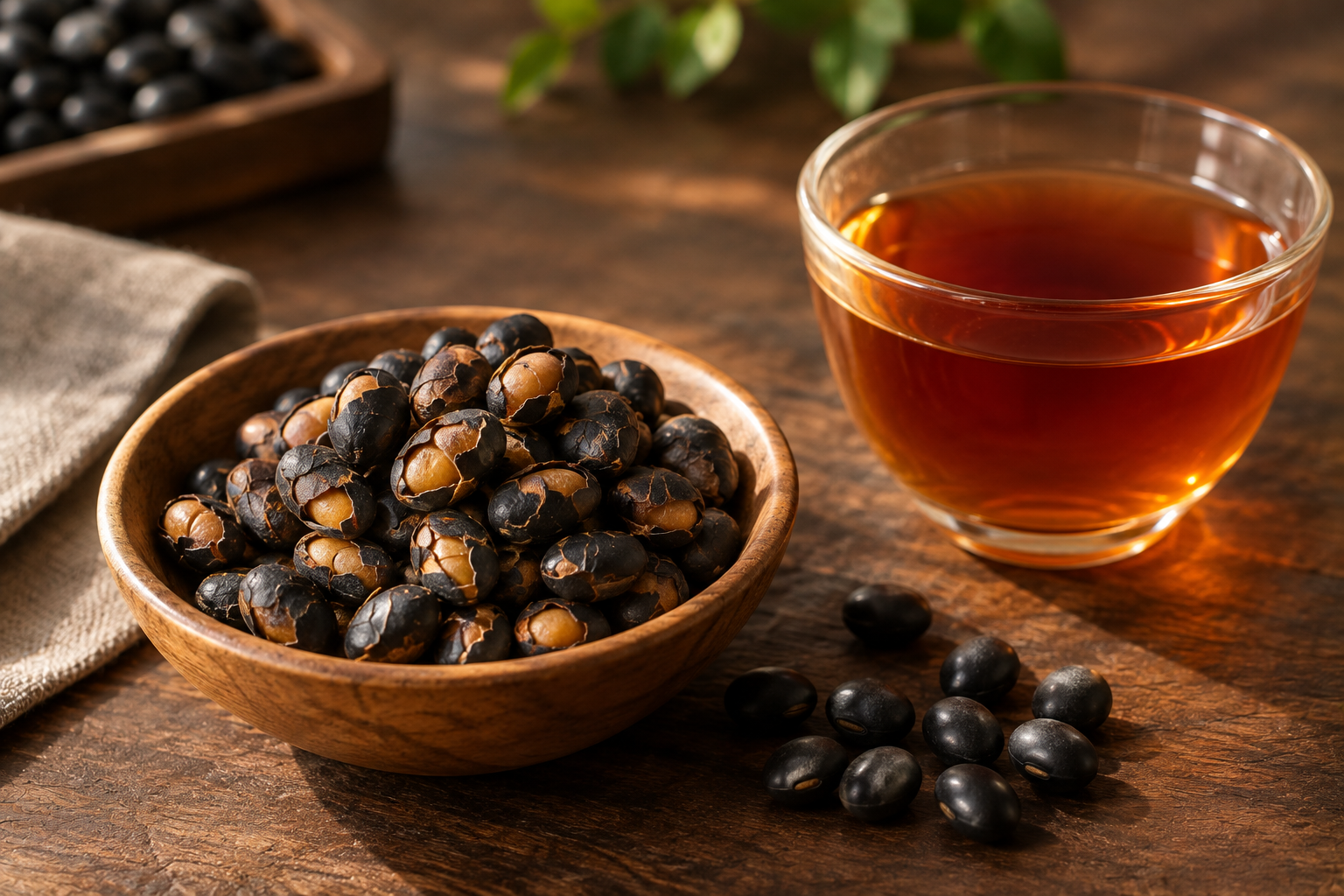
The first time I made kuromamecha, I was mostly curious about the beans. They’re glossy and jet black when raw, and after roasting they crack open to show a pale, golden interior that smells like toasted nuts. Brewed, they turn into a reddish-brown tea that’s gently sweet, toasty and completely free of caffeine. And when the tea is done, the softened beans at the bottom of the pot are good enough to eat as a snack.
Kuromamecha (黒豆茶, “black bean tea”) is one of Japan’s quieter caffeine-free drinks – less famous than mugicha or sobacha, but just as easy to love, and one of the few you can easily make from scratch.
The Problem You’re Actually Trying to Solve
Most people find kuromamecha while looking for a caffeine-free alternative to green tea, or after seeing black soybeans in a Japanese grocery store and wondering what else they’re used for. The questions are usually the same: what does it taste like, how is it different from other roasted teas, and is it worth buying ready-made or making at home?
Who This Article Is NOT For
- If you have a soy allergy, kuromamecha isn’t safe for you. It’s made entirely from soybeans.
- If you’re looking for a tea with green tea flavor, kuromamecha doesn’t come from the tea plant and tastes nothing like sencha or matcha.
- If you want a full comparison of Japan’s caffeine-free drinks, start with my caffeine-free Japanese tea guide, then come back here for the details.
What Kuromamecha Actually Is
Kuromamecha is an infusion made by roasting black soybeans and steeping them in hot water. Like mugicha (barley tea) and sobacha (buckwheat tea), it’s called cha in Japanese but isn’t made from tea leaves, so it contains no caffeine.
The beans used are a black variety of soybean, the same kind simmered into the glossy sweet black beans called kuromame that are an essential part of the Japanese New Year feast, osechi. The black color comes from the bean’s skin, which also gives the tea its reddish-brown or purplish tint.
Tamba Black Beans: The Prized Variety
Not all black soybeans are equal. The most prized are Tamba kuromame, grown in the Tamba area that spans parts of Hyogo and Kyoto prefectures. They’re large – often around 13-15mm across compared with 8-10mm for ordinary soybeans – glossy, and naturally sweet, and they’ve been cultivated in the region for centuries with careful hand-planting and harvesting.
Tamba beans are considered among the best for kuromamecha too, giving a sweeter, rounder cup. Beans from Hokkaido are also common; they tend to be a little smaller, with an earthier, deeper roasted flavor.
If a package says “Tamba,” that’s a sign of a premium tea.
What It Tastes Like
- Toasty and nutty, like roasted soybeans or lightly roasted nuts
- Gently sweet, with no added sugar
- No bitterness or astringency, since there are no tea leaves
- Round and soft, slightly fuller than sobacha
Compared with its caffeine-free cousins:
| Drink | Made from | Flavor | Watch out for |
|---|---|---|---|
| Kuromamecha | Roasted black soybeans | Toasty, sweet, round | Soy allergy |
| Mugicha | Roasted barley | Toasty, grain-forward, slightly bitter | Contains gluten |
| Sobacha | Roasted buckwheat | Nutty, light, sweet | Buckwheat allergy |
If you like sobacha, kuromamecha is a natural next step: similar toasty sweetness, but with more body. It’s also a useful option for people who avoid gluten (unlike mugicha) or buckwheat (unlike sobacha) – as long as soy isn’t a problem.
How to Brew Kuromamecha
Hot (loose beans):
- About 10-15g of roasted beans per 400ml of water (roughly a small handful)
- Near-boiling water, around 95°C (203°F)
- Steep about 5 minutes; longer for a stronger cup
- The same beans can give a second, lighter infusion
Hot (tea bags): steep in near-boiling water for 3-5 minutes.
Cold brew: use a similar ratio in cold water and refrigerate for 4-6 hours or overnight. Cold-brewed kuromamecha is cleaner and a little less toasty than hot.
Tip: lightly crushing the roasted beans before brewing helps them release flavor faster.
Don’t Throw Away the Beans
After one or two infusions, the beans are soft and still taste of roasted soybean. You can eat them:
- Plain as a snack, warm or cold
- Mixed into freshly cooked rice
- Sprinkled over salads, yogurt or oatmeal
- Added to soups or stews
It’s one of the nicest things about kuromamecha – the drink and a snack from the same handful of beans.
How to Make Kuromamecha at Home
Making your own is easy and fills the kitchen with a lovely toasted smell.
- Soak. Rinse black soybeans and soak them in water for about 8 hours or overnight.
- Dry. Drain and dry them thoroughly – spread them on a towel for several hours. Wet beans scorch easily.
- Roast. Choose one method:
- Oven (easiest): spread the beans in a single layer on a lined tray, no oil, and roast at about 170°C (340°F) for 40-50 minutes, stirring every 10-20 minutes.
- Stovetop: use a dry, uncoated pan over low-medium heat for about 30-40 minutes, stirring often. Some beans will pop.
- Check. They’re done when most skins have cracked and the insides look light golden-brown. They may still feel slightly chewy but will harden as they cool.
- Cool and store. Let them cool completely, then keep them in an airtight container. Use within a few weeks for the best flavor.
Brew as above – about 10 beans per cup is a good starting point.
Troubleshooting Homemade Kuromamecha
- The tea tastes burnt or bitter: the heat was too high, or the beans were roasted too long. Roast more gently next time and stop as soon as most skins have cracked.
- The tea tastes weak or “beany”: the beans weren’t roasted enough. Roast a little longer, until the insides are golden rather than pale.
- The beans scorched on the outside but stayed pale inside: they were still damp, or the heat was uneven. Dry them thoroughly and stir more often.
- The tea is cloudy: usually from crushed beans or bits of skin. It’s harmless – strain it through a fine mesh if you prefer a clear cup.
Blends Worth Trying
Kuromamecha also blends well with other roasted drinks:
- With barley: mixing roasted black soybeans with roasted barley gives a rounder, sweeter version of mugicha. Many Japanese households make a blend like this for everyday drinking, though remember barley contains gluten.
- With hojicha: a few roasted black soybeans in a pot of hojicha add sweetness and body to the roasted tea. This one contains caffeine from the hojicha.
- With brown rice: roasted black soybeans and roasted brown rice together make a nutty, genmaicha-like cup without any tea leaves.
Start with roughly equal parts and adjust to taste.
Kuromamecha and the Japanese New Year
Because black soybeans are a New Year food, kuromamecha has a natural seasonal connection. In osechi, kuromame represents health and hard work, thanks to a pun: mame means both “bean” and “diligent” or “healthy.” A warm cup of black soybean tea is a nice, caffeine-free companion to the rich New Year meal – or a way to use up leftover beans after the holidays.
A Few Things People Ask Me
Does kuromamecha have caffeine? No. It’s made from soybeans, not tea leaves, so it’s naturally caffeine-free – a popular evening drink in Japan.
Is it the same as the black beans in osechi? It’s made from the same type of bean, but the osechi dish is simmered in sweet syrup, while kuromamecha uses beans that are dry-roasted with nothing added.
Is kuromamecha healthy? It’s a pleasant, caffeine-free, sugar-free drink. Some products advertise health benefits, but I’d treat it as a tasty alternative to sugary drinks rather than a remedy.
Where can I buy it? Ready-made kuromamecha on Amazon is easy to find, in both loose beans and tea bags – look for Tamba beans if you can. To make your own, start with dried Japanese black soybeans on Amazon.
Where I Landed
Kuromamecha is one of my favorite caffeine-free drinks because it gives you three things from one handful of beans: a warm, toasty cup, a second infusion, and a snack at the end. It’s sweet without sugar, gentle enough for any time of day, and simple enough to roast at home on a weekend afternoon. If you already enjoy sobacha or mugicha, it deserves a place on the same shelf.