Tag: Matcha Quality Guide

  • Ichibancha vs Nibancha: Why Matcha Harvest Timing Matters More Than You’d Think

    Ichibancha vs Nibancha: Why Matcha Harvest Timing Matters More Than You’d Think

    Disclosure: This post contains affiliate links. If you buy through one of them, I may earn a small commission at no extra cost to you.

    I used to assume “ceremonial grade” was the only label worth paying attention to on a matcha tin, until I compared two tins from the same brand, same region, same grade name, and found one noticeably sweeter and rounder than the other. The difference turned out to have nothing to do with grade at all. It came down to when the leaves were actually picked, months apart on the same growing calendar, and that single variable changed the flavor more than anything else on either label — more than the region, more than the price, more than the word “ceremonial” printed on both tins alike.

    The Problem You’re Actually Trying to Solve

    You’ve searched for ichibancha versus nibancha because you’ve noticed harvest terminology on matcha packaging, or you’re trying to understand why two matchas with similar grade claims can still taste so different, and want to know what these Japanese harvest terms actually mean for what ends up in your cup.

    Who This Article Is NOT For

    Let’s save you some scrolling if this isn’t quite your situation.

    • If you want to understand grade terminology (ceremonial vs. culinary) rather than harvest timing specifically, my how to tell matcha grades apart guide covers that separate, related topic.
    • If you’re buying matcha specifically for baking, later-harvest matcha is often the more practical, cost-effective choice for that use case anyway, so the distinctions here matter less for your purchase.

    If you’re past that, here’s where the actual explanation starts.

    The Japanese Tea Harvest Calendar

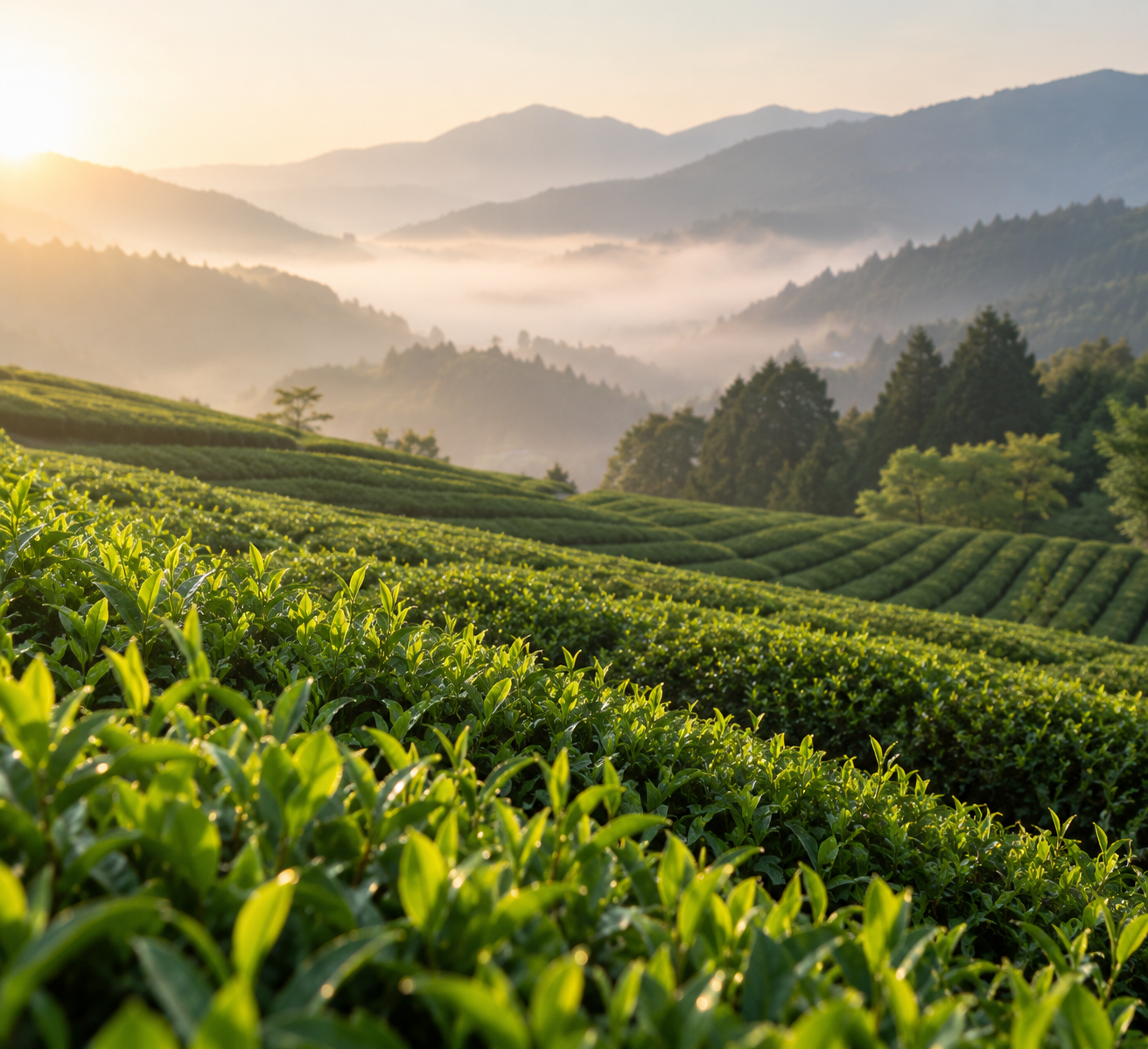
    Japanese tea plants aren’t picked continuously through the growing season. They’re harvested in distinct flushes, each with a name and a genuinely different flavor profile.

    HarvestJapanese TermTypical TimingCharacter
    First flushIchibanchaLate April – late MaySweetest, highest umami, most delicate
    Second flushNibanchaMid-June – early JulyMore astringent, brisker, more affordable
    Third flushSanbanchaLate July – early AugustMost bitter, coarsest, lowest grade use
    Autumn/winterShuto banchaLate September – OctoberRarely used for matcha; mostly other tea products

    Why the Chemistry Actually Changes Between Harvests

    This isn’t just a scheduling difference, it’s a genuinely different chemical outcome, and understanding why makes the flavor gap make complete sense.

    Ichibancha benefits from six months of dormancy. Tea plants accumulate amino acids, particularly L-theanine, the compound responsible for matcha’s sweetness and umami, throughout the winter while the plant is dormant. That stockpile gets concentrated into the very first leaves that emerge in spring, which is why first-flush matcha carries such a pronounced sweet, savory depth. Some sources cite ichibancha containing roughly three times the theanine of nibancha from the same plant, a substantial gap, not a marginal one, and it’s the single biggest reason a well-made first-flush bowl tastes fundamentally different rather than just marginally better.

    Nibancha grows fast under strong summer light, and light drives a different chemical process entirely. Light exposure is the key trigger for catechin production in tea plants, catechins being the polyphenols responsible for bitterness and astringency. Because nibancha leaves grow quickly under longer summer days and more intense sunlight, they shift the plant’s chemical balance toward catechins and away from the amino acid accumulation ichibancha benefits from. The result is a brisker, more assertive, less naturally sweet leaf, picked roughly six to eight weeks after the first flush finishes.

    Sanbancha compounds both effects further. By the third flush, leaves are more mature, have had even less time to build amino acid reserves relative to their growth, and have been exposed to the most cumulative sunlight of the season, producing the most bitter, coarsest result of the three. This is the leaf most likely to end up in the lowest tier of culinary matcha or bulk food-service products, where its assertiveness gets buried under other ingredients anyway.

    Reading Harvest Language on a Label

    Not every brand states harvest timing explicitly, but when they do, here’s what the terms actually signal:

    “First harvest” or “ichibancha” or “first flush” — genuinely the spring leaf, shaded the longest, picked once per season. This is the leaf behind virtually all top-tier ceremonial matcha.

    “Second harvest” or “nibancha” — summer regrowth, more available and more affordable, and genuinely well-suited to lattes and baking, where its brisker character reads as freshness rather than a flaw.

    Vague or absent harvest language — worth treating with a bit more skepticism, particularly on a tin claiming “ceremonial grade” at a suspiciously low price. A legitimate first-flush product is expensive to produce, and a brand confident in that sourcing usually says so.

    Matching Harvest to Actual Use

    For drinking matcha straight, usucha or koicha style: ichibancha, without much debate. This is exactly the use case first-flush matcha’s sweetness and umami were meant to showcase, and a later harvest will taste noticeably flatter and more bitter prepared the same simple way.

    For lattes: nibancha is a genuinely sensible, not just budget-driven, choice. Its brisker character actually reads as fresher and more assertive once milk and sweetener are involved, and you’re not paying a premium for subtlety that dairy is going to mute anyway.

    For baking: later harvests, nibancha or even sanbancha-derived culinary matcha, are the practical, cost-effective choice, since baking similarly buries the delicate qualities that make first flush worth its price tag.

    Where to Find First-Flush Matcha

    Shop first-flush ceremonial-grade matcha on Amazon →

    A Few Things People Ask Me

    Is nibancha “bad” matcha, or just different? Genuinely just different, not inferior in an absolute sense. It’s simply matched to different applications than ichibancha, and treating it as a lesser product rather than a differently suited one leads to either overpaying for lattes or being disappointed by a straight cup made from the wrong harvest.

    Does shincha mean the same thing as ichibancha? Essentially yes, they refer to the same leaf, just with different emphasis. Ichibancha means “first-picked tea” in the context of the season’s harvest sequence, while shincha means “new tea,” highlighting freshness rather than harvest order specifically.

    Can I taste the harvest difference myself, or is it too subtle without training? It’s genuinely one of the more noticeable distinctions in matcha, not a subtle one requiring a trained palate. A side-by-side of genuine ichibancha and nibancha from the same brand and region makes the sweetness and umami gap obvious even to a first-time taster.

    Why don’t more brands state harvest timing clearly if it matters this much? Partly because grade terminology (ceremonial, premium, culinary) has become the more dominant marketing language in Western markets, even though it’s less standardized and arguably less informative than harvest timing. A brand that states both is generally giving you more useful information than one relying on grade language alone.

    Does a plant’s age affect how harvest timing plays out, separate from the flush itself? Yes — newer tea fields, typically in their third or fourth year, are often given lighter harvests to let the plant establish itself, with full commercial-scale picking usually starting around year four or five. A young plant’s ichibancha may not yet reach the same character as an established bush’s first flush, which is a separate variable from harvest timing itself but worth knowing if a brand specifically markets young-plant tea.

    Is there any harvest that falls between nibancha and sanbancha in quality that I should know about? Not really as a distinct named category — the calendar generally runs ichibancha, nibancha, sanbancha in that order of both timing and declining quality, though some regions with longer growing seasons occasionally squeeze in an additional autumn harvest, generally used for lower-grade bancha rather than matcha specifically.

    Where I Landed

    The tin comparison that started this whole realization for me wasn’t really about one product being defective, it was about not understanding that “ceremonial grade” alone doesn’t fully specify what I was buying. Harvest timing is arguably the more fundamental variable, the one that actually explains why two similarly labeled matchas can taste so different, and it’s worth checking for specifically rather than relying on grade language alone.

    Once you know to look for it, harvest timing becomes one of the fastest ways to size up whether a tin is actually worth its price, faster even than color or texture checks, since a brand willing to state ichibancha specifically is telling you something concrete, not just repeating a marketing word every competitor uses too.

    If you’re shopping with this in mind, my matcha powder brands comparison covers several brands where harvest and sourcing details held up well against real scrutiny.
  • How to Tell Matcha Grades Apart (Because the Label Alone Won’t Tell You)

    How to Tell Matcha Grades Apart (Because the Label Alone Won’t Tell You)

    Disclosure: This post contains affiliate links. If you buy through one of them, I may earn a small commission at no extra cost to you.

    I once bought a tin proudly labeled “ceremonial grade” for under twenty dollars, excited to have found a bargain, and the powder inside was a dull olive color that tasted flatly bitter no matter how carefully I whisked it. It took me embarrassingly long to learn something that would have saved me that disappointment entirely: “ceremonial grade” isn’t a regulated term anywhere. There’s no government body checking whether a tin labeled that way actually meets any standard at all. Brands can, and plenty do, put “ceremonial” on whatever they want.

    That doesn’t mean grade is meaningless — real, meaningful differences exist between matcha grown and processed for different purposes. It just means you can’t fully trust a label alone, and you need to know what to actually look, smell, and taste for instead. Once you know those signals, you stop being at the mercy of whatever word a brand decided to print on the tin.

    The Problem You’re Actually Trying to Solve

    You’ve searched for how to tell matcha grades apart because either you’re shopping for a new tin and don’t know how to judge whether a “ceremonial grade” claim is legitimate, or you already have some matcha at home and are trying to figure out what grade it actually is, since the packaging alone didn’t make that obvious. Both come down to the same core issue: since grading isn’t officially standardized, you need independent ways to verify quality rather than trusting a single word on a label.

    Who This Article Is NOT For

    Let’s save you some scrolling if this isn’t quite your situation.

    • If you’re buying matcha specifically for baking, you actually want the bolder, more assertive characteristics of culinary grade, not the subtle sweetness ceremonial grade is prized for — my how to bake with matcha guide covers that side of things.
    • If you already trust a specific brand’s grading and have been happy with the results, this diagnostic-level guide isn’t necessary for you — it’s aimed at people navigating an unfamiliar tin or comparing options for the first time.
    • If you want a definitive numeric grading scale, that doesn’t exist industry-wide. This guide teaches you to judge quality through observable characteristics, not to apply an official point system, because no such official system exists.

    If you’re past that, here’s where the actual guide starts.

    What the Grades Actually Mean

    Despite the lack of regulation, there is a real, meaningful pattern behind the common grade names, rooted in three production variables.

    1. Shading duration and intensity. Longer, more intense shading before harvest (often 20 days or more, blocking 90%+ of light for the highest grades) boosts chlorophyll and L-theanine, both of which drive the sweeter, greener, less bitter qualities associated with top-tier matcha. Culinary grade typically comes from shorter, less intense shading, sometimes as little as a week or two, which leaves more of the compounds responsible for astringency intact.

    2. Harvest timing. First-flush leaves, picked in the earliest spring harvest, are younger, more tender, and carry more of the amino acids responsible for sweetness. Later harvests, sometimes the third or fourth picking of the season, produce more mature, tougher leaves that lean more bitter and astringent. This is part of why a tin’s stated harvest timing, when a brand actually discloses it, is one of the more trustworthy signals available.

    3. Processing and grinding. Higher grades typically have stems and veins fully removed before grinding and are stone-ground slowly into an extremely fine powder. Lower grades may retain more stem material and be ground faster with less precision, producing a coarser texture. Traditional stone mills are slow by design, which is part of why properly ground high-grade matcha commands a real price premium rather than being purely a marketing markup.

    The Three Common Grade Tiers

    GradeHarvestShadingBest For
    CeremonialFirst flush (earliest spring)Longest, most intense (20+ days)Drinking straight, usucha, koicha
    Premium / Latte GradeFirst or blended early harvestModerateLattes, daily drinking, all-round use
    CulinaryLater harvest (third/fourth picking)Shorter, less intenseBaking, smoothies, cooking

    Keep in mind these tier names aren’t standardized across brands — one company’s “premium” might taste closer to another’s “ceremonial.” Treat this table as a general map of the landscape, not an exact translation between every brand’s own labeling.

    How to Actually Judge What You’ve Got

    Color

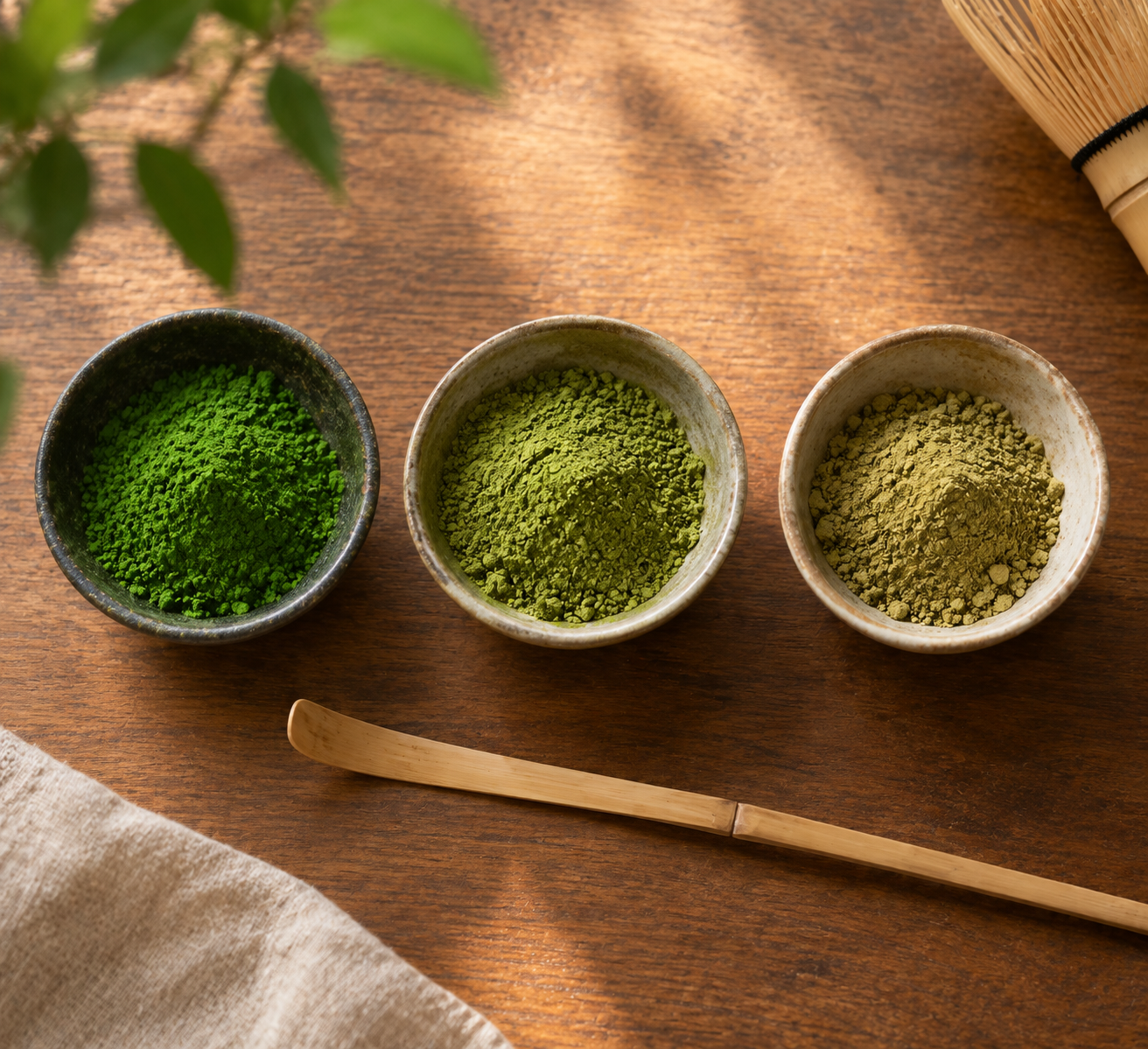
    This is the fastest and most reliable visual clue. Genuine ceremonial-grade matcha should be a vivid, almost electric emerald or jade green. As you move down through premium into culinary grade, the color trends progressively toward a duller olive, khaki, or yellow-green. If a tin labeled “ceremonial” looks distinctly olive or brownish rather than vibrant green, that’s a real red flag regardless of what the label claims — color doesn’t lie the way marketing copy can.

    Texture

    Run a small pinch between your fingers. High-grade matcha should feel exceptionally fine, almost like cosmetic talc or baby powder, a direct result of slow stone-grinding. Culinary grade tends to feel slightly coarser or grittier by comparison, a sign of faster, less precise grinding and sometimes leftover stem material that didn’t get fully removed before processing.

    Aroma

    Good ceremonial matcha should smell fresh and vegetal, sometimes described as similar to fresh-cut grass, with a pleasant, slightly sweet edge. Lower grades tend to smell more hay-like, dusty, or simply flatter, lacking that fresh quality entirely.

    Taste

    This is the most decisive test, though it requires actually preparing a cup. Whisk a small amount with water at the correct temperature (roughly 70–80°C, never boiling) and taste it plain, without sweetener. Genuine ceremonial-grade matcha should taste naturally sweet with a savory umami depth and minimal bitterness. If it tastes sharply bitter, thin, or predominantly grassy with no real sweetness, you’re likely dealing with something closer to culinary grade regardless of what the tin says, or matcha that’s been brewed with water too hot.

    Price as a (Rough) Sanity Check

    Genuine ceremonial-grade matcha from a legitimate producer is expensive to make — the shading infrastructure, the limited harvest window, and the slow stone-grinding all add real cost. A tin claiming “ceremonial grade” at a price point that undercuts the market significantly is worth extra scrutiny. This isn’t a perfect rule, since brand markup varies, but an implausibly cheap “ceremonial” tin should raise your eyebrows before it raises your expectations.

    A Quick Side-by-Side Test

    If you have access to two matcha tins, even from the same brand at different price points, the fastest way to actually learn to spot the difference is a direct comparison rather than tasting one in isolation:

    1. Whisk both with the same water temperature and ratio.
    2. Look at the color of the foam and liquid side by side before tasting either.
    3. Smell both before tasting.
    4. Taste the lighter-colored one first, then the more vibrant one — going in this order makes the quality gap more obvious than tasting them in reverse.

    Doing this once with two genuinely different-grade matchas trains your palate far faster than reading about the differences ever will.

    Where to Buy for Comparison

    Shop ceremonial-grade matcha on Amazon →

    Shop culinary-grade matcha on Amazon →

    A Few Things People Ask Me

    Does higher grade always mean healthier, or just better tasting? Mostly the latter. Both ceremonial and culinary grade come from the same plant and generally contain similar core compounds — catechins, caffeine, L-theanine — since both are whole-leaf products. The real differences are in taste, texture, and preparation suitability rather than a dramatic nutritional gap between grades.

    Is “premium” grade just a marketing word, or does it mean something specific? It’s a genuinely useful middle category in practice, even without a formal standard behind it — typically leaves from an early harvest with moderate shading, positioned to hold up reasonably well in a latte while still being pleasant enough to drink straight. Treat it as “good enough for most everyday uses” rather than either extreme.

    If I already have matcha and I’m not sure what grade it is, how do I figure it out? Run through the color, texture, aroma, and taste checks above. If it’s vividly green, extremely fine, smells fresh, and tastes sweet with minimal bitterness when whisked properly, you likely have something at or near ceremonial grade regardless of what the packaging says. If it’s duller, coarser, and more bitter, treat it as culinary grade and consider saving it for baking rather than drinking straight.

    Can bad brewing technique make good matcha taste like a lower grade than it actually is? Absolutely, and this trips people up constantly. Water that’s too hot, insufficient sifting, or poor whisking technique can all make genuinely good matcha taste flat or bitter. Before concluding a tin is mismarked or lower quality than advertised, make sure you’re actually brewing it correctly — my green tea brewing temperature guide covers water temperature principles that apply here too, even though matcha itself is whisked rather than steeped.

    Does matcha degrade from one grade to a lower one as it sits in the tin? Not literally, but it can taste like it has. Oxidation and light exposure dull color and flatten flavor over time, so a properly stored ceremonial-grade matcha that’s gone stale can genuinely taste closer to culinary grade than it did fresh, even though nothing about its original processing changed. My how to store matcha guide covers keeping that degradation from happening in the first place.

    Is it worth paying extra for a brand that publishes specific harvest and shading details rather than just a grade name? Generally yes. A brand willing to disclose first-flush harvest timing or a specific shading duration is giving you something closer to verifiable fact than a brand that only prints “ceremonial grade” with no further detail. That transparency is itself a reasonably good quality signal, independent of the grade name alone.

    Where I Landed

    The single most useful habit from all of this: trust your own senses over the label. Color, texture, aroma, and taste will tell you more about what’s actually in a tin than the word printed on the front of it, since that word isn’t policed by anyone. Once you’ve done a side-by-side comparison even one time, you’ll find yourself able to spot a mismarked or overhyped “ceremonial” tin almost instantly, without needing to reference a chart at all.

    It’s a genuinely useful skill to build once, the same way learning to recognize a good cup of coffee by smell and color eventually replaces needing to read the bag’s roast date every time. The market isn’t going to start regulating these terms anytime soon, so your own palate is the most reliable tool you actually have.

    If you’re shopping for your next tin with this in mind, my matcha powder brands comparison covers several brands where grading claims held up well against the criteria in this guide.