Disclosure: This post contains affiliate links. If you buy through one of them, I may earn a small commission at no extra cost to you.
Gifting matcha adds a wrinkle that buying it for yourself doesn’t: you’re not the one deciding how carefully it gets handled between now and the moment someone actually opens it, and you often don’t know how long it’ll sit unopened once it arrives. A beautiful presentation that fails to actually protect the tea inside is a gift that looks great in a photo and tastes disappointing by the time it’s used, which defeats the entire point of giving someone something genuinely good in the first place.
The Problem You’re Actually Trying to Solve
You’ve searched for protective matcha packaging because you’re choosing or building a gift and want it to look genuinely thoughtful while also actually keeping the tea fresh until the recipient gets around to using it, which for a gift is often longer than it would take you to work through a tin yourself.
Who This Article Is NOT For
Let’s save you some scrolling if this isn’t quite your situation.
- If you’re storing matcha for your own daily use rather than gifting, my matcha storage guide covers that more directly.
- If you’re deciding what tea or teaware to gift rather than how it’s packaged, my Japanese tea gift guide covers that broader decision.
If you’re past that, here’s where the actual guide starts.
Tin vs. Pouch, for Gifting Specifically
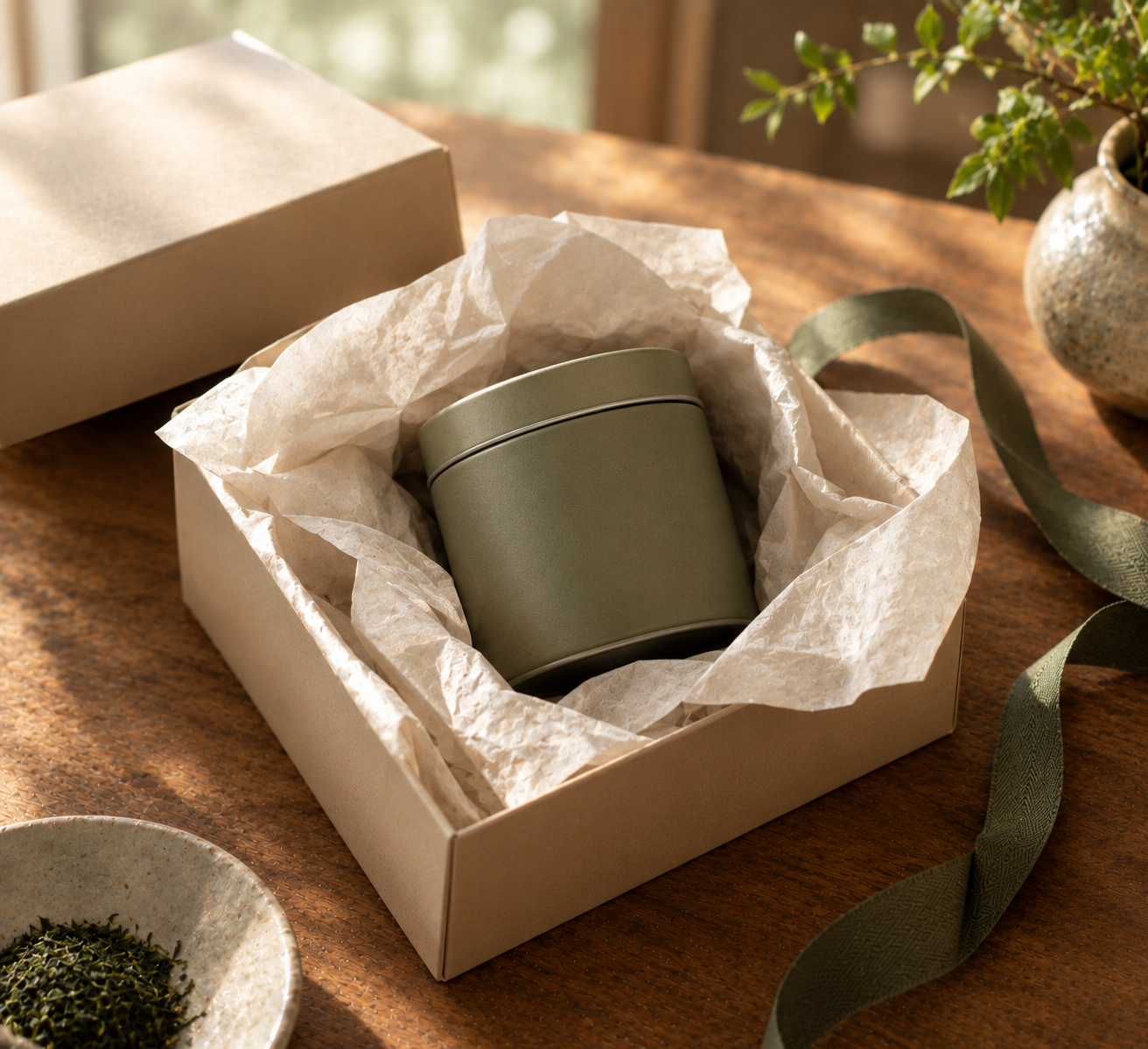
Metal tins are the stronger default for a gift specifically, not just for everyday storage. They’re fully opaque, genuinely airtight when they use a gasket or double-lid design, and physically protect the contents from the kind of handling a gift might see in shipping or sitting in a bag. They also read as more premium on unboxing, which matters more for a gift than for tea you’re buying purely for yourself, and they’re reusable afterward, which pouches generally aren’t.
Pouches can perform nearly as well when they use proper multi-layer barrier film with a reliable resealable closure, and they’re often more affordable, which matters if you’re including matcha as part of a larger gift set rather than the sole item. The tradeoff is that a lower-quality pouch is easier to damage or leave imperfectly resealed than a tin, which is a bigger risk for a gift you won’t personally handle again after giving it — you’re trusting the recipient to reseal it correctly every time, which isn’t a given for someone new to matcha.
What to avoid entirely: clear glass or plastic packaging, however attractive it looks through a gift box window. Light exposure is one of matcha’s biggest enemies, and transparent packaging defeats a meaningful part of what protective packaging is for, regardless of how good it looks unwrapped. If a seller is using clear packaging specifically to show off the vivid green color, that same light exposure is quietly working against the product the whole time it sits on a shelf before the gift is even given.
What Actually Signals Quality Protective Packaging
A genuine airtight seal, whether a gasket lid on a tin or a proper zip-and-fold closure on a pouch, not just a snap-on lid that looks sealed but lets air through. If you’re buying rather than packaging matcha yourself, check product descriptions specifically for words like “airtight” or “gasket” rather than assuming any tin qualifies.
Full opacity, not just a dark tint. Some packaging uses tinted rather than fully opaque material, which blocks less light than it appears to. A tin or foil-lined pouch is more reliable here than colored glass or plastic.
A double-lid or inner-seal design, common on higher-quality tins, which adds a second layer of protection beyond the outer lid alone, particularly useful for a gift that might be opened and reclosed a few times by a curious recipient before being used regularly.
Reasonable portion sizing for a gift specifically. A 30 to 40 gram tin is a common, sensible gift size, large enough to feel substantial but small enough that the recipient can reasonably work through it before quality declines, rather than a bulk size that outlives its own freshness before it’s finished.
Building a Protective Gift Set, Not Just a Tin
If you’re assembling a fuller gift rather than sending matcha alone, the packaging question extends to what surrounds the tin too. A gift box with a properly fitted insert keeps the tin from shifting and taking impact damage in transit, and pairing the tin with a chasen and chashaku gives the recipient everything they need to actually use the gift immediately rather than needing to source tools separately before their first cup.
Where to Find Good Protective Tins
Shop airtight matcha gift tins on Amazon →
Shop matcha gift sets with tin and whisk on Amazon →
A Few Things People Ask Me
Is it worth repackaging matcha into a nicer gift tin if it originally came in a plain bag? Only if the replacement tin is genuinely airtight and opaque itself — transferring matcha into a decorative but poorly sealed container can do more harm than leaving it in a properly sealed original bag, however plain that bag looks.
Does vacuum-sealed packaging offer a meaningful advantage over a standard airtight tin for gifting? It can extend freshness somewhat further, particularly useful if the gift might sit unopened for an extended period before the recipient starts using it, though a well-made standard airtight tin is sufficient for most gifting timelines under a few months.
How do I know if a gift tin I’m buying is actually airtight, not just marketed that way? Look for a stated gasket or rubber seal in the product description, and check reviews specifically for mentions of the lid loosening or air getting in over time, since marketing language alone doesn’t always reflect real-world performance.
Should I worry about the matcha degrading during shipping if I’m mailing a gift rather than handing it over in person? A genuinely airtight, opaque tin handles normal shipping timelines without meaningful degradation. The bigger risk with shipping is usually temperature extremes or rough handling denting a tin, not the packaging’s ability to block light and air specifically.
Is it better to buy matcha already in gift-appropriate packaging, or buy plain matcha and package it myself? Buying from a seller whose standard packaging already meets the airtight, opaque criteria above is simpler and generally more reliable than repackaging yourself, since matching a proper seal at home is harder than it sounds. Reserve DIY repackaging for cases where you specifically want a personalized container and are confident it genuinely seals well.
Do different matcha grades need different levels of packaging protection for a gift? Ceremonial grade, being the most delicate and expensive, benefits most from the highest level of protection, an airtight tin with a genuine gasket seal. Culinary grade is somewhat more forgiving and can hold up reasonably well in a good-quality resealable pouch, though the same general principles still apply.
Where I Landed
The instinct to prioritize how a gift looks unwrapped is natural, but for matcha specifically, protection and presentation aren’t actually in conflict, a genuinely good tin does both at once. Opaque, airtight, appropriately sized, that’s the checklist, and everything else, the ribbon, the box, the included teaware, is where you get to add the personal touch without compromising what’s actually protecting the tea inside.
Getting this right also means the gift keeps delivering after the initial unboxing moment, which is really the whole point. A tin that looked beautiful for the five seconds it took to open but let the tea go dull within weeks is a worse gift than a simpler-looking one that still tastes vibrant months later.
If you’re building out the rest of the gift alongside the packaging itself, my Japanese tea gift guide is a good next stop for matching the whole gift to the person you’re giving it to.