Disclosure: This post contains affiliate links. If you buy through one of them, I may earn a small commission at no extra cost to you.
I spent nine dollars on a matcha latte at a place with beautiful branding and a genuinely gorgeous cup, and it tasted like sweetened milk with a green food coloring afterthought. No bitterness, no umami, nothing that actually resembled matcha beyond the color. That experience taught me the uncomfortable truth about ordering matcha at most cafés: the price tag and the aesthetics tell you almost nothing about what’s actually in the cup, and a beautifully styled Instagram-ready drink can still be a genuinely mediocre one underneath.
Unlike coffee, where most baristas can speak to origin and roast with some confidence, matcha knowledge varies wildly from one café to the next, and the burden of asking the right questions largely falls on you as the customer. This is a practical guide to actually doing that, without needing to become a matcha snob about it.
The Problem You’re Actually Trying to Solve
You’ve searched for how to order a good matcha latte because you’ve either had a genuinely disappointing one recently, sweetened, flat, more green-tinted milk than tea, or you’re about to order one somewhere new and want to avoid that same letdown. Either way, the fix isn’t complicated once you know what to look for and ask.
Who This Article Is NOT For
Let’s save you some scrolling if this isn’t quite your situation.
- If you’re making matcha lattes at home rather than ordering them out, my how to make a matcha latte guide covers that side of things directly, including ratios and technique.
- If you genuinely prefer a sweeter, dessert-style matcha drink, nothing here is meant to talk you out of that preference — this guide is for people specifically trying to taste the tea itself.
If you’re past that, here’s where the actual guide starts.
What to Look for Before You Even Order
Watch for a Whisk and Bowl Behind the Counter
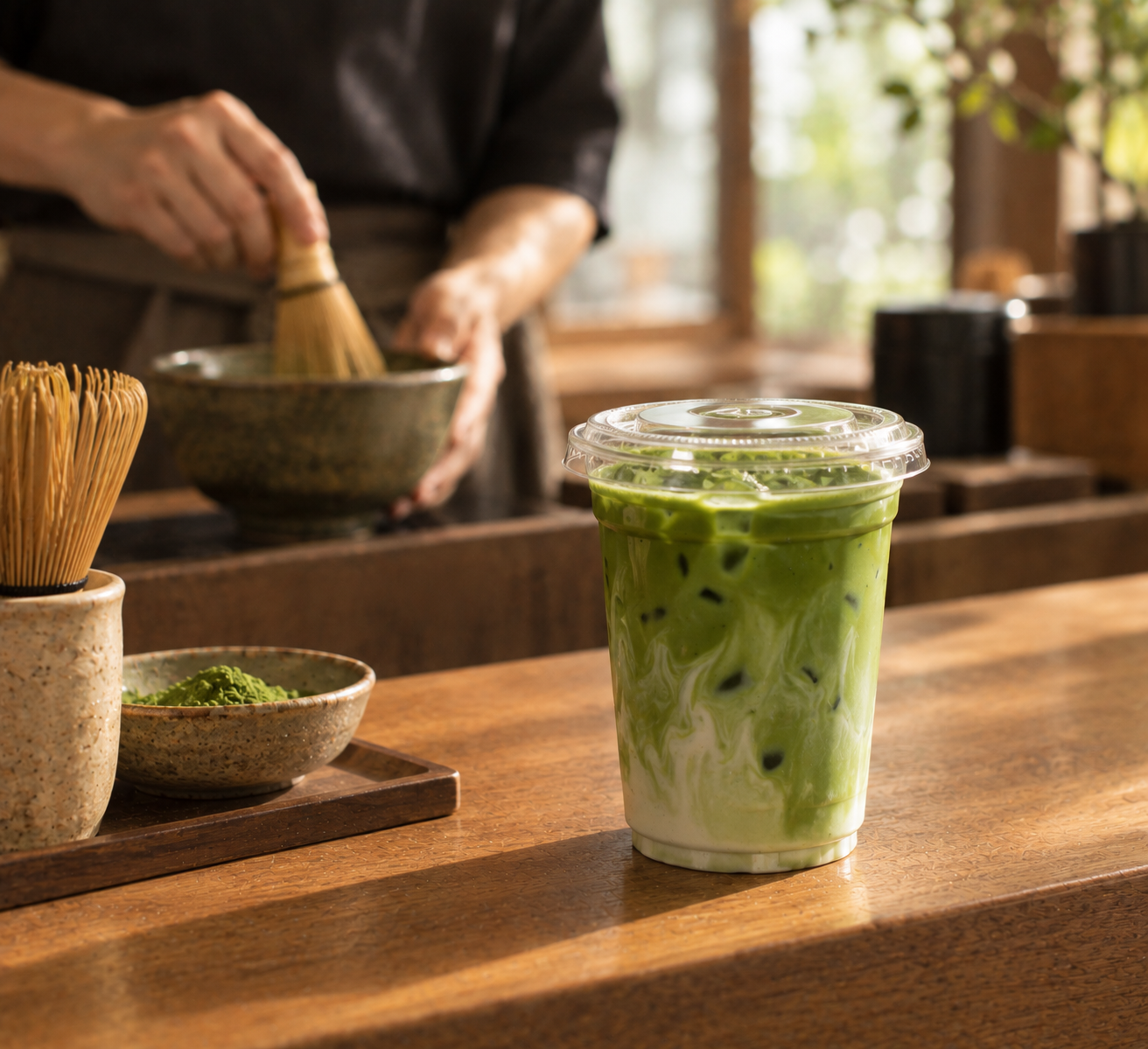
If you can see a chasen (bamboo whisk) and a bowl set up near the register, that’s a strong signal drinks are prepared to order rather than poured from a pre-mixed batch sitting in the fridge. Smaller, specialty-focused cafés are more likely to whisk each drink individually; larger chains more often use a squeeze bottle or a pre-made paste. This single visual cue is often more reliable than anything printed on the menu, since it reflects an actual operational choice rather than marketing language.
Check the Menu Language Itself
Menus that specifically name a grade (“ceremonial,” “premium,” “latte-grade”) or a sourcing detail (a region, an importer, a specific farm) are signaling more transparency than a menu that just says “matcha latte” with no further detail. That’s not a guarantee of quality on its own, but it’s a meaningfully better starting point than total silence on sourcing. A café confident enough in its sourcing to print specifics has, at minimum, thought about the question before you asked it.
Notice the Price Relative to the Café’s Coffee Menu
A rough but useful heuristic: if a café’s matcha latte is priced noticeably lower than its comparable coffee drinks, that’s sometimes, though not always, a sign the matcha itself is a lower-cost, lower-quality ingredient relative to their coffee sourcing standards. This isn’t a hard rule, plenty of places price matcha competitively regardless of quality, but a matcha latte priced suspiciously below the café’s own espresso drinks is worth a bit more scrutiny before ordering.
What to Actually Ask
“Is this pre-sweetened, or can I get it without added sugar?” Many café matcha powders come pre-blended with sugar, which means even an “unsweetened” request might still land somewhat sweet. Asking this upfront tells you whether you’re tasting real matcha or a sweetened mix dressed up as one, and it forces the question to actually be considered rather than assumed away by a barista moving quickly through a rush.
“Do you know what grade of matcha this is?” A confident, specific answer, even something modest like “it’s a latte-grade blend,” is a better sign than a blank look. It doesn’t guarantee excellence, but a barista who’s been told nothing about the product they’re serving is a reasonable yellow flag, and it often correlates with a café that hasn’t invested much thought into the ingredient beyond stocking it because customers ask for it.
“Is this whisked to order, or from a pre-made batch?” Especially relevant at larger chains, since a batch sitting in a container for hours degrades in color and flavor the same way home-brewed matcha does if left out too long. A “made fresh” answer is worth taking at face value unless you have reason to doubt it, since most staff have no incentive to lie about something this specific.
“Can I see the tin or bag it comes from?” This one feels bolder, and not every café will accommodate it, but if they’re willing, a printed grade, harvest date, or region on the actual packaging tells you more in five seconds than several minutes of questioning ever could.
Reading the Cup Once It Arrives
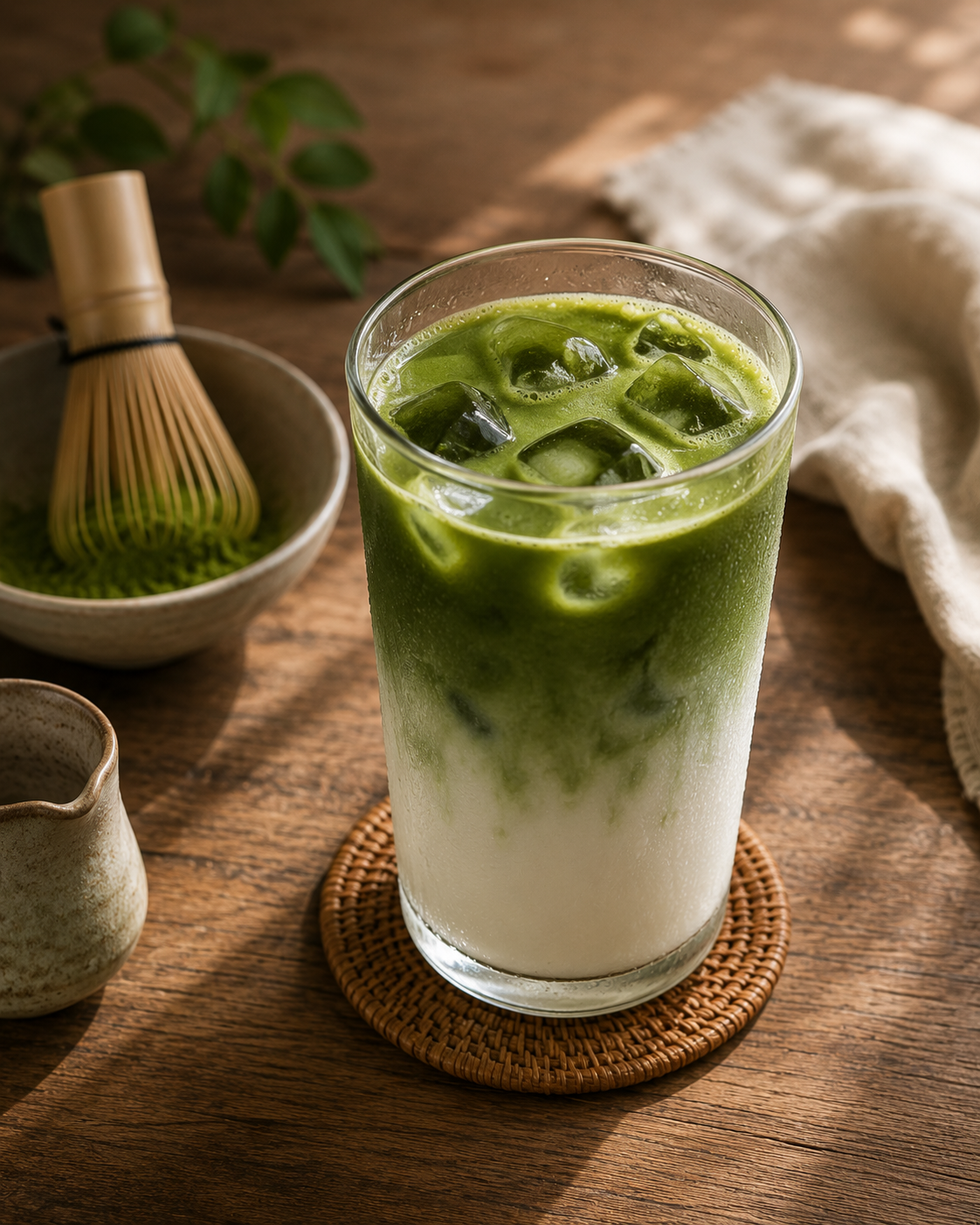
Color. A vivid, bright green points to fresher, better-quality matcha. A dull, olive, or yellowish tint suggests either lower-grade matcha or matcha that’s been sitting out too long, or brewed with water hot enough to degrade its chlorophyll. This is genuinely the fastest visual check available, and it’s worth glancing at the drink before your first sip rather than after.
Sweetness balance. If the drink tastes sweet even after you specifically asked for no added sugar, the base powder itself was likely pre-sweetened rather than the barista simply forgetting your request. Real matcha carries its own natural sweetness, but it’s subtle, not dessert-level sweet on its own, and the two are genuinely easy to tell apart once you’ve tasted a properly unsweetened version for comparison.
Aftertaste. Good matcha should leave a clean, slightly vegetal, faintly sweet aftertaste. A chalky, artificially green, or flatly bitter finish, especially paired with no real depth of flavor, points toward a lower-quality powder. Pay attention specifically to what lingers after the milk’s own flavor fades, since that’s where the tea itself, not the dairy, is actually doing the talking.
Texture and foam. A well-whisked matcha base should carry a light foam layer, even once combined with milk. A completely flat, foam-free surface can indicate either a poorly whisked base or one that was simply stirred in rather than properly incorporated, which affects mouthfeel even when the underlying flavor is otherwise fine.
Where This Gets Harder: Big Chains vs. Specialty Cafés
Larger coffee chains generally optimize for consistency and speed across thousands of locations, which often means a shelf-stable, pre-sweetened matcha blend rather than a whisked-to-order ceremonial powder. That’s not automatically bad, it’s simply a different product built for a different purpose, closer to a flavored syrup category than to genuine tea. Smaller, specialty-focused cafés, particularly ones that treat matcha as a dedicated menu item rather than an afterthought, are more likely to invest in better sourcing and to-order preparation, though price alone isn’t a perfect predictor of which category a given café falls into — plenty of overpriced spots are still serving the same pre-mixed batch as a much cheaper chain down the street.
Ordering Smart at Big Chains Specifically
Since large chains are the most common place people actually order matcha, and also the place where quality control varies most, it’s worth a dedicated approach rather than lumping them in with specialty cafés.
Specify “no classic” or “unsweetened base” explicitly. Many chains have a default sweetened matcha base built into their standard recipe, sometimes labeled internally as the “classic” version, which stacks on top of anything you add yourself. Asking for that base removed, not just “less sweet,” is the difference between a genuinely unsweetened drink and one that’s still secretly carrying a full dose of syrup.
Choose milk deliberately, not by default. Whole milk and 2% tend to let matcha’s flavor come through most directly. Oat milk’s natural sweetness is popular but can flatten the tea character into something closer to a dessert drink, which is fine if that’s what you want, but worth knowing if you’re specifically trying to taste the matcha itself.
Ask for any sweetener on the side rather than mixed in. This single request gives you control that “less sweet” alone doesn’t. A pump of syrup on the side lets you add exactly as much as you want, or none at all, rather than trusting a barista’s judgment of what “light” sweetness means.
Don’t assume seasonal or limited-time matcha drinks use the same base as the standard menu item. Chains sometimes formulate limited releases differently, occasionally with better quality control precisely because they’re positioned as a premium or specialty offering rather than the everyday default.
A Short Vocabulary Cheat Sheet
A few terms are worth recognizing quickly, since café staff won’t always use consistent language and knowing what they mean helps you ask better follow-up questions.
Ceremonial grade. Traditionally the highest tier, made from young, shade-grown leaves. This label isn’t officially regulated by any governing body, so it’s a starting signal rather than a guarantee.
Culinary or latte grade. A bolder, more affordable tier specifically built to hold up against milk and sugar. Not a downgrade for latte purposes, it’s actually the more appropriate choice for this exact drink, and a café using it intentionally isn’t cutting corners so much as making a sensible choice.
Pre-batched or “matcha paste.” A pre-mixed concentrate, sometimes stored in a squeeze bottle, used to speed up preparation during rushes. Not inherently bad, but quality degrades the longer a batch sits before use, which is part of why asking about preparation timing matters.
What a Genuinely Good One Actually Tastes Like
It’s worth describing this directly, since a lot of people who’ve only ever had mediocre café matcha don’t have a clear reference point for what they’re actually chasing. A well-made matcha latte should taste distinctly vegetal and slightly grassy upfront, followed by a rounder, savory-sweet umami note that lingers without turning bitter or chalky. The sweetness, if any, should feel like it’s supporting the tea rather than covering it up entirely. If you finish a cup and couldn’t identify a single flavor beyond “sweet and green,” that’s a strong sign the matcha itself was doing very little of the actual work in that drink.
Traveling and Ordering Abroad
If you’re ordering matcha while traveling, particularly outside Japan, expectations are worth adjusting slightly by region. Cafés in cities with an established specialty coffee culture, ones that already take sourcing seriously for their coffee beans, are statistically more likely to extend that same care to matcha. In regions where matcha is a newer trend item rather than an established specialty, don’t be surprised if quality is more inconsistent even at higher price points, since the supply chains and staff training simply haven’t caught up to demand yet.
Building a Reliable Home Setup Instead
Shop premium latte-grade matcha on Amazon →
Shop portable matcha whisk and travel sets on Amazon →
If you travel often or simply don’t trust the café near your office, a small travel whisk and a resealable pouch of good matcha genuinely solves this problem more reliably than any amount of careful ordering ever will. It’s a small amount of extra effort in exchange for never being at the mercy of an unfamiliar café’s sourcing decisions again.
A Few Things People Ask Me
Is it rude to ask a barista these questions? Not at all — it’s a completely normal customer question, similar to asking about milk alternatives or roast level for coffee. Most baristas either know the answer or will say so honestly, and either response tells you something useful.
Why does the same “matcha latte” taste so different from one café to the next, even at similar prices? Price reflects overhead, branding, and location as much as ingredient quality, so it’s a weak signal on its own. The actual grade and freshness of the matcha powder, plus whether it’s whisked to order, matter far more than what’s printed on the price tag.
Should I just bring my own matcha and ask them to make it for me? Some cafés will accommodate this, though many won’t for hygiene or liability reasons, and it’s worth asking rather than assuming either way. Bringing your own is a much more reliable option at home, which is where my matcha powder brands comparison is genuinely useful.
Is it worth just making matcha lattes at home instead of dealing with this every time? If you’re consistently disappointed by café versions, yes — a home setup gives you full control over grade, sweetness, and preparation, and it pays for itself quickly compared to repeated nine-dollar disappointments.
Does the type of milk affect how easy it is to judge quality? Somewhat — oat milk’s natural sweetness can mask a mediocre matcha more easily than a neutral milk like plain whole or skim, so if you’re specifically trying to evaluate the tea itself rather than just enjoy the drink, a less sweet milk option gives you a clearer read.
Are there any visual cues on the menu board itself worth watching for? Photos showing a clearly vivid green drink, rather than a dull or brownish-green one, can be a loose hint, though menu photography is often stylized enough that it’s a weaker signal than actually asking the questions above in person.
Where I Landed
The single most useful habit here is asking about sweetening before you order, not after you’ve already been handed a syrup-loaded drink you didn’t want. That one question filters out a huge share of the disappointing versions before they ever reach your hands, and everything else, color, aftertaste, whether it’s whisked to order, is confirmation rather than the first line of defense.
None of this requires turning every café visit into an interrogation. A couple of quick, polite questions, asked the same way you’d ask about oat milk availability, is genuinely enough to dramatically improve your odds without slowing down the line or making anyone uncomfortable. Most baristas, in my experience, actually appreciate a customer who seems to know and care about the drink, rather than finding the questions annoying.
If café versions keep letting you down, twenty minutes learning the basics is worth it — once you know what a properly made one actually tastes like, it becomes a lot easier to tell when a café is cutting corners, and a lot easier to just make your own when the nearest good option isn’t within walking distance. Between a reliable home setup and a short list of the right questions to ask when you’re out, there’s no real reason to keep settling for sweetened green milk and calling it matcha.