Disclosure: This post contains affiliate links. If you buy through one of them, I may earn a small commission at no extra cost to you.
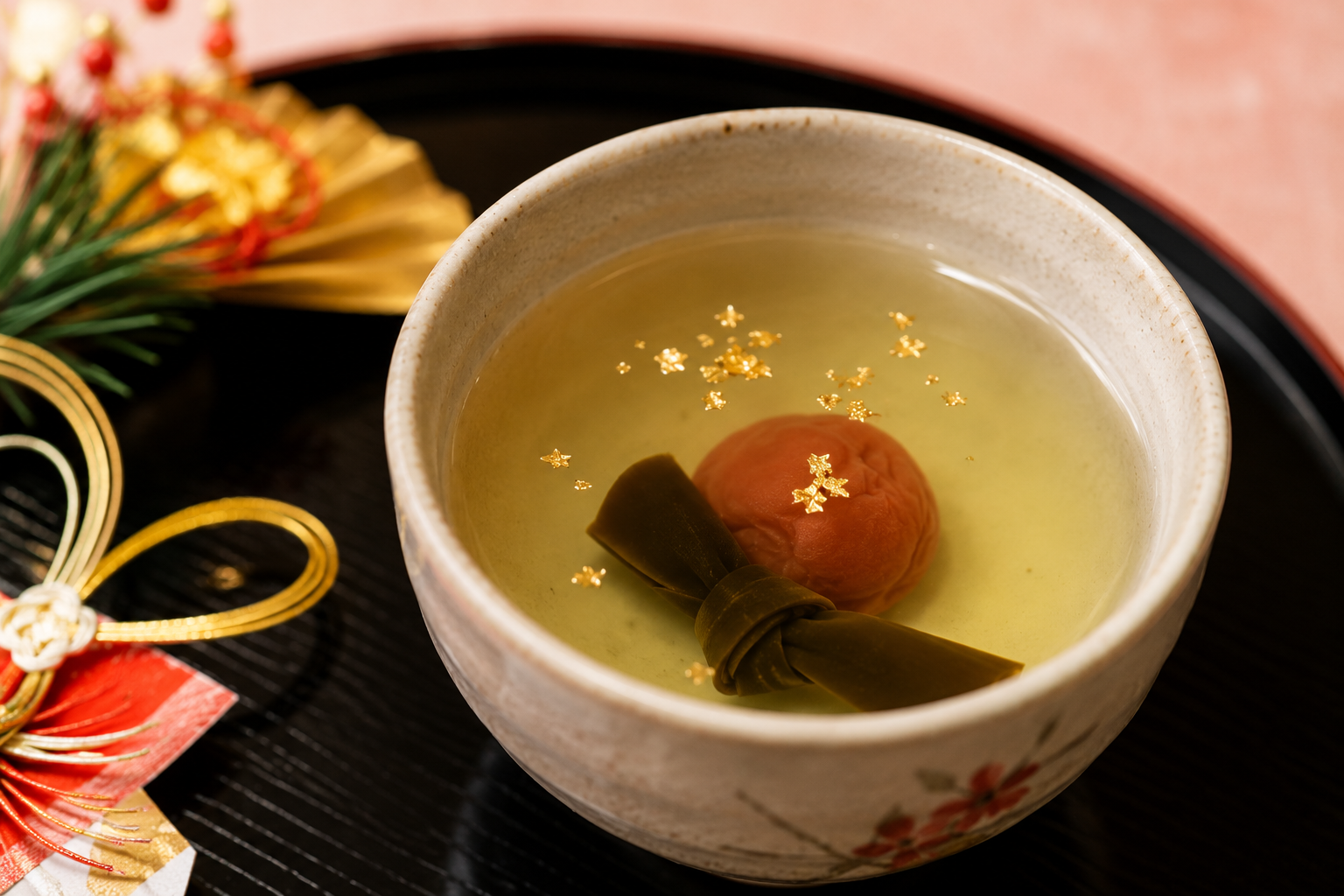
In parts of Japan, especially Kyoto and the surrounding Kansai region, the first cup of tea of the year isn’t an ordinary one. On New Year’s morning, families pour green tea over a pickled plum and a small knot of kelp, and drink it for good health and good fortune in the year ahead. It’s called obukucha (大福茶), “great fortune tea,” and it comes with a story that goes back more than a thousand years.
The Problem You’re Actually Trying to Solve
Most people come across obukucha in one of two ways: a tea shop’s limited “New Year tea” listing in December, or a mention in a guide to Japanese New Year customs. Neither usually explains what’s actually in the cup, why those ingredients, or how to make it if you can’t buy the seasonal blend. The good news is that it’s simple, and almost everything you need is easy to find.
Who This Article Is NOT For
- If you’re looking for a new kind of tea leaf, obukucha isn’t one. It’s a way of serving a mild green tea – most often sencha, bancha or genmaicha – for a special occasion. If you need a good base tea, my sencha brand comparison is a good starting point.
- If you’re looking for a remedy, the healing story below is a legend. Obukucha is a celebratory drink, not a medicine.
- If you can’t have salty foods, note that umeboshi and kombu both add salt to the cup.
The Story Behind It
The tradition is usually traced to Rokuharamitsuji, a temple in Kyoto, and to its founder, the Buddhist priest Kūya. According to the legend, an epidemic swept through the capital in 951. Kūya served tea with pickled plum to the sick, and it was said to help them recover. Emperor Murakami is said to have drunk the same tea himself, and to have made drinking it at New Year a custom.
The name has a nice twist. It was originally written with characters meaning “the emperor drank” (皇服茶, kōfukucha), and because kōfuku also sounds like the word for happiness, the name later came to be written as 大福茶 – “great fortune tea.” Today, Rokuharamitsuji still serves it at New Year, and many Kyoto tea shops sell special obukucha blends each winter.
What Goes in the Cup, and Why
Each ingredient was chosen for what it represents:
| Ingredient | What it adds | What it symbolizes |
|---|---|---|
| Green tea (sencha, bancha or genmaicha) | A mild, clean base | The first tea of the year |
| Umeboshi (pickled plum) | Sour, salty notes | Long life and good health – the wrinkled plum is linked to living to old age, and plum trees are the first to bloom in spring |
| Musubi kombu (knotted kelp) | Savory umami and salt | Joy and family ties – kombu echoes yorokobu, “to be happy,” and the knot represents “tying” good fortune together |
| Gold leaf (optional) | No flavor | Celebration and prosperity |
Some families add roasted brown rice, which is one reason genmaicha is a popular base. Ippodo, for example, releases its own obukucha each winter as a premium genmaicha. If you’re choosing a genmaicha to use as your base, my genmaicha brand comparison explains what to look for.
How to Make Obukucha at Home
You’ll need (per cup):
- 1 cup of mild green tea – sencha, bancha or genmaicha
- 1 umeboshi (pickled plum)
- 1 small piece of kombu, tied in a knot (or a small strip if knotting is fiddly)
- Edible gold leaf, optional
Method:
- Place the umeboshi and the knotted kombu in the bottom of the cup.
- Brew your green tea as usual. Sencha around 70-80°C, genmaicha a little hotter.
- Pour the tea over the plum and kelp.
- Sprinkle a few flakes of gold leaf on top if you’re using it.
- Let it sit for a minute so the plum and kombu flavor the tea, then drink.
The result tastes like green tea with a sour, salty and savory edge – more interesting than it sounds, and very warming on a cold New Year’s morning. The plum can be eaten at the end.
Small tips:
- Soak dried kombu in a little water for a few minutes first. It softens enough to tie, and it’s easier to knot thin strips.
- Choose a milder umeboshi if you can. Traditional ones are very salty and sour; honey-pickled versions are gentler.
- Use a mild base tea. A delicate, expensive gyokuro would be wasted under the plum and kelp.
When It’s Drunk
Obukucha is traditionally the first tea drunk on New Year’s Day, and some families continue for the first few days of January. Because of its lucky associations, it’s also served at other celebrations, including weddings and birthdays, and it’s a popular New Year gift. Similar “fortune tea” customs exist elsewhere in Japan, with local variations in what goes into the cup.
A Few Things People Ask Me
Is obukucha a type of tea? Not exactly. It’s a traditional way of serving green tea, with plum and kelp added. Shops sell “obukucha” blends, but you can make it with tea you already have.
What does it taste like? Like light green tea with a sour, salty and slightly savory note from the plum and kelp. If you’ve had umeboshi or kombu tea, you’ll recognize both.
Can I make it with genmaicha? Yes – it’s one of the most common bases, and the toasty rice pairs nicely with the plum.
Where can I buy the ingredients? For a base tea, Nio Teas’ genmaicha works beautifully. Umeboshi is easy to find at Japanese grocery stores or as umeboshi pickled plums on Amazon, and dried kombu is usually stocked right next to it.
Where I Landed
What I love about obukucha is how little it asks of you. There’s no special leaf and no special equipment, just a plum, a knot of kelp and a cup of ordinary green tea – and a thousand-year-old story to go with it. If you want a small, meaningful way to start the new year, make a cup on the morning of January 1st. It takes five minutes, and it’s one of the easiest Japanese traditions to bring home.