Tag: Japan Konbini Tea

  • Japanese Convenience Store Tea Guide: Hojicha, Oolong, Jasmine, Afternoon Tea and More (Beyond Green Tea)

    Japanese Convenience Store Tea Guide: Hojicha, Oolong, Jasmine, Afternoon Tea and More (Beyond Green Tea)

    Disclosure: This post contains affiliate links. If you buy through one of them, I may earn a small commission at no extra cost to you. Lineups, recipes and labels change often in Japan, and seasonal editions come and go – always check the label.

    Quick Picks

    • Toasty and gentle: bottled hojicha – roasted green tea, low in bitterness, great in the evening (still contains some caffeine).
    • Best with oily food: bottled oolong tea – clean and refreshing; Suntory has sold it since 1981.
    • Floral and refreshing: jasmine tea, or Okinawa’s sanpin-cha – a favorite in the south.
    • Sweet treat: Kirin’s Gogo no Kocha (Afternoon Tea) – Japan’s classic bottled black tea, in milk, lemon and straight versions.
    • Caffeine-light blends: grain and herb blends like Sokenbicha – toasty and easy to drink, but check the label for green tea in the mix.
    • Fell in love with hojicha? You can brew it at home. Hojicha tea bags on Amazon, or try fresh loose-leaf Japanese tea from Nio Teas’ sencha collection – at the time of writing, ordering through the links on this page automatically applies a 10% discount at checkout, no code needed. Offers can change, so check the final price in your cart.

    Below: every major type of tea you’ll find in a Japanese convenience store besides green tea and barley tea – what it tastes like, whether it’s sweetened, and how much caffeine to expect.


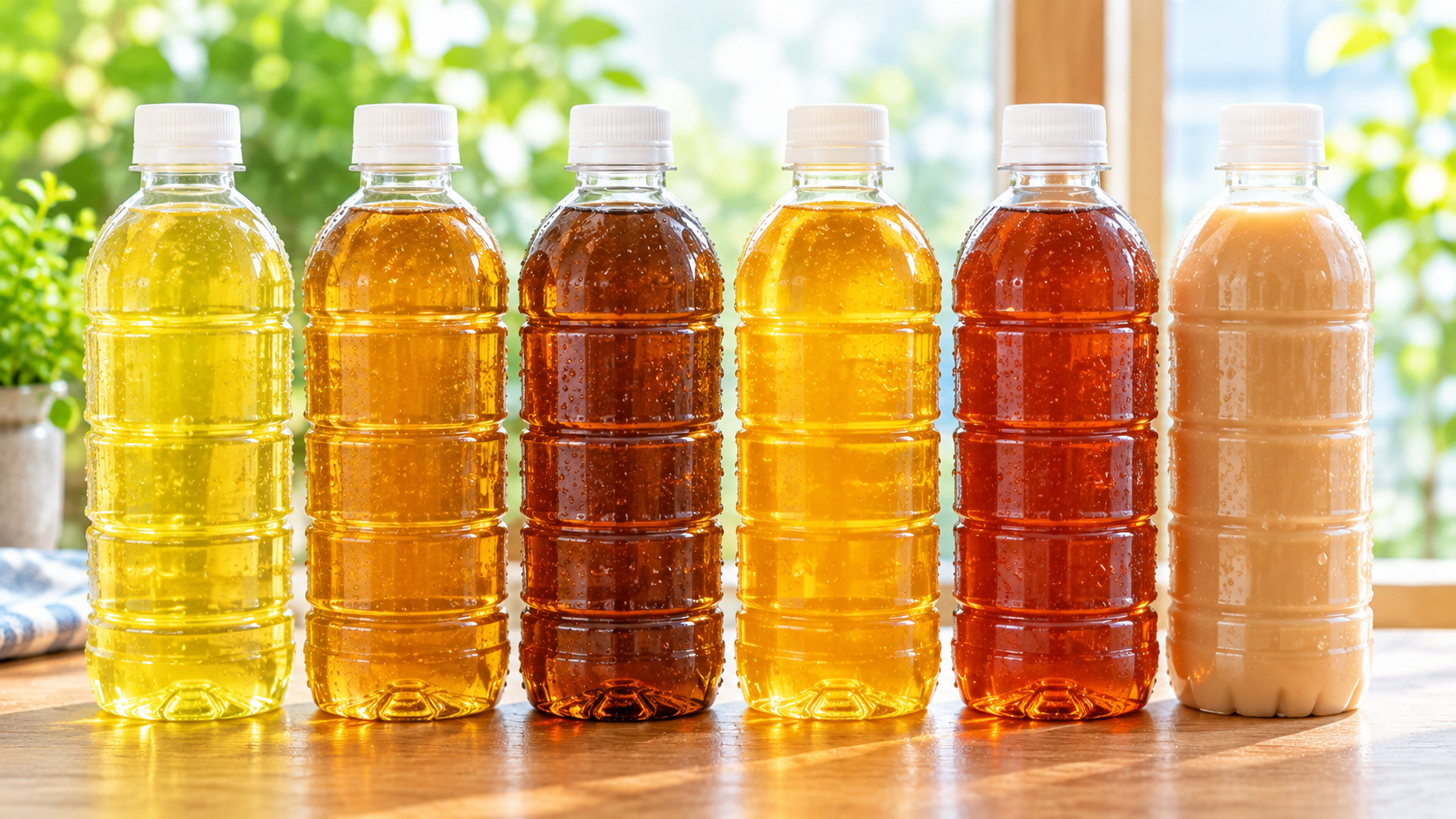
    The drinks fridge in a Japanese convenience store is one of the best tea shops in the world – if you know what you’re looking at. Green tea and barley tea get the most space, but next to them you’ll find roasted tea, Chinese-style teas, black tea, blended health teas and a rotating cast of seasonal drinks.

    Most are unsweetened. Some are very sweet. A few look the same on the shelf but taste completely different. This guide is your map to the rest of the fridge.

    The Problem You’re Actually Trying to Solve

    You’ve tried the green tea and maybe the barley tea, and you want to explore – but you can’t read the labels, and you don’t want to end up with a sugary milk tea when you wanted something refreshing (or vice versa). You want to know what each type is, whether it’s sweet, and whether it has caffeine.

    Who This Article Is NOT For

    • If you want to buy good hojicha to brew at home, my hojicha brand comparison covers the best brands.
    • If you need a caffeine-free drink above all, my caffeine-free Japanese tea guide explains which drinks have none.
    • If you’re looking for energy drinks or coffee, they’re a different section of the fridge entirely.

    The Quick Map

    TypeSweetened?CaffeineTasteBest for
    HojichaUsually noSome (generally gentle)Toasty, smoothEvenings, with food
    OolongUsually noYesClean, slightly roastedFried and rich food
    Jasmine / sanpin-chaUsually noYes (green tea base)Floral, lightHot days, Okinawan food
    Gogo no Kocha and other black teasOften yes (except straight and sugar-free)YesSweet, milky or lemonyA sweet afternoon break
    Blended health teasNoVariesToasty, mildAll-day sipping
    Matcha and hojicha lattesYesYesSweet, creamyDessert in a bottle

    Hojicha (Roasted Green Tea)

    Bottled hojicha is roasted green tea: brown in color, toasty, smooth and low in bitterness. It’s one of the best choices with Japanese food, and many people drink it in the evening because it’s gentle. It does contain caffeine, though usually less per bottle than strong green tea.

    Look for ほうじ茶 on the label. In autumn and winter, you’ll often find it in the hot cabinet, too.

    Oolong Tea

    Oolong is a Chinese-style, partly oxidized tea, and it’s hugely popular in Japan as an unsweetened everyday drink. Suntory launched its canned oolong tea in 1981 – one of the first ready-to-drink teas in Japan, at a time when buying tea in a can was a new idea. Today, bottled oolong is a standard partner for fried food, grilled meat and Chinese food, because its clean, slightly roasted taste cuts through oil.

    Look for ウーロン茶 on the label. Some oolong products are sold as foods with health claims; treat them as tea, not medicine.

    Jasmine Tea and Okinawa’s Sanpin-cha

    Jasmine tea is green tea scented with jasmine flowers: light, floral and refreshing. In Okinawa, a similar jasmine-scented tea called sanpin-cha is so popular it’s considered a local soul drink. It has been drunk there for generations, and a canned sanpin-cha was first sold in Okinawa in 1993 – at a time when the idea of selling chilled tea in cans was still unusual. Today, both sanpin-cha and jasmine tea are standard in Okinawan convenience stores and supermarkets, and jasmine tea is easy to find across Japan.

    Look for ジャスミン茶 or さんぴん茶. Because it’s made from tea, it contains caffeine.

    Gogo no Kocha (Afternoon Tea) and Other Black Teas

    Kirin’s Gogo no Kocha (“Afternoon Tea”) launched in 1986 as Japan’s first bottled black tea inspired by afternoon tea culture, and it’s still a giant: at the time of writing, Kirin said it was Japan’s best-selling tea drink brand by sales in 2025. The main lineup includes:

    • Straight tea – lightly sweet black tea
    • Milk tea – sweet and creamy, the classic choice
    • Lemon tea – sweet and tangy
    • A sugar-free series – for people who want black tea without sweetness

    Unlike most Japanese bottled teas, the milk and lemon versions are sweetened, so think of them as a treat rather than an everyday thirst-quencher. If you enjoy Japanese black tea and want to try a loose-leaf version, Japanese-grown black tea (wakocha) is worth exploring.

    Blended Health Teas

    Japan loves blended teas made from grains, herbs and sometimes a little tea. The best-known is Coca-Cola’s Sokenbicha, launched nationally in 1994 with a blend that originally included ten ingredients, such as Job’s tears, brown rice, barley and green tea. Asahi’s Juroku-cha (“sixteen tea”) is another long-running blend.

    These teas are toasty, mild and unsweetened. Some are caffeine-free, but others contain a little tea, so read the label if caffeine matters: カフェインゼロ means caffeine-free.

    Sweet Tea Lattes and Seasonal Drinks

    You’ll also see bottled matcha lattes, hojicha lattes, royal milk teas and seasonal flavors like sakura in spring or chestnut in autumn. They’re fun to try, but they’re sweet – closer to dessert than tea.

    Konbini Tea Tips for Travelers

    • Check the hot cabinet. From autumn to spring, hot bottles of tea sit in a warmer near the register – perfect on cold mornings.
    • Try store-brand teas. Convenience store chains sell their own unsweetened teas, often cheaper than the big brands.
    • Look for limited editions. Seasonal and regional bottles change constantly, and they’re part of the fun.
    • Buy big for your hotel. Supermarkets sell 2-liter bottles much more cheaply per liter than convenience stores.
    • Recycle properly. Remove the cap and label if you can, and use the bottle bins next to the store or vending machine.

    How to Avoid Accidentally Buying Something Sweet

    LabelMeaning
    無糖 (mutō)Unsweetened
    砂糖不使用No sugar used
    微糖 (bitō)Slightly sweetened
    ミルクティー / ラテMilk tea / latte – usually sweet
    カフェインゼロCaffeine-free

    If a bottle has a picture of milk or fruit on it, assume it’s sweetened unless it says 無糖.

    Which Tea for Which Moment?

    MomentGrab
    With ramen, karaage or gyozaOolong tea
    With sushi or a bentoHojicha (or green tea)
    A hot day in OkinawaSanpin-cha
    An afternoon pick-me-upGogo no Kocha milk tea
    Late eveningA caffeine-free blended tea or barley tea
    A cold winter morningHot hojicha from the heated cabinet

    A Few Things People Ask Me

    Are Japanese bottled teas sweetened? Most plain teas – green tea, hojicha, oolong, jasmine and blended teas – are unsweetened. Black tea with milk or lemon, and lattes, are usually sweet.

    Which convenience store tea has no caffeine? Barley tea and some blended teas. Look for カフェインゼロ.

    What is sanpin-cha? Okinawa’s jasmine-scented tea, a local favorite available in almost every store there.

    Is Gogo no Kocha Japanese tea? It’s a Japanese brand of bottled black tea, made in the style of Western-inspired afternoon tea.

    Where I Landed

    The convenience store fridge is the cheapest tea tasting you’ll ever do. Grab a hojicha with your bento, an oolong with your fried chicken, a sanpin-cha if you’re in Okinawa, and a Gogo no Kocha milk tea when you need something sweet. When you find a favorite, it’s worth learning to brew it at home – especially hojicha, which is easy to make and even better fresh.
  • Japanese Bottled Barley Tea (Mugicha): The Best Brands to Grab, and How They Differ

    Japanese Bottled Barley Tea (Mugicha): The Best Brands to Grab, and How They Differ

    Disclosure: This post contains affiliate links. If you buy through one of them, I may earn a small commission at no extra cost to you. Allergy note: mugicha is made from barley, which contains gluten. Some bottled barley teas also include other grains – check the label if you have allergies. Lineups and labels change often in Japan.

    Quick Picks

    • Japan’s best seller: Kenko Mineral Mugicha (Ito En) – sweet, toasty and easy to drink. Guinness World Records lists it as the best-selling ready-to-drink barley tea brand.
    • Most toasty, “kettle-brewed” taste: Yakan no Mugicha (Coca-Cola) – made with a high-temperature boiling method for a fuller roast.
    • Lightest and softest: GREEN DA・KA・RA Yasashii Mugicha (Suntory) – gentle, with roasted rice and Job’s tears in the blend.
    • Can’t get to Japan? Ito En sells a bottled Mugicha outside Japan – caffeine-free, made from water, barley and vitamin C. Ito En Mugicha bottles on Amazon
    • Want to make it at home? A cold-brew pitcher and mugicha tea bags make a liter for a fraction of the price. Cold-brew tea pitchers on Amazon

    Below: how the major brands taste, how to read the labels, which to choose for which moment, and how to recreate bottled mugicha at home.


    In a Japanese convenience store, the barley tea section is almost as big as the green tea section – and in summer, it may be bigger. Bottled mugicha is caffeine-free, unsweetened, cheap and wonderfully refreshing, which makes it the drink of choice for families, office workers, athletes and anyone escaping the summer heat.

    But the bottles look alike, and they taste surprisingly different. Some are sweet and mellow, some deeply roasted, some blended with other grains. Here’s how to tell them apart.

    The Problem You’re Actually Trying to Solve

    You want a caffeine-free, sugar-free drink in Japan – or you’ve tried bottled mugicha and want to know which brand to buy next, or how to get something similar at home. The labels are in Japanese, and you can’t tell the brands apart from the shelf.

    Who This Article Is NOT For

    • If you want to brew mugicha from tea bags or grains, my mugicha guide covers how to make it properly.
    • If you want to compare all of Japan’s caffeine-free drinks, my caffeine-free Japanese tea guide covers mugicha, sobacha and more.
    • If you avoid gluten, barley tea isn’t for you.

    The Main Brands, Compared

    BrandMakerWhat’s in itTaste
    Kenko Mineral MugichaIto EnBarley, malt, deep-sea water, vitamin CSweet, toasty, smooth, no bitterness
    Yakan no MugichaCoca-ColaSix-row barley, barley extract, vitamin CFuller roast, “boiled in a kettle” style
    GREEN DA・KA・RA Yasashii MugichaSuntoryBarley, sprouted barley, roasted rice, Job’s tears, seaweed extractLight, soft, easy to drink
    Juroku-cha MugichaAsahiBarley blended with other grains and herbsToasty with a clean finish
    Ito En Mugicha (sold abroad)Ito EnWater, barley, vitamin CClassic, clean roasted barley

    Ingredients as listed by manufacturers and retailers at the time of writing. Recipes change, so check the label.

    Kenko Mineral Mugicha (Ito En)

    This is the best-known bottled barley tea in Japan. Ito En blends barley with malt for a naturally sweet, roasted flavor with no bitterness, and uses deep-sea water to add a small amount of minerals. Guinness World Records lists Kenko Mineral Mugicha as the best-selling ready-to-drink barley tea brand, based on 2024 sales. In a 2022 survey of 500 people in Japan by All About, it also came first among favorite bottled barley teas, with respondents praising its easy, non-bitter taste and large bottle.

    Yakan no Mugicha (Coca-Cola)

    Yakan means kettle, and that’s the idea: a mugicha that tastes like it was boiled at home in a kettle. Coca-Cola uses a high-temperature boiling method to bring out a fuller, toastier barley flavor. It’s the pick if you like a stronger roast. There are a few versions under the Sokenbicha brand as well.

    GREEN DA・KA・RA Yasashii Mugicha (Suntory)

    Yasashii means gentle, and this is the softest of the major brands. Suntory blends barley with sprouted barley, roasted rice and Job’s tears (hatomugi). It’s light and easy to drink – popular with families and with people who find other barley teas too strongly roasted.

    Juroku-cha Mugicha (Asahi)

    Asahi’s barley tea draws on its famous blended “sixteen tea” (juroku-cha), combining barley with other grains and herbs. It’s toasty with a clean finish – a good pick if you like a more complex flavor.

    Ito En Mugicha (Outside Japan)

    If you’re outside Japan, Ito En’s bottled Mugicha is one of the easiest Japanese barley teas to find. Its US listing describes 500ml bottles made from water, barley and vitamin C, naturally caffeine-free.

    Why Mugicha Is Everywhere in Japan

    Mugicha has been a household drink in Japan for generations. Before bottled drinks existed, families boiled roasted barley in a kettle every morning and cooled it in the fridge, and many still do. Its appeal is simple:

    • No caffeine, so children, older people and anyone avoiding caffeine can drink it freely.
    • No sugar, so it’s a healthier everyday alternative to soft drinks.
    • It suits Japanese summers. A cold, slightly toasty drink is refreshing in hot, humid weather, and many people drink it to stay hydrated.
    • It goes with everything. It doesn’t compete with food, from rice balls to barbecue.

    Bottled mugicha simply made that home habit portable.

    Bottle Sizes and Where to Buy

    • Convenience stores and vending machines usually sell bottles of around 500-650ml – perfect for a day out.
    • Supermarkets and drugstores sell large 2-liter bottles, often much cheaper per liter. Families buy them by the case in summer.
    • Seasonal displays – mugicha takes over more shelf space from late spring through summer, with special and limited editions.
    • Hot mugicha occasionally appears in winter in some stores and vending machines, though hot green tea and hojicha are more common.

    How to Read the Labels

    JapaneseMeaning
    麦茶 / むぎ茶 (mugicha)Barley tea
    カフェインゼロCaffeine-free
    無糖Unsweetened
    六条大麦 (rokujo omugi)Six-row barley – the classic barley for mugicha
    国産Japanese-grown
    はと麦 (hatomugi)Job’s tears (another grain)
    ミネラルMinerals

    Almost all bottled barley teas in Japan are unsweetened and caffeine-free. If an ingredient list includes several grains, it’s a blend.

    Which Bottle for Which Moment?

    MomentGrabWhy
    A hot summer walkKenko Mineral MugichaSweet, easy and refreshing
    With grilled food or ramenYakan no MugichaThe stronger roast stands up to rich food
    With kids or for all-day sippingYasashii MugichaLight and gentle
    After exerciseAny large bottle of mugichaCaffeine-free and unsweetened
    Late eveningAny mugichaNo caffeine to keep you awake

    How to Make “Bottled” Mugicha at Home

    Bottled mugicha is convenient, but homemade is cheaper, greener and just as good:

    1. Use a pitcher or cold-brew bottle. One with a built-in filter is easiest.
    2. Add one mugicha tea bag per liter (check the bag size on the pack).
    3. Cold brew for 1-3 hours, or boil for 3-5 minutes and cool. Boiling gives the “yakan” kettle-style flavor.
    4. Remove the bag so it doesn’t turn bitter.
    5. Keep it in the fridge and drink within about two days. Mugicha has no preservatives.

    Want Kenko Mineral Mugicha’s sweetness? Look for mugicha bags that include malt, or try a deeper-roasted barley.

    A Few Things People Ask Me

    Is bottled mugicha caffeine-free? Yes. Barley tea has no tea leaves, so it’s naturally caffeine-free.

    Is bottled mugicha sweetened? The major brands are unsweetened. Any sweetness comes from roasted barley and malt.

    Is mugicha gluten-free? No. Barley contains gluten.

    Can I buy Japanese bottled mugicha outside Japan? Ito En’s Mugicha is sold in some countries and online. Other brands are mainly found in Japanese and Asian supermarkets, if at all.

    Which is the most popular in Japan? Kenko Mineral Mugicha from Ito En is the best-selling brand.

    Where I Landed

    Bottled mugicha is one of the best things you can drink in Japan: caffeine-free, sugar-free and perfect in the heat. Start with Kenko Mineral Mugicha for a sweet, smooth classic, try Yakan no Mugicha if you like a stronger roast, and Yasashii Mugicha if you want something gentle. Back home, a pitcher and a box of mugicha bags will keep you stocked all summer.

  • Japanese Bottled Green Tea Guide: Oi Ocha, Ayataka, Iyemon and Namacha – Which to Grab at a Konbini

    Japanese Bottled Green Tea Guide: Oi Ocha, Ayataka, Iyemon and Namacha – Which to Grab at a Konbini

    Disclosure: This post contains affiliate links. If you buy through one of them, I may earn a small commission at no extra cost to you. Lineups, labels and prices change often in Japan – especially with seasonal editions.

    Quick Picks

    • The classic, clean benchmark: Oi Ocha (Ito En) – light, clear and lightly bitter. Also the easiest to buy outside Japan. Oi Ocha on Amazon
    • Richest and most “green”: Ayataka (Coca-Cola) – blended with matcha for a fuller, slightly cloudy cup.
    • Most “freshly brewed” feeling: Iyemon (Suntory) – developed with Kyoto tea merchant Fukujuen.
    • Freshest, lightest: Namacha (Kirin) – partly cold-extracted for a fresh, gentle taste.
    • For the evening: a bottled hojicha, or a caffeine-free barley or grain tea.
    • Want to recreate it at home? A cold-brew bottle and good loose sencha make a better, cheaper “bottled tea” than anything on the shelf. Nio Teas’ sencha collection – at the time of writing, ordering through the links on this page automatically applies a 10% discount at checkout, no code needed. Offers can change, so check the final price in your cart.

    Below: what each brand tastes like, how to read the labels, hot vs. cold bottles, and how to make your own bottled-style tea at home.


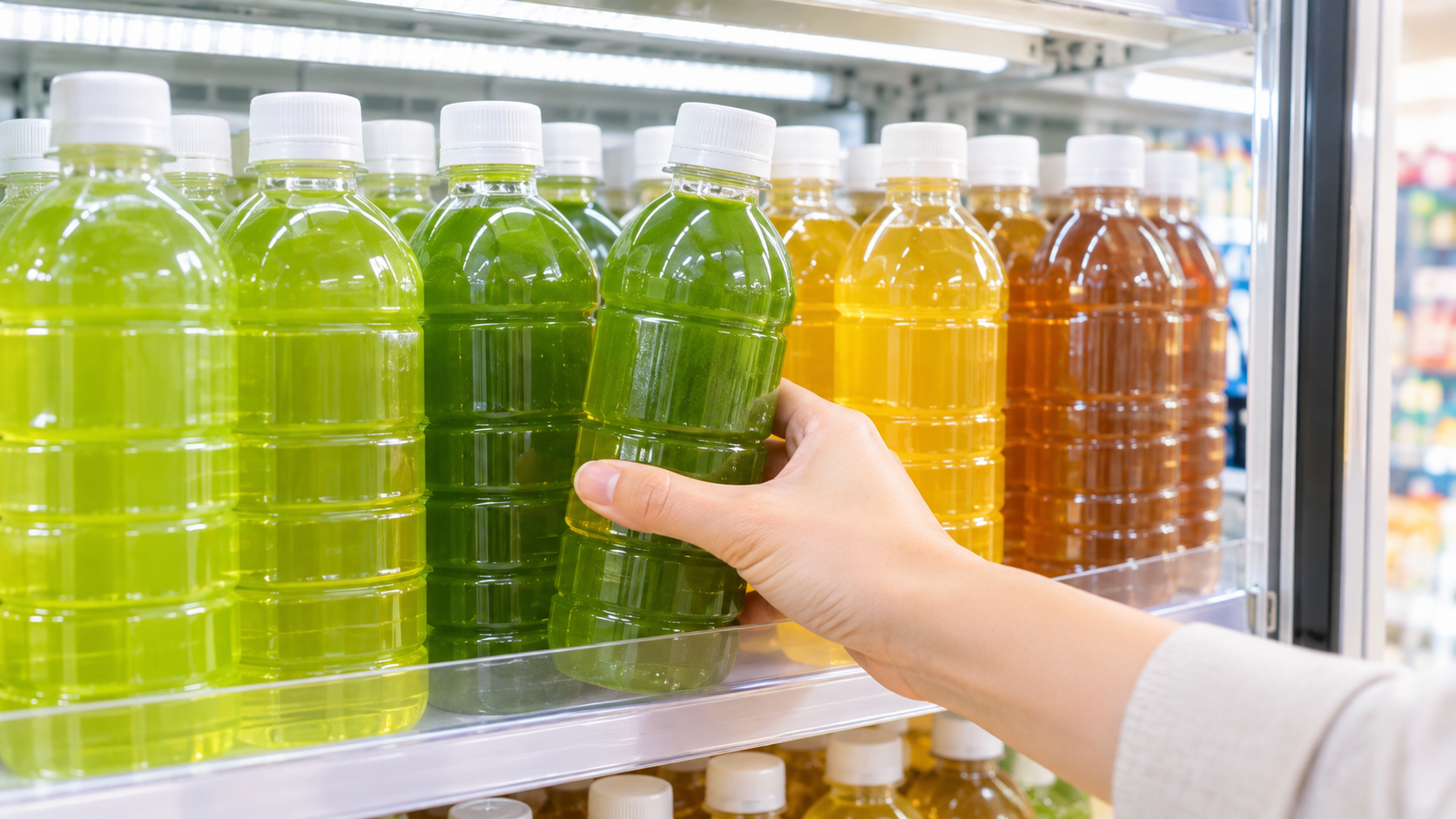
    Walk into any Japanese convenience store and you’ll find a wall of green tea bottles – and almost all of them are unsweetened. For visitors used to sugary iced tea, it’s a revelation: real, cold, refreshing green tea for a couple of hundred yen, available on every corner and in every vending machine.

    The problem is choosing. The big four – Oi Ocha, Ayataka, Iyemon and Namacha – all look similar on the shelf, and the labels are in Japanese. Here’s how they differ, so you can find your favorite on your first day.

    The Problem You’re Actually Trying to Solve

    You’re in Japan (or planning a trip) and want to try the famous bottled green teas. Or you’ve already tried one and want to know which others to taste, how they differ, and how to get something similar back home.

    Who This Article Is NOT For

    • If you need a caffeine-free option, see my guide to mugicha – Japanese roasted barley tea, which you’ll also find in every konbini.
    • If you want to brew loose-leaf tea at home instead, my sencha brand comparison covers where to buy good sencha.
    • If you’re looking for sweet milk tea or flavored drinks, those are on the same shelf, but this guide focuses on unsweetened green tea.

    The Big Four, Compared

    BrandMakerStyleTasteBest for
    Oi OchaIto EnClear senchaLight, clean, lightly bitterEveryday benchmark, with food
    AyatakaCoca-Cola (Japan)Matcha-blendedFuller, rounder, slightly cloudyPeople who like a rich “green” taste
    IyemonSuntoryKyoto-style green teaBalanced, gently bitter, aromaticA “teapot-brewed” feel
    NamachaKirinPartly cold-extractedFresh, light, gentleA softer, less bitter cup

    Oi Ocha (Ito En)

    Oi Ocha is the original. Ito En began selling canned green tea in 1985, renamed it Oi Ocha in 1989, and moved it into plastic bottles in 1996 – making it one of the pioneers of ready-to-drink green tea. It’s clear, light and refreshingly bitter: the taste most people picture when they think of Japanese bottled tea.

    Oi Ocha is also the easiest to find outside Japan, so if you fall in love with it, you can keep drinking it at home. Ito En also sells variations, such as a stronger “koi” version with more caffeine and aroma, and premium editions in some seasons.

    Ayataka (Coca-Cola)

    Ayataka was launched by Coca-Cola in Japan in 2007 and has become one of the country’s top green tea brands – it reported its highest-ever sales in 2025. Its signature is matcha: the tea is blended with matcha, which gives it a slightly cloudy look and a fuller, rounder, more intensely “green” flavor than a clear sencha. Coca-Cola works with Kanbayashi Shunsho Honten, a historic Uji tea house, on Ayataka products.

    If you find Oi Ocha a little thin, Ayataka is the one to try next.

    Iyemon (Suntory)

    Suntory launched Iyemon in 2004, in partnership with Fukujuen, a long-established Kyoto tea merchant. The brand is named after Fukujuen’s founder, and a Fukujuen tea master selects the leaves. Iyemon aims for the feeling of tea poured from a teapot: balanced, aromatic and gently bitter. Suntory adjusts the flavor over time to match changing tastes.

    Namacha (Kirin)

    Kirin’s Namacha uses partly cold extraction – brewing some of the tea with cold water – which gives a fresh, gentle, less bitter taste. It’s a good pick if you find other bottled teas too astringent.

    Beyond the Big Four

    • Bottled hojicha – roasted, toasty and lower in bitterness; a nice choice in the evening (it still contains some caffeine).
    • Caffeine-free grain teas – mugicha (barley tea) and blended grain teas like Coca-Cola’s Sokenbicha are toasty, caffeine-free and perfect in summer.
    • Premium editions – some brands sell pricier bottles made with gyokuro or first-harvest tea. Worth trying once.
    • Seasonal and regional editions – limited flavors appear throughout the year, so the shelf is never quite the same twice.

    Which Bottle for Which Moment?

    MomentGrabWhy
    With sushi, onigiri or a bentoOi OchaClean bitterness cuts through rice and fish
    Mid-afternoon slumpAyataka or a “koi” (strong) green teaFuller flavor and a bit more caffeine
    A long train rideIyemonBalanced and easy to sip slowly
    A hot summer walkNamacha or mugichaLight and refreshing; mugicha is caffeine-free
    After dinnerHojicha or a grain teaGentle and toasty
    A cold winter morningAny hot bottle from the heated cabinetWarms your hands as well as you

    How to Read the Labels

    You don’t need to read Japanese – just look for a few words:

    JapaneseMeaning
    緑茶 (ryokucha)Green tea
    無糖 (mutō)Unsweetened
    濃い (koi)Strong / rich
    ほうじ茶 (hōjicha)Roasted green tea
    麦茶 (mugicha)Barley tea (caffeine-free)
    カフェインゼロCaffeine-free
    抹茶入り (matcha iri)Contains matcha

    Most plain green teas in Japan are unsweetened by default. Sweet drinks are usually labeled as milk tea, lattes or “tea” in Western style – check before you buy if you want zero sugar.

    Hot or Cold?

    In autumn and winter, Japanese convenience stores and vending machines sell hot bottled tea. In vending machines, hot drinks are usually marked with a red label (あったか〜い, “warm”), and cold drinks with blue (つめた〜い, “cold”). In convenience stores, hot bottles sit in a heated cabinet near the register. Hot bottles are usually smaller and have caps designed for heating.

    A warm bottle of green tea on a cold morning is one of the small pleasures of travel in Japan.

    How to Make “Bottled Tea” at Home

    Bottled tea is convenient, but it’s easy to make a fresher, cheaper version yourself:

    1. Use a cold-brew bottle. A bottle with a built-in filter makes it effortless. Cold-brew tea bottles on Amazon
    2. Add good sencha. About 10g of loose sencha per liter of cold water.
    3. Refrigerate for 2-3 hours. Then remove the leaves or filter.
    4. Want an Ayataka-style cup? Whisk a little matcha (about 1g) into a small amount of water and stir it into your cold-brewed sencha.
    5. Drink within a day or two. Homemade tea has no preservatives.

    The result is smoother and sweeter than most bottled teas, with none of the plastic waste.

    A Few Things People Ask Me

    Which bottled green tea is most popular in Japan? Oi Ocha, Ayataka and Iyemon are consistently among the leading brands. Each has loyal fans.

    Are Japanese bottled teas sweetened? Plain green teas almost never are. Look for 無糖 (unsweetened) on the label to be sure.

    Can I buy Oi Ocha outside Japan? Yes – it’s the most widely exported, found in many Asian supermarkets and online. Ayataka, Iyemon and Namacha are much harder to find abroad.

    Do bottled green teas have caffeine? Yes. For zero caffeine, choose mugicha or another grain tea.

    Where I Landed

    Try all four on your trip – it’s one of the cheapest, most fun food experiences in Japan. Start with Oi Ocha as your benchmark, try Ayataka if you want something richer, Iyemon for a teapot-style cup, and Namacha for something lighter. When you get home and miss them, Oi Ocha is easy to find – and a cold-brew bottle with good sencha will give you something even better.