Disclosure: This post contains affiliate links. If you buy through one of them, I may earn a small commission at no extra cost to you. Product details below are from public information about Hojicha Co. at the time of writing (October 2026); the range and prices may change.
Quick Verdict
- Is Hojicha Co. worth it? Yes, if you want to make hojicha lattes at home. It’s a brand built around one thing – Kyoto hojicha, especially hojicha powder – and its powder is designed to stand up to milk.
- Best for lattes and baking: Hojicha Co. hojicha powder – their best seller. Hojicha Co. powder on Amazon
- Best for drinking straight: their loose-leaf hojicha, including the Gold Roast. Hojicha Co. loose leaf on Amazon
- Not ideal if: you mostly drink hojicha plain and want a gentle, delicate cup – a refined stem hojicha from a Kyoto tea house may suit you better.
- Want a gentle real tea for evenings too? Nio Teas’ kukicha collection has low-caffeine stem teas from small farms. At the time of writing, ordering through the links on this page automatically applies a 10% discount at checkout – no code needed. Offers can change, so check the final price in your cart.
Below: who’s behind Hojicha Co., what it sells, how the powder works in a latte, the honest downsides, and how it compares with other hojicha brands.
A few years ago, hojicha was almost unknown outside Japan. Today, hojicha lattes are on café menus across North America – and Hojicha Co. is one of the brands that helped make that happen. Rather than selling every kind of Japanese tea, it focused on one: roasted green tea from Kyoto, with a powder made for lattes.
That focus is its biggest strength. It’s also why it isn’t the right choice for everyone.
The Problem You’re Actually Trying to Solve
You’ve had a hojicha latte at a café and want to make it at home, or you’ve seen Hojicha Co. recommended and want to know if it’s worth buying. You’re wondering whether its powder actually tastes good, whether it works for drinking straight, and how it compares with the hojicha sold by traditional Japanese tea houses.
Who This Article Is NOT For
- If you want to compare several hojicha brands side by side, my hojicha brand comparison covers Ippodo, Marukyu Koyamaen, Kaga Boucha, Hojicha Co. and Ito En.
- If you’re mainly wondering how much caffeine hojicha has, my matcha vs. hojicha caffeine comparison covers that.
- If you need a completely caffeine-free drink, hojicha isn’t it – it’s lower than many teas in a typical cup, but not zero.
Who’s Behind Hojicha Co.
Hojicha Co. was founded in 2018 in Toronto, Canada, by Danielle Geva and Francois Mathieu. The idea came from a trip to Japan: they brought hojicha home, shared it with friends, ran out quickly, and found nothing fresh and authentic in local shops.
A few points about the company:
- Kyoto sourcing. Its hojicha is sourced from Kyoto Prefecture, where hojicha has a long tradition. The founders chose producers by tasting and comparing samples.
- A focus on powder. Hojicha powder – finely ground roasted green tea – quickly became its best seller, and the company has worked to bring it into North American cafés.
- Recognition. It won “Best Tea” at the Toronto Coffee & Tea Expo in 2019, and its Gold Roast hojicha placed in a blind tasting at the Toronto Tea Festival in 2020.
- A link to Marukyu Koyamaen. In 2023, Hojicha Co. announced a partnership with the Uji matcha maker Marukyu Koyamaen, becoming an official distributor of its matcha outside Japan – useful if you’ve struggled to find Marukyu Koyamaen from trustworthy sellers.
What It Sells
- Hojicha powder – the flagship product, for lattes and baking
- Loose-leaf hojicha – several varieties, including the Gold Roast
- Uji matcha from Marukyu Koyamaen
- Japanese-made tea accessories and teaware
How the Powder Works
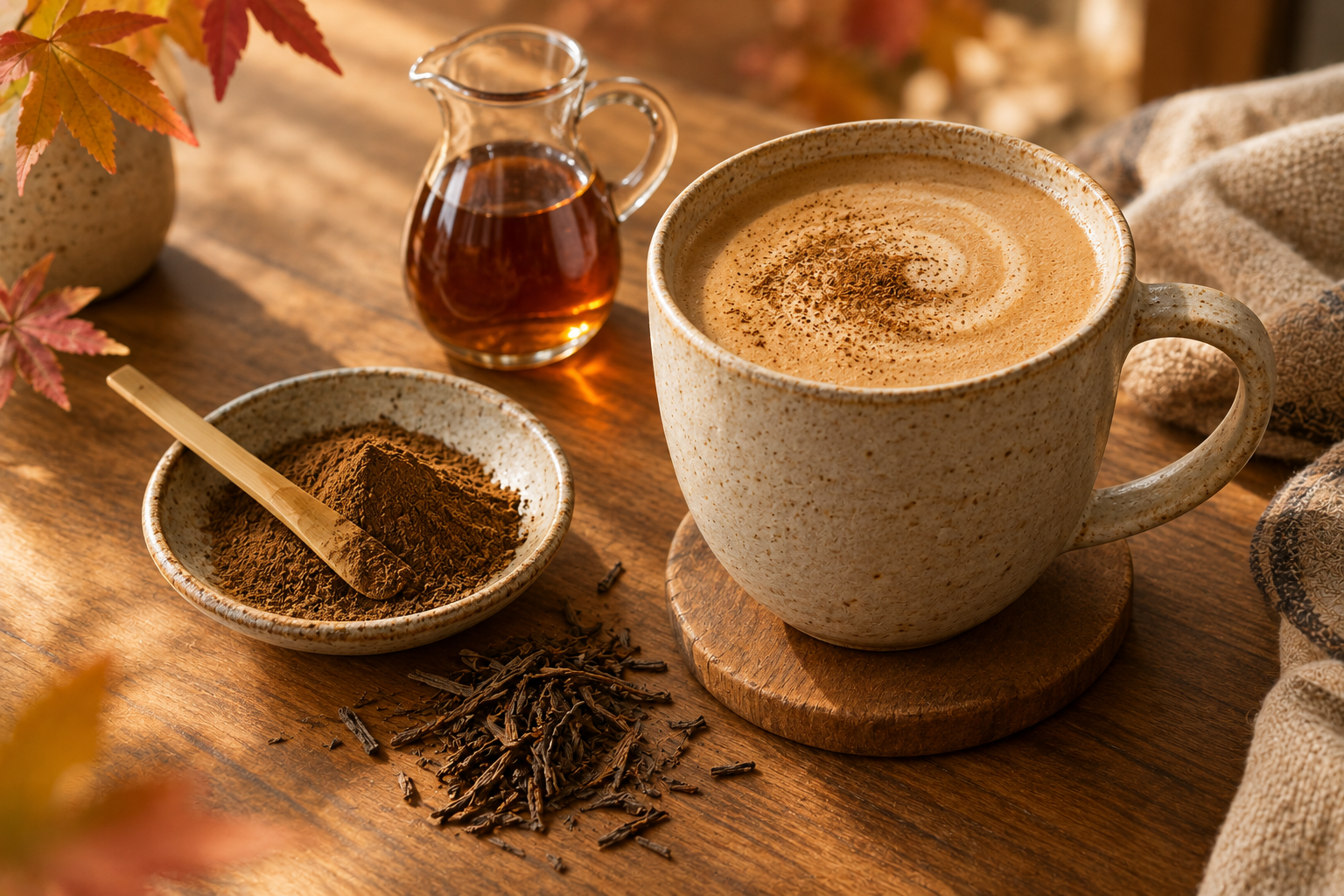
Hojicha powder is to hojicha what matcha is to green tea: the whole roasted leaf, ground fine. You don’t steep it – you whisk or stir it into liquid. That makes it fast and convenient, and it gives a fuller, toastier flavor than a latte made from brewed hojicha.
Basic hojicha latte:
- Add about 1-2 teaspoons (2-4g) of hojicha powder to a mug.
- Pour in a splash of hot water (around 80°C / 175°F or hotter – roasted tea tolerates heat) and whisk into a smooth paste.
- Add about 200ml of steamed or cold milk.
- Sweeten with a little maple syrup or honey if you like – maple and hojicha are a particularly good match.
The same powder works in baking, smoothies, ice cream and overnight oats – anywhere you’d use matcha but want a toasty, caramel-like flavor instead of a grassy one.
Three Ways to Use Hojicha Powder Beyond the Basic Latte
Iced maple hojicha latte. Whisk 3g of powder with 30ml of hot water and 1-2 teaspoons of maple syrup until smooth. Pour over a glass of ice, then top with about 200ml of cold milk. The maple brings out hojicha’s caramel notes, and it’s a good choice for warm days.
Hojicha affogato. Whisk 2g of powder with 30ml of hot water into a thick shot, then pour it over a scoop of vanilla ice cream. It’s a fast, impressive dessert – and a good way to taste the powder’s roasted flavor clearly.
Hojicha overnight oats. Stir 1 teaspoon of powder into 50g of oats, 150ml of milk and a little honey, then refrigerate overnight. The toasty flavor works especially well with banana, walnuts or a spoonful of nut butter.
As a rule, use a little more hojicha powder than you would matcha: its flavor is gentler, so it needs a bit more to come through milk and sugar.
What’s Genuinely Good
- Built for lattes. The powder is designed to taste good under milk, which is how most people outside Japan drink hojicha.
- Kyoto-sourced. Kyoto is hojicha’s traditional home, and the brand sources only from there.
- Focused expertise. A brand that does one tea is more likely to do it carefully.
- Easy to buy in North America. Shipping from within North America is faster and simpler than ordering from Japan.
- Approachable. For coffee drinkers, a hojicha latte is one of the easiest “first Japanese teas” to enjoy.
The Honest Downsides
- Bold for drinking plain. The powder is designed for milk, so it can feel strong and a little heavy whisked with water alone.
- More expensive than supermarket hojicha. You’re paying for a specialist brand and quality powder.
- Narrower range. If you want to explore many styles of Japanese tea, a broader shop offers more.
- Not caffeine-free. Hojicha is often marketed as very low in caffeine, but Japan’s official food composition tables list brewed hojicha at about 20mg per 100ml – similar to sencha under their standard brewing method. And with powder, you consume the whole leaf, so a strong powder latte isn’t as gentle as a lightly brewed cup.
- Powder fades. Like matcha, hojicha powder loses aroma once opened. Keep it sealed and finish it within a few weeks to a couple of months.
Hojicha Co. vs. Other Hojicha Brands
| Hojicha Co. | Ippodo Kuki-Hojicha | Kaga Boucha | Ito En | |
|---|---|---|---|---|
| Best for | Lattes, baking | Refined straight cups | Bold, smoky character | Budget everyday |
| Form | Powder and loose leaf | Loose leaf (stems) | Loose leaf (stems) | Tea bags, leaf |
| Style | Toasty, built for milk | Gentle, biscuit-like | Deeply roasted | Consistent, mild |
| Origin | Kyoto | Kyoto | Kanazawa | Japan (large producer) |
A Few Things People Ask Me
Is Hojicha Co. powder good for drinking with just water? It can be, but it’s built for lattes. For plain hojicha, a loose-leaf hojicha usually tastes more balanced.
How is hojicha powder different from matcha? Matcha is ground shade-grown green tea; hojicha powder is ground roasted green tea. Hojicha powder tastes toasty and caramel-like rather than grassy and is usually less bitter.
Is hojicha good for the evening? Many people drink it in the evening because it’s gentle, but it does contain caffeine. If you’re sensitive, keep servings small or choose a caffeine-free grain tea instead.
Does Hojicha Co. sell matcha? Yes – it distributes Uji matcha from Marukyu Koyamaen outside Japan.
Where I Landed
Hojicha Co. is the brand I’d point anyone to who wants to make a café-style hojicha latte at home. Its powder is made for exactly that, it’s sourced from Kyoto, and it’s easy to buy in North America. If you mostly drink hojicha plain, a gentle loose-leaf hojicha will serve you better. But for lattes, baking and a toasty alternative to matcha, it’s an easy recommendation.