Disclosure: This post contains affiliate links. If you buy through one of them, I may earn a small commission at no extra cost to you.
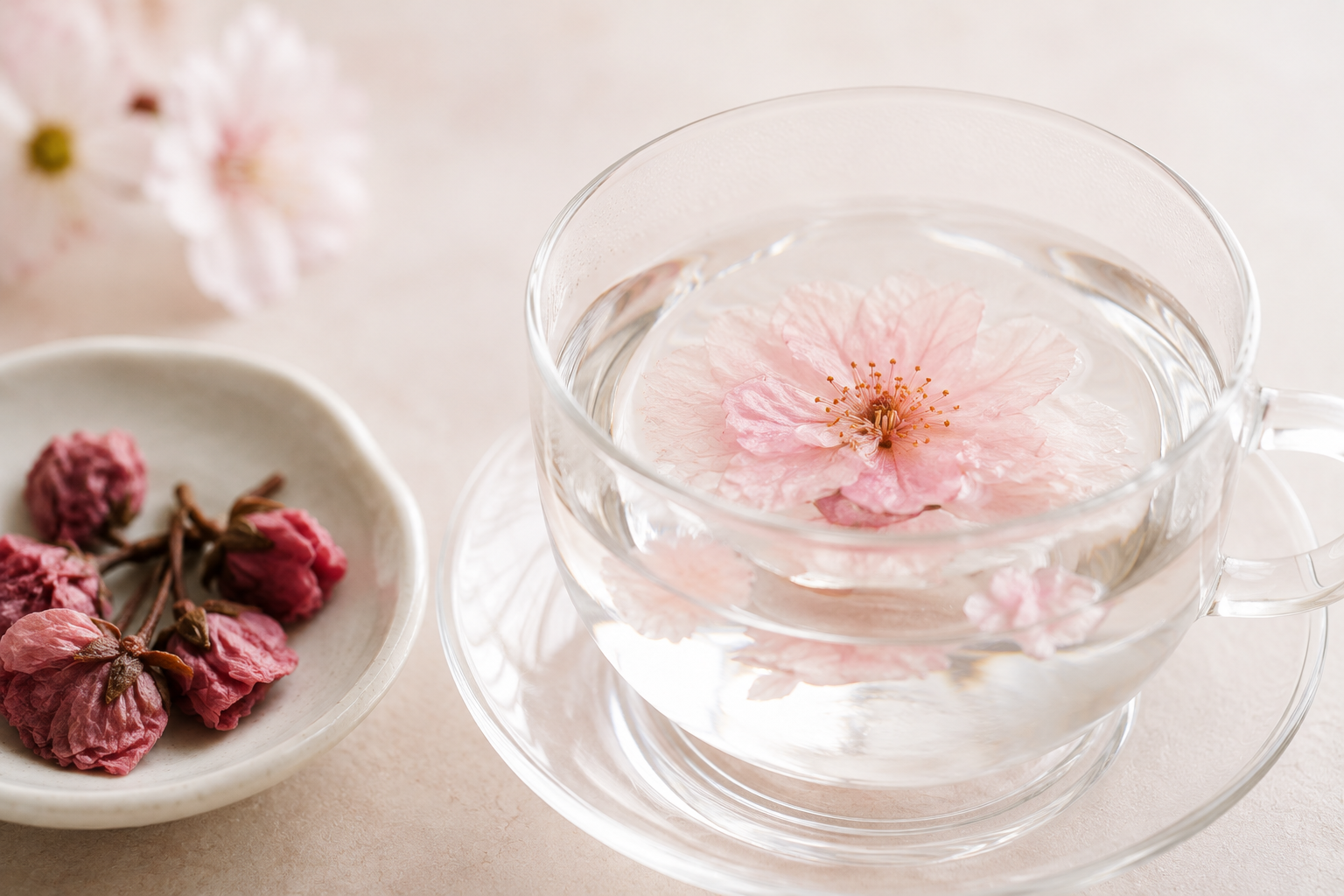
The first time I was served sakurayu, it arrived in a small cup of what looked like plain hot water, with a single pink flower sitting at the bottom. As I watched, the petals slowly opened and the blossom floated up to the surface. Then I took a sip and was surprised again: it was salty. Sakurayu – “cherry blossom water” – is one of the few Japanese drinks people photograph before they drink it, and one of the few that’s tied so closely to a single moment in life: celebrations, and above all weddings.
The Problem You’re Actually Trying to Solve
Most people who come across sakurayu have either seen a jar of pickled pink flowers in a Japanese shop and wondered what to do with it, or have been served it at a celebration and wondered why it tasted of salt instead of flowers. It’s a simple drink, but there are two things almost nobody explains: why it’s salty, and how to make it taste less salty if that’s not what you want.
Who This Article Is NOT For
- If you’re looking for a sweet, fruity “cherry blossom tea,” sakurayu probably isn’t it. Many Western “sakura teas” are flavored green or black teas; true sakurayu is salty and floral, not sweet.
- If you want a caffeine-free drink for everyday use, the grain teas are more practical. My caffeine-free Japanese tea guide compares sakurayu with mugicha, sobacha and others.
- If you need to keep your salt intake low, rinse the blossoms well (see below), or treat sakurayu as an occasional drink.
What Sakurayu Actually Is
Sakurayu is made by pouring hot water over cherry blossoms that have been pickled in salt and plum vinegar and then dried. There are no tea leaves in it, so pure sakurayu has no caffeine. It’s also sometimes called sakura-cha, though that name is also used for modern blends of sencha with cherry blossom or cherry flavoring, which do contain caffeine.
The blossoms used are usually yaezakura, double-flowered cherries that bloom a week or two after the familiar pale Somei Yoshino. Their many layered petals hold their shape and color well when preserved, which is why they open so beautifully in the cup. Most of Japan’s supply comes from Hadano in Kanagawa Prefecture, which is often credited with around 80% of national production.
How the Blossoms Are Made
The process is simple, but it takes weeks:
- The blossoms are picked in mid-to-late April, when they’re about half open.
- They’re layered with salt overnight, often under a weight, to draw out moisture.
- They’re soaked in umezu, the plum vinegar left over from making umeboshi. It often contains red shiso, which helps set the pink color.
- They cure for about three to four weeks, then are dried and sealed.
That’s where the flavor comes from: salt first, a faint tart, plum-like note from the vinegar, and a delicate floral finish. Once sealed, the blossoms keep for months, so sakurayu can be served year-round, not just in spring.
Why It’s Served at Weddings
Sakurayu is a traditional drink at weddings and engagement ceremonies (yuino), and it often appears at other happy occasions too. There are two reasons people usually give.
The first is symbolic: cherry blossoms opening in the cup represent new beginnings, and the drink is considered auspicious.
The second is linguistic, and it’s the one people remember. In Japanese, ocha wo nigosu – literally “to make the tea cloudy” – means to be evasive or to gloss over something. That’s not a phrase anyone wants associated with a marriage, so ordinary green tea is traditionally avoided at weddings, while sakurayu, which stays clear in the cup, is served instead. Kombu tea is another celebratory drink for a similar wordplay reason.
How to Make Sakurayu
- Blossoms: 1-2 per cup (one for a delicate cup, two for more flavor and a fuller look)
- Rinse first: soak them briefly in a little water to remove excess salt – a quick 10-second rinse for a mildly salty cup, or a few minutes’ soak for a gentler one. Keep the soaking water if you want to add saltiness back later.
- Water: around 70-80°C (158-176°F) – hot but not boiling
- Steep: 2-5 minutes, until the blossom has fully opened
- Serve: in a clear glass or a white cup, so you can see the flower
That rinsing step is the answer to the most common complaint about sakurayu. Unrinsed blossoms make a very salty cup; rinsed ones make a light, floral, faintly savory one. Adjust to taste.
Other Ways to Use Salted Cherry Blossoms
The same pickled blossoms are used in Japanese sweets and cooking, especially in spring:
- On bread and sweets: the famous sakura anpan – a sweet bean bun with a salted blossom pressed into the top – is a well-known example from Tokyo’s bakeries. The saltiness balances the sweet filling.
- In rice: rinse a few blossoms, chop them and mix them into freshly cooked rice for a pale pink, gently salty sakura rice.
- On wagashi and desserts: a single rinsed blossom makes an easy, beautiful garnish for mochi, jelly, or ice cream. If you serve matcha with sweets, my seasonal wagashi pairing guide has more ideas for spring.
Don’t confuse these with the leaves used to wrap sakura mochi. Those are salted cherry leaves, not blossoms, and they have a different, more herbal aroma.
A Few Things People Ask Me
Does sakurayu have caffeine? Pure sakurayu – just blossoms and hot water – has none. Blends labeled “sakura sencha” or “sakura green tea” contain tea leaves and do have caffeine.
Why is my sakurayu so salty? Because the blossoms are preserved in salt. Rinse or soak them before brewing, and add some of the soaking water back if it ends up too mild.
Can I eat the blossom? Yes. It’s edible, though most people simply enjoy looking at it.
Where can I buy it? Look for “salted cherry blossoms” or “sakurazuke” – salt-pickled cherry blossoms on Amazon are the easiest to find. A heat-resistant clear glass teacup on Amazon makes all the difference to the presentation.
Where I Landed
Sakurayu isn’t really a tea you drink for flavor alone. It’s a drink for a moment – a wedding toast, a spring visit, a quiet celebration – and much of its appeal is watching the blossom open. Rinse the blossoms so the salt doesn’t overwhelm it, serve it in clear glass, and you’ll see why it’s been part of Japan’s happiest occasions for so long.