Disclosure: This post contains affiliate links. If you buy through one of them, I may earn a small commission at no extra cost to you.
I killed my first chasen in about three weeks. I’d rinse it, shake off the water, and drop it back into its little plastic case – the same one it shipped in – thinking that counted as “putting it away properly.” What I didn’t know was that the case was the problem: bamboo left damp in an enclosed space doesn’t dry, it molds, and by the time I noticed the musty smell and the faint dark spotting on the tines, the whisk was already done.
A chasen isn’t a low-maintenance tool the way a lot of teaware is. It’s untreated bamboo split into anywhere from 16 to well over 100 fine tines, and it needs a specific, small routine after every single use to hold its shape and stay usable for more than a few weeks.
The Problem You’re Actually Trying to Solve
Two things kill a chasen early, and neither is really about how much you use it. The first is improper drying – putting a wet whisk back into an enclosed case or leaving it lying flat on a towel, both of which trap moisture against the bamboo and encourage mold. The second is technique – pressing the tines hard against the bottom or sides of the bowl while whisking, which stresses and eventually snaps them, rather than working the whisk in a light motion just above the bowl’s surface.
Most of what follows is really about avoiding those two failure points, plus knowing honestly when a chasen has reached the end of its life rather than trying to nurse a truly broken one along.
Who This Article Is NOT For
- If you’re looking for how to actually whisk matcha (technique for making the drink itself, not caring for the tool), my guide to making a matcha latte at home covers the whisking motion for that specific drink.
- If you haven’t bought a chasen yet and want buying advice rather than care instructions, my matcha whisk buying guide is the right place to start.
- If you’re using a metal or plastic milk-frother-style whisk rather than a traditional bamboo chasen, none of the mold/drying concerns here really apply to you the same way.
The Daily Routine That Actually Matters
Soak it before you use it, not just after. Dip the chasen in water for one to two minutes before whisking. This isn’t just a ritual step – it rehydrates the bamboo fibers, making the tines more flexible and considerably less likely to snap during use. A dry chasen straight out of storage is at its most brittle.
Rinse immediately after use, with water only. No soap, no detergent – just rinse under running water right after whisking to clear out any matcha residue before it dries into the tines. Soap residue trapped in bamboo fibers is its own long-term problem, and it’s genuinely unnecessary here since matcha rinses out cleanly with water alone.
Never store it in its case while damp. This is the mistake that got my first one. The case that a chasen ships in is meant for transport, not storage – it has no airflow, and a wet whisk sealed inside it is a small mold incubator. Air circulation is the entire point of proper drying, and an enclosed case removes it completely.
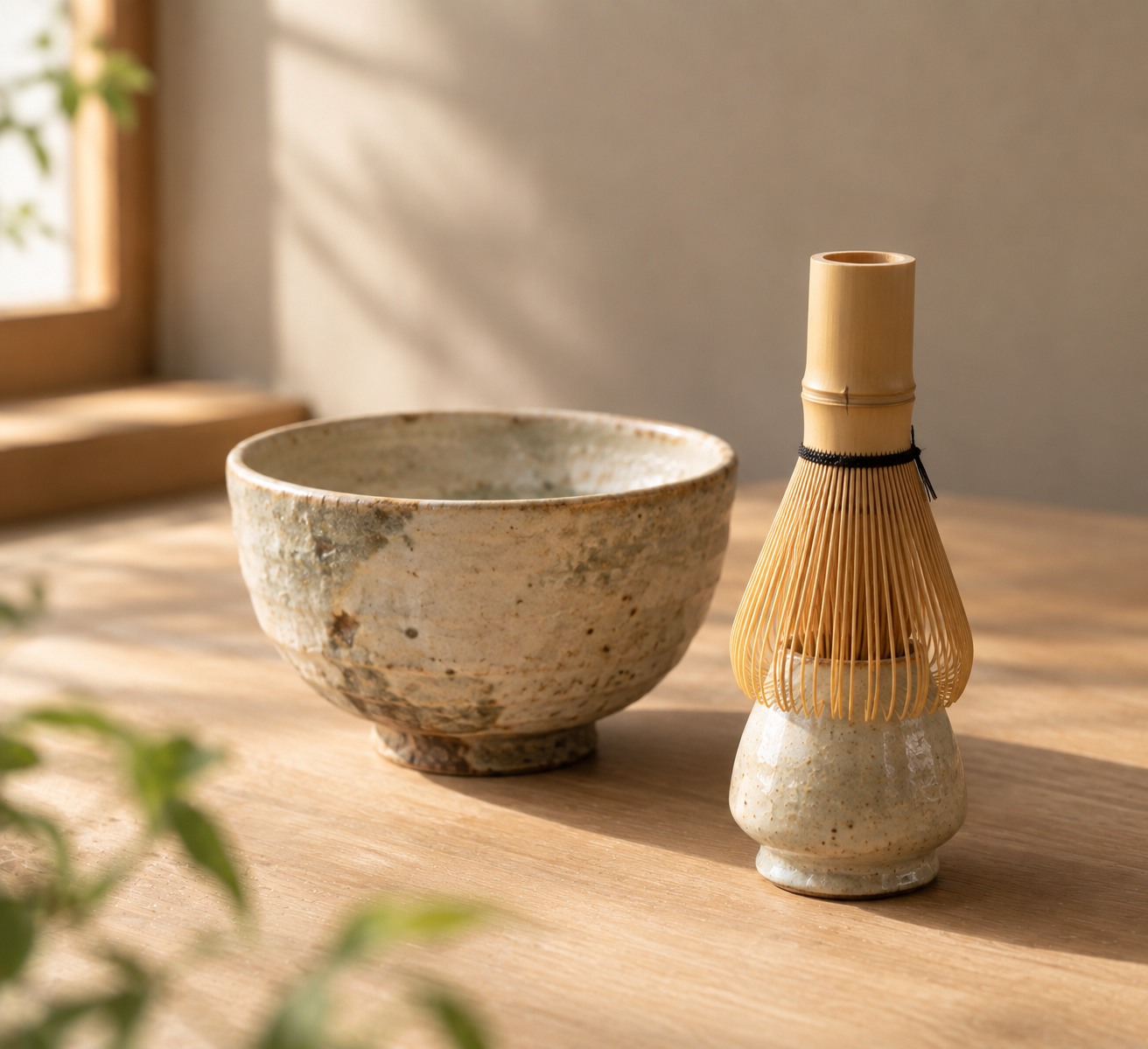
Dry it upright on a whisk stand (kusenaoshi), not lying flat. A whisk stand holds the chasen in its splayed, curved shape while air reaches all the tines evenly. Left lying flat on a towel or draining board, the tines get flattened on one side as they dry, which permanently distorts their shape over time even if mold never becomes an issue.
Whisking Technique That Extends Its Life
How you actually whisk affects lifespan as much as how you clean and dry it. The tines are doing their job when the whisk moves in a light “W” or “M” motion just above the bottom of the bowl – not scraping or pressing hard against the ceramic. Pressing down hard to try to break up clumps faster is the single fastest way to snap tines, and it’s usually a sign the matcha wasn’t sifted or the water wasn’t hot enough to begin with, rather than a problem the whisk itself can fix by being pushed harder.
How Long a Chasen Actually Lasts
This varies more than most people expect, and it comes down almost entirely to frequency of use and technique rather than the price you paid. With daily use, a chasen typically lasts somewhere in the two-to-four-month range; used a few times a week rather than daily, six months to a year is realistic. Bamboo quality plays a role too – whisks made from higher-grade bamboo (Nara-region bamboo is often cited as a benchmark) tend to hold their shape and resist wear longer than lower-grade alternatives, and finer-tine whisks (80-120 tines), while better at producing foam, are also more delicate and need slightly gentler handling than coarser 16-64 tine versions.
Signs It’s Actually Time to Replace It
- Multiple broken or missing tines, especially if it’s now visibly affecting how well it froths matcha
- Tines that stay flattened or splayed even after a full soak and dry cycle, rather than springing back into their curved shape
- A musty smell or any dark spotting on the bamboo, which almost always means mold has already set in
- Thin, uneven foam despite using proper technique and a matcha you know whisks up well – at that point it’s the tool, not the method
None of these are things to push through. A chasen with mold isn’t salvageable, and a whisk with broken tines will only get worse and start affecting your matcha’s texture, not just the tool’s appearance.
A Few Things People Ask Me
Can I revive a chasen that’s dried out stiff after sitting unused for a while? A long soak – several minutes rather than the usual one to two – before use will restore some flexibility if the bamboo itself is still sound. If it’s cracking or the tines feel brittle rather than just stiff, that’s closer to end-of-life than something a soak fixes.
Is it okay to use my chasen for anything besides matcha and water? No – it’s built specifically for whisking matcha into water, and using it in milk-based drinks or with other ingredients isn’t something it’s designed for and will shorten its life considerably faster than normal matcha use.
Do I need a separate whisk stand, or can I just prop it against something? A proper kusenaoshi is worth having specifically because it holds the tines in their correct splayed shape while drying, which propping against a cup or bowl edge won’t do consistently. It’s a small, inexpensive accessory relative to what it protects.
What’s a reasonable chasen to keep on hand as a backup? Since even a well-cared-for chasen has a real lifespan, it’s worth having a second one ready rather than being stuck without one when the first finally breaks. Nio Teas’ chasen on their site is a reasonable option if you want to buy from the same place I’ve sourced other matcha tools from.
Where I Landed
The whole care routine boils down to one idea: bamboo needs to fully dry between uses, and it needs to be handled gently while wet, since that’s when it’s most flexible and most vulnerable at the same time. Once I started drying mine upright on a stand instead of tossing it back in its case, the difference in how long it lasted was immediate and obvious – not a subtle improvement, just a whisk that actually made it past the three-week mark for the first time.