Disclosure: This post contains affiliate links. If you buy through one of them, I may earn a small commission at no extra cost to you. Allergy note: mugicha is made from barley, which contains gluten – it is not suitable for people with celiac disease or a wheat/barley allergy.
Quick Picks
- Easiest to find abroad: Ito En Mugicha tea bags – caffeine-free, made for hot or cold brewing, and sold in large packs. Ito En Mugicha on Amazon
- Best for Japanese-grown barley: Japanese-brand mugicha that lists barley from Japan on the label. Japanese barley tea bags on Amazon
- Best for a toastier, fuller cup: whole-grain (marumugi) mugicha made for boiling. Whole grain mugicha on Amazon
- Best for organic: organic roasted barley tea – look for organic certification on the pack.
- Want a low-caffeine real tea too? Nio Teas’ kukicha collection has gentle stem teas from small Japanese farms. At the time of writing, ordering through the links on this page automatically applies a 10% discount at checkout – no code needed. (Nio Teas doesn’t sell mugicha; the discount applies to its teas. Offers can change, so check the final price in your cart.)
Below: how to choose mugicha, the main types and brands, how much you get per bag, and how to brew it so it tastes like the mugicha in a Japanese fridge.
In Japan, summer smells like roasted barley. Almost every household keeps a pitcher of cold mugicha in the fridge from early summer onward, and many keep drinking it all year. It’s caffeine-free, sugar-free, cheap, and easy to make by the liter.
Outside Japan, though, buying good mugicha is confusing. Some bags are meant for cold water, some for boiling. Some contain whole roasted grains, others ground barley. Some are Japanese, some Korean, and some are blends with other grains. This guide sorts it out so you buy the right bag the first time.
The Problem You’re Actually Trying to Solve
You’ve tried mugicha – or read about it – and want to keep a pitcher in the fridge. But the Amazon listings all look similar, and you don’t know whether to buy cold-brew bags or boiling bags, ground or whole grain, Japanese or Korean, or which brand tastes best.
Who This Article Is NOT For
- If you want to know what mugicha is and how to make it from scratch, my mugicha guide covers the basics.
- If you want to compare all of Japan’s caffeine-free drinks, my caffeine-free Japanese tea guide covers mugicha, sobacha, kuromamecha and more.
- If you avoid gluten, mugicha isn’t for you. Barley contains gluten. Sobacha (buckwheat tea) is gluten-free, but buckwheat is a serious allergen of its own.
How to Choose Mugicha
1. Cold-brew bags vs. boiling bags
This is the most important choice.
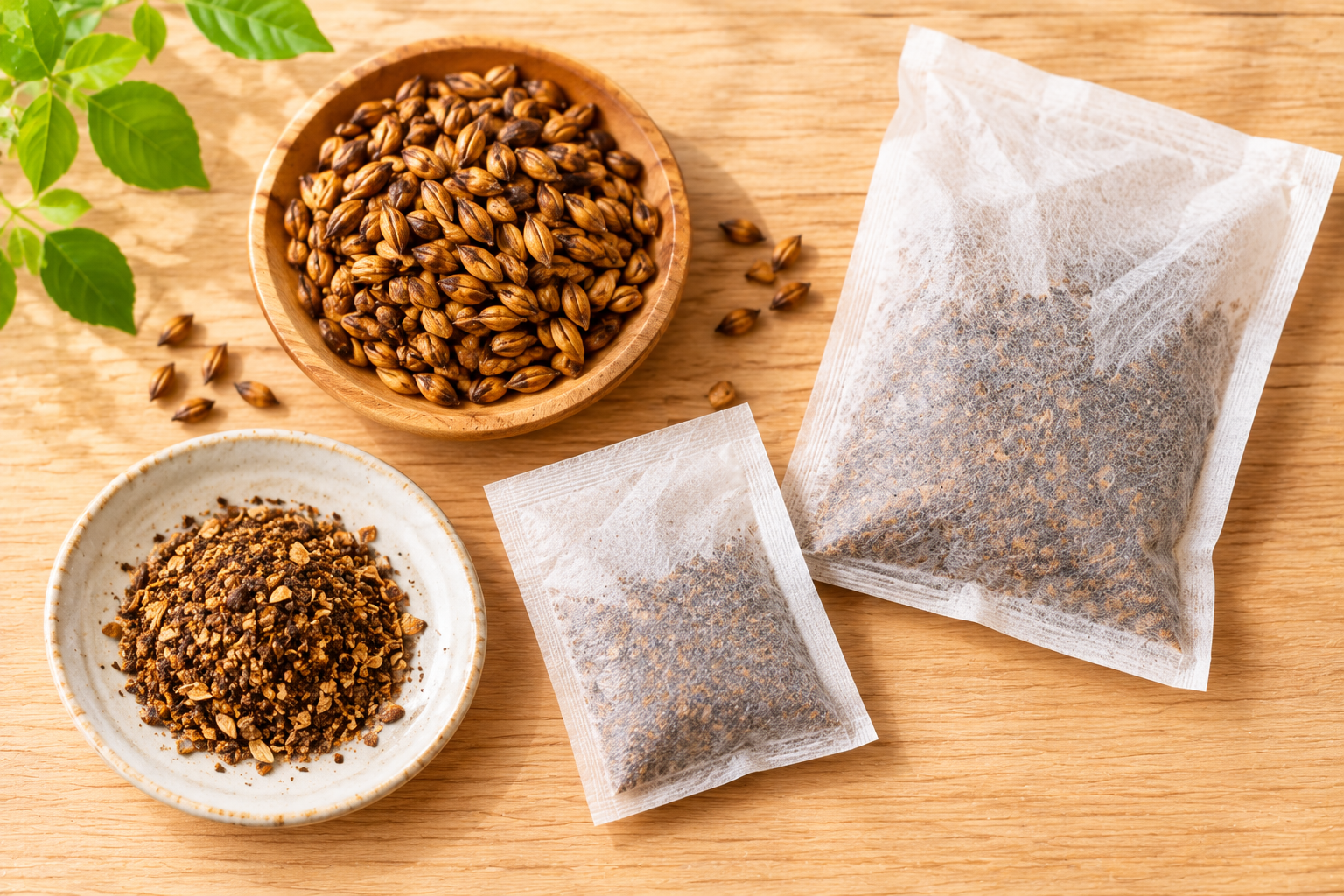
- Cold-brew (mizudashi) bags are made from finely ground or cut barley, so flavor comes out in cold water. You drop a bag in a pitcher of cold water and refrigerate. Easy, but usually a lighter flavor.
- Boiling (nidashi) bags often use whole or coarsely cracked roasted grains. You simmer them for several minutes, then cool. More effort, but a deeper, toastier taste.
- Hot-or-cold bags work both ways and are a good all-rounder.
Check the pack: Japanese bags usually say 水出し (cold brew), 煮出し (boil) or both.
2. Bag size: how much tea it makes
Japanese mugicha bags are usually sized for a whole pitcher – often around 1 liter per bag (some brands make bags for 2 liters). Check the size so you don’t end up with tea that’s too weak or too strong. A pack of 50 bags can last a family a whole summer.
3. Whole grain vs. ground barley
- Whole roasted grains (marumugi) give a rounder, toastier flavor and a clear, amber tea. They’re usually meant for boiling.
- Ground or cut barley releases flavor fast and suits cold brew and quick hot brewing.
4. Roast level
Some brands roast lightly for a soft, sweet flavor; others roast deeply, sometimes more than once, for a stronger, almost coffee-like toastiness. If you like a bold cup, look for words like “deep roast” or “double roasted.”
5. Where the barley comes from
Many mugichas use imported barley processed in Japan. If you prefer Japanese-grown barley, look for “barley (Japan)” or 国産大麦 on the label. Most Japanese mugicha uses six-row barley (rokujo omugi), which gives the classic toasty flavor.
6. Pure barley vs. blends
Some products blend barley with other grains or ingredients – for example multi-grain teas. They can be delicious, but if you want classic mugicha, check that barley is the only ingredient.
The Main Options
| Option | Type | Best for | Watch out for |
|---|---|---|---|
| Ito En Mugicha | Tea bags, hot or cold | Easy everyday mugicha, widely available abroad | Check bag size and brewing method on the pack |
| Japanese-grown barley mugicha (various Japanese brands) | Tea bags | People who want Japanese-grown barley | Usually a little pricier |
| Whole-grain mugicha (e.g. Hakubaku Marumugicha) | Whole grains in bags, mainly for boiling | Deeper, toastier flavor | Needs boiling and cooling |
| Organic mugicha | Tea bags | Organic-focused buyers | Less common outside Japan |
| Korean boricha | Loose roasted barley or bags | A very similar, often cheaper alternative | Flavor and roast differ slightly from Japanese mugicha |
Ito En Mugicha
Ito En is Japan’s largest green tea company, and its mugicha tea bags are among the easiest Japanese mugichas to buy abroad. Its US store lists a 54-bag pack that’s naturally caffeine-free and suitable for both hot and cold brewing. In Japan, Ito En’s Kenko Mineral Mugicha is one of the best-known bottled and bagged barley teas, and you may find it in Japanese grocery stores abroad.
Japanese-Grown Barley Mugicha
Several Japanese brands sell mugicha made only from barley grown in Japan – Ujien’s roasted barley tea bags, for example, list barley from Japan as the ingredient. These are a good choice if origin matters to you.
Whole-Grain Mugicha
Hakubaku, a Japanese grain company, is known in Japan for Marumugicha – whole roasted six-row barley in bags designed to leave little residue. Whole-grain mugicha takes a few minutes of boiling but rewards you with a deeper flavor.
Korean Boricha
Korean roasted barley tea (boricha) is a close cousin of mugicha and is often easier to find in Asian supermarkets. It’s a perfectly good substitute – just expect small differences in roast and flavor.
How to Brew Mugicha Like a Japanese Household
Cold brew (easiest):
- Put one bag in a pitcher with the amount of cold water shown on the pack (often 1 liter).
- Refrigerate for 1-3 hours, depending on the brand.
- Remove the bag so it doesn’t turn bitter.
Boiled (tastiest):
- Bring the water to a boil, add the bag, and simmer for about 3-5 minutes (or as the pack says).
- Remove the bag, cool the tea quickly, then refrigerate.
Food safety tip: mugicha has no tea leaves, sugar or preservatives, but it can spoil. Keep it in the fridge in a clean pitcher, and drink it within about two days.
A pitcher with a built-in filter or a dedicated cold-brew bottle makes the daily routine easier. The same pitcher works for cold-brewed green tea, too.
Ways to Enjoy Mugicha Beyond a Plain Glass
- Mugicha with a squeeze of lemon – a refreshing, sugar-free summer drink.
- Half mugicha, half green tea – a gentle, toasty blend with a little caffeine.
- Mugicha “latte” – brew it strong, then add warm milk and a little honey for a cozy, caffeine-free evening drink.
- Mugicha ice cubes – freeze mugicha in an ice tray so your iced mugicha never gets watered down.
- With rice crackers or onigiri – in Japan, mugicha is the default drink with simple, salty snacks.
A Few Things People Ask Me
Is mugicha caffeine-free? Yes. It’s made from roasted barley, not tea leaves.
Is mugicha gluten-free? No. Barley contains gluten.
Which is better, cold-brew or boiling bags? Cold-brew bags are easier; boiled mugicha tastes deeper and toastier. Many Japanese households use whichever fits the day.
Can I drink mugicha hot? Yes. It’s lovely hot in winter, especially after a meal.
Is Korean barley tea the same as mugicha? Very similar – both are roasted barley tea. Roast levels and flavor can differ slightly.
Where I Landed
The best mugicha is the one that fits your routine. For most people outside Japan, Ito En’s mugicha bags are the easy starting point. If you want Japanese-grown barley, read the label; if you want the richest flavor, try whole-grain mugicha and boil it. Whichever you choose, keep a pitcher in the fridge – it’s the simplest way to drink like a Japanese household all summer long.