Disclosure: This post contains affiliate links. If you buy through one of them, I may earn a small commission at no extra cost to you.
Bancha gets treated as the tea you settle for, not the tea you choose – the cheaper option on the shelf next to sencha, made from later, lower leaves rather than the prized spring flush. That framing undersells it. Bancha isn’t a lesser sencha; it’s a genuinely different, milder tea with its own flavor identity, and it’s also the quiet base ingredient behind two teas most people already like without realizing where they come from.
The Problem You’re Actually Trying to Solve
Most people encounter bancha as an afterthought – either the budget bag next to sencha at a Japanese grocery store, or a term they see mentioned in passing while reading about hojicha or genmaicha. Understanding what bancha actually is, why it’s cheaper, and why it tastes so different from sencha makes it a lot easier to decide whether it’s worth buying on its own rather than only as a component of something else.
Who This Article Is NOT For
- If you want the brighter, grassier, more vegetal flavor Japanese green tea is known for, sencha is the better starting point – my sencha vs. gyokuro comparison covers that leaf-forward end of the spectrum.
- If you’re specifically looking for a roasted, nutty tea, you actually want hojicha or genmaicha, both of which are often made from bancha but taste quite different after roasting or blending with roasted rice.
- If you want the lowest-caffeine option possible, kukicha (twig tea) runs even lower than bancha, since stems contain even less caffeine than older leaves.
What Bancha Actually Is
Sencha is made from young sprouts picked from the top of the tea plant during the first flush in spring. Bancha comes from further down the plant, and typically from a later harvest – the third or fourth flush, picked later in the season after the prized early leaves are gone. Older leaves simply contain less caffeine and fewer catechins than young spring growth, which is the whole reason bancha tastes and behaves differently from sencha rather than just being a cheaper version of the same thing.
That harvest timing is also exactly why bancha costs roughly half what sencha does – it isn’t a quality shortcut so much as a genuinely different point in the plant’s growth cycle, priced accordingly.
How Bancha Actually Tastes
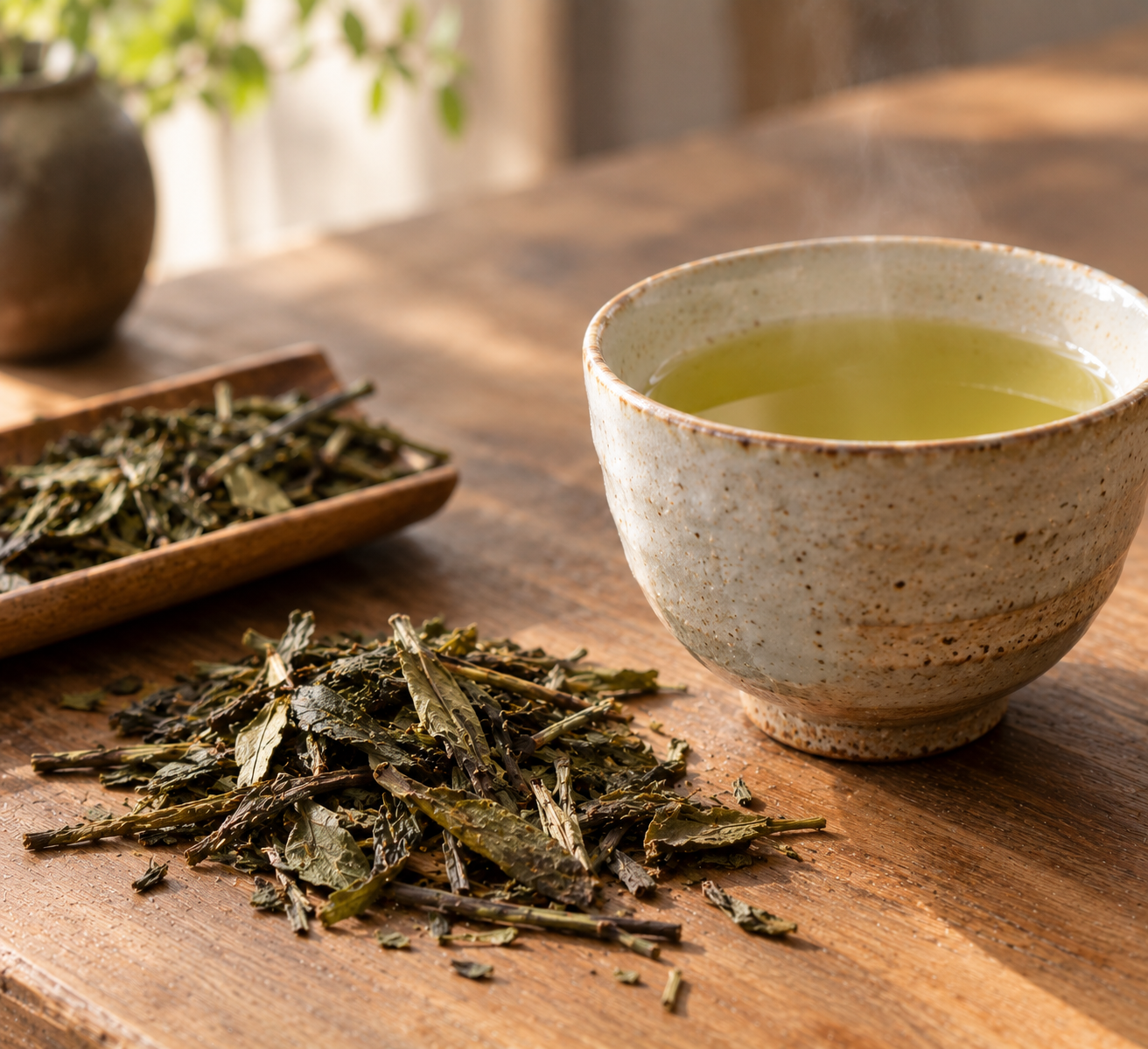
Where sencha brings grassy, vegetal, slightly citrusy notes, bancha shifts toward something milder and more rustic – earthy, woody notes with hints of cereal, and sometimes a faint caramel or popcorn-like sweetness. It’s a quieter tea by design: less bitterness, less brightness, and a flavor that holds up fine as a background, everyday drink rather than something you sit and savor the way you might a good sencha or gyokuro.
The Connection to Hojicha and Genmaicha
Here’s the part that surprises people: both hojicha and genmaicha are frequently made using bancha as their base. Hojicha is bancha (or sencha) leaves roasted at high heat until the flavor shifts entirely toward toasty and nutty; genmaicha is bancha blended with roasted rice. Both are cheaper than straight sencha for the same underlying reason bancha itself is cheaper – they’re built on the same later-harvest, lower-leaf base. If you already like hojicha or genmaicha, you’ve been drinking bancha’s flavor profile all along, just transformed by roasting or blending.
How to Brew It
Bancha is forgiving, which is part of its appeal as an everyday tea:
- Water temperature: 70-80°C (158-176°F) – hotter than you’d use for sencha, since there’s less risk of bitterness from the lower caffeine and catechin content
- Amount: about 3-4g of leaves per 120-150ml of water
- Steep time: 30-60 seconds
- Good for 4-5 infusions, more than sencha typically tolerates, since there’s simply less to extract on the first pour
Because it’s less prone to bitterness than sencha, bancha is a reasonable tea to brew a little looser with – slightly hotter water or a slightly longer steep won’t punish you the way it would with a delicate first-flush sencha.
A Few Things People Ask Me
Is bancha lower quality than sencha, or just different? Different, more than lower quality. It comes from a later harvest and lower leaves by design, which changes the flavor and caffeine profile rather than making it a failed attempt at sencha. Comparing them directly is a bit like comparing a young wine to an aged one – different intent, not a strict hierarchy.
Does bancha have less caffeine than sencha? Yes, noticeably – roughly half of sencha’s caffeine per cup, since older leaves contain less caffeine than the young spring growth sencha uses. That makes it a reasonable afternoon or after-dinner option where sencha might feel like too much.
Is Kyoto’s “kyobancha” the same thing as regular bancha? It’s a regional variation – roasted over an open flame in a style specific to Kyoto, giving it a smokier character than standard bancha. The base leaf category is the same; the roasting process is what sets kyobancha apart.
Where can I actually try bancha? Nio Teas’ bancha is a straightforward place to start, and a simple kyusu teapot on Amazon works fine for brewing it – bancha doesn’t need anything specialized to taste good.
Where I Landed
The thing that actually changed how I thought about bancha was realizing how much of what I already liked – hojicha’s toastiness, genmaicha’s popcorn note – was quietly built on this exact tea underneath. Once I tried it plain rather than only encountering it disguised inside something else, it stopped feeling like the tea you settle for and started feeling like a genuinely different, low-key option worth keeping around specifically for the days sencha feels like too much.