Disclosure: This post contains affiliate links. If you buy through one of them, I may earn a small commission at no extra cost to you.
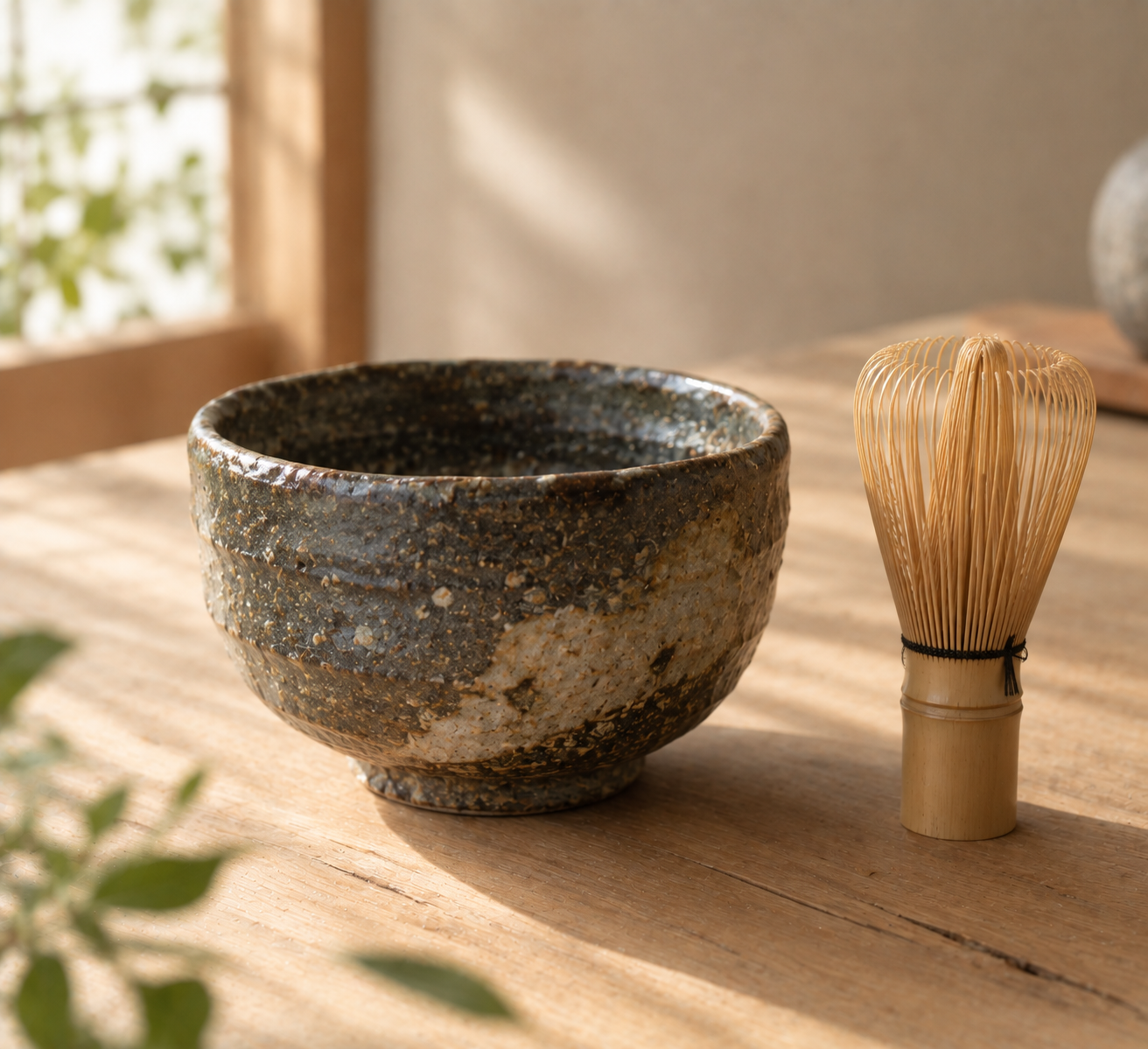
I bought my first chawan almost entirely on looks – a deep glossy black bowl that photographed beautifully and told me nothing about how it would actually feel to whisk matcha in. It works fine, but it’s a winter bowl and I bought it in July, when a thinner, cooler-feeling piece would have suited the season far better. Nobody told me chawan came with a “right time of year” until after I’d already picked one.
A chawan isn’t just a bowl matcha happens to go in. Its shape, weight, and glaze all affect how the matcha whisks, how it feels in your hands, and even how it tastes – which is a lot more variables than most first-time buyers expect from something that looks, at a glance, like simple pottery.
The Problem You’re Actually Trying to Solve
Most chawan buying guides either dive straight into named historical styles (Raku, Hagi, Oribe) without explaining why any of it matters practically, or they treat every bowl as interchangeable as long as it’s “matcha-bowl shaped.” Neither approach actually helps you pick one that suits how and when you’ll use it. The practical questions – does this bowl’s shape suit summer or winter, is it sized right for whisking without matcha splashing everywhere, does the glaze affect the flavor – get skipped in favor of aesthetics or history alone.
Who This Article Is NOT For
- If you’re looking for the whisk itself rather than the bowl, my chasen care guide covers that tool specifically.
- If you just want a functional bowl for casual home matcha and don’t care about seasonal appropriateness or named ceramic styles, any reasonably sized ceramic bowl will work – you don’t need to read the style section below.
- If you’re shopping for a full tea ceremony set rather than a standalone chawan, my Japanese tea set gift guide covers complete sets.
Shape and Size: The Practical Basics
Before style or aesthetics, a chawan has to actually work as a whisking vessel. It needs to be large enough that vigorously whisking matcha with a chasen doesn’t send it splashing over the rim, but still small and comfortable enough to hold and drink from directly. A bowl that’s too shallow or narrow will fight you every time you whisk; one that’s oversized just makes a small amount of matcha look and feel strange to drink from.
Beyond that baseline, the clay’s thickness and texture change what drinking from it actually feels like, and this is where the seasonal distinction comes in.
Winter Bowls vs. Summer Bowls
This is the detail most first-time buyers miss entirely, and it’s a real, functional distinction rather than just tradition for its own sake.
Winter chawan tend to use heavier, coarser clay, built to feel rich and substantial in the hand – the goal is a cozy, hearty, deep feeling that suits the season, and the thicker walls also help retain the warmth of the matcha a little longer.
Summer chawan go the opposite direction: thin, smooth-walled bowls meant to feel breezy, elegant, and cool. A thick winter-style bowl in the middle of summer just feels heavy and warm in a way that works against the season, while a thin summer bowl in winter cools down too fast to be pleasant.
If you’re only going to own one chawan, this isn’t a dealbreaker – a mid-weight bowl works reasonably year-round. But if you’re building out a small collection, this seasonal logic is the traditional reasoning behind owning more than one.
How Glaze and Clay Affect the Matcha Itself
The glaze, clay texture, and wall thickness aren’t purely aesthetic choices – they genuinely affect how the matcha tastes and feels. A smooth, neutral cream-glazed bowl is often recommended specifically for comparing different matcha side by side, since it doesn’t add any visual or flavor bias of its own. Deeper, glossier glazes with speckling create a different visual and tactile experience without necessarily changing flavor much, while rougher, more textured clay bowls are sometimes favored for pouring matcha into a separate cup rather than drinking directly from the bowl.
A Few Named Styles Worth Knowing
You don’t need to memorize these to buy a good first chawan, but recognizing the names helps when you’re browsing:
Raku bowls are hand-formed rather than wheel-thrown, from porous clay that makes them noticeably light – tap one and it produces a dull thud rather than the ringing sound of high-fired ceramics. Developed in the late 1500s in collaboration with the tea master Sen no Rikyū, Raku bowls embrace irregular, imperfect shapes as part of the aesthetic rather than a flaw.
Hagi ware, from Yamaguchi Prefecture, is known for actually improving with age – the glaze develops fine cracks over years of use that slowly absorb tea and darken, a process called nanabake that potters consider part of the bowl’s intended life rather than wear and tear.
Oribe ware takes a more playful, intentionally distorted approach, associated with tea master Furuta Oribe – asymmetric shapes, folded lips, and in its Ao-Oribe variant, a distinctive copper-green glaze rather than the more common black or cream tones.
Shino ware, from the Seto/Mino region, was Japan’s first white-glazed ceramic style, recognizable by a textured surface with small pinholes rather than a smooth, even finish.
None of these are objectively “better” than a simple, unnamed modern chawan – they’re different aesthetic and tactile traditions, and picking one is really about which look and feel appeals to you rather than which is most authentic or correct.
A Few Things People Ask Me
Do I actually need a dedicated chawan, or can I just use a regular bowl? A regular bowl can work in a pinch, but a proper chawan’s shape (specifically its width and slightly curved walls) is built to give the chasen room to whisk properly without splashing, which a random kitchen bowl often doesn’t replicate well.
How many chawan does a casual matcha drinker actually need? One is genuinely enough for most people – a mid-weight, medium-sized bowl that isn’t extreme in either direction works reasonably across seasons. The winter/summer distinction matters more once you’re already invested enough to want a small collection.
Does an expensive, named-style chawan actually make the matcha taste better than a cheap one? Not dramatically – the glaze and clay can subtly affect texture and how flavor is perceived, but a well-made, reasonably priced bowl will make good matcha taste good. The named styles are more about craft tradition and aesthetic than a guaranteed flavor upgrade.
What should I look for if I’m buying my first chawan and don’t care about seasonal bowls yet? Prioritize size and shape (wide enough to whisk in without splashing, comfortable to hold) over glaze style or historical pedigree. Nio Teas’ matcha bowls are a reasonable place to start if you want something functional without needing to research named ceramic traditions first.
Where I Landed
The thing I wish someone had told me before my first chawan purchase is that the “right” bowl depends far more on how and when you’ll actually use it than on how good it looks in a photo. A gorgeous glossy black winter bowl bought in July isn’t a mistake exactly, but it’s not really suited to the season either, and that mismatch is the kind of detail that separates buying a chawan as decor from buying one you’ll actually reach for regularly. If you’re only getting one, aim for something mid-weight and comfortably sized before you worry about glaze traditions or seasonal correctness – the rest is worth learning once you’re already hooked. If you want a reliable everyday option to start with, a basic ceramic chawan on Amazon is a low-commitment way to figure out what size and weight you actually prefer before spending more on a named style.