Disclosure: This post contains affiliate links. If you buy through one of them, I may earn a small commission at no extra cost to you.
My first attempt at cold brew matcha was exactly what you’d expect from someone who assumed “cold brew” meant “just add cold water and stir”: a glass of cold green water with dark, unmixed clumps of matcha sitting stubbornly at the bottom, no matter how long I stirred. It turns out dumping dry matcha straight into cold water is close to the worst way to try dissolving it, and the actual method, while still genuinely simple, needs one extra step most people skip on their first attempt.
Cold brew matcha is a real, distinct thing from the more common flash-chilled iced matcha most cafés serve, and once you know the difference, you can choose whichever fits your morning better rather than accidentally making a worse version of one while trying for the other. Neither method is hard once you know it, but they’re genuinely different processes with different results, not just two names for the same drink.
The Problem You’re Actually Trying to Solve
You’ve searched for how to make cold brew matcha because either your first attempt came out clumpy and unpleasant, or you’re trying to understand what “cold brew matcha” actually means versus the iced matcha lattes you’ve had at coffee shops. Both come down to the same underlying issue: matcha doesn’t dissolve in cold liquid the way it does in warm water, and skipping the step that accounts for that is where almost every bad cold brew matcha attempt goes wrong.
Who This Article Is NOT For
Let’s save you some scrolling if this isn’t quite your situation.
- If you want the classic café-style iced matcha latte, made with hot-water-whisked matcha poured over ice and milk, that’s a related but different method — my how to make a matcha latte guide covers that version specifically.
- If you’re baking with matcha rather than drinking it, none of the cold water techniques here apply — my how to bake with matcha guide is the right resource instead.
- If you’re brewing steeped green tea rather than whisked matcha, cold brewing loose leaf tea is a different process entirely from what’s covered here, which is specifically about matcha powder.
If you’re past that, here’s where the actual guide starts.
Cold Brew vs. Iced Matcha: What’s Actually Different
These two terms get used almost interchangeably online, but they describe genuinely different methods with different results.
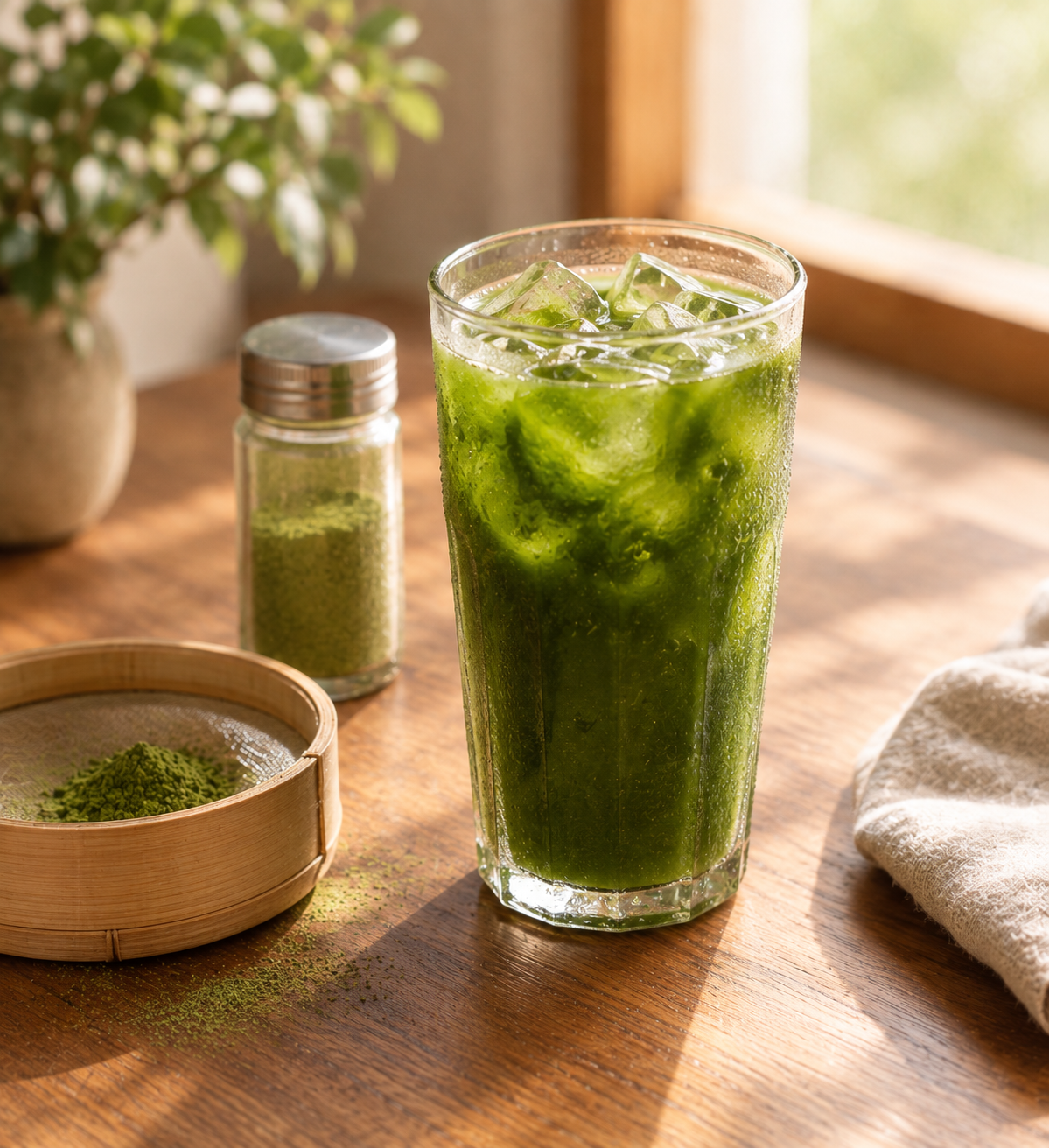
Cold brew matcha means dissolving matcha directly in cold water from the start, typically by shaking it in a sealed bottle or jar, with no hot water involved at any point. It tends to produce a smoother, mellower flavor with less bitterness, since cold water extracts differently than hot water does, and it’s the better choice if you’re making a batch ahead of time to keep in the fridge.
Flash-chilled iced matcha (what most cafés actually serve) means whisking matcha with a small amount of hot water first to fully dissolve it, then pouring that concentrated base over ice. It’s faster to make on the spot and produces a brighter, slightly bolder flavor than true cold brew.
Neither is objectively better — they’re just different tools for different situations. Cold brew rewards a little patience and batch preparation; flash-chilled iced matcha is the quicker, single-serving option.
The Method, Step by Step
True Cold Brew Matcha
- Sift 1 teaspoon (about 2 grams) of matcha into a small bowl or directly into your bottle. This step doesn’t become optional just because you’re skipping hot water — cold water is actually worse at breaking up existing clumps than hot water, so sifting matters even more here.
- Add a small amount of room-temperature water first to form a thin paste, stirring or whisking briefly. This bridging step, forming a smooth paste before adding the bulk of your cold water, is the single most effective way to prevent the clumping that ruins most first attempts at true cold brew.
- Add the remaining cold water, roughly 8 ounces (235ml) total for the 1 teaspoon of matcha, adjusting to taste.
- Seal and shake vigorously for 30 to 40 seconds, until no visible dark green clumps remain and the mixture looks uniformly smooth and slightly frothy.
- Pour over a glass of ice and serve, or refrigerate the batch for later.
Flash-Chilled Iced Matcha (The Faster Alternative)
- Sift 1 to 2 teaspoons of matcha into a bowl.
- Add about 2 tablespoons of hot water, 160–175°F (70–80°C), not boiling.
- Whisk vigorously in a zigzag or “W” motion for 15 to 20 seconds until smooth and frothy.
- Fill a glass with ice, then pour the whisked matcha base over the top.
- Add cold water or milk to fill, stir, and serve immediately.
Why the Paste Step Matters So Much
This is worth calling out specifically because it’s the step almost everyone skips on their first attempt, and it’s also the single biggest predictor of whether your cold brew comes out smooth or clumpy. Matcha powder is hydrophobic in small clumps, meaning dry pockets of powder actually resist mixing into liquid rather than dissolving on contact. A small amount of liquid mixed directly with the dry powder first, forming a concentrated paste before you dilute it further, breaks that resistance down far more effectively than trying to dissolve the same amount of powder directly into a full glass of water all at once. Think of it the same way you’d handle cocoa powder or instant coffee crystals that clump when you dump them straight into a full glass rather than dissolving a small amount first.
Adjusting Ratio and Strength
The 1 teaspoon (roughly 2 grams) to 8 ounces (235ml) ratio is a solid starting point, but it’s genuinely adjustable to taste. A stronger cold brew, closer to 1.5 teaspoons per 8 ounces, produces a bolder, more assertive cup, while a lighter ratio makes something gentler and easier to drink throughout a hot afternoon. If you’re using a specific brand’s matcha, check whether they’ve published their own recommended ratio, since matcha density and intended strength can vary meaningfully between brands.
Variations Worth Trying
Creamy cold brew matcha. After shaking the base with cold water until smooth, add a splash of oat, almond, or regular milk and shake again gently before pouring over ice.
Vanilla and honey cold brew. Stir in a small amount of vanilla extract and honey after the matcha has fully dissolved in the cold water, before adding milk if you’re using it.
Batch cold brew for the week. Scale the ratio up into a larger pitcher or jar and keep it refrigerated, shaking briefly before each pour since some settling is normal over a day or two.
Tools That Make This Easier
Shop matcha sifters on Amazon →
Shop shaker bottles for cold brew matcha on Amazon →
A Few Things People Ask Me
Why is my cold brew matcha still clumpy even after shaking it for a while? Almost always means the paste step got skipped, or the initial small amount of water used to form that paste wasn’t enough to fully wet the sifted powder before more water was added. Go back to basics: sift, form a thin paste with a small amount of liquid, then dilute.
Can I use a blender instead of shaking a bottle? Yes, and it can actually produce a smoother result faster than shaking, particularly for a larger batch. Blend on low for about 10 seconds after adding the sifted matcha and cold water together.
Does cold brew matcha taste noticeably different from hot-brewed or flash-chilled matcha? Yes, genuinely. Cold water extraction tends to produce a smoother, less bitter, more mellow flavor than hot water does, since some of the more astringent compounds extract less aggressively at lower temperatures. Some people specifically prefer cold brew for this reason, independent of the temperature of the final drink.
How long does prepared cold brew matcha keep in the fridge? Generally a day or two before the color and flavor start to noticeably decline, similar to how a whisked matcha base loses vibrancy over time. Making it fresh, or in a small enough batch to finish within that window, gives you the best result.
Does the grade of matcha matter as much for cold brew as it does for drinking it hot? It matters, though slightly less dramatically than with a straight hot cup, since cold extraction is gentler overall and tends to mute some of the sharper differences between grades. A decent premium or latte-grade matcha performs well here without needing to reach for your most expensive ceremonial tin.
Can I make cold brew matcha without a bottle or shaker, just using a whisk? Yes, though you’ll get a smoother result with vigorous shaking than with whisking cold water, since a whisk works best with warm water where the powder is already more willing to dissolve. If you’re whisking rather than shaking, the paste step becomes even more important to get right.
Where I Landed
The paste step is genuinely the whole trick here — everything else about cold brew matcha is close to as simple as “add matcha to water.” Skip the paste step and you’re fighting clumps the entire time; include it and the whole process takes maybe an extra thirty seconds for a noticeably smoother result. It’s a small habit that pays off disproportionately, the kind of thing that once you’ve done it correctly once, you’ll never go back to skipping again.
Once you’ve got the basic method down, cold brew matcha becomes one of the easiest routine drinks to keep stocked for a hot afternoon, especially if you batch a small pitcher ahead of time rather than making it fresh every single time. It’s a genuinely low-effort habit once the technique clicks, closer to keeping a pitcher of iced coffee ready than to any kind of elaborate preparation. If you’re still deciding which matcha to actually use for this, my matcha powder brands comparison is a good place to start.