Disclosure: This post contains affiliate links. If you buy through one of them, I may earn a small commission at no extra cost to you.
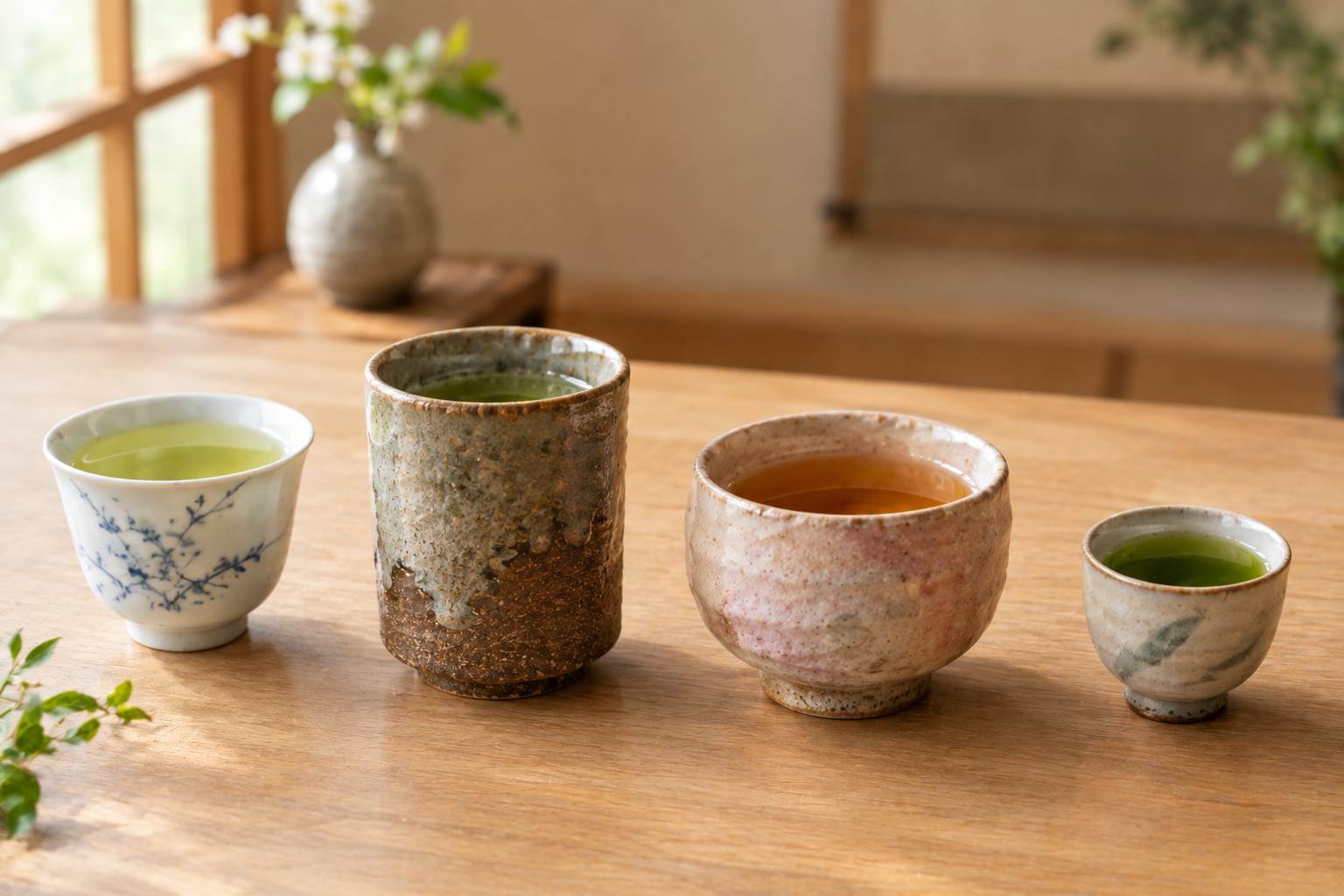
In most Japanese homes, every member of the family has their own teacup. It might be a tall, chunky pottery cup that’s been used every morning for years, or a delicate white porcelain one kept for good sencha. Ask someone which cup is theirs and they’ll know immediately. That’s the yunomi (湯呑み), the everyday Japanese teacup – and the right one makes a surprising difference to how your tea tastes and feels.
Yunomi come in an enormous range of shapes, sizes and clays, and they’re one of the easiest pieces of Japanese teaware to start collecting. This guide explains what actually matters when you choose one.
The Problem You’re Actually Trying to Solve
You’ve bought a good Japanese tea and maybe a kyusu, and now you’re drinking it out of a coffee mug. It works, but something feels off: the tea cools too fast or burns your fingers, you can’t see its color, or a mug-sized pour makes delicate sencha taste weak. You want a cup that suits the tea – without having to learn the history of Japanese pottery first.
Who This Article Is NOT For
- If you’re looking for a bowl for matcha, that’s a chawan, which is much wider and shaped for whisking – a different purchase.
- If you’re still choosing a teapot, start with my kyusu buying guide. The teapot affects your tea more than the cup does.
- If you’re buying a complete matching set as a gift, my Japanese tea set gift guide is a better starting point.
What a Yunomi Is
Yunomi literally means “hot water drinker.” It’s the everyday, handle-less teacup used for green tea in Japan – at home, at the office and in casual restaurants. Unlike Western cups, a yunomi usually has no handle: you hold it with one hand and support the base with the other. That’s also a quiet temperature check – if the cup is too hot to hold comfortably, the tea is probably too hot for good green tea.
You’ll often see two broad styles:
- Nagayunomi (長湯呑): tall, cylindrical cups for everyday drinking. They hold more tea and keep it warm longer.
- Kumidashi (汲出): shorter, wider, rounder cups, traditionally used to serve guests. Their wide mouths release aroma and show off the tea’s color.
The large, thick, tall cups you see at sushi restaurants – often printed with fish names in kanji – are the extreme version of the everyday nagayunomi.
Material: Porcelain, Stoneware or Glass
Porcelain (磁器)
Porcelain is made from fine, white clay fired at high temperatures. It’s thin, smooth, hard and non-porous. Well-known porcelain wares include Arita (Saga Prefecture) and Hasami (Nagasaki Prefecture).
- Best for: gyokuro, fine sencha and any tea where you want to see the color clearly.
- Why: the white interior shows the tea’s color, and the thin walls feel elegant on the lips. Porcelain doesn’t absorb flavor or smell, so it’s neutral.
- Downside: thin porcelain passes heat to your fingers quickly, and it cools fast.
Stoneware and Earthenware (陶器)
Pottery cups are thicker, heavier and more textured, often with expressive glazes. Famous examples include Hagi (Yamaguchi), Mino (Gifu), Shigaraki (Shiga) and Mashiko (Tochigi).
- Best for: hojicha, bancha, genmaicha and other teas brewed with hotter water.
- Why: thick walls insulate, so the tea stays warm and the cup is comfortable to hold even when hot. The rough texture feels warm and natural in the hand.
- Downside: some pottery is slightly porous and can absorb aromas or stains over time. This is why many people keep separate cups for green tea and strong-smelling drinks.
A note on Hagi ware: Hagi pottery is famous for changing with use. Tea gradually seeps into the fine cracks in its glaze and slowly changes the cup’s color over the years – a quality known as Hagi no nanabake, “the seven transformations of Hagi.” Many owners treasure this, but if you want a cup that stays exactly the same, choose glazed porcelain.
Glass
Heat-resistant glass is ideal for cold-brewed tea and for showing off the bright color of good green tea. It’s not traditional, but it’s practical in summer. Make sure any glass you use with hot tea is labeled heat-resistant.
Shape: What It Changes
| Shape | Effect | Best for |
|---|---|---|
| Tall and narrow | Keeps tea warm longer; holds more | Everyday sencha, bancha, hojicha |
| Short and wide | Releases aroma; cools tea faster; shows color | Fine sencha, serving guests |
| Small and shallow | Small, concentrated servings | Gyokuro |
| Flared rim | Gentle on the lips; tea flows smoothly | All teas |
| Thick rim | Soft, comfortable feel with hot drinks | Hot hojicha, bancha |
| Thin rim | Delicate feel; good for cold tea | Gyokuro, cold brew |
Small details matter more than you’d expect. A thin, slightly flared rim makes delicate tea feel lighter in the mouth, while a thicker rim feels warm and comforting with hot roasted tea.
Size: Match the Cup to the Tea
Size is the most practical choice of all. A cup that’s too big for the tea leads to either a half-empty cup or weak tea.
- Gyokuro: about 40-60ml. Gyokuro is brewed with very little water and drunk in small, concentrated sips, so tiny cups are traditional.
- Fine sencha: about 80-120ml. Small to medium cups let you enjoy the aroma and keep the tea at its best temperature.
- Everyday sencha: about 120-180ml. A standard everyday cup.
- Bancha, hojicha, genmaicha: about 150-250ml. These teas are drunk in larger quantities, so a bigger, taller cup suits them.
Tip: check that your teapot’s volume matches the cups you’ll use. A 300ml kyusu fills two or three medium cups well. Pouring a little into each cup in turn, rather than filling one at a time, gives every cup the same strength.
The Inside Color Matters
If you love green tea’s color, look for a cup that’s white or pale inside. A white interior shows the bright green of fukamushi sencha, the pale gold of gyokuro and the amber of hojicha. A dark interior is beautiful in its own way but hides the tea completely – better suited to roasted teas, where color matters less.
How to Choose Your First Yunomi
- Decide what you drink most. Sencha? Hojicha? Your everyday tea should decide your first cup.
- Choose the material. Porcelain for delicate green tea; stoneware for hot, roasted teas.
- Pick a size. For most people, a 120-180ml cup is the most versatile.
- Hold it if you can. A yunomi is meant to feel good in your hands. Weight, texture and the shape of the rim are all personal.
- Check the care instructions. Some handmade pottery shouldn’t go in the dishwasher or microwave.
If you only buy one cup, a medium-sized cup with a white interior is the most versatile choice.
Caring for Your Yunomi
- Rinse with warm water after use. For porcelain, mild dish soap is fine.
- Be gentle with porous pottery. Avoid soaking it in soapy water for long periods, since some unglazed or porous clay can absorb the smell. Rinse well and let it dry completely before putting it away.
- Dry thoroughly. Damp pottery stored in a cupboard can develop odors or mold.
- Check before the dishwasher or microwave. Mass-produced porcelain is often fine; handmade pieces and cups with gold or silver decoration usually aren’t.
- Before first use, some potters recommend soaking new stoneware in water to help it settle in. Follow the maker’s advice if it comes with instructions.
- If a cup chips, don’t throw it away – the traditional Japanese art of kintsugi repairs broken pottery with lacquer and gold.
A Few Things People Ask Me
Why don’t yunomi have handles? Japanese green tea is brewed below boiling, so the cup is usually comfortable to hold. Holding the cup itself also lets you feel the temperature of the tea.
What’s the difference between a yunomi and a teacup for guests? Everyday yunomi are taller and personal; guest cups are often shorter, wider and come in matching sets, sometimes with lids and saucers.
Can I use a yunomi for coffee or Western tea? Yes, though thin porcelain cups may feel very hot with boiling drinks. Thick pottery works better.
Where can I buy a good yunomi? For delicate green tea, a white Arita porcelain yunomi on Amazon is a classic choice. And a beautiful cup deserves good tea – Nio Teas’ sencha collection has fresh sencha from small Japanese farms.
Where I Landed
You don’t need a cabinet full of teaware. One good yunomi – the right size for your favorite tea, with a white interior and a rim that feels good on your lips – will make every cup more enjoyable. Start with one for your everyday tea. Then, if you’re like most tea drinkers in Japan, you’ll slowly find a second for hojicha, a tiny one for gyokuro, and a favorite you’ll reach for every morning for years.