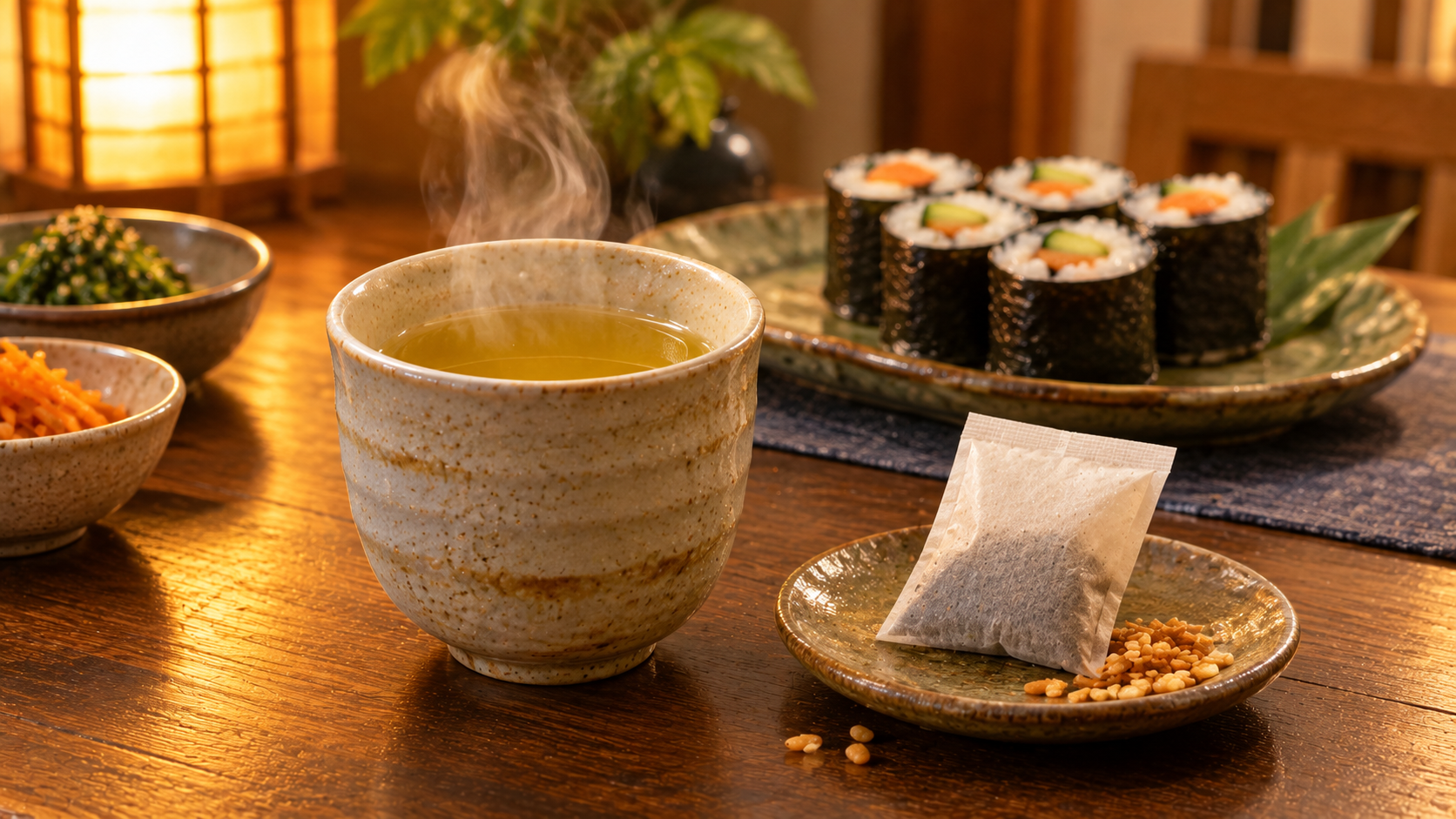
Disclosure: This post contains affiliate links. If you buy through one of them, I may earn a small commission at no extra cost to you. Links to Yamamotoyama’s own website are not affiliate links. Prices and product details below are from Yamamotoyama’s US website and retailer listings at the time of writing (November 2026); they change often, so always check before buying.
Quick Verdict
- Is Yamamotoyama worth it? Yes, as an affordable, easy-to-find everyday tea – especially its genmaicha and hojicha. It’s a convenient supermarket option, not a premium single-origin tea.
- Best for: people who want Japanese-style tea bags from a local store, genmaicha fans, sushi-night tea, and anyone on a budget.
- Watch out for: limited origin information on some US products, and bagged green teas that reviewers find less exciting than loose leaf.
- Best first buy: a box of Genmaicha tea bags. Yamamotoyama tea on Amazon
- Ready to step up to loose leaf? Nio Teas’ sencha collection ships from Japan. At the time of writing, ordering through the links on this page automatically applies a 10% discount at checkout – no code needed. Offers can change, so check the final price in your cart.
Below: Yamamotoyama’s history, what it sells, prices, what it does well, the honest downsides, and which tea to buy for what.
Yamamotoyama is one of the easiest Japanese tea brands to find outside Japan. Its green boxes sit on the shelves of Asian grocery stores, supermarkets and Amazon, often next to the nori – because Yamamotoyama sells seaweed too.
It’s also one of the oldest tea companies in the world. So is it a heritage brand worth seeking out, or just a convenient supermarket tea? Honestly, a bit of both.
The Problem You’re Actually Trying to Solve
You’ve seen Yamamotoyama tea in a store or online, and it’s cheaper than specialist brands. You want to know whether it’s good, which tea to choose, and whether it’s worth buying over loose-leaf tea from a specialist.
Who This Article Is NOT For
- If you’re ready to compare loose-leaf sencha from several sellers, my sencha brand comparison covers that.
- If you’re curious about gyokuro – the tea Yamamotoyama helped make famous – my gyokuro brand comparison shows where to buy it.
- If you want ceremonial-grade matcha, a matcha specialist is a better fit.
Who Is Yamamotoyama?
The company’s history, as it tells it:
- 1690: the Yamamoto family moved from Kyoto to Edo (today’s Tokyo) and opened a tea shop in Nihonbashi. The company describes itself as the oldest tea company in the world.
- 1835: the company credits Kahei Yamamoto VI with inventing gyokuro, the shaded green tea now considered one of Japan’s finest.
- 1975: Kahei Yamamoto IX founded Yamamotoyama U.S.A. in Los Angeles to supply tea and seaweed to supermarkets and restaurants.
- 1993: the company acquired Stash Tea Company of Portland, Oregon.
- Today: it’s still family owned and operated, with a US production facility in Pomona, California.
So Yamamotoyama is a genuine piece of Japanese tea history – but its US products are made for everyday, mainstream drinking.
What You Can Buy
- Tea bags – sencha, genmaicha, hojicha, oolong, jasmine and more
- Loose tea – including genmaicha, hojicha and sencha
- Iced tea – bottled and cold-brew options
- Organic tea – such as an organic sencha tea bag
- Seaweed – sushi nori, snack seaweed and more
- Teaware and gift wrappers
Prices at a Glance
| Product | Size | Price on Yamamotoyama’s US site (at the time of writing) |
|---|---|---|
| Genmaicha Green Tea Bag | 18 bags (55g) | $6 |
| Organic Sencha Green Tea Bag | 18 bags (36g) | $7 |
Amazon and supermarket prices vary, and multi-packs often cost less per bag. Either way, Yamamotoyama is firmly in the budget range – far cheaper per cup than most loose-leaf specialist tea.
What’s Genuinely Good
- Easy to find. Supermarkets, Asian grocery stores and Amazon all stock it.
- Affordable. A box costs about the same as a single café latte.
- Great genmaicha. Its genmaicha is one of its best-rated teas, with a nutty, roasted-rice flavor that’s easy to like. On RateTea, a review site, its loose-leaf genmaicha scored highest among the recent reviews.
- Good roasted tea. Its hojicha tea bags are among its better-rated teas, too.
- Organic options. The organic sencha tea bags use leaf the company says comes from its own tea gardens.
- A real heritage. Few tea brands you can buy in a supermarket have more than 300 years of history.
The Honest Downsides
- Limited origin information. Some product pages on the US site don’t say where the tea is grown or processed. Check the “product of” line on the box if origin matters to you.
- Bagged green tea is average. On RateTea, reviewers were less impressed with some bagged teas: the decaf sencha tasted like generic decaf tea to one reviewer, and the konacha was described as dusty and weak.
- Flavored teas are mixed. The jasmine tea’s aroma was praised, but its flavor was called weak.
- Dated packaging. One reviewer noted that some boxes look unchanged for many years.
- Not specialist quality. If you want to taste what makes gyokuro or top sencha special, you’ll need loose leaf from a specialist.
Which Yamamotoyama Tea to Buy for What
| You want… | Buy | Why |
|---|---|---|
| An easy everyday tea | Genmaicha tea bags | Its best-rated, most forgiving tea |
| Something toasty and gentle | Hojicha tea bags | Roasted, low in bitterness |
| A classic green tea | Organic sencha tea bags | Clean, simple green tea |
| Tea for sushi night | Genmaicha or hojicha | Great with Japanese food |
| A Chinese-style tea | Oolong | Good with rich or fried food |
How to Brew Yamamotoyama Tea Bags Well
Yamamotoyama’s own instructions, at the time of writing:
- Use the right temperature. About 80-90°C (170-190°F) for genmaicha, and 75-85°C (167-185°F) for organic sencha.
- Use about 240ml (8oz) of water per bag.
- Steep for 1-3 minutes, then remove the bag.
My tips: for green tea bags, start at the lower end of the temperature and time ranges – boiling water and long steeps are the main cause of bitter green tea. Genmaicha and hojicha are more forgiving, so they’re the best choice if you just want to pour and go.
Yamamotoyama vs Loose-Leaf Specialist Tea
| Yamamotoyama | Specialist loose leaf | |
|---|---|---|
| Where to buy | Supermarkets and Amazon | Mostly online |
| Price per cup | Very low | Moderate to high |
| Flavor depth | Simple, everyday | Richer, more complex |
| Re-steeping | Limited | Often several steeps |
| Origin information | Sometimes limited | Usually detailed |
Yamamotoyama is a great everyday tea. Loose leaf is what you buy when you want to taste the difference between regions, cultivars and grades.
What to Check on the Box Before You Buy
- “Product of” line. Tells you where the tea comes from, which some product pages don’t spell out.
- Best-before date. Green tea loses aroma over time, so choose the freshest box on the shelf.
- Individually wrapped bags. Wrapped bags stay fresher, which matters if you drink tea slowly.
- Ingredients. Genmaicha contains roasted rice, and blends may include other ingredients – check the label if you have allergies.
- Organic labeling. If organic matters to you, look for the certification mark on the box itself.
A Few Things People Ask Me
Is Yamamotoyama a Japanese company? Yes. It dates back to a tea shop opened in Tokyo’s Nihonbashi in 1690, and it’s still family owned. Its US company was founded in Los Angeles in 1975.
Did Yamamotoyama invent gyokuro? The company credits Kahei Yamamoto VI with inventing gyokuro in 1835.
Is Yamamotoyama tea good? For everyday tea bags, yes – especially genmaicha and hojicha. It’s not meant to compete with premium loose-leaf tea.
Does Yamamotoyama own Stash Tea? The company says it acquired Stash Tea Company in 1993.
Where I Landed
Yamamotoyama is the tea I’d recommend to someone who wants an easy, affordable Japanese-style tea from the supermarket today – start with the genmaicha or hojicha, and brew green tea bags a little cooler than you think. It’s a heritage brand with real history, but its US tea bags are everyday drinks, not specialist tea. When you’re ready to taste what Japanese green tea can really be, step up to loose leaf.
You can browse its range at Yamamotoyama.