Disclosure: This post contains affiliate links. If you buy through one of them, I may earn a small commission at no extra cost to you. Allergy note: cheese and many desserts contain milk, and some contain nuts, wheat or eggs – adjust the pairings to suit your guests.
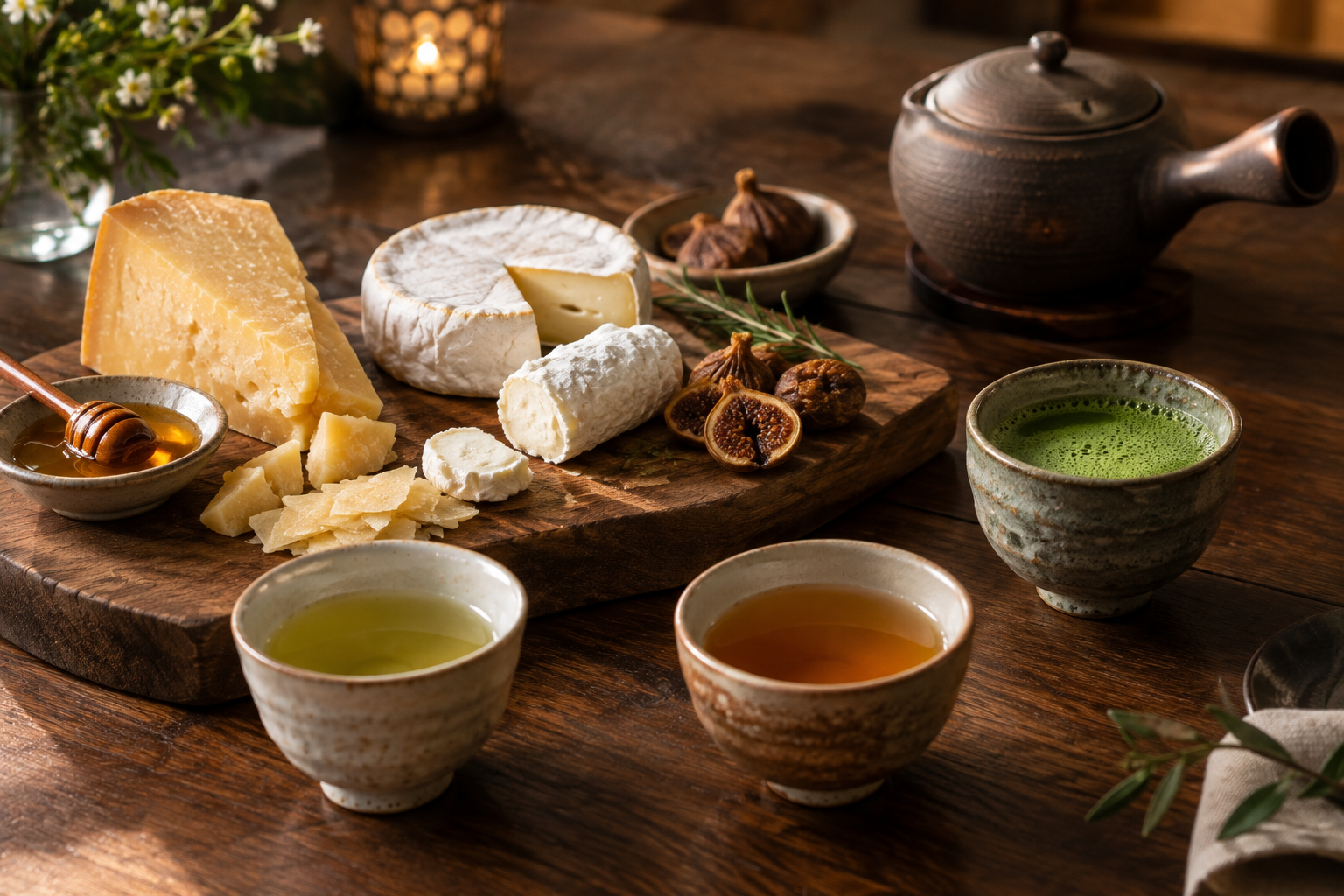
Japanese tea is usually paired with Japanese sweets: a bowl of matcha with a delicate wagashi, a cup of sencha with a rice cracker. But Japanese tea also goes remarkably well with Western food – especially cheese and chocolate. In France, tea and cheese pairings have become part of the growing interest in Japanese tea, and once you try one, it makes sense: tea has umami, roasted notes and refreshing bitterness, the same qualities that make wine and cheese work together.
The difference is that tea is gentler, has no alcohol, and refreshes your palate rather than coating it. This guide covers which Japanese teas go with which cheeses, chocolates and desserts, and why.
The Problem You’re Actually Trying to Solve
You want to serve Japanese tea with something other than wagashi – for a dinner party, an afternoon cheese board, or just with dessert – but you don’t know where to start. Pair the wrong tea with the wrong food and one of them disappears: a delicate gyokuro gets flattened by a strong blue cheese, or a smoky hojicha overwhelms a light fruit tart.
Who This Article Is NOT For
- If you’re looking for traditional Japanese sweets to serve with matcha, my wagashi pairing guide covers that.
- If you want strict rules, pairing is personal. Treat these as starting points, then trust your own taste.
- If you’re pairing very strong, pungent blue cheeses, tea can struggle; wine or a sweet drink may suit them better.
Why Tea and Cheese Work Together
Three things make the pairings click:
- Umami meets umami. Gyokuro and good sencha are rich in amino acids, which give them a savory, brothy quality. Aged cheeses like Parmesan are also full of umami. Together, they reinforce each other.
- Roast meets roast. Hojicha and genmaicha have toasty, nutty, caramel-like notes – the same flavors found in aged Gouda, Gruyère and dark chocolate.
- Bitterness cuts richness. The gentle astringency of green tea cleans fat from your palate, so each bite of cheese or chocolate tastes fresh again.
A good rule of thumb: match intensity. Light teas with light foods, bold teas with bold foods.
Pairing by Tea
Sencha: Fresh Cheese, Light Desserts and Savory Bites
Sencha’s grassy freshness and light bitterness make it a natural partner for fresh, tangy flavors.
- Fresh goat cheese (chèvre): the classic sencha pairing. The tea’s green, umami notes bring out the cheese’s freshness, and its bitterness tames the tang.
- Ricotta or fresh cow’s milk cheese: a gentle match for a light, sweet sencha.
- Sheep’s milk cheese: try a deep-steamed fukamushi sencha, whose fuller body stands up to the richer fat.
- Cheesecake: sencha’s astringency cuts through the creaminess, keeping a rich dessert from feeling heavy.
- Savory foods: smoked salmon, light salads and herb-based dishes.
Tip: cold-brewed sencha is excellent with salty or sharp cheeses – it’s refreshing and acts like a palate cleanser.
Gyokuro: Aged Cheese and Umami
Gyokuro’s deep sweetness and savory umami call for foods with depth.
- Parmesan (Parmigiano-Reggiano) or aged Comté: long-aged cheeses are full of savory compounds that echo gyokuro’s umami. Small pieces with small cups of gyokuro make a memorable tasting.
- Rich triple-cream cheeses (Brie-style): their soft, buttery texture can bring out gyokuro’s sweetness.
- Fresh mozzarella: serve it with cold-brewed gyokuro, a drizzle of olive oil and a pinch of salt for a light, elegant pairing.
Avoid: strong blue cheese and very spicy foods, which overwhelm gyokuro’s subtlety.
Hojicha: Aged, Nutty Cheeses and Dark Chocolate
Hojicha is the most food-friendly Japanese tea. Its roasted, toasty, slightly caramel flavor and low bitterness go with almost anything rich.
- Aged Gouda or aged Cheddar: the caramelized, nutty flavors of aged hard cheeses echo hojicha’s roast. This is one of the easiest and most reliable pairings to start with.
- Camembert and Brie: hot hojicha softens the cheese in your mouth, and its woody aroma blends with the creamy center.
- Washed-rind cheeses (like Pont-l’Évêque): a roasted stem hojicha can stand up to their stronger aroma.
- Dark chocolate: hojicha’s toasty sweetness harmonizes with cocoa’s roasted bitterness. Try 60-75% dark chocolate.
- Desserts: chocolate cake, brownies, tiramisu, caramel desserts, pecan pie, dried fruit and roasted nuts.
Genmaicha: Nutty Cheeses and Grain-Based Snacks
The toasted rice in genmaicha gives it a mellow, popcorn-like aroma.
- Gruyère and other nutty alpine cheeses: the toasty rice echoes the cheese’s roasted, nutty flavors.
- Mild cheeses: genmaicha is gentle enough not to overpower them.
- Snacks and desserts: crackers, shortbread, oatmeal cookies and grain-based treats.
Matcha: Creamy Cheeses, White Chocolate and Berries
Matcha’s thick body, deep vegetal flavor and bitterness need richness to balance them.
- Mascarpone or burrata: their creaminess softens matcha’s astringency.
- Alpine cheeses like Gruyère: their smooth, nutty character complements matcha’s earthy finish.
- White chocolate and milk chocolate: the classic matcha partner; the sweetness and milk fat round out the bitterness.
- Cream-based desserts: panna cotta, cream puffs, vanilla ice cream and shortcake.
- Berries: strawberries and raspberries add bright acidity that contrasts beautifully with matcha.
Tip: for pairings, serve matcha as usucha (thin tea), not as a sweet latte. A latte’s milk and sugar compete with the food.
Wakocha (Japanese Black Tea): Milk Chocolate and Baked Goods
Japanese black tea is gentle, with little astringency and a natural sweetness.
- Milk chocolate, scones, butter cookies and fruit tarts: wakocha’s soft, honeyed character suits classic afternoon-tea foods.
- Mild, creamy cheeses: an easy match for its gentle body.
Quick Pairing Chart
| Tea | Cheese | Chocolate | Desserts |
|---|---|---|---|
| Sencha | Fresh goat cheese, ricotta | Light, fruity chocolate | Cheesecake, fruit, light cakes |
| Fukamushi sencha | Sheep’s milk cheese | – | Butter cookies |
| Gyokuro | Parmesan, aged Comté | – | Simple, lightly sweet desserts |
| Hojicha | Aged Gouda, Cheddar, Camembert | Dark chocolate | Brownies, tiramisu, caramel |
| Genmaicha | Gruyère, mild cheeses | – | Crackers, shortbread, oat cookies |
| Matcha | Mascarpone, burrata, Gruyère | White and milk chocolate | Cream desserts, berries, ice cream |
| Wakocha | Mild creamy cheeses | Milk chocolate | Scones, fruit tarts |
How to Host a Tea and Cheese Tasting
- Choose three teas with different characters: for example, a sencha, a hojicha and a matcha or gyokuro.
- Choose three or four cheeses, from fresh to aged: a goat cheese, a Brie, an aged Gouda and a Parmesan.
- Go from light to strong. Start with the lightest tea and cheese, and finish with the boldest, just as you would with wine.
- Serve small amounts. Small cups of tea and bite-sized pieces of cheese let everyone compare without filling up.
- Offer neutral crackers and water between pairings to reset the palate.
- Add a bridge. If a pairing feels disconnected, a little honey, fig jam or dried fruit often brings tea and cheese together.
- End with dessert. Finish with hojicha and dark chocolate, or matcha and white chocolate.
Hot or Cold?
- Hot tea softens cheese and releases aromas, making creamy and aged cheeses feel even richer.
- Cold-brewed tea is refreshing and works like a palate cleanser – ideal with salty, sharp or fatty foods, and in summer.
A Few Things People Ask Me
What’s the easiest pairing to start with? Hojicha with aged Gouda, or hojicha with dark chocolate. Both are forgiving and taste good to almost everyone.
Does tea really work with cheese, or is it a gimmick? It genuinely works, for the same reasons wine does: complementary flavors and a drink that refreshes the palate. It’s a good option for anyone who doesn’t drink alcohol.
Which tea is best with chocolate? Hojicha for dark chocolate, matcha for white chocolate, and sencha or wakocha for milk chocolate.
What should I buy to try this? A fresh, quality sencha like the ones in Nio Teas’ sencha collection covers the fresh-cheese pairings, and loose-leaf hojicha on Amazon handles aged cheese and chocolate. If you’re choosing a hojicha, my hojicha brand comparison can help.
Where I Landed
Pairing Japanese tea with cheese and chocolate opened up a whole new way of serving tea for me. A cheese board with three teas instead of three wines is relaxed, interesting and something everyone at the table can enjoy. Start with hojicha and aged Gouda, add a fresh sencha with goat cheese, and finish with matcha and white chocolate. After that, you’ll start noticing pairings everywhere.