Disclosure: This post contains affiliate links. If you buy through one of them, I may earn a small commission at no extra cost to you. Travel details like access and opening times change often – always check the latest information before you go.
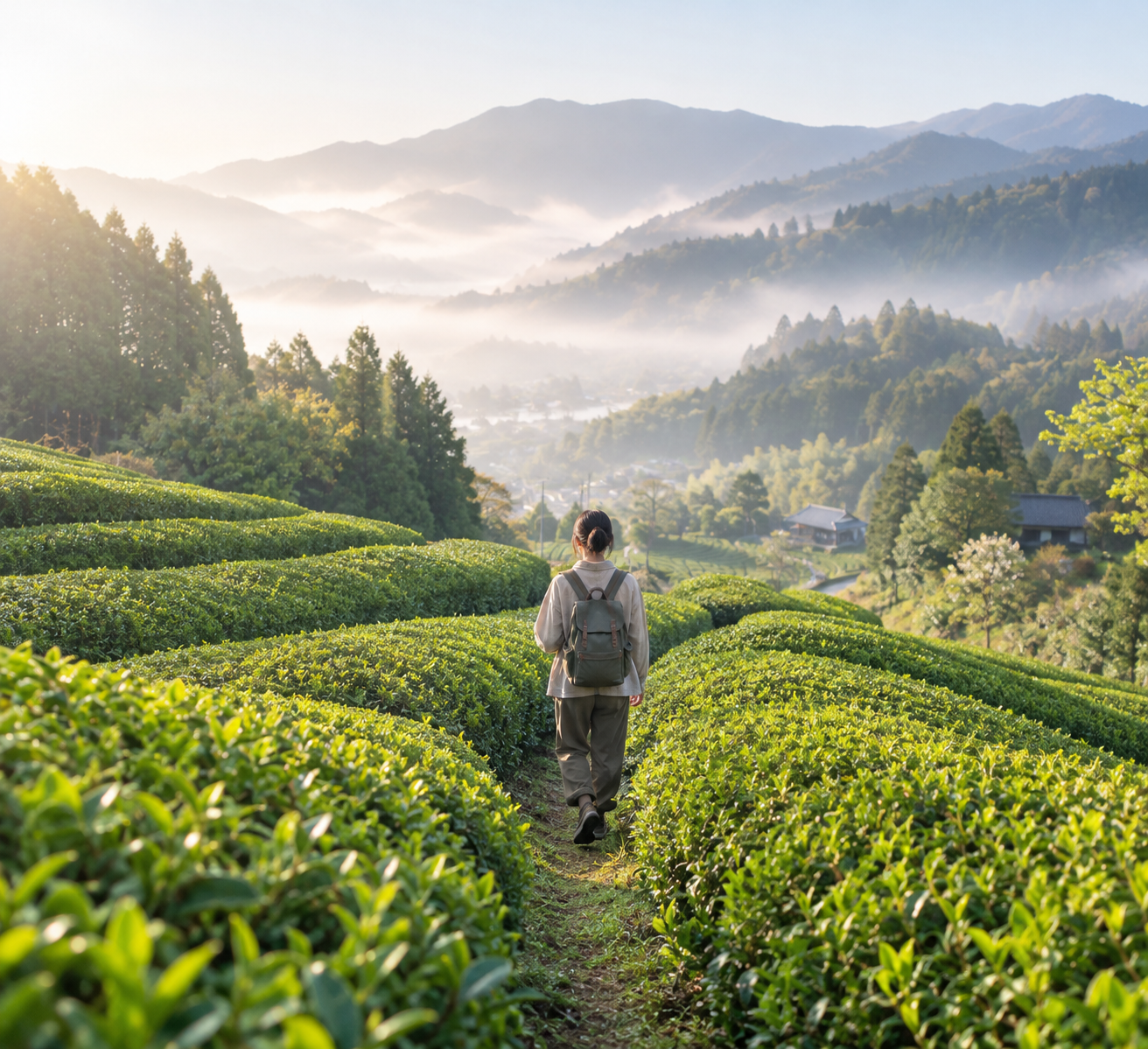
Most visitors to Japan experience tea in a café or a tea ceremony room in Kyoto. That’s wonderful, but it’s only half the story. Out in the countryside, the same tea grows in neat, rounded rows that ripple across hillsides like green waves, sometimes with Mount Fuji rising behind them. Standing in a tea field in early May, when the new leaves are bright green and the air smells faintly sweet, is one of the most memorable things I’ve done in Japan – and almost none of the people I met there were tourists.
This guide covers the tea regions that are easiest and most rewarding to visit, what you can do there, and when to go.
The Problem You’re Actually Trying to Solve
Japan’s tea regions are mostly rural, quiet and not set up like big tourist attractions. Information in English is scattered, public transport can be limited, and it’s easy to show up in the wrong season and find bare-looking bushes. A little planning makes the difference between a frustrating detour and a highlight of your trip.
Who This Article Is NOT For
- If you only have time for city tea experiences, my guide to the oldest tea shops in Uji and Kyoto covers historic shops you can visit without leaving town.
- If you’re looking for a formal tea ceremony, that’s usually easier to book in Kyoto or Tokyo than in the tea fields themselves.
- If you can’t travel, you can still “visit” these regions through their tea – see the end of this article.
When to Go
Late April to May – the best time. This is the first harvest, when the fresh new leaves turn the fields a vivid green and tea farms are at their busiest. It’s also when shincha, the first tea of the year, appears in shops. (More on shincha.) Kagoshima’s harvest starts earliest, often in early April, and the season moves north from there.
Summer. The fields are green and second-harvest work continues, but it’s hot and humid.
Autumn. Quieter, comfortable weather, and the fields are still green, if less vivid.
Winter. The bushes are dormant and darker green – but in places like Shizuoka, the cold, clear air gives the best views of Mount Fuji.
Shizuoka: Tea Fields and Mount Fuji
Shizuoka is Japan’s most famous tea prefecture and the easiest to reach from Tokyo by shinkansen.
Obuchi Sasaba (Fuji City). If you’ve seen a photo of tea rows leading up to Mount Fuji, it was probably taken here. It’s a working tea plantation on Fuji’s southern foothills, maintained by local farmers and a preservation association, and it’s free to visit.
- Best time: early to mid-May for bright new leaves; December to February for the clearest views of Fuji. Early morning gives the best chance of a clear mountain.
- Access: the nearest stations are Shin-Fuji (shinkansen) and Fuji. Buses are infrequent, so a taxi or car is usually easier – roughly 20-30 minutes.
- Tips: stay on the paths and don’t step into the fields; this is a working farm. Drones and commercial shoots need permission. Facilities are limited, so bring water.
Makinohara Plateau and Shimada. A vast tea-growing plateau associated with deep-steamed fukamushi sencha, with wide views of tea rows. The Fujinokuni Cha no Miyako Museum in this area is dedicated to tea and its history, and makes a good base for exploring the region.
Kawane. Further into the mountains along the Oi River, known for fragrant mountain-grown sencha. Combine it with a ride on the scenic Oigawa Railway.
Kyoto: Uji and Wazuka
Kyoto’s tea country is just south of the city and pairs naturally with a Kyoto trip.
Uji. About 20-30 minutes from Kyoto Station by train, Uji is the historic home of Japanese tea. Walk the street leading to Byōdō-in temple, lined with tea shops selling matcha, sencha and matcha sweets, and stop at one of the long-established tea houses. Uji is less about fields and more about tea culture, shops and history – and it’s very easy to visit in half a day.
Wazuka. For tea fields, head to Wazuka, a quiet town in the hills that grows much of the leaf sold as “Uji tea.” Its terraced tea fields climb steep slopes and are some of the most beautiful in Japan. Several farms, including Kyoto Obubu Tea Farms, offer tours in English with field walks, factory visits, tastings and, in season, tea picking. It’s rural and best reached by car or a booked tour – plan ahead.
Ujitawara. Near Uji, this is where Nagatani Sōen developed the method for making sencha in 1738. His former home in the Yuyadani area is a small pilgrimage spot for tea lovers.
Kyushu: Kagoshima, Yame and Ureshino
Kyushu has some of Japan’s biggest and most beautiful tea landscapes, and far fewer visitors.
Chiran (Kagoshima). Minamikyushu, the area around Chiran, is one of Japan’s largest tea-producing areas. Tea fields stretch toward the cone of Mount Kaimon, and viewpoints like Chabakken-oka look out over both. Chiran is also known for its preserved samurai residences and gardens.
- Best time: April to May, when the new shoots appear – earlier than anywhere else in mainland Japan.
- Access: about 45 minutes to an hour by car from Kagoshima-Chuo Station, or by bus.
- Experiences: local tea shops and cafés serve Chiran tea, and some hands-on experiences, such as hand-rolling or brewing lessons, can be booked in advance.
Yame (Fukuoka). Famous for high-quality gyokuro, Yame has wide, rolling tea fields. The Yame Central Tea Garden (Yame Chuo Daichaen) is a hillside viewpoint overlooking a sea of tea bushes, and it’s a peaceful stop on a drive through the region. A car is the easiest way to explore.
Ureshino (Saga). A hot-spring town that’s also a tea town, known for its curly tamaryokucha. Combine a soak in Ureshino’s famous onsen with tea tasting, and look for tea-themed experiences around town.
Practical Tips for Visiting Tea Country
- Rent a car if you can. Many tea fields are rural, and buses can be infrequent.
- Respect working farms. Stay out of the rows, don’t pick leaves unless you’re on a picking experience, and be quiet near homes.
- Book tours ahead. English tours and tastings often need advance reservations, especially in spring.
- Bring cash. Small farm shops and rural cafés may not take cards.
- Check the weather for views. Mountain views, especially of Fuji, are best on clear mornings.
- Buy tea at the source. Farm shops often sell fresh tea that’s hard to find abroad – and in May, you may find shincha just days old.
A Sample Day Trip
From Tokyo: take the shinkansen to Shin-Fuji, then a taxi to Obuchi Sasaba early in the morning. Continue to the Makinohara area and the tea museum by car, and finish with fresh sencha at a local farm shop.
From Kyoto: spend the morning in Uji, visiting Byōdō-in and the tea shops along its approach, then head to Wazuka in the afternoon for a booked farm tour and tasting.
A Few Things People Ask Me
Can I pick tea myself? Yes, on some booked tours, mainly in spring. Don’t pick leaves on your own – the fields are private farms.
Do I need to speak Japanese? Not for tours offered in English. For rural farm shops and cafés, a translation app and a few basic phrases go a long way.
Which region is best for a first visit? Uji is the easiest from Kyoto, and Obuchi Sasaba is the most iconic view from Tokyo. For a true tea-country experience, Wazuka or Chiran.
Can’t travel? Taste the regions at home. Nio Teas’ sencha collection can be filtered by region, so you can try teas from Shizuoka, Kagoshima and more side by side. And if you are traveling, a tea infuser bottle on Amazon lets you brew the fresh tea you buy on the road.
Where I Landed
Visiting tea fields changed how I drink tea at home. When I open a bag of Shizuoka sencha now, I picture those green rows climbing toward Fuji; a Kagoshima tea reminds me of the warm, early spring in Chiran. If you’re planning a trip to Japan, give yourself one morning in tea country – ideally in May, with a fresh cup of shincha at the end of it.