Disclosure: This post contains affiliate links. If you buy through one of them, I may earn a small commission at no extra cost to you.
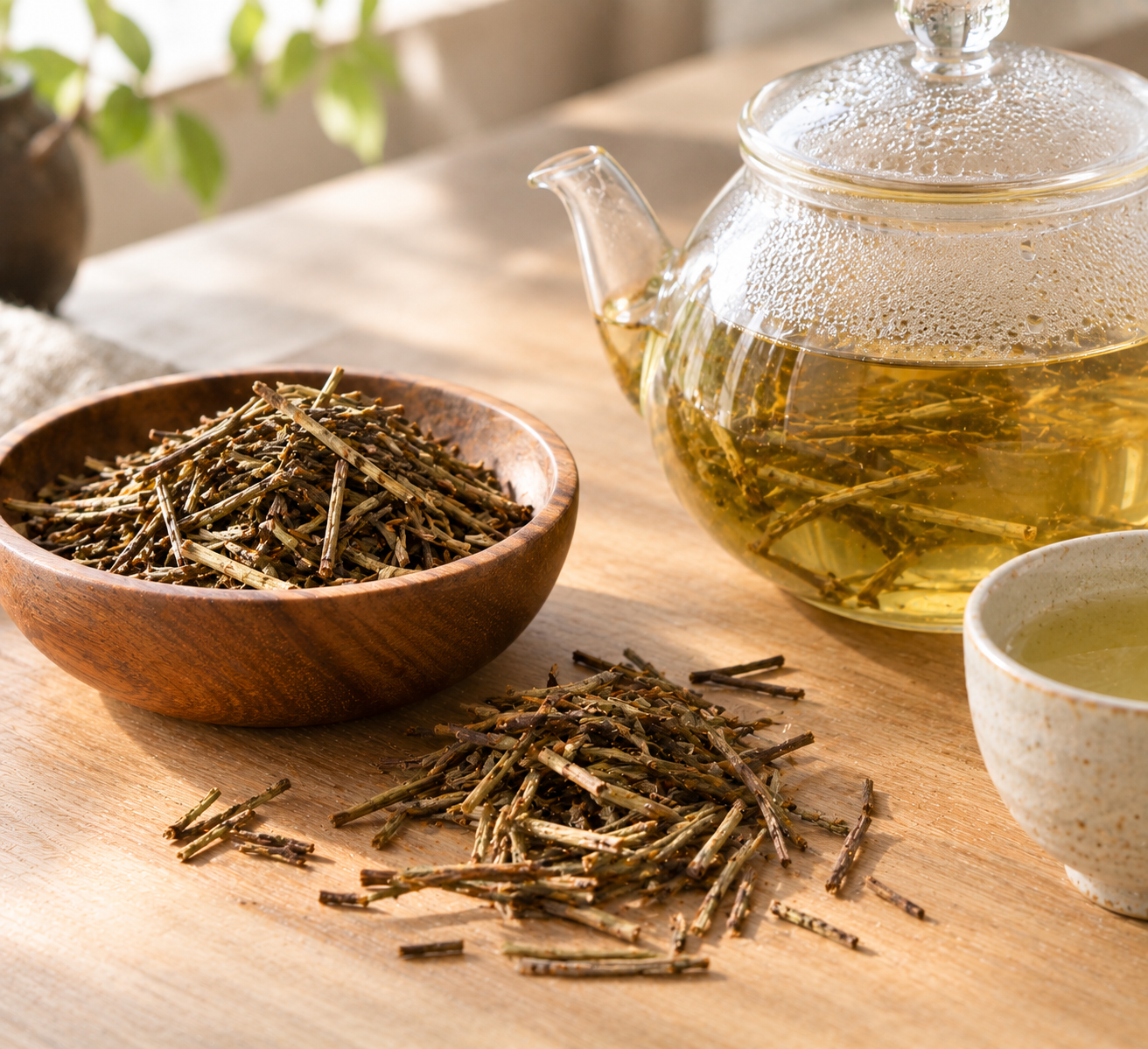
The first time I saw kukicha described as “twig tea,” I assumed that meant something scrappy or lesser – literal sticks steeped in water. It’s actually the opposite kind of story: kukicha is made from the stems and twigs left over after sencha or matcha leaves are processed, and because caffeine and bitterness concentrate mostly in the young leaves rather than the woodier stems, what you get is a genuinely pleasant, naturally low-caffeine tea that happens to be a byproduct rather than a compromise.
The Problem You’re Actually Trying to Solve
Most people looking into kukicha are trying to solve one of two things: finding a green tea they can drink in the evening without the caffeine hit of sencha or matcha, or figuring out what to do with the stems left over if they’re processing their own tea. Kukicha answers both, but it gets brewed wrong constantly – people treat it like sencha and oversteep it in water that’s too hot, which is one of the few ways to actually make this forgiving tea taste bad.
Who This Article Is NOT For
- If you want maximum caffeine from your green tea, kukicha is deliberately the wrong choice here – my matcha vs. coffee caffeine comparison or a standard sencha is a better fit for that.
- If you’re drinking tea specifically for the umami and richer flavor of whole leaves, kukicha’s stem-based character is intentionally lighter and sweeter rather than deep – my sencha vs. gyokuro comparison covers that leaf-forward end of the spectrum instead.
- If you’ve never brewed Japanese green tea before and want a single starting point, a standard sencha is the more typical entry tea – kukicha is a worthwhile detour once you already know what you like.
What Kukicha Actually Is
Kukicha is made from the stems, stalks, and twigs separated out during the final sorting stage (shiage) of sencha or matcha production – not a tea grown and picked on its own, but a genuine byproduct of premium tea that would otherwise go to waste. That byproduct status is exactly why it’s traditionally inexpensive despite tasting good on its own merits, and why it’s long been associated with macrobiotic diets as an everyday, sustainable tea.
There’s a quality hierarchy within kukicha worth knowing. Standard kukicha uses stems from various green teas, including sencha and fukamushi sencha. Karigane, the higher-quality version, comes specifically from gyokuro stems – and when that gyokuro-derived kukicha comes from Kyushu specifically, it’s sometimes called shiraore. If you see “karigane” on a package, you’re looking at the stem-tea equivalent of upgrading from sencha to gyokuro.
Why It’s So Low in Caffeine and Astringency
Caffeine and catechins (the compounds responsible for bitterness and astringency) concentrate heavily in young leaves, which is the plant’s own defense mechanism against insects. Stems and twigs, being older and woodier, simply contain much less of both. The rough numbers: kukicha runs somewhere around 5-10mg of caffeine per 8-ounce serving, compared to roughly 20-30mg for sencha and 70-80mg for matcha – a meaningful drop, not a marginal one.
The flip side of lower catechins is higher theanine relative to the tea’s other compounds, which is part of why kukicha tends to taste sweeter and less astringent than leaf teas, with a milder, nuttier, slightly creamy character rather than sencha’s grassier bite. It’s also genuinely hard to oversteep into bitterness the way you can with sencha, since there’s simply less of the compound responsible for that bitterness to extract in the first place.
How to Brew It
For unroasted (green) kukicha:
- Water temperature: 75-80°C (167-176°F)
- Amount: 4-5g of kukicha per 200ml water
- First steep: 60-90 seconds
- Good for 2-3 infusions, though flavor drops off noticeably after the first
For roasted kukicha (often labeled bocha):
- Water temperature: 85-95°C (185-203°F) – it tolerates hotter water well
- Steep time: 30-60 seconds
- Good for up to 5 infusions
Roasting changes the character substantially – unroasted kukicha stays pale gold with a light, vegetal sweetness, while roasted bocha develops a warmer, toasty, almost grain-like flavor from the same compounds (pyrazines) that show up in roasted hojicha. If you already like hojicha, roasted kukicha is worth trying as a close relative with an even gentler caffeine profile.
A Few Things People Ask Me
Is kukicha the same thing as hojicha? No, though they’re often confused. Hojicha is roasted sencha leaves (and sometimes stems); kukicha is specifically stems and twigs, which may or may not be roasted afterward. A roasted kukicha and a hojicha can taste fairly similar, but they start from different parts of the plant.
Is karigane worth paying more for over regular kukicha? If you already like kukicha’s flavor and want to see the upper end of it, yes – karigane’s gyokuro-stem origin gives it a noticeably smoother, sweeter cup than stems sourced from sencha. If you’re just trying kukicha for the first time, standard kukicha is a perfectly good and cheaper starting point.
Can I drink kukicha at night without worrying about caffeine? It’s genuinely one of the better options if you want green tea’s flavor without much caffeine – at roughly a quarter of sencha’s caffeine content, most people can drink it in the evening without issue, though anyone very caffeine-sensitive should still treat “low caffeine” as different from “no caffeine.”
Where can I actually get kukicha or karigane? Nio Teas’ kukicha is a straightforward place to start, and a basic kyusu-style teapot on Amazon works fine for brewing it if you don’t already have one – kukicha doesn’t demand anything specialized.
Where I Landed
What changed my view of kukicha wasn’t the tea itself so much as the framing – once I stopped thinking of it as “leftover tea” and started thinking of it as a deliberately different part of the same plant, the low caffeine and mild sweetness stopped feeling like a downgrade from sencha and started feeling like their own, genuinely useful thing. It’s the tea I actually reach for later in the day now, precisely because it isn’t trying to be sencha.