Disclosure: This post contains affiliate links. If you buy through one of them, I may earn a small commission at no extra cost to you.
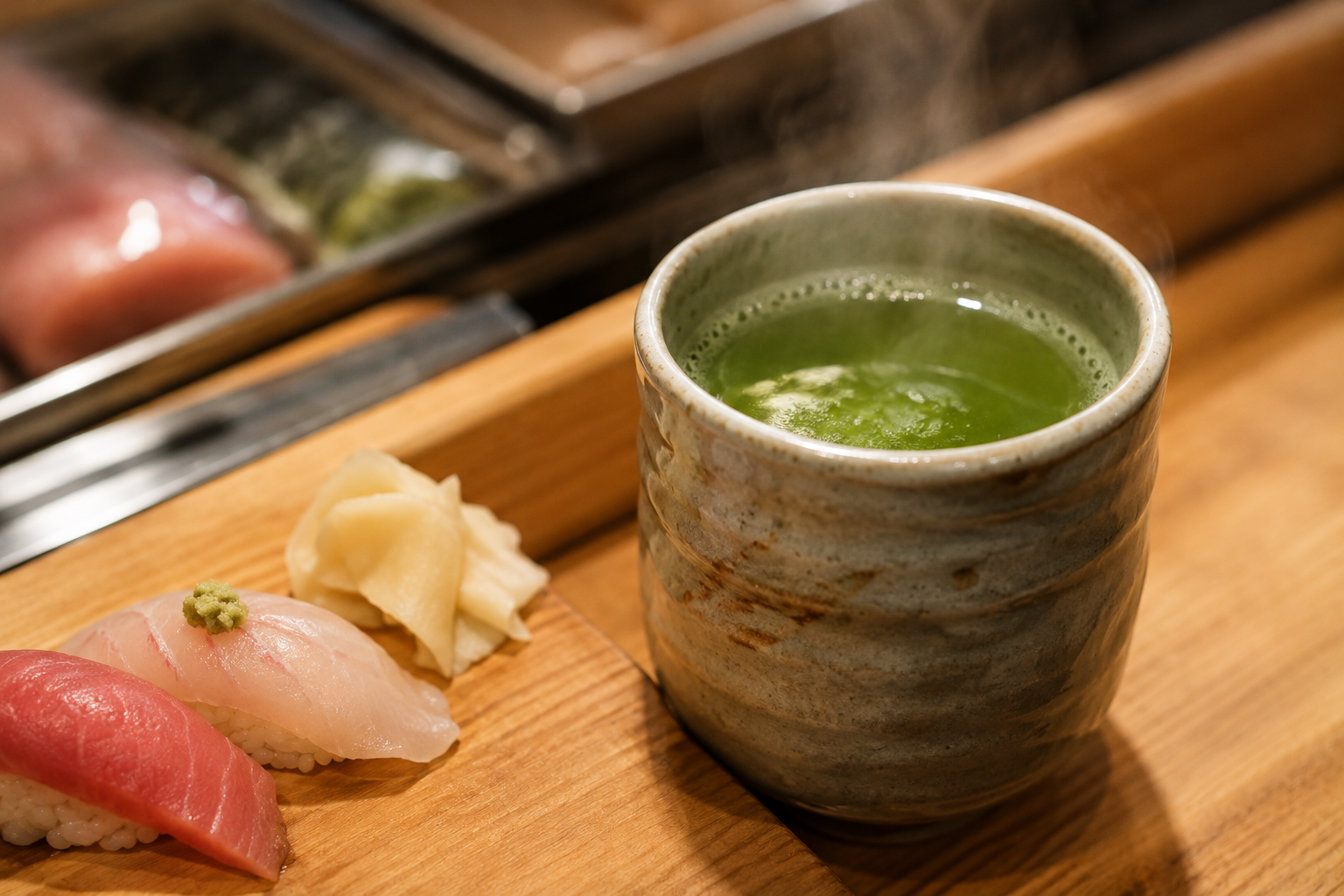
Anyone who has eaten at a sushi restaurant in Japan knows the tea: a big, heavy cup, almost too hot to hold, filled with a cloudy, deep green tea that tastes stronger and grassier than the sencha you’d brew at home. For years I assumed it was some special “sushi tea.” It’s actually konacha – literally “powder tea” – and it’s one of the cheapest teas in Japan. It just happens to be exactly right for sushi.
The Problem You’re Actually Trying to Solve
People usually look this up after a sushi meal, trying to recreate that tea at home – and then get confused, because konacha looks like matcha in the bag, some shops sell a soluble green powder under similar names, and recipes online mix the three up. They’re not the same thing, and making them the same way gives very different results.
Who This Article Is NOT For
- If you’re actually after matcha – the bright green, whisked tea – konacha won’t replace it. My matcha vs. green tea comparison explains why the two are made and prepared so differently.
- If you want a mild, sweet everyday green tea, konacha’s punchy, slightly bitter character may be too much. A gentler tea like bancha, which many sushi restaurants outside Japan serve instead, may suit you better.
- If you’re looking for a premium tea to drink on its own, konacha isn’t trying to be that. It’s an everyday tea built for food.
What Konacha Actually Is
When sencha and gyokuro are processed, the leaves are sorted and sifted. Along the way, small fragments, buds and fine particles fall out. Those leftovers are konacha. Konacha made from gyokuro is sometimes sold as gyokuro-konacha.
Because it’s a byproduct, konacha is much cheaper than sencha – one reason restaurants that serve free tea all day choose it. But cheap isn’t the same as bad. The small particles have a lot of surface area, so they release flavor fast, giving a strong, deep green cup with a bold, grassy taste from very little leaf.
Konacha vs. Matcha vs. Funmatsucha
These three are easy to confuse, especially in a bag:
| Konacha | Matcha | Funmatsucha | |
|---|---|---|---|
| What it is | Small leaf particles left over from sencha/gyokuro | Shade-grown tencha, stone-ground into fine powder | Ordinary leaf tea ground into powder |
| How you make it | Steep, then strain out the particles | Whisk into water; you drink it all | Stir into water; you drink it all |
| Taste | Strong, grassy, can turn bitter | Sweet, rich, umami | Like strong, astringent sencha |
| Price | Low | High | Low |
| Where you’ll meet it | Traditional sushi restaurants | Tea ceremony, cafés | Many conveyor-belt sushi restaurants |
The last row is worth knowing. At many conveyor-belt (kaiten) sushi restaurants, you’ll find a jar of green powder and a hot water tap at your seat. That’s usually powdered tea that you stir straight into the cup – closer to funmatsucha than to konacha, which needs to be steeped and strained. When buying, check whether the product says it dissolves (powdered/instant) or needs to be brewed in a teapot (konacha).
Why Sushi Restaurants Serve It
Sushi restaurants serve their tea very hot, and the reason is practical. Hot green tea helps rinse oils from fatty fish out of your mouth, so you can taste the next piece cleanly – the same job as the pickled ginger (gari) on the side. Konacha’s strong flavor holds up against fish and soy sauce where a delicate tea would disappear, and it brews quickly, which matters when you’re pouring cup after cup all day. And because it’s inexpensive, the restaurant can refill your cup as often as you like.
What “Agari” Means
In sushi restaurants, tea is often called agari. There are two common explanations for the word. One links it to the verb agaru, “to finish,” since tea traditionally comes at the end of the meal. The other traces it to the teahouses of the Edo period, where the first tea served to a guest was called odebana and the last agaribana. Sushi restaurants later picked up the term and shortened it.
A small etiquette tip: agari, like gari for ginger or murasaki for soy sauce, is restaurant staff jargon. Many people in Japan feel it sounds a little off when customers use it themselves. Simply asking for “ocha” (tea) is always correct.
How to Brew Konacha at Home
- Leaf: about 4g (roughly 2 teaspoons) per 120ml of water
- Water: around 80°C (176°F)
- Steep: 30 seconds at most – it extracts very quickly
- Strain: use a fine-mesh strainer or a kyusu with a fine filter, since the particles are tiny
The sushi-restaurant version is hotter and stronger, which is great with food but turns bitter on its own. At home, start with the recipe above. If you want the full sushi-bar effect, use hotter water and a bigger cup, and drink it alongside something oily or salty.
Konacha’s fine particles can clog the filter of some teapots. Many people find it easiest to brew in a disposable tea filter bag, or to use konacha already packed in tea bags.
A Few Things People Ask Me
Is konacha the same as matcha? No. Matcha is shade-grown tea leaf stone-ground into a powder that you whisk and drink entirely. Konacha is small leftover leaf particles that you steep and strain, like regular green tea.
Why does my konacha taste bitter? It’s probably steeping too long or with water that’s too hot. Konacha extracts much faster than whole-leaf sencha, so keep it to about 30 seconds.
Can I use konacha for cooking? Yes. Its strong flavor works well in cooking, for example as a quick, strong green tea for ochazuke.
Where can I buy it? Look for “konacha” or “sushi tea” – konacha on Amazon is easy to find, in loose form or tea bags. Because the particles are so fine, a fine-mesh tea strainer on Amazon makes brewing much easier.
Where I Landed
Konacha is a good example of how Japanese tea culture works: the leftovers of expensive tea become a cheap, strong tea that turns out to be perfect for one specific job. It isn’t something to sip slowly on its own, but with sushi – very hot, in a big cup, refilled often – it’s hard to beat. Brew it short at home, and you’ll have the closest thing to a sushi-bar cup outside Japan.