Disclosure: This post contains affiliate links. If you buy through one of them, I may earn a small commission at no extra cost to you.
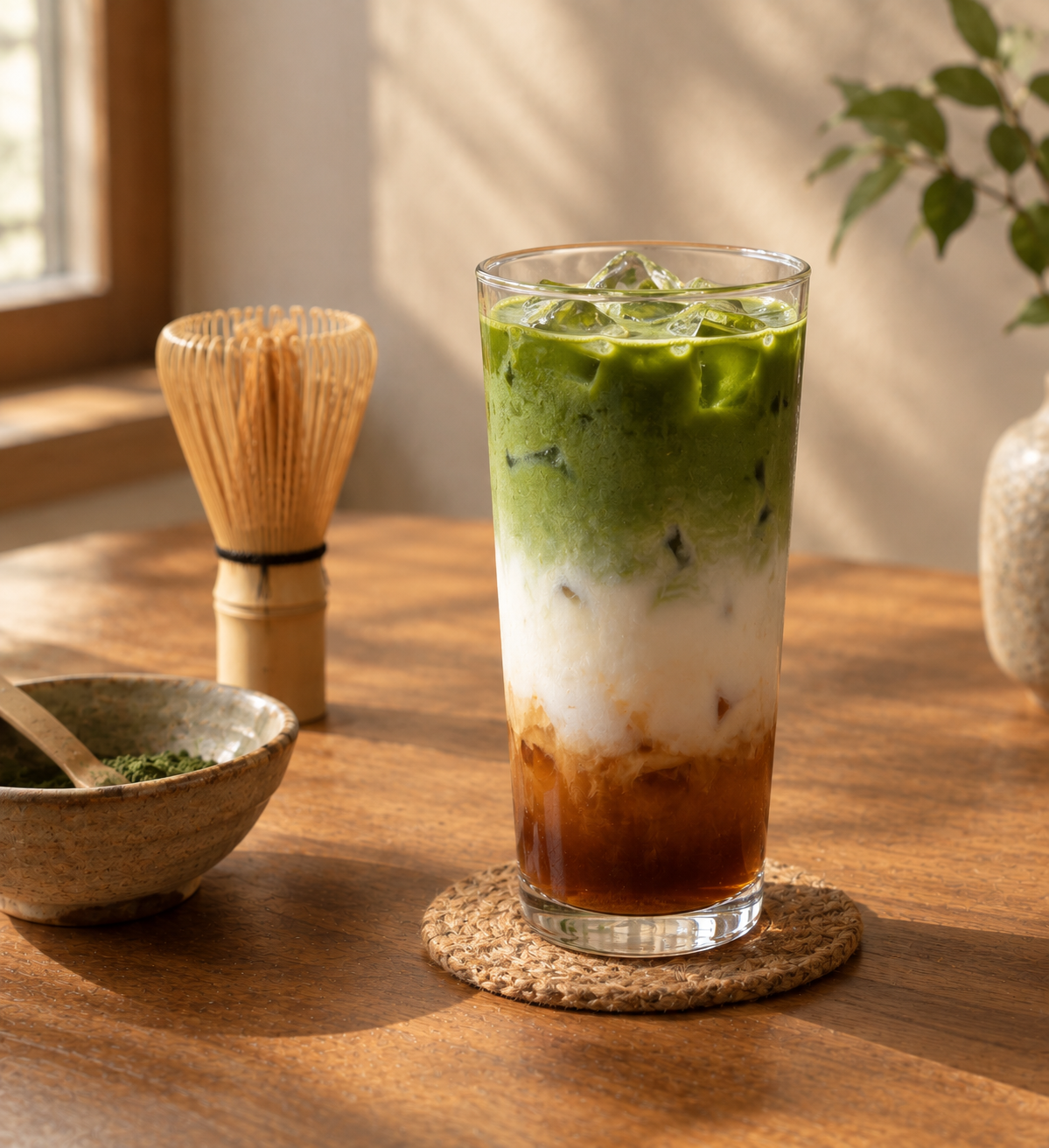
Matcha and hojicha come from the exact same plant, processed in completely opposite directions, unroasted and vividly green versus roasted into something toasty and reddish-brown, and putting them in the same glass turns out to be far more interesting than picking one or the other. Instead of competing, they layer: matcha’s grassy sharpness on one end, hojicha’s caramel-like roundness on the other, with milk holding the middle together, and the visual contrast alone makes it one of the more genuinely striking drinks you can put together at home.
The Problem You’re Actually Trying to Solve
You’ve searched for matcha and hojicha blend ideas because you’ve seen the layered version, the one with three distinct colored stripes in a glass, or you already love both teas separately and want to know how to actually combine them without one flavor completely overwhelming the other.
Who This Article Is NOT For
Let’s save you some scrolling if this isn’t quite your situation.
- If you want matcha recipes specifically without hojicha involved, my how to make a matcha latte guide covers that on its own.
- If you want to understand hojicha as its own category before combining it with anything, my best hojicha brands guide is the better starting point.
If you’re past that, here’s where the actual guide starts.
The Classic Layered Matcha-Hojicha Latte
This is the version most people picture, three visually distinct layers, hojicha at the bottom, milk in the middle, matcha floating on top, that you stir together right before drinking.
The method:
- Sift 1 teaspoon of matcha into a bowl, whisk with about 40ml of cold water until smooth.
- Separately, sift 2 teaspoons of hojicha powder into another bowl, whisk with about 80ml of cold water until smooth.
- Fill a tall glass with ice.
- Pour the hojicha mixture in first, forming the bottom layer.
- Slowly pour milk over the back of a spoon to create a middle layer without disturbing the hojicha below.
- Gently pour the matcha mixture on top last, letting it float rather than sink.
Using cold water for both bases, rather than hot, keeps the layers more visually distinct and prevents the ice from melting too quickly and blurring the separation.
Matcha-Hojicha with Caramel
A slightly more indulgent variation adds a caramel element, which bridges the two teas nicely since caramel’s sweetness echoes hojicha’s naturally roasted, almost caramel-like character while still letting matcha’s brighter top note come through.
The method: Prepare the matcha and hojicha bases separately as above, drizzle caramel syrup along the inside of the glass before adding ice, then layer milk and both tea bases the same way. The caramel clinging to the glass walls adds visual interest along with the flavor.
Brown Sugar as the Bridge Flavor
Brown sugar is a particularly good sweetener choice specifically because it doesn’t compete with either tea’s flavor the way white sugar or a neutral syrup can. Its own caramel-forward character sits naturally between matcha’s vegetal brightness and hojicha’s roasted depth, reinforcing both rather than masking either.
The method: Dissolve brown sugar into warm milk before combining with your whisked matcha and hojicha bases, rather than adding it dry, which can leave undissolved grit at the bottom of the glass.
Beyond Lattes: Other Ways to Combine Them
Hot chocolate hybrid. Hojicha blends particularly well into hot chocolate, since its roasted character complements cocoa the way a really good dark roast coffee complements chocolate desserts. Adding a smaller amount of matcha on top as a garnish layer, rather than mixing it fully in, keeps its brightness from getting lost against the cocoa.
Baked goods with both. A marbled effect in cookies or a loaf cake, swirling a matcha-tinted batter and a hojicha-tinted batter together before baking, gives you both flavors in alternating bites rather than a single blended one, similar in spirit to a chocolate-vanilla marble cake.
Fruit pairings. Hojicha pairs particularly well with strawberry specifically, its roasted, nutty character contrasting nicely against fresh fruit sweetness, and this combination works as a base for a matcha-hojicha version too, strawberry and hojicha on the bottom, matcha floated on top for color contrast as much as flavor.
Getting the Ratio Right Between the Two
Because hojicha’s flavor is naturally more assertive and roasted while matcha is more delicate and vegetal, most successful blends lean slightly hojicha-forward, roughly a 2-to-1 ratio of hojicha to matcha by volume, rather than an even split. An even 50-50 split tends to let hojicha dominate anyway, so intentionally leaning into that ratio rather than fighting it usually produces a more balanced-tasting result than a technically equal measurement would.
What You’ll Need
Shop hojicha powder for lattes on Amazon →
Shop culinary-grade matcha for lattes on Amazon →
A Few Things People Ask Me
Does combining matcha and hojicha change the caffeine content compared to either alone? Yes, modestly — since matcha carries meaningfully more caffeine per gram than roasted hojicha, a blended drink lands somewhere between the two, generally closer to a standalone hojicha than a standalone matcha given the ratio most recipes use.
Can I make a hot version of the layered latte, or does it only work iced? The visual layering effect specifically depends on ice and gentle pouring technique, so a hot version won’t maintain distinct layers the same way. A hot version still tastes great combined, just fully stirred together rather than presented as separate stripes.
Is there a “wrong” order to layer the ingredients? For the classic version, hojicha on the bottom, milk in the middle, matcha on top, is the standard because it plays with density and color contrast effectively. Reversing it technically still tastes the same but loses some of the visual appeal that makes this version popular in the first place.
Do I need two separate whisks, or can I use the same one for both teas? A single whisk works fine as long as you rinse it between the matcha and hojicha bases, since any leftover residue from one can slightly muddy the color and flavor of the other, especially matcha’s more delicate green if hojicha residue carries over first.
Which milk works best for holding the layers apart visually? A slightly thicker milk, whole dairy or a barista-formulated oat milk, holds a cleaner layer than a thinner milk like skim or standard almond, since viscosity affects how well the layers resist mixing on contact. Pouring slowly over the back of a spoon matters more than the milk choice itself, but a thicker milk gives you a bit more forgiveness if your pour isn’t perfectly gentle.
Can this be made without dairy or any milk at all, just the two teas together? Yes, though without milk in the middle the layering effect mostly disappears, since matcha and hojicha bases are similar enough in density to blend together on contact. If you want the flavor combination without the visual layering, simply whisking both bases together directly works fine.
Where I Landed
The appeal of combining matcha and hojicha isn’t really about one being better than the other, it’s that they highlight each other by contrast. Matcha’s brightness makes hojicha’s roastiness read as even warmer, and hojicha’s depth makes matcha’s vegetal edge taste sharper and more distinct than it does on its own. That’s a genuinely different experience than either tea delivers solo, and it’s worth trying at least once even if you already have a clear favorite between the two.
Once you’ve made the classic layered version, the rest of this list, the caramel variation, the hot chocolate hybrid, the fruit pairings, are all easy to riff on from there using the same basic technique of whisking each base separately before combining them. If you want to go deeper on either tea individually before combining them, a good culinary-grade matcha and a well-roasted hojicha are worth having on hand as your baseline starting points.