Tag: Matcha Drinks

  • Matcha Mocktails: Non-Alcoholic Drinks Worth Making on Purpose

    Matcha Mocktails: Non-Alcoholic Drinks Worth Making on Purpose

    Disclosure: This post contains affiliate links. If you buy through one of them, I may earn a small commission at no extra cost to you.

    Most mocktails feel like an afterthought – the “virgin” version of something built around alcohol, missing whatever the alcohol was contributing and never quite replacing it. Matcha mocktails don’t have that problem, because matcha isn’t standing in for the alcohol’s flavor role. It’s doing the same job it does in a matcha cocktail: providing bitterness and depth that a purely sweet, fruity drink usually lacks. These recipes aren’t lesser versions of anything – they’re built to work fully non-alcoholic from the start.

    The Problem You’re Actually Trying to Solve

    Most matcha “mocktails” you’ll find online are just matcha cocktail recipes with the alcohol removed and nothing added to fill the gap it left, which usually results in something thinner and less interesting than the original. A mocktail built around matcha from the start – rather than alcohol with matcha added, minus the alcohol – avoids that problem, since matcha’s own bitterness and body were always doing real work in the drink.

    Who This Article Is NOT For

    • If you actually want the alcoholic versions of these drinks, my matcha cocktail guide covers gin, whiskey, tequila, and bourbon-based versions instead.
    • If you want a simple daily matcha drink rather than something more elaborate for entertaining, my guide to making a matcha latte at home is the more everyday option.
    • If you’re avoiding caffeine entirely, these all use real matcha rather than a decaffeinated substitute, so they’re not a caffeine-free choice.

    What Makes a Matcha Mocktail Work

    The same technical basics that apply to matcha cocktails apply here: matcha needs to be dissolved into a smooth paste or slurry with warm water before it goes anywhere near ice or carbonation, since it clumps in cold liquid on its own. And the same flavor logic holds too – matcha’s bitterness pairs best with bright citrus, mint, ginger, and tropical fruit flavors that give it something to contrast against, rather than purely sugary mixers that just make the whole drink taste flat and one-note.

    Three Matcha Mocktails Worth Making

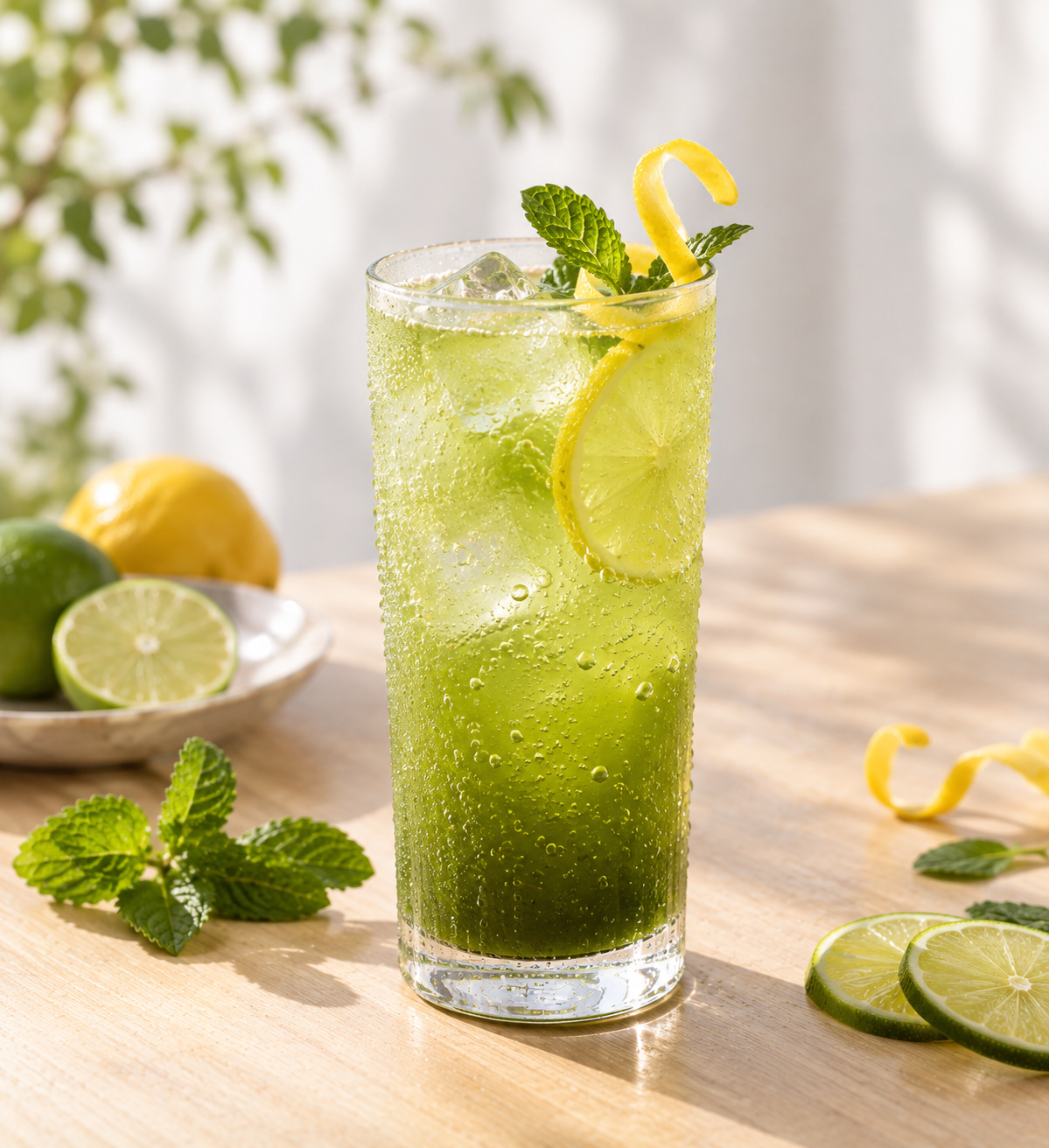
    1. Matcha Lemon Fizz

    A bright, citrusy sparkling drink that’s easy to put together and genuinely refreshing rather than just sweet.

    Ingredients:

    • 1 tbsp matcha powder
    • Juice of 1/4 lemon
    • 1 tsp sugar
    • Lemon-flavored sparkling water, to top
    • Ice

    Method: Shake the matcha, lemon juice, sugar, and a splash of water together with ice until the matcha is fully dissolved and frothy. Strain into a glass over fresh ice and top with sparkling lemon water. Garnish with a light sprinkle of matcha and a lemon twist. The sparkling water does a lot of the work here, carrying the citrus and giving the drink lift without needing anything more complicated.

    2. Matcha Mojito Mocktail

    A muddled mint-and-lime drink that borrows the mojito’s structure entirely, minus the rum.

    Ingredients:

    • 1 tsp matcha powder
    • 1 cup hot water (around 160°F/70°C)
    • 1 tsp maple syrup or mint simple syrup
    • 1 tbsp lime juice
    • 2 lime slices
    • 3-4 mint leaves
    • Ice

    Method: In your serving glass, muddle the mint leaves and lime slices together to release their oils – this matters more here than in most drinks, since there’s no alcohol to help carry the aromatics, so a good muddle does real work. In a separate cup, sift and whisk the matcha into the hot water until completely smooth, then stir in the maple syrup until dissolved. Fill the glass with ice, pour the matcha mixture over the muddled mint and lime, stir, and garnish with extra mint and lime.

    3. Matcha Piña Colada Mocktail

    A creamy, tropical option that leans into coconut and pineapple rather than citrus.

    Ingredients:

    • 1 tsp matcha powder
    • 1 oz warm water
    • 1/2 cup pineapple juice
    • 1/4 cup coconut milk
    • 1 tbsp cream of coconut, optional
    • 1/2 cup ice
    • Pineapple slice, for garnish

    Method: Whisk the matcha with the warm water until smooth and frothy – do this step separately before it touches anything cold, same principle as the other recipes. In a blender or shaker, combine the pineapple juice, coconut milk, cream of coconut if using, and ice. Add the whisked matcha and blend or shake until fully combined. Pour into a chilled glass and garnish with a pineapple slice.

    A Few Things People Ask Me

    Which of these is the easiest to start with? The Matcha Lemon Fizz, by a good margin – it’s the fewest steps and the most forgiving if your matcha doesn’t dissolve perfectly on the first try, since the sparkling water and shaking do most of the work.

    Can I make any of these ahead of time for a party? The matcha-and-liquid base for the piña colada version can be pre-blended and kept chilled for a few hours, though it’s best shaken again just before serving since it can separate slightly. The lemon fizz and mojito versions are best made fresh, since their sparkling and muddled elements don’t hold up well sitting around.

    Do these have less caffeine than the alcoholic cocktail versions? No – removing the alcohol doesn’t change the matcha content, so the caffeine level is roughly the same as the cocktail versions using an equivalent amount of matcha, just without the alcohol’s effects layered on top.

    What matcha works best for mocktails specifically? Since these drinks have plenty of competing flavor from citrus, mint, or coconut, culinary-grade matcha on Amazon works just as well as a pricier ceremonial-grade tin – save the ceremonial grade for drinking matcha on its own.

    Where I Landed

    What changed my mind about mocktails generally was realizing a good one isn’t built by subtraction – it’s built the same way a good cocktail is, just without alcohol as one of the flavor components from the start. Matcha happens to be particularly well-suited to that approach, since its bitterness and body were never dependent on the alcohol in the first place. If you want to try a specific brand across all three of these, Nio Teas’ matcha is what I used testing each one.
  • The Matcha Cocktail Guide: Five Recipes Worth Actually Making

    The Matcha Cocktail Guide: Five Recipes Worth Actually Making

    Disclosure: This post contains affiliate links. If you buy through one of them, I may earn a small commission at no extra cost to you. This article includes recipes containing alcohol; please drink responsibly and only if you are of legal drinking age in your location.

    I resisted matcha cocktails for a long time. My assumption was that they’d taste like someone dumped a health smoothie into a gin and tonic – grassy, a little sad, trying too hard to be “wellness.” Then a bartender in Kyoto made me a version of a whiskey highball with a proper ceremonial-grade matcha and I had to sit with that for a minute. The bitterness wasn’t a flaw to mask. It was doing the same job the bitters in an Old Fashioned do – cutting through the sweetness and giving the drink somewhere to land.

    That’s really the whole case for matcha in cocktails. It’s not a novelty color additive. Used at the right grade and dissolved properly, it brings a vegetal, umami-forward bitterness that plays well against citrus, ginger, and brown spirits in particular.

    The Problem You’re Actually Trying to Solve

    Most people who search for matcha cocktail recipes have had one of two experiences: either they’ve seen a bright green drink on Instagram and want to replicate the look, or they’ve tried making one themselves and ended up with clumpy powder floating on top of their drink instead of dissolving into it. Both problems trace back to the same root cause – treating matcha like a garnish instead of an ingredient that needs to be properly incorporated before it goes anywhere near ice or carbonation.

    The other quiet problem is grade mismatch. A lot of recipes floating around online call for “matcha powder” without specifying that culinary-grade matcha behaves completely differently from ceremonial-grade in a cocktail shaker, and using the wrong one either wastes good tea or makes a mediocre drink taste worse than it should.

    Who This Article Is NOT For

    • If you want a non-alcoholic matcha drink, this isn’t the right guide – a matcha latte or iced matcha will serve you better than a “mocktail” version of these recipes, since the alcohol here is doing real flavor work, not just adding a buzz.
    • If you’re looking for a matcha latte recipe rather than a cocktail, my guide to making a matcha latte at home covers that separately.
    • If you don’t have a bar cart or aren’t interested in shaking/stirring cocktails, three of these five recipes are effectively unmakeable without at least a cocktail shaker and a fine strainer.

    What Actually Makes Matcha Work in a Cocktail

    Three things determine whether a matcha cocktail tastes intentional or like a mistake.

    Grade matters more than people think. Ceremonial-grade matcha is going to give you a smoother, less bitter cup than culinary-grade, which is milled from later, coarser tea leaf harvests and is meant to stand up to milk, sugar, and baking. For cocktails, I’ve found culinary-grade matcha actually works better than you’d expect in citrus-forward drinks like a margarita, where its slightly stronger, more assertive bitterness holds its own against lime and triple sec. For something more spirit-forward like a whiskey highball, a mid-tier ceremonial matcha gives a rounder, less aggressive flavor that doesn’t fight with the whiskey.

    Dissolving technique is not optional. Matcha powder does not dissolve in cold liquid or alcohol on its own – it clumps. The move that actually works is whisking or shaking the matcha with a small amount of warm (not boiling) water first to form a smooth, lump-free paste or slurry, then adding that slurry to the rest of the drink. Some of the recipes below call for a “matcha simple syrup” instead, which solves the same problem by dissolving the matcha into syrup while it’s still warm from the stove.

    Pairing logic follows matcha’s actual flavor profile. Matcha’s vegetal, slightly astringent, umami character pairs naturally with a few flavor families: bright citrus (lime, lemon), warm ginger, mint, and clean base spirits like gin, vodka, and blanco tequila. It gets more complicated with brown spirits like whiskey and bourbon, but the combination can work when the matcha is used sparingly enough that it doesn’t compete with the barrel notes.

    Five Matcha Cocktails Worth Making

    1. Matcha Gin Fizz

    A gin fizz is already built around the idea of something bitter-bright cutting through citrus and soda, which makes it one of the easiest entry points into matcha cocktails.

    Ingredients:

    • 2 oz gin
    • 1/2 tsp culinary-grade matcha
    • 3/4 oz fresh lemon juice
    • 1/2 oz simple syrup
    • Soda water, to top
    • Ice

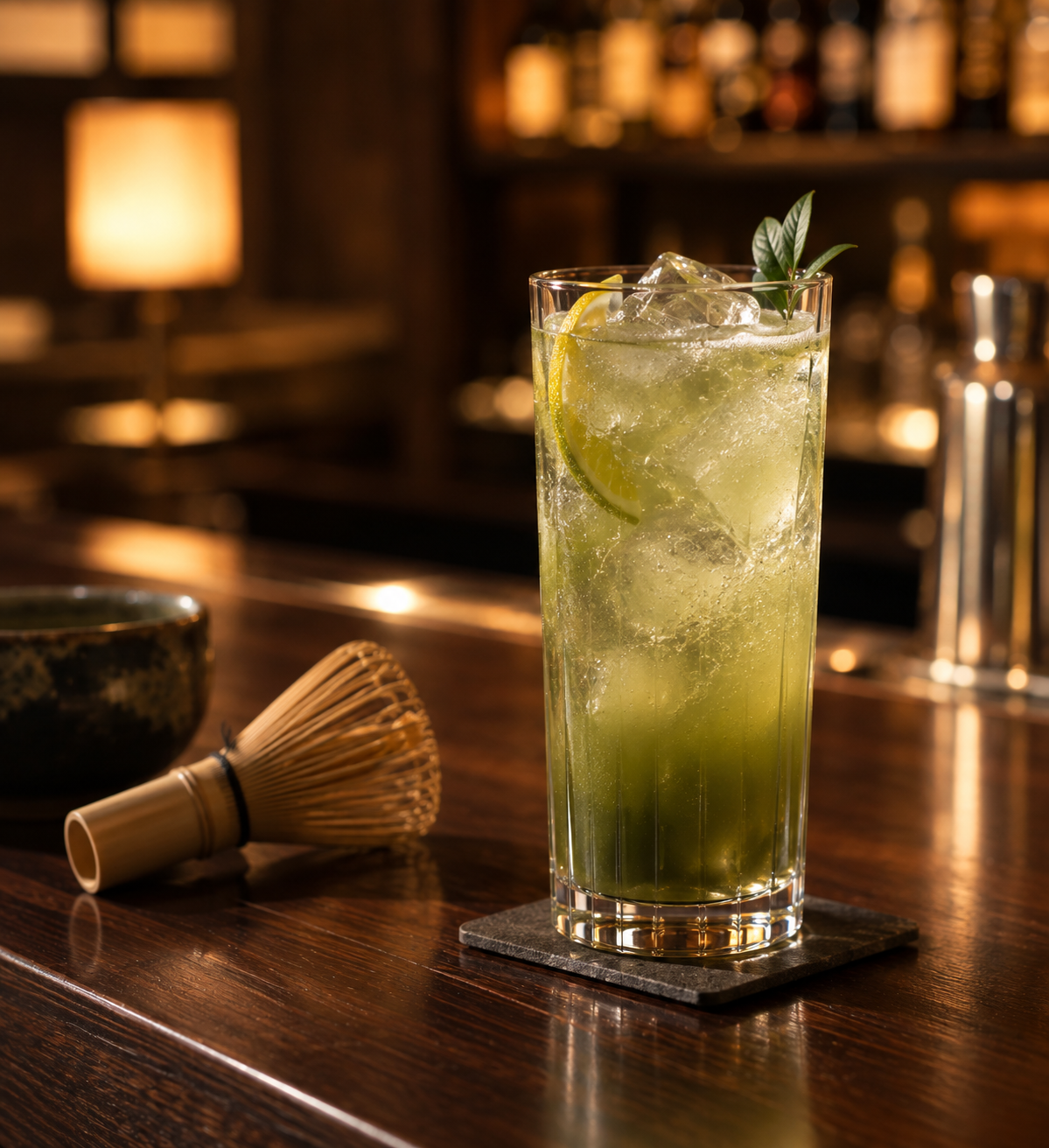
    Method: Whisk the matcha with about a tablespoon of warm water until it’s a smooth, clump-free paste. Add the paste, gin, lemon juice, and simple syrup to a shaker with ice and shake hard for about 15 seconds. Strain into a highball glass over fresh ice and top with soda water. The matcha settles into a soft green haze rather than sitting on top, which is the visual sign you’ve dissolved it properly.

    2. Tokyo Mule (Matcha Version)

    This is a matcha riff on the classic Moscow Mule, swapping some of the ginger beer’s sharpness for matcha’s vegetal depth while keeping the drink’s fundamental structure intact.

    Ingredients:

    • 2 oz vodka
    • 1/2 tsp matcha, made into a slurry with 1 tbsp warm water
    • 1/2 oz fresh lime juice
    • Ginger beer, to top
    • Lime wheel and mint sprig, for garnish

    Method: Combine the vodka, matcha slurry, and lime juice in a copper mug or highball glass with ice. Stir gently, then top with ginger beer and stir once more, just enough to combine without killing the carbonation. Garnish with a lime wheel and a mint sprig. The ginger beer’s spice and matcha’s bitterness end up doing very similar jobs in this drink, so it reads as more harmonious than you’d expect from the ingredient list.

    3. Matcha Whiskey Highball

    This is the drink that changed my mind about matcha cocktails in the first place, and it’s the one I’d point a whiskey drinker toward first.

    Ingredients:

    • 2 oz Japanese whiskey (or a smooth blended whiskey)
    • 1/4 tsp ceremonial-grade matcha
    • 1/4 oz simple syrup
    • Soda water, to top
    • Ice

    Method: Whisk the matcha into the simple syrup while it’s still slightly warm, until fully smooth – this keeps the matcha amount low enough that it doesn’t fight the whiskey’s own flavor. Fill a highball glass with ice, add the whiskey and matcha syrup, stir a few times, then top slowly with soda water and give it one final gentle stir. Keep the matcha quantity restrained here; this is a drink where a little goes further than you’d think, and doubling the matcha just makes it taste muddy rather than more flavorful.

    4. Matcha Margarita

    Matcha and lime were always going to work together, and tequila’s slight vegetal quality (particularly in a good blanco) doesn’t fight the tea the way some other spirits do.

    Ingredients:

    • 2 oz blanco tequila
    • 1/2 oz triple sec
    • 3/4 oz fresh lime juice
    • 1/2 tsp culinary-grade matcha
    • 1/2 oz agave syrup or simple syrup
    • Salt, for the rim (optional)

    Method: Whisk the matcha with a small amount of warm water into a smooth paste. Combine the tequila, triple sec, lime juice, matcha paste, and syrup in a shaker with ice, and shake vigorously for 15-20 seconds. Strain into a salt-rimmed rocks glass over fresh ice. Culinary-grade matcha is the right call here specifically because its slightly rougher bitterness stands up to the citrus and triple sec instead of getting lost in them.

    5. Matcha Mint Julep

    A julep is built on the tension between sweetness and mint’s sharp freshness, and matcha slides into that tension as a third bitter-vegetal voice rather than competing with either side.

    Ingredients:

    • 2 oz bourbon
    • 1/4 tsp matcha, made into a slurry with warm water
    • 1/2 oz simple syrup
    • 8-10 fresh mint leaves
    • Crushed ice

    Method: Gently press the mint leaves in the bottom of a julep cup or rocks glass with the simple syrup – just enough to release the oils, not so much that you tear the leaves into shreds. Add the bourbon and matcha slurry, then fill the glass with crushed ice and stir until the outside of the glass frosts over. Top with a final small mound of crushed ice and a fresh mint sprig. Bourbon’s caramel and vanilla notes and matcha’s grassy bitterness sound like they shouldn’t work together, but the mint acts as a bridge between them.

    A Few Things People Ask Me

    Which of these is the easiest to start with? The Matcha Gin Fizz or the Tokyo Mule. Both use citrus or ginger beer to carry most of the flavor, so a small error in your matcha slurry is much more forgiving than it would be in the whiskey highball or julep, where the matcha has less to hide behind.

    Can I make the matcha component ahead of time for a party? A matcha simple syrup keeps in the fridge for about a week in a sealed container, and it’s the most party-friendly option of the group – you can pre-batch several drinks’ worth and just add spirits and mixers to order. A plain matcha-water slurry doesn’t hold up nearly as well and is best made fresh right before shaking.

    Does the caffeine in matcha cocktails add up if I’m having a few? A quarter to half a teaspoon of matcha per drink is a modest caffeine dose – noticeably less than a full cup of matcha tea – but if you’re having several matcha cocktails over an evening, that does add up on top of the alcohol itself, so it’s worth pacing the same way you would with any caffeinated mixer like cola or coffee liqueur.

    What’s the best matcha grade to keep on hand just for cocktails? A mid-tier culinary-grade matcha is the most versatile choice if you only want to buy one tin – it’s more affordable than ceremonial grade and holds up better in citrus-forward drinks, while still working fine in the whiskey highball if you scale the amount down slightly. If you’re also using matcha for baking, my guide to baking with matcha covers grade selection from that angle too.

    Where I Landed

    The lesson that stuck with me most from all of this is that matcha isn’t a color you add to a cocktail – it’s a bitterness you’re borrowing, the same way you’d borrow bitters or amaro. Once I started thinking about it that way, choosing which drinks to try it in got a lot more obvious: anything that already leans on a bitter or sharp counterpoint (citrus, ginger, mint) is a safer bet than trying to force it into something purely sweet. The whiskey highball remains my favorite of the five, mostly because it’s the one where the matcha genuinely surprised me – not by transforming the drink, but by fitting into it like it had always belonged there. If you want a single reliable tin to start with, Nio Teas’ ceremonial-grade matcha is what I used for the highball recipe above, and it holds up well across both the citrus-forward and spirit-forward drinks in this guide.