Disclosure: This post contains affiliate links. If you buy through one of them, I may earn a small commission at no extra cost to you.
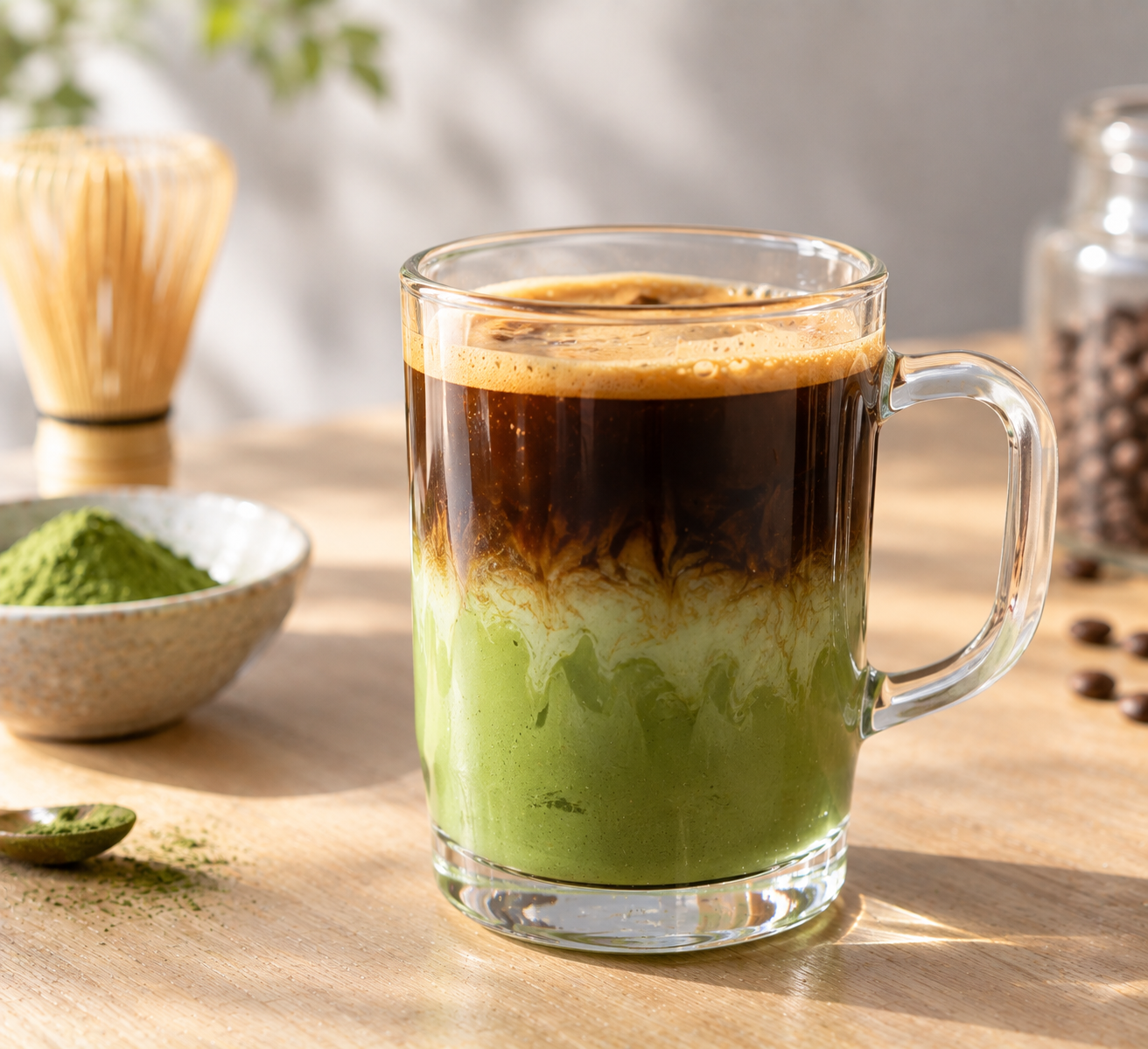
A dirty matcha – sometimes called a matchiato – is exactly what it sounds like: matcha and espresso in the same glass, deliberately not mixed together into one uniform drink. The name comes from that imperfection. Coffee sits on top, matcha sits on the bottom, and you drink through both layers rather than a single blended flavor. My first attempt turned into a fully mixed, muddy-looking latte because I didn’t understand that the “dirty” part – the messy, unmixed layering – is the entire point, not a mistake to fix.
The Problem You’re Actually Trying to Solve
Most people attempting a dirty matcha at home either stir everything together immediately, losing the visual layering and the point of drinking through two distinct flavors, or get the ratio wrong and end up with coffee completely overpowering the matcha (or the reverse). Getting both the layering technique and the ratio right is really the whole recipe.
Who This Article Is NOT For
- If you want a fully blended matcha coffee drink rather than distinct layers, this technique isn’t necessary for you – just combine matcha and coffee together directly rather than layering.
- If you’re sensitive to caffeine, this combines two caffeinated drinks into one, so it runs notably higher than either a matcha latte or a coffee alone – my matcha vs. coffee caffeine comparison is worth reading first if that’s a concern.
- If you just want a simple matcha latte without any coffee involved, my guide to making a matcha latte at home is the more straightforward option.
The Actual Recipe
Ingredients:
- 2 tsp matcha powder
- 1/4 cup milk (oat milk works particularly well)
- 2 tbsp hot water (just under boiling), for dissolving the matcha
- 2 tsp sugar, or to taste
- 2 tsp espresso or strong coffee
- Ice
Method: Sift and whisk the matcha into the hot water until completely smooth, then whisk in the sugar and milk. Pour this matcha mixture into a glass filled with ice. Separately, pull or brew your espresso and let it cool slightly – chilling the coffee somewhat before pouring helps it layer rather than immediately blending into the matcha below. Pour the espresso over the ice slowly, directly on top of the matcha layer rather than stirring it in. Done correctly, you get a visibly distinct dark coffee layer sitting over the pale green matcha, which you drink through both layers of rather than mixing.
The 1:1 ratio of matcha to coffee by volume above is a reasonable starting point, but it’s worth adjusting to taste: if the coffee is overpowering the matcha’s flavor, reduce the espresso slightly and increase the matcha a touch rather than assuming the ratio is fixed.
Getting the Layering Right
Three things actually matter for clean layers rather than a muddy mix:
Ice, and plenty of it. A glass well-filled with ice before either liquid goes in gives the two layers something to separate around, rather than immediately merging in a glass with too little ice and too much empty space.
Pour slowly, and pour the coffee last. The matcha-milk mixture goes in first, over the ice; the coffee goes in afterward, poured slowly and gently rather than dumped in, which helps it settle as a distinct top layer rather than crashing through and mixing everything below.
Let the coffee cool slightly first. Pouring hot espresso directly onto ice and cold matcha creates more turbulence and mixing than pouring espresso that’s had a minute or two to cool down first – the temperature difference between the two liquids is part of what keeps them from blending immediately.
A Reasonable Substitute If Coffee Feels Too Harsh
If straight espresso feels too aggressive against the matcha’s own flavor, hojicha powder is a genuinely good substitute for the coffee layer – it shares some of coffee’s roasted character without coffee’s sharper bitterness, giving you a tea-forward alternative that still creates the same layered visual and flavor effect, just gentler.
A Few Things People Ask Me
Is a dirty matcha the same thing as a matchiato? Functionally, yes – both names describe the same drink (matcha plus espresso, deliberately layered rather than fully mixed), with “dirty matcha” being the more common term and “matchiato” showing up as a playful variant riffing on “macchiato.”
How much caffeine does a dirty matcha actually have compared to a regular latte? Meaningfully more – you’re combining matcha’s caffeine with a full shot of espresso, so the total easily exceeds either drink on its own. This isn’t a light afternoon pick-me-up; treat it more like a double-strength coffee in terms of caffeine load.
Do I have to drink it through the layers, or is it fine to stir it together? Stirring is completely fine if you’d rather have a uniform flavor – the layered presentation is traditional and visually distinctive, but nothing about the drink requires drinking it unmixed. Some people stir the first sip to taste the layers separately, then mix the rest.
What matcha works best for this specifically? Culinary-grade matcha on Amazon is fine here, since the coffee’s flavor is doing plenty of the work alongside it – no need for an expensive ceremonial-grade tin for a drink that’s half espresso anyway. Nio Teas’ matcha is what I used in testing the recipe above.
Where I Landed
The thing that took me longest to accept was that “dirty” wasn’t describing a flaw in my technique – the imperfect, unmixed layering is the actual design of the drink. Once I stopped trying to make it look like a clean, uniform latte and just let the coffee sit messily on top of the matcha, the drink started working the way it’s supposed to: two distinct flavors you move through in one glass, rather than one blended, muddier one.