Tag: Kyusu Comparison

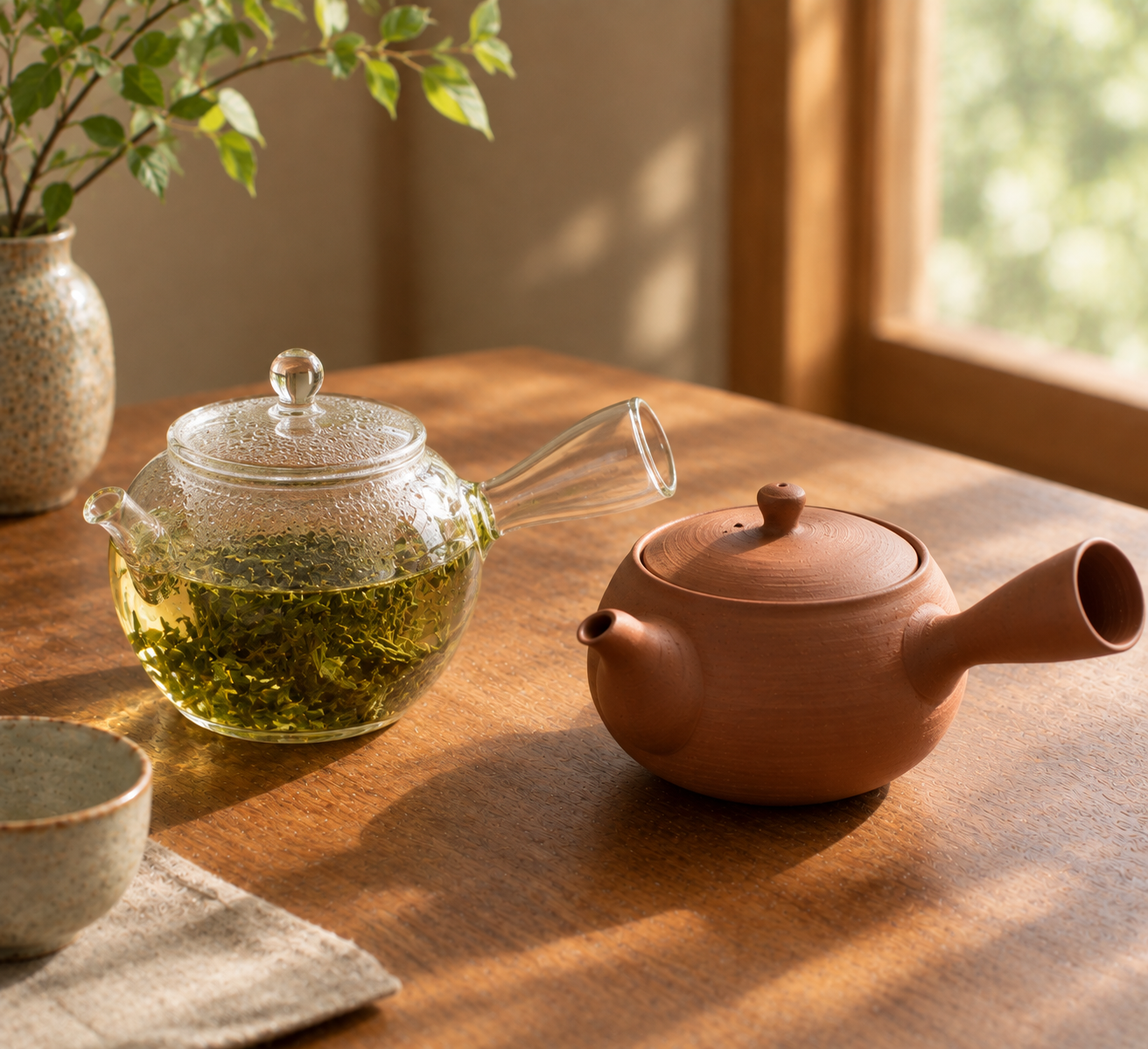
  • Glass vs. Clay Kyusu: Which Actually Fits How You Drink Tea

    Glass vs. Clay Kyusu: Which Actually Fits How You Drink Tea

    Disclosure: This post contains affiliate links. If you buy through one of them, I may earn a small commission at no extra cost to you.

    I resisted buying a glass kyusu for a long time, treating it as somehow less legitimate than proper Tokoname clay, the way some coffee purists look down on a French press next to a proper espresso machine. Once I actually used one regularly, that snobbery didn’t hold up. Glass and clay aren’t a better-versus-worse pairing. They’re built around genuinely different priorities, and which one actually fits your routine depends on questions most buying guides skip past in favor of just declaring clay “more authentic” and calling it a day.

    This is a companion piece to my broader kyusu buying guide, zoomed in specifically on the material question, since it’s one of the decisions that shapes almost everything else about how the pot performs.

    The Problem You’re Actually Trying to Solve

    You’ve searched for a glass versus clay kyusu comparison because you’re trying to decide between the two before spending money, and most of what you’ve found either treats clay as automatically superior or glass as automatically more convenient, without explaining clearly which tradeoffs actually matter for your specific situation.

    Who This Article Is NOT For

    Let’s save you some scrolling if this isn’t quite your situation.

    • If you’ve already decided on clay and just want brand recommendations, my Japanese kyusu brands compared guide covers specific makers rather than the material question itself.
    • If you’re deciding on handle style or filter design rather than material, my kyusu buying guide covers those separate variables.
    • If you drink a wide variety of unrelated teas (black, oolong, herbal) and want one pot for everything, glazed ceramic or porcelain, not glass or unglazed clay specifically, is usually the more practical answer, and this article focuses on the glass-versus-unglazed-clay comparison specifically.

    If you’re past that, here’s where the actual comparison starts.

    Comparison Table

    Unglazed Clay (Tokoname/Banko)Glass
    Flavor impactGenuine, softens tannins and astringency over timeNone — fully neutral
    Heat retentionStrong, thick walls hold warmth through multiple infusionsWeaker, cools faster unless double-walled
    CleaningHot water only, no soap everEasy, dishwasher-safe in most cases
    Multi-tea useShould be dedicated to one tea categoryFully flexible across any tea
    Visual feedbackNone — you can’t see the leaves steepingFull view of leaves unfurling
    Typical price$30–150+ depending on maker and craftsmanship$25–80
    DurabilityFragile in its own way, but no thermal shock riskGenuinely fragile, some risk from rapid temperature change

    Why Clay Actually Changes the Tea

    This isn’t just tradition talking. Unglazed clay is genuinely porous, and that porousness does two real things: it interacts chemically with tannins in a way that measurably softens astringency and bitterness over repeated use, and it slowly absorbs oils and character from whatever tea you consistently brew in it, building a kind of flavor memory into the pot itself over months and years of use. This is a genuinely different mechanism than simple heat retention — it’s an active chemical relationship between the vessel and the tea, not just a passive container holding hot water.

    Denser, high-fired clays like yaki-shime Tokoname take this further, sealing the surface just enough to season slowly while still adding detectable mineral notes to the tea, something multiple side-by-side tastings have picked up on when compared directly against glass or glazed alternatives brewing the identical leaf.

    The tradeoff: that same porousness is exactly why clay needs to be dedicated to one general tea category and never touched with soap, both covered in more depth in my kyusu care guide. The flavor benefit and the maintenance responsibility are two sides of the same physical property, not separate concerns.

    Why Glass Doesn’t Do Any of That, and Why That’s Sometimes the Point

    Glass is fully non-porous and chemically neutral. It doesn’t season, doesn’t absorb, and doesn’t interact with the tea at all, which means the tea’s own quality has to stand entirely on its own without the softening effect clay provides. For a genuinely good, well-sourced tea, that neutrality lets its own character come through cleanly. For a mediocre tea, there’s no clay working quietly in the background to smooth over its rougher edges.

    Where glass genuinely wins: you can watch the leaves unfurl during the steep, which is both a nice ritual detail and a useful way to visually judge doneness as you’re learning to brew loose leaf tea. It’s also dishwasher-safe in most cases, and it’s the only sensible choice if you regularly brew a genuinely wide variety of teas in the same pot without wanting to dedicate separate vessels to each.

    The tradeoff: glass cools faster than clay’s thick walls do, unless you specifically buy a double-walled version, which matters more for teas that benefit from sustained warmth across several infusions, like gyokuro, than it does for a quick single steep. Quality also varies meaningfully by glass type: borosilicate resists the thermal shock of hot water hitting a cool pot, while cheaper soda-lime glass is more prone to cracking under that same stress.

    Heat Retention, in Practice

    Clay’s thick walls and slower heat conduction mean a clay kyusu holds brewing temperature more consistently through a multi-infusion session, which matters if you’re doing several short steeps back to back the way sencha or gyokuro traditionally call for. Glass loses heat more quickly by comparison, which isn’t a problem for a single infusion but can mean your second or third steep starts from a noticeably cooler baseline unless you’re reheating water each round anyway, which most careful multi-infusion brewing already involves.

    Which One Should You Actually Buy

    If you drink primarily one type of tea consistently, sencha or gyokuro especially: unglazed clay, ideally Tokoname for sencha-style teas or Banko if you’re leaning toward gyokuro specifically, will genuinely improve your cup over time in a way glass can’t replicate.

    If you drink a rotating variety of different teas and don’t want to dedicate separate pots to each: glass, since its neutrality means no flavor carryover between sessions regardless of how different consecutive teas are.

    If you’re new to loose leaf brewing and want visual feedback while you learn: glass gives you a genuine advantage here, letting you see how leaves actually behave and unfurl as you’re still calibrating steep times by feel.

    If soap-free, more careful cleaning feels like a dealbreaker for your routine: glass is the easier daily-use choice, dishwasher-safe and forgiving of a less disciplined cleaning routine than clay demands.

    Where to Buy Each

    Shop glass kyusu teapots on Amazon →

    Shop Tokoname clay kyusu on Amazon →

    A Few Things People Ask Me

    Is glazed ceramic a reasonable middle ground between glass and unglazed clay? Genuinely yes, and it’s worth considering if neither pure option feels quite right. Glazed ceramic offers glass’s flavor neutrality and easy cleaning while still bringing some of clay’s heat retention from its typically thicker walls, at the cost of losing both the flavor-softening effect of unglazed clay and the visual feedback glass provides.

    Does a cheap glass kyusu perform as well as an expensive one, unlike clay where price often reflects real craftsmanship? Largely yes for the material itself — glass’s quality differences show up mostly in durability (borosilicate versus cheaper soda-lime) and build quality rather than in a meaningful flavor difference the way clay quality genuinely does. You’re less likely to be disappointed by a budget glass kyusu than by a budget clay one cutting corners on clay quality or filter design.

    Can I switch a glass kyusu between teas without any cleaning concerns at all? Essentially yes, a quick rinse or trip through the dishwasher between different teas is sufficient, since there’s no porous surface holding onto previous flavors the way unglazed clay does.

    Is it worth owning both a glass and a clay kyusu rather than choosing just one? Plenty of regular tea drinkers do exactly this, keeping a dedicated clay pot for their everyday tea and a glass one for variety, guests, or teas they don’t want to commit a clay pot to long-term. It’s a genuinely sensible setup if you drink enough tea to justify two dedicated vessels.

    Does the size of the kyusu matter differently for glass versus clay? Not dramatically, though glass pots often run slightly larger on average since manufacturing constraints differ from hand-thrown clay. Both materials come in sizes suited to solo brewing and larger group servings, so size is more a function of the specific product than the material itself.

    Where I Landed

    My own answer ended up being both, which felt like a cop-out until I actually lived with the setup for a while and realized it wasn’t. The clay pot handles my everyday sencha, and it’s genuinely gotten better over the months I’ve used it consistently, the tea noticeably smoother than it was in the same pot’s first few uses. The glass one handles everything else, gift teas, whatever a friend brings over, gyokuro I’m still deciding whether to commit a clay pot to.

    If you can only justify one right now, let your actual drinking habits decide rather than a sense that clay is somehow the “more legitimate” choice. A glass kyusu used well and often beats a clay one bought for authenticity and left half-neglected in a cabinet, and there’s no prize for owning the more traditional option if it doesn’t actually match how you drink tea day to day.
  • Japanese Kyusu Brands Compared: Yamakiikai, KIMIKURA, COTONOHA, and More

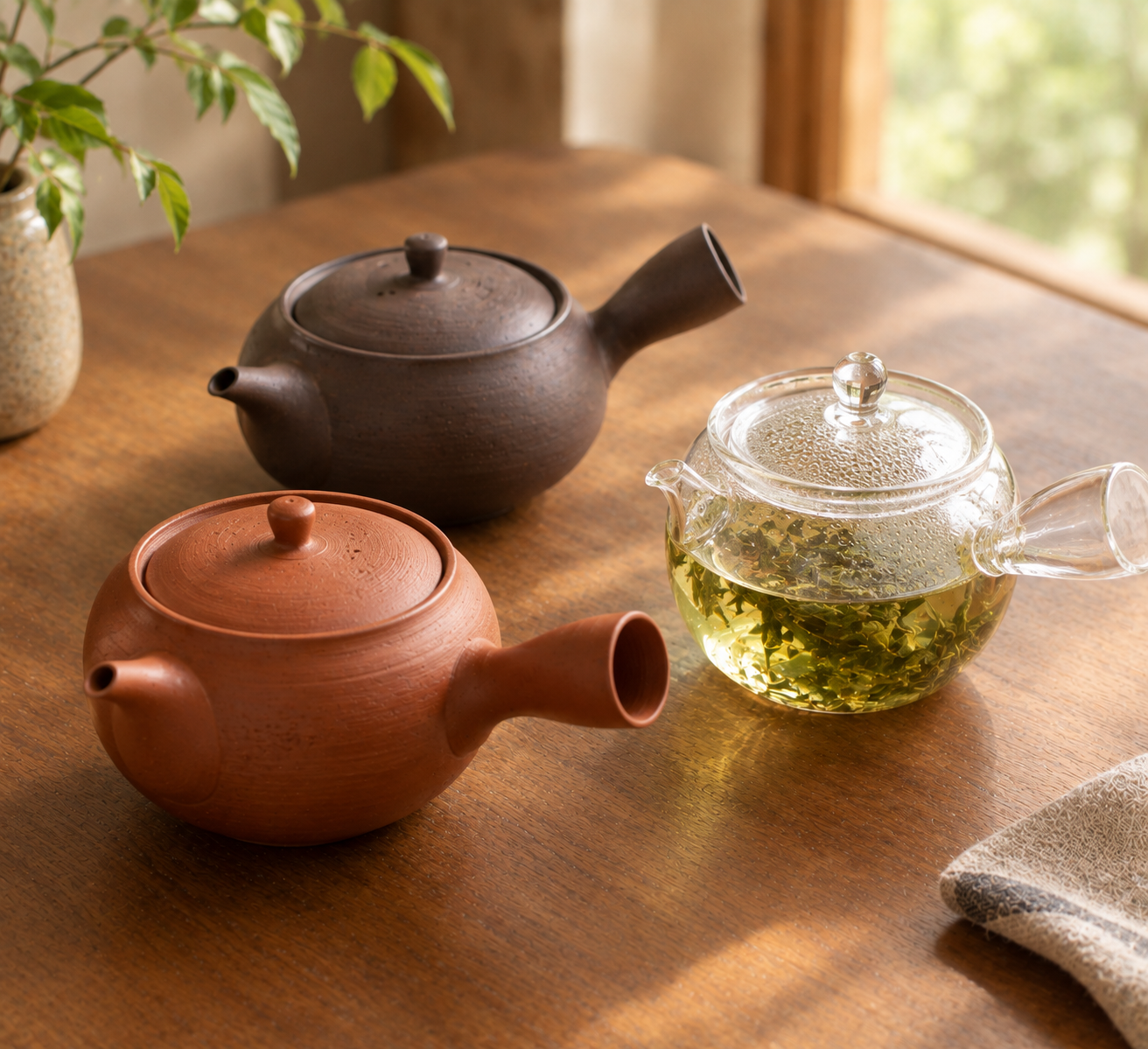
    Japanese Kyusu Brands Compared: Yamakiikai, KIMIKURA, COTONOHA, and More

    Disclosure: This post contains affiliate links. If you buy through one of them, I may earn a small commission at no extra cost to you.

    Once you know what to look for in a kyusu, clay type, handle style, filter design, the next question is genuinely harder to answer: which actual brand or maker do you buy from? Type “kyusu” into a shopping search and you’ll get everything from centuries-old Tokoname kilns to modern Japanese housewares brands to budget imports that borrow the shape without much of the substance behind it, all sitting side by side in a results page with no obvious way to tell them apart at a glance.

    I went through several of the names that come up most often, across both traditional clay and a well-known modern alternative, to sort out which ones are actually worth your money and which ones are riding on Tokoname’s reputation without quite earning it themselves.

    The Problem You’re Actually Trying to Solve

    You’ve searched for a kyusu brand comparison because you already understand, or want to understand, the basics of what makes a good kyusu, and now you’re facing an overwhelming number of specific product listings that all claim to be “authentic Tokoname” or “handmade Japanese pottery” without much to actually differentiate one from another at a glance. This guide sorts through several of the more established names so you’re choosing based on something more concrete than star ratings alone.

    Who This Article Is NOT For

    Let’s save you some scrolling if this isn’t quite your situation.

    • If you haven’t yet decided what kind of kyusu you want (handle style, clay type), start with my kyusu buying guide first, then come back here once you know what you’re shopping for.
    • If you’re looking for antique or one-of-a-kind collector pieces, this covers accessible, currently-produced brands rather than the vintage and auction market, which follows very different pricing and authentication rules.
    • If budget is your only concern and authenticity doesn’t matter to you, most of the brands below sit in the mid-range rather than the absolute cheapest tier, since genuine Tokoname or Banko craftsmanship, even from a smaller maker, carries real production cost.

    If you’re past that, here’s where the actual comparison starts.

    What I Actually Judged These On

    Three criteria, consistent with how every guide on this site is built.

    1. Authenticity of craft. Is the kiln, clay origin, and maker genuinely traceable, or is “Tokoname-style” doing a lot of marketing work without a verifiable production origin behind it?

    2. Consistency and quality control. Handmade pottery naturally varies piece to piece, but a good maker still delivers dependable filter performance and pour control across their catalog, not just in their best-photographed pieces.

    3. Fit for different buyers. A centuries-old artisan kiln and a modern accessible housewares brand serve genuinely different needs, and neither is automatically the “correct” choice for every buyer.

    Comparison Table

    Brand/MakerClay/MaterialStylePrice RangeBest For
    YamakiikaiTokoname clayTraditional handmade, patterned options available~$40–90Authentic Tokoname craftsmanship, gift-worthy pieces
    KIMIKURATokoname clayClean, modern-leaning Tokoname~$30–60First-time clay kyusu buyers
    COTONOHABanko clayModern Banko-yaki with steel strainer~$25–50Buyers wanting Banko specifically, reliable filtering
    Hario ChaCha Kyusu MaruHeat-resistant glassModern, not traditional clay~$25–40Watching the leaves, easy cleaning, multi-tea use
    Nio Teas (curated)Tokoname clay (sourced from small artisans)Curated selection for Western buyers~$30–70English-speaking buyers wanting guided artisan sourcing

    The Brands, One by One

    Yamakiikai

    Shop Yamakiikai kyusu teapots on Amazon →

    Yamakiikai is a genuinely established Tokoname maker, producing everything from simple, budget-friendly ash-glazed rounds to more elaborate patterned pieces with decorative crests.

    What I liked: The range within one maker is genuinely useful — you can start with a modest, single-serve ash-glazed piece and later step up to a more elaborate patterned kyusu without switching brands entirely. The handmade character is real, not just marketing language, and it shows in small variations from piece to piece that mass-produced imports don’t have.

    What bugged me: Because pieces are handmade, sizing and exact proportions can vary slightly between what you see in photos and what arrives, which is standard for genuine artisan pottery but worth expecting going in rather than being surprised by.

    Bottom line: A strong, traceable choice if authentic Tokoname craftsmanship matters to you and you’re comfortable with the natural variation that comes with handmade pieces.

    KIMIKURA

    Shop KIMIKURA Tokoname kyusu on Amazon →

    KIMIKURA sits in a similar Tokoname clay category to Yamakiikai but leans toward cleaner, more minimal, contemporary shapes rather than heavily patterned traditional designs.

    What I liked: For a first clay kyusu, KIMIKURA’s more understated aesthetic and consistently well-reviewed filter performance make it an easy, low-friction entry point. It doesn’t ask you to commit to an ornate traditional look if that’s not your style, while still delivering genuine Tokoname clay’s tannin-softening benefit.

    What bugged me: If you specifically want the more traditional, decorative look associated with classic Tokoname ware, KIMIKURA’s more minimal designs won’t scratch that particular itch as well as a maker like Yamakiikai will.

    Bottom line: A great starting point if you want authentic Tokoname clay without a heavily traditional aesthetic attached to it.

    COTONOHA

    Shop COTONOHA Banko-yaki kyusu on Amazon →

    COTONOHA works in Banko clay rather than Tokoname, and pairs it with a bottom-mounted stainless steel strainer rather than the ceramic mesh filters more common in Tokoname pieces.

    What I liked: If you’ve decided Banko clay specifically is what you want, based on its reputation for enhancing umami and its association with gyokuro and higher-grade sencha, COTONOHA is one of the more accessible ways to get there. The steel bottom strainer is also genuinely good at resisting clogs with finer tea particles compared to some ceramic mesh designs.

    What bugged me: A steel strainer, while functional, is a slight departure from the fully traditional all-ceramic construction some purists prefer, and it’s worth knowing that distinction going in if authenticity to the classic Banko form matters to you specifically.

    Bottom line: The clearest path to genuine Banko clay if that’s specifically what you’re after, with a filter design that handles fine sediment unusually well.

    Hario ChaCha Kyusu Maru

    Shop Hario ChaCha Kyusu on Amazon →

    Hario, better known internationally for pour-over coffee equipment, makes this heat-resistant glass kyusu as a genuinely different alternative to clay. It’s worth including specifically because it represents such a clear departure from everything else on this list.

    What I liked: Glass adds zero mineral character to your tea, which makes it the most flexible option here for brewing different tea types in the same pot without the flavor cross-contamination concern that comes with unglazed clay. It’s also easy to clean with mild soap, unlike clay, and lets you watch the leaves unfurl, which some people genuinely enjoy as part of the process.

    What bugged me: You lose the flavor-softening, tannin-mellowing effect that unglazed clay develops over time, and glass doesn’t retain heat quite as well through a longer multi-infusion session. It’s a fundamentally different tool, not a lesser version of a clay kyusu.

    Bottom line: The right pick if you want maximum flexibility across different teas, or if the idea of dedicated single-tea clay pots feels like more commitment than you want right now.

    Nio Teas (Curated Artisan Sourcing)

    Shop Nio Teas’ kyusu collection →

    Nio Teas isn’t a maker itself but a retailer that sources handmade Tokoname kyusu directly from small Japanese artisan producers, curated specifically for an English-speaking, Western customer base.

    What I liked: If navigating Japanese pottery marketplaces directly feels intimidating, Nio Teas’ curation does that legwork for you, and the pieces are genuinely sourced from small Tokoname producers rather than anonymous mass manufacturing. It’s a solid middle ground between fully DIY sourcing and buying from a large, impersonal retailer.

    What bugged me: Because it’s a curated selection rather than a single maker’s full catalog, the range at any given time is narrower than going directly to a maker like Yamakiikai with a larger overall product line.

    Bottom line: A comfortable, guided entry point if you’d rather not research individual Japanese kilns yourself and trust a specialist retailer to have already done that vetting.

    Which One Should You Actually Buy

    If you want the most authentic, traditional Tokoname experience: Yamakiikai, especially if you’re drawn to a more decorative, classic aesthetic.

    If you want Tokoname clay with a cleaner, more contemporary look: KIMIKURA.

    If you specifically want Banko clay: COTONOHA, particularly if you value strong filter performance for finer tea leaves.

    If you want maximum flexibility across multiple tea types without dedicating a pot to just one: the Hario ChaCha Kyusu Maru.

    If you’d rather have a specialist retailer curate the sourcing for you: Nio Teas’ collection.

    A Few Things People Ask Me

    Is a glass kyusu like the Hario a legitimate choice, or is it seen as a lesser option among tea enthusiasts? It’s a legitimate, genuinely different tool rather than a downgrade. Some serious tea drinkers keep both a clay kyusu for a dedicated everyday tea and a glass one for variety or for teas they don’t want to commit a clay pot to long-term.

    Does buying from a curated retailer like Nio Teas cost more than buying directly from a maker? Not necessarily dramatically more, though there’s often some premium built in for the curation and English-language customer support. If you’re comfortable researching Japanese makers yourself, going direct can sometimes save a bit, but the convenience has real value if that research isn’t something you want to take on.

    How do I know if a listing claiming “Tokoname” or “Banko” is actually genuine? Look for the maker or kiln name specifically listed, not just the clay region as a generic descriptor. A listing that names an actual studio or maker (like Yamakiikai, KIMIKURA, or a specific kiln) is a stronger signal of authenticity than one that only uses “Tokoname-style” as a loose marketing term without attribution.

    Do these brands ship internationally, or are they mainly available through Japanese retailers? Most of the brands and curated retailers covered here are accessible through Amazon and international shipping options, which is part of why they made this list rather than smaller makers who sell exclusively through Japan-only marketplaces.

    Is it worth paying more for a named maker versus an unbranded “Tokoname-style” listing at a lower price? Generally yes, if authenticity and long-term durability matter to you. Named makers have a reputation to protect and tend to be more consistent in clay quality and filter construction, while unbranded budget listings can vary wildly, sometimes using a thinner clay body or a less effective filter design to hit a lower price point.

    Can I mix and match — a Yamakiikai kyusu for one tea and a Hario glass one for another? Absolutely, and it’s actually a common approach among people who drink a genuine variety of teas. A dedicated clay pot for your everyday sencha or gyokuro, paired with a glass kyusu for occasional different teas or for guests, avoids the flavor cross-contamination concern that comes with using one unglazed clay pot for everything.

    Where I Landed

    If I had to recommend just one starting point, it’d be KIMIKURA for most first-time clay kyusu buyers — genuine Tokoname clay, a clean aesthetic that doesn’t demand you commit to a heavily traditional look, and consistently solid filter performance. If you already know you want the more decorative, classic Tokoname look, Yamakiikai is worth the slightly higher investment, and if variety across many tea types matters more to you than a single dedicated pot, the Hario glass option is a genuinely smart alternative rather than a compromise.

    None of these are wrong choices, and it’s worth resisting the pressure to find one objectively “best” brand — the right pick here depends more on what you already know you want out of the previous buying guide than on any single maker being universally superior to the others.

    Whichever you choose, pair it with proper care from the start — my kyusu seasoning and care guide covers exactly how to treat a new clay pot so it develops well rather than degrading early.