Disclosure: This post contains affiliate links. If you buy through one of them, I may earn a small commission at no extra cost to you.
Quick Picks
- Best overall (premium): Ippodo sencha tea bags – real Kyoto tea-house sencha in a bag, 2g per bag. Ippodo tea bags on Amazon
- Best everyday value: Ito En green tea bags – consistent, easy to find, and genuinely Japanese. Ito En green tea bags on Amazon
- Best budget / supermarket pick: Yamamotoyama – an inexpensive classic, especially their genmaicha. Yamamotoyama tea bags on Amazon
- Best for evenings: hojicha tea bags – roasted, mellow and gentler than sencha. Hojicha tea bags on Amazon
- Ready to move beyond bags? Nio Teas’ sencha collection – loose-leaf sencha from small Japanese farms. At the time of writing, ordering through the links on this page automatically applies a 10% discount at checkout – no code needed. Offers can change, so check the final price in your cart.
Below, you’ll find what separates a good Japanese tea bag from a dusty one, a comparison table, and how to brew a tea bag so it doesn’t taste bitter.
Most green tea bags taste the same: thin, grassy, a little bitter, and gone after one cup. That’s not because green tea is bland. It’s because most tea bags are filled with the smallest, cheapest leftovers of tea processing, packed in paper and left on a shelf for months.
Good Japanese tea bags exist, though, and the best of them are surprisingly close to loose-leaf tea. The trick is knowing what to look for on the box – because the brand name on the front tells you much less than the details on the back.
The Problem You’re Actually Trying to Solve
You want real Japanese green tea, but you don’t want to deal with a teapot, a strainer and wet leaves – at work, while traveling, or just on busy mornings. You’ve probably already tried a supermarket green tea bag and found it flat or bitter, and you’re wondering whether paying more actually makes a difference.
It does – but only if you’re paying for the right things.
Who This Article Is NOT For
- If you’re happy using loose leaf and just want the best sencha, my sencha brand comparison is the better guide.
- If you want loose leaf without owning a kyusu, my guide to brewing Japanese tea without a kyusu shows how to do it with a mug and a strainer.
- If you’re looking for matcha, that’s powdered tea – tea bags aren’t the format for it.
What Makes a Good Japanese Tea Bag
1. Leaf size: “fannings” vs. real leaf
Cheap tea bags are usually filled with fannings and dust – tiny broken particles left over after the good leaf has been sorted out. They release flavor quickly, which sounds good, but they also release bitterness quickly, and their aroma fades fast.
Better tea bags use larger, broken leaf pieces. You can often see the difference through a mesh bag: recognizable green leaf fragments instead of fine brown-green powder.
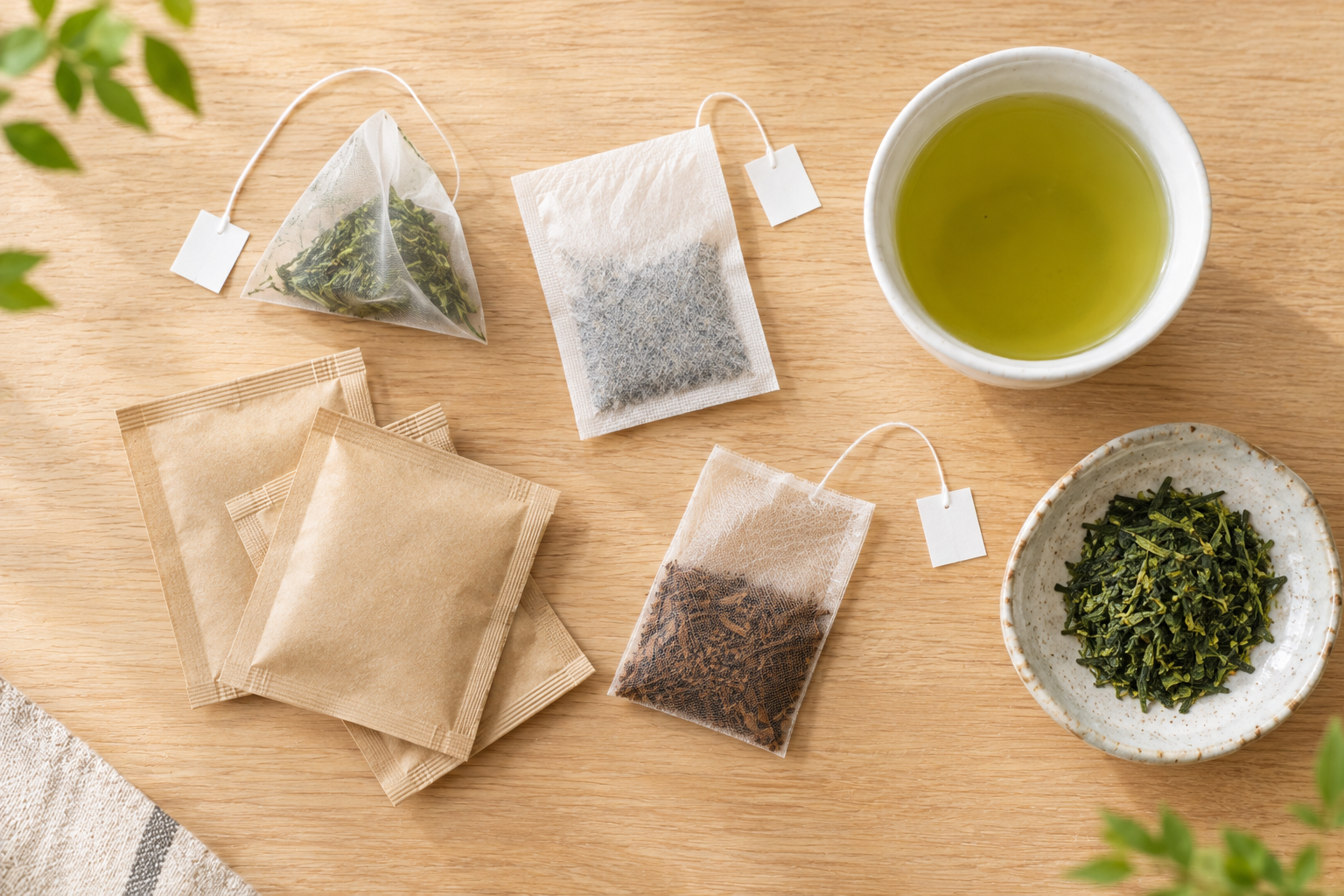
2. Bag type: paper vs. mesh vs. pyramid
- Flat paper bags are the cheapest. They give the leaves very little room to open, and some people notice a slight papery taste.
- Mesh and pyramid bags give the leaves space to unfurl and let water flow through more freely – a closer experience to loose leaf. Many are made from nylon or PET; some brands now use plant-based or biodegradable materials. Check the box if this matters to you.
3. Amount of tea per bag
Look for about 2g per bag or more. Many budget bags contain 1.5g or less, which is part of why they taste weak – people then steep them longer, which makes them bitter. It’s a lose-lose.
4. Origin and harvest
“Product of Japan” is the minimum. Better brands name a region (Uji, Shizuoka, Kagoshima) or say the tea is from the first harvest (ichibancha). If a box just says “green tea” with no origin, it may not be Japanese tea at all.
5. Freshness and packaging
Green tea fades quickly once exposed to air. Individually wrapped bags, or bags in a resealable foil pouch, stay fresh much longer than loose bags in a cardboard box. Check the best-before date and buy the freshest box you can.
Comparison Table
| Brand / type | Leaf quality | Bag style | Price level | Best for |
|---|---|---|---|---|
| Ippodo (sencha, gyokuro, hojicha) | Kyoto tea-house loose-leaf grade, 2g/bag | Biodegradable plastic bags | Premium | Gifts, tea lovers, office “treat” |
| Ito En green tea bags | Good, consistent | Mostly paper or mesh, varies by line | Mid | Everyday drinking |
| Yamamotoyama | Basic everyday | Paper | Budget | Large boxes, genmaicha |
| Western brand sencha sachets (e.g. Harney & Sons) | Decent sencha | Sachet | Mid | Easy to find in Western stores |
| Hojicha tea bags (various brands) | Roasted leaf or stems | Mixed | Budget-mid | Evenings, low bitterness |
The Options, One by One
Ippodo
Ippodo is a Kyoto tea house dating back to 1717, and its tea bags are essentially its loose-leaf teas portioned into bags. Their sampler set includes sencha, gyokuro and hojicha at 2g per bag, and the bags themselves are made from a biodegradable plastic material. Brewing instructions are simple: one bag in about 150ml of water, around 90 seconds for sencha and gyokuro (cooled water), or 60 seconds with boiling water for hojicha.
What’s good: this is as close to loose-leaf quality as tea bags get. The gyokuro bags in particular are a rare chance to try shaded tea without buying a full bag of leaf.
The catch: price. Per cup, it costs several times more than supermarket tea bags. It’s the one I’d buy as a gift or for a desk drawer treat rather than for drinking five cups a day.
Ito En
Ito En is one of Japan’s largest tea companies, best known abroad for its bottled “Oi Ocha” green tea. Its tea bags are widely available in Asian supermarkets and online, and the quality is reliable from box to box.
What’s good: a solid, clean-tasting Japanese green tea at an everyday price, and easy to find. Their matcha-blended green tea bags add a little body and color.
The catch: it won’t have the depth or sweetness of a premium first-harvest sencha. Think of it as a dependable daily cup.
Yamamotoyama
Yamamotoyama is a long-established Japanese tea and nori company and a fixture in many American grocery stores. Their tea bags are among the cheapest Japanese options available.
What’s good: price and availability. Their genmaicha tea bags are a particularly good value, because the toasted rice gives flavor and body that hides the limits of everyday leaf.
The catch: flat paper bags and basic leaf. Steep briefly to avoid bitterness.
Western Brand Sencha Sachets
Several Western tea companies sell Japanese sencha in sachets – Harney & Sons is a common example. These are often easier to find in Western supermarkets and cafés than Japanese brands.
What’s good: convenient and usually better than generic “green tea” bags, since they name the tea as Japanese sencha.
The catch: you’re paying a Western brand’s markup, and sourcing details are usually limited. Check the origin on the box.
Hojicha Tea Bags
Roasted green tea is one of the best types of Japanese tea for a bag, because roasting makes it forgiving: it’s hard to make hojicha bitter, and boiling water is fine. Several Japanese brands sell hojicha tea bags, including Ito En and Ippodo.
What’s good: toasty, mellow, and gentle in the evening. A good choice for people who find sencha too grassy.
The catch: it isn’t caffeine-free – just gentler than sencha in most cups.
How to Brew a Japanese Tea Bag (So It Doesn’t Taste Bitter)
Most bitter tea-bag tea is a brewing problem, not a tea problem.
- Cool the water. For sencha and gyokuro bags, use water around 70-80°C (158-176°F) – let boiled water stand for a few minutes, or pour it into your mug first and wait. Boiling water is fine for hojicha and genmaicha.
- Use less water. About 150ml (5oz) per bag, not a giant mug. A large mug is why many tea bags taste weak.
- Keep it short. 60-90 seconds for sencha. Set a timer.
- Don’t squeeze the bag. Squeezing pushes out the bitterest part of the brew.
- Re-steep good bags. Premium bags like Ippodo’s can give a second, lighter cup – use slightly hotter water and a shorter time.
- Try cold brew. Put one or two bags in a bottle of cold water and refrigerate for 2-3 hours. It’s smooth, sweet and almost impossible to make bitter.
A Few Things People Ask Me
Are Japanese tea bags as good as loose leaf? The best ones come close, but loose leaf still wins for depth and for multiple infusions. Tea bags win on convenience.
Why does my green tea bag taste bitter? Usually water that’s too hot, too long a steep, or squeezing the bag. Fix those three things before you blame the tea.
Are tea bags made of plastic? Many mesh and pyramid bags are made of nylon or PET; some brands use plant-based or biodegradable materials, and traditional paper bags are also common. Check the packaging if you want to avoid plastic.
How long do tea bags stay fresh? Unopened, until the best-before date. Once opened, keep them in an airtight container and use them within a month or two for the best flavor.
What’s the next step up from tea bags? Loose-leaf sencha brewed in a mug with a fine strainer. Nio Teas’ sencha collection is a good place to start – the link-only discount mentioned at the top applies there too.
Where I Landed
A good Japanese tea bag is about three things: real leaf, enough of it, and fresh packaging. For a special cup or a gift, Ippodo’s tea bags are the closest thing to loose-leaf tea in a bag. For everyday drinking, Ito En is the reliable choice, and Yamamotoyama’s genmaicha is the bargain. Whichever you pick, brew it with cooler water and a shorter steep than the box suggests – that one change makes more difference than any brand.