Disclosure: This post contains affiliate links. If you buy through one of them, I may earn a small commission at no extra cost to you.
The first time I bought two senchas side by side – one from Shizuoka, one from Kagoshima – I expected them to taste roughly the same. Same tea type, same country, similar price. Instead, the Kagoshima tea was deep green, rich and smooth, while the Shizuoka tea was lighter, fresher and more fragrant. Neither was “better,” but they were clearly different, and the region on the label was the best clue to why.
Japan is a small country, but its tea regions stretch from northern Honshu to the subtropical south, and climate, terrain, cultivars and local processing traditions all leave their mark. This guide covers the regions you’re most likely to see on a bag of Japanese green tea, and what each one tends to taste like.
The Problem You’re Actually Trying to Solve
Region names show up on almost every Japanese tea label – Shizuoka, Kagoshima, Uji, Yame, Sayama – but most guides either just list them or focus only on matcha. If you’re buying sencha or other leaf teas, you want to know what a region actually says about the taste, so you can choose one you’ll like instead of guessing.
Who This Article Is NOT For
- If you’re specifically comparing matcha regions, my matcha region comparison covers Uji, Nishio, Shizuoka, Kagoshima and Yame for powdered tea.
- If you want a hard rule like “Kagoshima is always sweeter,” regions don’t work that way. Cultivar, harvest, steaming and the individual farm matter just as much.
- If you’re new to Japanese tea entirely, start by learning the main tea types first, then come back to regions.
The Big Picture: Two Giants and Many Specialists
Two prefectures dominate Japanese tea production:
- Kagoshima – about 27,000 tonnes of aracha (unrefined tea) in 2024
- Shizuoka – about 25,800 tonnes in 2024
That 2024 result was historic: it was the first time since records began in 1959 that Kagoshima produced more tea than Shizuoka. Strong demand for tea used in bottled drinks, which favors Kagoshima’s large, mechanized farms and longer harvest season, helped it take the lead.
After those two, production drops sharply. Mie, Miyazaki and Kyoto follow – in 2023, the top five were Shizuoka, Kagoshima, Mie, Miyazaki and Kyoto – with Fukuoka, Saga, Saitama, Nara and others making smaller amounts, often of more specialized teas.
Shizuoka: The Heart of Japanese Tea
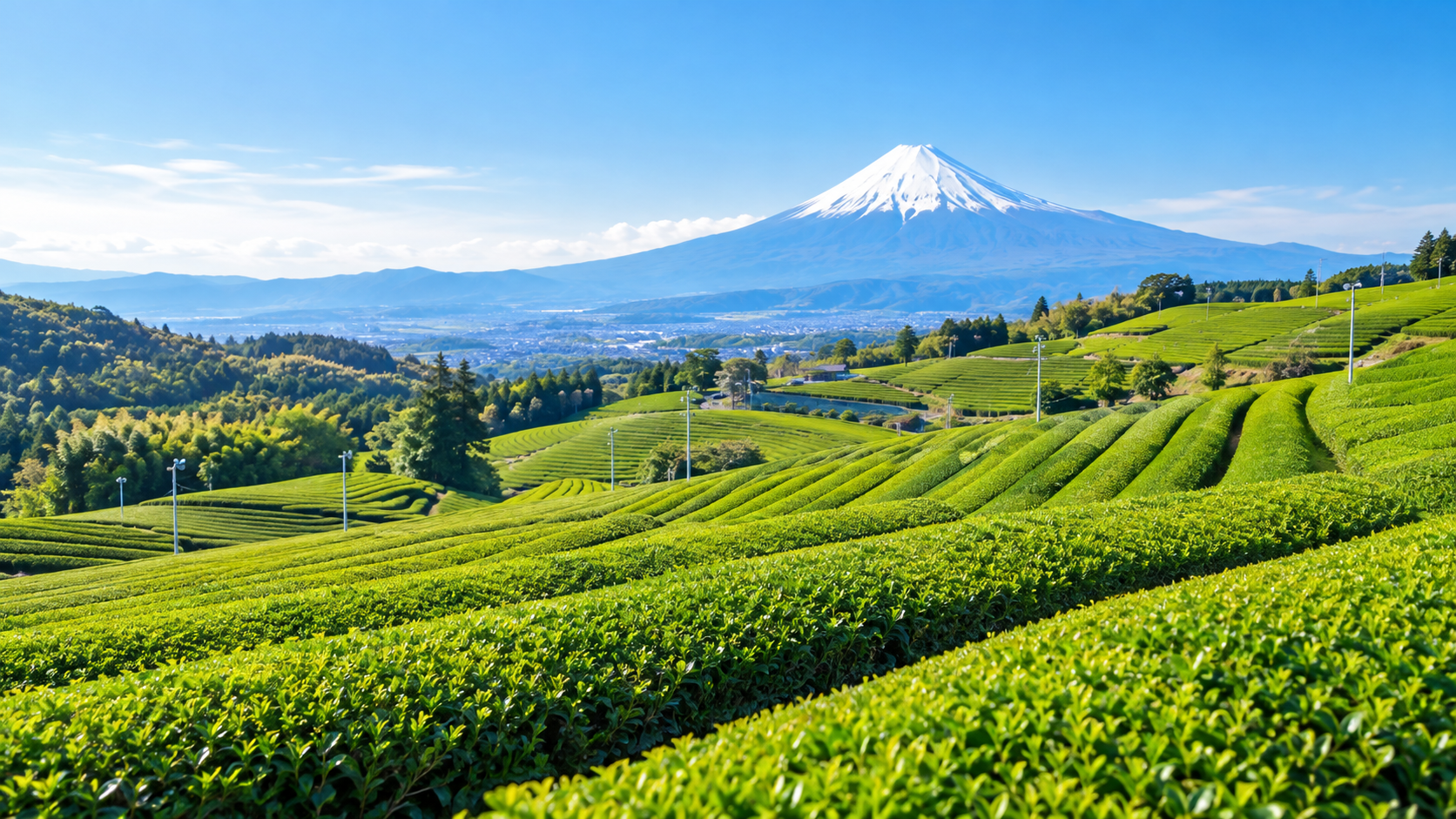
Shizuoka has long been the center of the Japanese tea industry. Yabukita, the cultivar behind most Japanese tea, was selected there, and the prefecture is home to the country’s biggest tea market and countless farms, factories and wholesalers.
Shizuoka isn’t one style, though. A few areas are worth knowing:
- Makinohara and Kakegawa – broad tea plateaus closely associated with fukamushi (deep-steamed) sencha, which gives a deep green, smooth, full-bodied cup
- Kawane and Honyama – mountain areas along rivers, where mist and temperature swings produce lighter, more aromatic, elegant senchas
- Shizuoka city and surrounding hills – a wide range of everyday and premium teas
Typical character: fresh, balanced, often aromatic, with classic sencha grassiness. Mountain teas lean fragrant and refined; plateau teas lean rich and deep-steamed.
Kagoshima: Early, Green and Rich
Kagoshima, at the southern tip of Kyushu, has a warm climate that lets it harvest earlier than anywhere else on the main islands – its shincha (first tea of the year) is usually the first to reach the market each spring. Much of its tea is grown on wide, flat land, which allows large-scale mechanized farming.
Kagoshima growers also plant a wider range of cultivars than most regions, including Yutakamidori and the sweet Saemidori, and many teas are partly shaded or deep-steamed. Chiran is one of its best-known tea areas.
Typical character: deep green color, rich body, smooth sweetness and umami, lower astringency. A great choice if you find some senchas too sharp.
Mie: Home of Kabusecha
Mie Prefecture’s tea is sold as Ise-cha, and it’s best known for kabusecha, sencha that is shaded for a short time before harvest. By most accounts, Mie produces the majority of Japan’s kabusecha. My kabusecha guide explains how that light shading changes the flavor.
Typical character: sencha with extra sweetness and roundness from shading.
Kyoto (Uji): The Birthplace of Sencha
Uji, south of Kyoto, is famous for gyokuro and matcha, and for its long association with the tea ceremony. It’s also where modern sencha was born: in 1738, a tea maker named Nagatani Sōen in Ujitawara developed the steaming-and-rolling method that became the basis of today’s sencha.
Uji is a relatively small producer by volume, and much of its focus is on shaded teas. Uji sencha exists, but the region’s prestige and prices come mostly from gyokuro and matcha.
Typical character: refined, elegant teas; known above all for shaded teas with deep umami.
Fukuoka (Yame): Japan’s Gyokuro Country
Yame, in Fukuoka Prefecture, is one of Japan’s most celebrated gyokuro regions, regularly winning top awards for its traditionally shaded teas. It also makes excellent sencha and kabusecha.
Typical character: rich, sweet, full of umami, especially in its shaded teas.
Saitama (Sayama): The Northern Tea
Sayama, in Saitama Prefecture near Tokyo, is near the northern limit of commercial tea growing in Japan. The cold winters mean fewer harvests and thicker leaves, and local producers use a strong final firing called Sayama-bi that gives the tea a distinctive roasted, full flavor.
There’s a well-known saying about it: “Iro wa Shizuoka, ka wa Uji yo, aji wa Sayama de todome sasu” – “For color, Shizuoka; for aroma, Uji; but for flavor, Sayama is the best.”
Typical character: bold, rich, with a toasty depth from the firing.
Kyushu Specialists: Miyazaki, Saga and Nagasaki
The rest of Kyushu has its own distinct traditions:
- Miyazaki – a major producer of sencha and Japan’s leading region for rare pan-fired kamairicha, especially in mountainous Takachiho and Gokase
- Saga (Ureshino) and Nagasaki (Sonogi) – known for tamaryokucha, the curly-leaved green tea with a soft, round flavor
These regions are good places to look if you want something beyond standard sencha.
A Quick Comparison
| Region | Known for | Typical character |
|---|---|---|
| Shizuoka | Sencha, fukamushi, mountain teas | Balanced, fresh, aromatic (mountain) or deep (plateau) |
| Kagoshima | Early shincha, diverse cultivars | Deep green, rich, smooth, low astringency |
| Mie (Ise) | Kabusecha | Sweet, rounded sencha |
| Kyoto (Uji) | Gyokuro, matcha, birthplace of sencha | Refined, umami-rich |
| Fukuoka (Yame) | Gyokuro | Very sweet, rich umami |
| Saitama (Sayama) | Sayama-bi firing | Bold, rich, toasty |
| Miyazaki | Kamairicha, sencha | Gentle, toasty (pan-fired) |
| Saga / Nagasaki | Tamaryokucha | Round, mild, soft |
How to Use Regions When Buying
- If you want a classic, fresh sencha: start with Shizuoka, especially a mountain tea from Kawane or Honyama.
- If you find sencha too bitter: try Kagoshima or a fukamushi from Makinohara or Kakegawa.
- If you want extra sweetness without gyokuro prices: look for Ise kabusecha from Mie.
- If you want something bold: try Sayama.
- If you want to taste the difference yourself: buy a Shizuoka sencha and a Kagoshima sencha at the same price and brew them side by side.
Remember that region is only one clue. A tea’s cultivar, harvest (first flush is best) and steaming style all matter too, so read the whole label.
A Few Things People Ask Me
Which region makes the best sencha? There isn’t one. Shizuoka and Kagoshima both make outstanding teas in different styles, and smaller regions have their own specialties. “Best” depends on whether you like fresh and aromatic or rich and smooth.
Is Uji tea better because it’s famous? Uji is famous mainly for gyokuro and matcha, and its name carries a premium. For sencha, other regions often offer as good or better value.
Why do some teas list a region and a cultivar? Both affect flavor. A “Kagoshima Saemidori” tells you both where it was grown and which plant it came from – which together say a lot about the taste.
Where can I buy single-region teas? Nio Teas’ sencha collection can be filtered by region, which makes side-by-side comparisons easy. For classic everyday tea, Shizuoka sencha on Amazon is widely available.
Where I Landed
Learning the regions didn’t make me choose a favorite – it made me curious. I now keep a fresh Shizuoka sencha for mornings, a rich Kagoshima tea for when I want something smoother, and the occasional Sayama or Ise kabusecha to remind me how much variety there is. Start with Shizuoka and Kagoshima side by side. Once you taste the difference, the rest of the map starts to make sense.